Cheat Sheet to SEO for Landscaping: Get More Leads

How Does SEO for Landscaping Bring in More Local Leads?
SEO for landscaping helps nearby customers find your business when they search for services you offer. Start by completing your Google Business Profile, creating a page for each core service, and making your website easy to use on a phone. Then add real project photos, ask customers for reviews, and track which calls and quote requests turn into booked jobs.
Focus first on services you want more of, such as lawn maintenance or patio installation, in areas your crews can serve. The goal is not just more website visits. It is more qualified leads for profitable work.
I’m Clayton Johnson, founder of SmallBizSEO. My work in content strategy, technical SEO, and link building shapes this guide to SEO for landscaping, with a focus on clear answers and measurable leads.
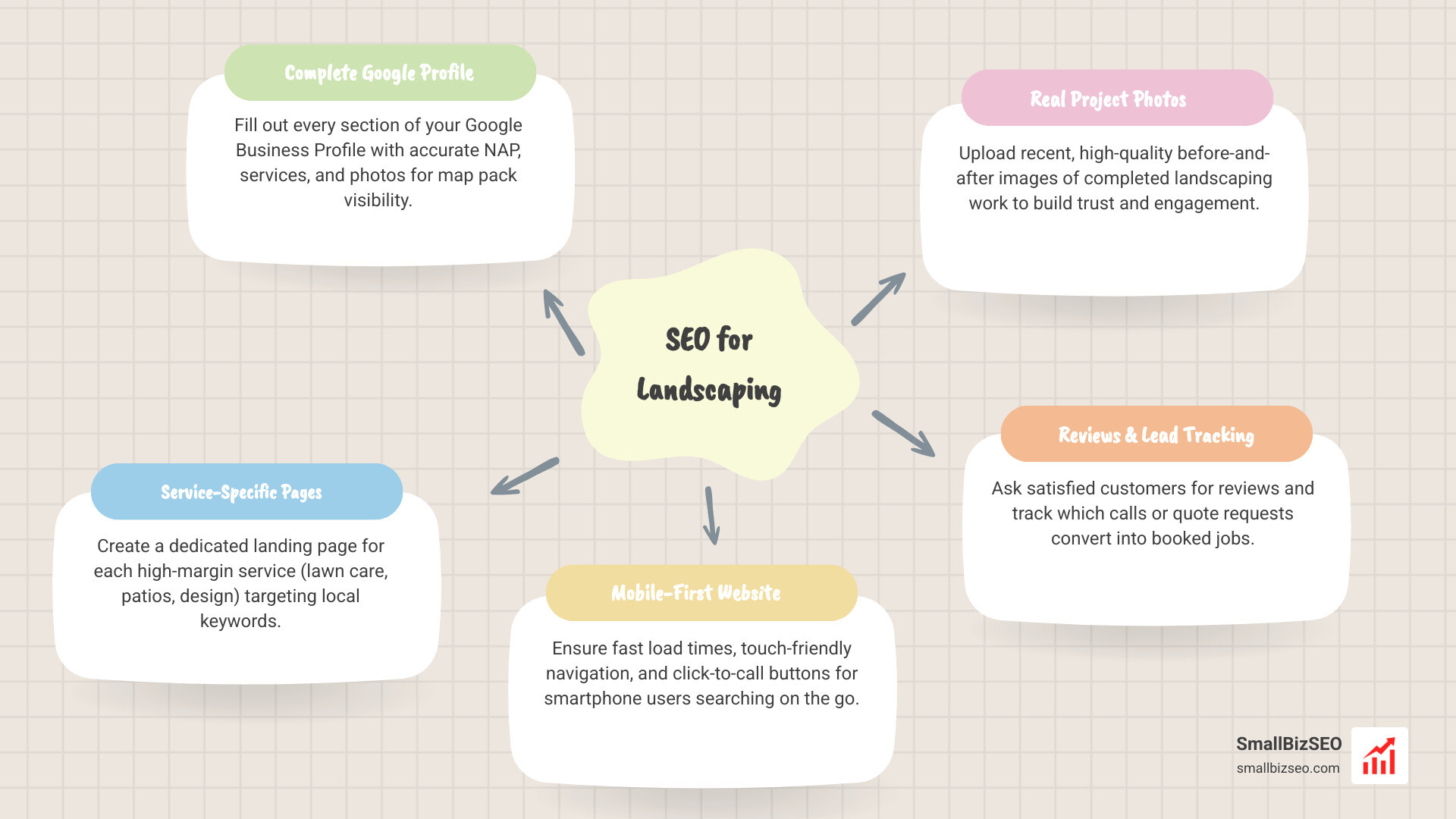
Quick look at SEO for landscaping:
Core Playbook: How Does SEO for Landscaping Generate Predictable High-Ticket Leads?
SEO for landscaping positions your business at the top of Google search results when local property owners actively search for outdoor services. Instead of relying on unpredictable outbound prospecting, organic search marketing attracts high-intent property owners who are ready to book estimates.
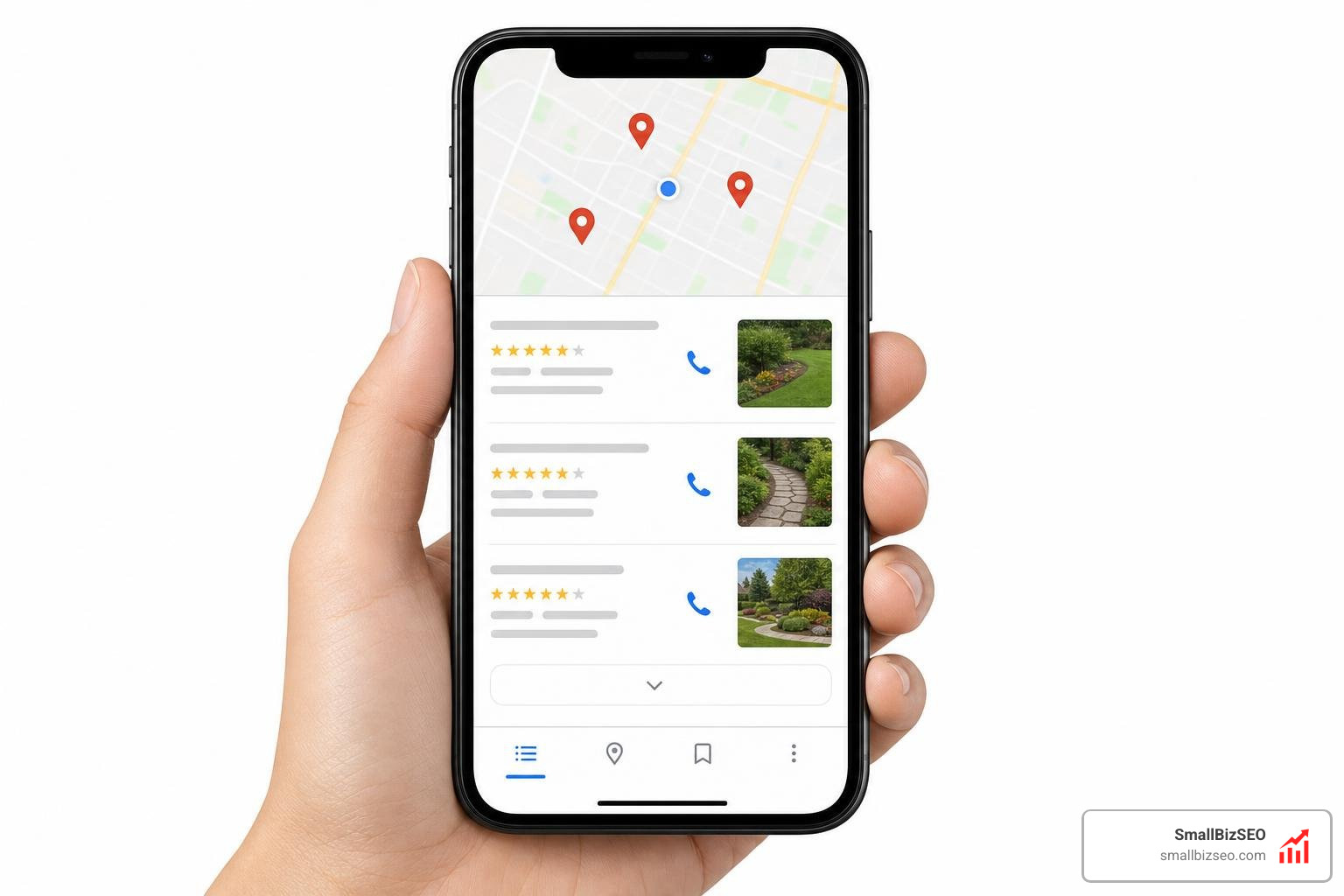
Ninety-three percent of all online experiences begin with a search engine, and seventy-two percent of consumers search online for local services within three miles of their location. For home services, the Google Local Pack appears in approximately 98 percent of relevant search queries. Capturing these spots allows landscape contractors to build route density, target high-margin design-build installations, and secure steady recurring maintenance contracts.
| Factor | Local SEO for Landscaping | National SEO |
|---|---|---|
| Primary Audience | Nearby homeowners and commercial property managers | Broad national audience, DIY researchers |
| Key Platform | Google Business Profile, Local Map Pack, localized pages | Standard search engine organic web listings |
| Keyword Intent | Commercial and transactional (e.g., "patio contractor near me") | Informational guides (e.g., "how to aerate soil") |
| Ranking Factors | Geographic proximity, review velocity, core citations | Domain authority, massive backlink profile |
| Primary Conversion | Direct phone calls, estimate requests, booked jobs | Pageviews, digital downloads, software signups |
Focusing on localized search intent connects your business with property owners within your operational routes who are ready to hire.
What Are the Essential Pillars of SEO for Landscaping?
A complete SEO strategy for landscaping rests on four foundational pillars: on-page optimization, technical performance, local authority, and off-page link building.
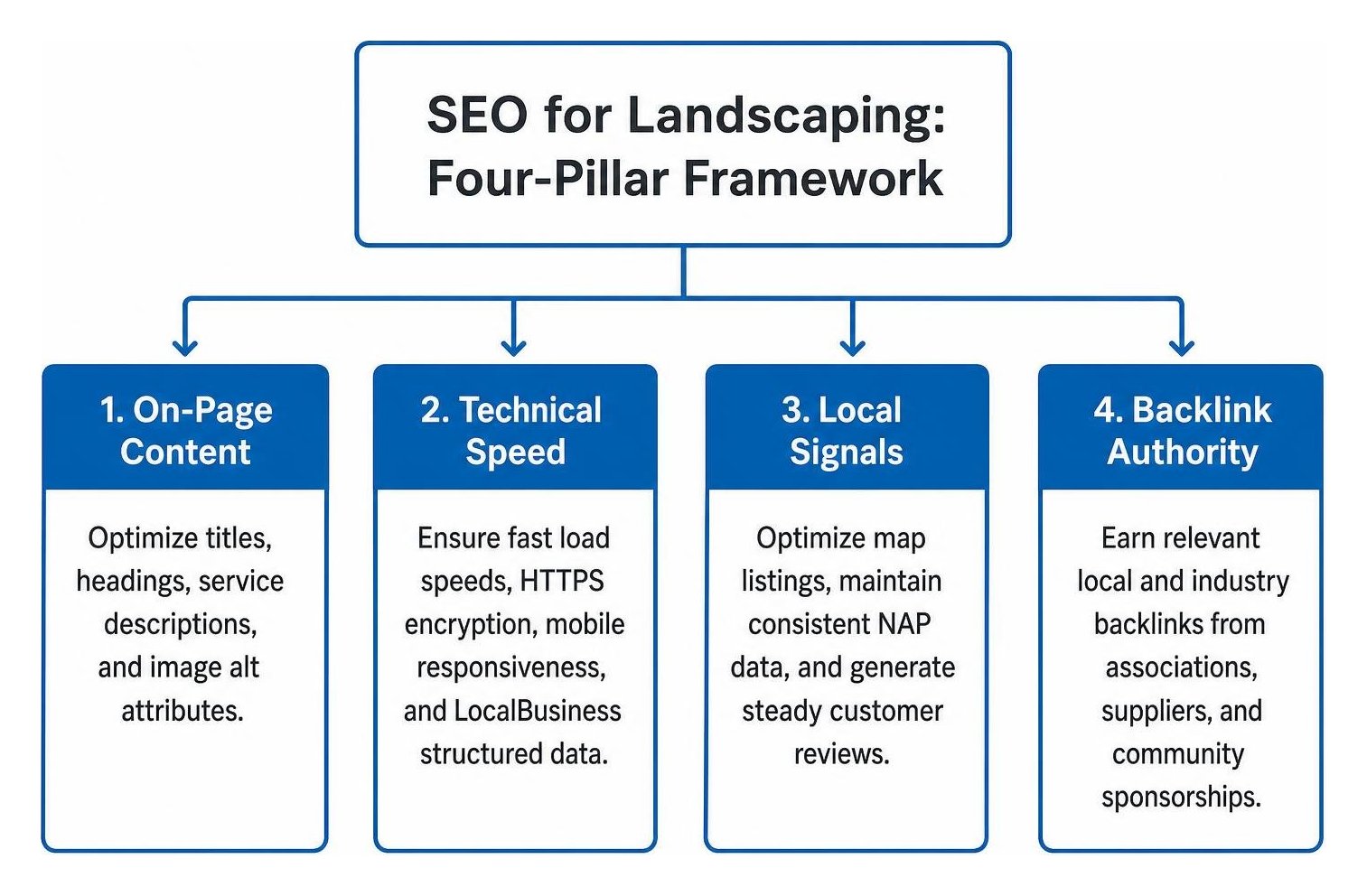
- On-Page SEO: Optimizing page titles, headings, service descriptions, and image alt attributes so search engines understand your exact services and service areas.
- Technical SEO: Delivering fast load speeds, secure HTTPS encryption, mobile responsiveness, and clean LocalBusiness structured data. With 83 percent of users expecting pages to load in under three seconds, technical stability keeps bounce rates low.
- Local SEO: Implementing local SEO map services to optimize map listings, maintain consistent Name, Address, and Phone number (NAP) data, and generate steady customer reviews.
- Off-Page SEO: Acquiring relevant local and industry backlinks from trade associations, suppliers, and community sponsorships.
Aligning these four pillars ensures your website functions as an automated lead-generation engine that converts search traffic into booked revenue.
How Can Landscapers Optimize Their Google Business Profile for the Local Map Pack?
An optimized Google Business Profile acts as your most valuable local asset because the Map Pack drives the majority of incoming calls from mobile devices.
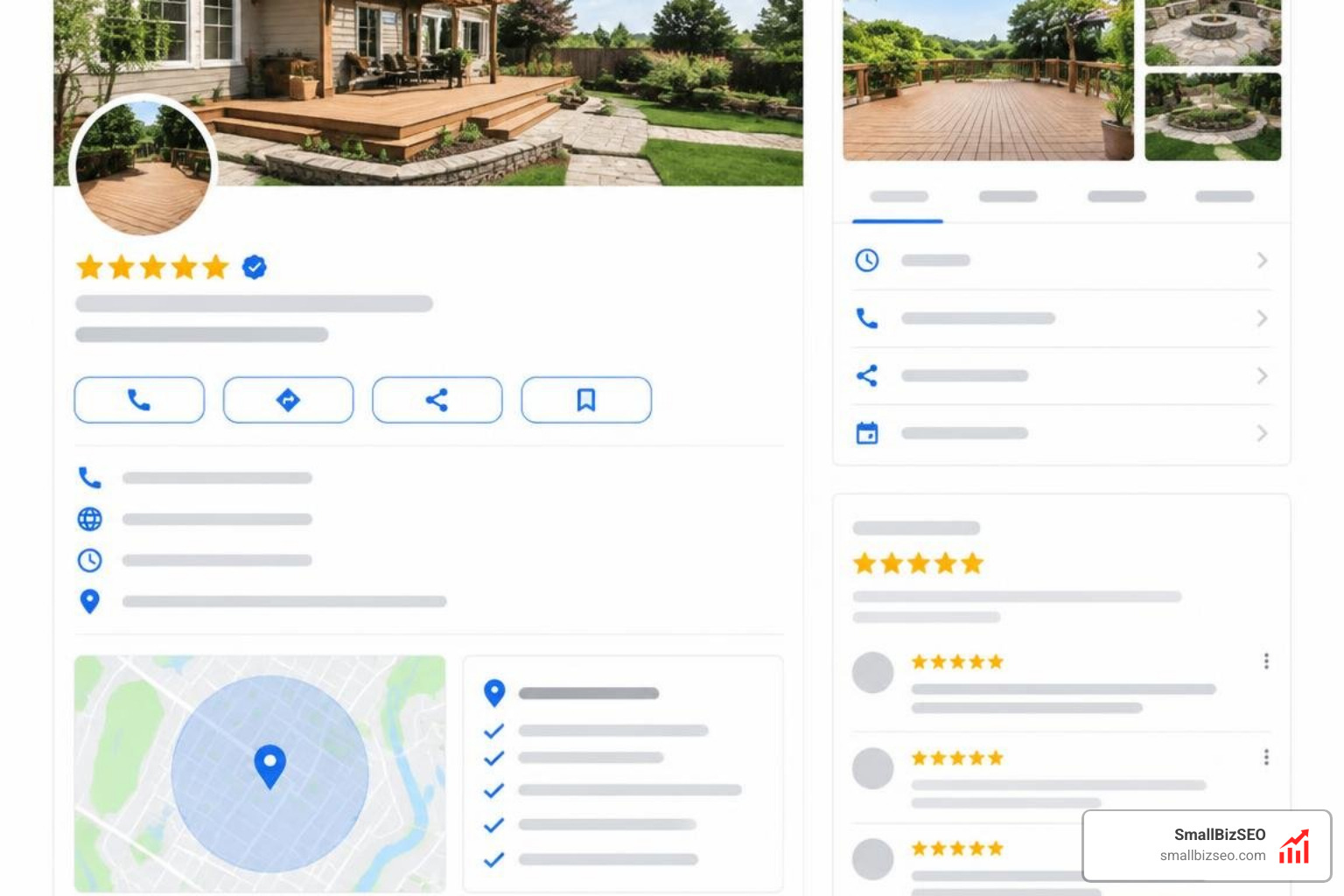
To maximize your visibility on local maps:
- Set Your Primary Category Accurately: Select "Landscaper" or "Lawn care service" based on your highest-margin core offering, and add relevant secondary categories for hardscaping, irrigation, or snow removal.
- Maintain NAP Uniformity: Ensure your business name, physical address, and primary phone number match your website footer and directories exactly.
- Define Explicit Service Areas: Configure specific service zip codes and townships rather than broad radius settings.
- Build a Sustainable Review Engine: Promptly request customer feedback after job completion. Gaining steady weekly reviews with descriptive service mentions dramatically improves local prominence.
- Upload Real Project Visuals: Add clear before-and-after photos of completed hardscapes, plantings, and turf transformations with descriptive filenames.
You can streamline your listings and citations using a dedicated google business profile management strategy to maintain consistent local prominence.
How Do You Conduct High-Intent Keyword Research and Build Service Pages?
Effective keyword research for landscaping focuses on commercial and transactional queries rather than generic DIY terms.
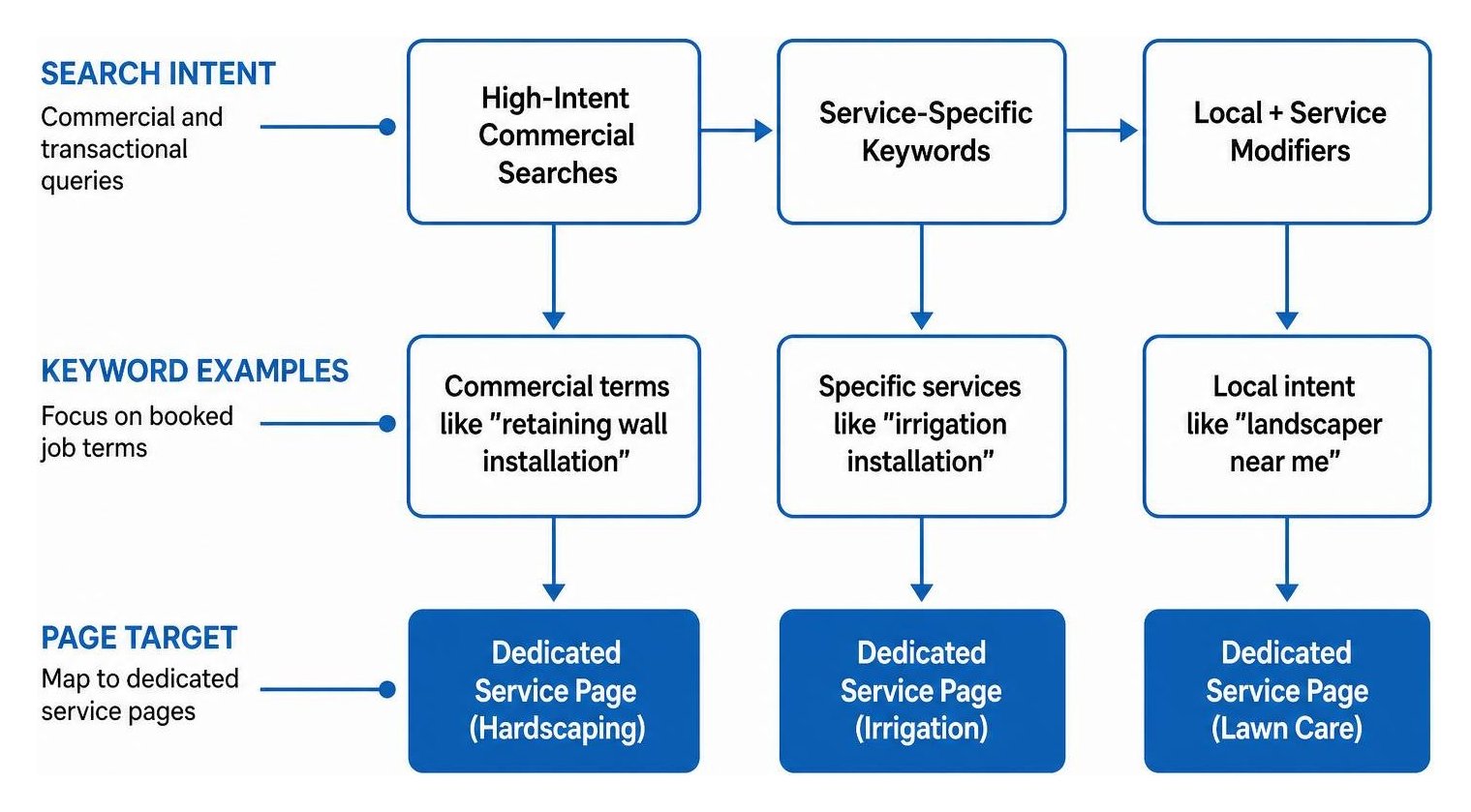
Research shows that 99.2 percent of keywords triggering Google AI Overviews are informational queries (like "how to plant shrubs"), which have seen a 34.5 percent drop in first-position click-through rates. To secure booked jobs, focus on commercial-intent terms like "retaining wall installation" or "commercial turf maintenance."
Follow these best practices to structure high-converting service pages:
- One Page Per Distinct Service: Build separate pages for each primary service (e.g., hardscaping, sod installation, drainage systems) rather than grouping everything onto a single page.
- Optimize Header Structures: Place primary keywords naturally in the H1 tag, URL slug, and title tag using the standard structure: Service in [City, State] | [Company Name].
- Develop Geo-Targeted Pages: Implement a tailored local landing page for each municipality you serve, integrating genuine local project photos and customer testimonials.
- Support Service Pages with Local Content: Publish a structured neighborhood content plan addressing regional soil types, drainage challenges, and local plant varieties, internally linking readers directly to your service quote forms.
To understand how high-intent terms perform across search engines, review Ahrefs research on search intent for outdoor contractors.
Execution and Growth: How to Measure, Avoid Mistakes, and Scale
How Long Does SEO for Landscaping Take to Produce Measurable Revenue?
SEO produces measurable revenue over a structured, compounding timeline. While fast technical fixes can bring early improvements, building sustainable domain authority takes consistent execution.
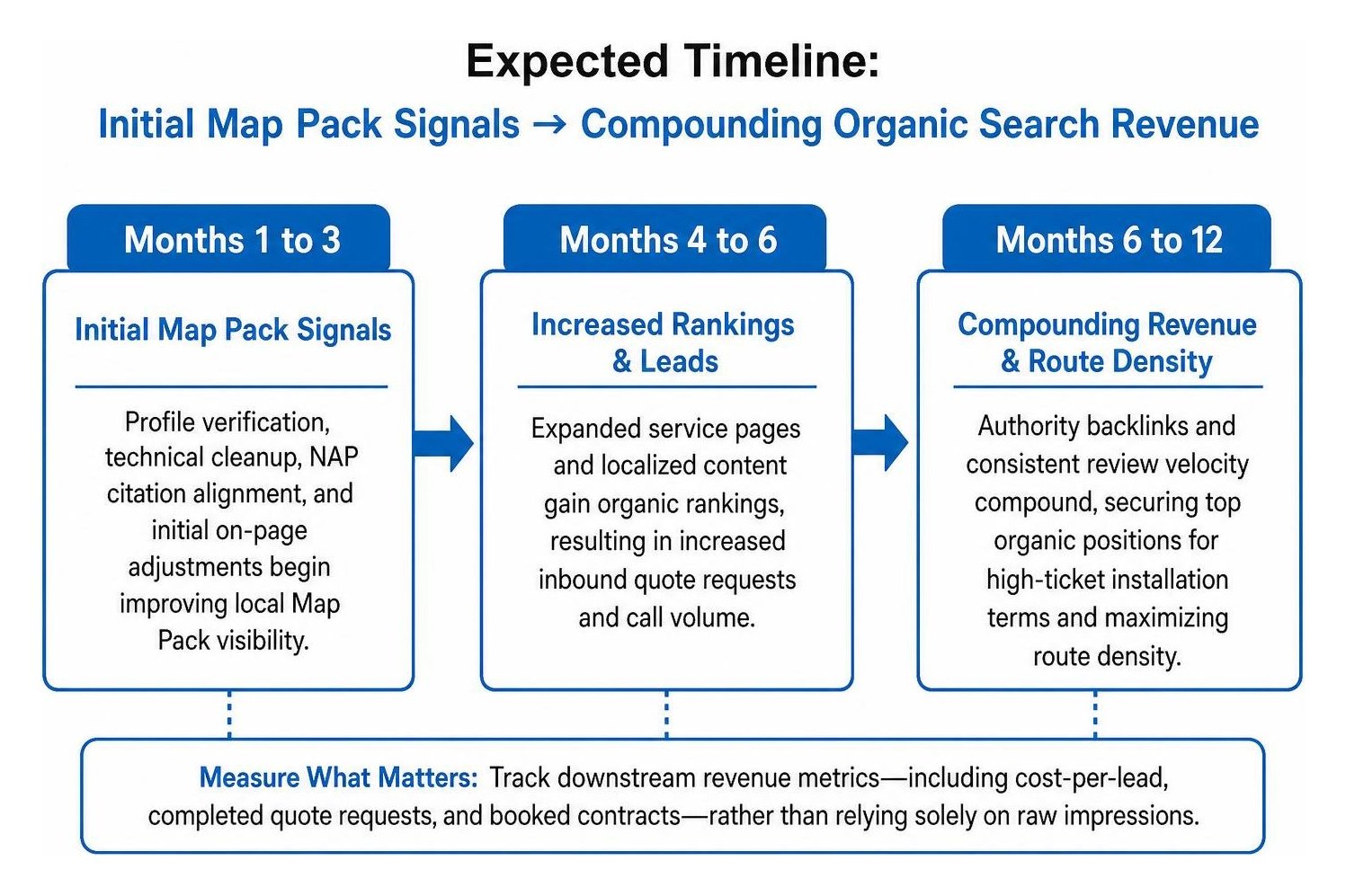
- Months 1 to 3: Profile verification, technical cleanup, NAP citation alignment, and initial on-page adjustments begin improving local Map Pack visibility.
- Months 4 to 6: Expanded service pages and localized content gain organic rankings, resulting in increased inbound quote requests and call volume.
- Months 6 to 12: Authority backlinks and consistent review velocity compound, securing top organic positions for high-ticket installation terms and maximizing route density.
Track downstream revenue metrics—including cost-per-lead, completed quote requests, and booked contracts—rather than relying solely on raw impressions.
What Are the Costly SEO Mistakes That Drain Landscaping Budgets?
Avoiding common technical and strategic pitfalls protects your digital marketing budget and preserves hard-earned search rankings.

Key mistakes to eliminate include:
- Ignoring Mobile Usability: With 57 percent of local service searches occurring on mobile devices, non-responsive sites lose qualified leads immediately.
- Publishing Thin Doorway Pages: Duplicating identical city pages without unique project examples or local details leads to search indexation penalties.
- Keyword Stuffing: Forcing repeated keywords into headers and body text creates a poor reading experience and triggers algorithmic demotions.
- Neglecting Image Compression: Uploading uncompressed, multi-megabyte project portfolio photos slows page speeds well beyond the 3-second user threshold.
- Purchasing Fake Reviews: Buying reviews violates platform policies and destroys consumer trust; focus on authentic post-job feedback instead.
Should You Handle SEO In-House or Partner with a Specialized Agency?
Lawn care and landscaping operators often manage early SEO tasks internally by claiming map profiles and capturing job-site photos. However, scaling organic search rankings across competitive suburban markets requires continuous technical optimization, content creation, and high-tier link acquisition.
Managing complex schema markup, monitoring Core Web Vitals, and building authoritative backlinks takes hours away from managing crews and bidding on estimates.
At SmallBizSEO, we help small businesses and trade contractors scale through transparent, data-driven optimization. Our proprietary "Velocity" framework delivers rapid search visibility, robust technical infrastructure, and sustainable E-E-A-T-compliant growth backed by automated reporting. Explore our specialized home services SEO packages to build a predictable pipeline of high-margin contracts.
Build Your Local Search Lead Engine Today
Winning top Google rankings allows your landscaping business to replace unpredictable word-of-mouth referrals with a dependable flow of high-value residential and commercial projects.
By building dedicated service pages, maintaining a fast mobile website, optimizing your Google Business Profile, and earning authentic local reviews, you establish an organic marketing asset that compounds over time.
Ready to see how your website stacks up against local competitors? Request a custom SEO visibility audit with SmallBizSEO today, and let our team build a clear, data-driven plan to scale your local search revenue.