11 Top Enterprise SEO Firm Options to Scale Large Websites
11 Top Enterprise SEO Firm Options to Scale Large Websites
How to Choose an Enterprise SEO Firm
Choose an enterprise SEO firm that can improve the systems behind your site, not just optimize pages one by one. Ask each firm to show how it handles sitewide technical fixes, works with your developers and approval teams, connects SEO data to your reporting tools, and measures leads or revenue. Request a written scope that spells out deliverables, costs, and who owns implementation.
That matters when one template change can affect thousands of pages, or a local update needs approval across several teams. The right partner brings a plan for testing changes safely and scaling what works.
I'm Clayton Johnson, a digital marketing and SEO strategist focused on how digital PR, content, and search build lasting visibility. That experience shapes the practical questions I ask when evaluating an enterprise SEO firm.
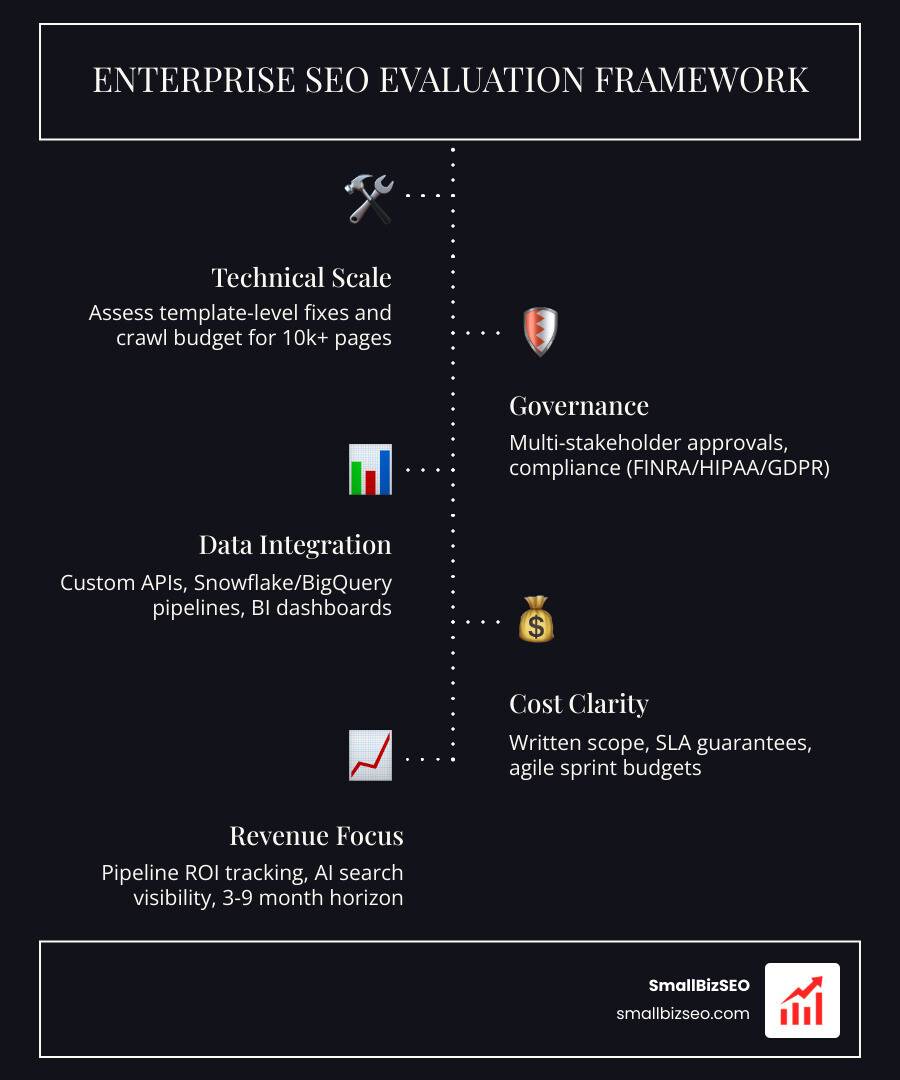
Basic enterprise SEO firm vocab:
- enterprise local SEO
- SEO for enterprise companies
What Separates Enterprise SEO from Standard Search Optimization
Managing search performance for an enterprise brand is not simply standard SEO performed more frequently. When a digital footprint expands across tens of thousands of URLs, distinct business units, and international subdirectories, basic checklists fall apart.
Enterprise search demands system-level engineering, strict multi-stakeholder governance, and deep cross-functional alignment across marketing, product, and software development teams.
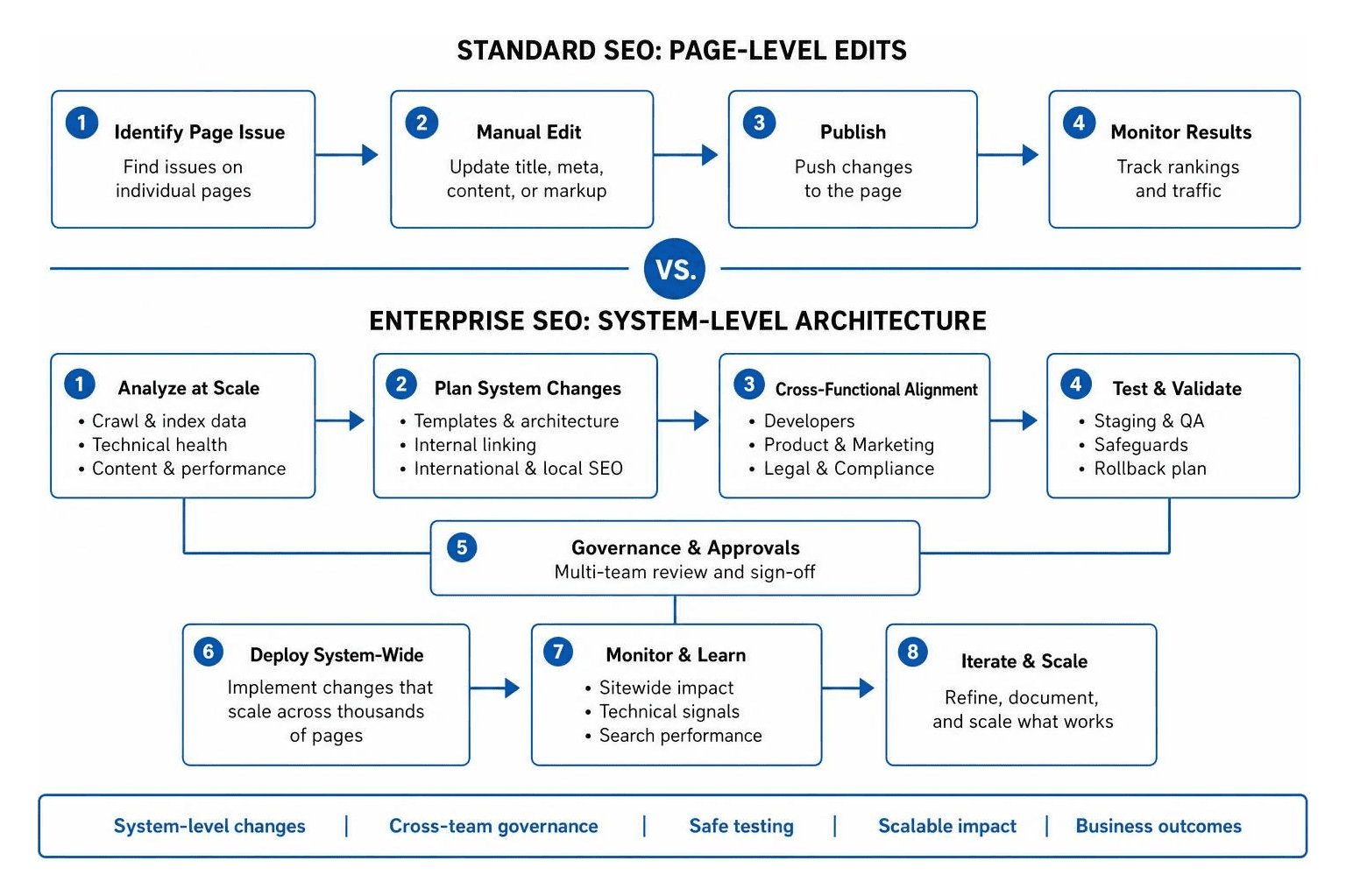
At scale, everyday challenges multiply. Crawl budget management becomes a serious operational task, international routing through hreflang tags requires pristine deployment, and a single staging error can de-index an entire revenue stream overnight.
What Defines a True Enterprise SEO Firm vs. a Boutique Agency
A boutique marketing agency typically focuses on tactical, manual execution—such as tweaking meta descriptions or writing monthly blog posts. In contrast, an enterprise search partner operates as a strategic steward and fractional executive team.
Leading enterprise providers structure their engagements around formal enterprise evaluation frameworks like MEDDPICC (Metrics, Economic Buyer, Decision Criteria, Decision Process, Identify Pain, Champion, Competition) to align search initiatives directly with high-level corporate milestones.
Whether reviewing solutions from an enterprise-grade search agency or seeking specialized consulting, enterprise buyers require partners who understand cross-channel revenue attribution rather than superficial traffic figures.
Engineering-Led Template Fixes vs. Manual Page Edits
If your website contains 50,000 product pages, manually adjusting title tags or canonical tags is an impossible chore. Enterprise firms treat optimization as software engineering. They design programmatic taxonomy rules and build site-wide template solutions.
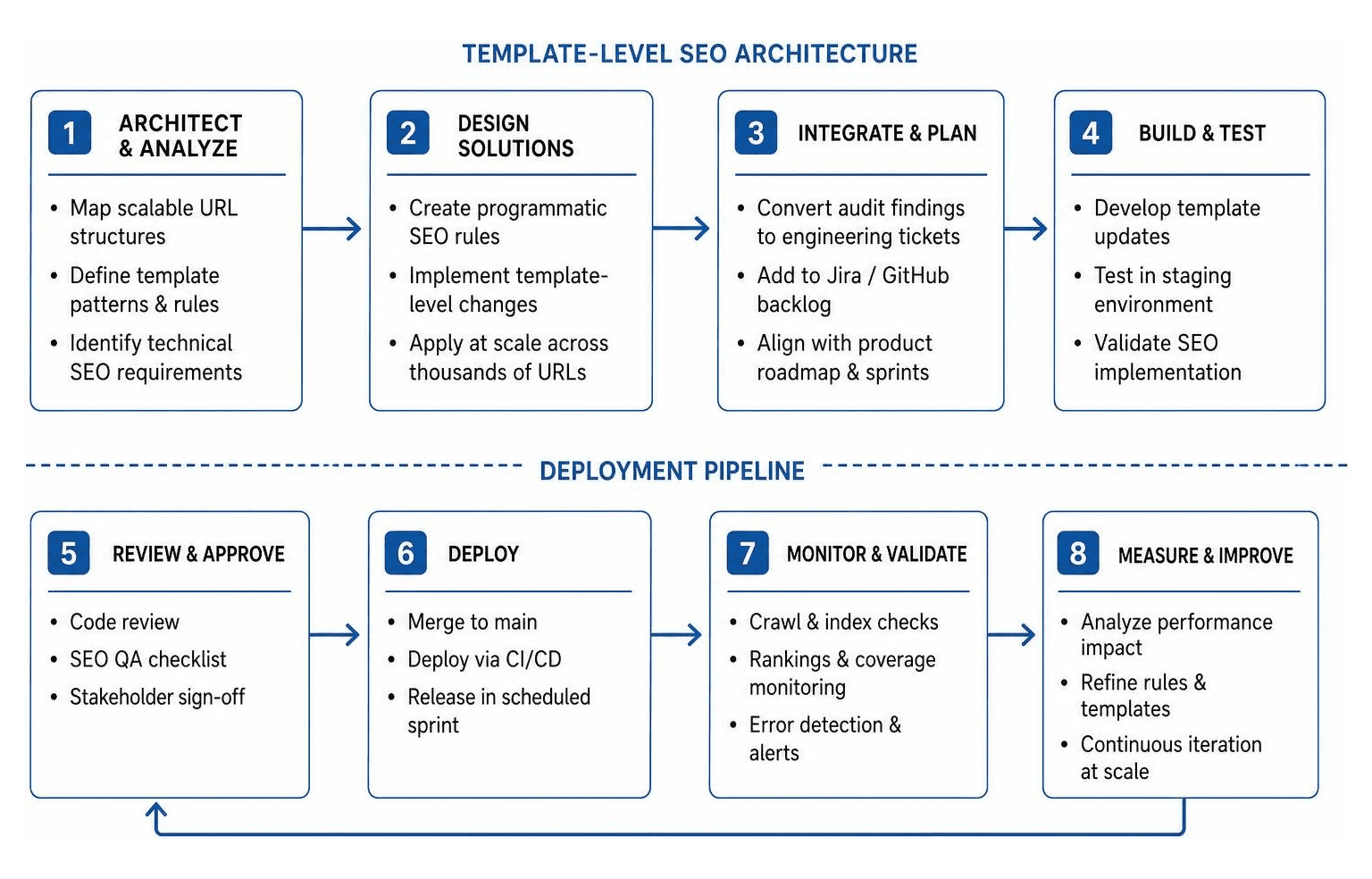
By analyzing Domain prefix and architecture data, technical leads map URL structures that scale cleanly across millions of parameters.
Instead of delivering unwieldy spreadsheets, modern enterprise search specialists translate technical audits into Jira or GitHub tickets. This allows engineering squads to test, approve, and deploy updates during regular two-week development sprints without throwing off the core product release calendar.
Core Capabilities Every Enterprise SEO Firm Must Possess
Large websites require enterprise-grade infrastructure. When search engines crawl millions of pages, standard tools cannot capture the full picture of site health.
An experienced partner provides:
- Comprehensive log-file analysis to monitor bot behavior in real time.
- Core Web Vitals optimization across complex template layouts.
- Controlled, test-driven rollouts on page subsets before global site deployments.
- Structured data markup deployment across dynamic catalogs.
Data Pipelines, Custom APIs, and BI Integrations
Enterprise organizations rarely review search metrics through standalone third-party tools. Instead, data must feed directly into centralized business intelligence environments.
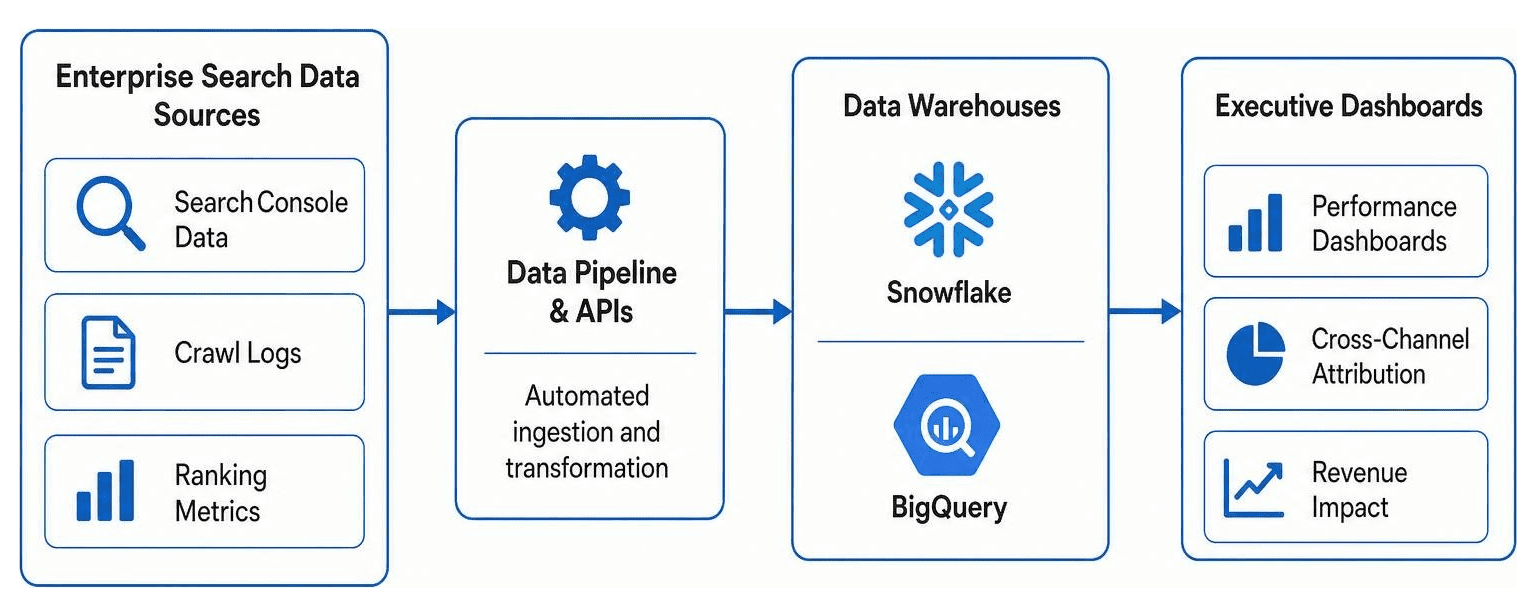
Top-tier firms build automated data pipelines utilizing custom APIs to feed raw search console data, crawl logs, and ranking metrics into data warehouses like Snowflake and Google BigQuery.
These feeds populate enterprise reporting dashboards in Tableau, Power BI, or Looker Studio, unifying organic search performance with product inventory and CRM pipeline metrics.
Answer Engine Optimization and AI Search Visibility
Search is no longer confined to ten blue links. Modern organic visibility requires Answer Engine Optimization (AEO) and Generative Engine Optimization (GEO).
When buyers use conversational engines, search visibility depends on being cited as an authoritative entity. Enterprise partners optimize unstructured content, build internal knowledge graphs, and deploy robust schema markup so your brand earns citations across platforms like ChatGPT, Perplexity, Gemini, and Google AI Overviews.
Enterprise Governance, Multi-Location Compliance, and Approvals
For global enterprises and publicly traded brands, a single compliance misstep can lead to severe regulatory fines or brand erosion. Enterprise search strategies must incorporate strict governance frameworks that protect digital assets across all markets.
Workflow Governance and Role-Based Permissions
Managing content updates across global teams requires multi-tiered approval workflows. Content cannot go live without passing legal, compliance, and brand checks.
- Role-Based Access Control (RBAC): Restricting editing and publishing capabilities based on verified internal roles.
- Regulatory Compliance Integration: Aligning search content with strict industry standards such as FINRA, HIPAA, GDPR, and CCPA.
- Automated Audit Logging: Tracking every staging modification, technical deployment, and metadata update to maintain complete operational transparency.
- Brand Protection Systems: Integrating monitoring tools like Proofpoint to ensure automated content generation adheres to brand risk parameters.
Multi-Location Rollouts and Franchise Brand Protection
For multi-unit brands and franchise operations, managing regional organic visibility without causing internal keyword conflict is a major priority. Tailored enterprise multi-location strategies help brands establish scalable location page architectures.
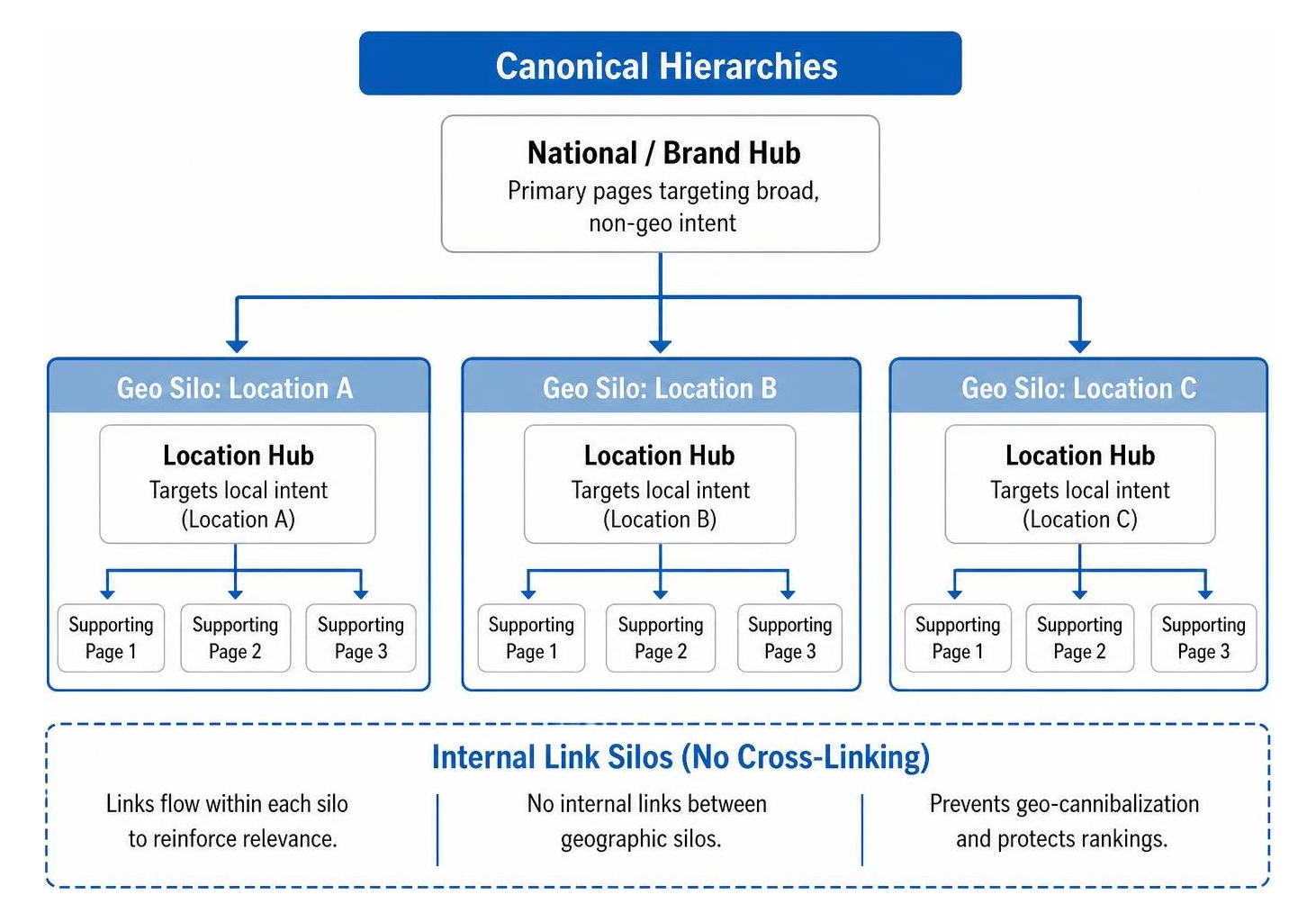
Proper execution relies on strict canonical tag hierarchies, structured internal link silos, and centralized Google Business Profile governance. These measures ensure regional landing pages capture nearby intent without cannibalizing primary national rankings.
Pricing Structures and Total Cost of Ownership
Enterprise search engagements require clear, transparent commercial terms. Because large organizations operate on rigorous procurement schedules, search firms use defined scoping methodologies to outline costs and expectations.
Scoping Models Used by an Enterprise SEO Firm
- Milestone-Based Fixed Retainers: A structured monthly or quarterly fee tied to specific roadmaps, agile development sprints, and deliverable phases.
- Annual Master Service Agreements (MSAs): Comprehensive enterprise contracts that govern long-term strategic execution, custom development hours, and service-level agreements (SLAs).
- Hybrid Project-to-Retainer Scopes: Initial intensive technical remediation sprints followed by ongoing strategic stewardship, content scaling, and data monitoring.
- Variable Analytics and Data Licensing: Separate pass-through or bundled costs for enterprise database hosting, custom API calls, and digital shelf tracking.
Build vs. Buy: Agency Partnership vs. In-House Scaling
Enterprise leadership often weighs the total cost of ownership (TCO) between hiring an outside firm and building an entirely internal department.
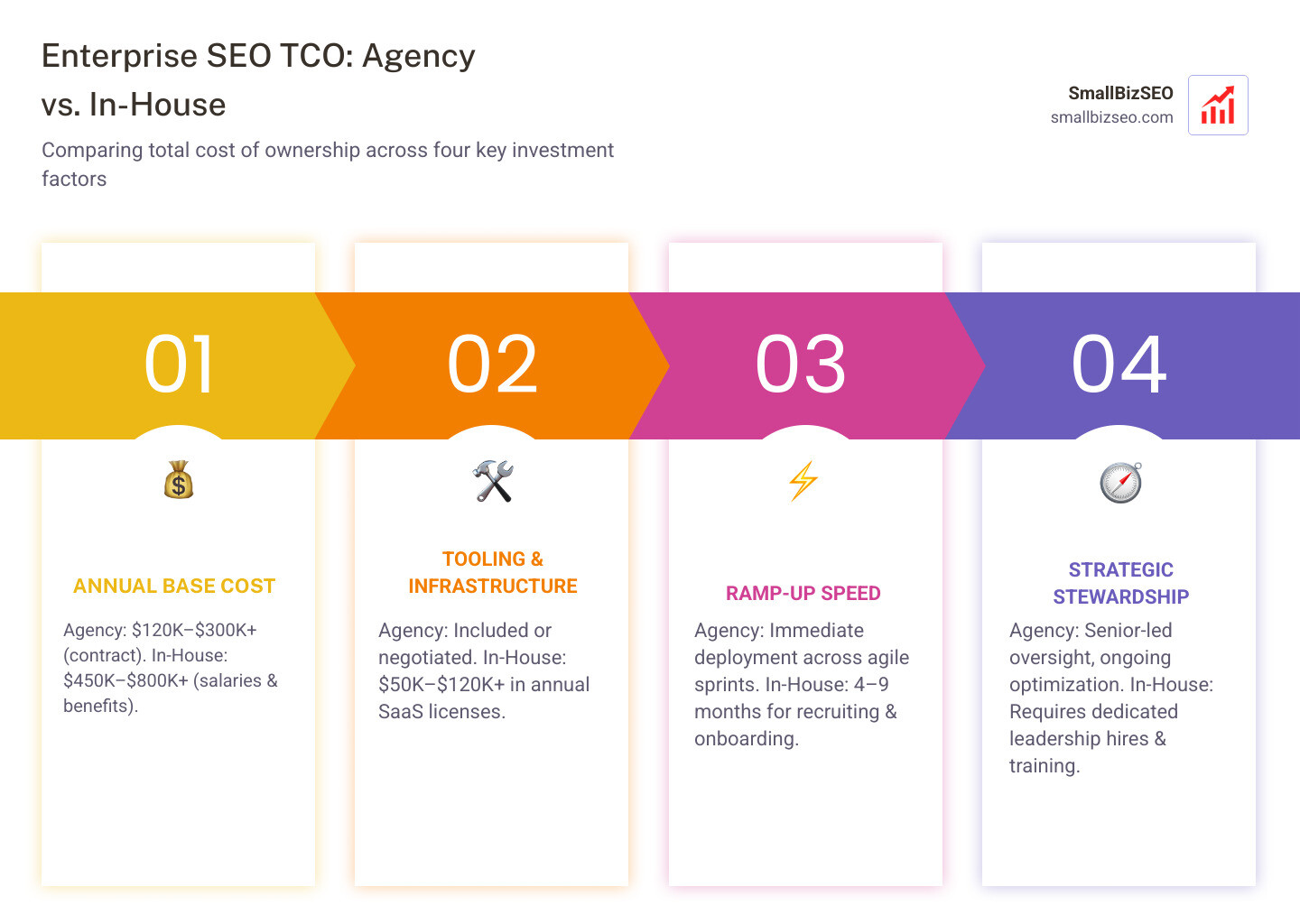
| Investment Factor | Enterprise SEO Agency | Fully In-House Team |
|---|---|---|
| Annual Base Cost | $120,000 – $300,000+ | $450,000 – $800,000+ (Salaries & Benefits) |
| Tooling & Infrastructure | Included in contract or negotiated | $50,000 – $120,000+ in annual SaaS licenses |
| Ramp-Up Speed | Immediate deployment across agile sprints | 4 to 9 months for talent recruiting and onboarding |
| Skill Diversity | Access to developers, data scientists, and strategists | Limited to the specific skills of individual hires |
| Governance & Redundancy | Broad institutional knowledge and SLA backups | Vulnerable to single-person employee turnover |
While building internal capabilities provides dedicated headcount, an external enterprise partner brings cross-industry benchmarking, ready-to-deploy data infrastructure, and specialized technical expertise without lengthy recruitment delays.
Frequently Asked Questions About Enterprise Search Partnerships
How long does an enterprise SEO implementation take to show pipeline ROI?
Initial technical cleanups and template corrections can improve crawl efficiency and indexation within weeks. However, meaningful pipeline growth and revenue lift typically compound over a 3-to-9 month window as search engines re-evaluate site architecture and topical authority across the entire domain.
What governance safeguards prevent technical rollouts from breaking compliance?
Enterprise agencies work within pre-production staging environments and utilize automated regression testing tools. Proposed codebase modifications are submitted as formal tickets and run through mandatory legal, regulatory, and security approval workflows before pushing to production servers.
How do enterprise agencies optimize for Google AI Overviews and generative engines?
Optimization for AI-driven answers centers on entity authority and clear information architecture. Agencies optimize content using structured data schemas, format key takeaways in concise, direct-answer prose, and build authoritative brand citations across the broader web ecosystem to maximize inclusion in AI-generated answers.
Accelerate Your Digital Growth Engine
Selecting the right enterprise partner is one of the most critical decisions an executive team can make. Success at scale does not come from superficial tricks or generic checklists—it requires data-driven engineering, seamless cross-team collaboration, and an unwavering focus on measurable revenue pipeline.
At SmallBizSEO, we believe in sustainable, high-velocity digital growth built on deep technical excellence and radical reporting transparency. Whether you are scaling an emerging catalog or managing a complex multi-team web ecosystem, matching your organization with a partner that respects your technical architecture and business goals ensures long-term organic success.