The SEO Action Plan: Turning Audit Data Into Traffic
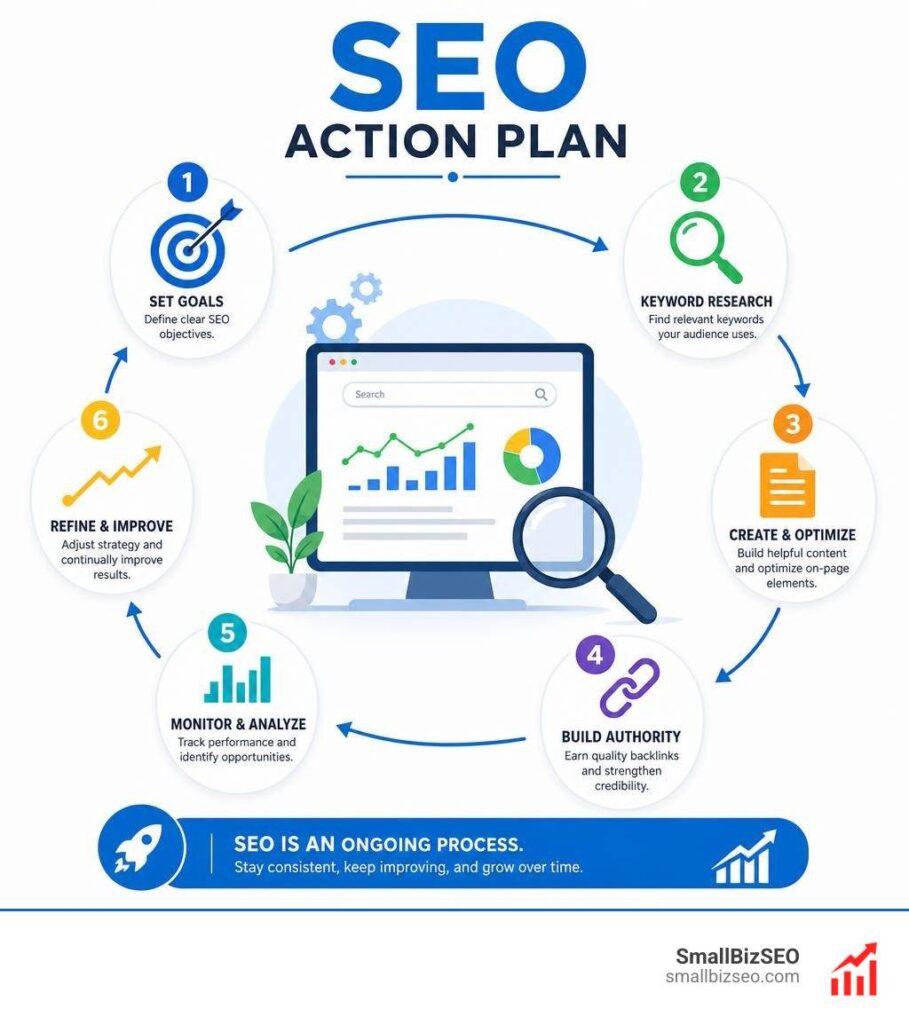
The SEO Action Plan: Turning Audit Data Into Traffic
Why Every Small Business Needs an SEO Action Plan
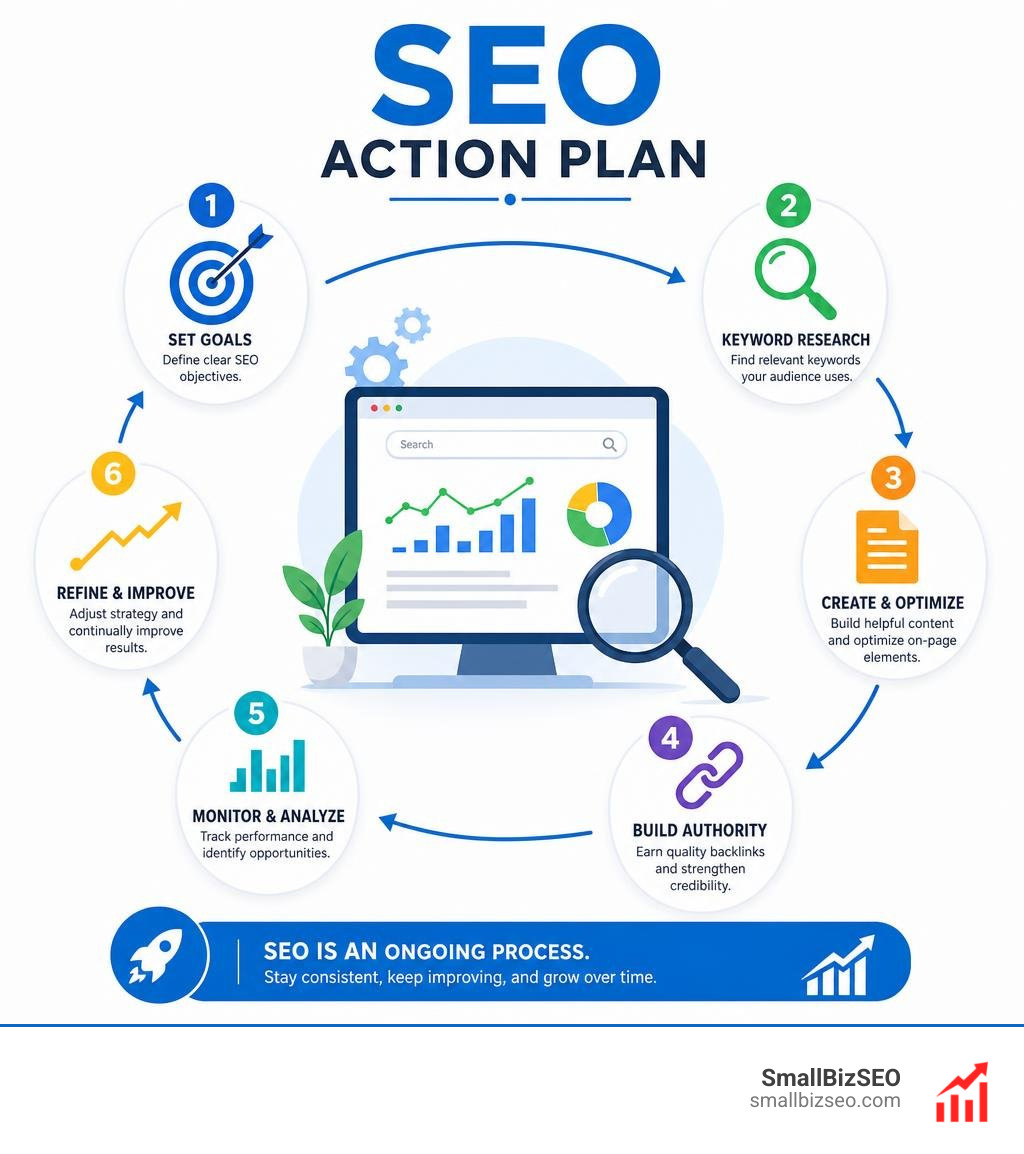
An SEO action plan is a structured, step-by-step roadmap that turns your audit findings into prioritized tasks — so your website climbs search rankings and brings in consistent organic traffic.
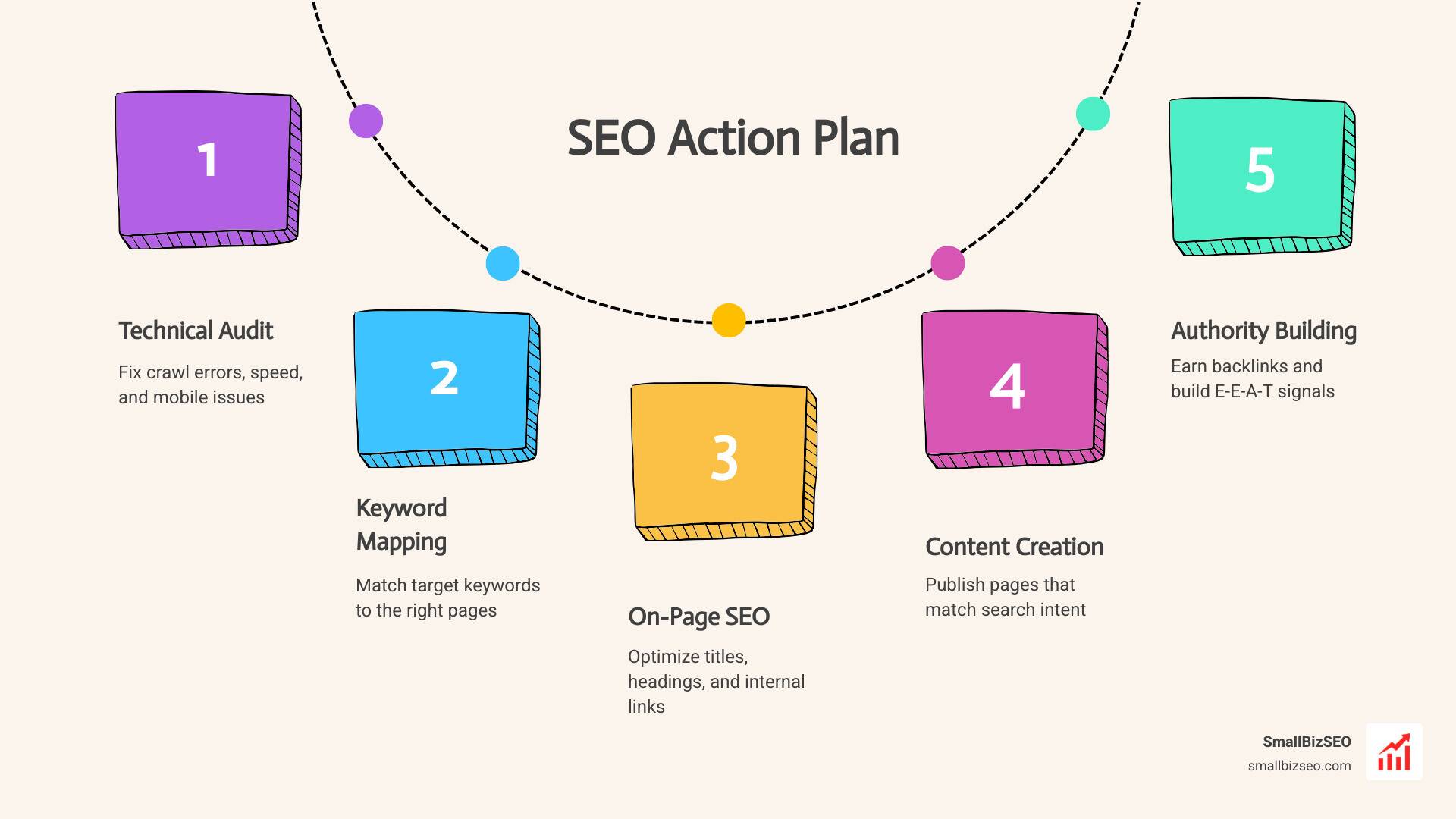
Here's what a solid SEO action plan covers:
- Technical foundation — fix crawl errors, page speed, and mobile issues
- Keyword research and mapping — assign the right keywords to the right pages
- On-page optimization — titles, meta descriptions, headings, and internal links
- Content creation — publish pages that match what your audience is searching for
- Authority building — earn backlinks from relevant, trusted sites
- Tracking and iteration — measure what's working and adjust monthly
Most small businesses already know SEO matters. The problem isn't awareness — it's knowing what to do first and in what order.
Here's the reality: SEO results typically start showing meaningful movement between months 3 and 6. But that growth only compounds if the work is done in the right sequence. Jump straight to content or link building without fixing your technical foundation, and you're building on sand.
This guide walks you through exactly how to turn raw audit data into a phased, executable plan — even if you're short on time and working without a dedicated SEO team.
I'm Clayton Johnson, a digital PR and SEO specialist focused on helping small businesses build search visibility through strategic, data-driven campaigns — and building an effective SEO action plan is the foundation of every successful engagement I've run. In the sections ahead, I'll show you the exact framework we use at SmallBizSEO to go from zero data to measurable organic growth.
SEO action plan terms to remember:
What is an SEO Action Plan and Why Your Business Needs One
Many business owners confuse a general SEO strategy with a tactical SEO action plan. While a strategy defines your long-term goals and high-level direction, an action plan is the exact, step-by-step checklist of who does what, when, and how. Without a clear plan, audits sit in folders, and organic visibility stalls.
To drive real business outcomes, your plan must align technical health with search intent. When you target what your future customers are actually searching for, your conversion rates naturally increase.
| Feature | General SEO Strategy | Tactical SEO Action Plan |
|---|---|---|
| Focus | Long-term goals and competitive positioning | Immediate, prioritized tasks with deadlines |
| Primary Metric | Overall organic visibility and brand authority | Specific page-level rankings and organic conversions |
| Execution | High-level guidelines | Step-by-step technical, on-page, and content tasks |
| Adaptability | Reviewed annually or bi-annually | Updated monthly based on live performance data |
The Core Components of an Effective Plan
An effective plan balances four critical pillars of search engine optimization:
- Technical SEO: Ensuring search engines can crawl, index, and render your site without issues.
- On-Page SEO: Optimizing individual pages so search engines understand your content.
- Off-Page SEO (Authority Building): Earning high-quality backlinks that signal trust to search engines.
- Content Creation: Developing valuable assets that answer user queries.
To turn your audit findings into immediate tasks, you can jumpstart your process with this Free SEO Action Plan Template. It helps you categorize your fixes into quick wins, short-term actions, and long-term initiatives.
The 90-Day Roadmap: Phase-by-Phase Execution
Trying to fix every SEO issue at once leads to overwhelm. Instead, we structure our work into a 90-day roadmap. This phased approach yields compounding growth, ensuring your site remains resilient against search rankings fluctuations and algorithm updates.
Phase 1 (Days 1-30): Building the Foundation of Your SEO Action Plan
The first month is all about diagnostics and infrastructure. You cannot optimize a broken website. We begin by setting up our tracking systems and running a technical SEO audit.

- Tracking Setup: Connect Google Search Console and Google Analytics to establish your baseline data.
- Run a Technical Audit: Use diagnostic tools to crawl your site. If you need professional eyes on your site, you can get a Detailed SEO Analysis from our team.
- Fix Crawl Errors: Resolve 404 broken pages, redirect loops, and server errors that prevent Google from indexing your site.
- Optimize for Mobile-First Indexing: Ensure your site stacks naturally and remains completely readable on mobile devices.
- Improve Core Web Vitals: Compress images, adopt WebP formats, and minify code to ensure your pages load within the ideal one-to-three-second window.
Phase 2 (Days 31-60): Content Execution and On-Page Optimization
Once your technical foundation is secure, shift your focus to keyword research and keyword mapping. This ensures every priority page on your site has a single, dedicated target keyword.
To find where your competitors are winning, run a gap analysis using our Keyword Gap Analysis Guide.
Once your targets are locked in, execute clean On-Page SEO across your core "money pages" — the service and product pages that directly drive leads and revenue.
- Metadata: Keep title tags under 60 characters and place your primary keyword near the front. Write compelling meta descriptions under 155 characters.
- Heading Structure: Organize your content hierarchically using a single H1 tag for the title, followed by H2 and H3 tags for subsections. Ensure your target keyword appears naturally in at least one subheading.
Phase 3 (Days 61-90): Authority Building, AI Optimization, and Scaling
With your pages fully optimized, it is time to build authority and prepare for modern search landscapes.
- Link Building & Digital PR: Backlinks remain a major ranking factor. Focus on earning high-quality, topically relevant links through guest outreach, resource page listings, and digital PR.
- E-E-A-T Optimization: Google prioritizes content that showcases Experience, Expertise, Authoritativeness, and Trustworthiness. Learn how to signal these qualities in our guide on How to Optimize Your Content for E-E-A-T and Build Real Search Trust.
- AI Search Optimization: Search is evolving. AI Overviews can significantly impact organic clicks. To stay visible, structure your content to answer "query fan-out" sub-questions and add an LLMs.txt file to your root directory to guide AI crawlers.
Executing Your Plan: Best Practices and Tools
Consistency is the secret to SEO success. To keep your team on track, establish a clear content calendar that matches content creation with search intent.
Every piece of content you publish must prioritize user experience and mobile responsiveness. If a page is hard to read on a mobile device, users will bounce, signaling to search engines that your page does not satisfy their query.
Essential Tools for Tracking Your SEO Action Plan
You do not need a massive budget to manage your plan. Start with a solid toolkit:
- Screaming Frog: Excellent for crawling your site to find broken links and duplicate metadata.
- Ahrefs or Semrush: Vital for keyword research, competitor analysis, and backlink tracking.
- Surfer SEO: Great for optimizing on-page content structures.
- The Chrome SEO Action Plan Extension: A free browser extension that lets you audit meta tags, headings, and schema markup in a single click without digging into source code.
For a daily, step-by-step schedule of tasks, you can also use this Free 14-Day SEO Action Plan to build momentum.
Key KPIs and Measuring Success
To understand if your SEO action plan is working, you must separate your leading metrics from your lagging metrics.

- Leading Metrics (Activity-Based): Number of technical issues resolved, pages optimized, and new articles published.
- Lagging Metrics (Result-Based): Organic click-through rate, search rankings, and organic conversions (leads, sales, or sign-ups).
Essential KPIs to Track Monthly:
- Organic traffic growth (via Google Analytics)
- Target keyword ranking positions (via Search Console or rank trackers)
- Impressions and click-through rate (CTR)
- Domain Authority / Domain Rating growth
- Conversion rate of organic landing pages
Frequently Asked Questions About SEO Action Plans
How long does it take to see results from an SEO action plan?
SEO is a compounding game. While you might see quick wins from fixing technical crawl errors within the first few weeks, meaningful ranking shifts and organic traffic growth typically take 3 to 6 months. To understand what to expect at different stages of growth, explore our SEO Services Guide.
What are the most common mistakes to avoid when executing the plan?
The biggest mistake is skipping the initial technical audit. Publishing beautiful content on a technically broken website is a waste of resources.
Another common pitfall is keyword cannibalization — having multiple pages targeting the exact same keyword, which confuses search engines. Finally, never treat your 90-day plan as a static finish line. If you run into ranking drops due to algorithm changes, read our guide on How to Recover from a Google Algorithm Penalty.
How should the plan be updated after the initial 90 days?
After the first 90 days, your plan should transition into a continuous growth loop. Conduct quarterly adjustments to address content decay (updating older posts with fresh data) and monitor competitor strategies.
If you want an ongoing partner to handle these updates, you can explore our tailored SEO Packages. For local businesses operating in highly competitive areas, working with local experts can make a massive difference. For instance, New York businesses often partner with specialized local teams to maintain their edge. You can also research regional approaches and strategies for digital success in highly competitive markets to see how top-tier agencies structure their ongoing campaigns.
Conclusion
Building a successful website does not require a massive marketing degree — it requires a repeatable, tactical process. By turning your raw audit data into a structured SEO action plan, you take control of your search visibility and set your business up for sustainable, long-term growth.
At SmallBizSEO, we help small businesses fast-track this journey. Our signature Velocity framework combines technical precision, expert content strategy, and authoritative link building to deliver fast rankings and E-E-A-T-compliant growth — all backed by transparent, automated reporting.
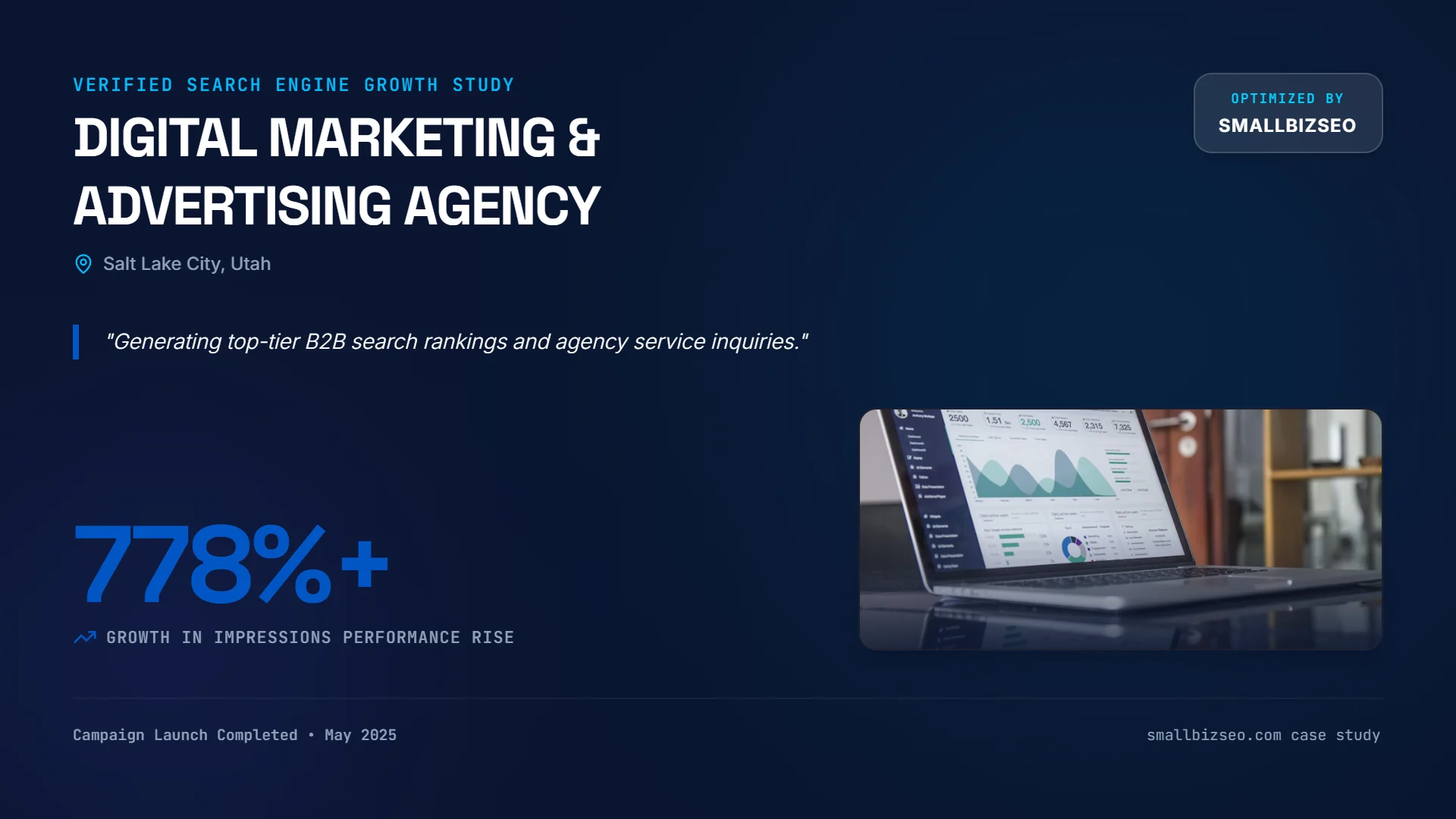
Ready to stop guessing and start growing? Let us build your roadmap. Claim Your Free SEO Visibility Audit today and let's turn your search data into real business revenue.