What Are Backlinks in Digital Marketing and Why Do They Matter?
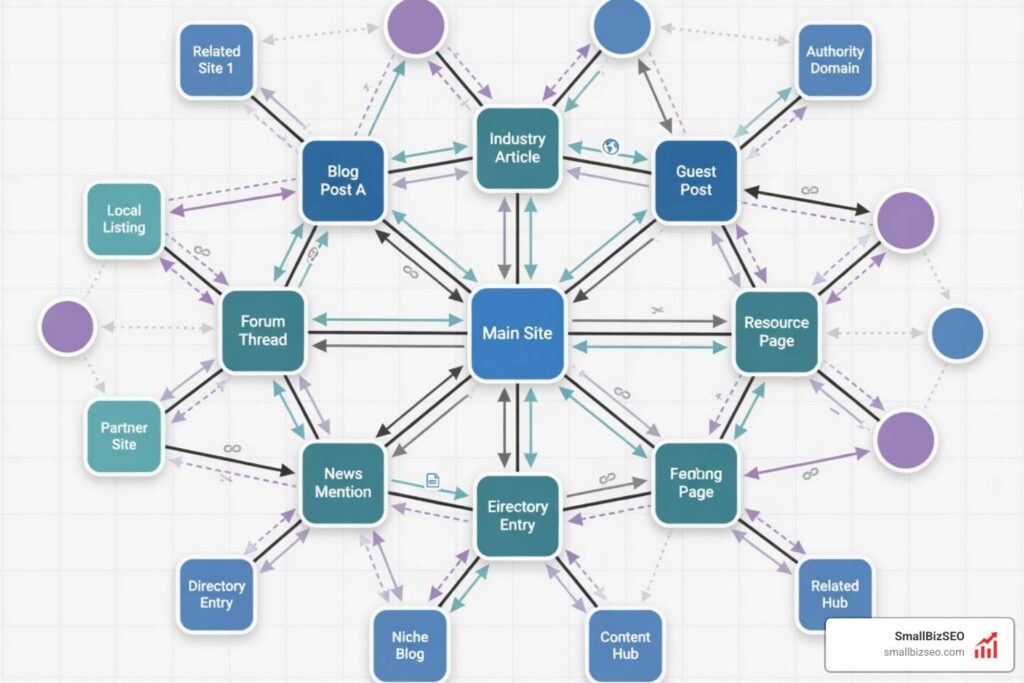
What Are Backlinks in Digital Marketing and Why Do They Matter?
Backlinks in digital marketing are links from one website to another that signal trust and authority to search engines like Google. Think of each backlink as a vote of confidence — the more credible votes your site earns, the higher it tends to rank.
Here is a quick overview of what backlinks are and why they matter:
| What | Why It Matters |
|---|---|
| A link from another website pointing to yours | Tells Google your content is worth referencing |
| Acts as a "vote of confidence" from that site | Boosts your authority and search rankings |
| Passes ranking power (PageRank) to your pages | Helps you climb higher in search results |
| Drives referral traffic from the linking site | Brings new visitors beyond just Google |
| Signals expertise and trustworthiness (E-E-A-T) | Builds long-term credibility with search engines |
Consider this: the first result on Google captures nearly 30% of all clicks, while the tenth result gets just 2.5%. Less than 1% of searchers ever click to page two. Backlinks are one of the most powerful factors separating the top results from everything else.
Yet for most small business owners, link building feels like a mystery — or worse, something that sounds risky or too technical to touch. This guide cuts through the confusion.
I'm Clayton Johnson, a digital PR and SEO specialist focused on building backlinks in digital marketing campaigns that improve search visibility and drive real business results. In the sections ahead, I'll walk you through everything you need to know — from the basics to the strategies that actually work.
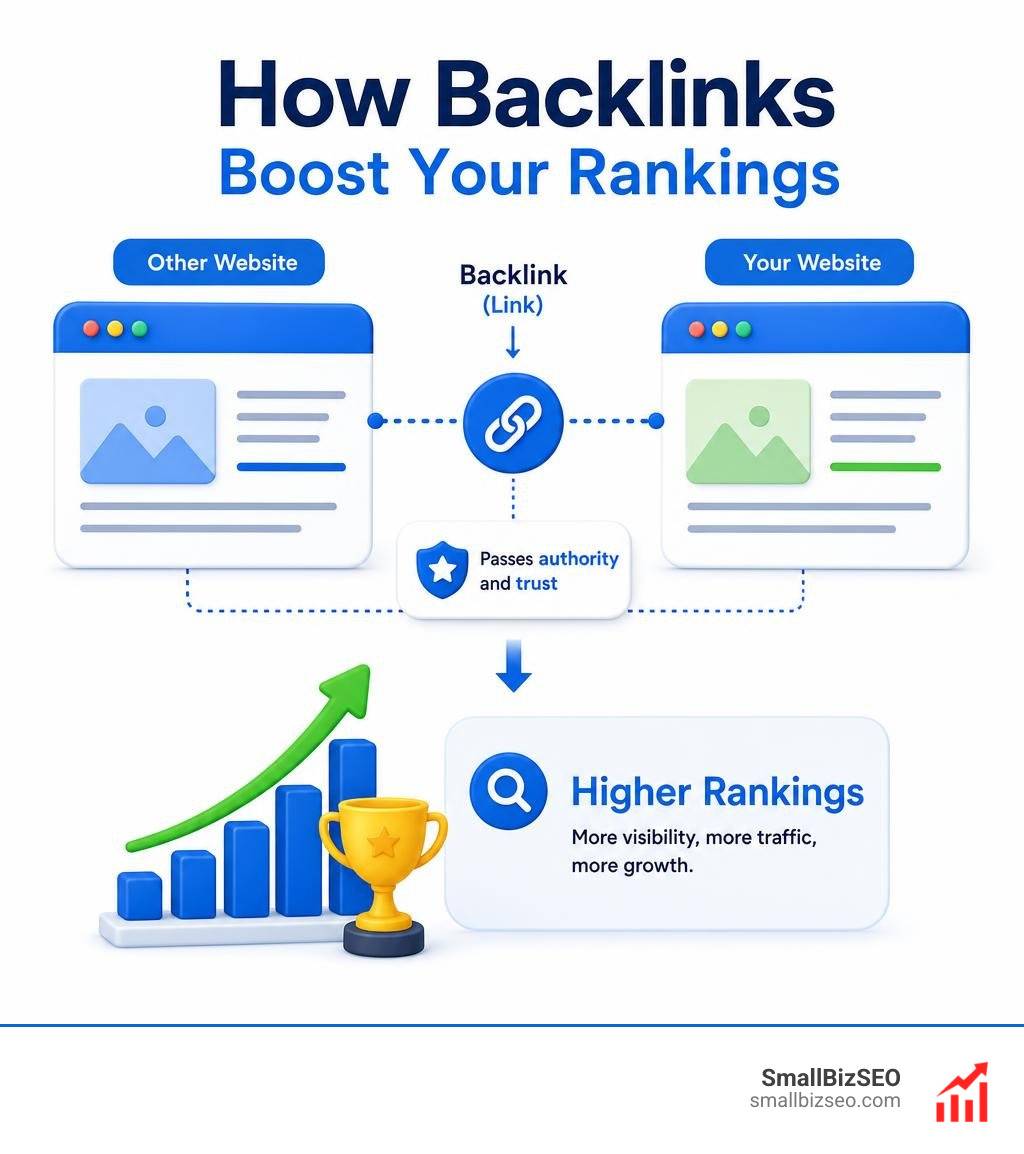
What Are Backlinks in Digital Marketing?
At its simplest, a backlink (also known as an inbound link or external link) is created when one website links to another. If Website A publishes an article and includes a hyperlink pointing to Website B, Website B has earned a backlink.
These links act as the pathways of the internet. They allow users to navigate between different sources of information smoothly. For search engines, they serve as crucial trust signals. When highly regarded websites link to your content, they are essentially vouching for your credibility and expertise.
For small businesses trying to establish an online presence, earning these inbound links is a foundational step. If you want to understand how this fits into your broader digital strategy, our comprehensive SEO Services Guide is a great place to start.
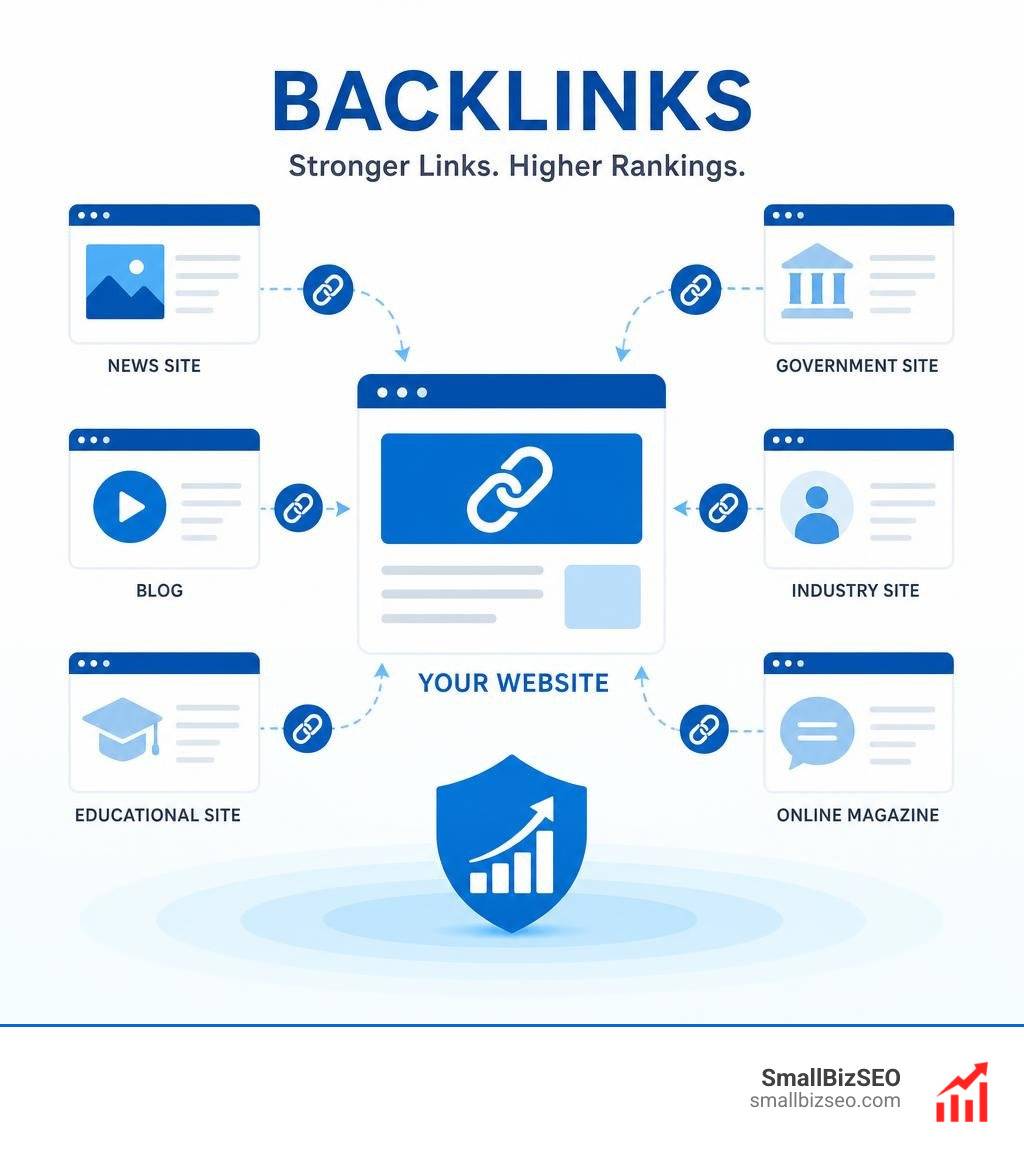
Backlinks vs. Internal Links
While both are hyperlinks, backlinks and internal links serve entirely different purposes in your digital marketing strategy.
- Backlinks are links from external domains pointing to your website. They build your domain authority and prove to search engines that outside sources find your content valuable.
- Internal links are links that connect different pages on the same website. They help search engines understand your site architecture, distribute authority across your pages, and keep visitors engaged.
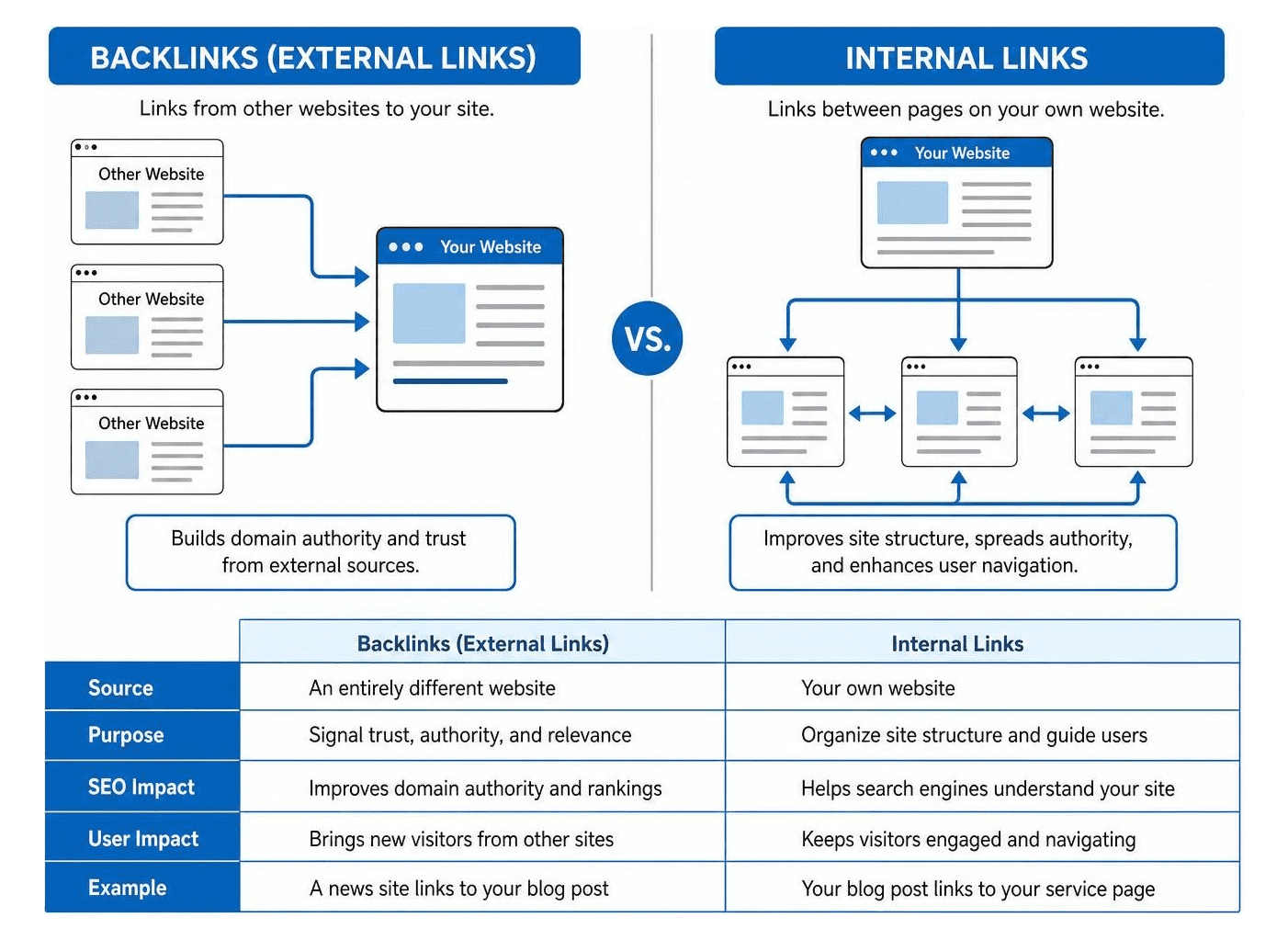
Here is a side-by-side comparison to help you understand the differences:
| Feature | Backlinks (External Links) | Internal Links |
|---|---|---|
| Source | An entirely different website | Your own website |
| Primary Purpose | Build authority, trust, and search rankings | Improve navigation, crawlability, and distribute page authority |
| Control | Hard to control; must be earned or built | 100% controlled by you |
| SEO Impact | High impact on overall domain authority | High impact on page-level crawlability and user experience |
How Backlinks Influence SEO Performance and Rankings
Search engine algorithms are incredibly complex, but backlinks remain one of their core pillars. Google uses bots to crawl the web, following links from page to page. When these bots find links pointing to your site, they index your content faster and pass along "link equity" (historically known as PageRank).
Earning high-quality backlinks influences your SEO performance in several ways:
- Boosts Organic Search Rankings: Pages with a robust backlink profile tend to rank significantly higher for their target keywords.
- Increases Indexation Speed: Search engine crawlers prioritize popular, well-linked pages. Backlinks ensure your new content is discovered and indexed rapidly.
- Expands Your Crawl Budget: The more trusted links pointing to your site, the more frequently search engine bots will visit to look for updates.
The Role of Backlinks in Digital Marketing and Brand Visibility
Beyond search engine algorithms, backlinks drive tangible business value by generating referral traffic. When a user is reading an article on an authoritative industry publication and clicks a link pointing to your website, you acquire a highly qualified visitor.
This referral traffic often converts at a higher rate because the linking site has already established trust with the reader. Additionally, being mentioned alongside industry leaders builds brand awareness and establishes "co-citations"—where search engines associate your brand name with specific, high-value topics.
For businesses looking to scale their overall visibility, collaborating with digital marketing specialists can help design holistic campaigns that combine PR, content creation, and link acquisition. You can also explore specialized local SEO optimization services to target geographically relevant audiences.
Backlinks in AI and Generative Search
The search landscape is changing rapidly with the rise of AI-driven and generative search engines. However, backlinks have not lost their importance. In fact, their role has expanded.
Generative engines favor content from authoritative, trustworthy sources. A recent study analyzing unique domains showed a strong relationship between a website's authority score (which is heavily determined by backlink quality) and how often that domain appears in AI-generated answers.
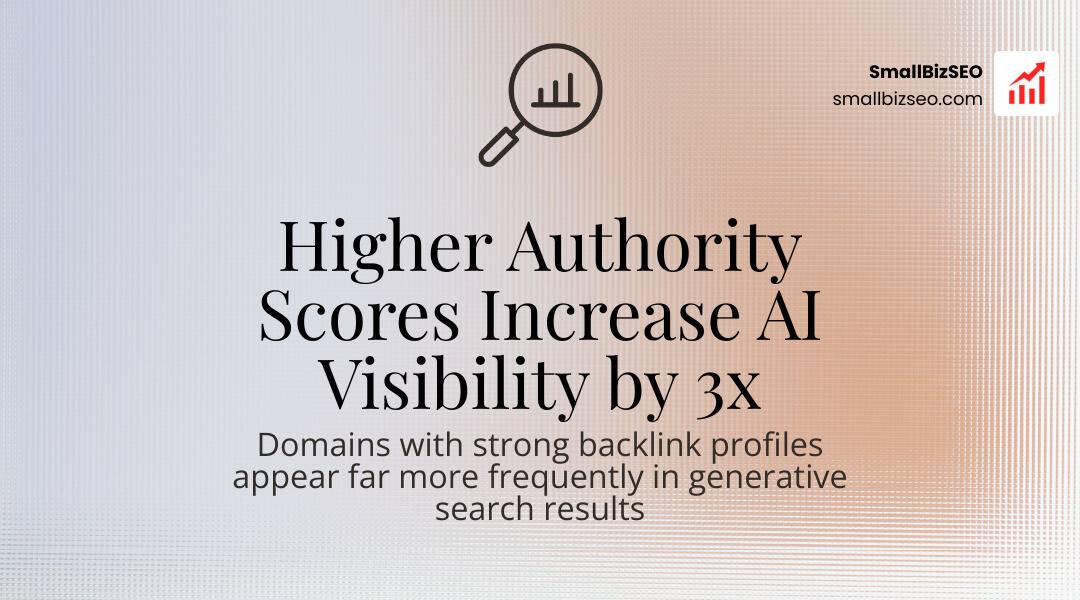
In AI search, brand mentions, co-citation proximity, and topical associations shape how large language models (LLMs) understand your business. Earning consistent mentions and links across reputable sites ensures your business is cited in generative search results.
Evaluating Link Quality: High-Quality vs. Low-Quality Backlinks
Not all backlinks are created equal. In the early days of SEO, quantity was everything. Today, a single link from a highly trusted, relevant website can carry more ranking power than hundreds of low-quality, spammy links.
In fact, 84.6% of SEO professionals consider relevance the main metric used to assess backlink quality. A link from a local business association or a highly respected blog in your industry is incredibly valuable. On the other hand, a link from an unrelated forum, a spammy directory, or a foreign-language site with no topical alignment will do little to help your rankings—and could even trigger a search engine penalty.
To see where your website currently stands, you can run a Detailed SEO Analysis to evaluate your current backlink profile.
Key Quality Signals Google Uses to Assess Backlinks
Google evaluates several factors to determine the value of a backlink:
- Anchor Text: The clickable text that holds the hyperlink. It should be natural and contextually relevant to the target page, rather than stuffed with exact-match keywords.
- Link Placement: Links embedded naturally within the body copy of an article (editorial links) carry far more weight than links hidden in sidebars, footers, or author bios.
- Editorial Context: Google looks at the surrounding text to ensure the link makes sense and adds genuine value for the reader.
- Traffic on the Linking Page: A link from a page that receives active organic traffic is highly valued, as it indicates the content is trusted and read by real users.
Types of Backlinks and Which to Prioritize
When managing your link profile, you will encounter different technical attributes attached to hyperlinks. It is important to know what they mean.
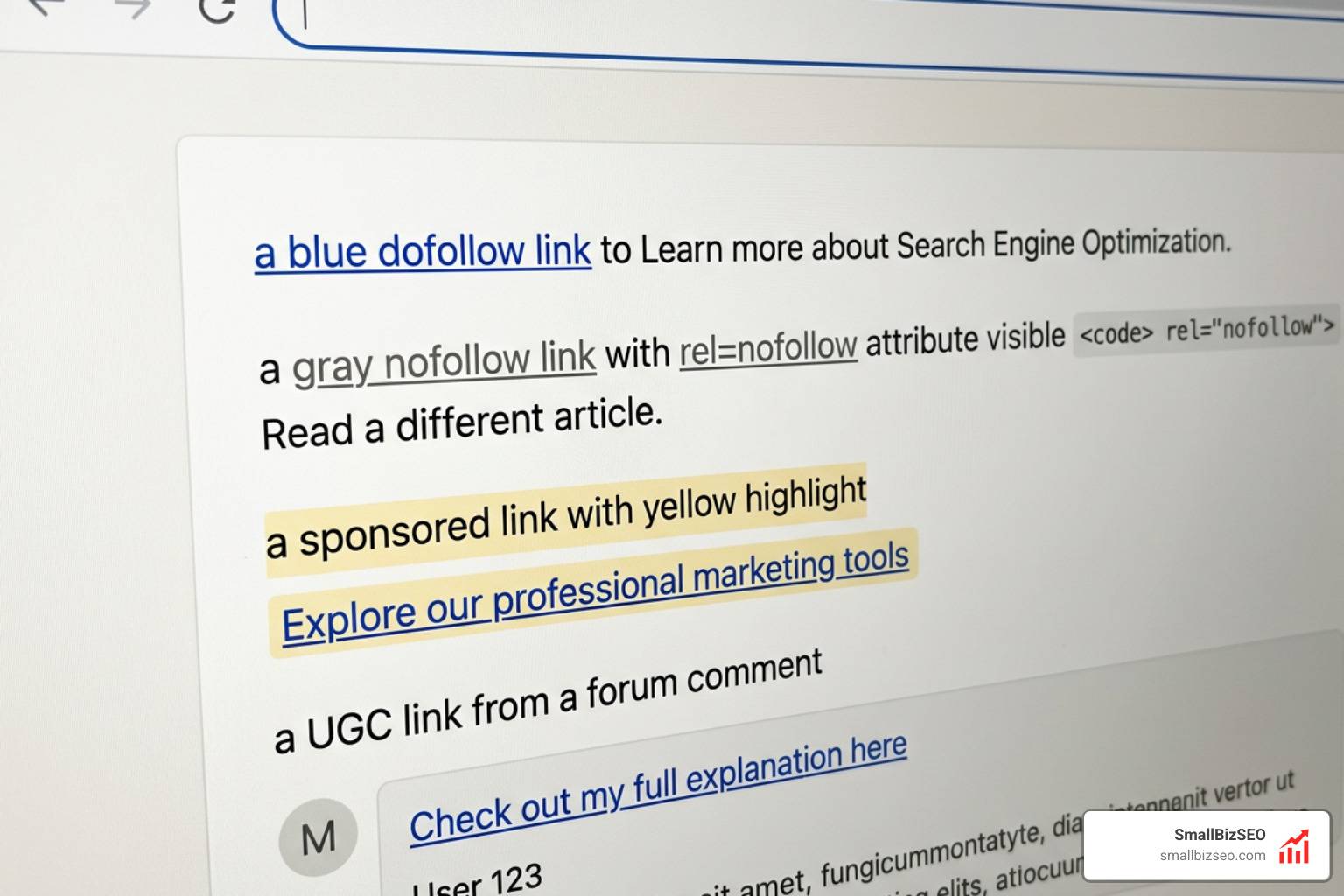
- Dofollow Links: These are standard links that allow search engines to pass authority and PageRank to your site. These are the primary links you want to target.
- Nofollow Links: These contain a special HTML attribute (
rel="nofollow") telling search engines not to pass authority. However, Google treats this as a "hint," meaning some nofollow links from massive media sites still carry indirect ranking and trust signals. - Sponsored Links: Used for links that are part of paid advertisements or sponsorships (
rel="sponsored"). - UGC Links: Applied to user-generated content, such as forum posts or blog comments (
rel="ugc").
Prioritizing Backlinks in Digital Marketing Campaigns
To build a natural, resilient link profile, we recommend prioritizing these high-value link types in your digital marketing campaigns:
- Editorial Links: Naturally earned links from journalists, bloggers, and industry publications who cite your content as a source.
- Guest Posts: Articles you write for relevant, high-quality publications in exchange for a contextual link back to your site.
- Resource Pages: Curated lists of helpful links on authoritative websites that recommend tools, services, or guides in your niche.
- Local and Industry Directories: High-quality, trusted directories that verify your business name, address, and phone number.
If you want to accelerate this process safely, working with professional link building services can ensure you acquire authoritative, editorially placed links without risking search engine penalties.
Effective and Ethical Link Building Strategies
Building quality backlinks requires a proactive, value-first approach. Here are some of the most effective and ethical strategies you can use to earn links:
- Digital PR: Create highly shareable, newsworthy content—such as original research, data studies, or unique infographics—and pitch it to journalists and industry bloggers.
- Broken Link Building: Find broken links on high-authority resource pages in your niche, and reach out to the site owner suggesting your active, high-quality content as a replacement.
- Unlinked Brand Mentions: Search for websites that mention your brand name but didn't include a hyperlink, and politely ask them to turn the mention into an active link.
- Competitor Backlink Replication: Use SEO tools to analyze where your top competitors are getting their links, and pitch those same websites.
To find the best opportunities, you can start with a Keyword Gap Analysis: What It Is and How to Do It Right to see where your competitors are outranking you and what content you need to build to earn those links.
Identifying High-Authority Link Opportunities
Finding the right websites to pitch is half the battle. You can use advanced Google search operators (like [your niche] + "resources") to find curated resource pages.
Additionally, using link intersect tools allows you to find websites that link to multiple competitors but not to you. This indicates a high likelihood that they would be open to linking to your content as well. When reaching out, always personalize your pitch and focus on how your content adds value to their audience.
To evaluate your current search presence and find areas for improvement, consider running an SEO Visibility Audit.
Common Mistakes and Black-Hat Tactics to Avoid
In the pursuit of fast rankings, some businesses turn to risky "black-hat" tactics. These shortcuts violate Google's search policies and can result in severe algorithmic or manual penalties that drop your site's visibility overnight.
Avoid these common link-building mistakes:
- Private Blog Networks (PBNs): Networks of fake websites built solely to link to a target site. Google's algorithms are highly sophisticated at detecting these networks.
- Buying Cheap, Spammy Links: Bulk link packages sold on freelance forums usually come from low-quality "link farms" that will damage your site's reputation.
- Link Exchanges: Excessive "link to me and I'll link to you" schemes look unnatural to search engines.
- Anchor Text Over-Optimization: Forcing exact-match keywords into all of your anchor text signals manipulation. Keep your anchor text profile natural and diverse.
If your site has suffered a sudden drop in rankings due to poor link-building practices in the past, you can read our guide on How to Recover from a Google Algorithm Penalty.
Frequently Asked Questions about Backlinks
How long does it take for backlinks to improve search rankings?
The timeline depends on several factors, including your site's current authority, keyword difficulty, and how quickly search engine crawlers find and index the new link. Generally, you can expect to see initial ranking movements within two to eight weeks after a high-quality link is indexed. In highly competitive niches, it can take several months of consistent link acquisition to see significant progress.
Can you safely buy backlinks for your website?
Google's spam policies prohibit buying links that pass authority (PageRank). If you pay for placement, the link must have a rel="sponsored" or rel="nofollow" attribute. While some businesses buy links privately on legitimate sites, it carries inherent risk. The safest way to invest your budget is to hire an agency to perform ethical outreach, digital PR, and content creation on your behalf.
How do you track and monitor your backlink profile?
You can monitor your backlinks for free using Google Search Console under the "Links" report. For deeper insights, professional SEO tools allow you to track your referring domains, monitor anchor text distribution, and spot toxic links before they cause harm.
For more tips on tracking your search performance, check out our Blog.
Conclusion
Building high-quality backlinks in digital marketing is not about chasing shortcuts; it is about consistently creating valuable content and building genuine relationships within your industry.
At SmallBizSEO, we help small businesses grow their online visibility through our data-driven "Velocity" framework. We focus on delivering fast, safe rankings and E-E-A-T-compliant growth through transparent, automated reporting.
Ready to build a stronger search presence? Explore our Resources or reach out to learn more about our professional Link Building Services today.