Everything You Need to Know About High Backlink Toxicity Not Being Proof of Harm

What Does a High Backlink Toxicity Score Actually Mean?
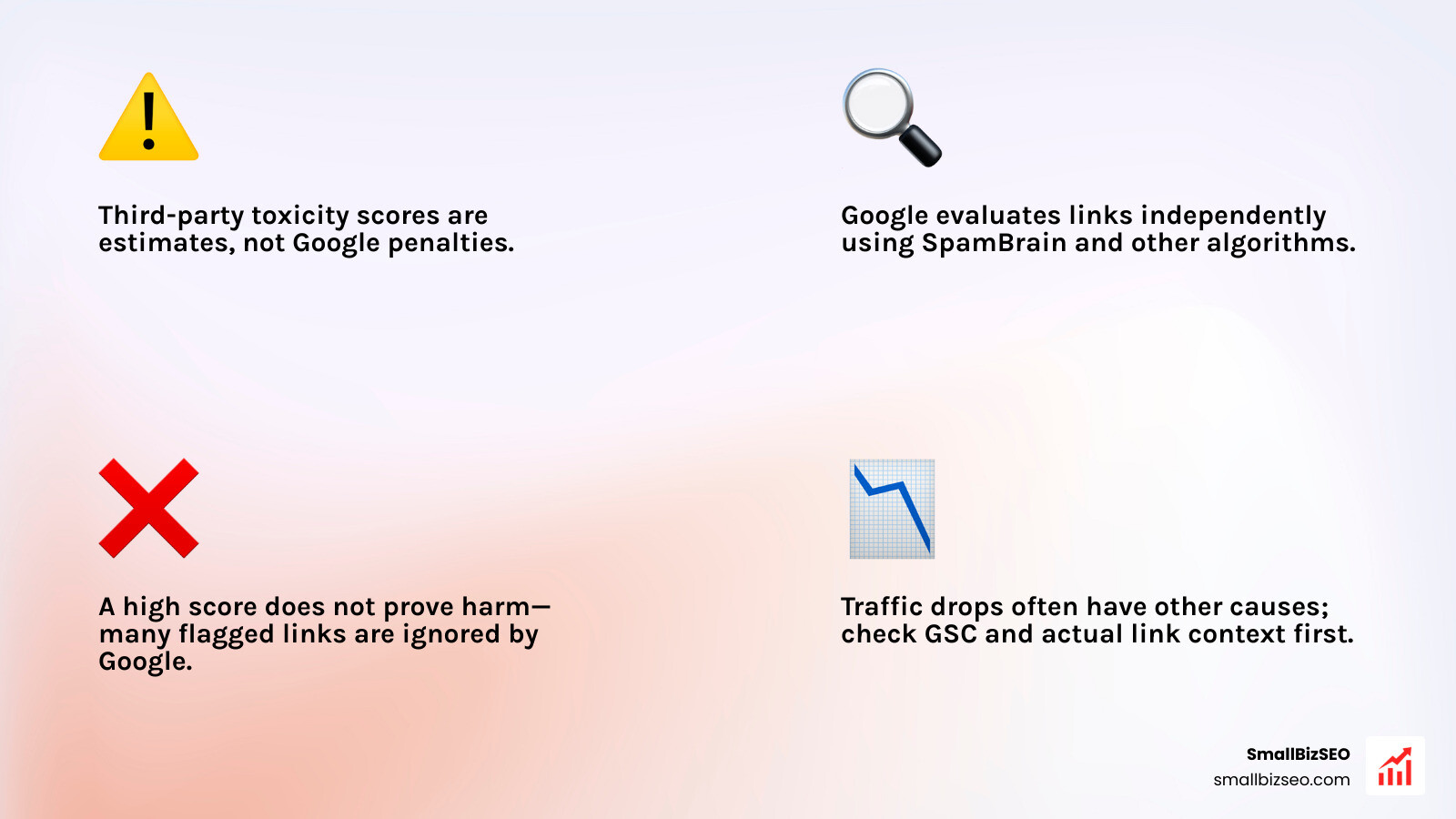
The reason why a high backlink toxicity score is not proof of harm is simple: the score is a third-party estimate, not a Google penalty. A tool may flag links that Google ignores. Before removing or disavowing anything, check Google Search Console for a manual action and review the flagged links in context.
A red warning can feel urgent, especially if traffic has fallen. But the score alone cannot tell you what caused the drop. This guide explains what to check and when a link pattern may need action.
I'm Clayton Johnson, founder of SmallBizSEO. My work in SEO, content, and link building for small businesses shapes how I explain why a high backlink toxicity score is not proof of harm.
Why Doesn’t a High Backlink Toxicity Score Prove Your Website Is Being Harmed?
A high score from an automated platform does not prove damage because search engines evaluate links using their own proprietary algorithms, completely independent of commercial SEO software.
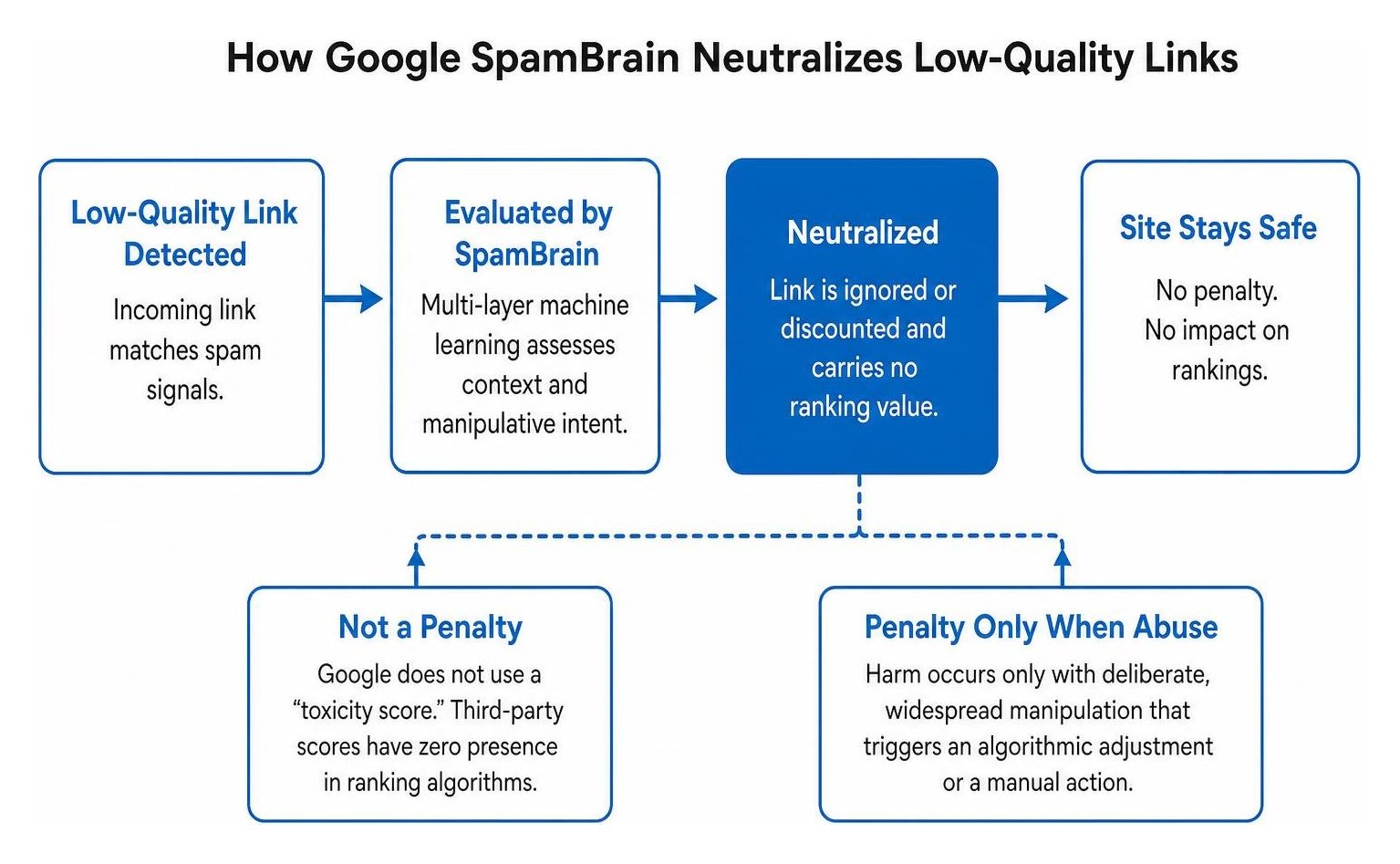
Google does not maintain an internal metric called "toxicity score." Over the years, Google search engineers have repeatedly stated that third-party toxicity grades have zero presence within search ranking algorithms. Instead, search engines rely on multi-layered machine learning systems to assess incoming links. While some external analyses suggest that toxic backlinks can still harm search rankings under specific conditions, real harm occurs only when deliberate, widespread manipulation triggers an automated algorithmic adjustment or a direct manual action.
How Do Tool Calculations Explain Why a High Backlink Toxicity Score Isn’t Proof of Harm?
SEO tools calculate toxicity by applying rule-based heuristics that flag surface-level anomalies, which often leads to widespread false positives on harmless links.
When you run an external link analysis through third-party platforms, the software scans individual markers such as:
- Low estimated domain authority or lack of organic search traffic
- Unfamiliar top-level domains (TLDs)
- High ratios of outbound links on the linking page
- Generic directory, coupon, or automated scraper layouts
These rules flag any unusual referring domain as a potential threat. However, for an established business, collecting local directory listings, scraper mentions, and low-traffic industry citations is completely normal. In fact, a typical small business profile regularly contains 10% to 15% links flagged as "toxic" simply because the open web is full of low-quality automated pages.
| Feature / Metric | Commercial SEO Tool Toxicity Score | Google Link Spam Processing |
|---|---|---|
| Data Origin | Proprietary third-party crawler databases | Complete Google Search web index |
| Core Method | Static heuristic rules and domain-level thresholds | AI pattern detection (SpamBrain) and contextual analysis |
| Typical Action | Generates a red alert or disavow suggestion | Automatically neutralizes or ignores the link value |
| Direct Impact | None (purely informational for the user) | Adjusts rank signals without issuing a penalty |
How Does Google Handle Low-Quality Backlinks and Link Spam?
Google handles the vast majority of low-quality backlinks by devaluing and ignoring them entirely, rather than penalizing the receiving website.
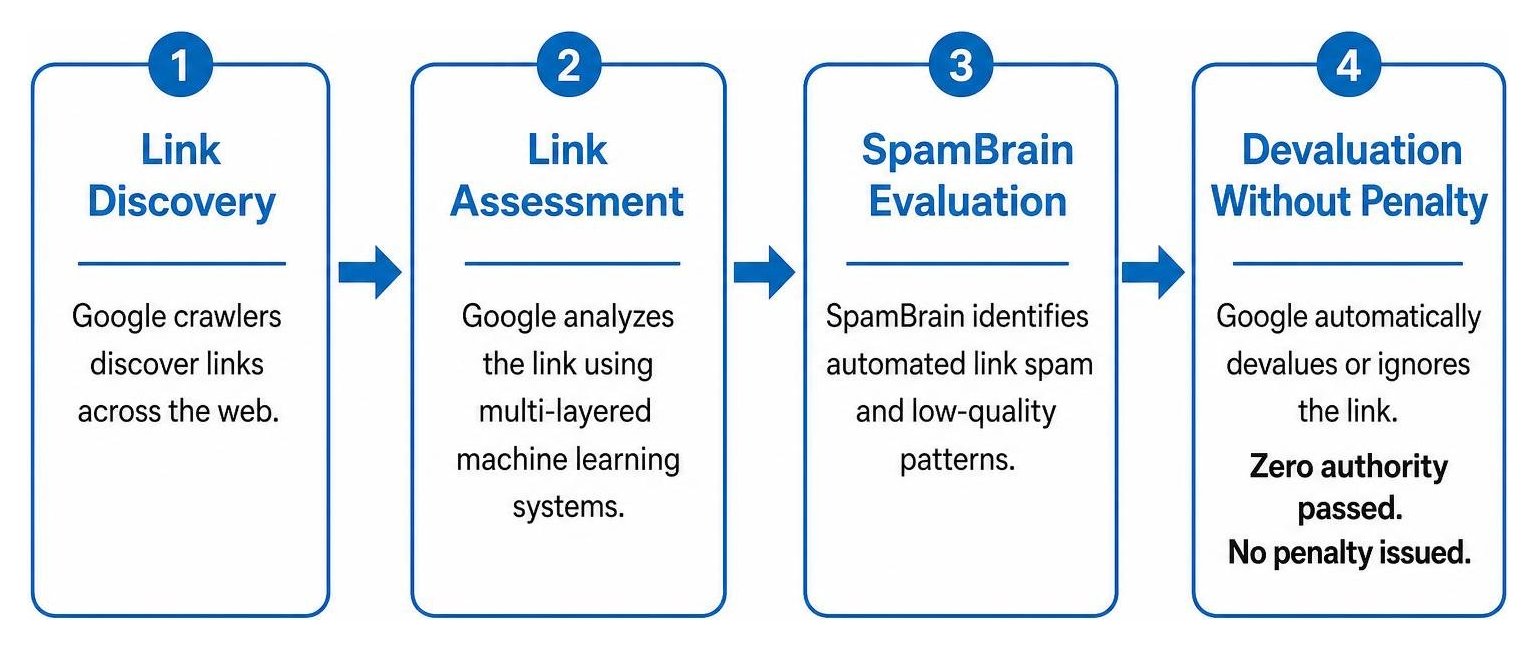
Historically, manipulative links could trigger site-wide algorithmic penalties. Today, Google's advanced AI systems, including SpamBrain, identify automated link spam and neutralize it at scale. Neutralization means search engines pass zero authority through the link; it neither helps nor hurts your organic positioning.
Unless a website actively participates in deceptive link generation, search engines assume random, low-tier scraper links were created without the owner's involvement and quietly exclude them from ranking calculations.
Why Can Disavowing Links Create Risk When a High Toxicity Score Isn’t Proof of Harm?
Disavowing links based entirely on an automated score introduces serious ranking risk because you may inadvertently destroy valuable ranking signals.
When website owners panic over a high toxicity score, they often export every flagged URL into Google's Disavow Tool. If that list contains mislabeled dofollow links—such as niche trade directories, local news mentions, or early forum discussions—Google stops counting their positive equity.
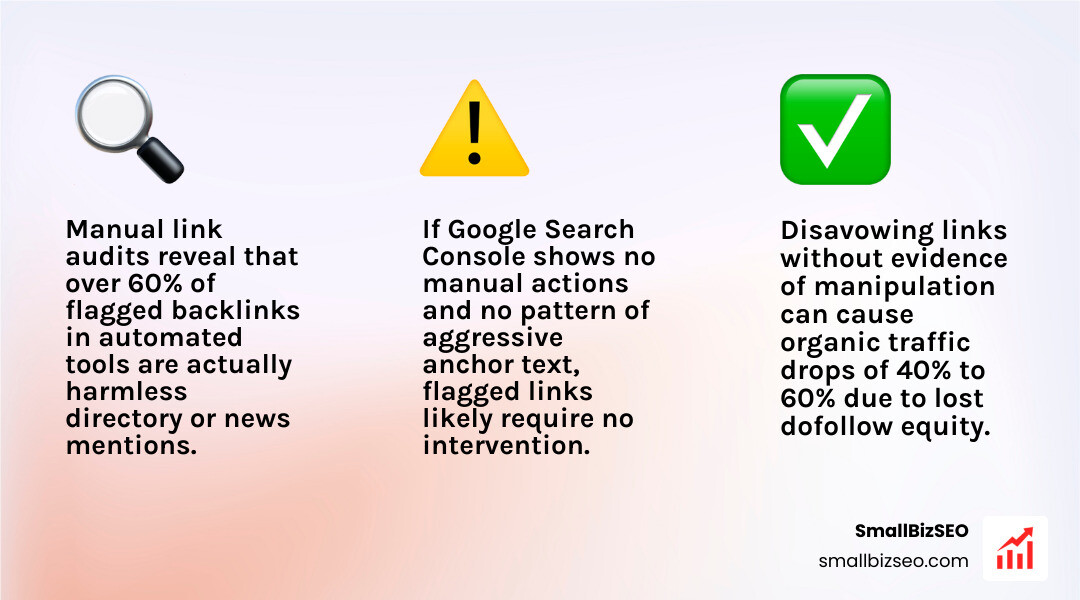
We frequently see cases where a business owner disavows hundreds of links following a software alert, only to see organic traffic drop by 40% to 60% shortly after. Understanding the difference between algorithmic penalties and technical indexing failures prevents you from taking drastic actions on harmless backlinks when the real culprit is a technical bug or a core algorithm update.
A high score that has sat quietly in your dashboard for months cannot trigger a traffic drop that started last week. Standing water does not suddenly cause a flash flood.
What Should You Do Instead of Panicking About a High Toxicity Score?
Instead of reacting to automated warnings with mass disavowals, conduct an evidence-based audit to evaluate link intent, manual notices, and broader site health.

How Can You Distinguish Benign Directory Links from Genuine Link Schemes?
To separate harmless web noise from genuinely harmful links, look for deliberate patterns of manipulation rather than low domain authority scores.
Following a quick start guide to link audit basics helps you review your links manually. Harmless links include unprompted blog mentions, local chamber directories, and automated aggregator feeds with natural brand anchors. Genuine threats, by contrast, leave clear footprints:
- Aggressive anchor text manipulation: Hundreds of exact-match commercial keywords pointing to a single subpage.
- Coordinated pbn clusters: Identical website templates, shared hosting IP addresses, and thin, AI-generated content built solely to sell links.
- Paid network footprints: Commercial blog posts spanning unrelated topics with hardcoded commercial anchors.
- Excessive reciprocal link rings: Coordinated cross-linking agreements designed to artificially manipulate PageRank.
If your profile does not exhibit these intentional manipulation patterns and your Google Search Console shows no manual actions, your flagged links require no intervention.
What Should Website Owners Focus on to Protect and Grow Organic Rankings?
To secure long-term organic growth, channel your resources into content quality, technical site speed, and acquiring authentic, high-relevance links.
Time spent pruning harmless web directories carries a heavy opportunity cost. Real search visibility improves when you earn authoritative editorial link placements and fix internal optimization gaps. When you need to find toxic links and build authority safely, rely on human review rather than automatic rules.
If you suspect past marketing campaigns left behind risky link schemes, our team at SmallBizSEO can help. Through our specialized toxic backlink audit and link strategy, we evaluate your backlink profile with precision, protecting your hard-earned authority and ensuring your search performance continues to scale safely.
Taking a Smarter Approach to Your Backlink Health
A high backlink toxicity score is simply software highlighting pages that match a set of generic rules. It is a diagnostic prompt to explore, never a definitive ruling from search engines. By stepping back, reviewing link patterns in their true context, and focusing on real ranking fundamentals, you keep your site safe from unnecessary disavow mistakes and build sustainable organic visibility.