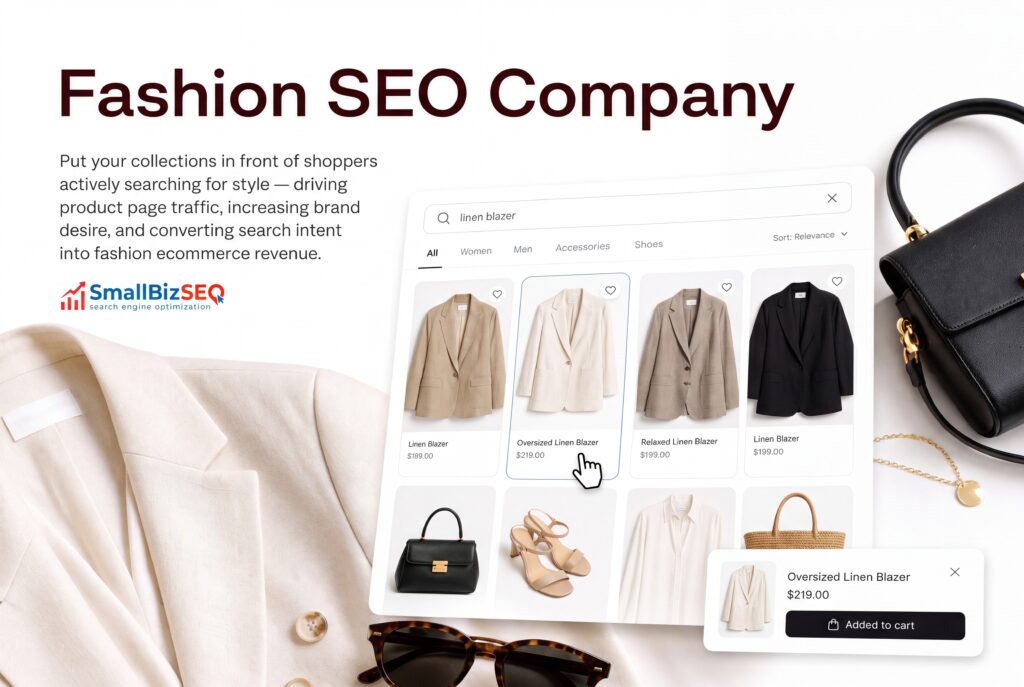
Help shoppers move from a look or category to the item details they need.
A shopper exploring an occasion edit, another searching for a specific silhouette and someone checking sizing need different entry points into a fashion store. We connect those journeys through a coherent collection and product structure. The content should reflect real merchandise and brand language, with useful fit, material and availability information rather than treating every color or size as a new editorial page.
Search intent & content
Follow the shopper from inspiration to item selection
Connect style-led discovery with the collection, fit and product details shoppers need. We prioritize pages around your catalog and brand positioning, giving each search journey a clear next step.
Category and silhouette discovery
Organize products under categories customers can understand, using genuine distinctions in the range. A useful dress or footwear category should explain the selection and lead to products rather than become an isolated block of keyword text.
Example searchwide leg trousers collection
Occasion and collection browsing
Connect editorial collections or lookbooks to the actual items shown. Explain the styling theme in your brand’s voice while keeping shoppers aware of current products and avoiding a collection page with no useful purchase path.
Example searchoccasion wear collection
Sizing, fit and materials
Use product-approved measurements, fit notes and material details to answer item-level questions. Give shoppers a route to the relevant guidance instead of relying on a generic size statement that says little about the garment.
Example searchclothing size and fit information
Specific product and variant searches
Review how colors, sizes and product versions are presented within the store. Clear product identity and variant navigation should help shoppers find the intended item without creating a confusing collection of nearly identical pages.
Example searchspecific dress color and size
Website priorities
Build useful pages around real customer decisions
Build a deliberate collection hierarchy
Connect main categories, smaller edits and products through navigation that mirrors the actual range. Consolidate overlapping collection concepts when they offer the same shopping experience rather than multiply thin landing pages.
Plan for changing inventory
Decide how discontinued products, returning seasonal pieces and replaced collections should be handled. Preserve useful navigation and accurate availability instead of leaving editorial links pointed at unrelated or empty destinations.
Make images part of the product story
Use clear product and lookbook imagery with descriptive context. Distinguish editorial styling from what is included in the purchase so inspiration does not obscure the exact item being sold.
Evaluate shopping actions by page type
Review collection browsing and product engagement alongside separately configured purchase analytics. A lookbook and a product page play different roles, so their usefulness should not be judged by identical expectations.
Our approach
A practical plan for your website
We review your catalog structure, product information and collection calendar. Then we prioritize the categories, item details and editorial connections that help shoppers understand the range while keeping technical variants and inventory changes manageable.
Review the foundations
Check crawlability, existing pages, customer needs, and the services your business actually offers.
Map services to demand
Connect customer questions to useful service pages and supporting content without duplicating search intent.
Build, measure, improve
Publish useful pages and refine them using search visibility and separately configured inquiry analytics.
- Product descriptions use actual sizing, material and merchandise information.
- Editorial imagery links clearly to the items represented and available paths.
- Variant pages preserve accurate product identity and selection details.
- Provenance and sustainability language is supported by confirmed product evidence.
Frequently asked questions
Questions about your industry SEO strategy
Should every clothing color or size have a separate SEO page?
Not automatically. Review how variants work in the store and whether a separate page serves a distinct shopping task. The aim is clear selection and product identity, not a page-count target.
How can lookbooks support product discovery?
Give each look useful editorial context and connect it to the actual products shown. Keep those links maintained as stock changes so the story continues to help shoppers navigate the range.
What should happen when a seasonal collection retires?
Plan the page’s next role based on whether the collection returns, still offers useful information or has a relevant successor. Keep availability accurate and avoid sending shoppers to unrelated products without explanation.
How do we measure whether SEO is helping?
Use Google Search Console for search visibility and page performance. Measure calls, inquiries, and lead quality separately through analytics and intake tracking where configured.
Can you guarantee rankings or new customers?
No. We focus on the work within our control: technical foundations, useful content, clear navigation, and measurement. Search outcomes depend on competition and other factors.
Build a clearer path from search to inquiry
Share your fashion catalog and collection plans. We can build a search strategy that connects brand-led discovery with the product details shoppers need to make a selection.
Search rankings & AI visibility — AI SEO / AEO
- Google AI Mode
- ChatGPT
- Claude
- Gemini
- Perplexity


Related services & strategies