Fix Your Organic Search Visibility to Win Nearby Commercial Fleet Business
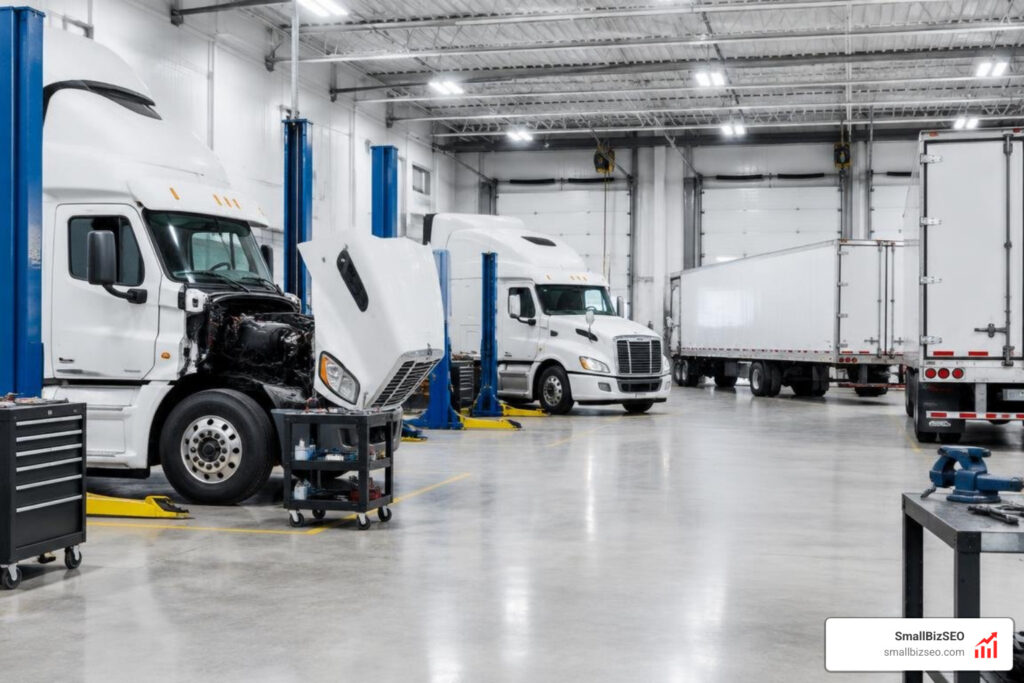
How Can Commercial Vehicle Repair Shops Get Found by Nearby Fleets?
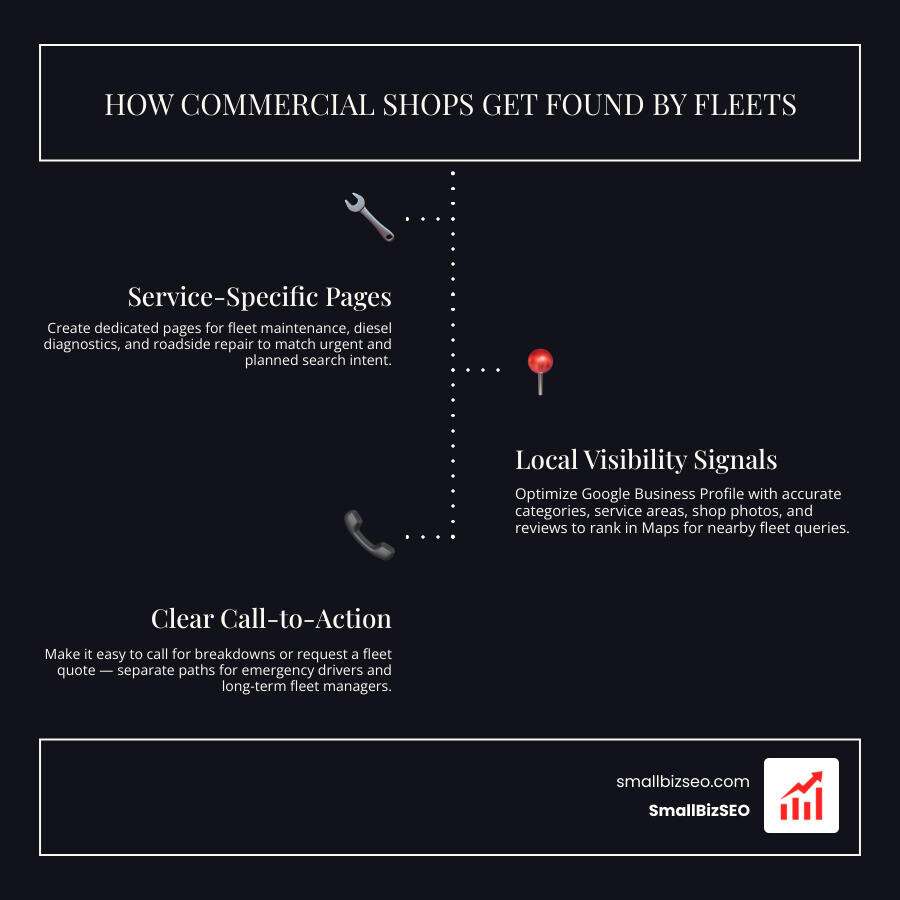
To improve SEO for commercial vehicle repair, create separate website pages for the services you offer, such as fleet maintenance, diesel diagnostics, and roadside repair. Match each page to the areas you serve, keep your Google Business Profile accurate, and make it easy to call or request a fleet quote.
That approach serves two different searches: a driver who needs help now and a fleet manager comparing long-term repair partners. Clear service details, shop photos, and customer reviews help both decide whether your business can handle the work.
I'm Clayton Johnson, founder of SmallBizSEO. My experience connecting technical SEO, content, and link building to qualified leads shapes this guide to SEO for commercial vehicle repair.
Quick SEO for commercial vehicle repair definitions:
Step-by-Step SEO for Commercial Vehicle Repair to Dominate Local Search
A complete search strategy helps commercial repair facilities capture high-intent repair calls and recurring maintenance contracts. While there are over 250,000 repair facilities in the country, most optimize exclusively for standard passenger cars. Commercial vehicle repair requires a tailored B2B approach because fleet managers spend an average of 9.5 hours researching online before selecting a primary service vendor.
According to data from the American Automobile Association (AAA), two out of every three drivers distrust mechanics. For commercial operators managing high-value assets, this skepticism is even higher. Professional digital visibility directly counteracts consumer and corporate doubt by presenting your shop as a certified, capable partner. Partnering with a dedicated commercial vehicle repair SEO company ensures your shop captures high-margin commercial jobs instead of low-ticket passenger car oil changes.
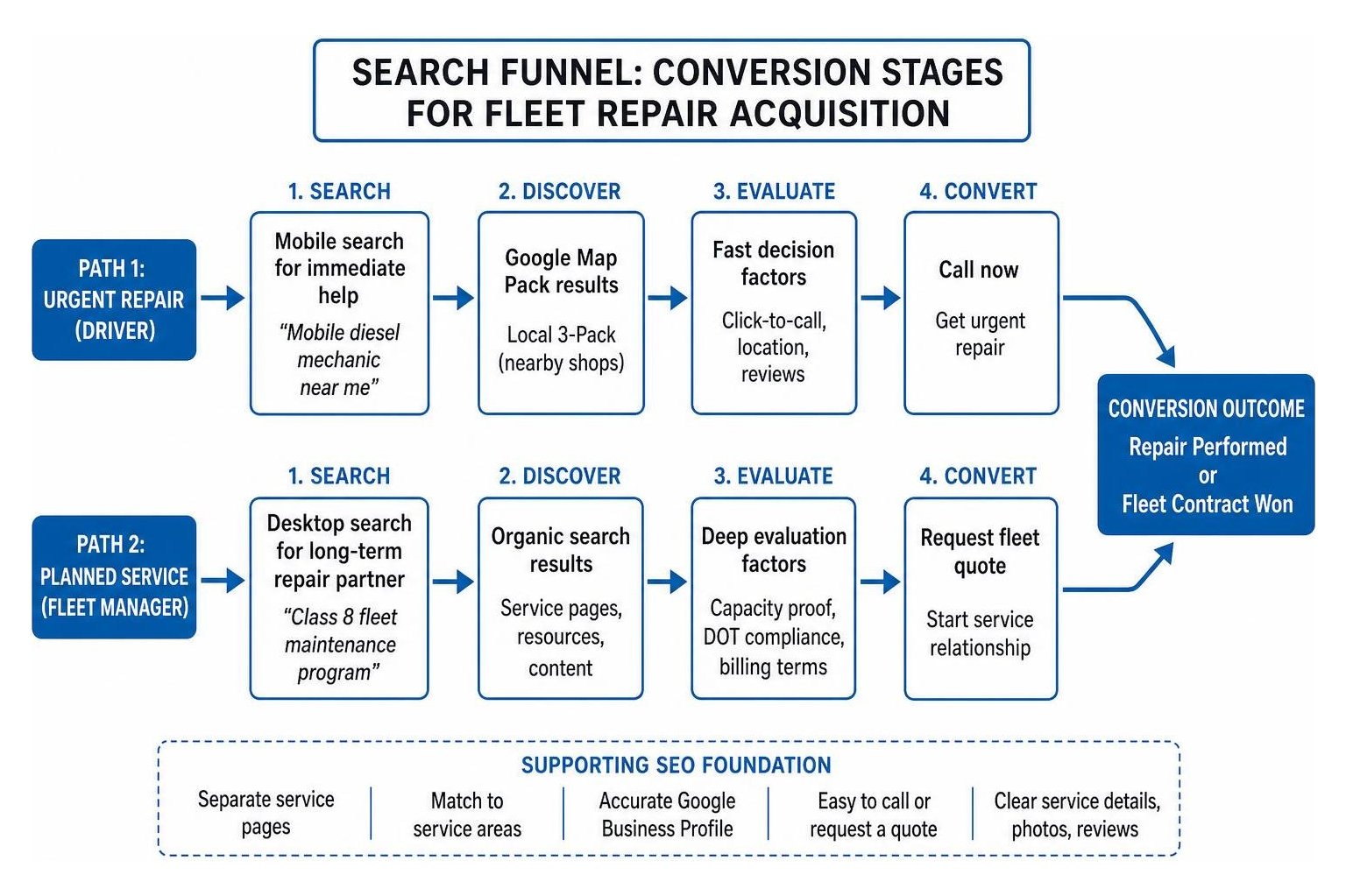
| Search Dimension | Emergency Roadside Search Intent | Commercial Fleet Contract Search Intent |
|---|---|---|
| Primary User | Stranded Driver / Owner-Operator | Fleet Director / Operations Manager |
| Decision Timeframe | 30 seconds to 5 minutes | 2 to 6 weeks (9.5 hours active web research) |
| Search Device | Mobile phone (over 82% of queries) | Desktop / Tablet workstation |
| Primary Keyword Goal | "Mobile diesel mechanic near me" | "Class 8 fleet maintenance program" |
| Top Conversion Factor | Fast click-to-call response & location | Capacity proof, DOT compliance, and billing terms |
| Average Deal Value | Single repair invoice ($500 – $3,000) | Annual recurring account ($20,000 – $100,000+) |
To bridge the gap between high-urgency breakdowns and planned preventive servicing, your website must implement technical structured data. You can learn more about deploying schemas on Local Business Structured Data documentation.
What Is the Difference Between Organic and Local SEO for Commercial Vehicle Repair?
Local SEO focuses on ranking in the Google Map Pack (the Local 3-Pack) for geographic queries, while organic SEO targets the standard blue links beneath the map for broader technical, diagnostic, and contract-focused research.
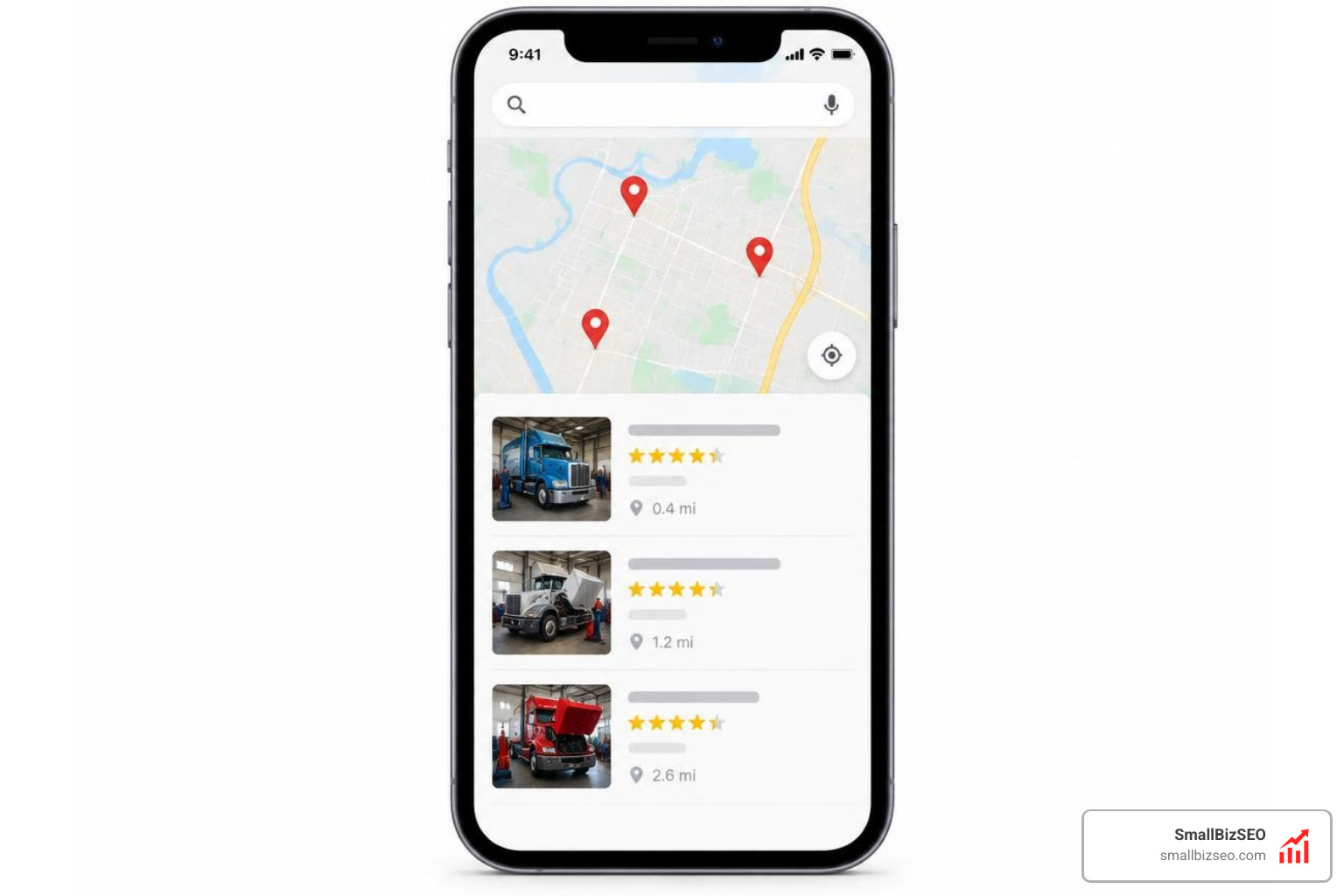
The Google Map Pack receives 126% more traffic than organic positions 4 through 10, delivering 93% more direct phone calls and clicks to listed businesses. Because over 82% of emergency commercial vehicle repair searches happen on mobile devices, appearing in the Local 3-Pack along major transport corridors is critical. When an owner-operator suffers a forced DPF shutdown or air compressor failure, they call the top listing on Google Maps immediately.
In contrast, organic search captures the research queries of procurement managers. A fleet director looking to reduce equipment downtime searches for comprehensive preventive maintenance schedules, DOT inspection protocols, and machine work. Working with a fleet services SEO company allows independent garages to capture both high-urgency map calls and long-tail organic contract searches.
How Do You Build a Fleet-First Keyword and Technical Content Architecture?
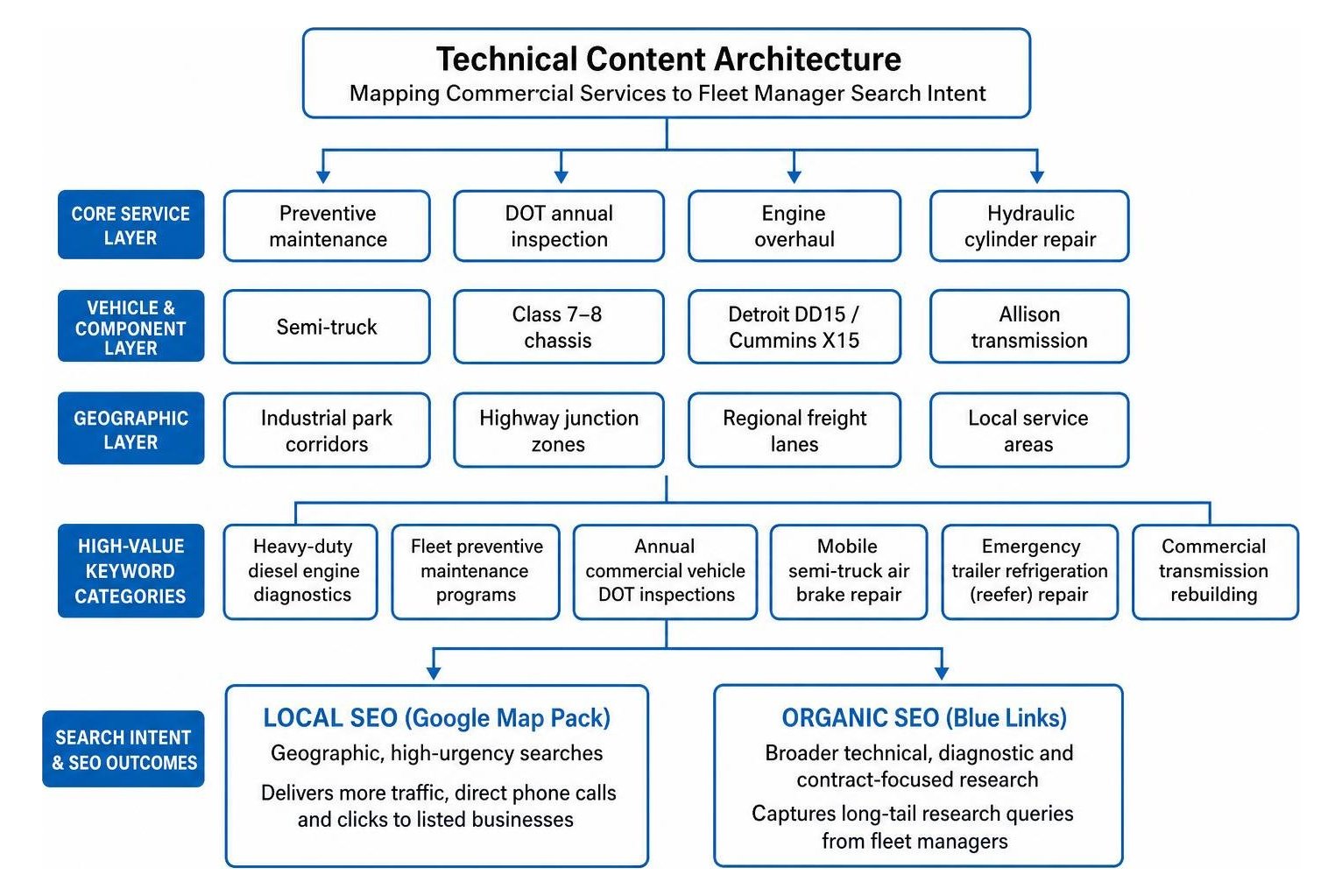
Build a fleet-first content architecture by creating individual service pages layered by vehicle class, service type, and regional market. Rather than bundling all offerings onto a generic service list, give every capability a dedicated URL.
Commercial fleet search behavior relies on an "onion layering" model:
- Core Service Layer: Preventive maintenance, DOT annual inspection, engine overhaul, hydraulic cylinder repair.
- Vehicle & Component Layer: Semi-truck, Class 7–8 chassis, refrigerated box truck, Detroit DD15, Cummins X15, Allison transmission.
- Geographic Layer: Industrial park corridors, highway junction zones, and regional freight lanes.
Consider these high-value commercial keyword categories:
- Heavy-duty diesel engine diagnostics
- Fleet preventive maintenance programs
- Annual commercial vehicle DOT inspections
- Mobile semi-truck air brake repair
- Emergency trailer refrigeration (reefer) repair
- Commercial transmission rebuilding
When fleet managers evaluate local facilities, they want proof of specialized technical capacity. If your garage handles precision machining, integrating content aligned with an engine rebuilding and machine shops SEO company captures high-ticket engine overhauls.
Publishing case studies that demonstrate a 40% reduction in vehicle downtime helps secure long-term corporate maintenance agreements. If your facility stocks commercial tire inventory, working with a specialized truck tires SEO company captures fleet managers needing fast tire turnaround to avoid roadside fines.
How Should Heavy-Duty Shops Optimize Google Business Profiles and Directory Citations?
Optimize your Google Business Profile (GBP) by setting your primary business category to "Truck Repair Shop" or "Diesel Engine Repair Service" rather than generic "Auto Repair Shop."
Follow these optimization steps for maximum visibility:
- Primary & Secondary Categories: Use "Truck Repair Shop" as the primary category. Add secondary categories like "Commercial Truck Dealer," "Trailer Repair Shop," and "Mechanic."
- Review Generation & Velocity: Repair facilities with a complete profile and 50 or more reviews generate 2.4 times more inbound phone calls than competitors with under 10 reviews. Every 10 new reviews increases your local conversion rate by 2.8%.
- Keyword-Rich Review Responses: Respond to 100% of customer reviews. Responding to at least 25% of reviews improves conversion rates by 4.1%. Mention specific commercial repairs naturally in your replies, such as: "Glad our team could perform your semi-truck DOT inspection and get your fleet back on the road safely."
- Visual Proof of Capacity: Upload photos of your heavy-duty lifting equipment, drive-through bays, advanced diagnostic software, mobile service trucks, and technician team.
- Niche Industry Citations: Maintain consistent Name, Address, and Phone number (NAP) data across general and heavy-duty directories such as TruckersReport, Find Truck Service, NTTS Breakdown Directory, and the Better Business Bureau.
Measuring Results, Avoiding Costly Pitfalls, and Winning Long-Term Contracts
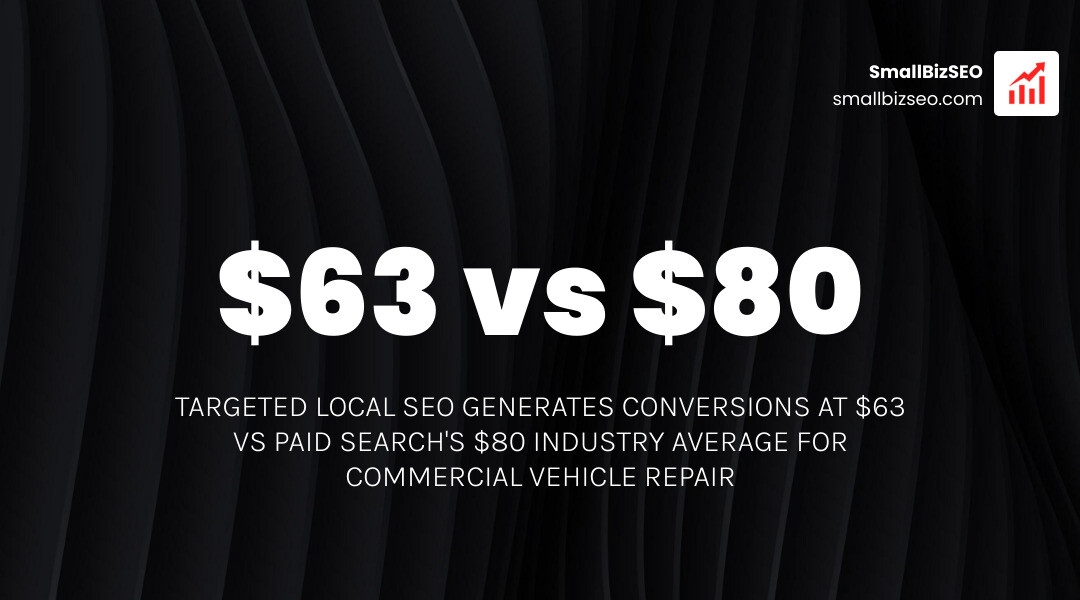
Commercial vehicle repair SEO creates a compounding business asset that lowers customer acquisition costs over time. Targeted local search optimization can reduce cost per conversion to $63, compared to the $80 industry average for paid search ads.
Commercial fleet marketing requires aligning your website to corporate decision cycles. With vehicle delivery delays averaging 20 weeks, 78% of fleet leaders prioritize maintenance cost savings and equipment longevity over vehicle replacement. A modern website built on structured schema markup, fast mobile loading times, and clear conversion paths turns this market demand into booked work orders while catering to how B2B account acquisition differs from retail consumer marketing.
How Can Commercial Garages Build Authority Through Backlinks and Strategic Partnerships?
Commercial repair shops build domain authority by acquiring high-quality backlinks from regional business networks, automotive supply partners, and transportation trade groups.
To build an authoritative backlink profile:
- Trade Associations & Certifications: Secure links from industry bodies such as the American Trucking Associations (ATA), ASE certification directories, and regional motor transport associations.
- Local Business Networks: Join your local Chamber of Commerce to obtain authoritative, localized directory links that reinforce regional search signals.
- Supply Chain Partnerships: Form mutual referral networks with local commercial parts suppliers, heavy equipment rental outfits, and towing operators, linking to each other's service resources.
- Logistics & Fleet Guest Articles: Publish maintenance planning and compliance advice on supply chain publications and logistics blogs.
- Manufacturer Approvals: Get listed on manufacturer locator pages for certified diagnostic equipment, parts brands, and warranty service networks.
What Common Mistakes Derail SEO for Commercial Vehicle Repair and How Do You Measure ROI?
The most common mistake is keyword cannibalization caused by grouping all commercial repairs onto a single page or mixing passenger car services with heavy-duty diesel maintenance.

Avoid these frequent SEO mistakes:
- Generic Category Dilution: Listing your shop under generic consumer categories, attracting retail car owners instead of commercial fleets.
- Missing Schema Markup: Failing to apply
AutoRepair,LocalBusiness, andFAQPagestructured data to tell search engines about your fleet capabilities. - Ignoring Mobile Usability: Slow load times and missing click-to-call buttons that cause stranded drivers to leave your site immediately.
To accurately track SEO performance, measure business-generating KPIs rather than vanity impressions:
- Direct click-to-call inquiries from mobile search.
- Google Business Profile driving direction requests.
- Commercial fleet quote form submissions and preventive maintenance schedule downloads.
- Keyword ranking progress across high-intent diagnostic queries.
Measurable ranking gains typically appear within 60 to 90 days for local map packs, with sustainable organic traffic and high-value fleet contract acquisition maturing within 3 to 6 months.
Transform Your Bay Capacity into Steady Fleet Revenue
Capturing consistent commercial repair contracts requires a search presence that proves your shop's technical capability, capacity, and reliability. By structuring dedicated service pages, refining your Google Business Profile, and earning authoritative industry links, your facility can outrank national chains and secure long-term fleet accounts.
At SmallBizSEO, our proprietary "Velocity" framework delivers rapid, data-backed rankings and transparent reporting tailored to growing businesses. If you are ready to fix your search visibility and fill your bays with high-margin fleet maintenance work, request a custom SEO visibility audit today to uncover your top growth opportunities.