How to Rewrite Pricing Explanations Clearly in 5 Steps

How do you make a service pricing explanation clear and credible?
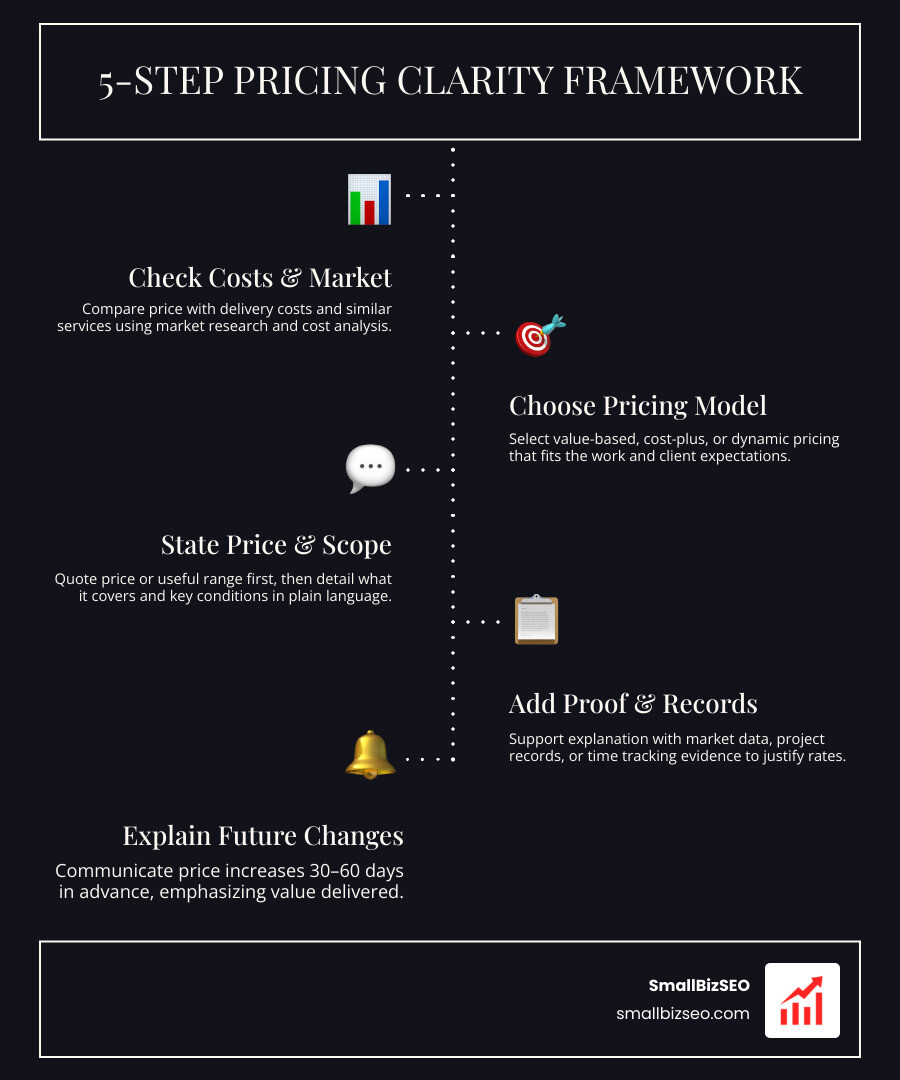
For small businesses, rewriting a service pricing explanation into a clear sourced answer means giving the price or a useful range first, then showing what it covers and why it may change. Use this five-step check:
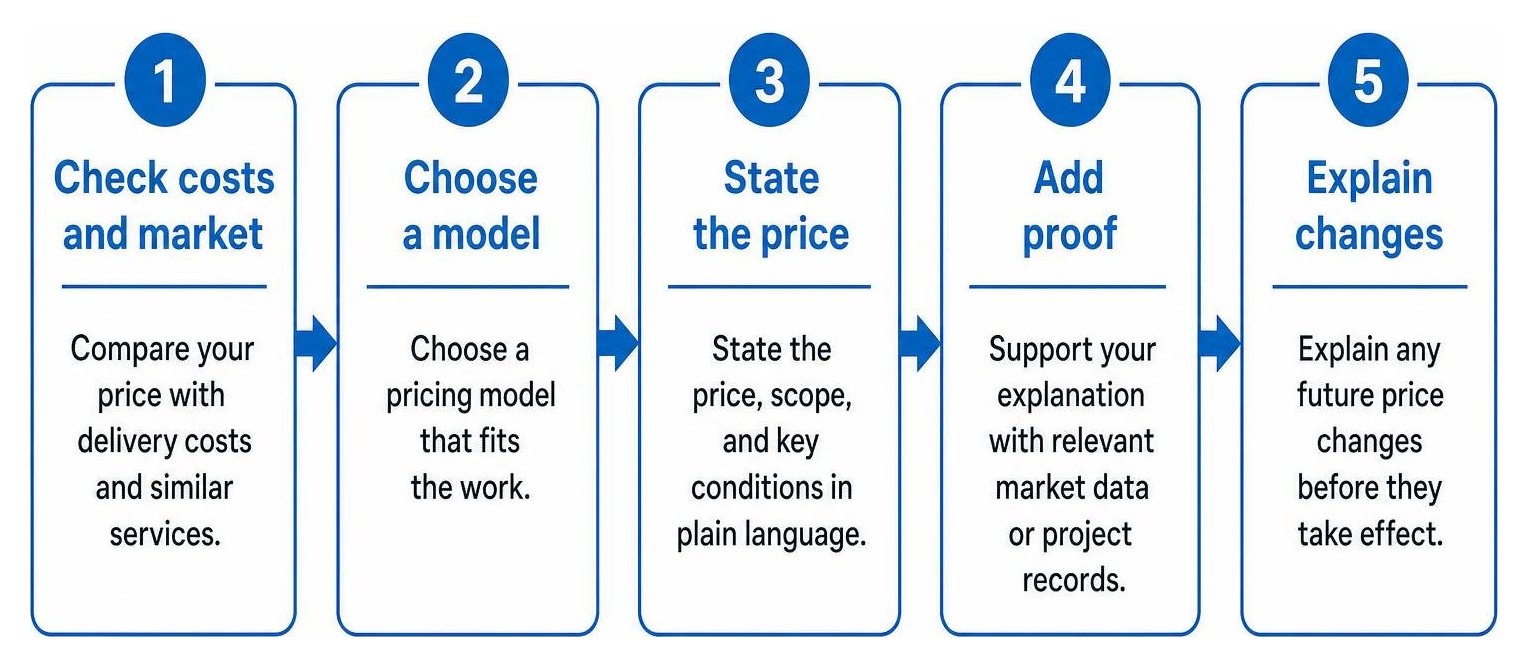
- Compare your price with delivery costs and similar services.
- Choose a pricing model that fits the work.
- State the price, scope, and key conditions in plain language.
- Support your explanation with relevant market data or project records.
- Explain any future price changes before they take effect.
I'm Clayton Johnson, founder of SmallBizSEO, where my work on rewriting a service pricing explanation into a clear sourced answer draws on SEO and content strategy. I develop Answer-Ready SEO resources that help small businesses turn their expertise into useful, evidence-backed answers.
The 5-Step Framework for Rewriting a Service Pricing Explanation into a Clear Sourced Answer

When buyers ask what a service costs, they are evaluating whether your solution justifies their investment. Vague phrases like "it depends" without any context create friction and stall sales conversations. To build trust instantly, every pricing explanation should adhere to four core principles:
- Lead with a direct number, baseline floor, or typical fee range.
- Tie the figure directly to tangible business outcomes and scope.
- Explain the conditional variables that adjust the total cost.
- Back every number with verified market benchmarks, time logs, or clear delivery models.
Step 1: Why Is Rewriting a Service Pricing Explanation into a Clear Sourced Answer Grounded in Market Research?
Grounded pricing begins by establishing whether a fee is fair and reasonable through formal market research and cost modeling. In federal procurement standards under FAR 15.404-1, contracting professionals rely on distinct analysis methodologies to validate pricing. Small business service providers can adopt these exact evaluation techniques to substantiate their own quotes.
Understanding the difference between price analysis and cost analysis is fundamental:
| Evaluation Aspect | Price Analysis | Cost Analysis |
|---|---|---|
| Primary Focus | Total overall price evaluation | Breakdown of individual cost elements |
| Data Requirements | Historical data and competitive market offers | Certified labor rates, materials, and overhead data |
| Primary Use Case | Commercial services with established benchmarks | Complex, custom, or sole-source contracts |
| Key Metric | Fair and reasonable comparison to market | Cost realism and allowable expense verification |
To establish a defensible baseline, calculate your internal break-even threshold. Divide your total fixed overhead costs by your contribution margin per project. Account for semi-variable expenses—costs that remain static until project volume scales—so you never price below your delivery threshold. When prospects ask why you charge your specific rates, you can point to clear industry standards. For an in-depth breakdown of how agency models stack up, review our guide on how to evaluate and compare SEO agencies.
Step 2: How Do You Select Between Value-Based, Cost-Plus, and Dynamic Pricing Strategies?
To select the right pricing model, match your delivery approach to the client's risk tolerance and expected return on investment. Cost-plus pricing sets a reliable floor by adding a target profit margin to delivery costs, while value-based pricing captures a percentage of the total economic upside generated for the client.
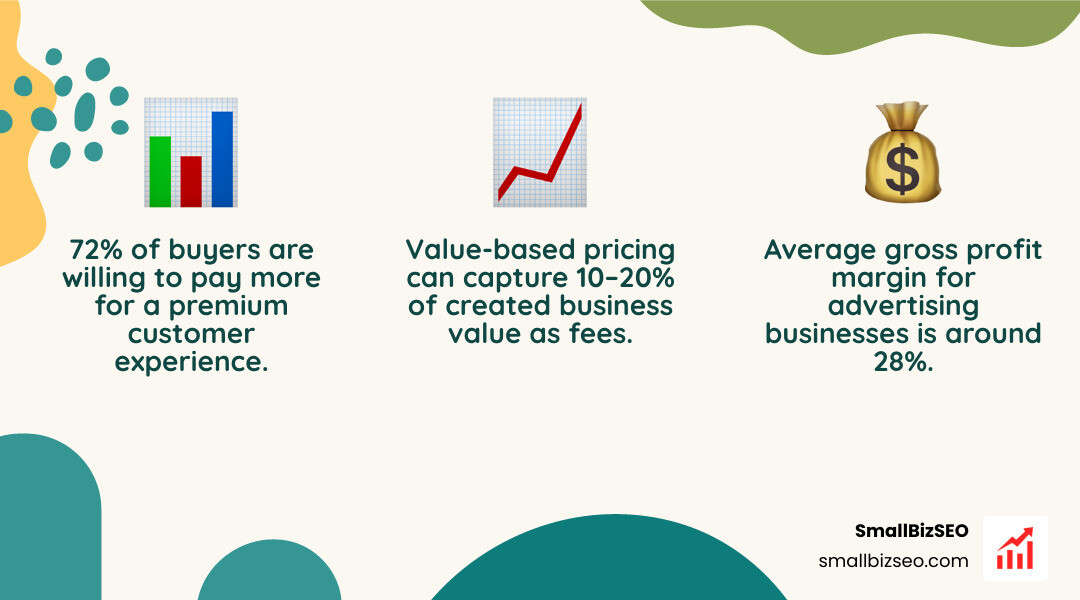
Research shows that 72 percent of buyers are willing to spend more for a premium customer experience, and 68 percent will pay extra for superior customer support. Furthermore, while the average gross profit margin for an advertising business hovers around 28 percent, value-based positioning allows specialized firms to capture significantly higher returns by tying fees directly to revenue growth.
Consider how these common service pricing models compare:
- Cost-Plus Pricing: Ideal for simple, labor-intensive tasks with predictable costs. It protects your floor but caps your upside.
- Value-Based Pricing: Best for high-impact advisory or revenue-generating services. As outlined in the playbook for Pricing Your AI Engagements, anchoring fees to 10 to 20 percent of created business value turns an operational expense into a strategic investment.
- Price Skimming: Setting premium rates during early market entry, lowering them as competition increases.
- Penetration Pricing: Introducing lower starter rates to capture market share quickly before adjusting to standard pricing.
- Dynamic AI Pricing: Adjusting rates based on real-time market demand and capacity. Maintaining transparency around how automated models calculate rates preserves customer trust.
Customized business goals require tailored strategies rather than rigid templates, which is why smart buyers choose to stop buying one-size-fits-all search optimization plans.
Step 3: How Does Rewriting a Service Pricing Explanation into a Clear Sourced Answer Build AI Citations and Client Trust?
Rewriting pricing explanations into an Answer-Ready structure makes your content immediately clear for prospective clients and easily discoverable by search engines and generative AI answer engines.
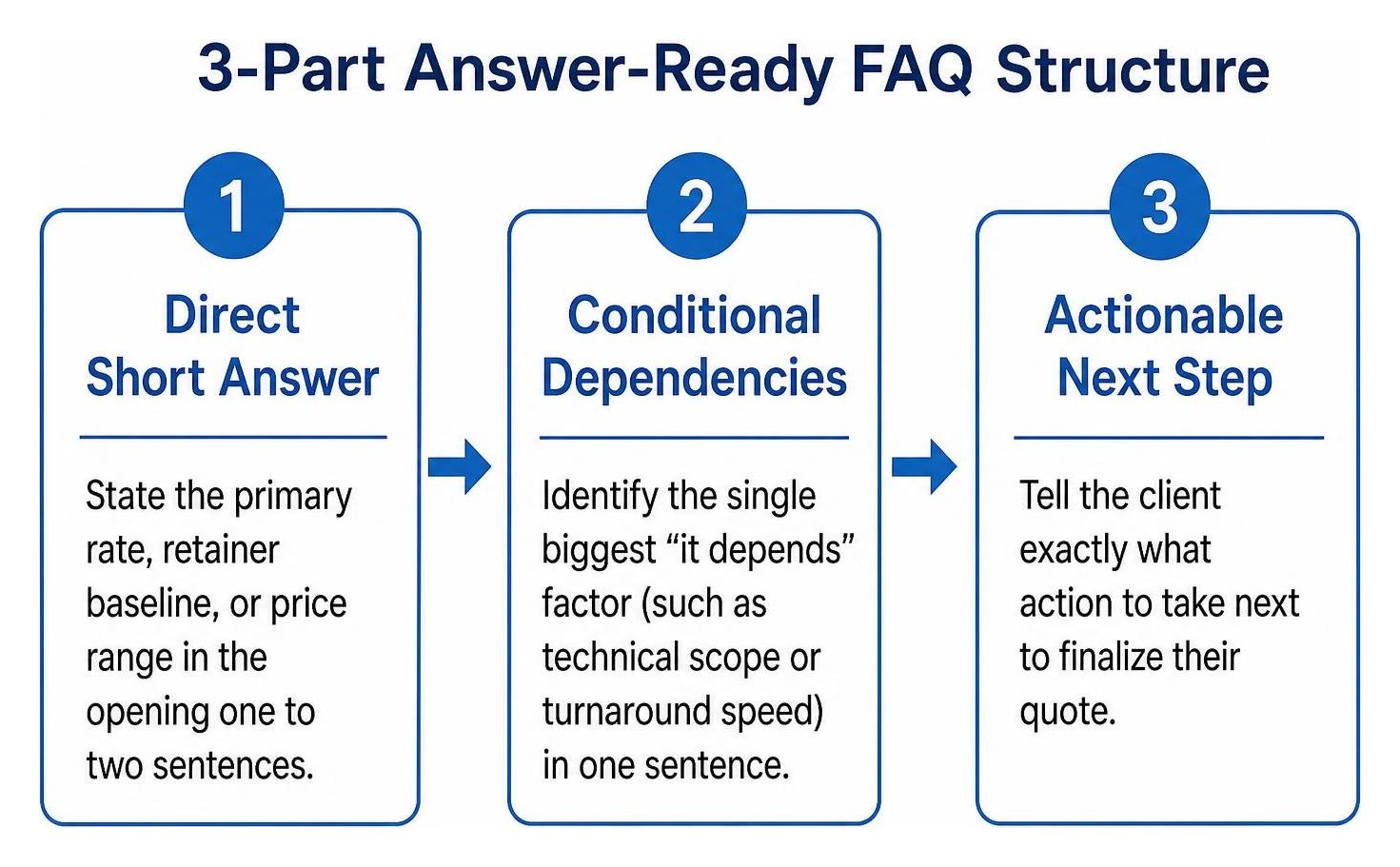
To achieve this, use a 3-part FAQ structure for every core offering:
- Direct Short Answer: State the primary rate, retainer baseline, or price range in the opening one to two sentences.
- Conditional Dependencies: Identify the single biggest "it depends" factor (such as technical scope or turnaround speed) in one sentence.
- Actionable Next Step: Tell the client exactly what action to take next to finalize their quote.
Eliminate confusing internal jargon. In field service industries, overhauling technical descriptions into customer-friendly terms consistently drives higher close rates, as demonstrated by the ServiceTitan Pricebook Overhaul methodology.
Furthermore, behavioral studies show that presenting a single bundled package fee yields up to 16.3 percent higher average transaction values compared to heavily itemized line-by-line breakdowns. Bundling focuses the client's attention on total strategic value rather than nickel-and-dime comparisons.
Step 4: How Can You Use Time Tracking Data and Quotation Frameworks to Justify Rates?

When skeptical clients ask for proof of cost, historical time-tracking data and structured quotations provide undeniable evidence of delivery value. Detailed task logs, estimate-versus-actual variance reports, and past performance metrics prove that your fee reflects real operational effort.
When drafting client proposals, follow established best practices from standard Business Quotation Template and Sections guides:
- Keep the proposal concise, limiting the breakdown to 3 to 8 clear line items to avoid cognitive overload.
- Include an explicit 30-day quote expiration date to protect against resource and cost fluctuations.
- Clearly define scope boundaries and specific project exclusions in writing.
When clients object that a service is "too expensive," reframe the conversation around the financial cost of inaction or offer to adjust the project scope rather than discounting your core rates. For complete transparency across common industry retainers, consult our cheat sheet to Google SEO services pricing.
Step 5: How Should You Communicate Price Increases and Retainer Adjustments?
Communicating a price increase requires proactive notice, confident phrasing, and clear evidence of compounding value. Unannounced rate hikes erode goodwill, while apologetic delivery invites unnecessary pushback.
Implement these practices to retain clients during rate adjustments:
- Provide 30 to 60 days of advance written notice before new rates take effect.
- Lead the conversation with a summary of delivered results, efficiency improvements, and past ROI.
- Clearly present the new rate schedule alongside grandfathered transition periods or extended retainer lock-in options.
- Maintain firm price floors to protect profitability while offering structured scope adjustments for budget-constrained accounts.
Mastering Transparent Pricing to Accelerate Business Growth
Clear, evidence-backed pricing removes friction from the sales process and establishes authority before discovery calls begin. When you replace vague estimates with structured, sourced answers, you turn your pricing page into a conversion engine.
At SmallBizSEO, we integrate transparent reporting and high-authority search visibility directly into our data-driven Velocity framework. By building Answer-Ready content that satisfies user intent and adheres to search engine quality standards, we help small businesses achieve sustainable organic growth. Explore our transparent answer-ready content framework to transform your service explanations into high-converting assets today.