In Depth Guide to SEO Technical Writing Techniques

In Depth Guide to SEO Technical Writing Techniques
Why SEO Technical Writing Makes Documentation Easier to Find
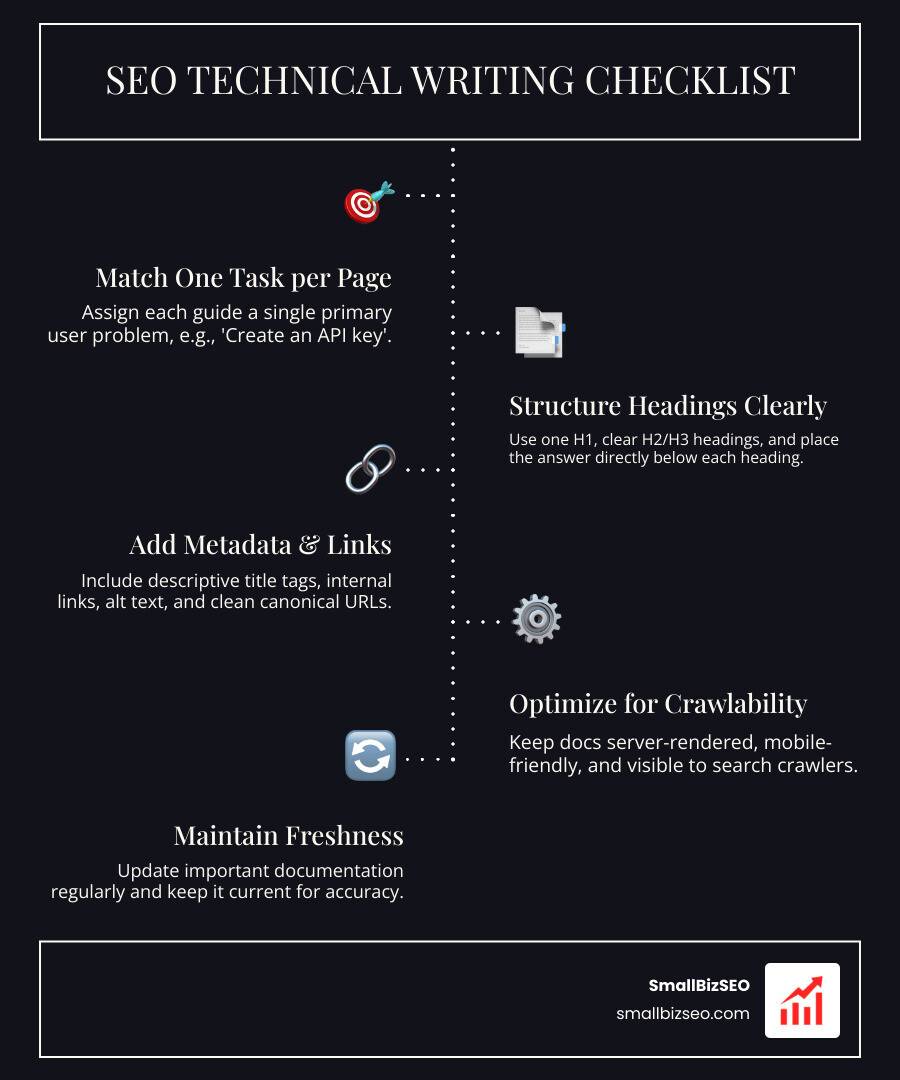
SEO technical writing helps customers, developers, and search engines find and use your documentation. Start by matching each page to one clear task, using a descriptive title and heading structure, answering the main question near the top, and making the page easy to crawl and load.
For a practical baseline:
- Give each guide one primary user problem, such as "Create an API key" or "Fix authentication errors."
- Use a single H1, clear H2 and H3 headings, and direct answers below each heading.
- Add useful metadata, internal links, accessible image alt text, and clean canonical URLs.
- Keep important documentation current, server-rendered, mobile-friendly, and visible to search crawlers.
Great documentation that cannot be found creates the same problem as a well-organized library with no clear entrance or address. SEO makes it discoverable in traditional search, while answer and generative engine optimization help AI tools extract accurate answers and cite useful sources.
I am Clayton Johnson, a digital PR and SEO professional focused on improving search visibility through campaigns that connect businesses with the audiences they need to reach. In this guide, I will show how SEO technical writing can turn helpful but overlooked documentation into a reliable source of qualified traffic and support.
Discover more about seo technical writing:
Core Principles of SEO Technical Writing
Technical documentation often suffers from a silent discoverability crisis. We write comprehensive guides, accurate API references, and detailed setup manuals, yet developers and end users end up struggling in support queues. Search engines drive roughly 68% of trackable web traffic, making search optimization an operational requirement for user education rather than an afterthought.
Mastering seo technical writing bridges deep engineering rigor with digital visibility. When we write for search engines, answer engines, and generative platforms simultaneously, we ensure our hard work reaches the people who need it.
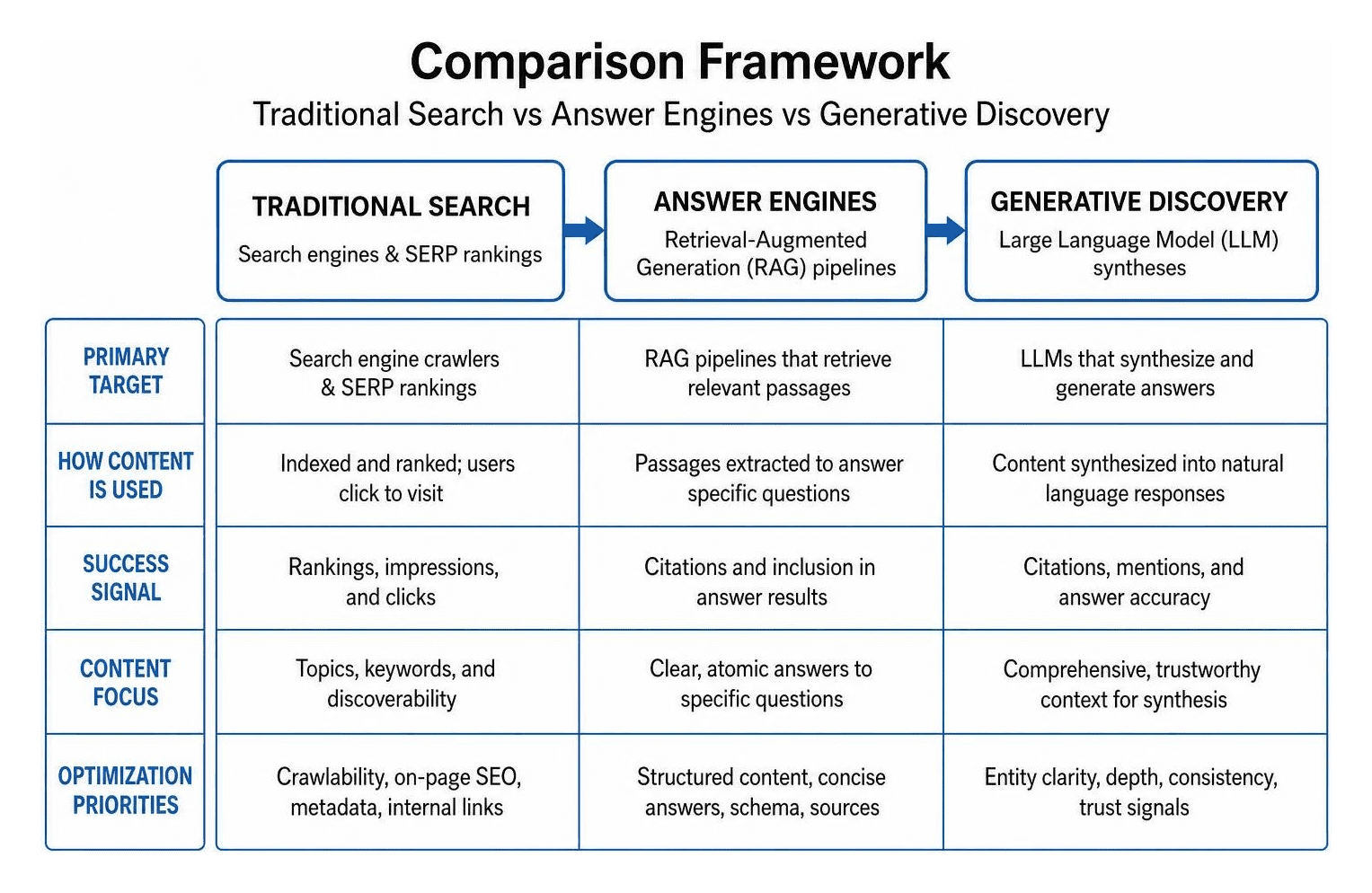
To succeed across modern search landscapes, we must balance three distinct retrieval disciplines:
| Feature Dimension | Traditional SEO | Answer Engine Optimization (AEO) | Generative Engine Optimization (GEO) |
|---|---|---|---|
| Primary Target | Search engine crawlers & SERP rankings | Retrieval-Augmented Generation (RAG) pipelines | Large Language Model (LLM) syntheses |
| User Goal | Discovering authoritative web links | Finding direct, immediate answers | Receiving synthesized recommendations |
| Key Mechanism | Keywords, backlinks, on-page tags | Structured chunks, FAQs, question headings | Entity salience, fresh data, citation signals |
| Traffic Impact | Direct organic clicks | Instant answer zero-click satisfaction | AI referrals (converts 4.6x higher) |
Understanding these shifts, as detailed in this analysis of SEO, AEO, and GEO for Technical Writers, enables us to construct technical content that satisfies both traditional web algorithms and conversational AI bots.
Information Retrieval and User Intent
Unlike traditional marketing content aimed at capturing attention or driving emotional engagement, technical content serves task-oriented search intent. Users search documentation when they face an immediate blocker: a broken build, a confusing error code, or an unfamiliar API endpoint.
We structure our information architecture around fast problem resolution. When we focus on demystifying SEO fundamentals from keywords to content optimization, we see that technical queries require extreme precision. Mapping exact parameters, command-line arguments, and concrete software entities directly aligns our pages with user intent.
The Shift from SEO to AEO and GEO
Information retrieval is evolving rapidly. Traditional search engines display indexed web pages, but answer engines and generative tools extract content chunks to build real-time responses.
Generative platforms evaluate content differently from classic search algorithms. Research demonstrates that only 12% of AI citations overlap with traditional top-ten search results, while 38% of AI overview citations come from pages in the top ten. This means achieving high search rank alone does not guarantee inclusion in AI responses. To earn citations in tools like ChatGPT and Perplexity, technical writers must structure their documentation for effortless chunking and semantic extraction.
Technical Architecture and On-Page Indexing for Documentation
Even flawless technical copy fails if search engine crawlers cannot access the underlying code. The underlying architecture dictates whether our pages get indexed reliably or discarded.
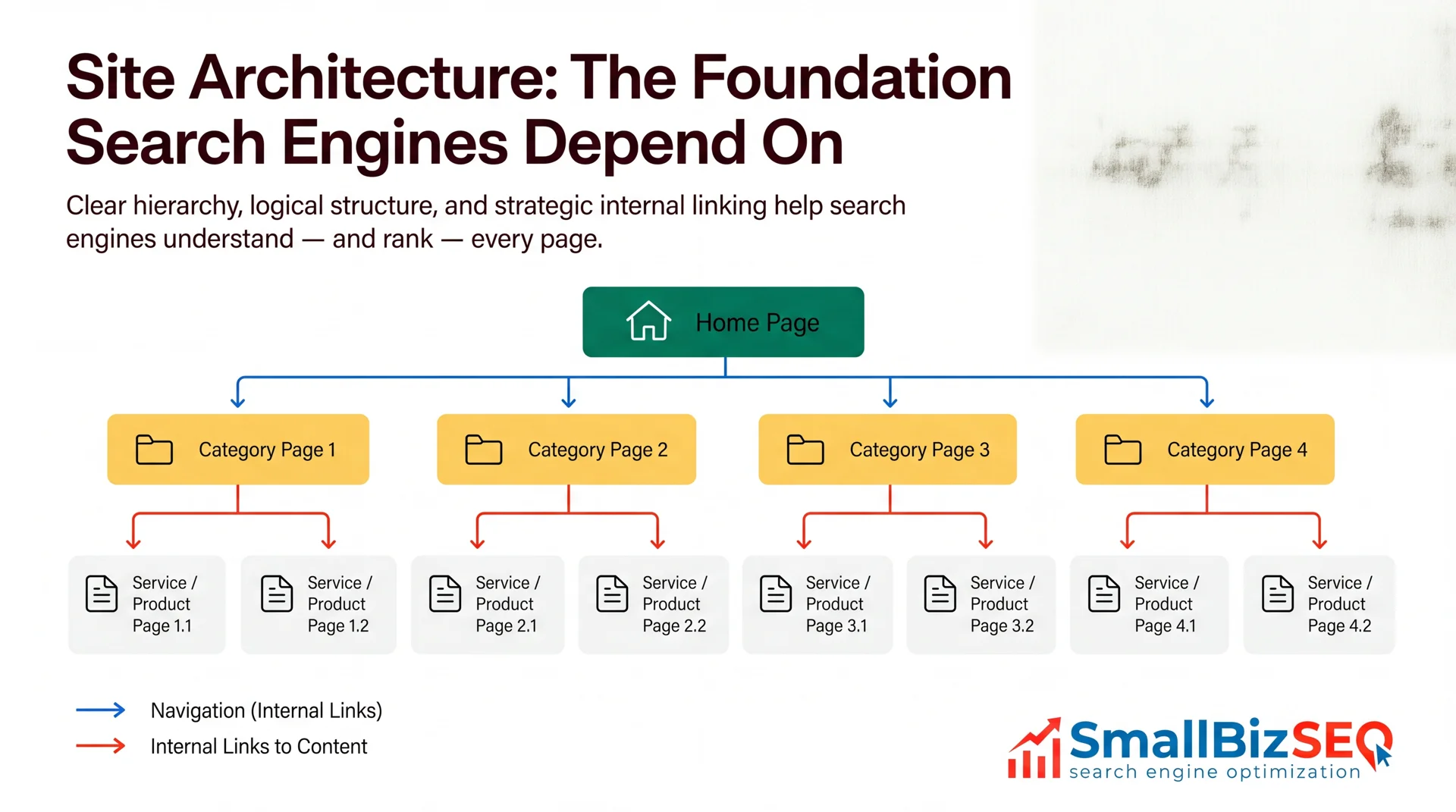
Following a comprehensive Technical SEO Checklist for Documentation Sites helps maintain a crawlable and performant platform.
Structured Data and Schema Implementation
Structured schema acts as a universal translation layer between our documentation and machine algorithms. Search engines use schema to understand the precise nature of our content, enabling rich snippets and improving entity recognition.
Partnering with a knowledgeable technical SEO company allows technical writers to implement schemas like TechArticle, BreadcrumbList, and APIReference. Adding server-rendered JSON-LD markup directly into the HTML allows search engines to identify code snippets, prerequisites, dependencies, and authors without executing resource-heavy scripts.
Handling Versioning and Canonical URLs
Software platforms evolve constantly, spawning multiple versions of API documentation (such as v1.2, v2.0, and v3.0). If managed carelessly, these legacy pages compete against each other, diluting search authority and causing keyword cannibalization.
We implement strict canonical tagging strategies to solve this:
- Self-referencing canonicals: If instructions materially differ between supported versions, use distinct URLs with self-referencing canonicals to preserve accurate technical instructions for legacy users.
- Canonicalizing to latest releases: If legacy pages share nearly identical content with minor syntax changes, point canonical tags directly to the latest stable release.
- Clear deprecation notices: Place prominent visual warning banners on older documentation paths directing human users to updated guides.
Optimizing Documentation Content for Humans and AI Engines
Great technical writing naturally aligns with machine understanding. When we write clearly for humans, we provide the structured clarity that algorithmic parsers need to extract reliable information.
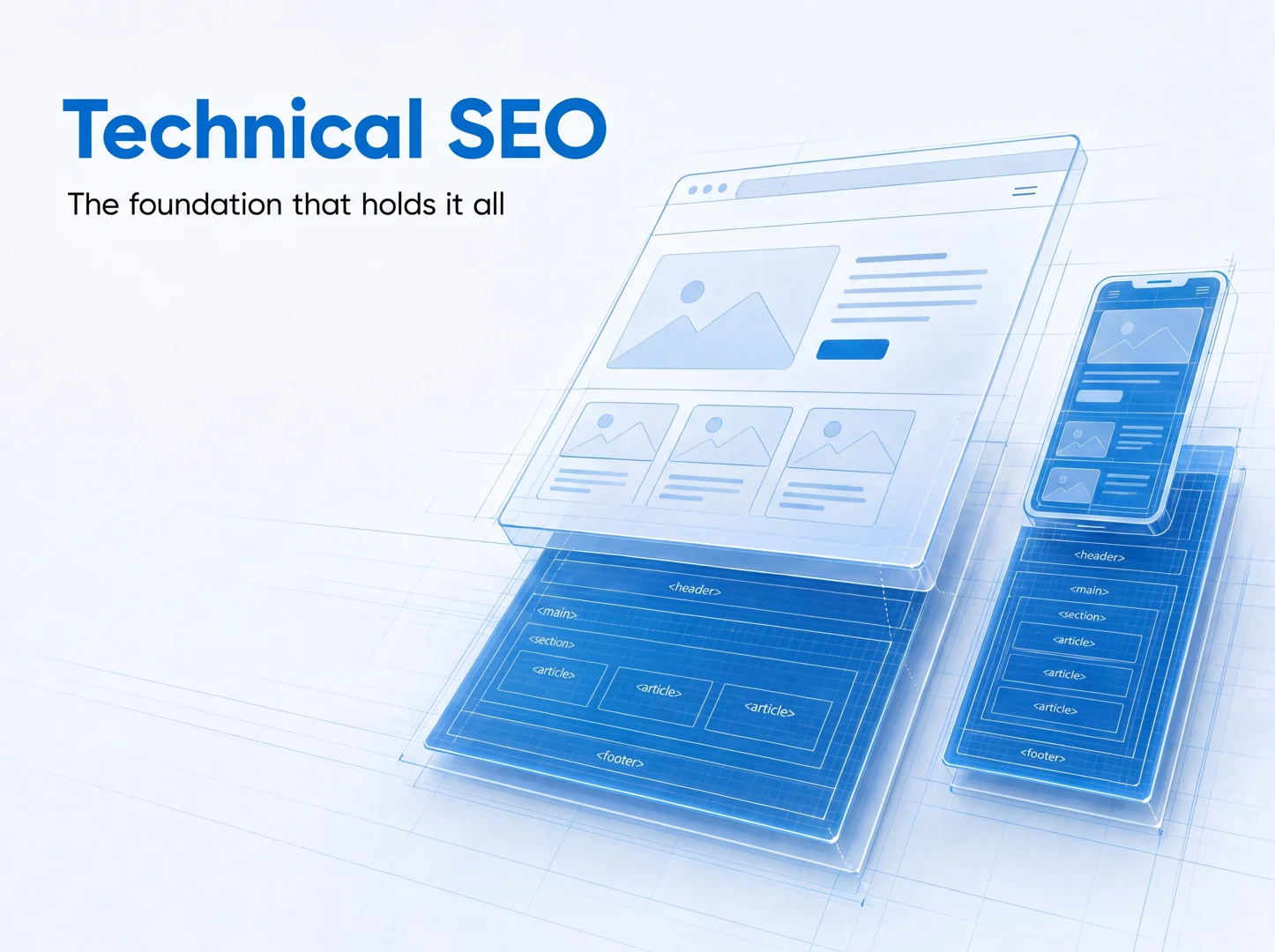
Structuring Content for SEO Technical Writing
Retrieval-Augmented Generation (RAG) systems chunk technical documentation primarily by heading tags. Vague headings like "Overview" or "Configuration" create dead ends for AI retrieval.
Applying robust on-page SEO principles ensures every section stands on its own:
- Strict Heading Hierarchy: Use a single H1 matching the document title, followed by structured H2 and H3 elements. Never skip heading levels.
- Question-Based Headings: Frame subheadings around actual user queries (e.g., replace "Webhook Events" with "Which Webhook Events Can I Monitor?").
- Answer-First Inverted Pyramid: Deliver the core answer or solution directly under the heading before elaborating on architectural concepts or configuration options.
- TL;DR Summary Blocks: Include a concise two-sentence summary at the top of procedural guides to accelerate human scanning and machine parsing.
- Structured Data Tables: AI systems extract tabular data 40% more effectively than dense prose paragraphs. Use tables whenever presenting comparative features, parameters, or error codes.
Optimizing Code Blocks and Technical Syntax
Code blocks represent critical indexing territory. Search engine bots parse code snippets, meaning our variable names, function declarations, and syntax choices directly affect developer search discovery.
- Tag all code blocks with explicit programming languages for accurate syntax rendering.
- Include descriptive code comments explaining the mechanism (e.g.,
# Authenticate client and return bearer token). - Provide fully formed sample request payloads alongside their expected response schemas to help developers verify integration states immediately.
Freshness Signals and Date Metadata
Freshness is a dominant ranking and citation factor. In generative platforms, 95% of citations originate from content updated within the preceding 10 months.
Adding visible "Last Updated" timestamps and explicit date_modified frontmatter signals ongoing maintenance to search bots. Furthermore, maintaining an llms.txt file at your documentation root increases citation accuracy by up to 24%, serving as a clear index for AI parsers.
Performance Measurement and Continuous Optimization
Search optimization is an iterative engineering process. Regular audits keep documentation accurate, discoverable, and healthy.
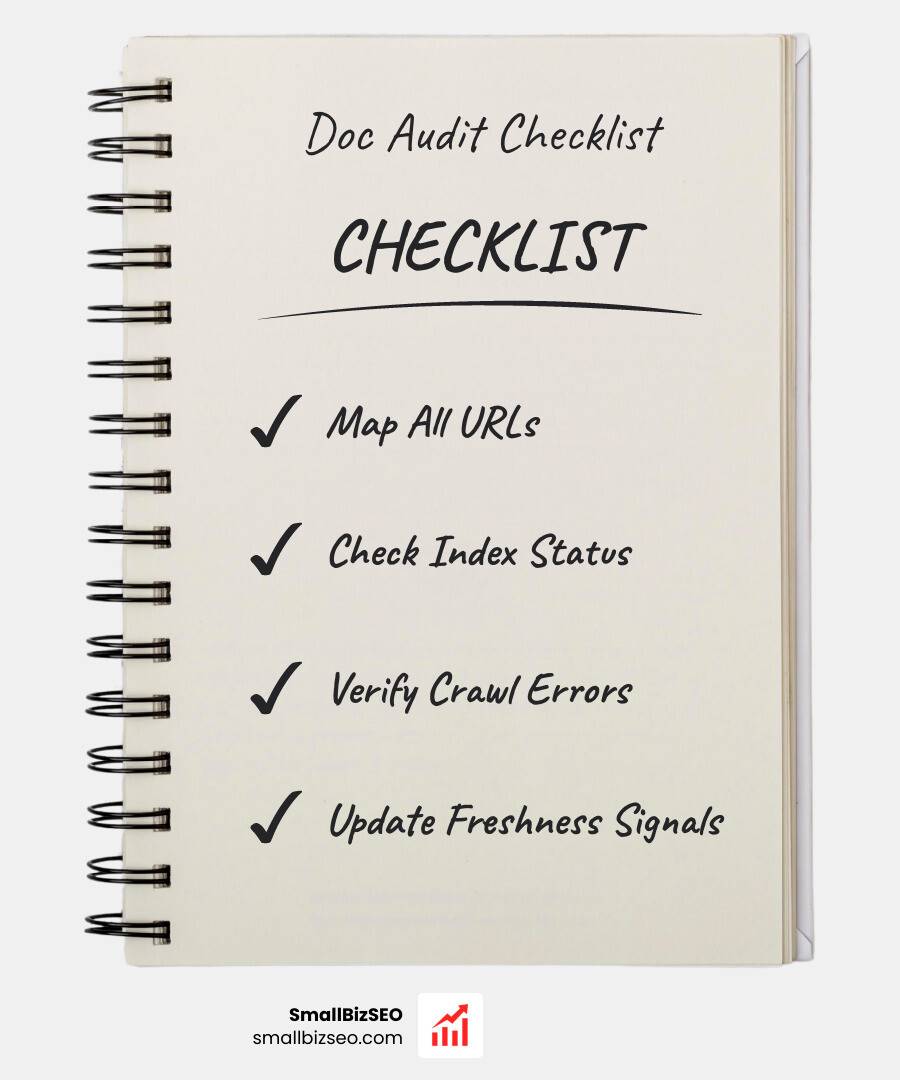
Auditing Workflows for SEO Technical Writing
A structured audit process preserves documentation hygiene across growing codebases. We implement continuous reviews using the following workflow:
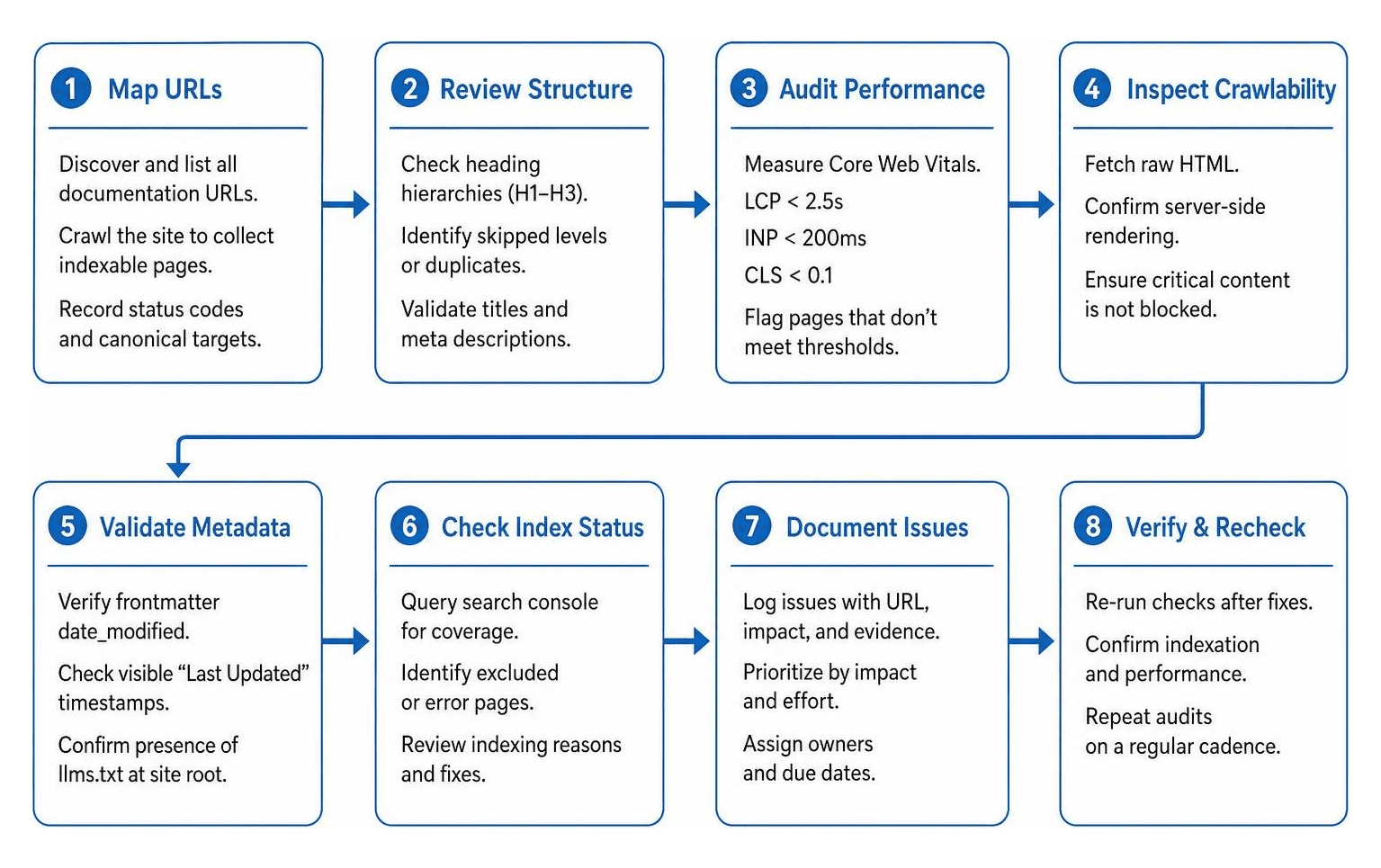
- Map Search Intent: Align every support doc and guide with one primary user query to eliminate duplicate content.
- Review Heading Hierarchies: Ensure every page follows a logical H1-H2-H3 path without skipped levels.
- Audit Core Web Vitals: Verify documentation templates achieve Largest Contentful Paint (LCP) under 2.5 seconds, Interaction to Next Paint (INP) under 200 milliseconds, and Cumulative Layout Shift (CLS) under 0.1.
- Inspect Crawlability: Check raw HTML outputs using terminal tools to confirm content is rendered server-side without relying on client-side JavaScript.
Tracking Search Visibility and AI Citations
Evaluating documentation performance requires monitoring technical KPIs alongside traditional metrics:
- Google Search Console Baselines: Track impressions, click-through rates (CTR), and average query positions for specific error codes and parameter searches.
- Server Crawl Logs: Monitor bot activity to ensure search engine spiders frequently crawl updated guides without getting trapped in redirect loops.
- AI Referral Traffic: Track incoming visits originating from AI interfaces like Perplexity and ChatGPT to measure conversational citation reach.
Frequently Asked Questions About Technical Documentation SEO
How does technical documentation SEO differ from marketing SEO?
Marketing SEO focuses on driving top-of-funnel brand visibility, extending dwell time, and converting visitors through promotional calls-to-action. In contrast, technical documentation SEO focuses on fast problem resolution. The primary goal is helping developers and users find precise, accurate answers quickly, reducing support volume and improving user experience.
Do AI crawlers execute JavaScript when parsing documentation?
Most AI search crawlers fetch and parse raw server-rendered HTML without executing client-side JavaScript. If your documentation portal relies entirely on client-side rendering frameworks without server-side rendering or static generation, AI bots may fail to see headings, text, and code blocks.
How can technical writers balance human clarity with algorithmic optimization?
Writing clearly for machines inherently improves the experience for human readers. By organizing pages with descriptive question-based headings, concise summary blocks, clean comparison tables, and self-contained procedural steps, we satisfy the structural requirements of retrieval algorithms while making documentation effortless for developers to scan.
Scaling Content Authority Across Technical Documentation
Optimizing documentation for modern search and AI retrieval turns static technical guides into discoverable assets. By aligning information architecture with user intent, implementing valid schema markup, structuring content for semantic chunking, and maintaining strict technical performance, we ensure our documentation serves both traditional search engines and emerging generative platforms.
Building a visible, high-performing technical knowledge base requires ongoing refinement. Exploring comprehensive seo content services can help your team establish sustainable content workflows, scale documentation authority, and connect users directly with the technical solutions they need.