Keep Your AI on a Leash: Vetting Agentic Browser Actions Pre-Release
How Do You Review Agentic Browser Actions Before Publication?
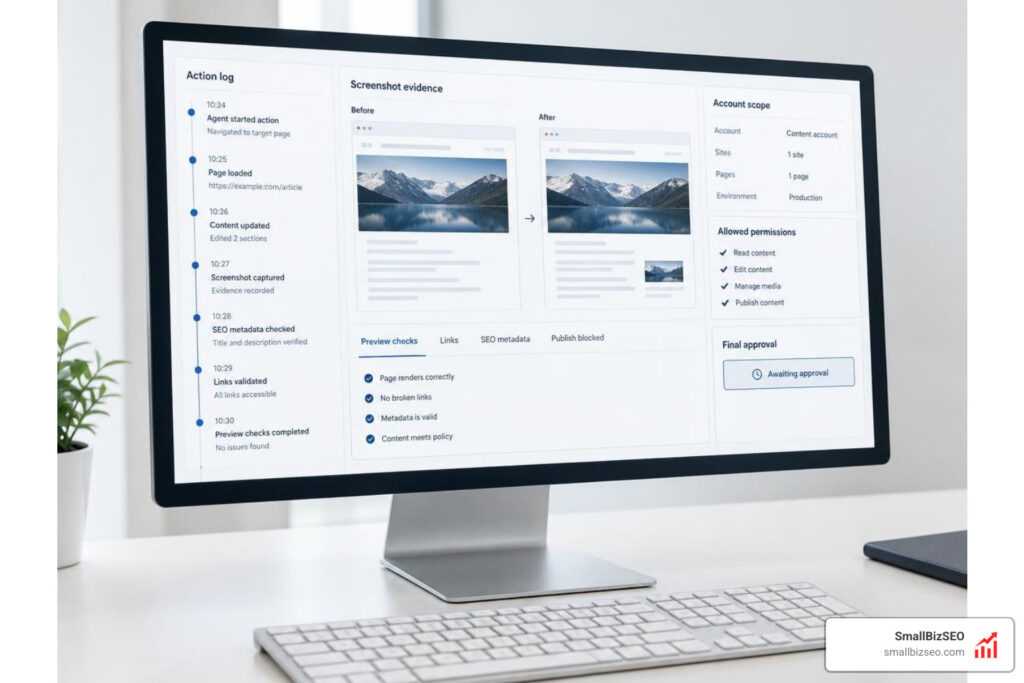
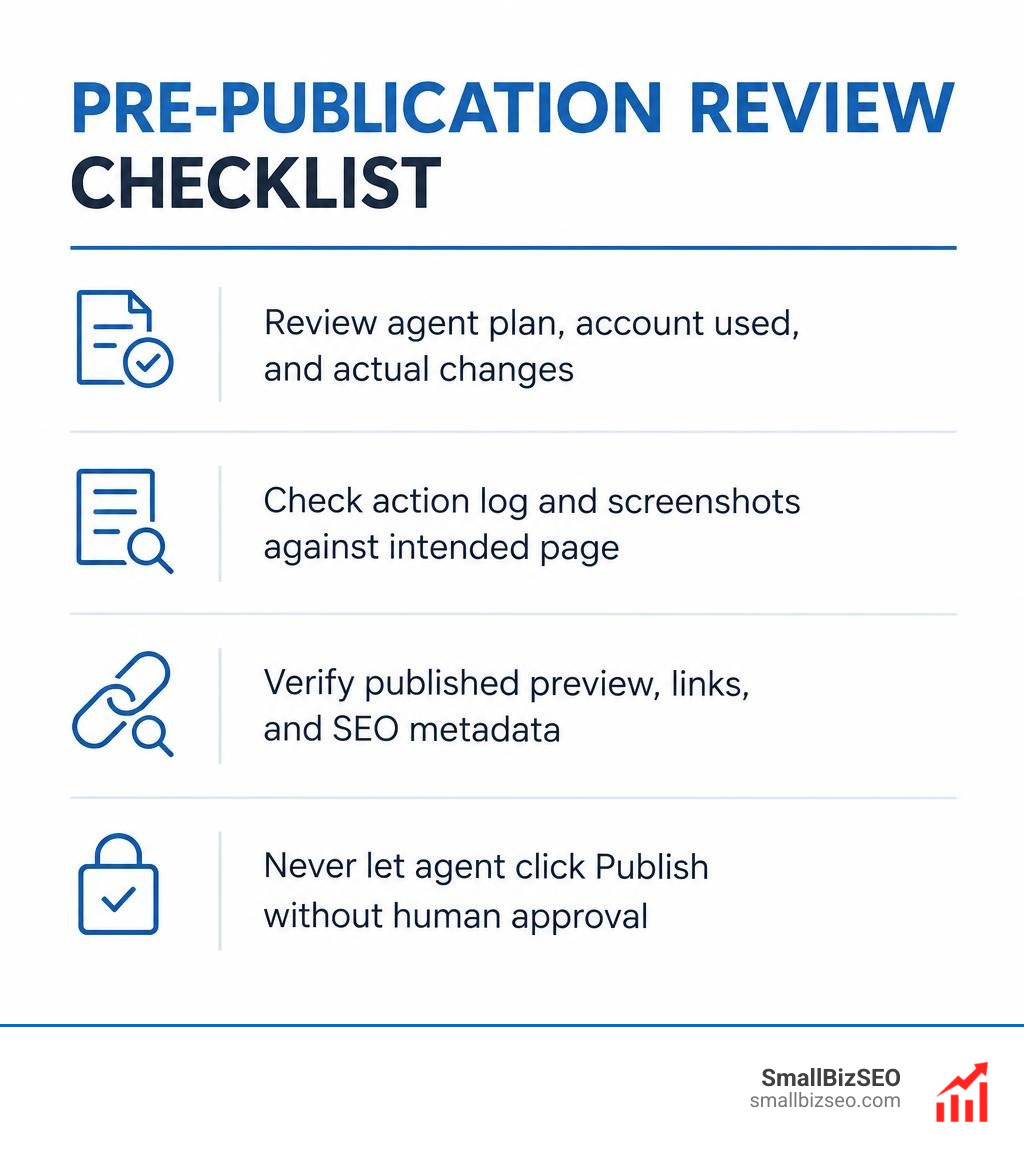
When reviewing agentic browser actions before publication, first check what the agent planned to do, which account it used, and what it actually changed. Review its action log and screenshots against the intended page. Check the published preview, links, and SEO metadata. Do not let the agent click Publish until a person approves the final result.
This matters because a browser agent can act on instructions it finds in untrusted web content. A page that looks normal to you could steer the agent toward the wrong action. Keep research in a separate browser session, limit what the agent can change, and pause it whenever the next step affects a live page.
I'm Clayton Johnson, founder of SmallBizSEO. My work on content review and repeatable website publishing workflows shapes this practical approach to reviewing agentic browser actions before publication.
A Complete Framework for Reviewing Agentic Browser Actions Before Publication
To safely verify automated website edits or content releases, you need a deterministic review framework that separates model decisions from direct execution. We structure this through four interconnected control gates: environment sandboxing, comprehensive evidence capture, explicit human approval checkpoints, and deep visual verification.
While 78% of AI users bring their own tools to work, unstructured automation creates serious operational blind spots. Establishing a repeatable pre-publication audit ensures that every automated step is logged, verifiable, and safe. You can prevent ai agent overreach with smart browser permission controls by requiring your automation harness to enforce hard execution boundaries rather than trusting raw model prompts alone.
Why Is Reviewing Agentic Browser Actions Before Publication Essential for Security?
Browser agents operate within authenticated web sessions, meaning an compromised action directly uses an organization's authority. Unlike traditional web scripts that fail deterministically when an element is missing, an autonomous agent dynamically adapts to screen elements. This flexibility introduces major risks if untrusted web pages contain indirect prompt injections designed to hijack the model's instructions.
Industry security standards rank prompt injection as the single highest vulnerability for large language model applications (OWASP LLM01). Breaches involving unmanaged shadow AI cost organizations an average of USD 670,000 more than incidents with strict oversight. Without rigorous review, an agent conducting automated market research might encounter hidden text on a third-party site instructing it to alter metadata, inject spam links, or exfiltrate session cookies.
To test AI browser workflows effectively, you must understand how to test AI browser agents before they click the wrong thing in production across distinct risk categories:
| Action Risk Category | Browser Action Examples | State Impact | Review Requirement |
|---|---|---|---|
| Safe Read-Only | Scraping public pages, capturing viewport screenshots, inspecting DOM tags | No state changes | Fully autonomous execution |
| Stateful Reversible | Saving draft articles, modifying unpublished staging CSS, organizing media library tags | Internal state altered, no public impact | Automated execution with logged traces |
| Irreversible / Live | Publishing live articles, deleting content directories, pushing live price updates | Externally visible production state change | Mandatory human-in-the-loop sign-off |
| Compliance-Sensitive | Altering billing details, updating DNS settings, modifying user account permissions | High enterprise and security exposure | Multi-party typed step-up authorization |
Step 1: How Do You Isolate Context and Control Autonomy Levels?
Begin by assigning the agent dedicated, ephemeral browser profiles that lack access to administrative credentials or internal email sessions. When an agent browses external websites for reference data or competitor analysis, isolate that session entirely from your internal content management systems.
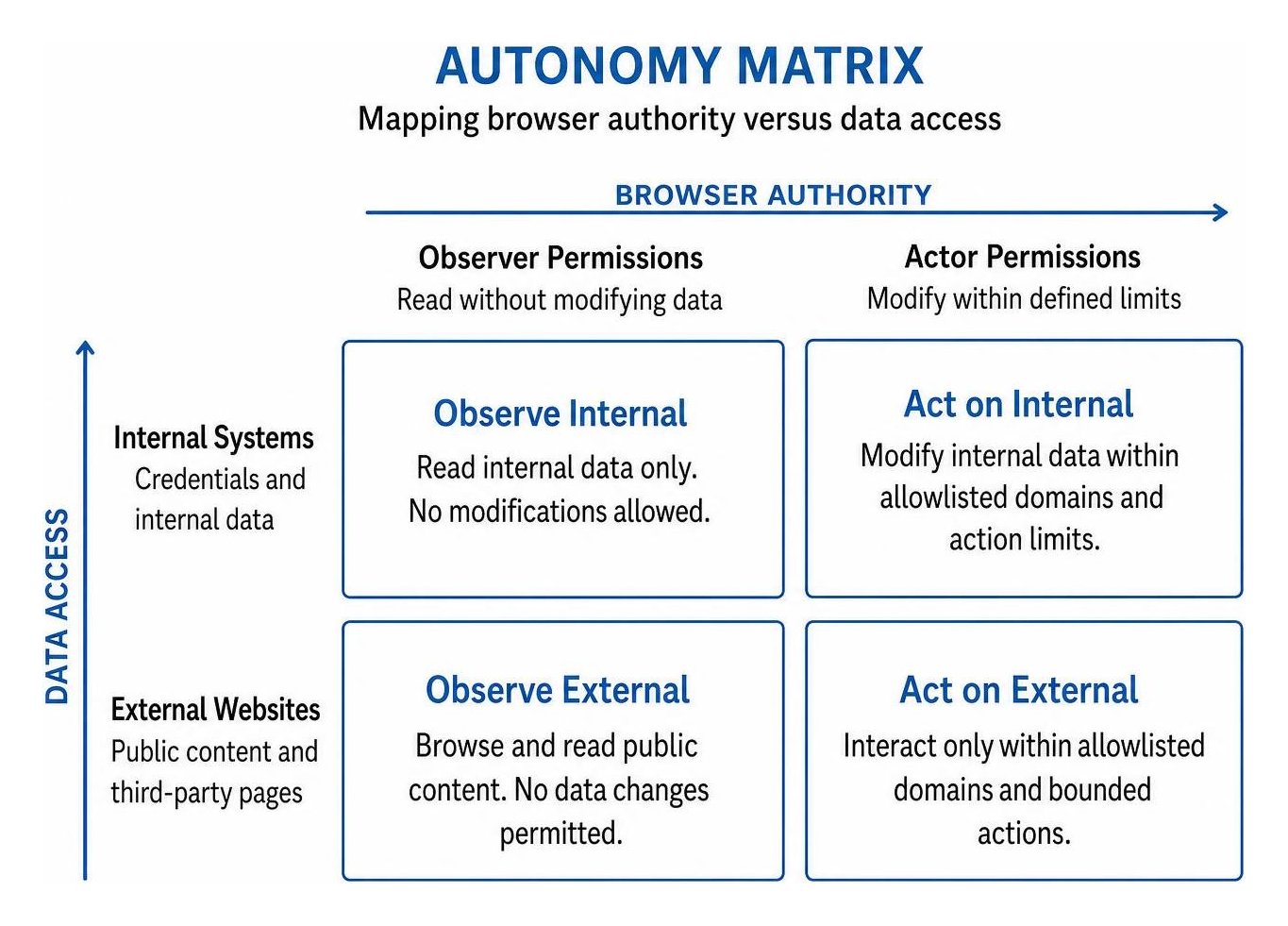
We recommend separating permissions into two discrete tiers:
- Observer Permissions: The agent can navigate freely, query page elements, and read text without modifying data.
- Actor Permissions: The agent's ability to input text, click interactive elements, or execute scripts is bounded by strict domain allowlists and action limits.
Following a practical field guide to safe browser automation in marketing ensures that external research tasks never inherit write authority over production websites.
Step 2: How Do You Build an Evidence Bundle When Reviewing Agentic Browser Actions Before Publication?
Never approve an agent's release decision based purely on a success message or raw console exit code. Instead, generate a comprehensive evidence bundle that records the context, intent, and visual result of every action before allowing changes to go live.
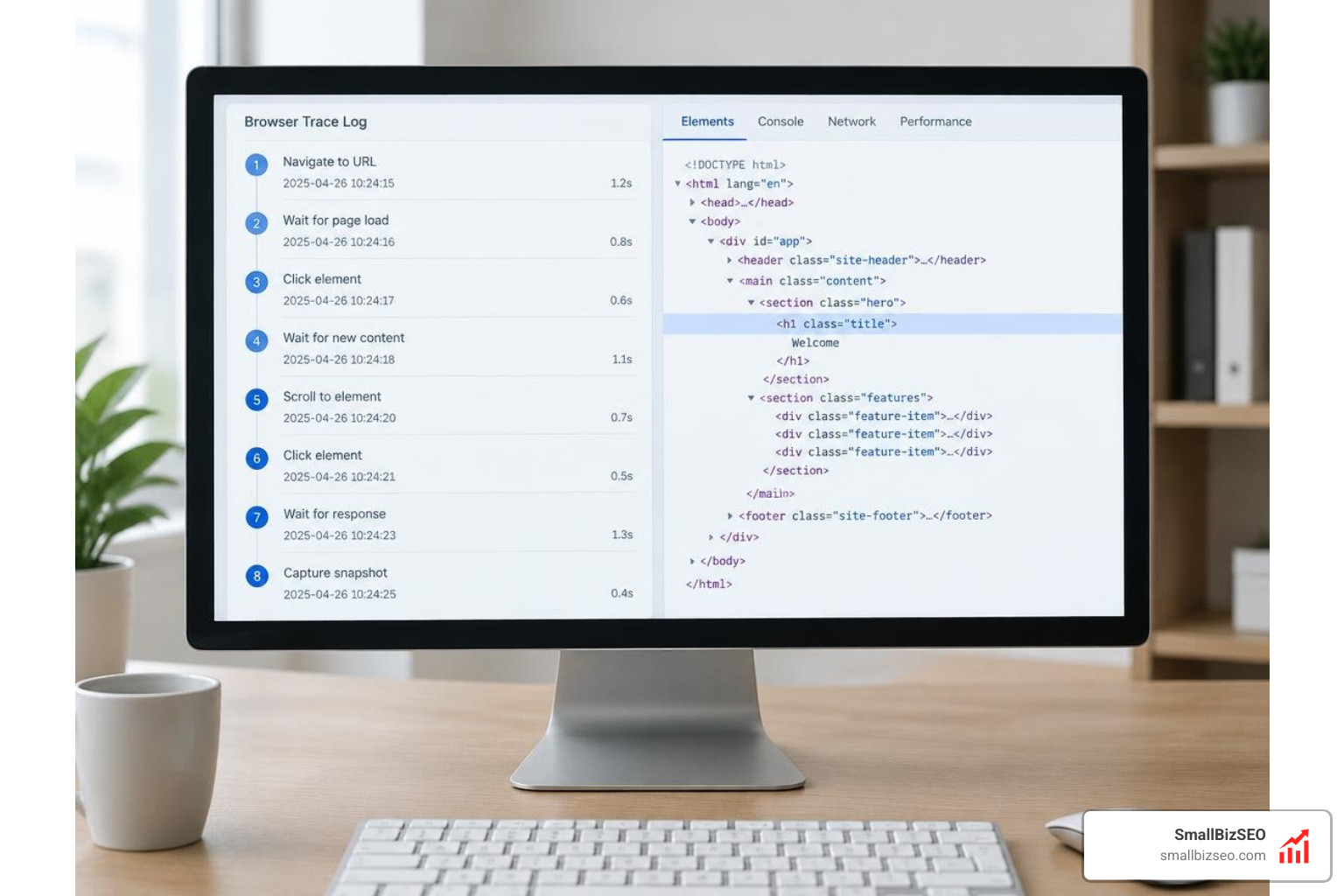
A production-ready evidence bundle should capture:
- Target Account and Environment: The authenticated profile, IP routing, and session identifiers used during the session.
- Deterministic Step-by-Step Traces: A sequential action log containing exact timestamps, target URLs, and element selectors.
- DOM Snapshots: Pre-action and post-action HTML snapshots to detect injected scripts or hidden content shifts.
- Visual Comparison Proofs: Full-page before-and-after screenshots across standard viewports.
- Cryptographic Integrity: A SHA-256 hash chaining each action back to the original human prompt.
As detailed in the browser-agent control plane framework, capturing rich forensic evidence bridges the gap between raw automation capability and true organizational authority.
Step 3: When Should an Agent Pause for Human-in-the-Loop Sign-Off?
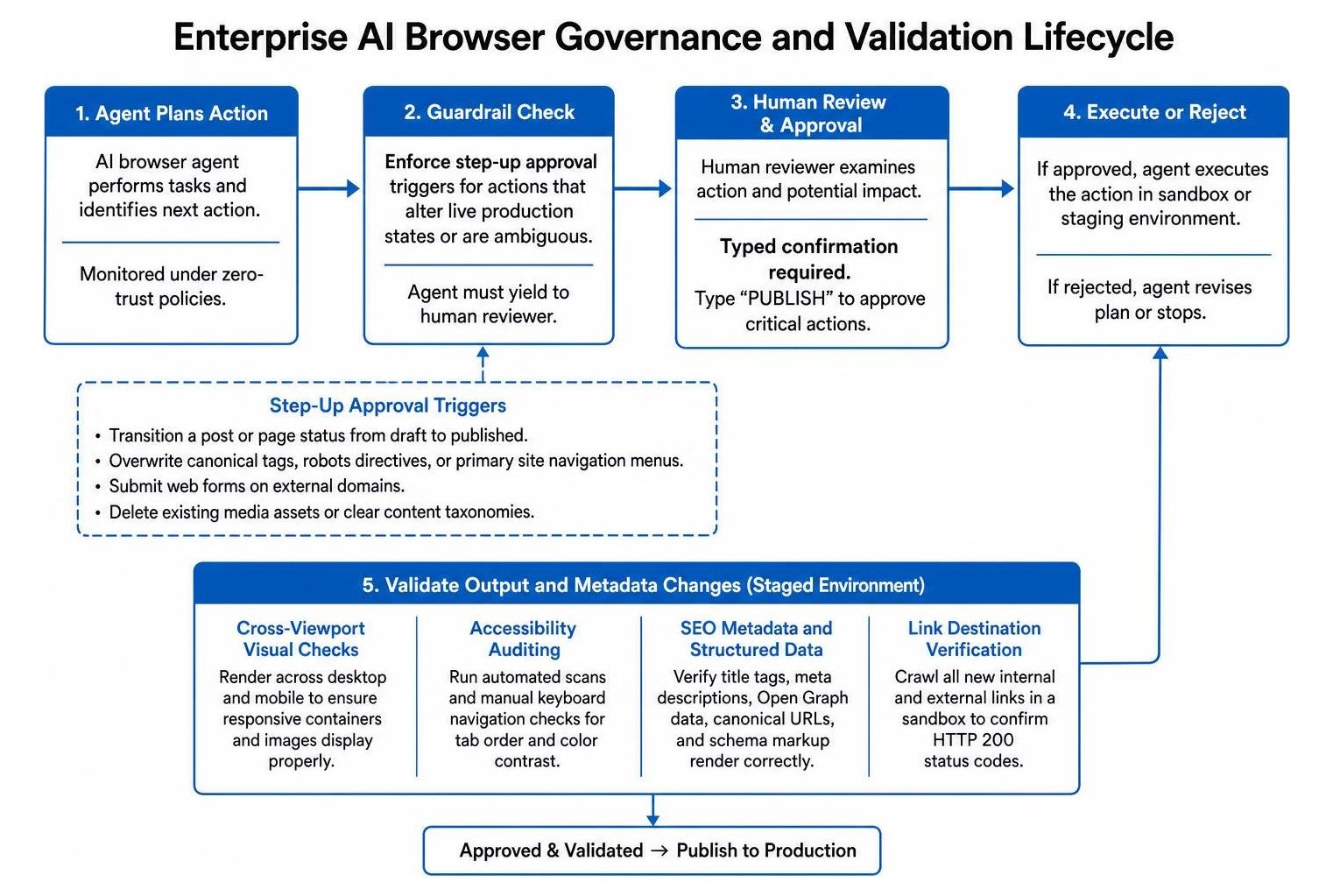
An autonomous agent must automatically yield execution to a human reviewer whenever it reaches a boundary that alters live production states or encounters ambiguous UI elements.
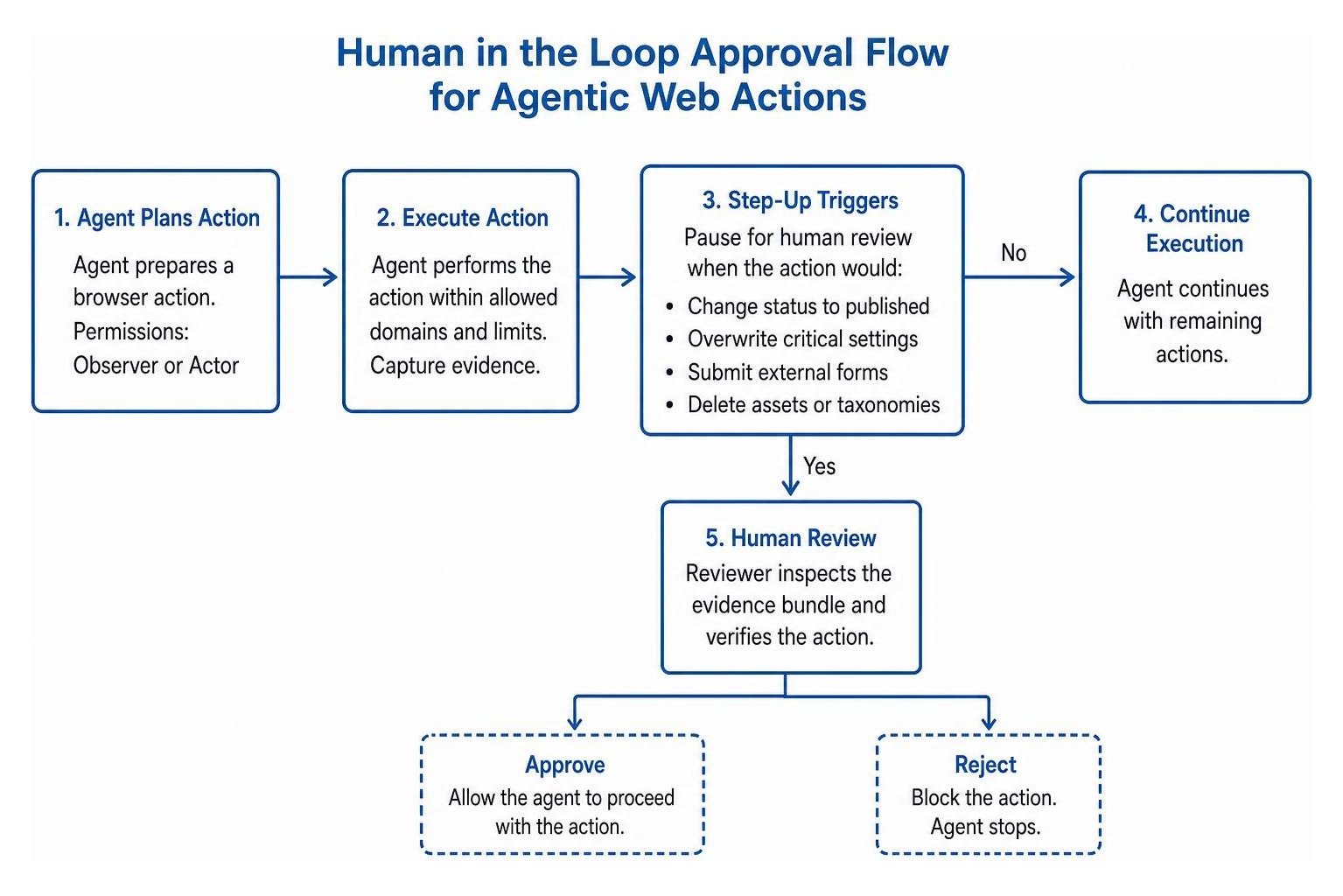
Enforce step-up approval triggers whenever the agent plans to:
- Transition a post or page status from draft to published.
- Overwrite canonical tags, robots directives, or primary site navigation menus.
- Submit web forms on external domains.
- Delete existing media assets or clear content taxonomies.
Understanding when an AI browser agent should stop and ask for human review allows teams to maintain rapid operational speed while eliminating accidental data corruption. Require typed confirmation (such as typing "PUBLISH" into an approval modal) for all critical actions to prevent accidental rubber-stamping by operators.
Step 4: How Do You Validate Rendered Output and Metadata Changes?
The final phase before release involves validating that the visual layout, accessibility metrics, and technical SEO elements match quality requirements. Automated agents can easily miss subtle styling collapses on specific screen sizes or introduce malformed structured data.
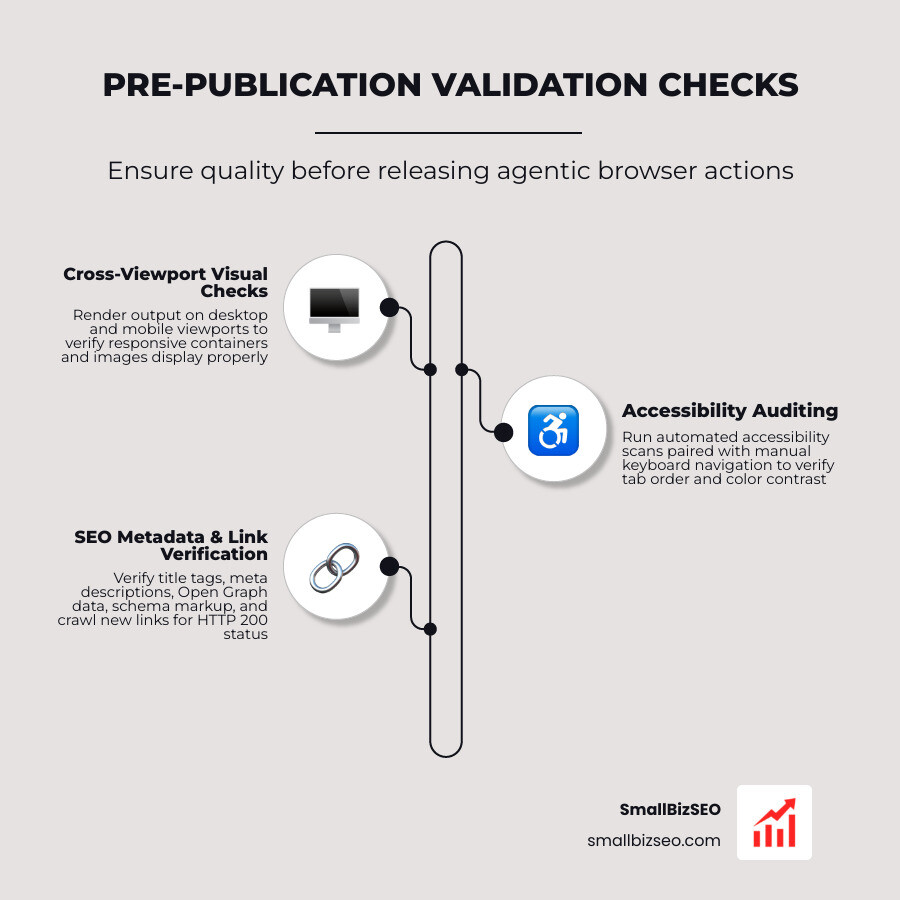
Execute these targeted verification checks on the staged page:
- Cross-Viewport Visual Checks: Render the output across both desktop and mobile viewports to ensure responsive containers and images display properly.
- Accessibility Auditing: Run automated accessibility scans paired with manual keyboard navigation checks to verify proper tab order and color contrast.
- SEO Metadata and Structured Data: Verify that title tags, meta descriptions, Open Graph data, canonical URLs, and schema markup render correctly without hallucinated values.
- Link Destination Verification: Crawl all newly added internal and external links in a sandbox to confirm HTTP 200 status codes.
You can consistently keep AI coding grounded by verifying website changes in the browser before live publication, ensuring technical accuracy across all site assets.
Enforcing Scalable Guardrails for Enterprise AI Browser Deployments
Deploying autonomous browsing tools across business operations requires a zero-trust governance model that treats every unvetted browser action as untrusted until validated against pre-execution policies.
Organizations that integrate structured end-to-end verification suites have seen daily test execution drop from 7 hours to 30 minutes, an 8x increase in release cadence, and up to an 85% reduction in production incidents. Our team at SmallBizSEO delivers data-driven growth through our Velocity framework, helping businesses navigate complex digital workflows safely while scaling organic search visibility.
Academic security research on web adversaries targeting agentic browsers confirms that prompt-injection attacks and session hijacking will continue to evolve. By combining runtime monitoring, strict permission models, and human sign-off gates, you can protect your digital footprint while taking full advantage of autonomous agents. Explore our agentic browser solutions to implement rock-solid guardrails across your automated content and publishing pipelines.
Master Safe Autonomous Publishing Today
Autonomous web agents deliver immense productivity benefits, but deploying them without systematic pre-publication reviews invites serious security, technical, and brand risks. By enforcing session sandboxing, compiling comprehensive evidence bundles, requiring typed human approvals for consequential steps, and validating rendered layouts, you ensure your automation remains completely aligned with your business standards.
Establish clear execution guardrails today to build a fast, reliable, and secure publishing pipeline that empowers your organization to scale with confidence.