A Practical Guide to Local SEO for Kitchen Remodelers

How Does Local SEO Help Kitchen Remodelers Get More Leads?
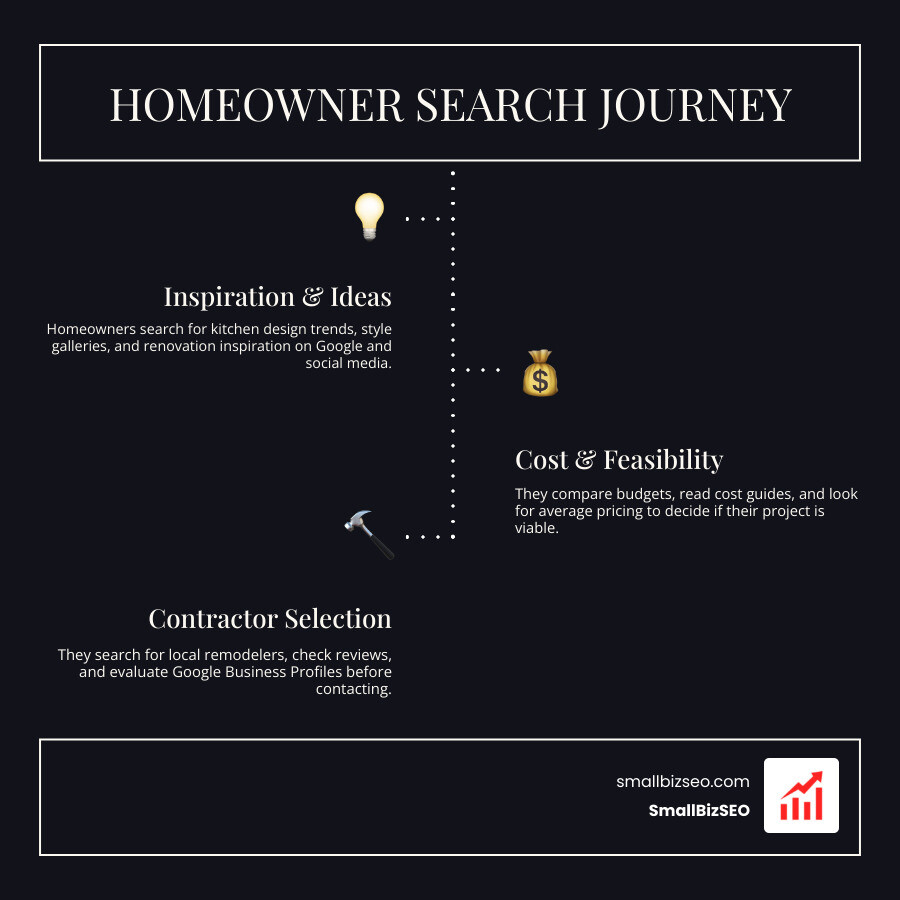
SEO for kitchen remodelers helps nearby homeowners find your business when they search for renovation ideas, costs, and contractors. Start with a complete Google Business Profile, a clear kitchen remodeling service page, and project pages that show real work. Then answer common questions about budgets and design choices. These steps give homeowners useful information as they plan and a reason to contact you when they are ready to hire.
I’m Clayton Johnson, founder of SmallBizSEO, where I connect technical SEO, content, and authority building to help small businesses attract qualified leads. My approach to SEO for kitchen remodeler websites draws on that work: answer homeowner questions clearly, show proof of your work, and make your business easy to find.
Relevant articles related to SEO for kitchen remodeler:
How Can Kitchen Remodelers Build High-Impact SEO?
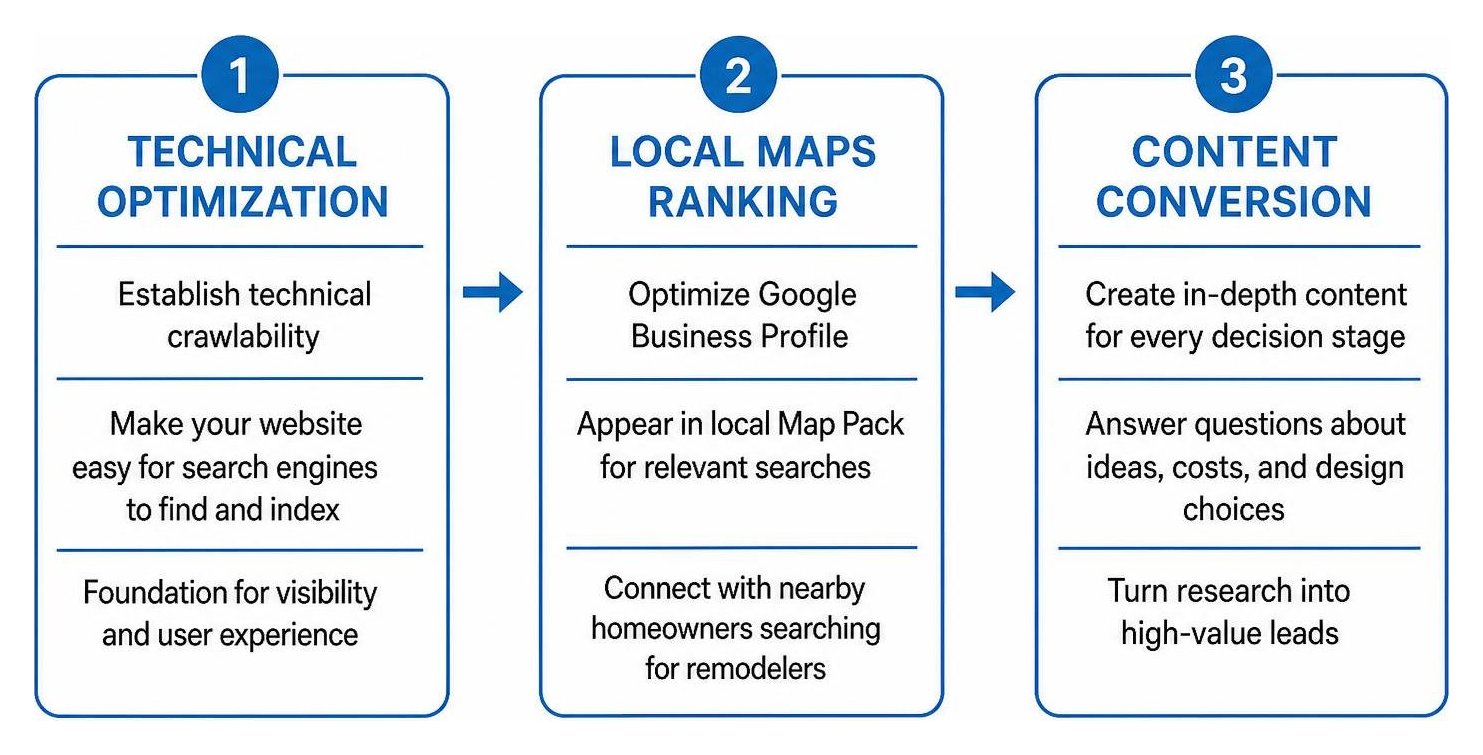
Kitchen remodelers build high-impact SEO by establishing technical crawlability, optimizing localized business profiles, and creating in-depth content that addresses every phase of the homeowner's decision journey. Because kitchen renovations represent substantial investments ranging from $25,000 to over $75,000, homeowners do not make impulsive decisions. They spend weeks researching design styles, layout options, and pricing before reaching out for an estimate.
Organic search visibility operates as a winner-take-most environment: 47% of all search clicks go directly to the top three positions on Google, and 90% of all clicks occur on the first page. When contractors partner with a kitchen remodeler SEO company, they establish sustainable digital assets that consistently drive exclusive inquiries.
What Is Local SEO for Kitchen Remodelers and How Does It Drive High-Value Leads?
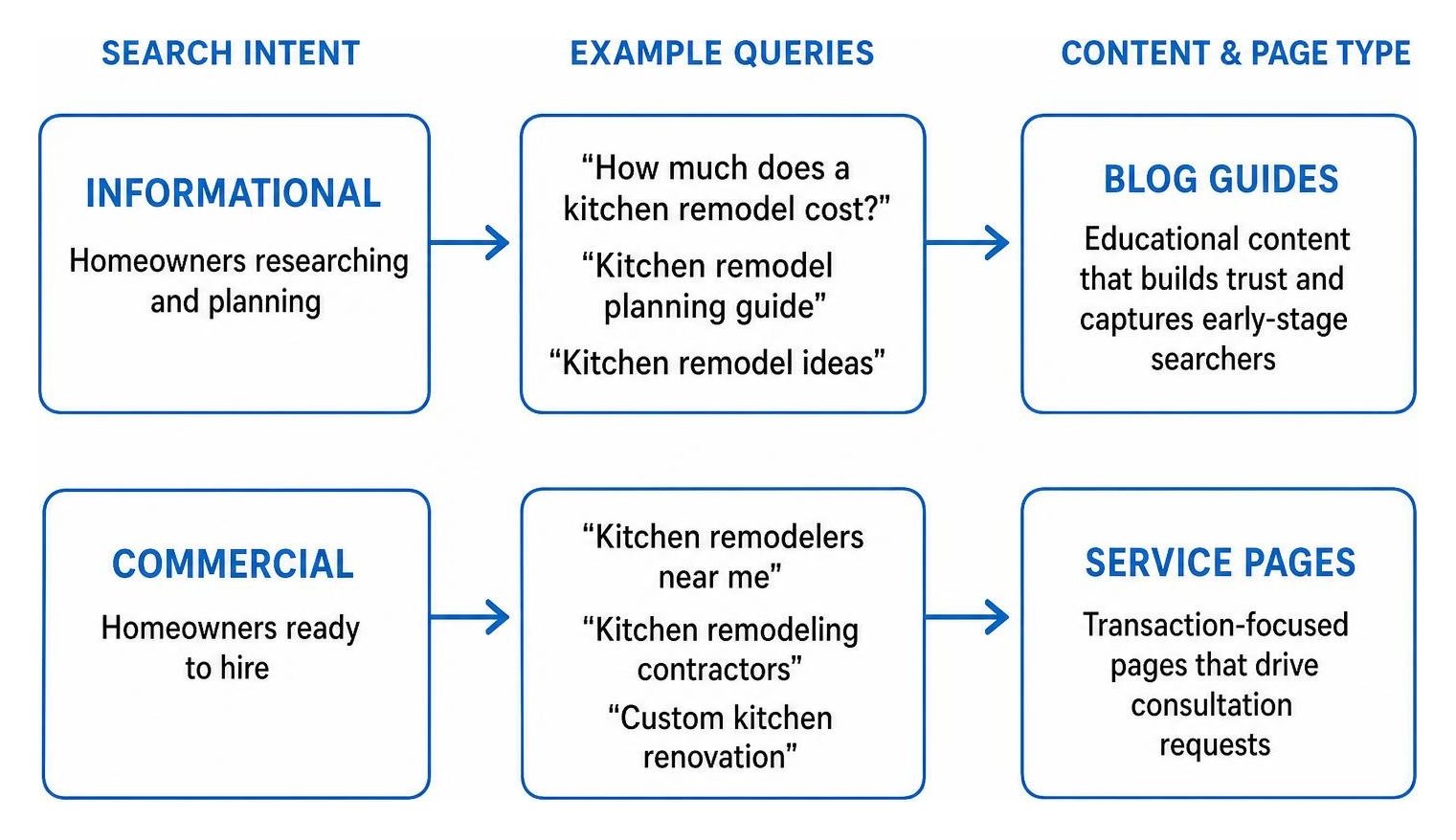
Local SEO is the specialized process of optimizing your online presence to capture high-intent searches from homeowners in your immediate service area. It connects high-ticket contractors with active buyers searching for phrases like "kitchen remodeling contractors" or "custom kitchen renovation."
Unlike broad marketing campaigns that cast an untargeted net, local SEO captures prospects at the precise moment they exhibit commercial intent. When homeowners conduct localized searches, Google evaluates proximity, relevance, and prominence to serve results across two primary areas: the local Map Pack and the standard organic web links.

By systematically strengthening these signals, contractors can capture non-branded organic traffic from qualified property owners. These visitors convert into design consultations at a high rate because the homeowner has already inspected your portfolio, reviewed your credentials, and validated your local reputation.
How Do You Optimize Google Business Profile and Map Packs for Kitchen Remodeling?
Optimizing your Google Business Profile (GBP) requires selecting accurate business categories, completing every available service attribute, uploading authentic project photos, and maintaining an active stream of client reviews. The Map Pack captures roughly 44% of all clicks on local searches, making it a critical asset for remodeling contractors.
To maximize your local map ranking, implement these specific actions:
- Primary Category Selection: Set your primary GBP category to "Kitchen Remodeler." If you offer broader residential work, add secondary categories such as "General Contractor," "Bathroom Remodeler," or "Interior Designer."
- Granular Service Menus: List 10 to 15 specific services under your profile, including custom cabinetry installation, island design, quartz countertop installation, and layout reconfiguration, complete with concise descriptions.
- Photo Cadence: Upload 5 to 10 high-resolution photos of recently completed projects each month. Google Business Profile data reveals that businesses with regular photo updates receive 35% more website clicks and 42% more direction requests. Avoid stock imagery, and note that search engines rely on visual recognition and user engagement rather than EXIF metadata.
- NAP Consistency: Ensure your Name, Address, and Phone number are identical across your website, GBP listing, and external directories.
- Review Velocity and Keywords: Implement an automated post-project review workflow. Encourage clients to mention the specific project type and their general neighborhood in their review, and reply to every review within 48 hours.
What High-Intent Keywords and Content Structures Fuel SEO for Kitchen Remodelers?
High-intent keyword optimization requires mapping transactional phrases to core service pages, local geographic modifiers to service area pages, and informational queries to planning guides. The head term "kitchen remodel" averages around 60,500 monthly searches across the country, while "kitchen remodelers near me" captures 74,000 monthly searches.
Understanding the foundational on-page SEO definition ensures that your site architecture matches the searcher's intent at each stage of their research:
Search demand also experiences predictable shifts throughout the year. Homeowner searches for kitchen remodeling reach peak levels in January, July, and September (approaching 90,500 monthly searches), while dipping to lower volumes in December (around 49,500 monthly searches). Publishing seasonal cost guides and project highlights 6 to 8 weeks before these seasonal peaks ensures your pages are indexed and ranking when search volume surges.
Educational content—such as our guide to SEO for bathroom remodelers—demonstrates how targeting related trade queries and publishing transparent cost breakdowns can capture homeowners planning multi-room renovations.
Additionally, industry research from Ahrefs on home improvement search terms confirms that creating dedicated, single-topic service pages outperforms broad, generic overview pages every time.
How Can Remodelers Build Authority and Measure SEO Results?
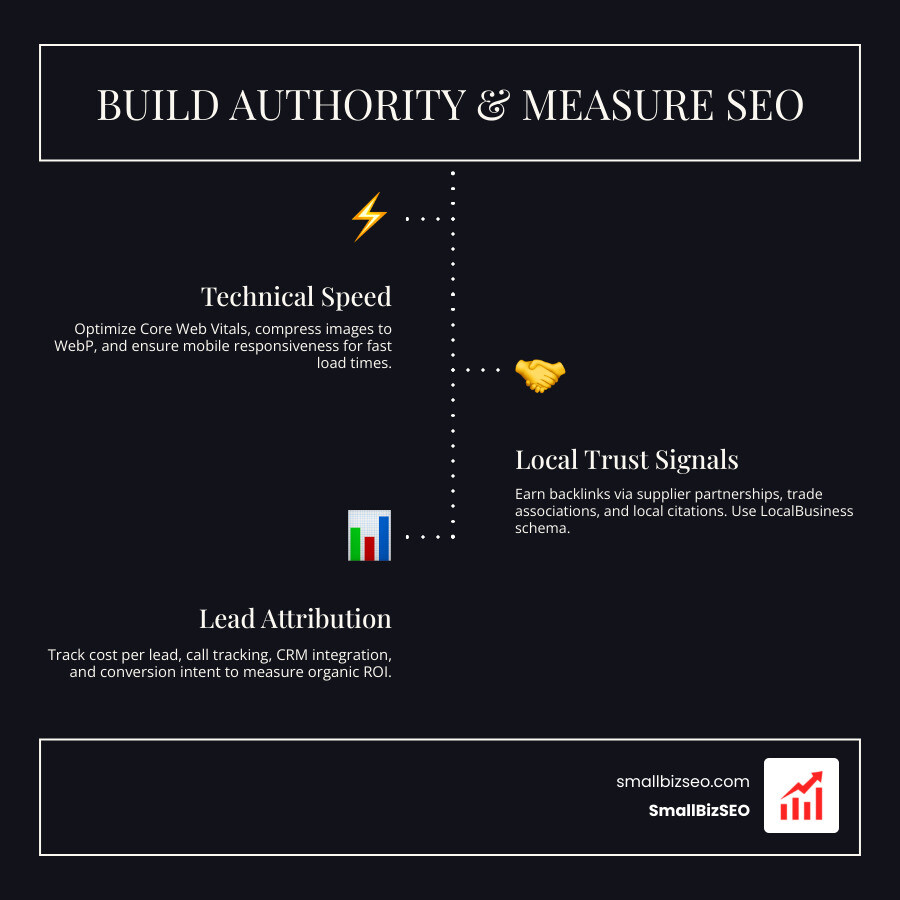
Remodelers build authority and measure results by pairing fast technical infrastructure with authentic local trust signals, attributing incoming leads directly to their organic search channels. Because search algorithms and generative AI tools prioritize trusted entities, contractors must substantiate their craftsmanship through structured data, industry partnerships, and verifiable client outcomes.
How Should Remodelers Optimize Visual Portfolios and Technical Site Speed?
Remodelers should optimize visual portfolios by converting photo galleries into individual, indexable case study pages backed by schema markup and modern image compression. A single JavaScript image gallery prevents search engines from indexing your work, whereas dedicated project pages allow you to rank for specific architectural styles, materials, and localized project scopes.

Follow this technical workflow to ensure optimal page performance:
- Image Compression: Convert all high-resolution portfolio imagery to WebP formats, maintaining file sizes below 200 KB while preserving crisp visual detail.
- Descriptive File Naming and Alt Text: Name image files descriptively before uploading (for example,
transitional-kitchen-remodel-quartz-island.jpg) and write detailed alt text reflecting the room layout and materials. - Structured Data Markup: Implement JSON-LD schema markup, including
HomeAndConstructionBusiness,Service, andFAQPageschemas. This structured code helps search engines and AI recommendation systems accurately interpret your services, pricing tiers, and licensing credentials. - Core Web Vitals: Maintain fast load times by utilizing lazy loading for below-the-fold project photos and minifying code to ensure responsive mobile browsing.
How Do You Earn Authoritative Backlinks and Build Local Trust Signals?
Earn authoritative backlinks by leveraging existing commercial relationships with trade vendors, product manufacturers, and regional trade organizations. In competitive local markets, backlinks function as foundational credibility votes that establish your site's authority.
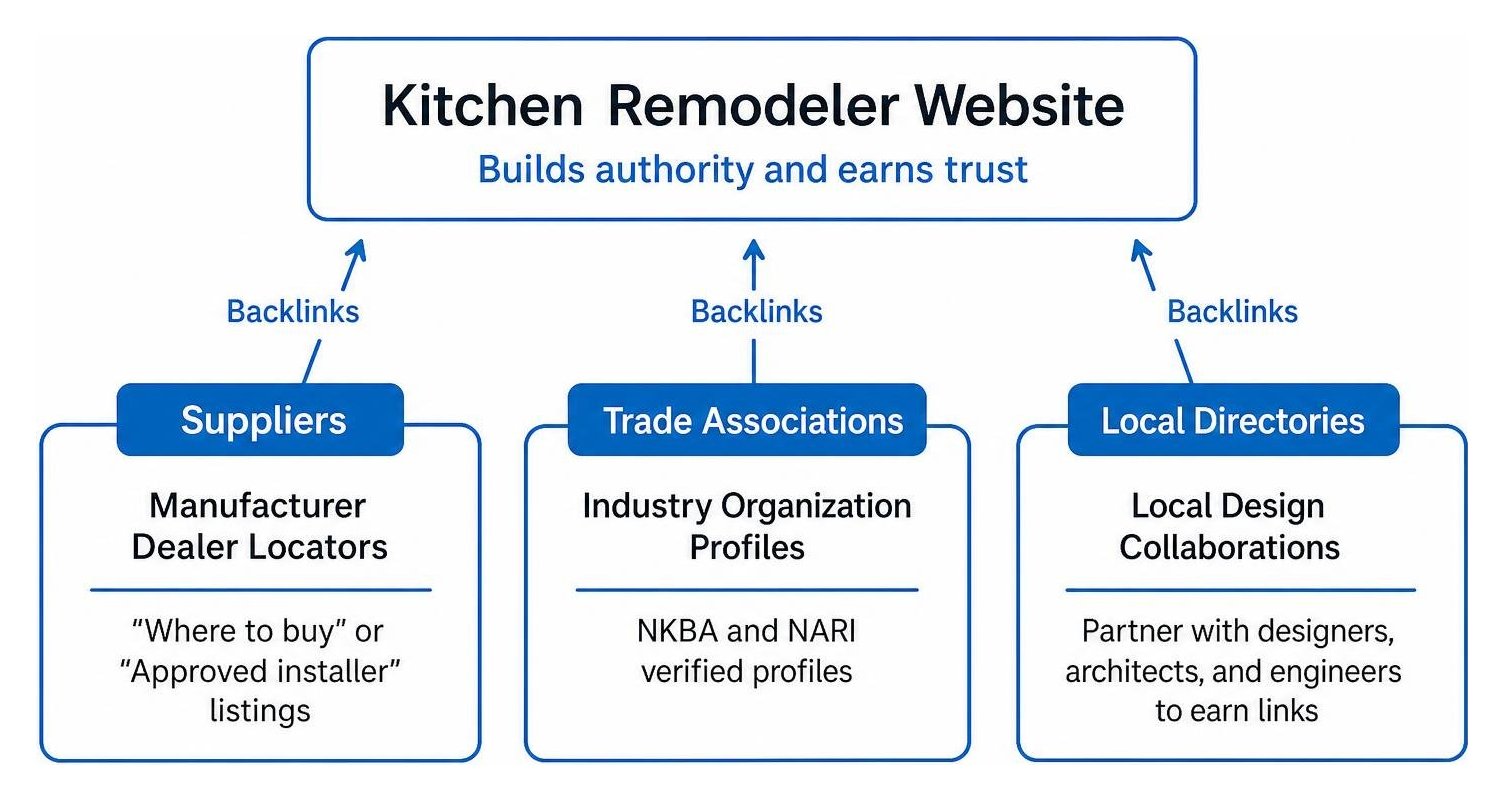
High-yield strategies to build authentic link equity include:
- Manufacturer Dealer Locators: Request listings on the "where to buy" or "approved installer" directories of the cabinetry, tile, and countertop brands you regularly install.
- Trade Associations: Maintain verified profiles on professional industry organizations such as the National Kitchen & Bath Association (NKBA) and the National Association of the Remodeling Industry (NARI).
- Local Design Collaborations: Partner with local interior designers, architects, and structural engineers to publish joint project showcases that link back to your service pages.
- Directory Citations: Claim and standardize listings on trusted platforms like the Better Business Bureau, Houzz, and regional business directories.
Avoid purchasing bulk backlink packages or participating in automated link networks. Google strictly penalizes artificial link manipulation, which can lead to algorithmic suppression and the loss of organic rankings.
How Can Remodelers Measure Organic SEO ROI?
Remodelers measure organic SEO ROI by tracking keyword progression, qualified phone inquiries, form submissions, and signed contract values attributed to organic search. Because remodeling projects have sales cycles spanning three to six months, tracking vanity traffic alone fails to capture the true financial impact of your marketing.
| Performance Metric | Organic SEO Impact | Strategy & Timeline |
|---|---|---|
| Lead Exclusivity | 100% exclusive inbound inquiries from local homeowners | Direct consultations generated via optimized portfolio and service pages |
| Long-Term Asset Value | Permanent digital equity and compounding domain authority | Produces consistent local inquiries over time through established rankings |
| Buyer Intent Level | High commercial intent from active searchers | Targets prospects researching specific renovation scopes and costs |
| Typical Payoff Timeline | 3 to 6 months to establish strong momentum | Structured execution across technical, on-page, and backlink foundations |
| Average Cost Per Lead | Progressively decreases as authority compounds | Scales search visibility without linear increases in customer acquisition cost |
To accurately assess marketing performance, connect your website forms and dynamic call tracking numbers directly to your customer relationship management (CRM) software. This enables you to track a homeowner from their initial search query down to their final project payment.
Transform Your Digital Presence into a Sustainable Lead Pipeline
A disciplined local SEO strategy ensures your business remains visible to homeowners throughout their multi-month renovation planning process. By combining a complete Google Business Profile, fast and structured portfolio case studies, high-intent localized content, and verified local backlinks, you build an appreciating business asset that consistently produces high-value project leads.
To identify technical bottlenecks and uncover immediate keyword opportunities in your market, request a comprehensive SEO visibility audit to benchmark your website and accelerate your organic growth.