Local SEO for Stair & Stairway Builders: Everything You Need to Know
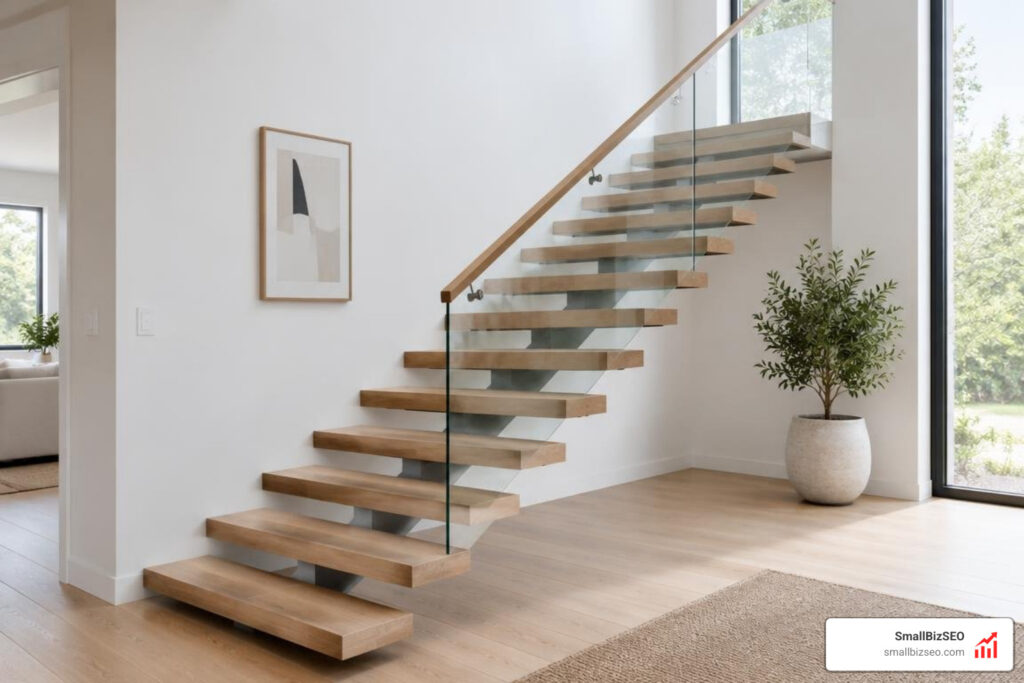
How can local SEO help stair and stairway builders get found?
SEO for stairs & stairway builders starts with the work people search for: custom staircases, floating stairs, railing installation, and stair repairs in the areas you serve. Give each core service a clear page, show completed projects with useful details, and keep your Google Business Profile accurate. These steps help nearby homeowners and trade professionals find a specialist whose work fits their project.
Stair builders need more than the broad service pages that may work for a general contractor. Buyers often search by style, material, and location, then look for photos and proof that the builder can handle the design safely.
I’m Clayton Johnson, founder of SmallBizSEO. My experience in technical SEO, content strategy, and link building informs this guide to SEO for stairs & stairway builders, with a focus on turning search visibility into qualified inquiries.
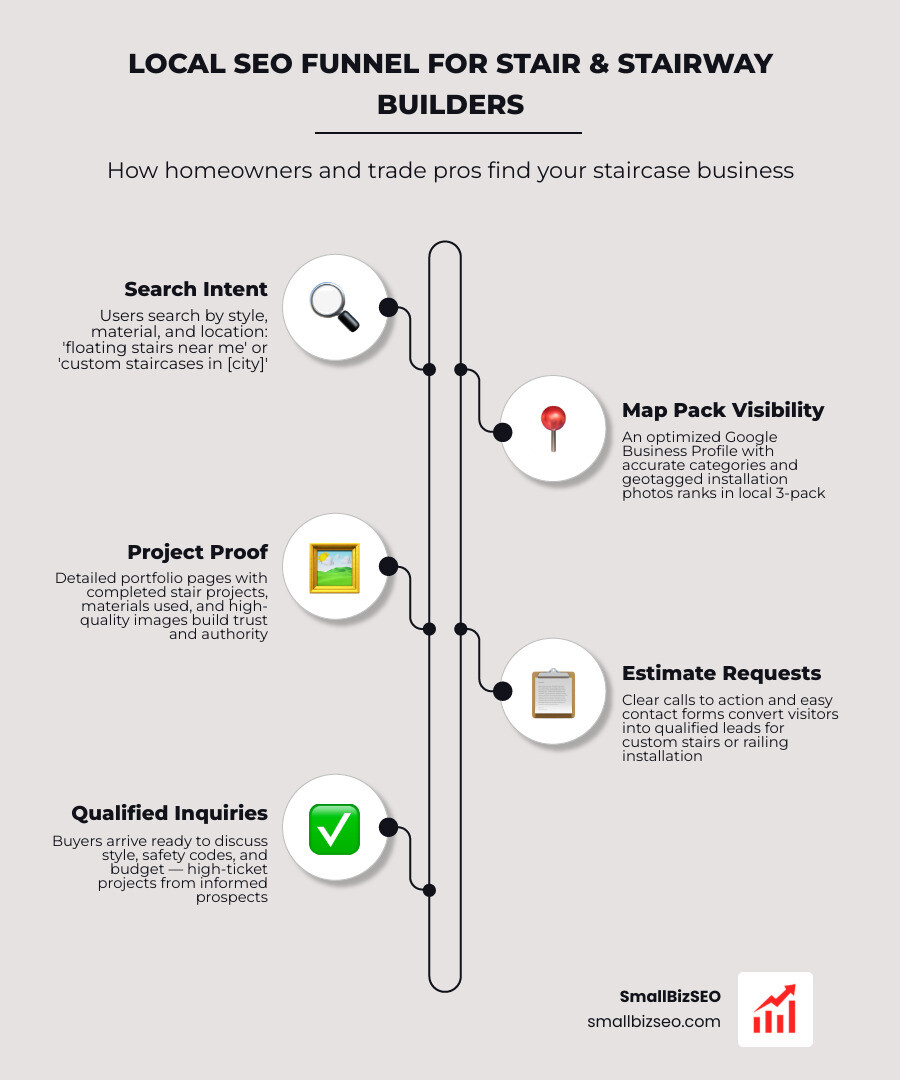
Must-know SEO for stairs & stairway builders terms:
What Drives Local SEO for Stair & Stairway Builders?
Local SEO for stair builders is driven by commercial search intent, precise geographic proximity, verified trade authority, and visual proof of craftsmanship. When homeowners, architects, and general contractors search for custom staircases, search engines prioritize businesses that demonstrate relevant local expertise, clear licensing, and real-world project portfolios.
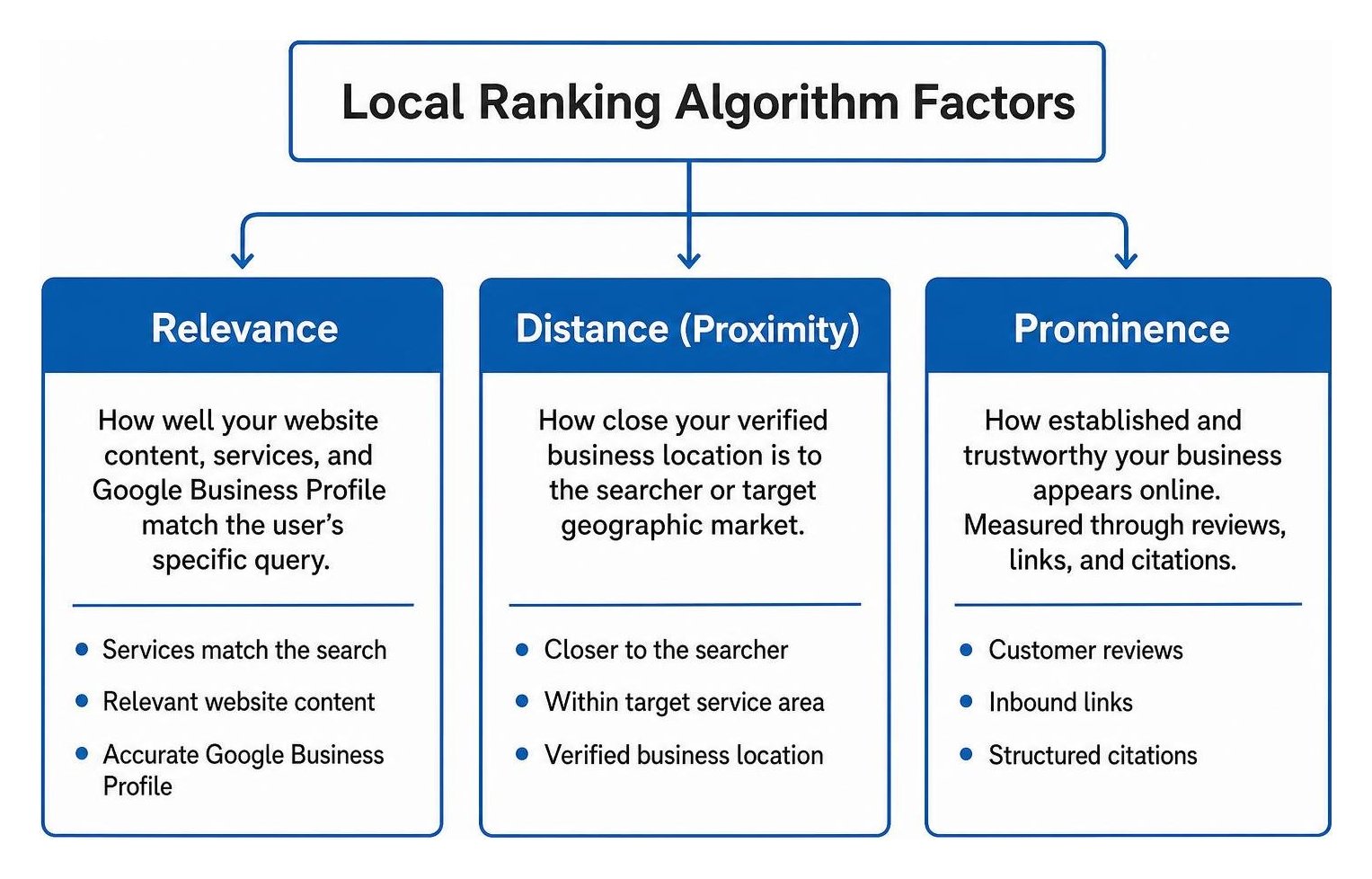
Unlike general construction, staircase fabrication is a specialized architectural investment. Potential clients rarely search for broad terms like "home remodeling." Instead, they search with high commercial intent for specific solutions such as "floating glass staircase fabrication" or "modern cable railing installation." According to Google Business Profile guidance, search engines evaluate three core local ranking factors:
- Relevance: How well your website content, services, and Google Business Profile match the user's specific query.
- Distance (Proximity): How close your verified business location is to the searcher or target geographic market.
- Prominence: How established and trustworthy your business appears online, measured through customer reviews, inbound links, and structured citations.
Applying dedicated custom home builder SEO strategies alongside verified trade credentials establishes the technical foundation required to capture high-margin architectural leads.
What Should Stair and Stairway Builders Target in Their Keyword Strategy?
To capture high-intent inquiries, stair builders must target a balanced mix of consumer-friendly descriptive terms and technical architectural keywords. Homeowners frequently use visual or aesthetic search phrases, while architects and commercial developers use precise structural terminology.
| Consumer Search Term | Architectural & Technical Term | Search Intent | Target Page Type |
|---|---|---|---|
| Floating Stairs | Mono-Stringer Staircase | High Commercial | Specialty Style Page |
| Glass Railings | Tempered Glass Balustrades | Direct Service | Material Category Page |
| Cable Stair Railings | Stainless Steel Tension Cable System | High Intent | Component Product Page |
| Curved Wood Stairs | Helical / Circular Staircase | Luxury Residential | Custom Portfolio Page |
| Staircase Renovation | Tread Replacement & Cladding | Renovation Intent | Service Page |
| Modern Metal Handrails | Wrought Iron Architectural Railings | Direct Commercial | Material Landing Page |
Expanding a contractor's keyword footprint from basic branded queries to hundreds of specific material and style keywords directly accelerates qualified lead generation. Keyword strategies must also target geographic modifiers to capture localized demand.
How Can Stair Contractors Improve Their Google Business Profile and Map Pack Visibility?
Stair contractors can improve their Google Business Profile visibility by selecting the correct primary category, regularly publishing geotagged installation photos, managing customer reviews, and utilizing interactive profile features.
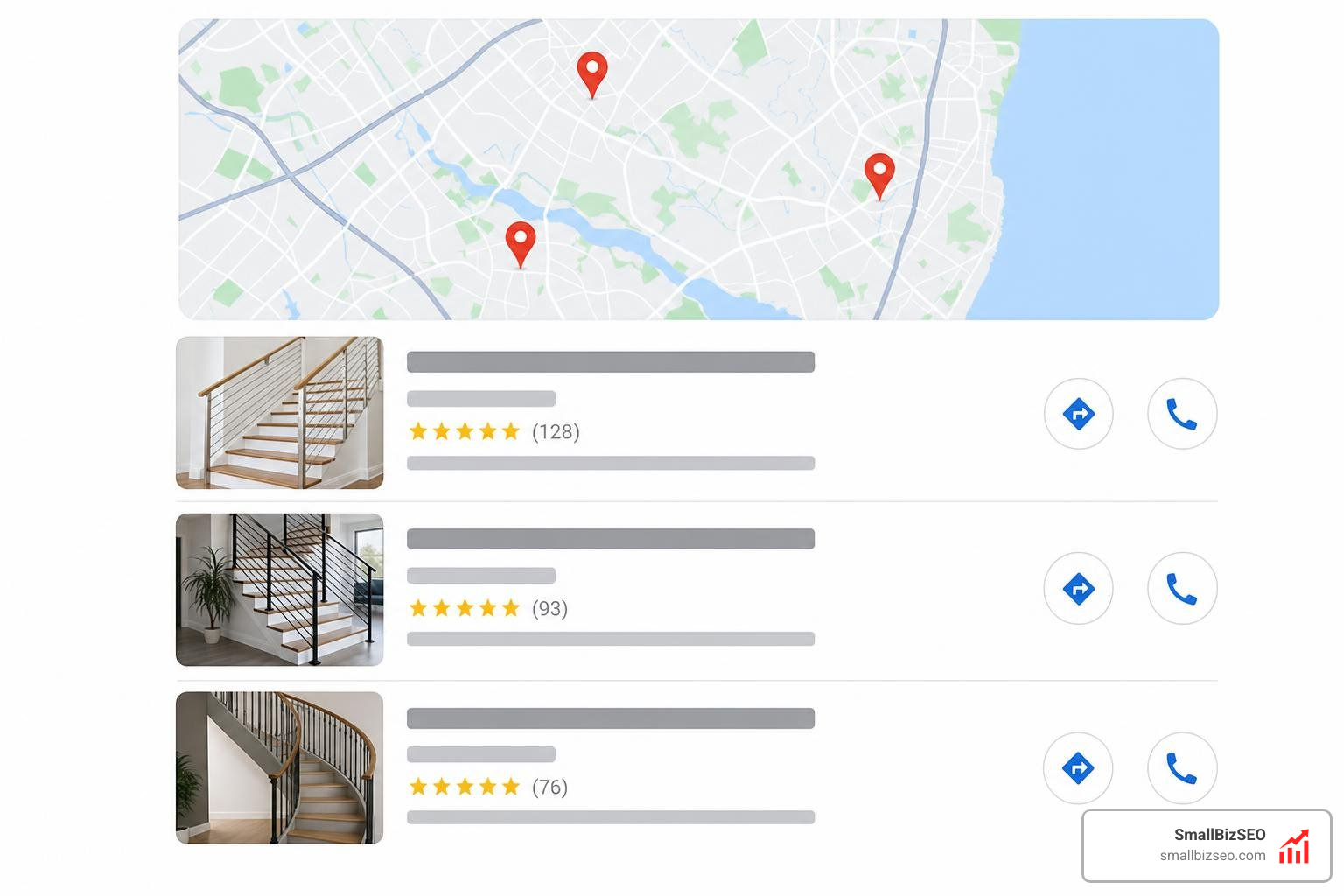
Businesses appearing in Google's local 3-pack capture approximately 70% of local search clicks and calls. Furthermore, over 75% of local searches lead to a direct business interaction within 24 hours. To maximize visibility in the local map pack:
- Primary and Secondary Categories: Set your primary category to "Stair Contractor" or "Railing Contractor," with secondary categories such as "Woodworker," "Metal Fabricator," or "General Contractor."
- Visual Evidence: Regularly upload high-resolution photos of finished spiral, floating, and curved staircases.
- Review Strategy: Proactively request reviews from past residential and commercial clients. Respond to every review with natural service and material references.
- Google Q&A and Posts: Pre-populate the profile Q&A section with common client inquiries regarding custom fabrication timelines, safety compliance, and materials.
- Products and Services: List all custom stairway designs, balustrades, and handrail packages under the built-in Products tab.
Implementing proven local SEO tips ensures your business profile consistently signals authority and geographic relevance to Google.
How Should Stair Builders Organize and Optimize Their Website Pages?
A stair contractor website should be structured logically around core services, specialized materials, geographic service areas, and individual project case studies. This architecture allows both search engines and potential clients to navigate your offerings seamlessly.
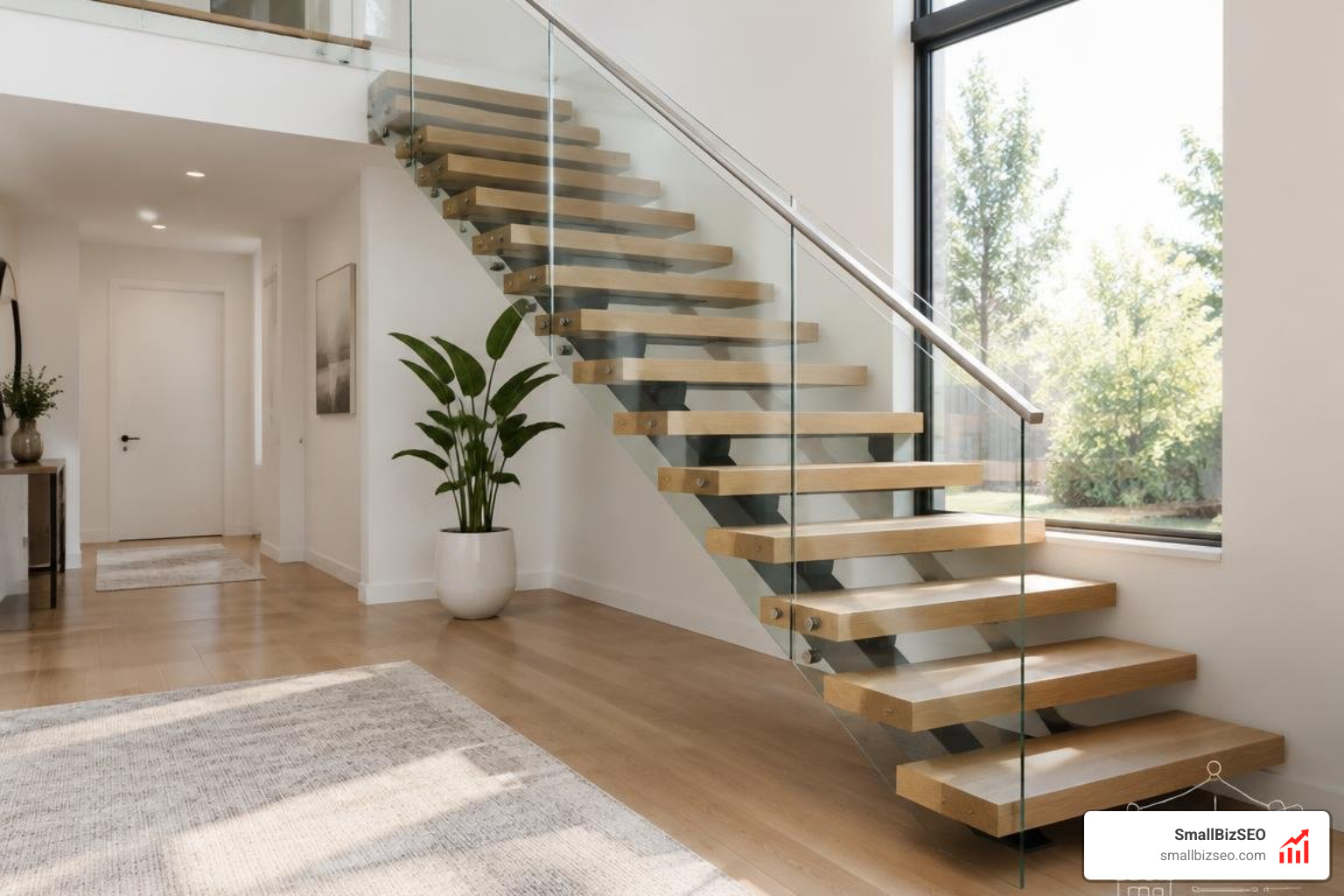
To maximize on-page and technical SEO performance:
- Header and Title Tag Hierarchy: Structure each page with a single H1 containing the primary service and target market, supported by H2s and H3s for specific materials and engineering details.
- Structured Data Schema: Implement
LocalBusiness,Service, andProductschema markup so search engines can parse your physical service area, ratings, and fabrication specialties. - Visual SEO Optimization: Custom staircases are sold visually. Compress high-resolution images to maintain fast page speeds, use descriptive filenames (such as
modern-floating-oak-staircase.jpg), and write clear alt text explaining the materials and structure. - Service Area Architecture: Create distinct, content-rich pages for major service regions. Avoid duplicate, thin content by featuring unique project photos and case studies for each locality.
- Internal Linking: Connect related service pages, material guides, and completed case studies using descriptive anchor text, similar to structured specialty contractor SEO workflows.
How Can Stair Contractors Improve Search Visibility and Win More Qualified Leads?
Stair contractors can improve organic search visibility and win more high-value contracts by diagnosing technical website health, implementing conversion rate optimization, building niche industry backlinks, and creating authoritative content that directly answers homeowner and architect inquiries.
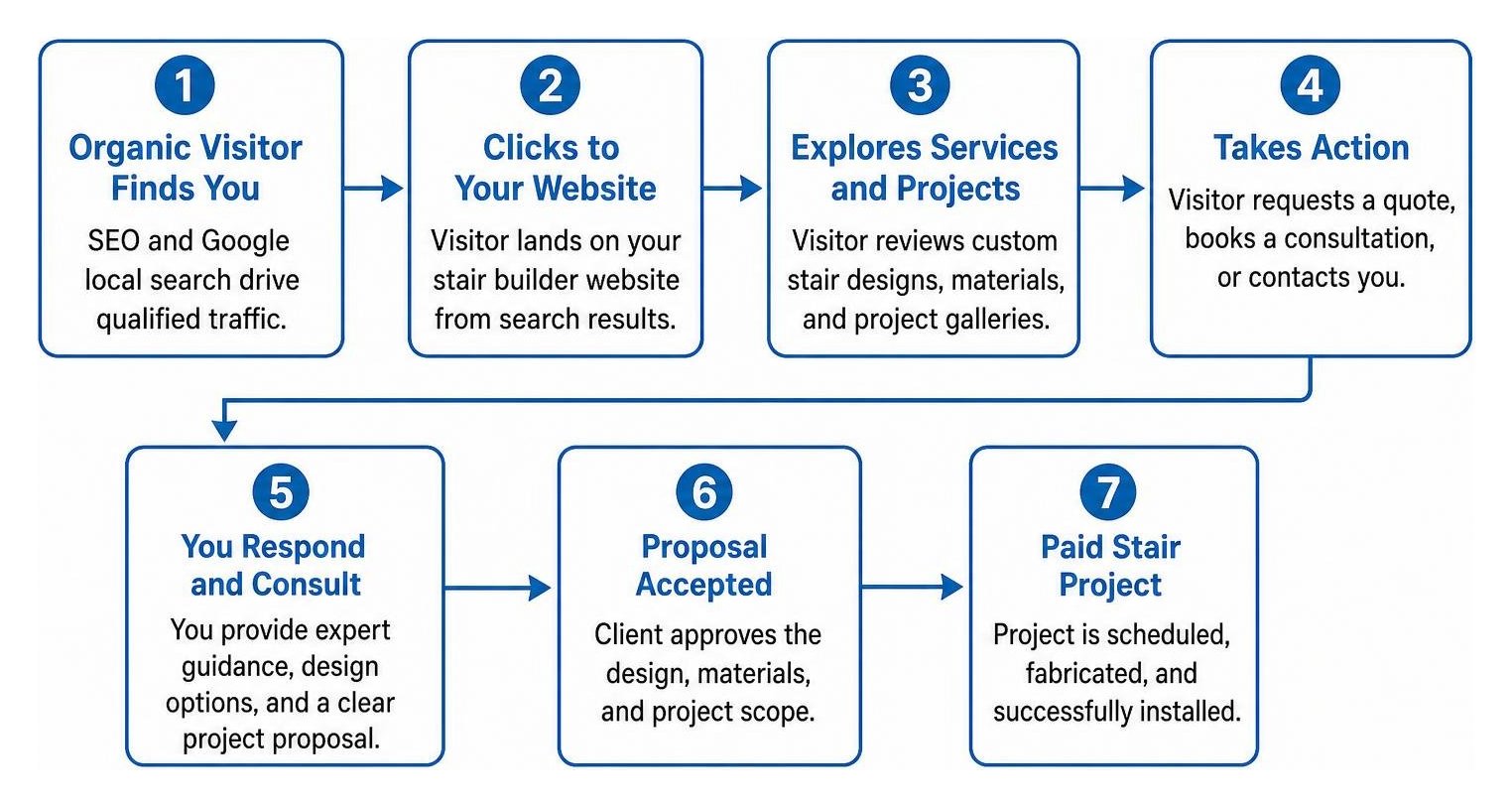
Specialty stairway builders often face competition from large general remodeling firms. To win profitable custom fabrication contracts, your website must clearly demonstrate architectural capability, safety compliance, and transparent design processes that turn search traffic into signed contracts.
What Content Helps Stair Builders Appear in Search and AI Answers?
High-quality content that provides direct, authoritative answers to client questions helps stair builders rank in organic results and earn citations in Google AI Overviews and Gemini search summaries.
Search engines favor Answer-Ready SEO that directly resolves user search intent without unnecessary filler. Staircase builders should build content clusters covering:
- Pricing and Cost Breakdowns: Comprehensive guides detailing the cost factors behind custom floating stairs, glass balustrades, and hardwood tread selection.
- Safety and Building Code Compliance: Detailed articles explaining local rise, run, handrail height, and baluster spacing regulations.
- Material Comparisons: Objective comparisons between tempered glass, stainless steel tension cable, wrought iron, and architectural hardwoods.
- Technical FAQs: Clear answers to common questions such as "Are floating staircases safe for children?" or "How much weight can a mono-stringer support?"
Providing evidence-backed project breakdowns and structured construction guides establishes the E-E-A-T (Experience, Expertise, Authoritativeness, and Trustworthiness) required for modern organic and AI search visibility.
How Can Stair Contractors Protect Rankings During a Website Redesign?
Stair contractors can protect their organic search rankings during a website redesign by executing a comprehensive technical audit, maintaining URL equity with 301 redirects, and optimizing Core Web Vitals.
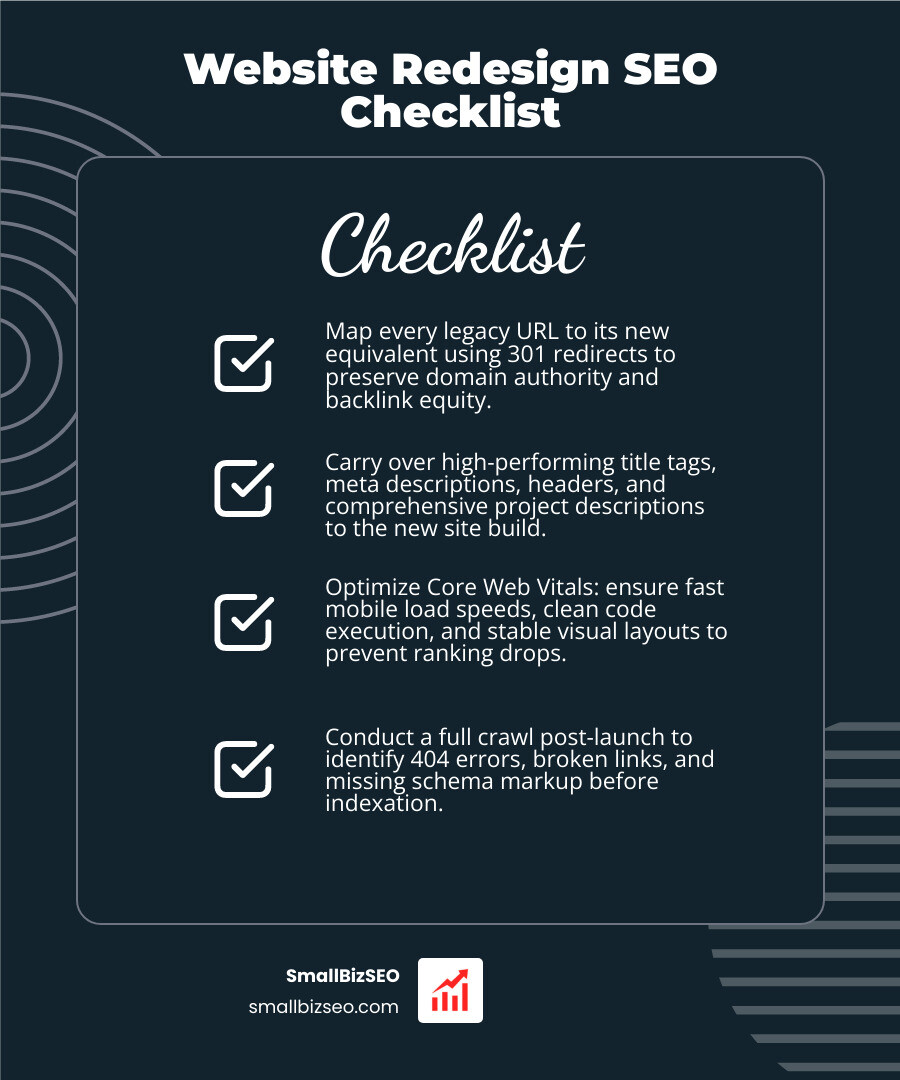
When launching a new site design, builders often lose high-ranking pages if legacy URLs are altered without proper redirect mapping. Essential steps to safeguard search equity include:
- URL Mapping and 301 Redirects: Map every legacy URL to its direct modern equivalent to transfer domain authority and preserve backlinks.
- Preserving Metadata and Content Depth: Ensure high-performing title tags, headers, and comprehensive project descriptions are carried over to the new build.
- Core Web Vitals Optimization: Ensure fast mobile load speeds, clean code execution, and stable visual layouts, preventing layout shifts from high-resolution photo galleries.
- Authoritative Industry Link Building: Earn contextual backlinks through supplier partnerships, architect credits, and home improvement publications.
At SmallBizSEO, we provide technical SEO, content strategy, and link-building services for small businesses. Our data-driven "Velocity" framework delivers fast rankings and E-E-A-T-compliant growth through transparent, automated reporting.
Before making major website changes, conducting a comprehensive SEO visibility audit protects your existing search equity and positions your custom stair contracting business for sustainable growth.
Elevate Your Stair Contracting Business with Strategic SEO
Dominating local search results requires combining technical website optimization, active Google Business Profile management, and visual proof of your craftsmanship. By structuring your website around high-intent keywords, answering critical buyer questions, and showcasing custom projects, your business can consistently attract high-margin residential and commercial clients.
Whether you specialize in modern floating stairs, luxury glass balustrades, or historic restorations, strategic local SEO ensures your craftsmanship is visible to the property owners and architectural professionals actively looking to hire your team.
Frequently Asked Questions
How long does it take for a stair builder's website to rank on Google?
Ranking timelines depend on the website's initial technical health, existing backlink profile, and local market competition. In markets with low specialty competition, foundational on-page SEO and local optimizations can generate qualified inquiries within weeks, while highly competitive metropolitan markets typically require several months of consistent optimization and authority building.
Why is visual SEO so important for custom stairway contractors?
Custom stairs represent significant design investments. Prospective clients evaluate builders heavily based on aesthetic quality and structural craftsmanship. Properly optimized image filenames, alt text, and fast-loading galleries help your projects rank in Google Image Search and Google Lens, driving high-intent visual traffic.
What is the difference between mono-stringer and floating stairs for SEO?
While structurally related, "floating stairs" is a popular consumer-facing search term with high search volume, whereas "mono-stringer" is a technical architectural term. Optimizing pages for both terms allows you to capture general homeowners as well as architects and structural engineers.