Mastering the Art of the SEO Content Brief

Mastering the Art of the SEO Content Brief
Why an SEO Content Brief Is the Foundation of Content That Actually Ranks
An SEO content brief is a structured planning document that tells a writer exactly what a page needs to rank — including the target keyword, search intent, heading structure, word count, internal links, and competitor gaps.
Here is what every SEO content brief should include:
- Primary keyword and semantic keyword list
- Search intent classification (informational, navigational, commercial, or transactional)
- Recommended word count based on competitor benchmarks
- Full H1/H2/H3 heading outline
- People Also Ask questions to target featured snippets
- Competitor gap analysis highlighting what top-ranking pages miss
- Internal and external link suggestions
- E-E-A-T guidance — author credentials, citation requirements, and depth level
- Tone and voice guidelines
- Call to action aligned to the reader's stage in the buyer's journey
Think about the last time a writer handed back a draft that missed the mark entirely. Maybe the keyword was there, but the angle was wrong. Or the content read well but never had a shot at ranking because it ignored what Google actually wanted to show for that query. That is not a writing problem — it is a briefing problem.
Without a clear, data-backed brief, even skilled writers are left guessing. They default to safe, generic content. Stakeholders ask for missing CTAs. Revision cycles pile up. As one content strategist described it: building content without a brief is like assembling furniture without the instructions — you get something, but good luck using it.
The good news? A well-structured brief fixes most of this before a single word is written. Research shows that well-briefed content can reduce revision cycles by over 70%, which is a significant time and cost saving for any small business.
I'm Clayton Johnson, a digital PR and SEO specialist who has built and refined SEO content brief workflows across dozens of content campaigns — using them to close the gap between search strategy and real, measurable organic growth. In the sections below, I'll walk you through everything you need to create briefs that consistently produce content that ranks.
SEO Content Brief terms to learn:
What is an SEO Content Brief and Why is it Essential?
At its core, search engine optimization relies on delivering the absolute best answer to a user's query. But search engine algorithms do not just look for keyword repetition; they evaluate topical authority and the overall depth of your content planning. This is where an SEO content brief becomes your secret weapon.
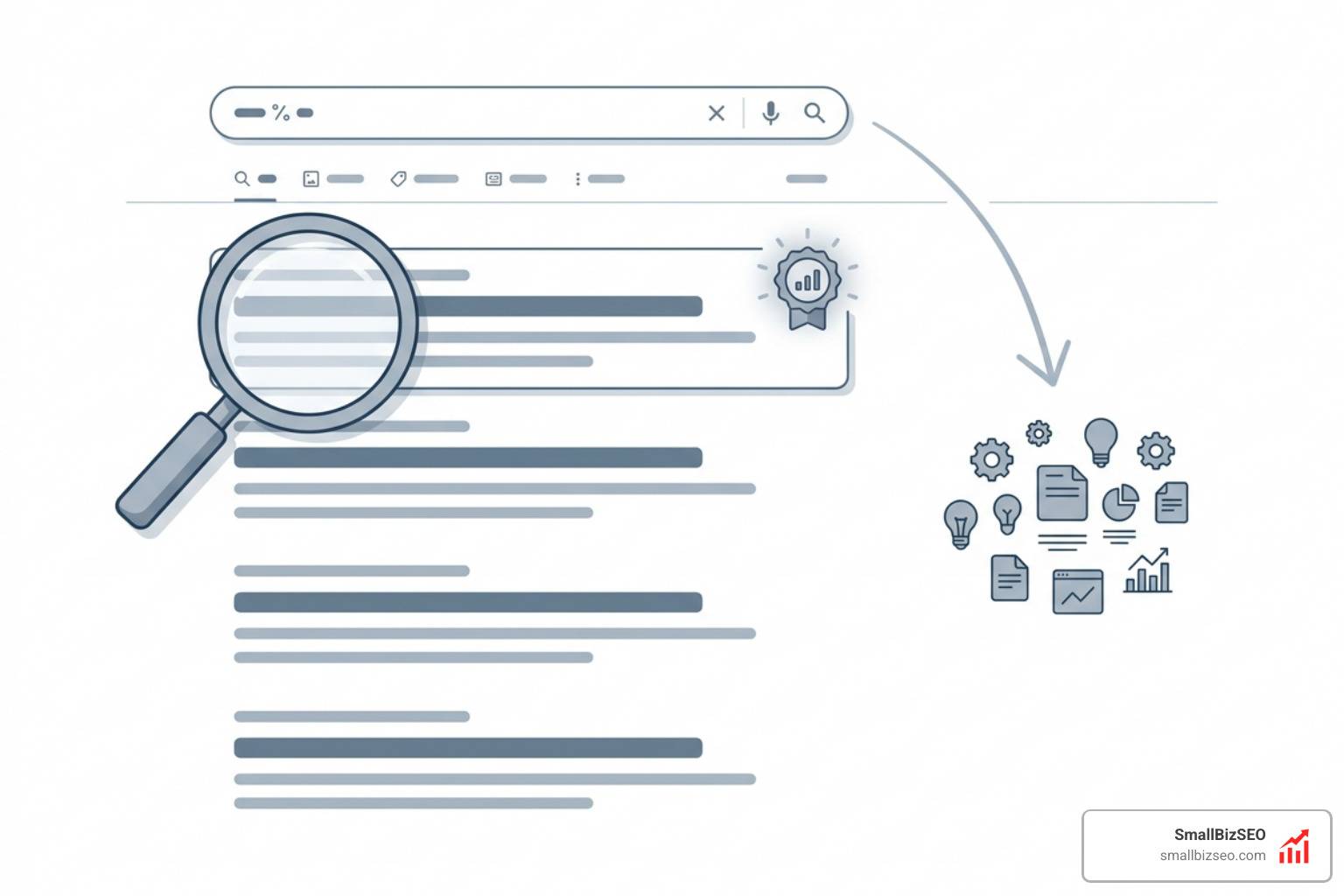
When we design a piece of content, we are not just writing into a void. We are competing against the top ten results on the search engine results page (SERP). To outrank them, our content must achieve "information gain"—a concept search engines reward heavily. Information gain means adding unique perspectives, original data, or expert insights that competitors left out.
If you simply rewrite what is already on page one, search engines have no incentive to rank your page higher. By integrating comprehensive competitive analysis directly into your SEO Content Marketing strategy, a brief ensures your writer knows exactly how to fill those competitive gaps. To understand how a brief acts as the ultimate blueprint for page-one rankings, explore the details in this guide on SEO Content Brief: Everything Your Page Needs to Rank.
Core Elements of a High-Performing Brief
A high-performing brief acts as both a content blueprint and a quality benchmark. It bridges the gap between technical requirements and creative editorial direction, ensuring that writers can focus on crafting engaging prose while satisfying technical search algorithms.
The Anatomy of a Winning SEO Content Brief
A winning brief goes far beyond a simple list of keywords. It maps out the exact DNA of the future web page.
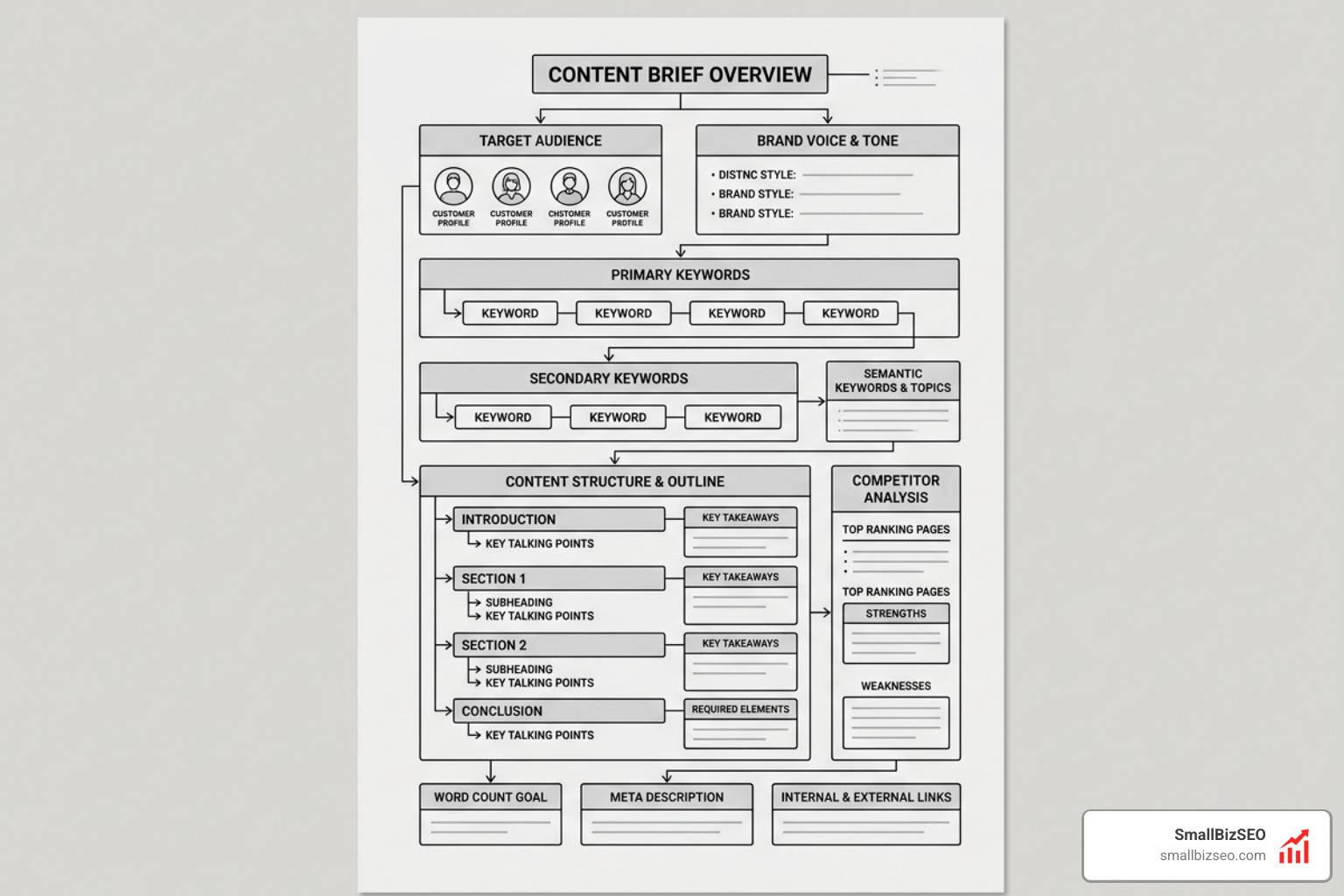
To set your writer up for success, ensure your brief template includes these foundational elements:
- Primary and Secondary Keywords: The main search term paired with 3 to 5 highly relevant secondary keywords.
- Semantic Keywords: Sourcing 5 to 10 conceptually related terms (entities) to build deep topical authority. Research shows that articles built from briefs containing rich semantic keywords can improve organic visibility dramatically compared to basic keyword lists.
- Target Audience and Brand Voice: Defining who the reader is—including their pain points—and how we should speak to them. Persona-based content can boost site visit duration by up to 900%.
- Internal and External Links: Specifying exactly which existing pages to link to (with recommended anchor text) and which external authority sources (.gov, .edu, or .org) to reference.
- Call to Action (CTA): A clear instruction on what the reader should do next, aligned with their stage in the buyer's journey.
By standardizing these elements, you ensure a smooth workflow for SEO Friendly Content Writing that requires minimal back-and-forth editing.
Technical Specifications and E-E-A-T Guidelines
Search engines place strict limits on how metadata is displayed. To prevent search engines from truncating your hard work, your brief must specify technical character limits:
- Title Tags: Maximum of 60 characters.
- Meta Descriptions: Between 140 and 160 characters, containing the exact primary keyword.
Additionally, modern search algorithms prioritize E-E-A-T (Experience, Expertise, Authoritativeness, and Trustworthiness). To build real search trust, your brief should provide explicit E-E-A-T guidelines for the writer. Instruct them on what author credentials to highlight, which first-person experiences to weave in, and how to cite reputable sources. For a deeper look at aligning your content with these quality standards, read our guide on How to Optimize Your Content for E-E-A-T and Build Real Search Trust.
How to Determine Search Intent, Word Count, and Heading Structure
To create a brief that ranks, we must analyze the current SERP landscape. This involves competitor benchmarking to understand content depth and plan a logical heading structure.
How to Create an SEO Content Brief That Aligns with Search Intent
Search intent is the "why" behind a user's search query. If you target a keyword with the wrong format or angle, your page will not rank—no matter how well-written it is. Search intent generally falls into four categories:
- Informational: The user wants to learn something (e.g., "how to write a brief").
- Commercial: The user is researching options (e.g., "best content brief software").
- Transactional: The user wants to buy (e.g., "buy content brief template").
- Navigational: The user wants to find a specific website.
We must analyze the top-ranking pages to see what Google already favors. If the top results for your target keyword are all listicles, your brief should instruct the writer to write a listicle. If they are product pages, do not assign a blog post. Aligning your content structure with these expectations is a core pillar of successful On Page SEO.
Setting Word Count Benchmarks and Heading Outlines
We do not believe in "magic" word counts, but analyzing competitor lengths gives writers a realistic benchmark. Take the median word count of the top three ranking competitors and add roughly 15% to ensure thoroughness.
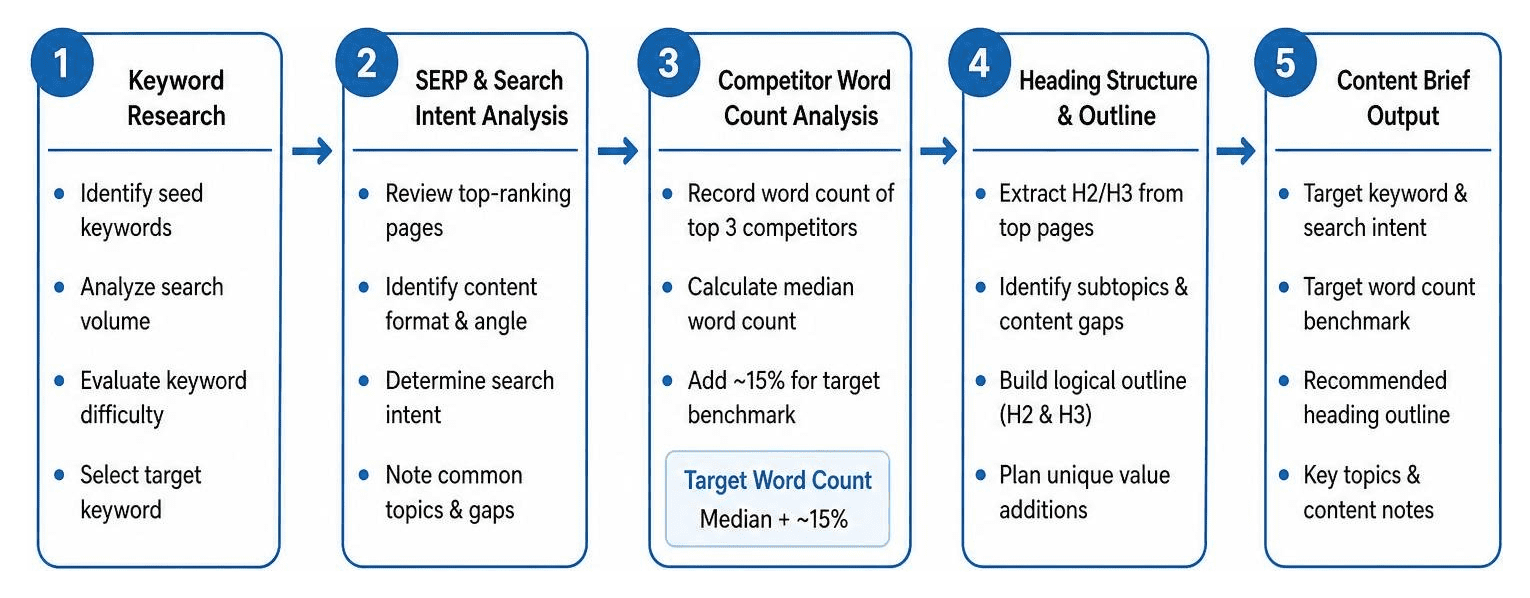
Next, build a logical heading structure using H2 and H3 tags. This outline should cover all major subtopics addressed by competitors while leaving room for unique value. To make this process highly efficient, many teams use automated tools alongside manual refinement.
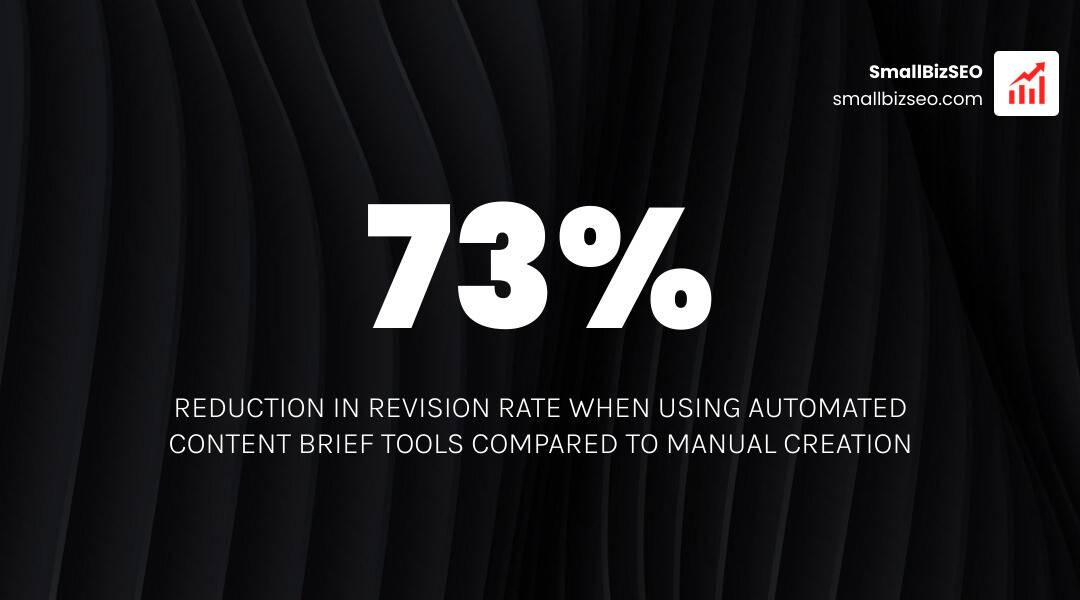
| Metric | Manual Brief Creation | Automated Tool Brief |
|---|---|---|
| Average Time Spent | 2 to 4 hours per brief | 3 to 15 minutes per brief |
| Semantic Keyword Depth | Limited to manual research | Extracts 50+ NLP entities instantly |
| Revision Rate | Higher due to human gaps | Reduced by up to 73% |
To find the exact structural and keyword gaps your competitors have left wide open, check out our step-by-step guide on Keyword Gap Analysis What It Is and How to Do It Right.
Common Mistakes to Avoid in Your Content Strategy
Even with the best intentions, content campaigns can stall due to a few common optimization pitfalls and workflow bottlenecks.
Over-Optimization and Keyword Stuffing
Keyword stuffing is an obsolete practice that destroys the user experience. Modern search engines use natural language processing (NLP) to understand entities and semantic search. They look for how naturally related concepts connect rather than how many times a single keyword is repeated.
Forcing keywords into headings where they do not belong makes content feel robotic. Over-optimization can also lead to different pages on your site competing for the same terms. To prevent this, read our strategic breakdown on Keyword Cannibalization.
Blindly Trusting Automated Tools Without Human Oversight
AI-driven brief generators are fantastic for gathering raw data, pulling People Also Ask questions, and estimating word counts in seconds. For instance, tools like the AI SEO Content Brief Generator — Research-Backed Briefs in 3 Minutes | Harbor can save hours of manual research.
However, blindly copy-pasting automated briefs without human oversight is a recipe for generic, "oatmeal" content. AI tools do not understand your unique business goals, your audience's exact emotional pain points, or your brand voice. Always have an experienced SEO strategist customize automated briefs to inject original insights and brand-specific value. For more on balancing automation with human creativity, explore our thoughts on going Beyond Content Optimization.
Frequently Asked Questions About SEO Content Briefs
What is the difference between a content brief and an outline?
An outline is simply a list of headings (H1, H2, H3) showing the order of topics. An SEO content brief is a comprehensive strategic document. It layers in the target audience, search intent, primary and semantic keywords, internal linking targets, competitive gap analysis, and E-E-A-T requirements behind those headings.
How long should a comprehensive brief be?
For competitive keywords, a comprehensive brief typically runs between 800 and 1,500 words. While that might seem long, a detailed brief eliminates writer guesswork, which ultimately cuts editing time in half.
Can AI tools completely replace manual brief creation?
No. AI tools are incredible for scaling data collection, but they lack human business context. A successful brief requires a human touch to align the content with actual marketing funnels, product-led angles, and unique brand voices.
Elevate Your Search Visibility with SmallBizSEO
Creating high-ranking content consistently requires a repeatable, data-driven framework. At SmallBizSEO, we help small businesses scale their organic traffic using our proprietary "Velocity" framework. We combine technical SEO, transparent automated reporting, and E-E-A-T-compliant content growth to deliver fast, sustainable rankings.
Whether you need help defining your Content Planning Process or want a fully managed solution, our expert team is here to help. Let us handle the technical strategy and briefing so you can focus on running your business. Explore our SEO Content Services today, and let us build a search strategy that drives real revenue for your brand.