Minneapolis Local SEO Strategies That Drive Real Foot Traffic Fast

Minneapolis Local SEO Strategies That Drive Real Foot Traffic Fast
How can Minneapolis local SEO bring in more nearby customers?
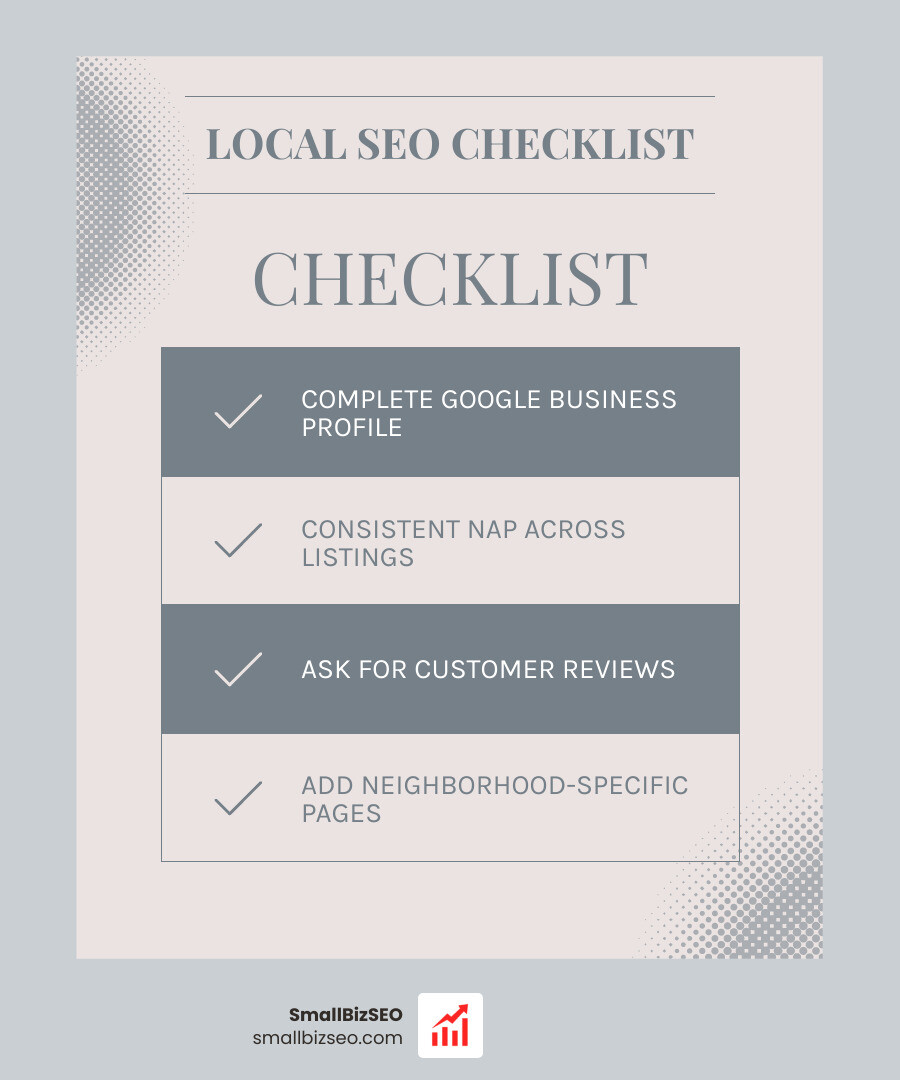
Start with the places customers already look. Complete your Google Business Profile, keep your name, address, and phone number consistent across listings, and ask customers for honest reviews. Then add useful website pages for the Minneapolis neighborhoods you serve, such as Uptown, North Loop, and Northeast.
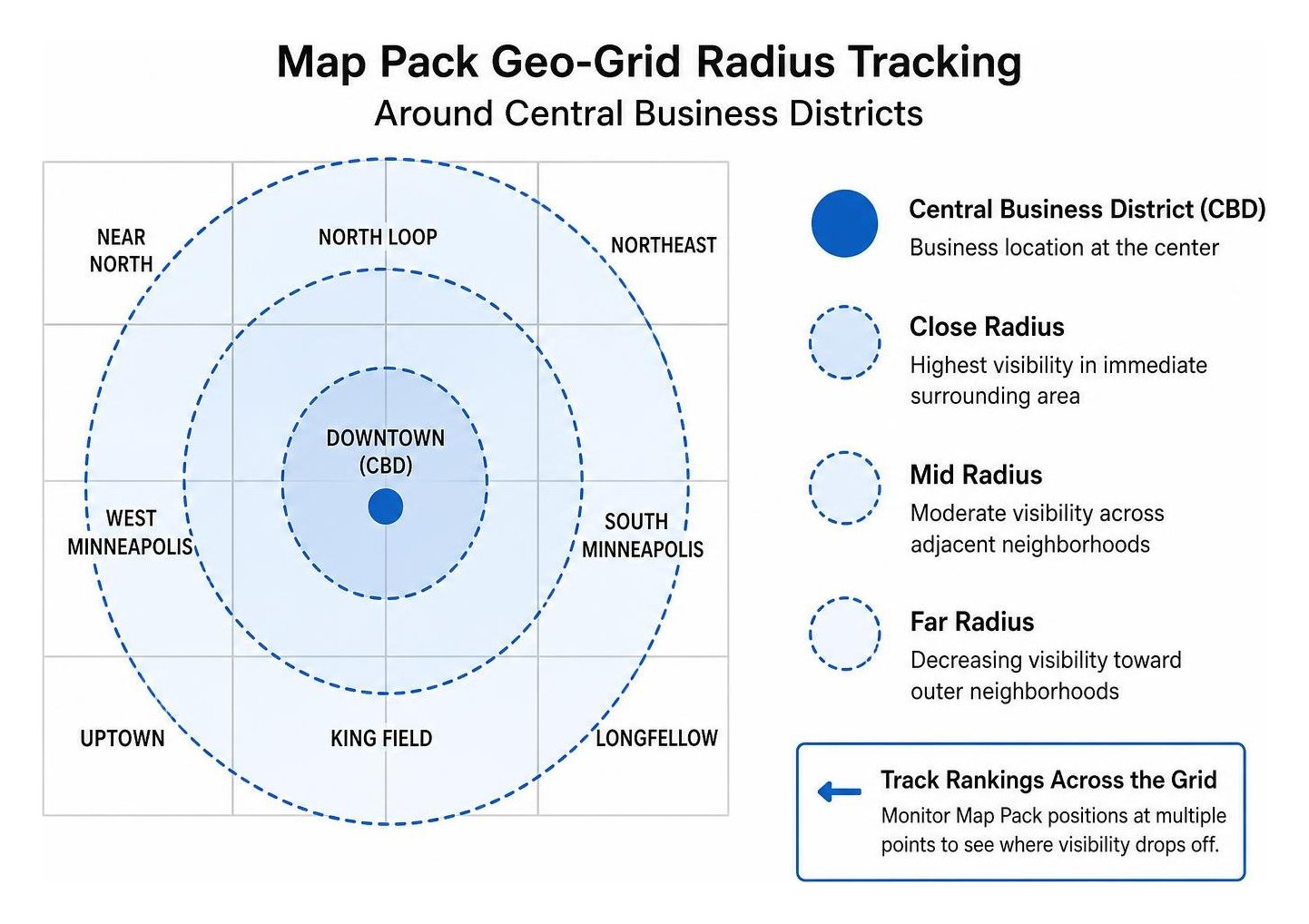
Minneapolis and St. Paul are close, but they are not one search market. Check where you appear on Google Maps from different parts of each city rather than relying on a single ranking. That will show you where nearby customers can find you and where your visibility drops off.
SmallBizSEO works with Minneapolis businesses on local SEO strategies that attract qualified leads, no matter where the business is physically based. Our approach connects clear website content, local search signals, and digital PR so owners can focus on visibility that supports real business goals. For a broader look at how local visibility works, Google's guide to local ranking breaks down the signals that influence map placement.
What Local SEO Pillars Help Minneapolis Businesses Win the Map Pack?
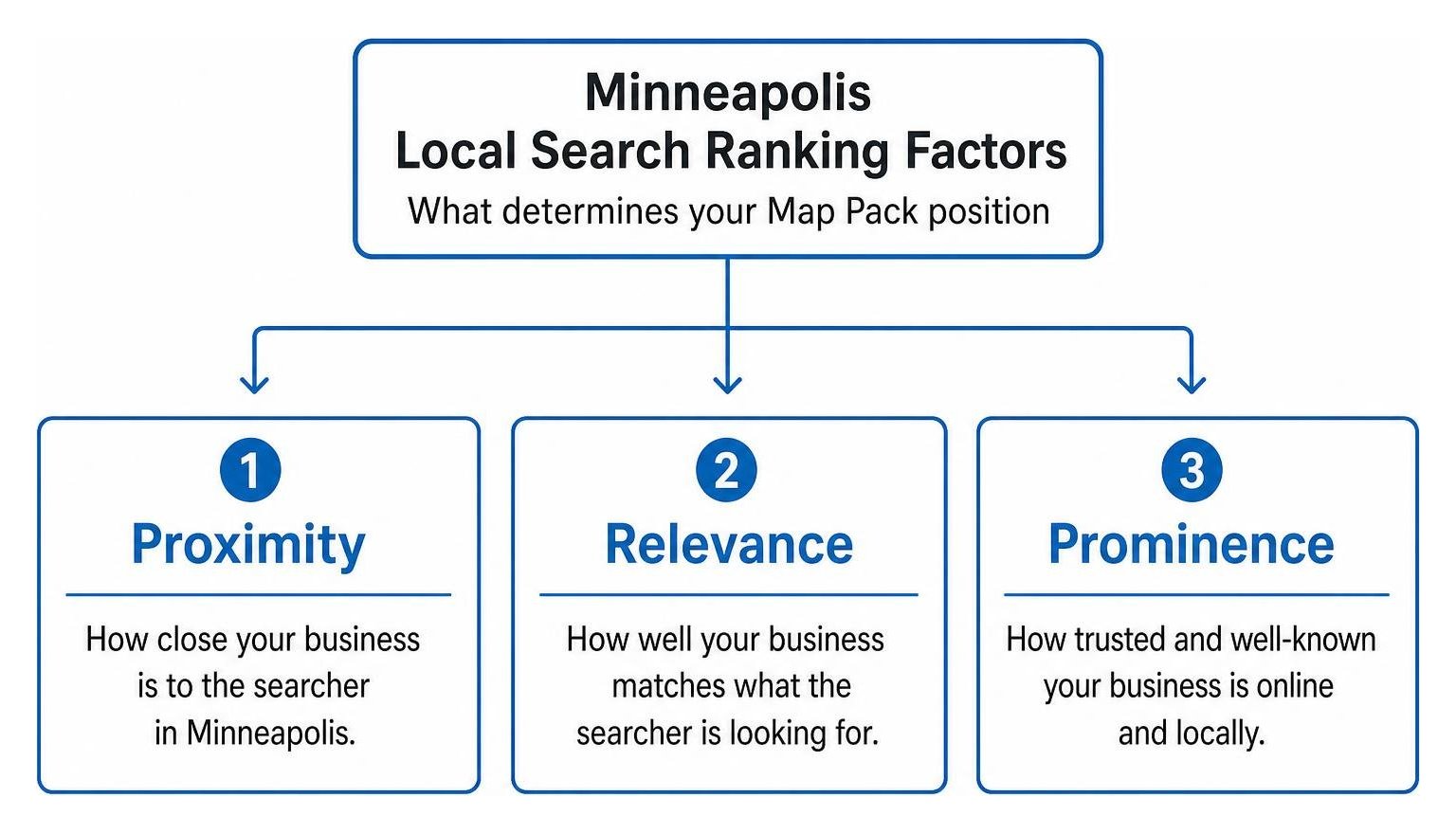
To win top spots in the Map Pack, build strong local signals around business accuracy, physical proximity, and customer trust. Over 93% of local buying decisions begin on a search engine, and roughly 70% of clicks go straight to the top three map results. Securing these positions requires active management of your core business details across the web.
When search engines determine which companies to display, they calculate three primary factors: relevance, distance, and prominence. Implementing actionable strategies from a practical guide to local SEO map visibility helps ensure your website and listings satisfy each of these criteria simultaneously.
How Does Local SEO Minneapolis Differ from Standard Organic SEO?
Standard organic SEO focuses on ranking websites in traditional search results regardless of searcher location, while local SEO focuses on securing map visibility for nearby consumers. In a metro area where more than 60,000 small businesses compete for visibility, winning map placement requires distinct geographic signals.
Organic results emphasize broad topical authority and national backlinks. In contrast, local pack results prioritize physical proximity, user location, and structured entity data. Even emerging search features like Google AI Overviews and answer engines rely on well-structured local information to recommend area providers. Understanding specific Google Local Map Pack secrets most local businesses overlook helps local establishments outrank larger, generic brands.
Service-area businesses can also compete effectively without displaying a public storefront address. Setting clear service boundaries and building localized landing pages signals relevance directly to neighborhood searchers.
Common search intent triggers that influence local map algorithms include:
- Immediate urgency terms (such as "emergency furnace repair" or "same-day service")
- Hyperlocal neighborhood modifiers (including "North Loop coffee" or "Uptown boutique")
- Direct geographic descriptors (such as "near me" or "closest open provider")
- High-intent commercial queries (like "best local contractor reviews" or "cost of installation")
How Can You Optimize Google Business Profile and Track Neighborhood Rankings?
Optimizing your Google Business Profile (GBP) starts by selecting accurate primary categories, writing comprehensive business descriptions, and uploading authentic photography regularly. Because rankings fluctuate significantly from block to block, tracking your visibility using geo-grid tools reveals exactly where your prominence fades across areas like the North Loop, Uptown, Northeast, and Downtown.
To support your profile, build dedicated neighborhood landing pages on your website that feature structured LocalBusiness schema markup. This technical code clarifies your exact service coordinates, operating hours, and service menus for search crawlers. You can follow our comprehensive local SEO guide to structure these neighborhood pages effectively.
How Can You Manage Citations, Reviews, and Winter Seasonality Spikes?
Managing off-page authority requires maintaining clean citations, fostering regular customer reviews, and anticipating seasonal consumer demand. Ensuring identical names, addresses, and phone numbers across all directories prevents mixed signals that confuse search algorithms.
Review velocity—the consistency and speed at which you gain new customer feedback—serves as a vital trust signal for local algorithms. Encouraging clients to mention specific services and neighborhood names in their reviews naturally reinforces geographic relevance.
Following our detailed overview where NAP consistency is explained helps eliminate duplicate listings that suppress rankings. Additionally, scoring the best local backlinks from neighborhood associations, local chambers, and community sponsorships reinforces your site's authority.
Planning around seasonal search spikes is also essential for service businesses. In colder months, urgent searches for furnace repair and ice dam removal surge overnight. Because SEO authority takes time to accumulate, winter-exposed businesses must establish relevant service pages and local links months before freezing temperatures arrive.
Which Local SEO Execution Strategy Can Help You Outrank Competitors?
The best execution strategy balances internal resources, technical requirements, and market competition. While large national franchises often rely on broad brand awareness, independent businesses can gain an advantage by building deeper, authentic neighborhood authority.
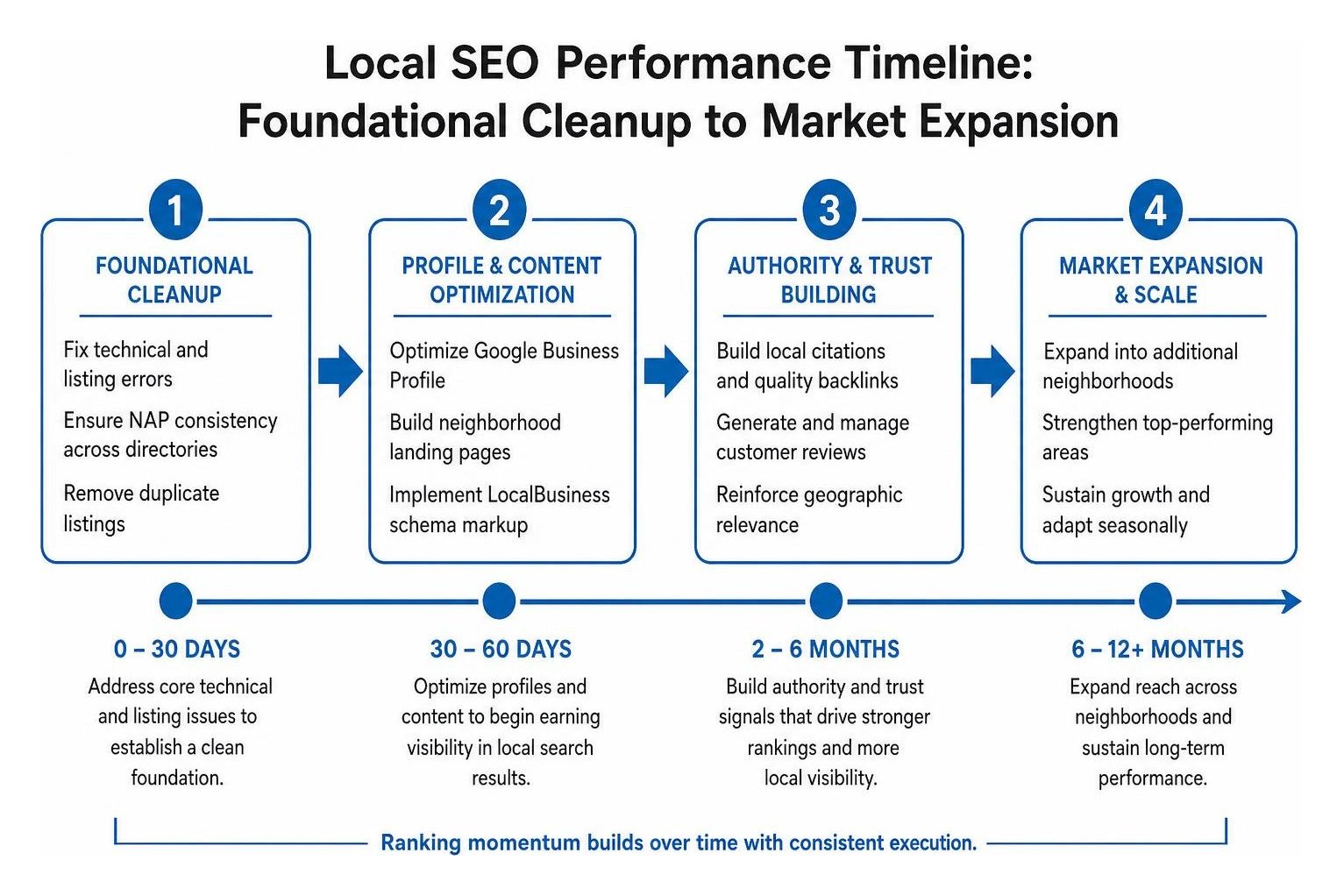
Most businesses begin seeing measurable ranking movement within 30 to 60 days of addressing core technical and listing errors, while competitive terms build momentum over 6 to 12 months. Choosing between a local vs national SEO agency depends on whether your target audience is localized or distributed across the country.
How Much Does Local SEO Minneapolis Cost Across Agency Tiers?
Local SEO pricing varies depending on project scope, keyword competition, and execution style:
| Service Model | Typical Monthly Investment | Core Deliverables | Expected Timeline | Best-Fit Business Profile |
|---|---|---|---|---|
| Self-Directed Software | $30 – $100 / month | Geo-grid rank tracking, citation scanning tools | 6 – 12 months | Startups and solo operators with available time |
| Guided Implementation | $399 – $900 / month | Managed citation cleanup, monthly audits, basic strategy | 3 – 6 months | Small businesses with internal marketing support |
| Full-Service Management | $1,500 – $5,000+ / month | Technical SEO, custom landing pages, digital PR, review systems | 30 – 90 days for initial movement | Established companies looking to dominate local search |
Investing in structured local campaigns provides compounding returns. Unlike paid ads that stop generating leads the moment spending ceases, organic map visibility continues delivering prospective calls and foot traffic over the long term.
Should You Handle Local SEO In-House or Hire a Specialized Agency?
Handling local SEO in-house works well for companies that have the time to consistently publish content, solicit customer reviews, and resolve technical issues. However, competitive service verticals often require dedicated technical expertise, programmatic page design, and proactive link building to outrank established competitors.
When vetting an agency partner, look for clear performance tracking, transparent deliverables, and month-to-month flexibility rather than restrictive long-term commitments. Our team uses a data-driven Velocity framework to combine technical optimization, local content generation, and authority building to produce measurable lead growth.
To evaluate your current search presence, schedule a comprehensive Minneapolis SEO audit to identify high-impact opportunities across your market.
Dominate Your Local Market and Drive Lasting Revenue
Winning the local search market requires a consistent focus on verified business information, active review collection, and relevant neighborhood content. By structuring your website to answer direct customer queries and reinforcing your geographic presence on Google Maps, you build a sustainable foundation for steady foot traffic and inbound customer calls. Focus on your core local signals today to establish lasting visibility across every neighborhood you serve.