A Practical Guide to Search Intent Keyword Mapping
What Is Search Intent Keyword Mapping?
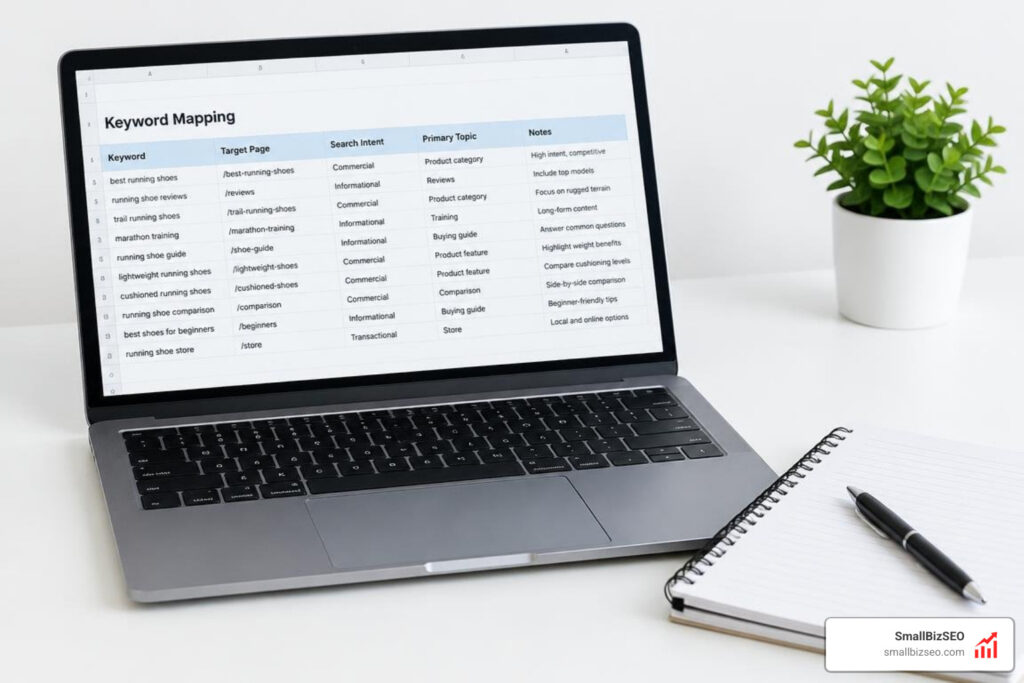
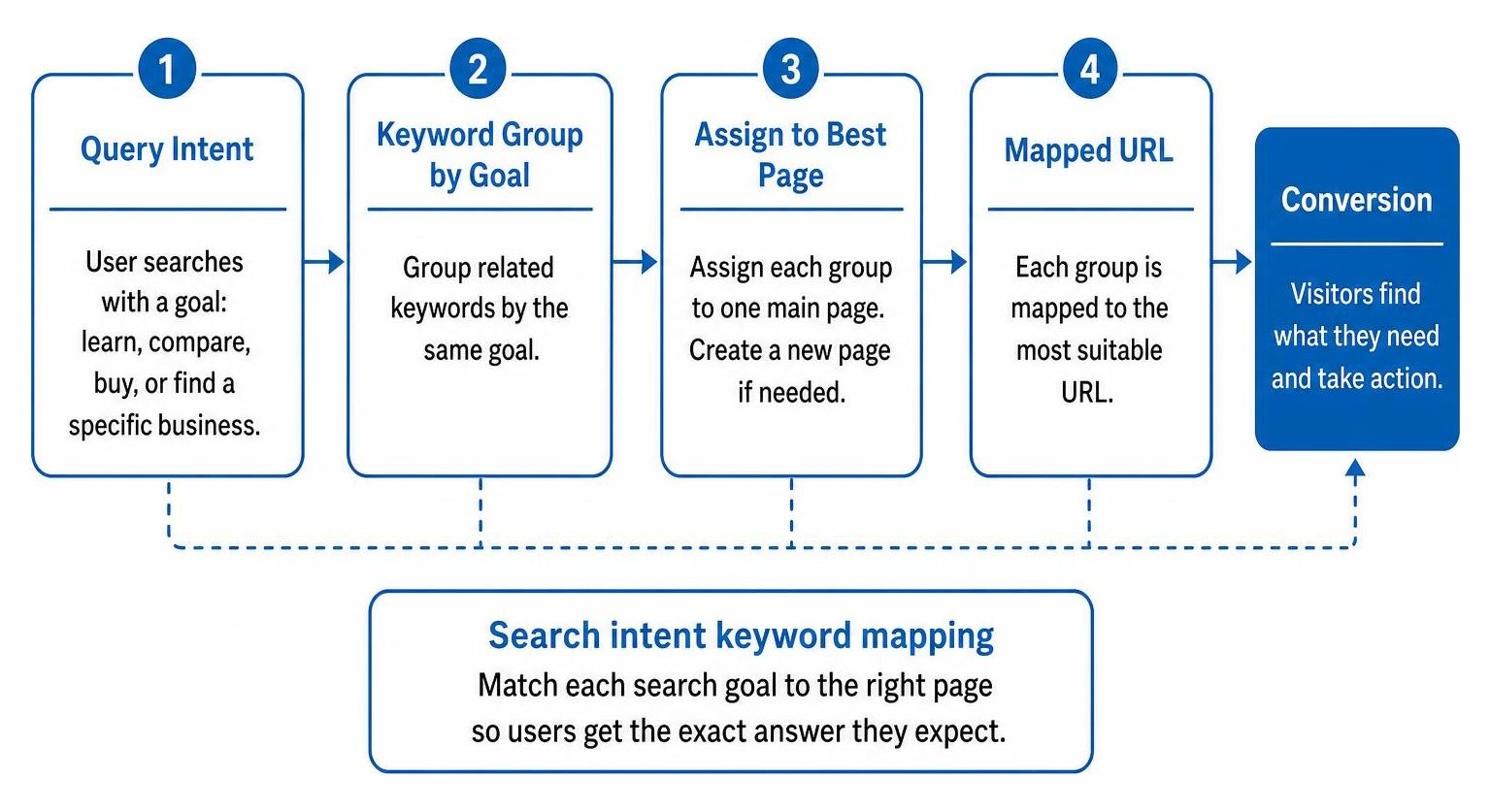
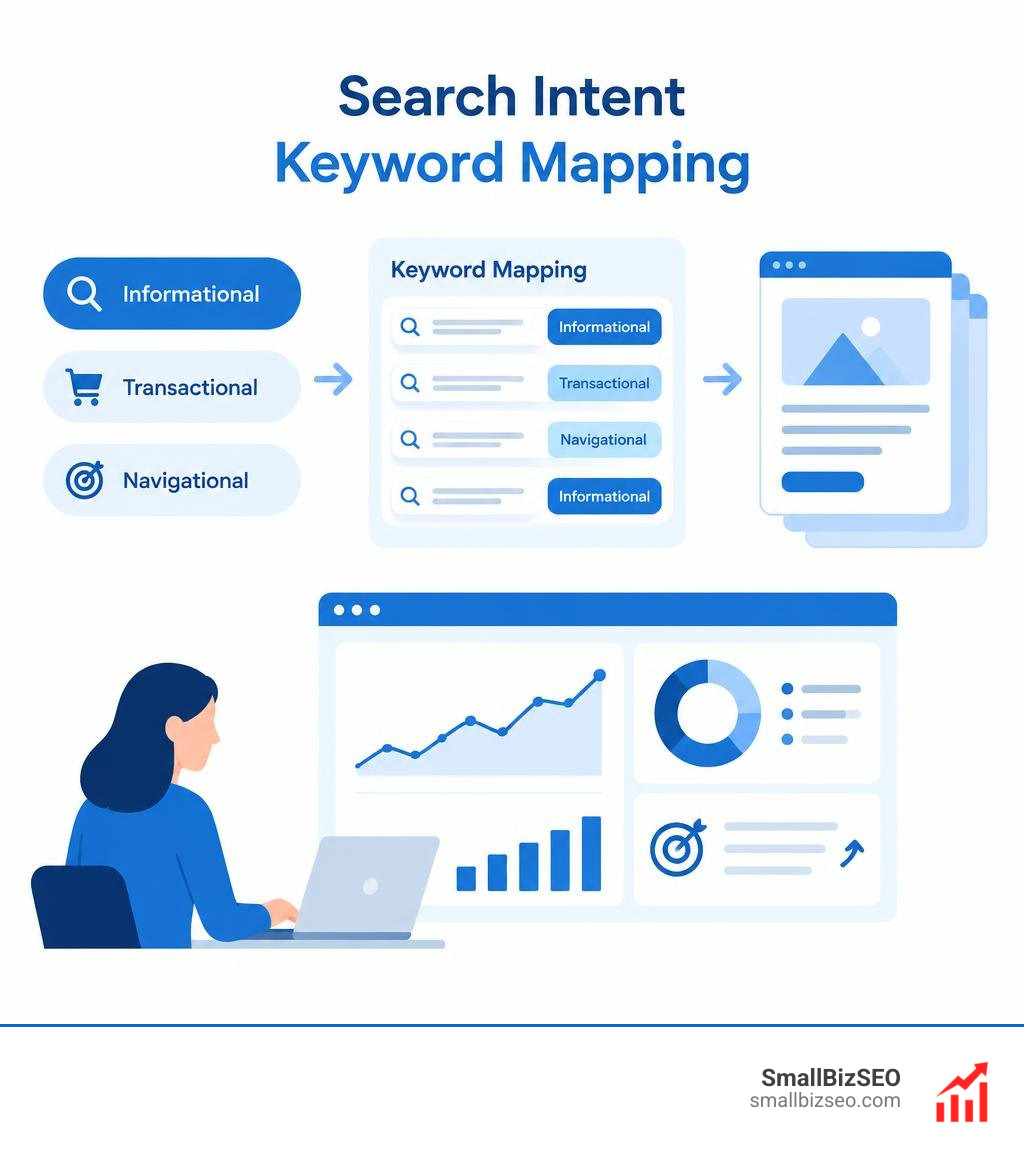
Search intent keyword mapping means grouping search terms by what people want to do, then assigning each group to the page best suited to help them.
- Sort keywords by goal: learn, compare, buy, or find a specific business.
- Check search results to see which page types meet that goal.
- Assign each group to one main page, and note where a new page is needed.
This goes beyond basic keyword research. Instead of collecting terms people search for, you decide which page should answer each search. That helps visitors find what they need and keeps your pages from competing for the same goal.
I'm Clayton Johnson, founder of SmallBizSEO, where my work in content strategy and Answer-Ready SEO includes search intent keyword mapping. I focus on turning customer questions into clear, useful pages that support qualified leads.
What Is Search Intent Keyword Mapping and Why Is It Critical for SEO?
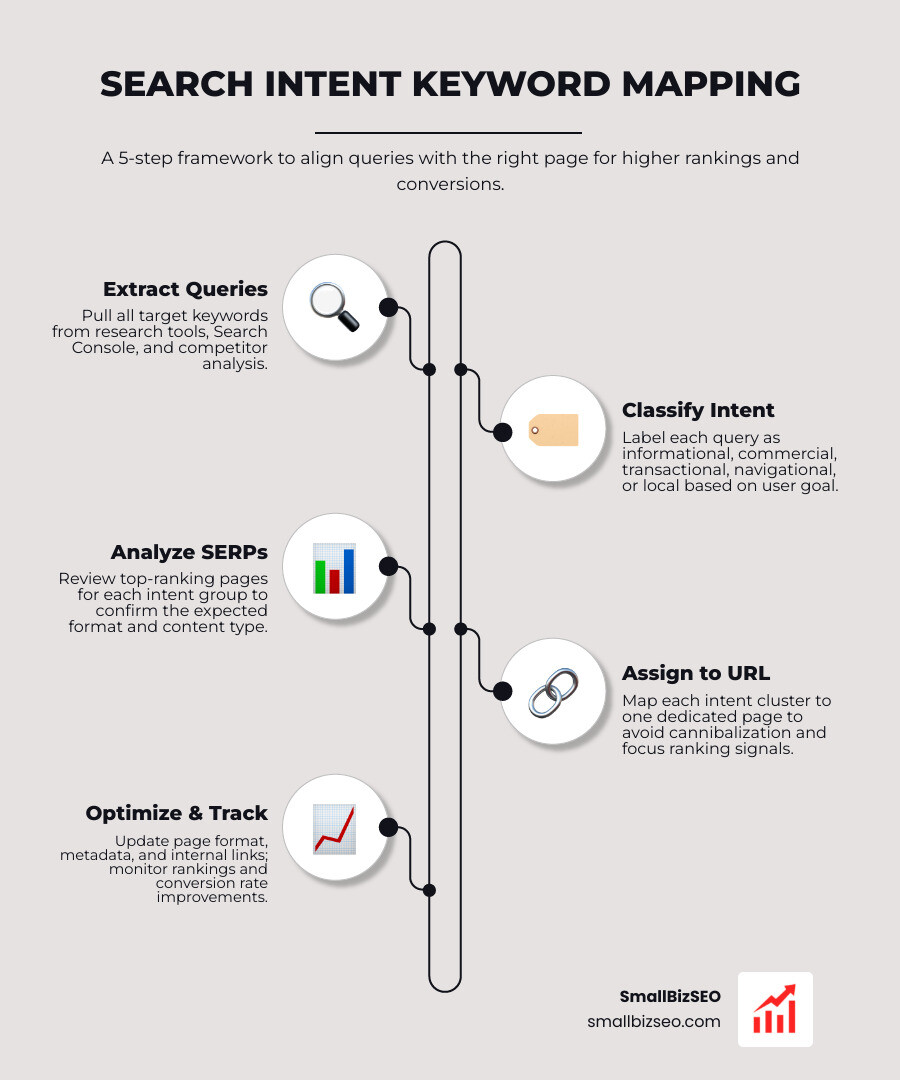
Search intent keyword mapping is the strategic practice of organizing target search queries based on the user's primary goal and assigning those clusters to dedicated URLs across your website. While basic keyword discovery compiles search volume and difficulty, mapping establishes the exact blueprint for your site's information architecture.
Aligning content with user intent is critical because search engines prioritize user satisfaction over raw keyword density or backlink volume. Pages with mapped intent structures improve organic conversion rates by over 25 percent while maintaining broad search visibility. Furthermore, intent-aligned pages hold first-page rankings up to 35 percent longer than pages targeting mixed or unaligned search goals. When content delivers the exact format and answer a visitor expects, engagement metrics rise, signaling relevance and quality to search engines.
What Are the Core Types of Search Intent to Identify?
To effectively organize queries, you must understand how to analyze user intent behind search queries. Search queries generally fall into distinct intent categories:
- Informational Intent: The searcher seeks answers, explanations, or tutorials (e.g., "how to fix a leaky faucet"). These belong on educational blog posts or guides.
- Commercial Investigation: The user evaluates options, compares solutions, or reads reviews prior to buying (e.g., "best accounting software for small business"). These map to comparison tables, roundups, and review pages.
- Transactional Intent: The visitor is ready to make a purchase, book an appointment, or sign up (e.g., "buy running shoes online" or "schedule plumbing service"). These require product, service, or checkout pages.
- Navigational Intent: The searcher wants to find a specific website or brand portal (e.g., "SmallBizSEO client login"). These map directly to brand homepages or specific utility URLs.
- Local Intent: The user searches for services or physical locations nearby (e.g., "electrician near me"). These require location pages and local business listings.
- Generative AI Intent: The user submits conversational prompts or task requests to AI search tools and answer engines, expecting structured steps or direct summaries.
Understanding these distinctions allows you to match queries with the right content format.
| Search Intent Type | Primary User Goal | Common Modifiers | Dominant SERP Features | Target Page Format |
|---|---|---|---|---|
| Informational | Learn or find answers | how to, what is, tips, guide | Featured Snippets, People Also Ask | Blog Post, In-Depth Tutorial |
| Commercial | Compare solutions | best, top, review, vs, comparison | Rating Stars, Comparison Tables | Product Roundup, Buyer Guide |
| Transactional | Purchase or convert | buy, price, discount, order | Product Carousels, Rich Snippets | Product Page, Booking Form |
| Navigational | Locate a brand page | login, portal, official site | Sitelinks, Brand Knowledge Panel | Homepage, Account Portal |
| Local | Find physical services | near me, open now, local | Map Pack, Local Business Card | Geo Landing Page, Service Page |
| Generative AI | Complete task or prompt | create, summarize, calculate | AI Overviews, Direct Synthesis | Structured Guide, Direct Answer Hub |
How Does Search Intent Keyword Mapping Prevent Cannibalization?
Keyword cannibalization happens when multiple pages on your website target the same search intent. When this occurs, search engines split ranking signals between competing URLs, suppressing both pages from ranking on page one.
Establishing a strict "one search intent = one page" rule eliminates internal competition. Brands that separate informational queries from commercial and transactional keywords reduce cannibalization by nearly 40 percent across large content libraries. A disciplined keyword clustering process lets you audit overlapping URLs, consolidate duplicate assets into a single comprehensive resource, and implement 301 redirects to preserve link equity and establish a clear authority signal.
Step-by-Step Framework for Search Intent Keyword Mapping
Building a search intent keyword map requires a repeatable, structured process that translates raw data into actionable content priorities.

A comprehensive keyword research strategy establishes order before any writing begins. Every entry in your map should be assigned an operational SEO action:
- Create: Build a net-new page for an unaddressed intent cluster.
- Optimize: Update on-page copy and layout to better serve existing search goals.
- Consolidate: Merge thin, overlapping pages into one authoritative resource.
- Redirect: Point retired or cannibalizing URLs to the primary ranking page via 301 redirects.
- Prune: Remove outdated pages that hold no organic or commercial value.
This structured alignment also improves paid search campaigns. When you group PPC ad groups by distinct intent tiers, your ad copy and landing page messaging align tightly with user readiness, reducing wasted ad spend and lifting quality scores. For guidance on producing valuable assets, consult Google's documentation on Creating Helpful, Reliable, People-First Content.
How Do You Conduct Search Intent Keyword Mapping Step by Step?
Executing a systematic keyword map involves five core phases:
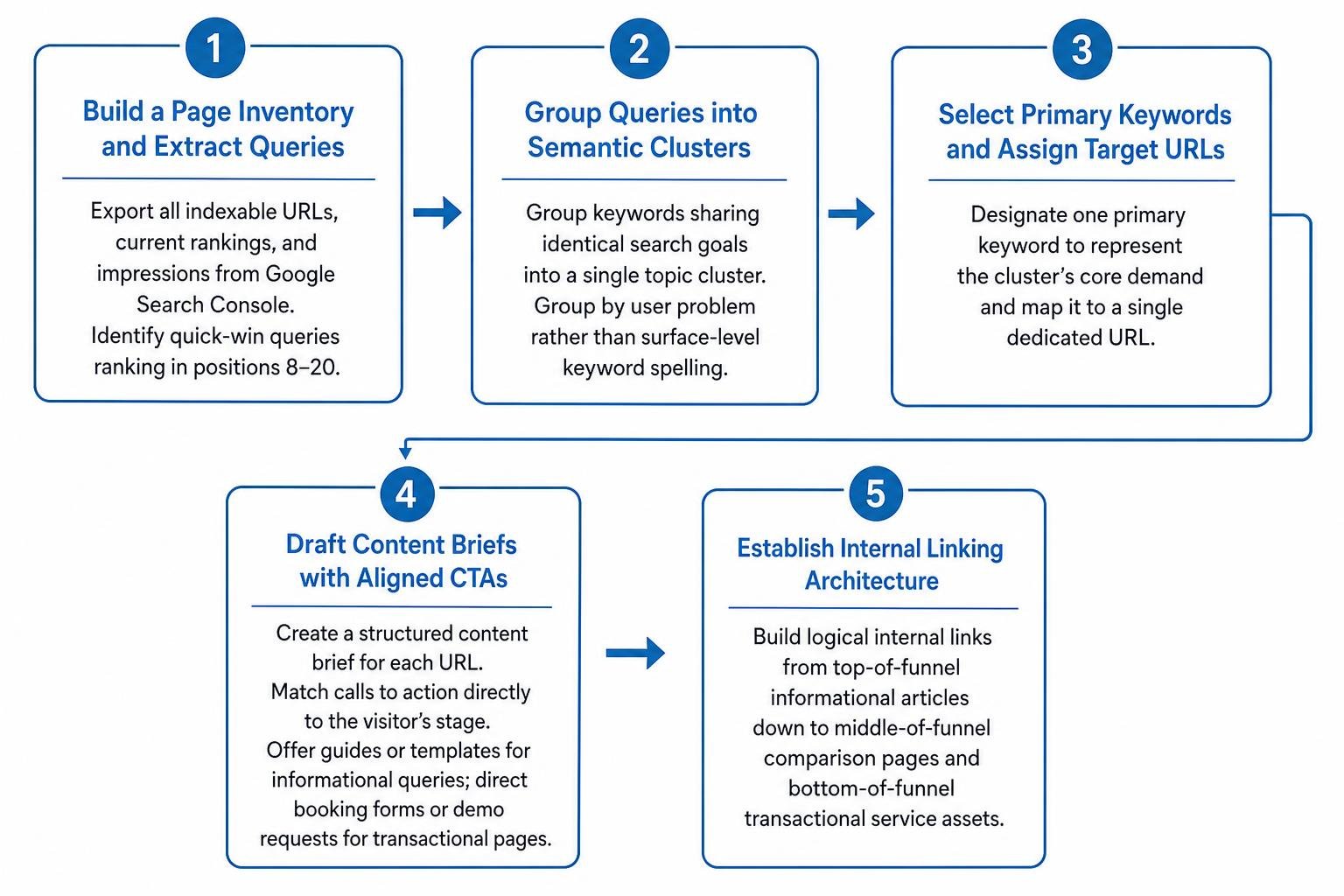
- Build a Page Inventory and Extract Queries: Export all indexable URLs, current rankings, and impressions from Google Search Console. Identify quick-win queries ranking in positions 8 through 20 that can jump to page one with tighter intent matching.
- Group Queries into Semantic Clusters: Group keywords sharing identical search goals into a single topic cluster. Grouping queries by user problem rather than surface-level keyword spelling prevents redundant content creation.
- Select Primary Keywords and Assign Target URLs: Designate one primary keyword to represent the cluster's core demand and map it to a single dedicated URL.
- Draft Content Briefs with Aligned CTAs: Create a structured content brief for each URL. Match calls to action directly to the visitor's stage: offer email guides or templates for informational queries, and direct booking forms or demo requests for transactional pages.
- Establish Internal Linking Architecture: Build logical internal links from top-of-funnel informational articles down to middle-of-funnel comparison pages and bottom-of-funnel transactional service assets.
How Do You Reverse-Engineer Intent Using SERP Analysis and AI Tools?
Live search engine results pages (SERPs) provide the most accurate blueprint of what algorithms reward for any query.
- Analyze Top-Ranking Formats: Search your target query in a clean browser session. If the top five results are step-by-step guides, publishing a product sales page will fail to rank.
- Inspect SERP Features: The presence of People Also Ask boxes indicates informational demand, comparison tables point to commercial investigation, and product carousels signal direct transactional intent.
- Leverage GSC Data: Use the Google Search Console API to extract comprehensive query-to-page performance data, pinpointing instances where pages rank for mismatched queries.
- Optimize for AI Overviews and LLMs: Generative answer engines synthesize content from clear, concise definitions, structured lists, and authoritative data. Including direct answers within the first 100 words increases your chances of citation in AI Overviews.
Optimizing, Maintaining, and Tracking Mapped Content for Long-Term Growth
A keyword map is not a static document; it is an evolving operational plan. Search behaviors evolve, competitor content shifts, and search algorithms continually refine how they categorize queries.
Large websites using mapped intent structures experience up to 30 percent faster ranking stabilization after publishing new content. Intent-optimized pages also generate 2.8 times higher user engagement than pages targeting search volume alone.
At SmallBizSEO, our Velocity framework incorporates continuous intent tracking and technical monitoring to ensure small business websites establish clear topical authority while preventing search intent drift.
How Do You Optimize Existing Pages and Prevent Search Intent Drift?
Search intent drift happens when search engines change the dominant format rewarded for a keyword over time—such as shifting from commercial comparison lists to informational tutorials.
- Audit Declining Legacy Content: When traffic drops on a page with strong backlinks, inspect live search results to identify whether the intent format has changed.
- Improve On-Page User Experience: Minimize layout friction by ensuring fast loading speeds, clean subheadings, and readable typography (14px font size or larger).
- Eliminate Pogo-Sticking: Place direct, clear answers high on the page so visitors do not immediately bounce back to search results to find what they need.
- Add Intent-Specific Schema Markup: Implement Article schema on guides, Review schema on comparison assets, and Service or Product schema on transactional landing pages.
Which Metrics Measure the Success of Intent-Mapped Pages?
Tracking the performance of intent-aligned pages requires looking beyond vanity traffic counts:
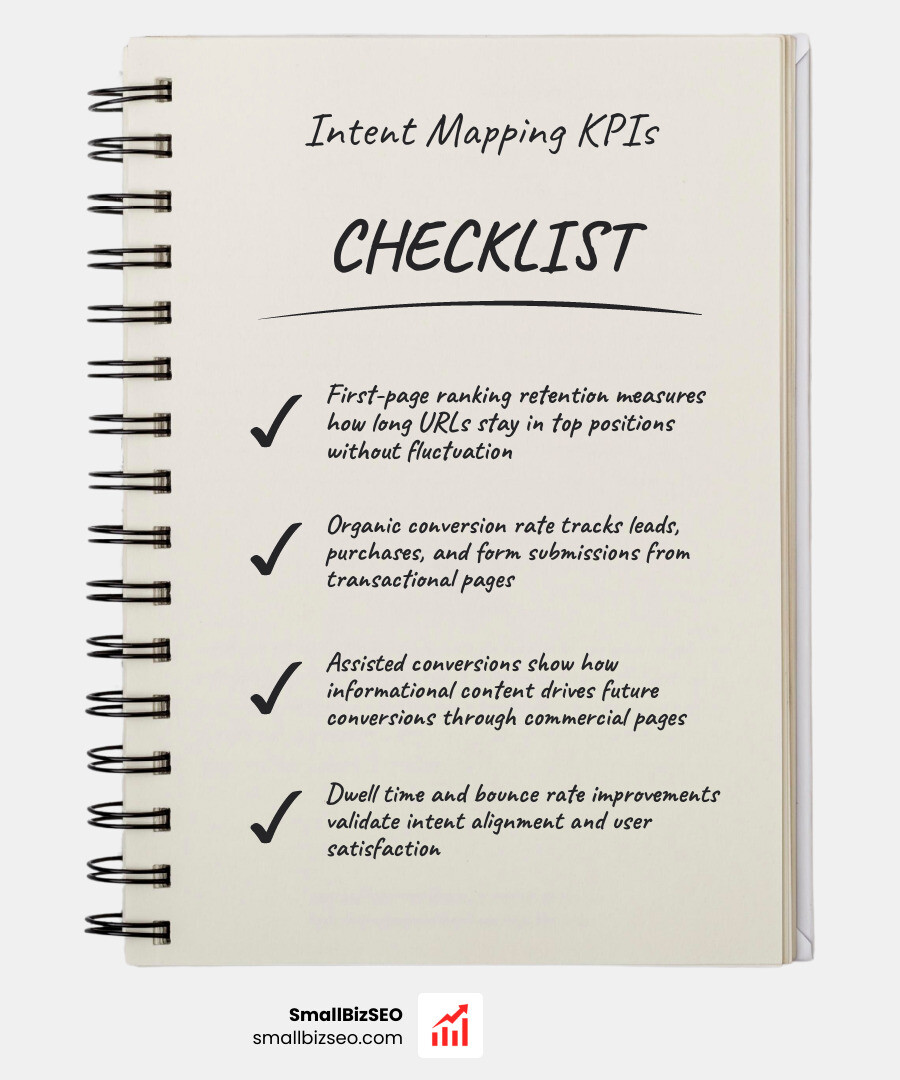
- First-Page Ranking Retention: Measure how long target URLs maintain top-tier rankings without fluctuation.
- Organic Conversion Rate: Track direct leads, purchases, and form submissions generated by transactional and commercial pages.
- Assisted Conversions: Monitor how informational topic clusters introduce visitors who later convert through commercial pages.
- Engagement and Dwell Time: Evaluate average engagement time and bounce rate improvements across mapped content.
- Crawl and Indexing Efficiency: Confirm that search engines index designated primary URLs without canonical confusion or split equity.
Mastering Intent-Driven Search Architecture
Search intent keyword mapping bridges the gap between raw keyword data and measurable business revenue. By systematically categorizing search queries by user goals, assigning one comprehensive URL per cluster, and continuously auditing for intent shifts, you protect your site against cannibalization and algorithmic updates. Focus on answering real customer questions with the exact format searchers want, and your website will build lasting organic visibility and qualified leads.