SEO for Amusement Parks: A Practical Marketing Guide for Theme Parks
Why SEO for Amusement Parks Helps Visitors Find and Book Your Park
SEO for amusement parks starts with the searches guests make before a visit. Create clear pages for your rides, tickets, hours, and seasonal events. Use the words guests use, keep your Google Business Profile accurate, and make it easy to buy tickets on a phone. Then track which search pages lead to purchases so you know what to improve.
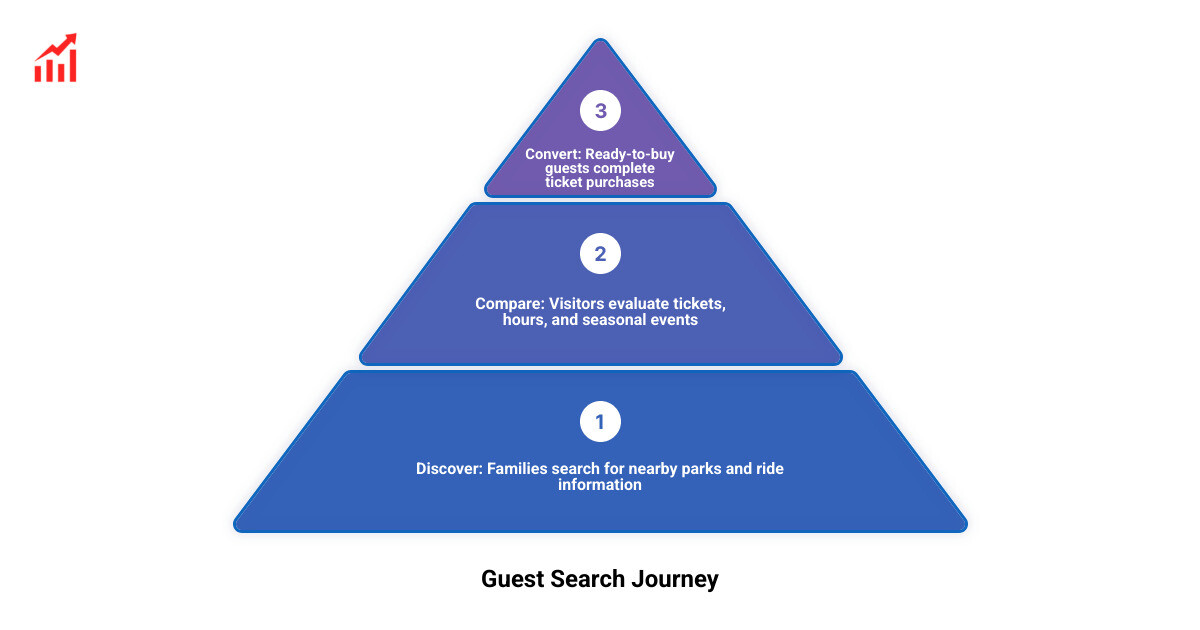
A family comparing nearby parks needs different answers from someone ready to buy a Halloween event ticket. Your pages should help both find the right information and take the next step.
I’m Clayton Johnson, founder of SmallBizSEO. My work in technical SEO, content strategy, and link building informs this guide to SEO for amusement parks, with a focus on turning useful search visibility into qualified visits.
Seo for amusement parks word roundup:
Why SEO for Amusement Parks Drives Ticket Sales and Online Discovery
Amusement park SEO directly fuels attendance by positioning your venue in front of guests during their trip-planning phase. Over 70% of park visitors research attractions online before making a purchase, and 75% of users never scroll past the first page of search results. If your park does not appear at the top of organic search results, potential guests end up buying tickets from competing attractions.
A slow website is like a broken roller coaster—nobody wants to wait in line for it. With over 60% of searches taking place on mobile devices, responsive technical performance directly influences rankings. In fact, amusement venues that maintain page load speeds under 3 seconds see 22% longer session times, keeping families engaged and moving toward your checkout page.
| Visitor Search Intent | Example Search Query | Primary Content Target | Conversion Action |
|---|---|---|---|
| Informational | "best rides for toddlers" | Family ride guide blog post | Email newsletter signup / Guide download |
| Commercial Investigation | "theme park ticket discounts vs season pass" | Pricing comparison page | Add pass to online cart |
| Transactional | "buy fast track roller coaster passes" | Direct checkout landing page | Ticket purchase |
| Navigational / Local | "amusement park open near me" | Google Business Profile / Hours page | Map directions / Gate ticket buy |
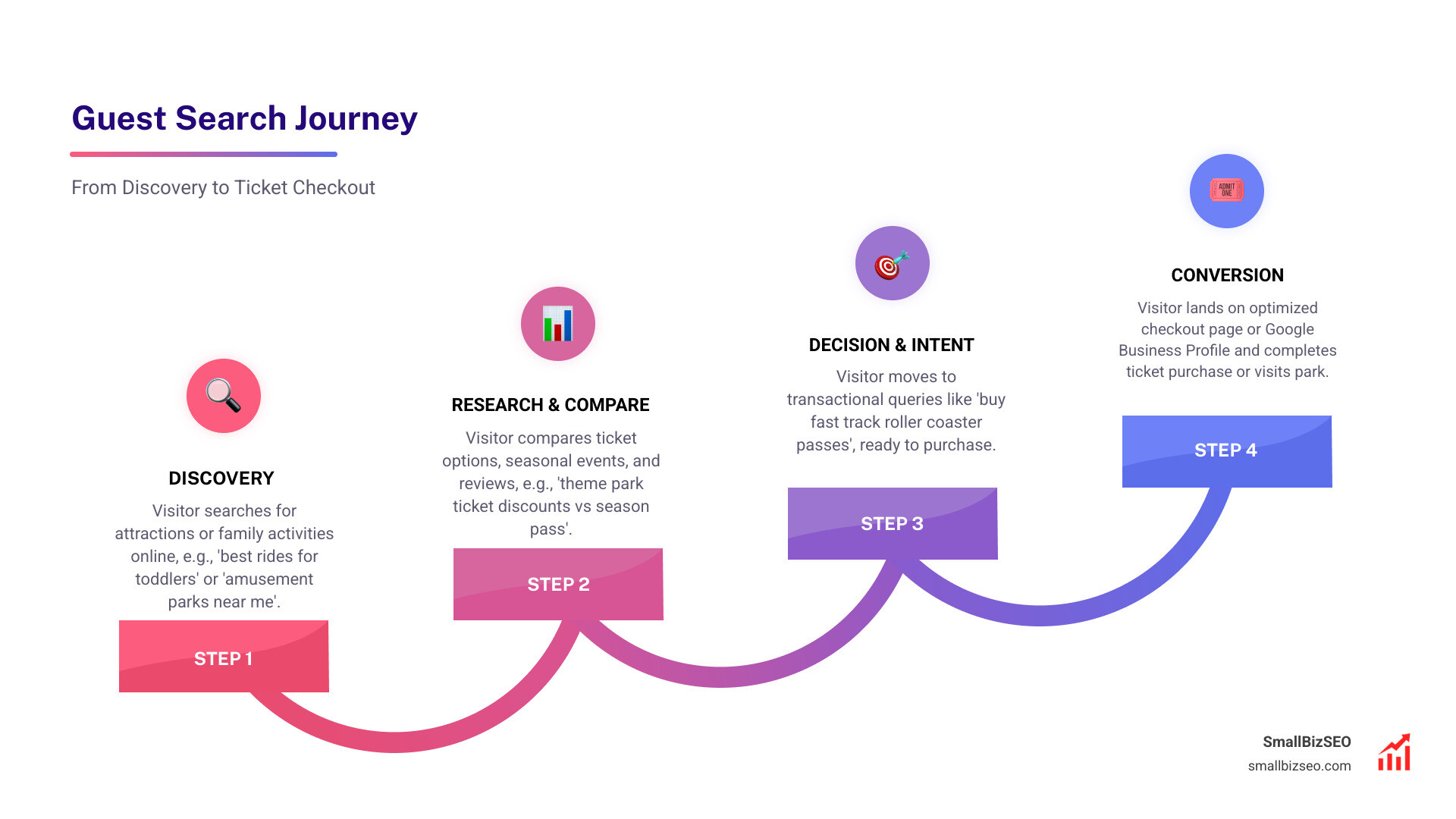
By capturing demand across all stages of the search journey, strategic optimization transforms casual browsing into steady admissions.
How to Execute a High-Impact Search Strategy for Theme Parks
Executing an effective search campaign requires aligning technical site health, keyword mapping, on-page content, and authority building into a cohesive growth engine.
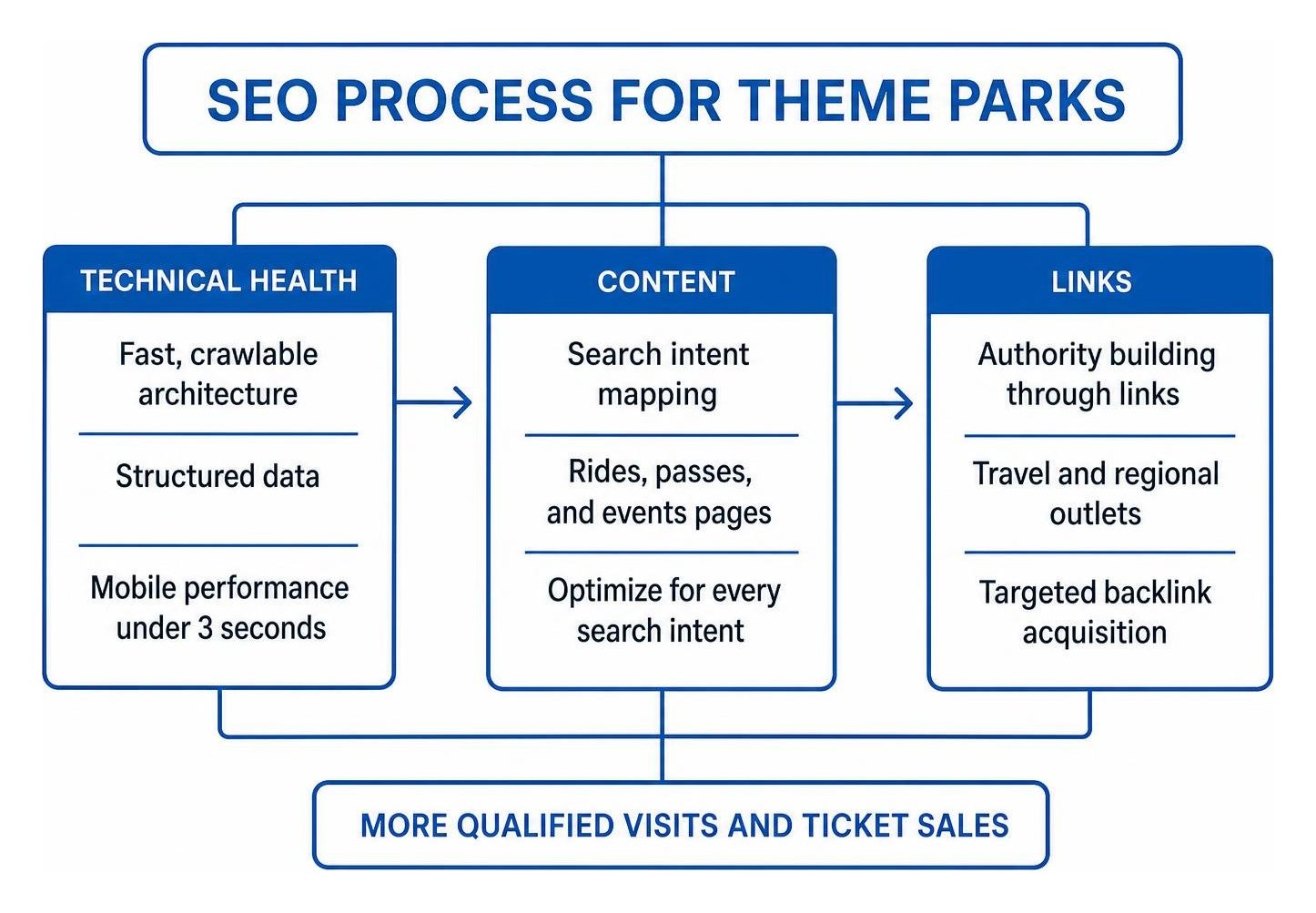
To build a high-performing foundation, focus on these core components:
- Fast, crawlable architecture with structured data.
- Search intent mapping for rides, passes, and events.
- Robust local optimization to capture nearby visitors.
- Targeted backlink acquisition from travel and regional outlets.
- Answer-ready optimization for AI platforms and voice assistants.
What Makes Keyword Research and Search Intent Unique for Attractions?
Amusement park keyword research is distinct because search intent changes heavily based on guest geography, group demographics, and seasonality. Parents search for safety requirements and kid-friendly zones, while thrill-seekers look for top speeds, inversions, and height minimums.
To capture every segment, map your keywords across specific categories:
- Attraction-Specific Queries: Target individual ride names and features (e.g., "hyper roller coaster with loop").
- Demographic Searches: Create content answering family-focused questions (e.g., "toddler attractions and stroller rentals").
- Pricing and Package Terms: Optimize for cost-conscious guests (e.g., "family four-pack ticket deals", "season pass perks").
- Local Experiential Searches: Reach local and visiting travelers searching for weekend entertainment.
Integrating targeted keywords into our proven content marketing strategies ensures your pages directly address what potential guests type into search bars.
How Do You Optimize On-Page Elements and Schema for Park Rides?
On-page optimization requires structuring each attraction page so search engine crawlers and users find essential details instantly. Every ride, show, and dining venue should have a dedicated page featuring descriptive headers, clear height and safety specifications, high-resolution compressed images, and prominent ticket buttons.
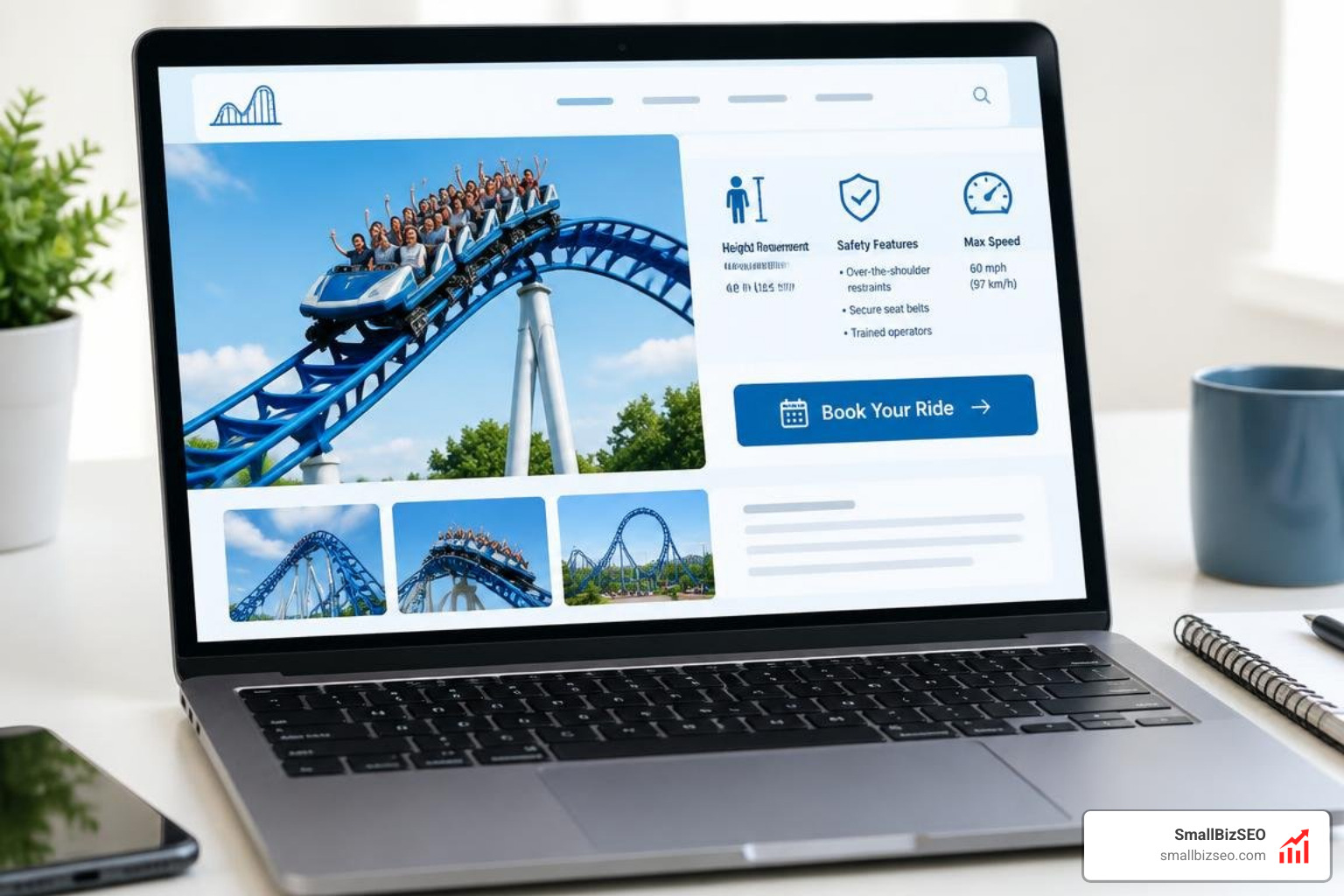
Structured data markup (Schema.org) tells search engines exactly what your content represents:
- Attraction & Place Schema: Identifies ride types, physical location, opening hours, and guest ratings.
- Event Schema: Highlights specific performance schedules, concerts, and seasonal celebrations.
- Offer & Ticket Schema: Displays real-time ticket pricing, admission tiers, and availability in rich snippets.
- FAQ Schema: Provides direct answers to common questions about parking, outside food policies, and rain checks.
A data-driven SEO approach delivers massive real-world returns. For example, during a targeted optimization campaign, popular amusement park Imagicaa achieved an 18x improvement in organic impressions and a 3x increase in organic clicks. By optimizing URL structures, enriching landing pages, and implementing structured event data, their non-brand impressions surged by 26x with non-brand clicks jumping 8x.
Why Is Local Search and Map Pack Optimization Critical for Nearby Visitors?
Over 60% of guests look for parks located within a 50-mile radius, and nearly 80% of travelers rely on location-based queries when planning trips. Dominating the local map pack ensures that whenever families make a near me query, your venue appears at the very top of Google Maps and local listings.
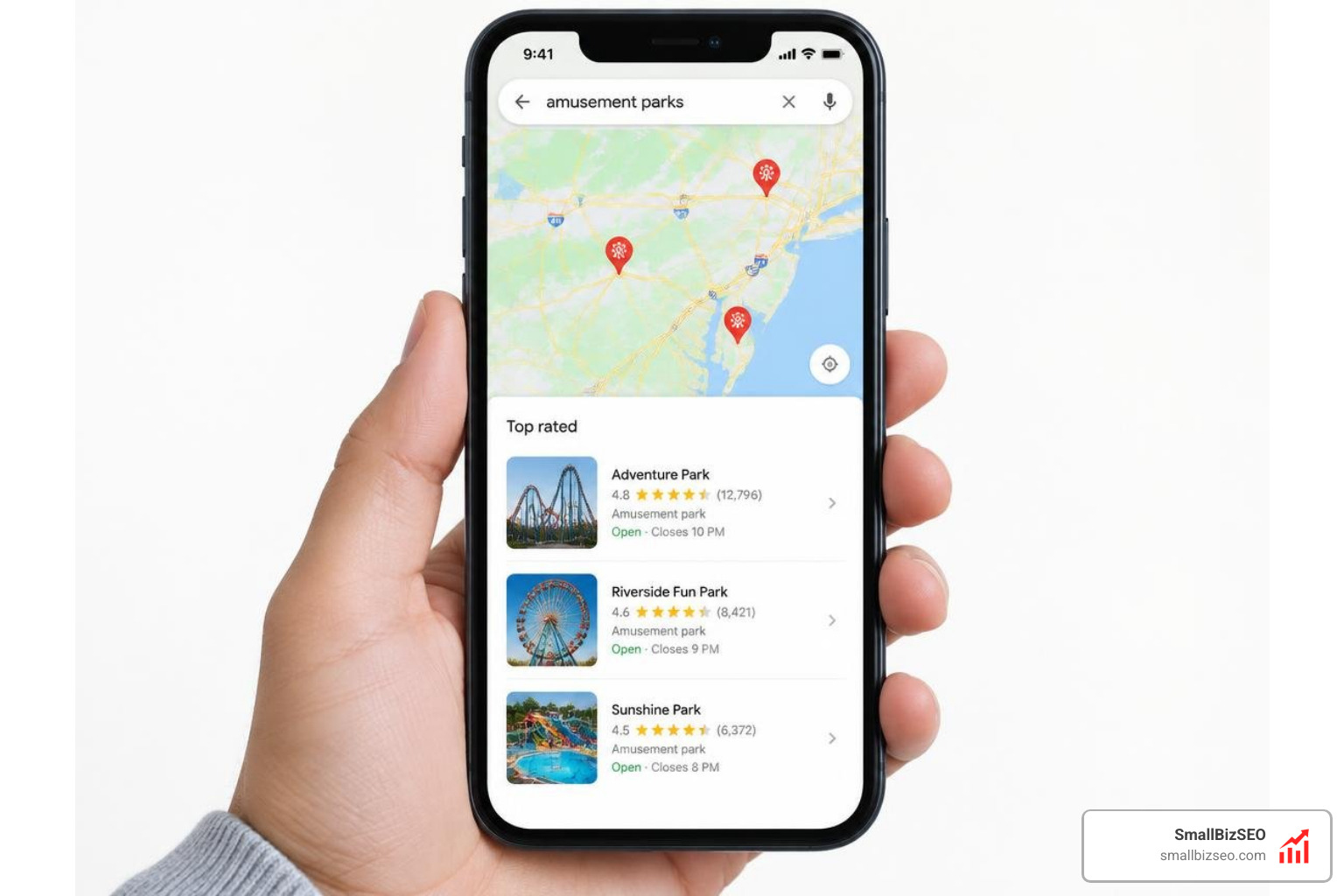
To maximize your local presence:
- Optimize Your Profile: Follow best practices for Google Business Profile optimization by completing every field, adding accurate operating hours, choosing primary categories like "Amusement Park," and uploading fresh weekly photos.
- Maintain Citation Consistency: Keep your Name, Address, and Phone number (NAP) identical across Yelp, TripAdvisor, Apple Maps, and tourism directories. Check out our comprehensive local SEO guide for complete citation management steps.
- Generate and Manage Reviews: A review score average of 4.5+ stars improves your local pack rankings by up to 37%. Respond promptly to all guest feedback to demonstrate active management.
Consult the official Google guide on how tips to improve your local ranking on Google - Google Business Profile Help outlines relevance, distance, and prominence.
How to Build High-Authority Backlinks with SEO for Amusement Parks
Earning authoritative backlinks signals credibility and topical relevance to search engines. For attractions, the most impactful links come from local tourism ecosystems, family lifestyle publications, and travel media.
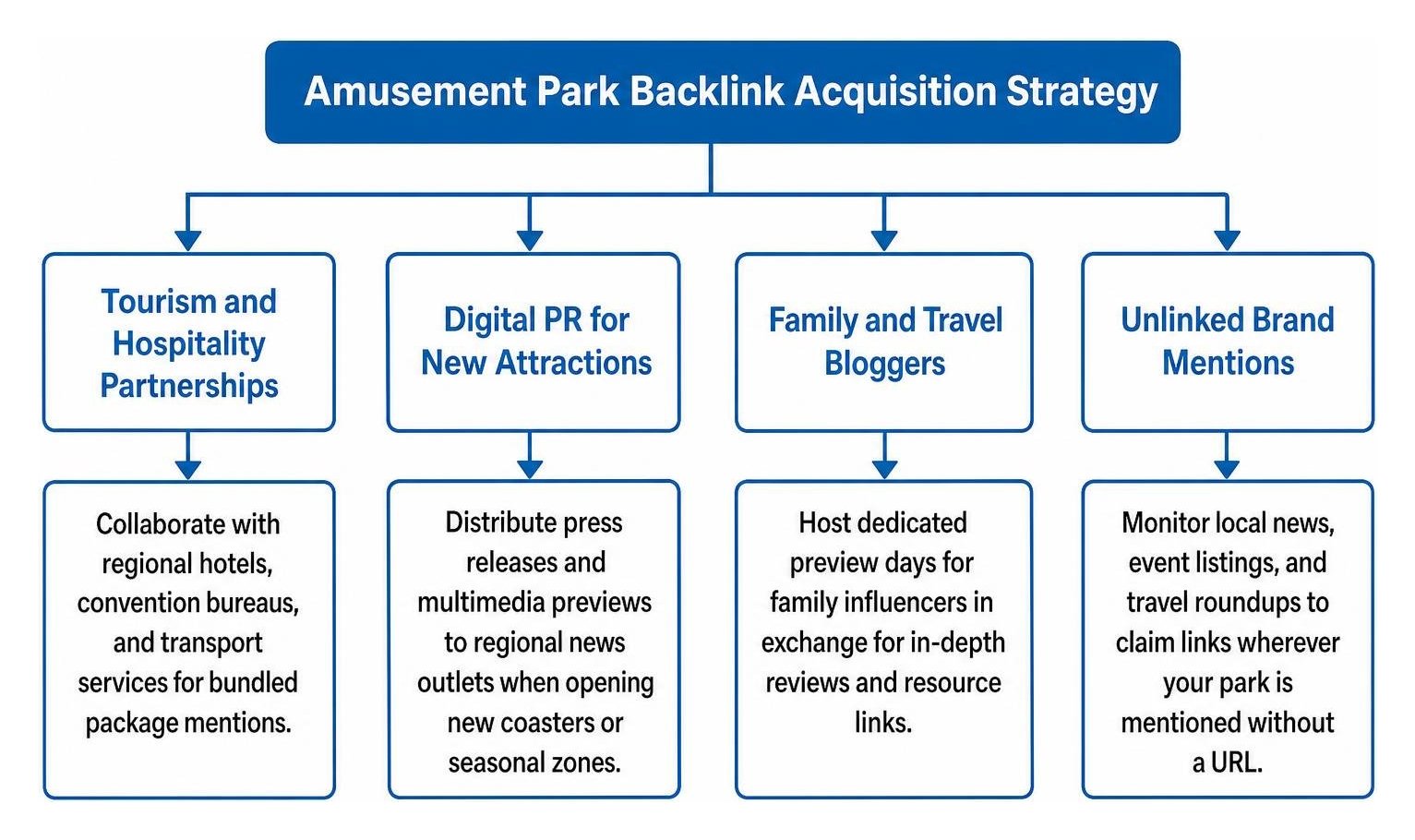
High-yield link acquisition tactics include:
- Tourism and Hospitality Partnerships: Collaborate with regional hotels, convention bureaus, and transport services for bundled package mentions.
- Digital PR for New Attractions: Distribute press releases and multimedia previews to regional news outlets when opening new coasters or seasonal zones.
- Family and Travel Bloggers: Host dedicated preview days for family influencers in exchange for in-depth reviews and resource links.
- Unlinked Brand Mentions: Monitor local news, event listings, and travel roundups to claim links wherever your park is mentioned without a URL.
How to Adapt SEO for Amusement Parks to AI Search and Voice Assistants?
Search behavior is shifting toward conversational AI platforms such as Google AI Overviews, ChatGPT, and Perplexity. Parents frequently ask voice assistants questions like, "What amusement park has rides for four-year-olds open this Saturday?"
To prepare your park for Answer Engine Optimization (AEO) and Generative Engine Optimization (GEO):
- Structure Short, Factual Answers: Place clear, 1- to 3-sentence summary answers immediately below question-based subheadings.
- Use Clear Bulleted Lists: Summarize ride restriction lists, ticket pricing tiers, and opening schedules in scannable formats.
- Keep Technical Schema Pristine: AI models rely heavily on schema markup to extract validated facts regarding ticket costs and operating times.
How Can You Promote Seasonal Events and Measure Organic ROI?
Seasonal festivals, Halloween fright nights, and holiday light shows represent major revenue drivers for parks. Instead of creating temporary URLs that get deleted each year, build evergreen seasonal URLs (e.g., /events/halloween-fright-nights) and update the content ahead of each season. This strategy preserves accumulated domain authority and backlink equity year after year.
Monitor performance using Google Search Console and GA4 by tracking:
- Organic Ticket Conversions: Track revenue generated from organic landing pages through e-commerce tracking.
- Assisted Conversions: Measure how informational blog articles assist in downstream ticket sales.
- Non-Branded Keyword Movement: Track ranking gains for competitive terms like "best water parks" or "holiday light shows."
Turn Search Visibility into Record Park Attendance
Search engine visibility provides one of the highest returns on investment for amusement attractions when managed with technical precision. By combining structured data, mobile performance, localized search tactics, and answer-ready content, your venue can outrank competitors and capture visitors right when they decide where to spend their leisure time.
At SmallBizSEO, we provide specialized technical SEO, content strategy, and link building tailored to leisure and hospitality brands. Using our data-driven "Velocity" framework, we deliver fast, sustainable organic rankings backed by transparent reporting.
Ready to expand your digital reach and drive consistent ticket sales? Explore our specialized Amusement Arcades Seo Company solutions, or schedule an amusement park SEO visibility audit with our team today.