SEO for Bookbinders: Turn Craft Searches Into Better Project Inquiries

How Can SEO Help Bookbinders Get Better Project Inquiries?
SEO for bookbinding starts with matching each service you actually offer to the way customers search. Give custom binding, routine repair, conservation, thesis binding, and short-run production their own pages where relevant. Explain what each service covers, show authorized project photos, and make it easy to request an assessment or quote. If your workshop is eligible for a Google Business Profile, keep its details accurate and ask customers for honest reviews.
I'm Clayton Johnson, founder of SmallBizSEO, where I work on technical SEO, content strategy, and link building for small businesses. In this guide, I'll apply that experience to SEO for bookbinding, starting with how to turn a relevant search into a useful service page and a qualified inquiry.
Core Strategies in SEO for Bookbinding to Attract High-Value Inquiries
Effective search engine optimization connects your bindery with clients searching for specific craft skills, routine structural repairs, or small production runs. Search engines prioritize sites that provide accurate capabilities, clear boundaries, and authentic evidence of workmanship. Following core principles from the Google Search Central SEO Starter Guide, binderies can establish distinct topical authority for each physical service they genuinely perform.
How Should Service Pages Be Structured for SEO for Bookbinding?
A high-performing bindery website requires a dedicated landing page for every distinct service you genuinely offer. When customers search for meaningfully different services, clear service pages can help them find the relevant capabilities, requirements, and quote process. Only create pages for services your workshop actively performs. Implementing structured on-page SEO techniques for measurable growth can help each page outline your real capabilities and intake guidelines.
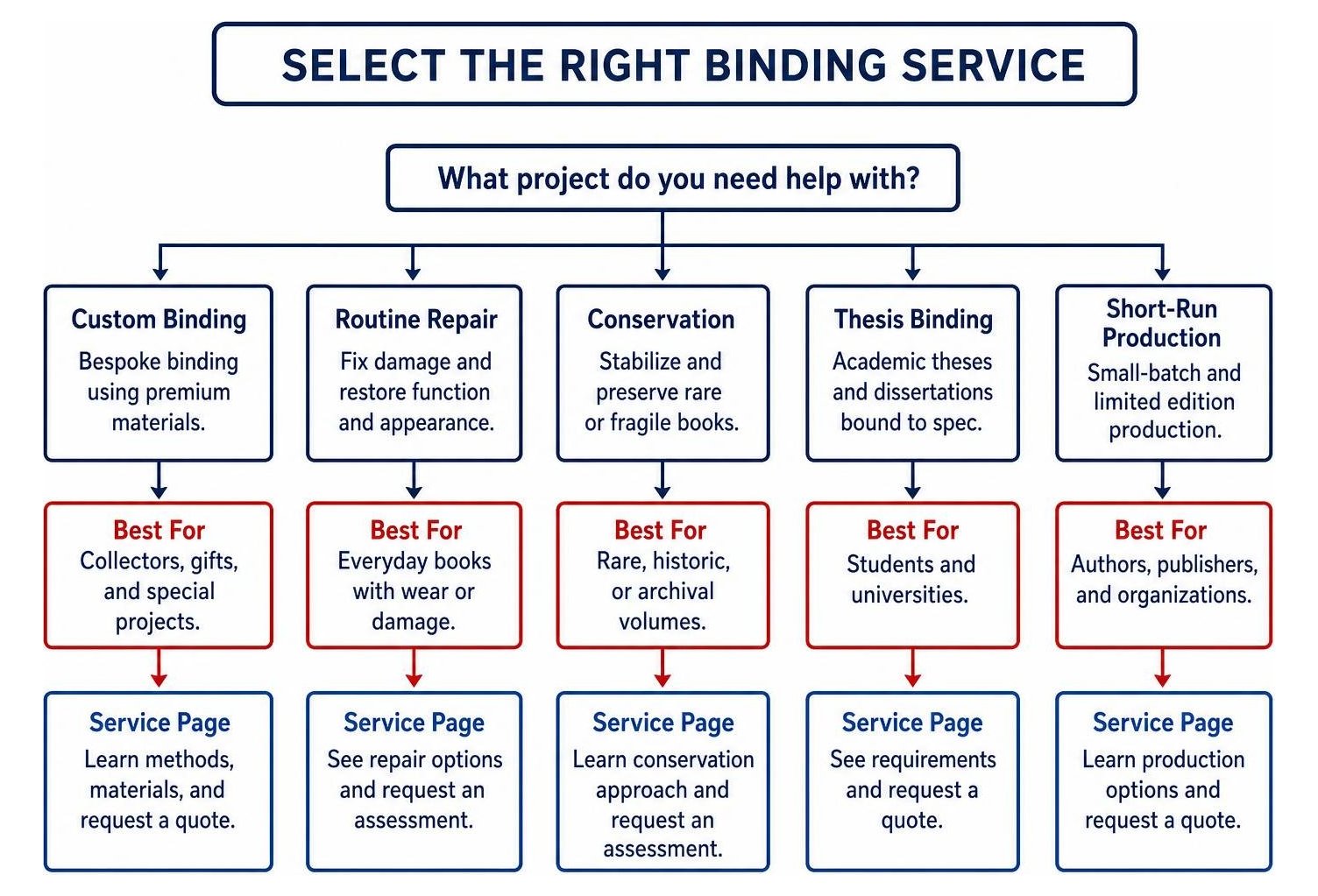
Every commercial service page should contain this essential checklist:
- Actual Methods and Capabilities: Detail the genuine techniques, equipment, and structural options your bindery handles.
- Material Selections: List available covering materials, papers, and structural supports.
- Quantities Handled: Define clear minimums or single-item custom capabilities.
- Scope Exclusions: Clearly state projects or treatments you do not accept.
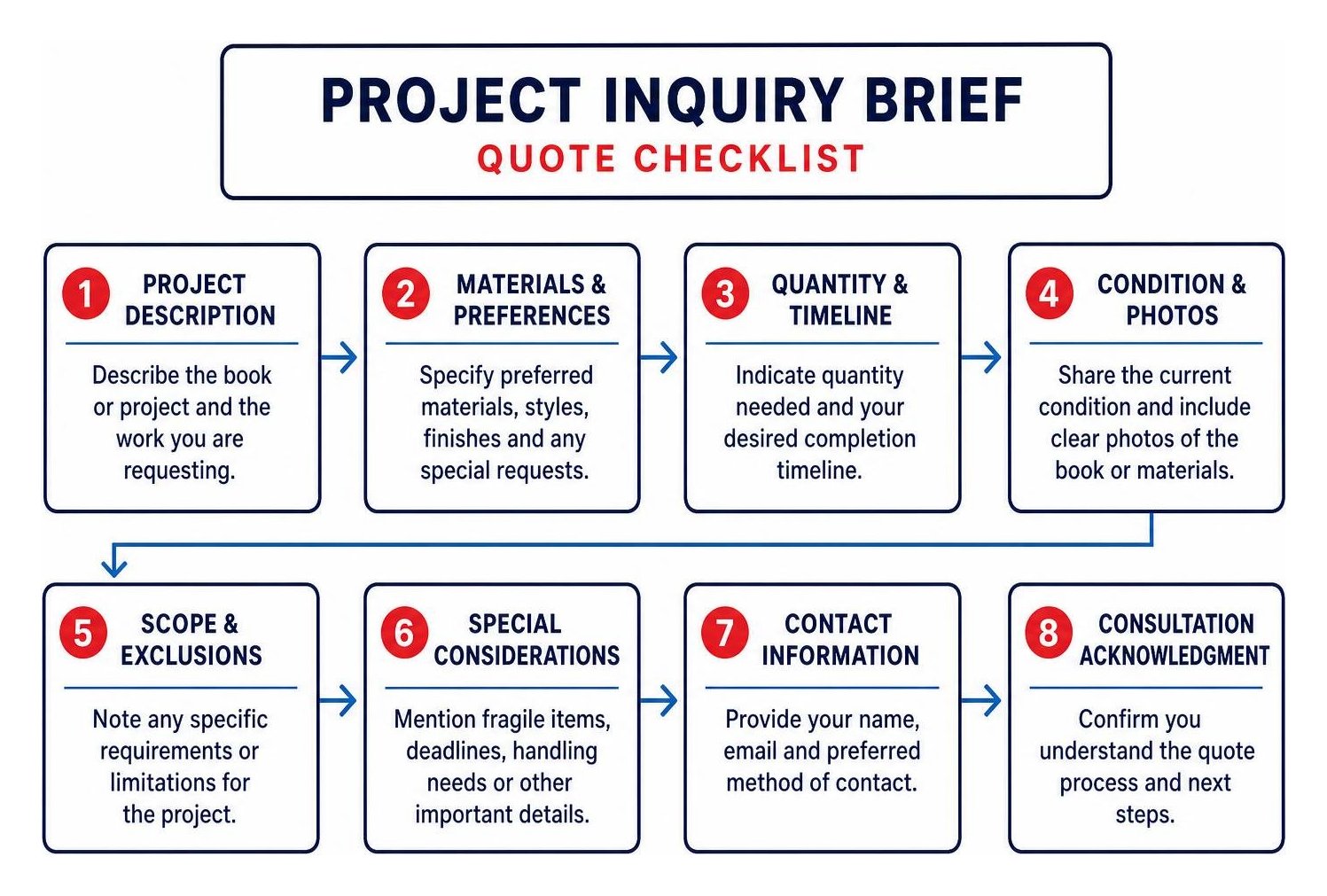
- Assessment and Quote Process: Provide an intake brief requesting project purpose, dimensions and page count (if known), material preferences, quantity, timing, and clear photos of the spine and hinges. Clarify that clients must never ship valuable books before receiving packing instructions and an initial assessment. For valuable or historic materials, request a professional assessment in line with NEDCC's guidance on conservation treatment for bound materials. For careful decisions about rebacking historic structures, consult the Folger Shakespeare Library's rebacking discussion. Hypothetical routing example: A thesis inquiry with a deadline goes to the thesis specifications and quote process, while a fragile historic volume goes to a qualified assessment rather than a prescribed repair.
- Real Permitted Photos: Feature authorized portfolio photography illustrating genuine past work.
| Search Intent | Target Keyword Concept | Key Page Components to Include |
|---|---|---|
| Custom Leather Binding | bespoke leather book binding, custom leather journals | Material options, lettering choices, portfolio examples, quote consultation process |
| Routine Book Repair | cloth book repair, fix damaged binding | Structural assessment intake, cloth options, condition requirements, scope exclusions |
| Rare Book Conservation | rare book conservation, historic document assessment | Professional assessment brief, conservation ethics, handling guidelines, consultation process |
| Academic Thesis Binding | university thesis binding, dissertation hard cover binding | University specifications, foil lettering options, accepted submission formats, turnaround options |
| Short-Run Edition Binding | small batch case binding, short run book printing | Order quantities, paper stock options, layout proofing, production requirements |
Which Keywords Drive Qualified B2B and B2C Bookbinding Inquiries?
Targeting specific, long-tail phrases attracts prospective clients who understand their project scope. Organizing content around distinct needs via our SEO basics survival guide for small business matches inquiries directly to workshop capabilities:
- B2C Queries: Searches such as "custom leather family bible binding," "thesis hardcover binding," or "folio rebinding" focus on sentiment, materials, and durability.
- B2B Queries: Searches such as "short run case binding" or "custom edition cloth binding" focus on batch volume, specifications, and turnaround.
How Does Local Search Help Bookbinders Reach Nearby Clients?
Clients with valuable books or regional publication deadlines often seek nearby craftspeople. Applying principles from our local SEO guide helps your physical workshop appear in relevant geographic searches.
To optimize your local presence:
- Maintain an accurate Google Business Profile, provided your workshop operates from an eligible, genuine commercial premises where you meet clients during stated hours.
- Keep your business name, address, and phone number (NAP) consistent across craft and trade directories.
- Invite clients to share honest reviews reflecting their direct project experience without incentives for any review.
Technical Best Practices and Measuring SEO for Bookbinding Performance
Behind your visual portfolio and written service descriptions, technical site health determines how efficiently search engine bots index your content. Technical optimization can help visitors on mobile devices or slower connections browse your workshop portfolio more smoothly.
What Technical Elements Support Smooth Crawling and Indexing?
Structuring your technical foundation according to a practical guide to the 4 types of SEO can reduce common indexing hurdles:
- Descriptive Image Optimization: Convert portfolio photography into compressed formats like WebP. Write clear alt text describing the binding style (such as
half-leather binding with marbled paper boards) without keyword stuffing. See Google's image SEO guidance for its guidance on descriptive, useful image text. - Structured URL Hierarchies: Use clear URL slugs reflecting your site structure, such as
/services/custom-leather-binding/or/services/thesis-binding/. - Service Schema Markup: Add JSON-LD structured data to service pages to help search engines understand your specific offerings. While structured data does not guarantee rich snippets, it provides search crawlers with clearer context.
How Can Binderies Track Real Business Results from SEO for Bookbinding?
Measuring SEO success requires tracking qualified inquiries rather than vanity metrics. In Google Search Console, review aggregate query and page trends to see which service terms and pages are gaining or losing search visibility. In your analytics and intake process, track qualified quote requests and accepted projects alongside the service page that initiated the inquiry when that information is available. Treat attribution carefully: a search visit may assist a later inquiry rather than produce a directly measurable conversion, and incomplete form data, phone calls, referrals, and privacy settings can limit certainty.
If you want an experienced team to handle technical audits, content architecture, and link building for your studio, book a consultation or explore our structured SEO packages to build lasting organic search visibility.
Five Practical Steps to Improve Your Bindery's Search Visibility
To improve your bindery's search presence, implement these five practical steps with their corresponding acceptance checks:
- Separate Core Service Pages: Create dedicated URLs only for services you genuinely offer, such as custom binding, routine repair, conservation of valuable books, thesis binding, and short-run production.
- Acceptance Check: Each genuinely offered service has an individual, indexable URL with no overlapping scope.
- Deploy a Comprehensive Inquiry Intake Form: Include fields for project purpose, dimensions and page count (if known), material preferences, quantity, timing requirements, and condition photos of the spine and hinges, accompanied by explicit instructions not to ship items before professional assessment.
- Acceptance Check: The quote form captures all required specifications and displays packing and pre-shipping notices.
- Audit and Compress Portfolio Images: Compress image file sizes and apply accurate, descriptive alt text following Google's image best practices without keyword stuffing.
- Acceptance Check: Portfolio imagery loads rapidly across devices and contains descriptive alt text.
- Align Local Business Details for Eligible Workshops: If your bindery has an eligible physical premises where clients are served, keep your Google Business Profile aligned with your website's contact information and core services.
- Acceptance Check: Business details and core service descriptions match across your profile and website.
- Establish Contextual Internal Links: Link educational guides discussing materials and durability directly to relevant commercial service pages.
- Acceptance Check: Informational pages link contextually to matching service pages using natural anchor text.