SEO for Radiant Heating & Cooling: A Quick Start Guide
How Can SEO Help Radiant Heating and Cooling Contractors Get Found?
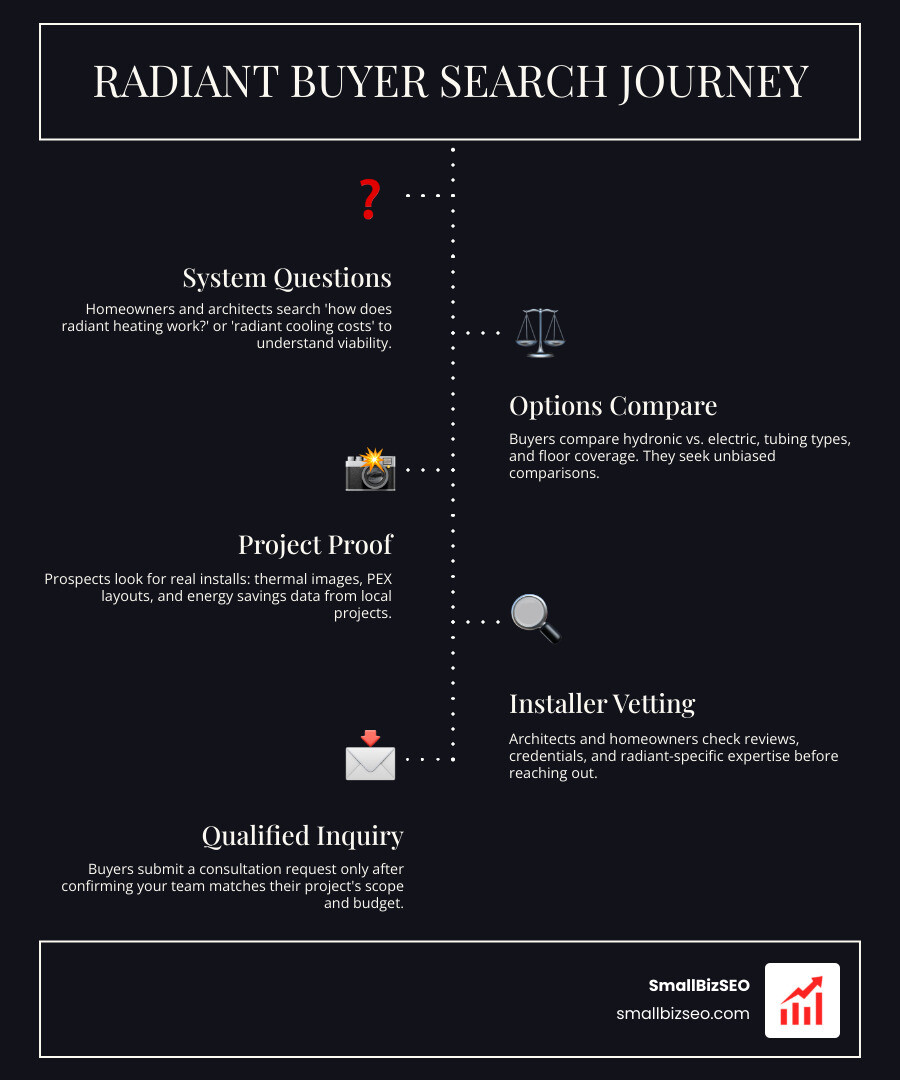
SEO for radiant heating and cooling starts with the questions buyers ask before choosing a system. Create pages for the installations and repairs you actually offer. Explain costs, flooring choices, cooling limits, and how the system works. Then add local service details and real project photos so homeowners, architects, and commercial buyers can judge whether your team is a good fit.
Radiant systems heat or cool a room through its floors, walls, or ceilings. Buyers may research them long before a project begins, so a useful site needs to do more than capture urgent repair searches. It should help people compare options and take the next step toward an installation.
I’m Clayton Johnson, founder of SmallBizSEO, where I work on technical SEO, content strategy, and authority building for small businesses. I apply that experience to SEO for radiant heating and cooling by focusing on clear answers, credible project evidence, and qualified inquiries.
SEO for radiant heating and cooling word list:
Why Does Radiant HVAC SEO Need a Different Strategy?
Radiant HVAC SEO needs a different strategy because radiant projects are planned investments rather than impulsive emergency purchases. While standard HVAC marketing focuses on sudden equipment breakdowns, radiant heating and cooling installations involve long research cycles, high ticket prices, and specialized architectural planning.
Luxury buyers and commercial specifiers typically spend three to six months researching radiant options before making a hiring decision. They compare materials, study energy efficiency ratings, and verify system integration with architectural blueprints. When prospective clients evaluate equipment like air-to-water heat pumps with radiant delivery, they search for detailed performance comparisons rather than simple phone numbers.
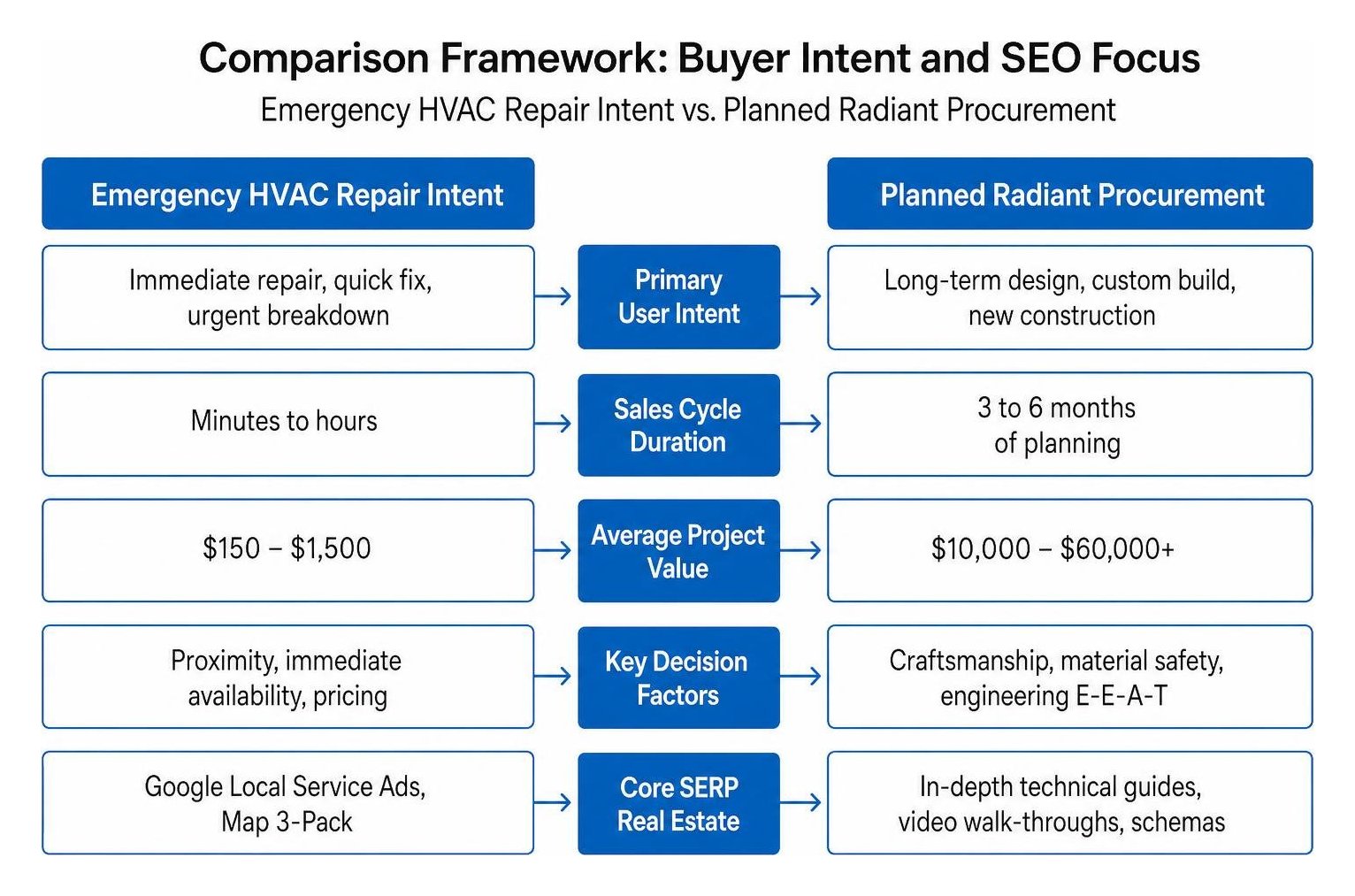
| Search Dimension | Standard Emergency HVAC | Planned Radiant HVAC (RHC) |
|---|---|---|
| Primary User Intent | Immediate repair, quick fix, urgent breakdown | Long-term design, custom build, new construction |
| Sales Cycle Duration | Minutes to hours | 3 to 6 months of planning |
| Average Project Value | $150 – $1,500 | $10,000 – $60,000+ |
| Key Decision Factors | Proximity, immediate availability, pricing | Craftsmanship, material safety, engineering E-E-A-T |
| Core SERP Real Estate | Google Local Service Ads, Map 3-Pack | In-depth technical guides, video walk-throughs, schemas |
How Is SEO for Radiant Heating and Cooling Different from Standard HVAC?
SEO for radiant heating and cooling differs from standard HVAC by focusing on hydronic engineering concepts and long-tail design searches rather than seasonal emergency volume spikes.
Standard heating and cooling queries surge dramatically based on extreme weather patterns. For example, furnace repair queries can jump 5x from quiet summer periods to winter freezes, while air conditioning repair searches often scale up to 9x during heat waves. Standard providers frequently rely on paid search, where a single click for emergency repairs can reach steep rates around $81.
In contrast, radiant heating operates through electromagnetic infrared radiation that warms objects and people directly, while hydronics uses water as the thermal fluid medium. Radiant cooling circulates chilled water through slabs or panels, absorbing sensible heat.
Because consumers rarely search for same-day replacements on complex hydronic loops, our HVAC SEO services emphasize deep topical authority for specialized hydronic heating systems over reactive seasonal bidding.
Which High-Intent Keywords Reach Architects and Luxury Homeowners?
Architects, custom home builders, and luxury homeowners search using architectural material terms, property lifestyle features, and engineering questions. Generic keywords like "heater installation" fail to connect with high-net-worth clients planning luxury builds.
To capture qualified commercial and residential interest, conduct an intentional keyword research strategy that targets these high-intent categories:
- Architectural & Material Intent: queries targeting thermal conductivity with luxury finishes, such as hydronic floor heating under imported marble, radiant heat safe for custom engineered hardwood, or chilled ceiling panels for open glass architecture.
- Lifestyle & Specialized Spaces: terms addressing unique home zones, like radiant heating for wine cellars, in-floor heat for luxury master bathrooms, and snow melting systems for custom stone driveways.
- Commercial Investigation: queries comparing major systems, such as hydronic vs electric radiant floor operating costs or whole-home radiant cooling efficiency.
What Technical and On-Page SEO Do Radiant Heating and Cooling Sites Need?
Radiant websites require sub-two-second page speeds, clean information architecture, and specialized structured data markup to reflect premium craftsmanship.
Affluent prospects leave slow sites quickly; research shows one in four visitors abandons a website that takes more than four seconds to load. Modern sites must meet rigorous Core Web Vitals benchmarks, maintaining a Largest Contentful Paint (LCP) under two seconds.
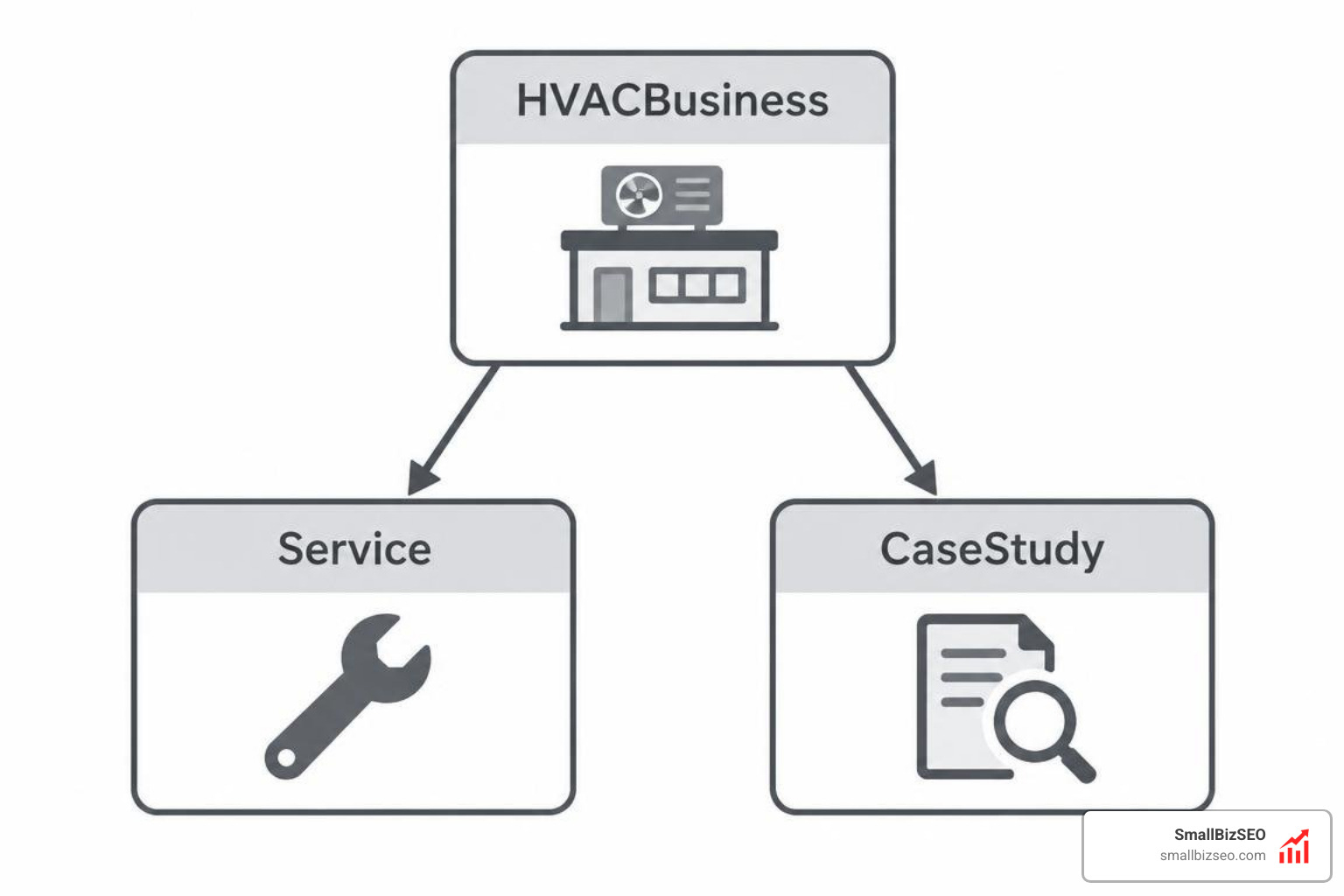
Our technical SEO implementation relies on connected structured data. Combining HVACBusiness, Service, and CaseStudy schemas helps search engines understand your specific engineering capabilities.
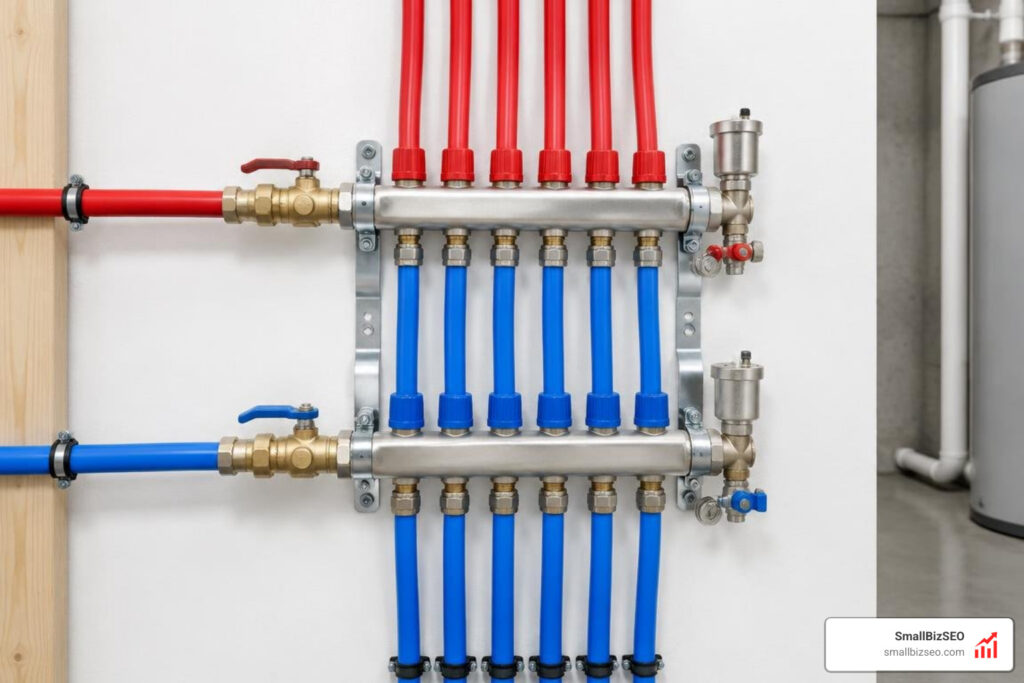
Pairing these technical foundations with proven on-page SEO principles ensures every floor plan analysis, manifold diagram, and efficiency report clearly communicates expertise.
How Can Radiant HVAC Contractors Generate More Leads with SEO?
Contractors generate more leads by building visual digital showrooms that highlight verified project evidence, energy performance metrics, and simple consultation workflows.
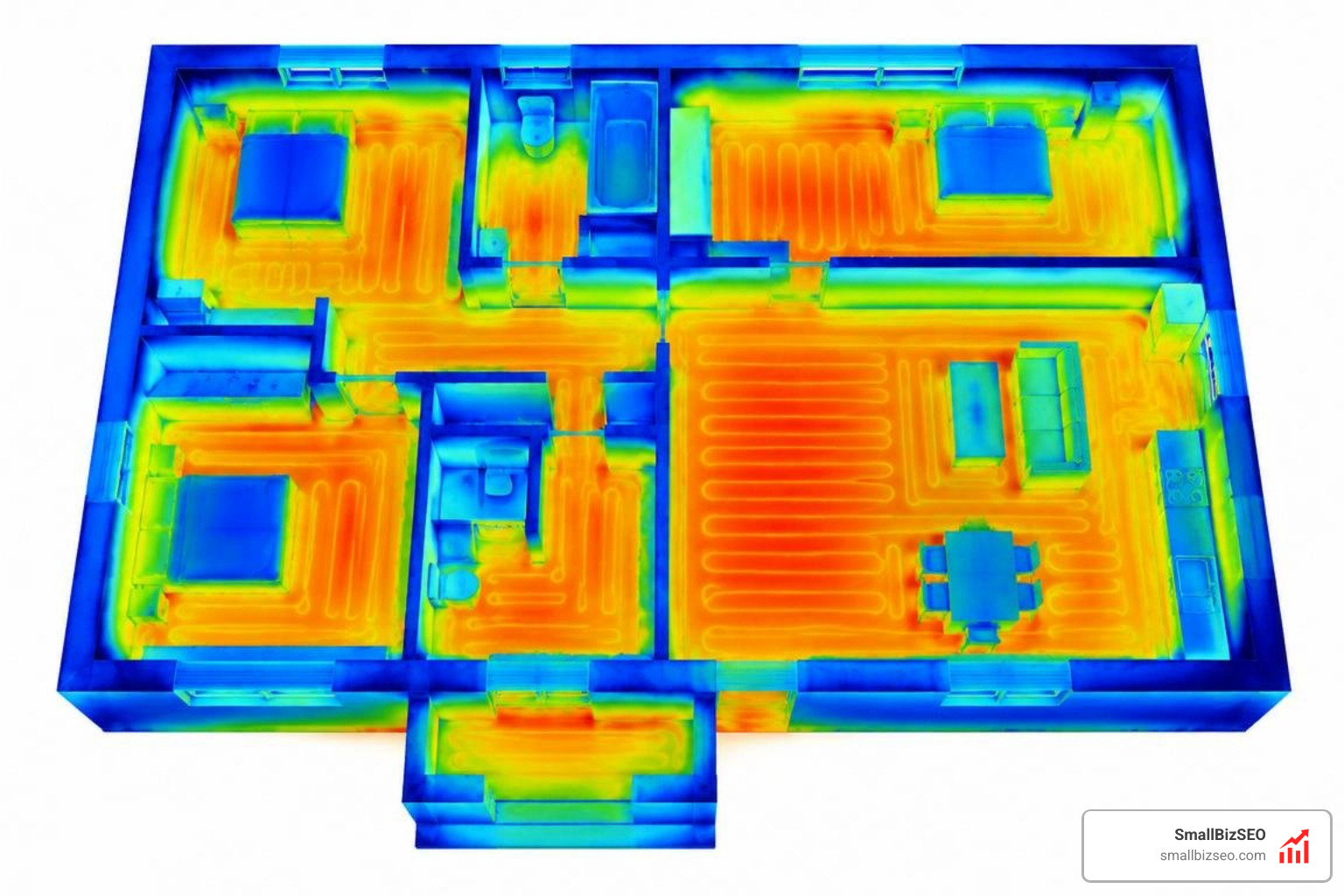
High-ticket buyers want proof of precision craftsmanship before signing five-figure contracts. Replacing generic stock photography with 4K pre-pour PEX tubing layouts and infrared thermal imaging scans proves genuine field experience.
How Can Technical Content and Energy Data Earn Featured Snippets?
Technical content earns featured snippets by providing direct, 50-word answers supported by verified engineering calculations and energy conservation data.
Search engines prioritize concise answers for Answer Engine Optimization (AEO) and featured snippets. Using our proven content SEO strategies, you can target complex topics that engineers and tech-savvy homeowners frequently research:
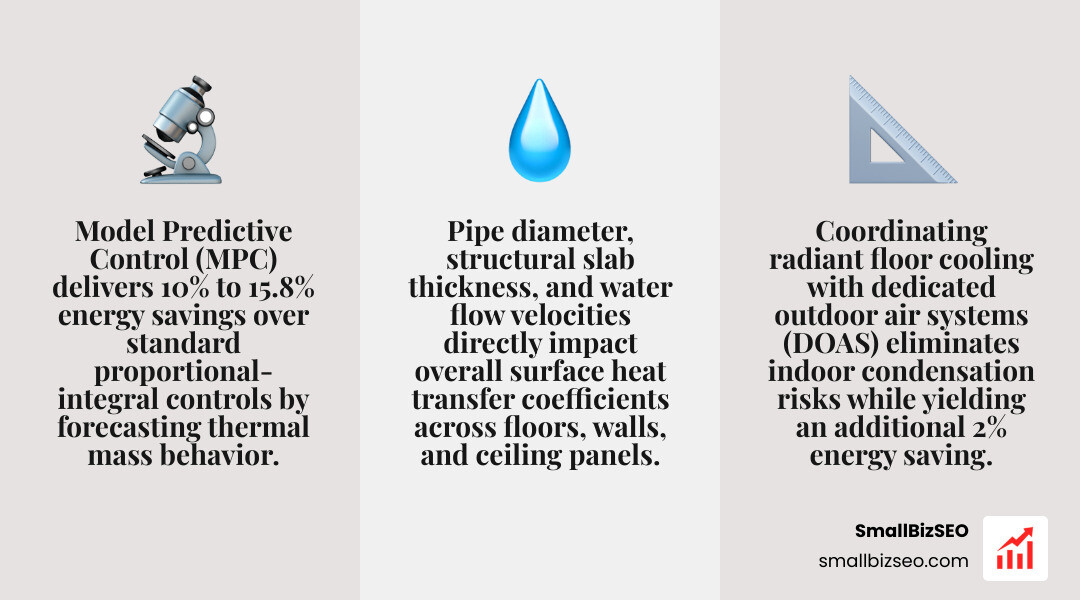
- Advanced Controls: Explain how Model Predictive Control (MPC) delivers 10% to 15.8% energy savings over standard proportional-integral controls by forecasting thermal mass behavior and optimizing nighttime chiller efficiency.
- System Integration: Detail how coordinating radiant floor cooling with dedicated outdoor air systems (DOAS) yields an additional 2% energy saving while eliminating indoor condensation risks.
- Thermal Performance Factors: Address how pipe diameter, structural slab thickness, and water flow velocities impact overall surface heat transfer coefficients across floors, walls, and ceiling panels.
How Can Local SEO and Verified Thermal Work Build Trust?
Local SEO paired with geo-targeted thermal case studies establishes authority across affluent neighborhoods and commercial building zones.
Nearly 97% of consumers search online for local service providers, with 88% of local mobile queries resulting in a phone call or site inquiry within 24 hours. Maximizing local map rankings requires executing proven local SEO tactics across your target service areas.
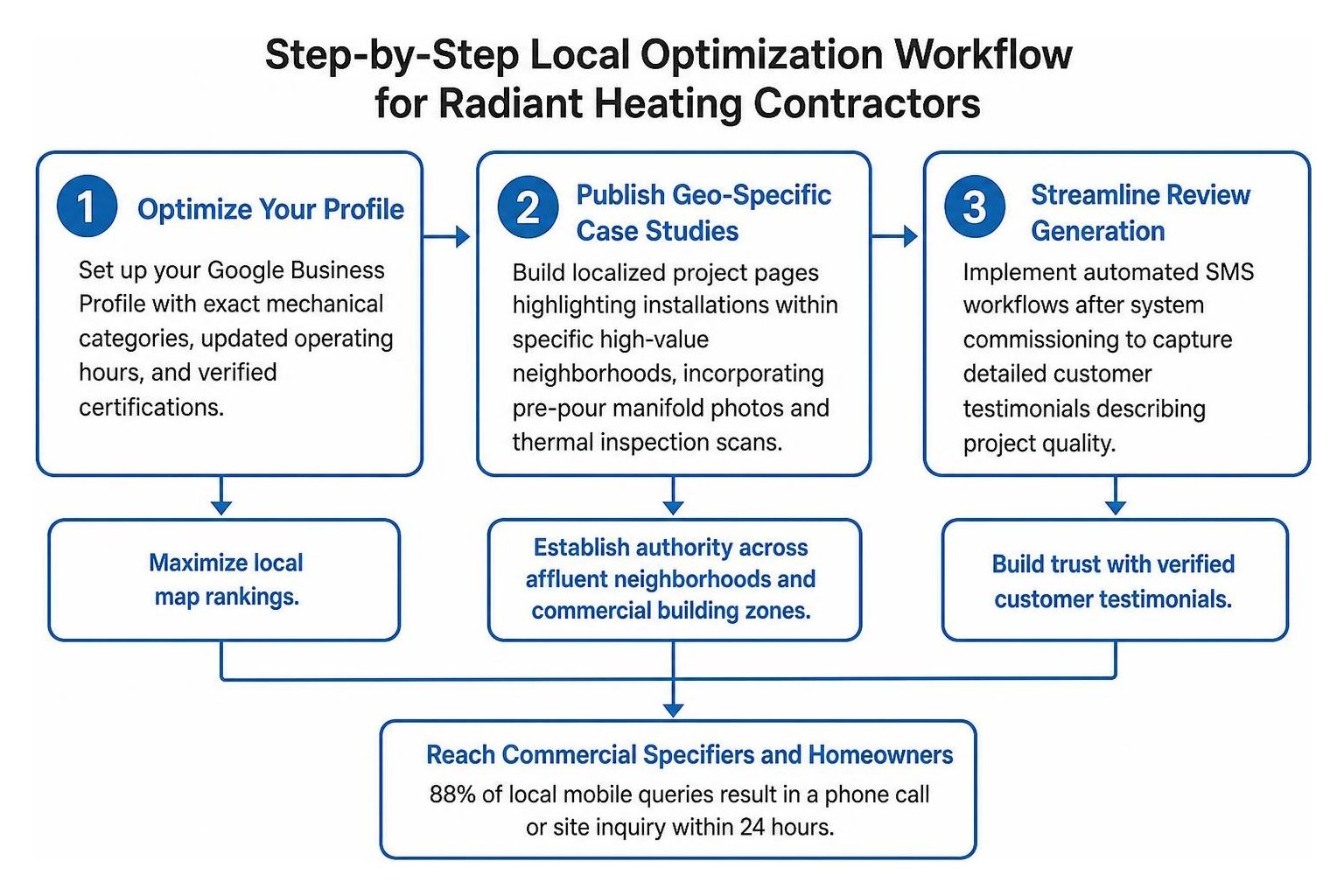
- Optimize Your Profile: Set up your Google Business Profile with exact mechanical categories, updated operating hours, and verified certifications.
- Publish Geo-Specific Case Studies: Build localized project pages highlighting installations within specific high-value neighborhoods, incorporating pre-pour manifold photos and thermal inspection scans.
- Streamline Review Generation: Implement automated SMS workflows after system commissioning to capture detailed customer testimonials describing project quality.
Following a structured local SEO setup helps your business consistently reach commercial specifiers and homeowners. At SmallBizSEO, our data-driven Velocity framework pairs deep technical audits with authoritative content creation to accelerate organic performance. To see how your site measures up against competitors, get a comprehensive SEO visibility audit and discover opportunities to expand your digital market share.
Accelerate Your Radiant HVAC Market Visibility
Dominating organic search results in the radiant heating and cooling industry requires an approach built around technical precision, visual credibility, and customer education. By moving beyond generic emergency repair tactics, your business can attract serious property owners, architects, and commercial developers who value long-term engineering excellence. Focus on publishing clear answers, maintaining fast technical performance, and documenting real-world hydronic craftsmanship to secure sustainable search visibility and consistent high-ticket inquiries.