Smart Search: Which AI Based SEO Services Actually Deliver Results?

Smart Search: Which AI Based SEO Services Actually Deliver Results?
The Search Landscape Has Changed — Here's What Small Businesses Need to Know
AI based SEO services are a new category of digital marketing solutions designed to help businesses get found not just on Google's traditional search results, but inside AI-generated answers from tools like ChatGPT, Gemini, Google AI Overviews, and Perplexity.
Quick answer — what do AI based SEO services typically include?
- Generative Engine Optimization (GEO): Structuring content so AI engines cite your brand in their answers
- Answer Engine Optimization (AEO): Formatting content to directly answer conversational search queries
- LLM Optimization: Making your site readable and trustworthy to large language models
- Technical SEO: Schema markup, structured data, and clean site architecture
- Traditional SEO foundation: Keyword research, content strategy, and link building
- AI visibility tracking: Monitoring how often and how well your brand appears in AI-generated responses
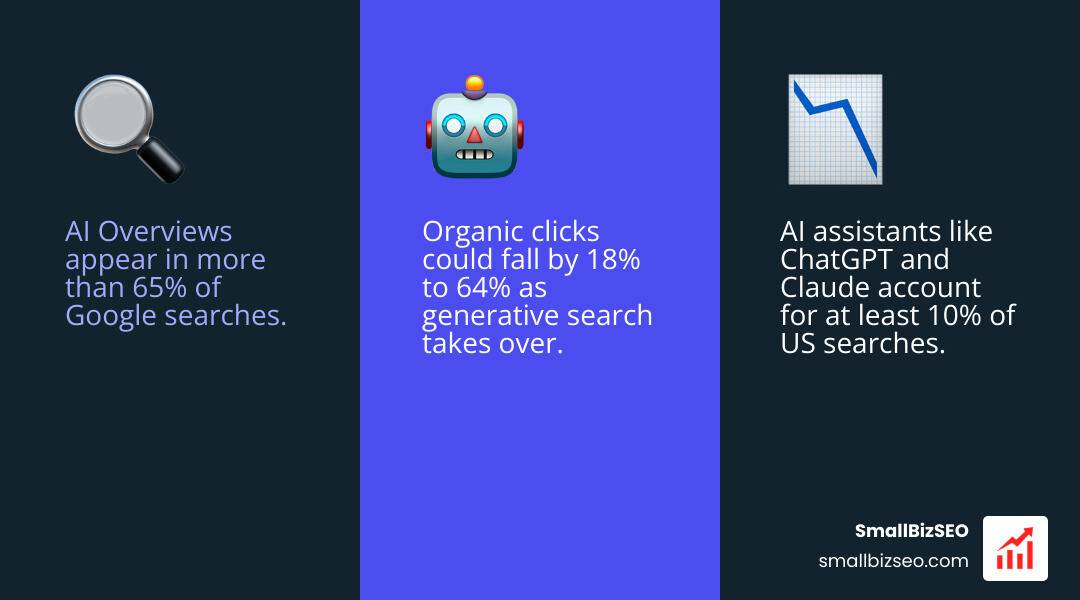
Here's what's happening right now: AI Overviews appear in more than 65% of Google searches. AI assistants like ChatGPT and Claude already account for at least 10% of US searches. And one Search Engine Land study predicts organic clicks could fall by anywhere from 18% to 64% as generative search takes over.
That's not a future problem. It's a right-now problem.
Many business owners have already noticed a 20–40% drop in search traffic since AI Overviews rolled out widely. The old playbook — rank for keywords, get clicks — is losing ground fast. The new game is about being the source AI engines trust and cite, not just the blue link someone might click.
This guide evaluates the AI based SEO services that are actually moving the needle for small businesses — so you can make a smarter investment decision without wading through the hype.
I'm Clayton Johnson, a digital PR and SEO specialist focused on building search visibility through high-impact content and link strategies. I've spent years helping businesses navigate the shifting search landscape, including the rise of AI based SEO services, and I'll cut through the noise to show you what's worth your time and budget.
The Shift from Clicks to Citations: Why AI Visibility is the New Traffic
In the classic search era, success was simple: you ranked on page one, a user clicked your blue link, and they landed on your website. Today, search engines use large language models (LLMs) to synthesize information and answer queries directly on the search results page. This is the zero-click search reality.
Because users no longer have to click through to find answers, traditional organic traffic is declining. To survive, businesses must pivot from chasing clicks to securing citations.
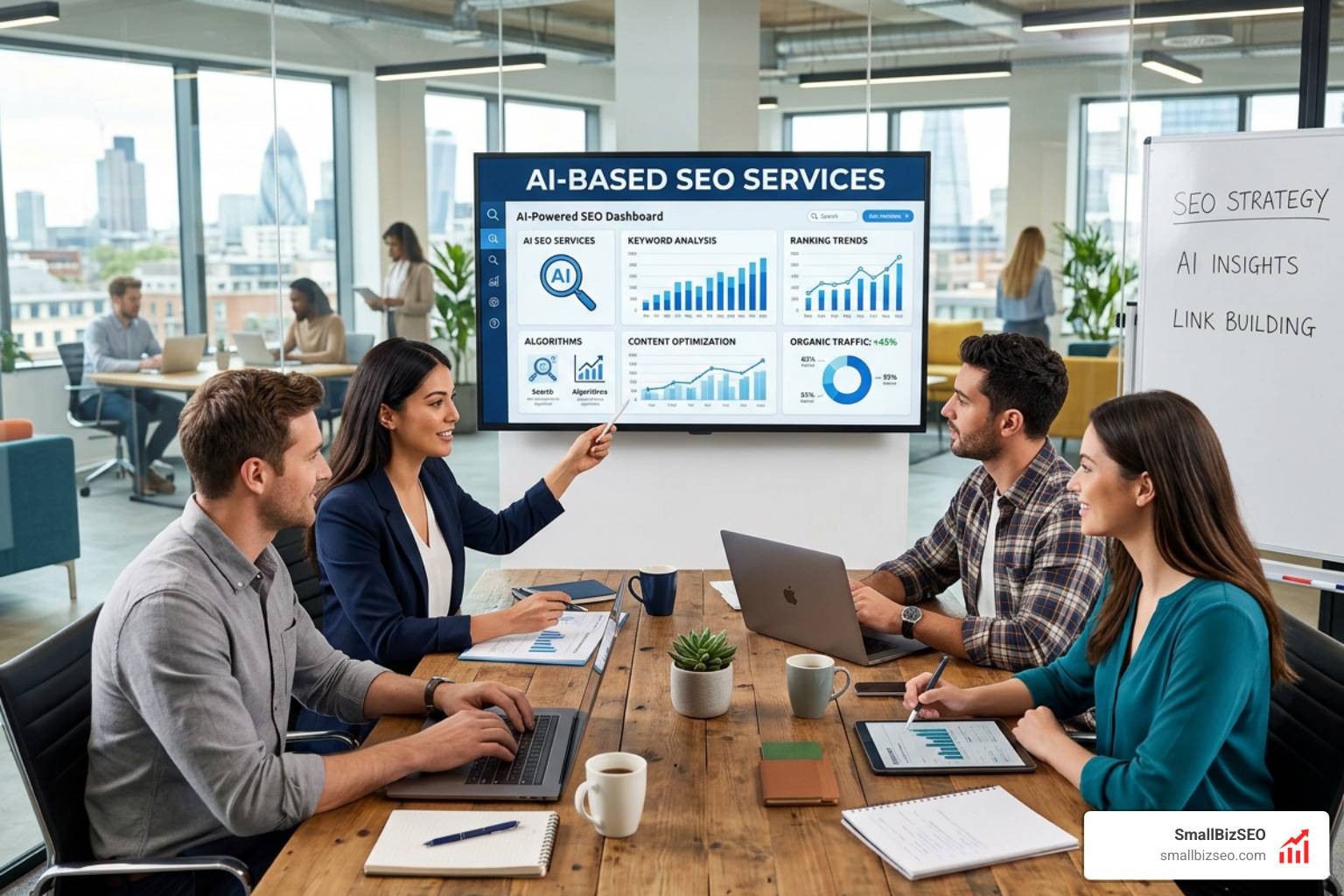
AI visibility measures how often and how prominently your brand is recommended, cited, or linked within these AI-generated summaries. When an LLM answers a query like "What is the best CRM for a small marketing agency?", it doesn't just list websites; it synthesizes an answer and links to its trusted sources.
Securing these citations requires a combination of Answer Engine Optimization (AEO) and Generative Engine Optimization (GEO). AEO focuses on formatting your content to directly answer conversational, voice-driven, or long-tail prompts. GEO takes this a step further by optimizing your brand's overall digital footprint so that LLMs perceive your business as a trusted, authoritative entity worthy of being cited.
To understand the software driving these strategies, you can explore our guide on What Are AI SEO Tools. If you are looking for local expertise to guide this transition, reviewing the Top AI SEO Agencies in New York can help you find partners specializing in modern generative search.
Evaluating Modern AI Based SEO Services: What Actually Works?
The market is flooded with tools and agencies promising to automate your search presence. However, not all AI based SEO services are created equal. Broadly, they fall into two categories: fully autonomous AI agents and hybrid, expert-led SEO services.
| Feature / Capability | Fully Autonomous AI Agents | Hybrid SEO Services (Expert-Led + AI-Enhanced) |
|---|---|---|
| Content Creation | Automated generation on autopilot; high risk of "commodity" content. | Written by human specialists; informed by AI data analysis. |
| Technical Audits & Fixes | Instant script-based fixes (broken links, schema injection). | Strategic prioritization; code-level optimization by developers. |
| E-E-A-T Compliance | Low; cannot produce real-world experience or original research. | High; integrates proprietary data, expert quotes, and case studies. |
| Link Building | Automated link exchanges; potential risk of search penalties. | Manual outreach, digital PR, and high-quality editorial placements. |
| Best Suited For | Basic technical site maintenance on a tight budget. | Mid-market and small businesses looking for sustainable revenue growth. |
While autonomous software agents are incredibly efficient at running 24/7 technical checks, they fall short when it comes to content. Search engine guidelines explicitly reward E-E-A-T (Experience, Expertise, Authoritativeness, and Trustworthiness). Purely AI-generated content often lacks original data and real-world experience, making it "commodity content" that search engines easily summarize and ignore.
The most effective approach is a hybrid model. We leverage advanced machine learning models to accelerate data analysis, predict trends, and automate structured data generation, while our human strategists and writers produce high-quality, E-E-A-T compliant assets. To learn more about this balanced approach, check out our dedicated AI SEO Services.
How AI Based SEO Services Differ from Traditional Search Strategies
Traditional SEO relies heavily on keyword matching, keyword density, and backlink volume. If a user searched for "best plumbing service," the search engine matched those exact words to the indexed pages.
AI-driven search relies on semantic search and entity optimization. LLMs do not just look for keywords; they build a complex knowledge graph of entities (people, places, businesses, concepts) and the relationships between them.
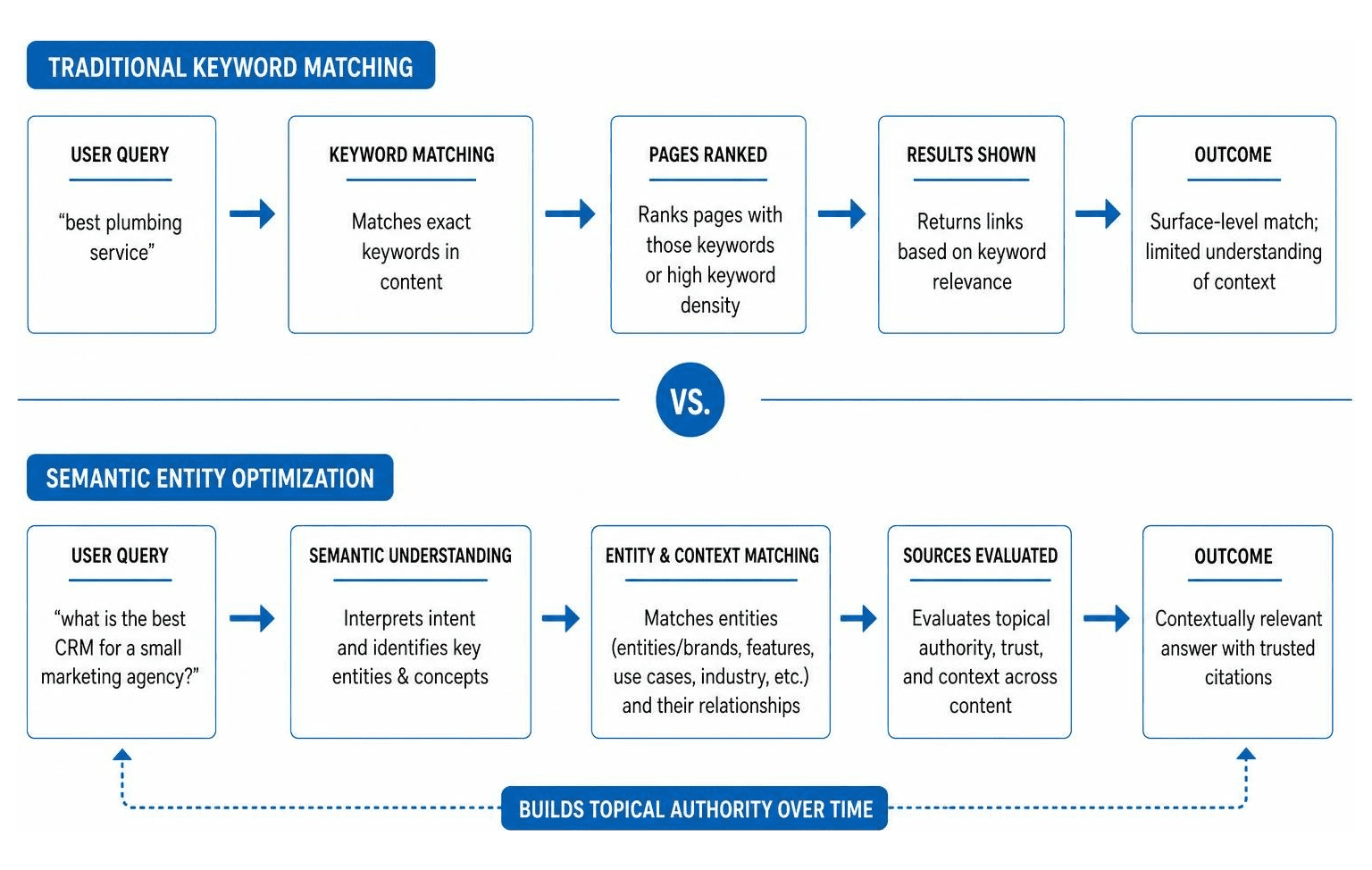
Instead of optimizing for a single keyword, modern services optimize for topical authority. This means structuring your content so that search algorithms understand the deeper context of your website, establishing your business as a trusted entity within your niche. For a broader look at how these core concepts integrate into standard campaigns, read about our foundational SEO Services.
What to Look For When Choosing AI Based SEO Services
When evaluating agencies or platforms, look for providers that avoid fully automated, cookie-cutter content. The right partner should offer transparent workflows, clear data integration, and a multi-model approach (utilizing different LLMs like OpenAI, Claude, and Gemini rather than relying on just one).
If you are a business owner searching for local expertise, exploring specialized AI SEO Services New York City can help you find a provider that understands both metropolitan market dynamics and modern LLM optimization.
Measuring ROI When Traditional Rankings Disappear
How do you measure the ROI of your SEO campaign when traditional keyword rankings are highly volatile? Studies show that URLs inside Google's AI Overviews are highly unstable, with more than 90% of tracked URLs getting swapped out or kicked out of generative summaries at some point.
Because of this volatility, tracking traditional rank positions alone is no longer sufficient. Modern ROI measurement focuses on:
- Citation Frequency: How often your brand is cited as a source across different LLMs.
- Sentiment Analysis: Whether AI engines recommend your brand positively, neutrally, or negatively during buyer research.
- Downstream Engagement: Direct conversions, leads, and referral traffic originating from AI platforms.
By focusing on these metrics, you can turn raw Data Into Traffic that actually impacts your bottom line.
Technical Blueprints for Generative Engine Optimization (GEO)
To ensure that LLM crawlers can easily parse, understand, and cite your website, you must implement specific technical optimizations.
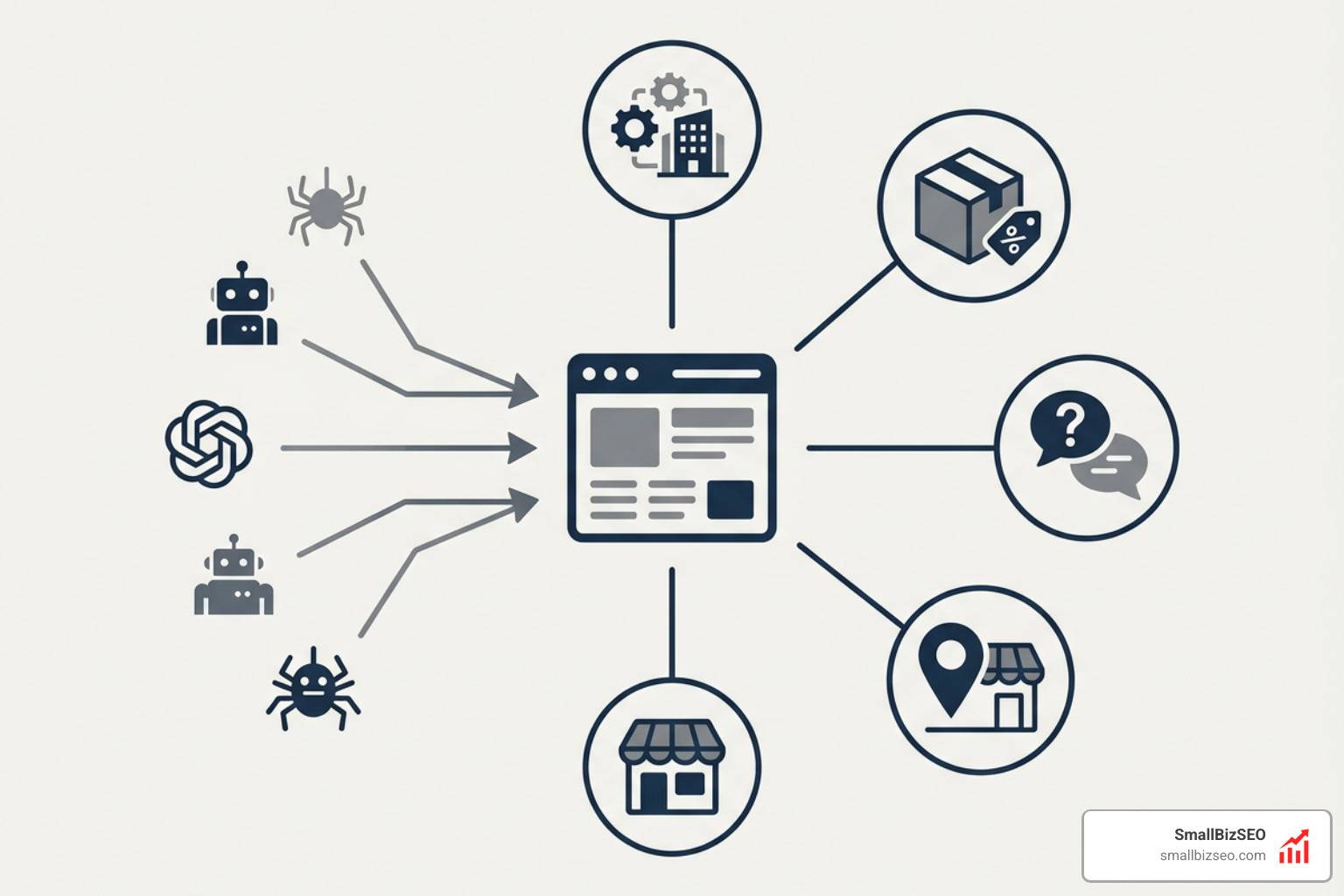
- Advanced Schema Markup: Implement granular JSON-LD schema (including Organization, Product, FAQ, and LocalBusiness markup) to explicitly define your business entities and relationships.
- Passage-Level Optimization: Structure your content with clear, descriptive subheadings (H2s and H3s) followed by direct, factual answers. This makes it easy for AI engines to extract specific passages for their summaries.
- LLM Crawler Guidance: Maintain clean site architecture, optimized JavaScript rendering, and files like
llms.txtandllms-full.txtto properly guide non-Google AI crawlers. - Structured B2B Content: Create comprehensive comparison tables, alternative guides, and transparent pricing pages. When B2B buyers ask an LLM to compare your software or service to a competitor, the AI relies on these highly structured formats to generate its comparison.
For developers and technical teams looking to automate this process, the open-source tool akii-technologies-ltd/akii-seo-ai-search-optimizer provides a terminal-based plugin to audit sites, generate schema, and track AI visibility. To explore how these technical layers go beyond standard on-page writing, read our analysis of strategies Beyond Content Optimization.
Frequently Asked Questions About AI Search Optimization
Is GEO a replacement for traditional SEO?
No, GEO is not a replacement; they are complementary strategies. AI engines rely on traditional search engine crawlers and indexes (like Googlebot and Bingbot) to discover and evaluate websites. Without a strong traditional SEO foundation — including high-quality backlinks, clean site health, and fast loading speeds — AI engines will never find your content to cite it in the first place.
How do Google AI Overviews and ChatGPT Search differ?
Google's AI Overviews are built directly on top of Google's search index and prioritize websites that already rank highly in standard search results. ChatGPT Search relies heavily on Bing's Search APIs, pulling real-time data, reviews, and roundups, and places a strong emphasis on direct citations and conversational answers. Gemini, Google's native model, integrates deeply with Google's workspace and real-time ecosystem.
How long does it take to see results from AI SEO?
While simple technical SEO fixes can show results in a couple of weeks, updates to LLM citations typically take longer. This latency is due to the indexing cycles of search engines and the training or fine-tuning schedules of various large language models. Expect to see consistent, meaningful visibility improvements within two to six months.
Future-Proof Your Search Presence with SmallBizSEO
Navigating the transition from traditional search to the AI era doesn't have to be overwhelming. At SmallBizSEO, we help small businesses build sustainable, future-proof search visibility.
We combine advanced technical SEO, data-driven content strategy, and authoritative link-building through our proprietary Velocity framework. This framework is designed to deliver fast rankings and E-E-A-T-compliant growth, backed by transparent, automated reporting so you always know exactly where your investment is going.
Whether you want to claim your spot in Google's AI Overviews, get cited in ChatGPT, or simply recover lost search traffic, we have the tools and expertise to make it happen. Explore our comprehensive AI SEO Services today, and let's build a search strategy that keeps your business ahead of the curve.