Smart SEO Strategies That Help Auto Body Parts Sellers Win More Search Traffic
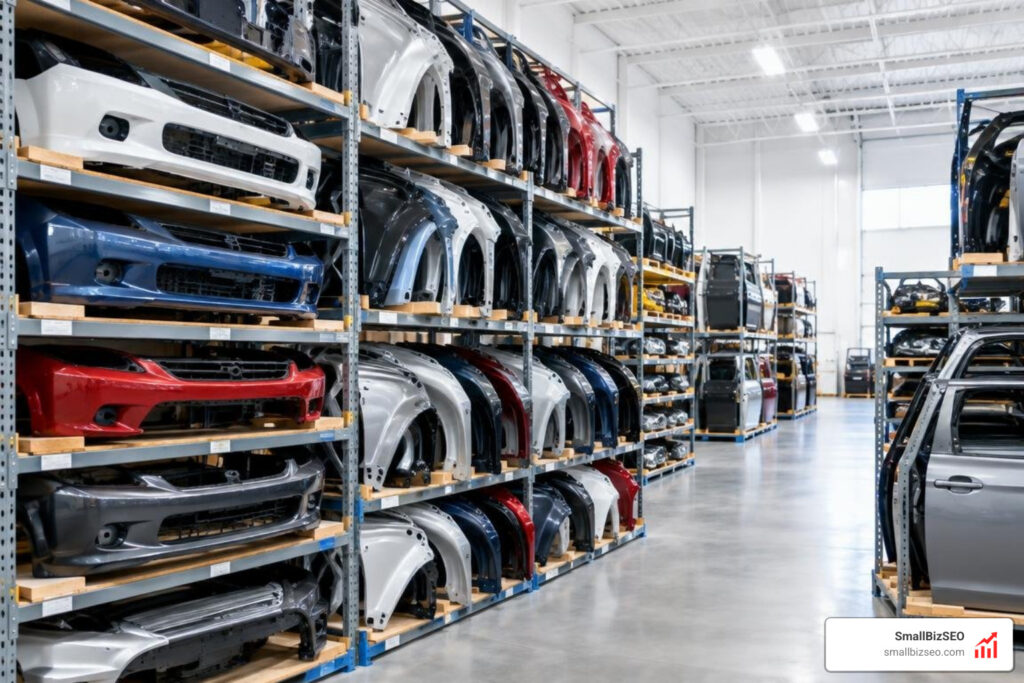
How Can Auto Body Parts Sellers Win More Search Traffic?
SEO for auto body parts starts with helping buyers find the right part for the right vehicle. Organize your catalog by vehicle and part type. Show fitment, part numbers, availability, and delivery details on each product page. Then make those pages fast on mobile and keep duplicate filter pages out of search results.
A buyer searching for a replacement bumper may know the vehicle year and model but not the part number. Your site should help them confirm fit before they order, not make them guess.
I’m Clayton Johnson, founder of SmallBizSEO. My work in website structure, content strategy, and search visibility informs this guide to SEO for auto body parts, starting with the catalog choices that help buyers find what they need.
Discover more about seo for auto body parts:
How Can Auto Body Parts Sellers Win More Search Traffic in a High-Stakes Search Landscape?
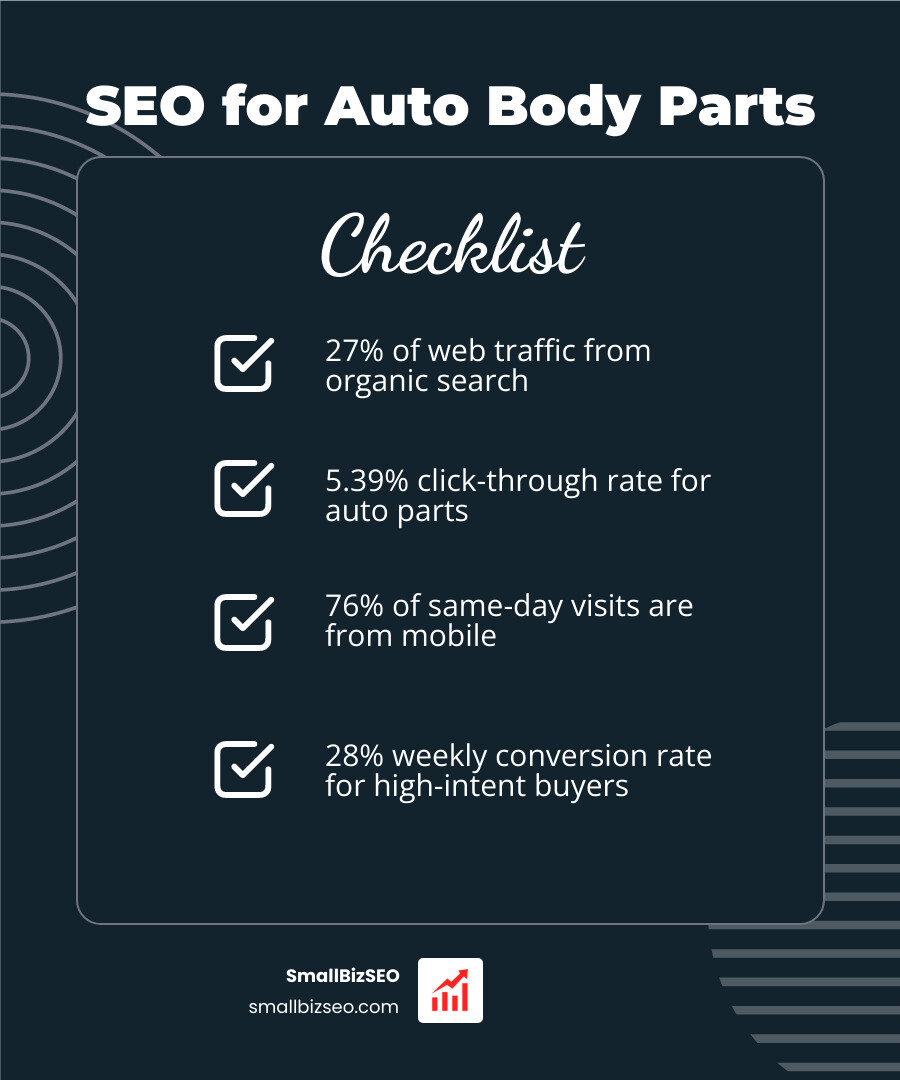
Auto body parts sellers can win more search traffic by organizing parts clearly by fitment, displaying accurate availability, and optimizing for mobile speed. Organic search is the top traffic source across the web, capturing roughly 27% of overall site traffic. In the automotive parts and repair sector, search ads and organic listings generate an average click-through rate of 5.39%. Capturing those clicks requires matching high-intent searches right when collisions happen or repairs become urgent.
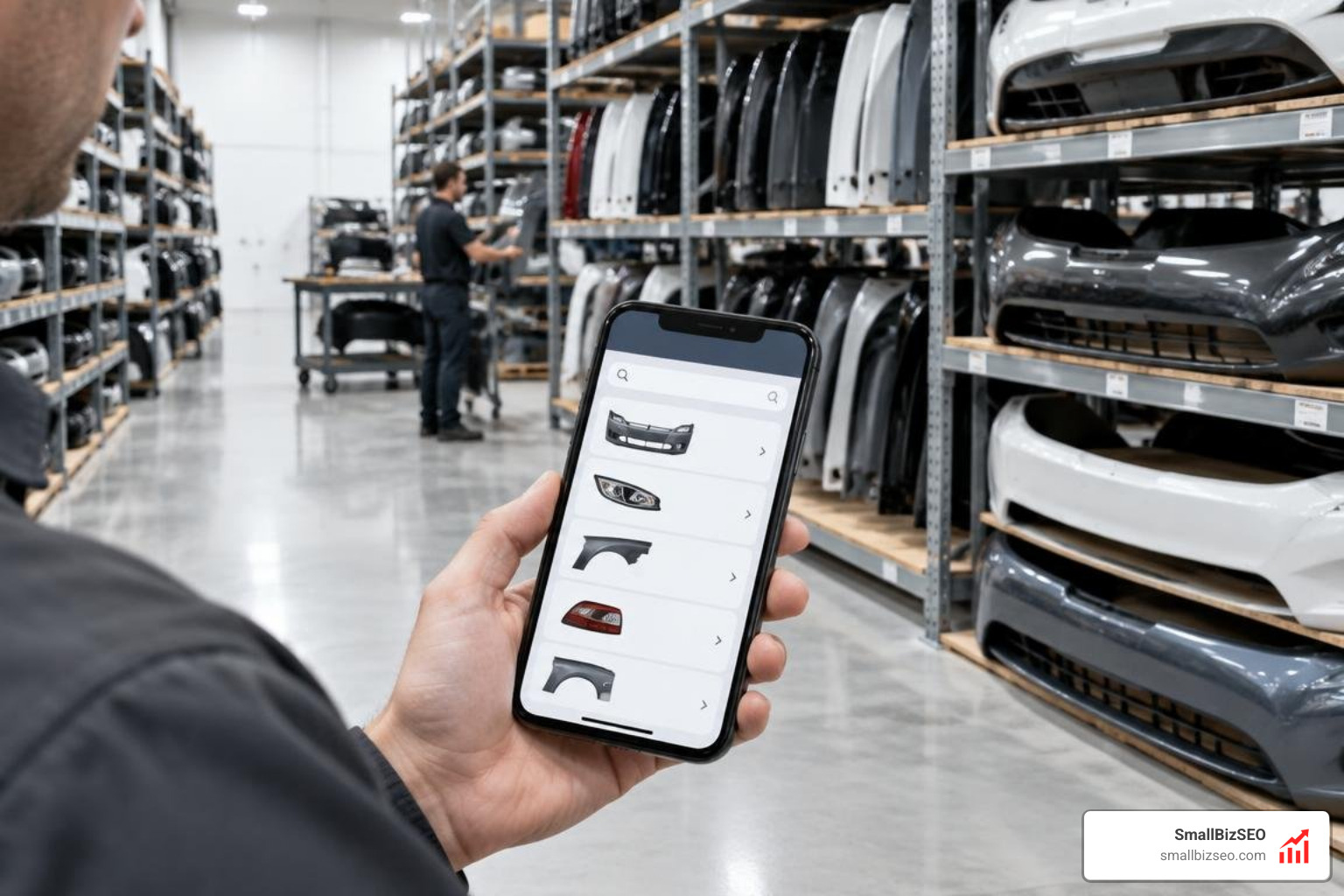
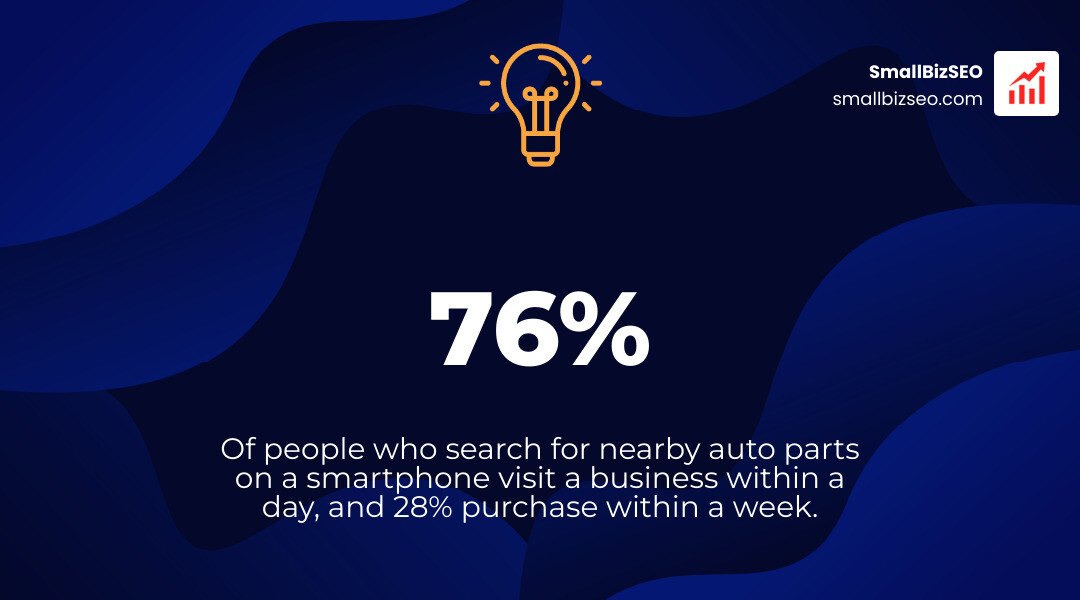
When an accident occurs, vehicle owners and professional collision technicians require immediate replacements. Roughly 76% of people who search for something nearby on a smartphone visit a relevant business within a day, and 28% of those searches lead to a purchase within a week. High-intent buyers cannot afford part obsolescence or incorrect orders.
Why is specialized SEO for auto body parts essential for eCommerce growth?
Specialized SEO for auto body parts connects complex automotive fitment data and live inventory to the exact technical terms shoppers enter into search engines. Unlike generic retail, replacement body panels, hoods, and structural supports rely on strict fitment compatibility. Industry standards such as ACES (Aftermarket Catalog Exchange Standard) manage fitment applications, while PIES (Product Information Exchange Standard) handles dimensions, weights, and digital assets.
Partnering with an experienced auto parts SEO company or a dedicated used auto parts SEO company helps retailers turn massive databases into search-ready pages. By targeting granular micro-intent queries (such as specific fender brackets, color codes, or mounting clips), sellers earn buyer trust, elevate inventory turnover, and slash costly return rates caused by mismatched parts.
How Should Auto Body Parts Sellers Structure Catalog Taxonomy and Fitment Data?
Auto body parts sellers should organize their catalog using a clear Year-Make-Model (YMM) hierarchy, create indexable landing pages for popular models, and keep navigation intuitive. A shallow click depth ensures customers and search engines find any replacement panel within three clicks of the homepage.

The table below illustrates how different taxonomy models perform for automotive catalogs:
| Taxonomy Type | Structure Level | User Experience | Best Use Case in Automotive eCommerce |
|---|---|---|---|
| Flat Taxonomy | Single layer with no subcategories | Simple but overwhelming for large catalogs | Small niche stores selling universal body hardware |
| Hierarchical Taxonomy | Top-down tree (Make > Model > Year > Category) | Predictable, crawl-friendly, easy to navigate | Core website architecture for all primary body categories |
| Faceted Navigation | Dynamic multi-attribute filtering (Side, Finish, Material) | Fast product refinement on category pages | Deep product catalogs requiring precise part filtering |
Card-sorting tests with real technicians and vehicle owners ensure your category labels match real-world vocabulary rather than confusing internal warehouse codes.
How do you structure Year-Make-Model taxonomy and faceted navigation?
Structure your Year-Make-Model taxonomy by building dedicated static landing pages for popular vehicle models and consolidating dynamic filter combinations. Dynamic URL parameters created by multi-select facets (such as sorting by price, color, or material) can create millions of duplicate URLs and deplete crawl budgets.
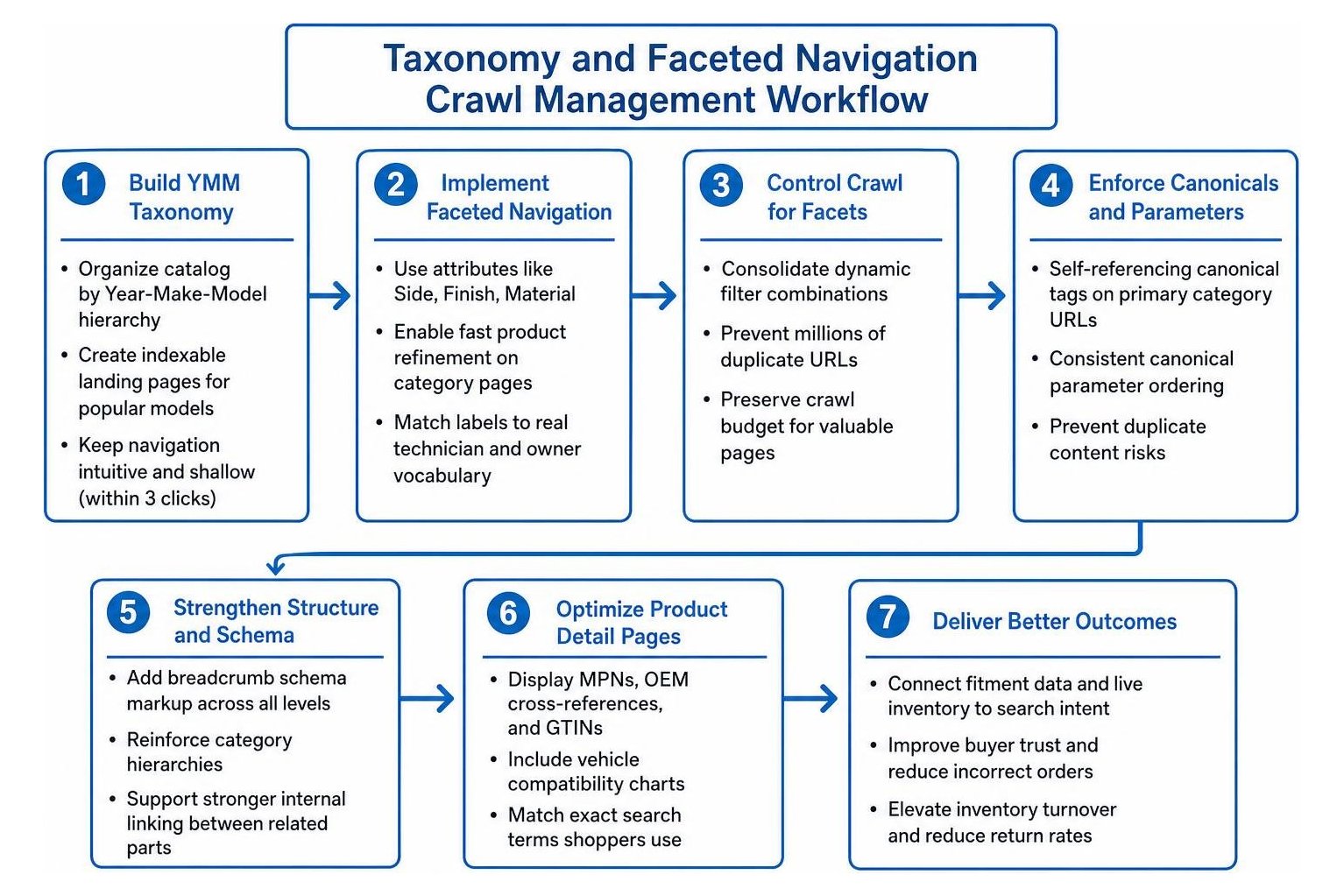
To prevent duplicate content risks outlined in TecDoc catalog duplicate content prevention, apply self-referencing canonical tags to primary category URLs and enforce consistent canonical parameter ordering. Add breadcrumb schema markup across all levels to reinforce category hierarchies. This setup works seamlessly alongside strategies used by a specialized car accessories SEO company or auto glass retail SEO company to build strong internal linking loops between related replacement body components.
How to optimize product detail pages for part numbers and vehicle fitment
Optimize product detail pages by placing manufacturer part numbers (MPNs), OEM cross-references, and vehicle compatibility charts prominently in the page HTML. High-intent shoppers regularly search using exact stamped part codes, interchange numbers, and Global Trade Item Numbers (GTINs).
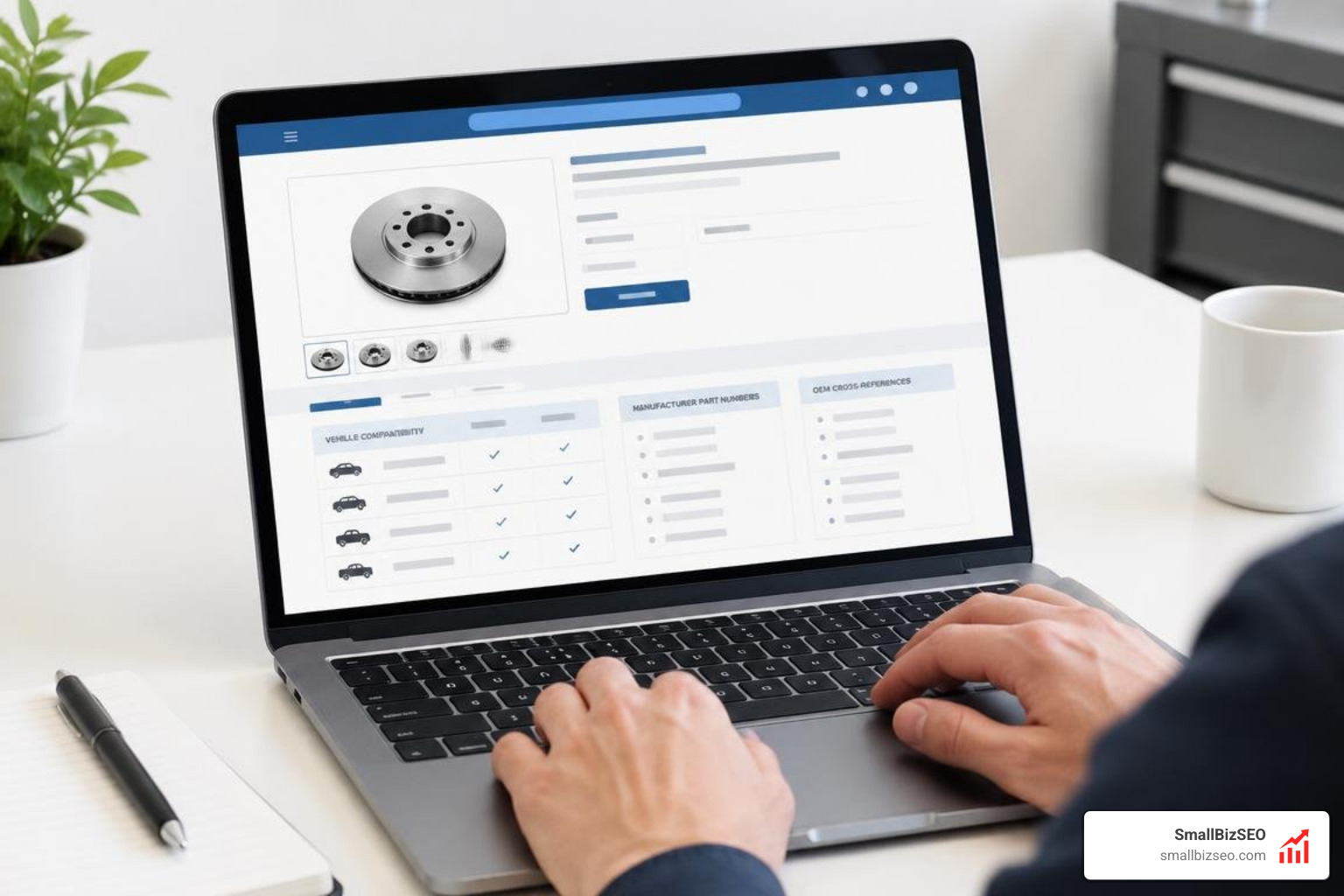
Follow these core practices on every product page:
- Dynamic Metadata Templates: Programmatically generate title tags and meta descriptions that include the part name, OEM code, and primary vehicle applications.
- Visible Compatibility Tables: Embed clean HTML tables showing exact year, make, model, trim, and submodel fitment details above the fold.
- Detailed Schema Markup: Implement Schema.org
ProductandOfferstructured data, declaring the MPN, GTIN, brand, availability, and fitment attributes. - Cross-Reference Lists: List equivalent aftermarket numbers to capture shoppers cross-shopping competitor brands, mirroring successful structured fitment ranking signals.
How Can Auto Parts Retailers Improve Technical SEO, Local Visibility, and Authority?
Auto parts retailers can improve overall search performance by passing Core Web Vitals thresholds, publishing helpful DIY and collision repair resources, and securing relevant automotive backlinks. Prioritize mobile-first indexing by optimizing images so mobile technicians can load fitment diagrams instantly in the repair bay.

Maintain the following performance and content benchmarks across your store:
- Target Sub-2.5 Second LCP: Keep Largest Contentful Paint under 2.5 seconds and Interaction to Next Paint (INP) under 200 milliseconds by compressing imagery and using modern image formats.
- Publish High-Intent Installation Guides: Create step-by-step panel replacement tutorials, bumper removal how-tos, and paint-matching tips that directly link to the featured parts, expanding your reach like a dedicated truck caps SEO company.
- Earn Quality Automotive Backlinks: Partner with car clubs, vocational repair schools, and local automotive trade organizations to build authoritative inbound links.
How can collision shops and parts sellers dominate Google Business Profile and AEO?
Collision centers and localized parts sellers dominate local search and Answer Engine Optimization (AEO) by maintaining complete business profiles, adding AutoBodyShop schema, and providing verified proof of repair capabilities. Today, roughly 45% of consumers use AI tools to find and evaluate local service providers.
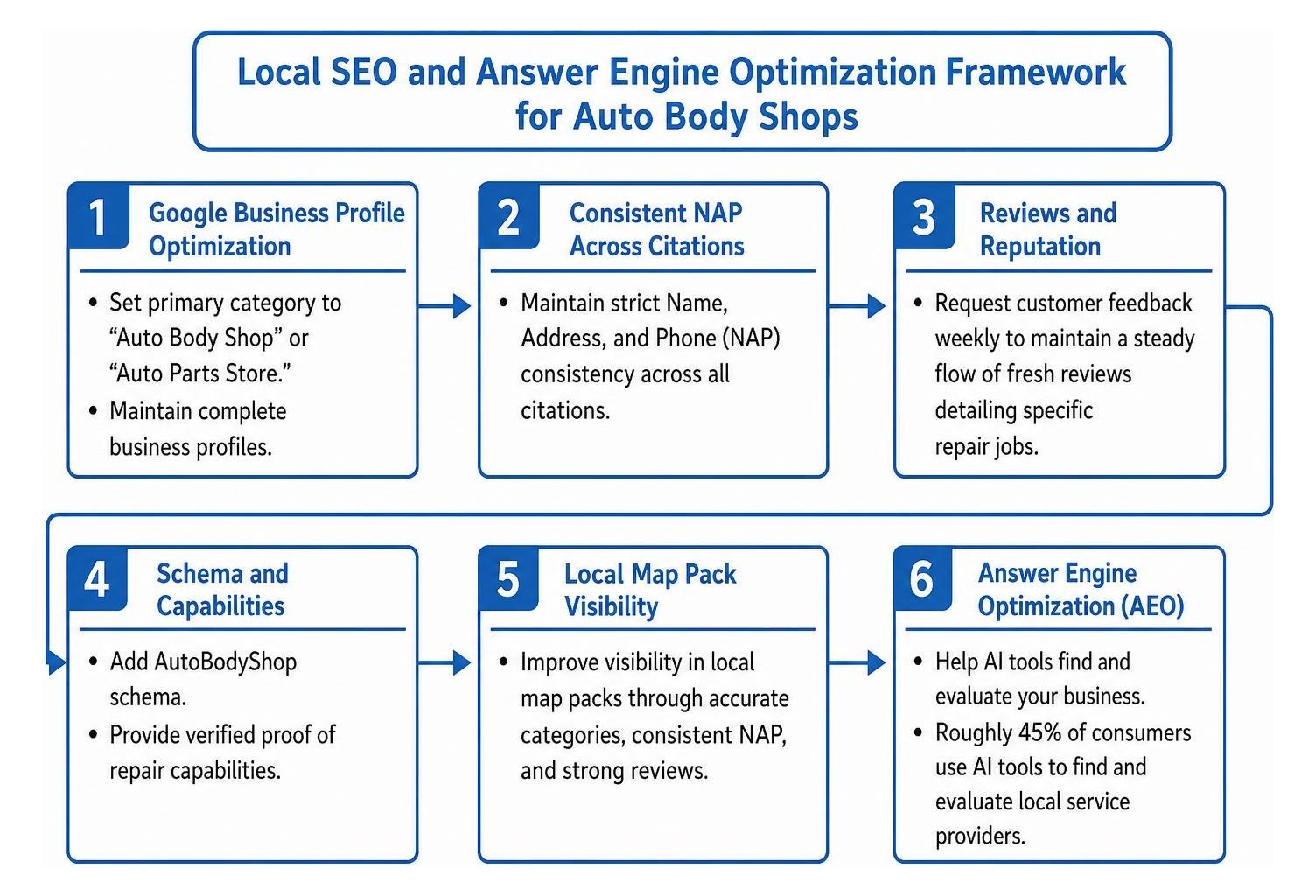
Research shows that 97% of consumers read online reviews before choosing a local business, with 74% paying specific attention to reviews written within the last three months. To maximize visibility in both local map packs and AI search engines:
- Set your primary Google Business Profile category accurately to "Auto Body Shop" or "Auto Parts Store."
- Maintain strict Name, Address, and Phone (NAP) consistency across all citations.
- Request customer feedback weekly to maintain a steady flow of fresh reviews detailing specific repair jobs.
- Add structured
AutoBodyShopschema to your website featuring verified credentials, warranties, accepted insurance providers, and direct estimate booking paths.
Technical best practices in SEO for auto body parts to eliminate crawl waste
Eliminate crawl waste by auditing your server logs, managing discontinued inventory, and removing broken internal links. When auto body parts go permanently out of stock, apply clean 301 redirects to the closest relevant replacement part or parent category rather than leaving 404 errors.
Regularly review crawl efficiency in Google Search Console to confirm that search bots index high-margin category hubs and product pages instead of empty faceted searches. Tracking conversion rates, phone call inquiries, and organic revenue helps align search marketing with tangible business results.
If you are ready to evaluate your site architecture and unlock sustainable organic revenue, our team at SmallBizSEO delivers fast, structured growth through our data-driven Velocity framework. Request a comprehensive SmallBizSEO SEO visibility audit today to turn your parts catalog into a high-performing search engine asset.
Transform Your Auto Body Parts Store into a High-Converting Search Leader
Winning search traffic for auto body parts comes down to catalog clarity, technical precision, and verified buyer trust. When you structure your Year-Make-Model taxonomy cleanly, eliminate crawl bloat from dynamic filters, and give shoppers transparent fitment data, search engines reward your store with higher visibility and better conversions.
Start by auditing your core category paths, updating your product schema, and streamlining your mobile user experience. Implementing these data-driven optimizations ensures your replacement panels, lighting assemblies, and repair components are always found first when drivers and technicians need them most.