Stop Chasing Blue Links and Embrace Answer Engine Optimization in Modern Search
How Does Answer Engine Optimization Change Visibility in Zero-Click Searches?
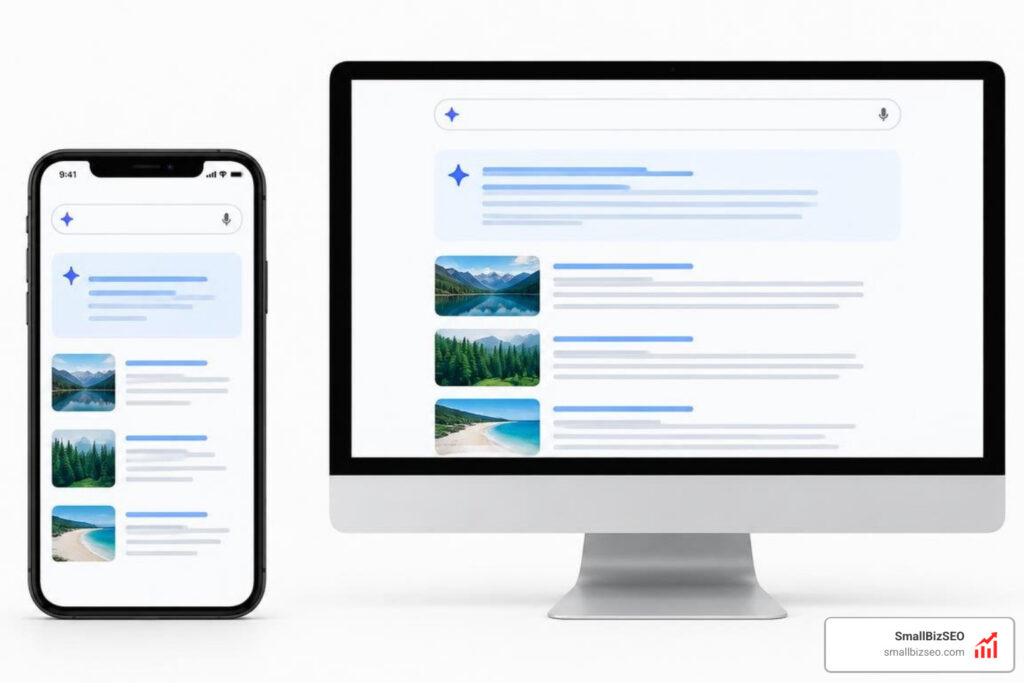
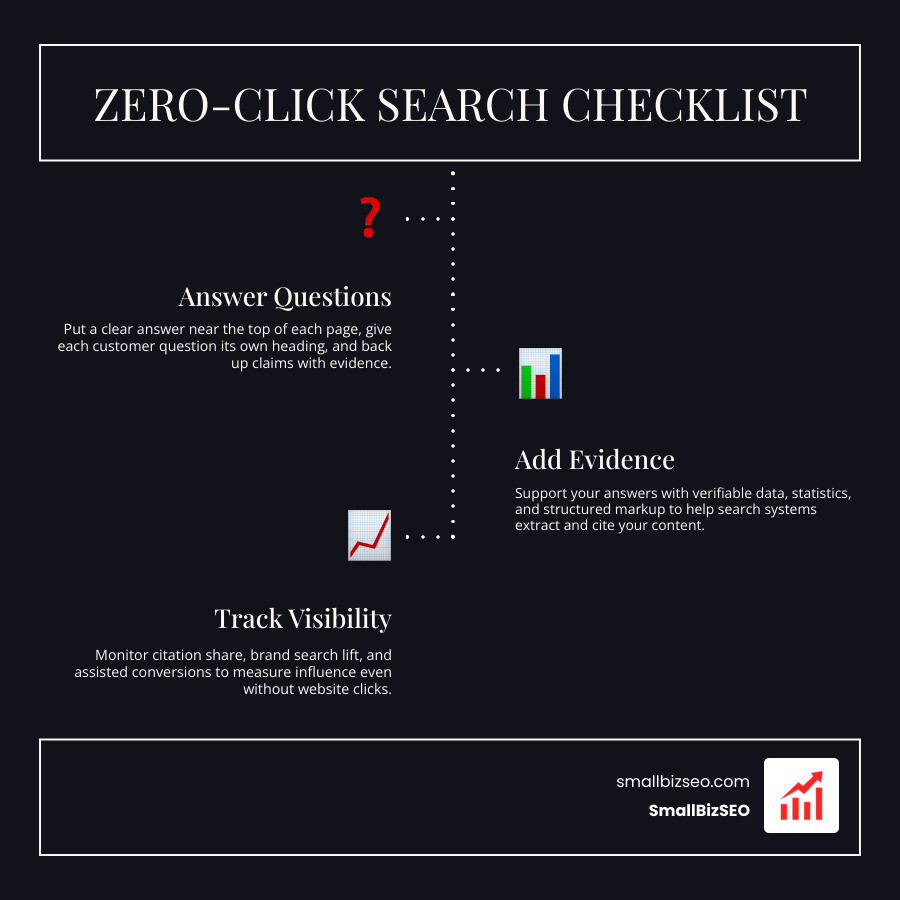
Start with the answer. To use answer engine optimization for zero-click searches, put a clear answer near the top of each page. Give each customer question its own heading, back up claims with evidence, and keep your business details accurate. These steps help search systems understand your content and may help it appear in AI answers, featured snippets, and local results, even when someone does not visit your site.
I'm Clayton Johnson, founder of SmallBizSEO, where I connect SEO, content strategy, and digital PR to help small businesses build visibility. My work on the search topic "answer engine optimization zero click searches" focuses on making useful business knowledge easier to find, understand, and trust.
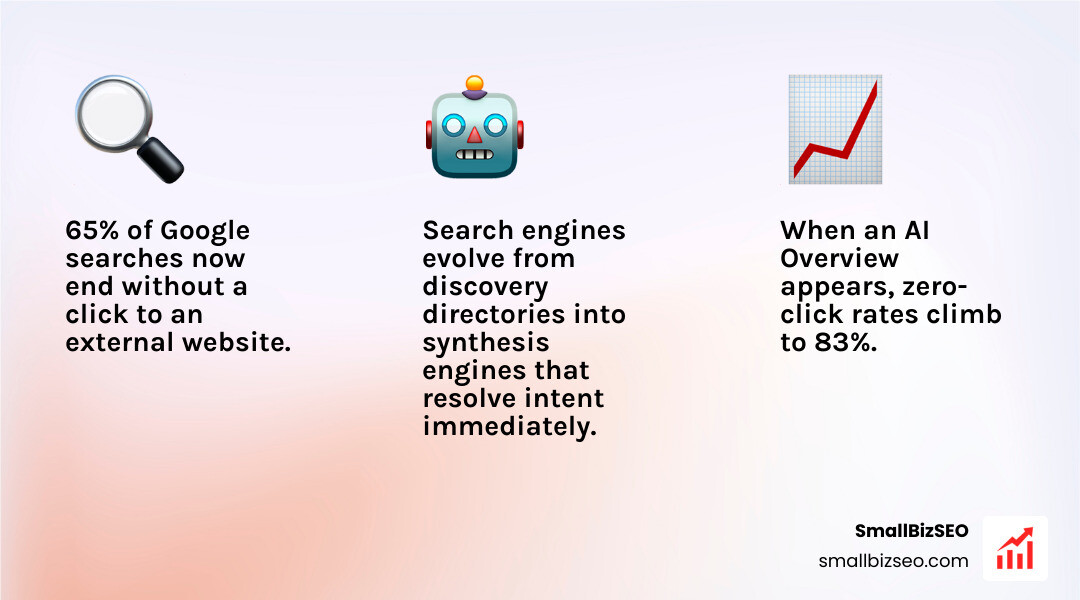
Roughly 65 percent of all Google searches now end without a click to an external website. When an AI Overview appears, that number climbs to 83 percent. As outlined in Bain & Company analysis on AI zero-click trends, search engines are evolving from discovery directories into synthesis engines that resolve intent immediately. Marketers who rely entirely on organic website traffic are seeing declining returns, making answer engine optimization essential for capturing brand influence at the point of search.
What Is Answer Engine Optimization and How Does It Differ From SEO?
Start with the answer. Traditional SEO focuses on ranking web pages in organic search results to drive clicks, Answer Engine Optimization (AEO) structures content so algorithms can extract and cite direct answers, and Generative Engine Optimization (GEO) optimizes brand presence across synthetic conversational responses.
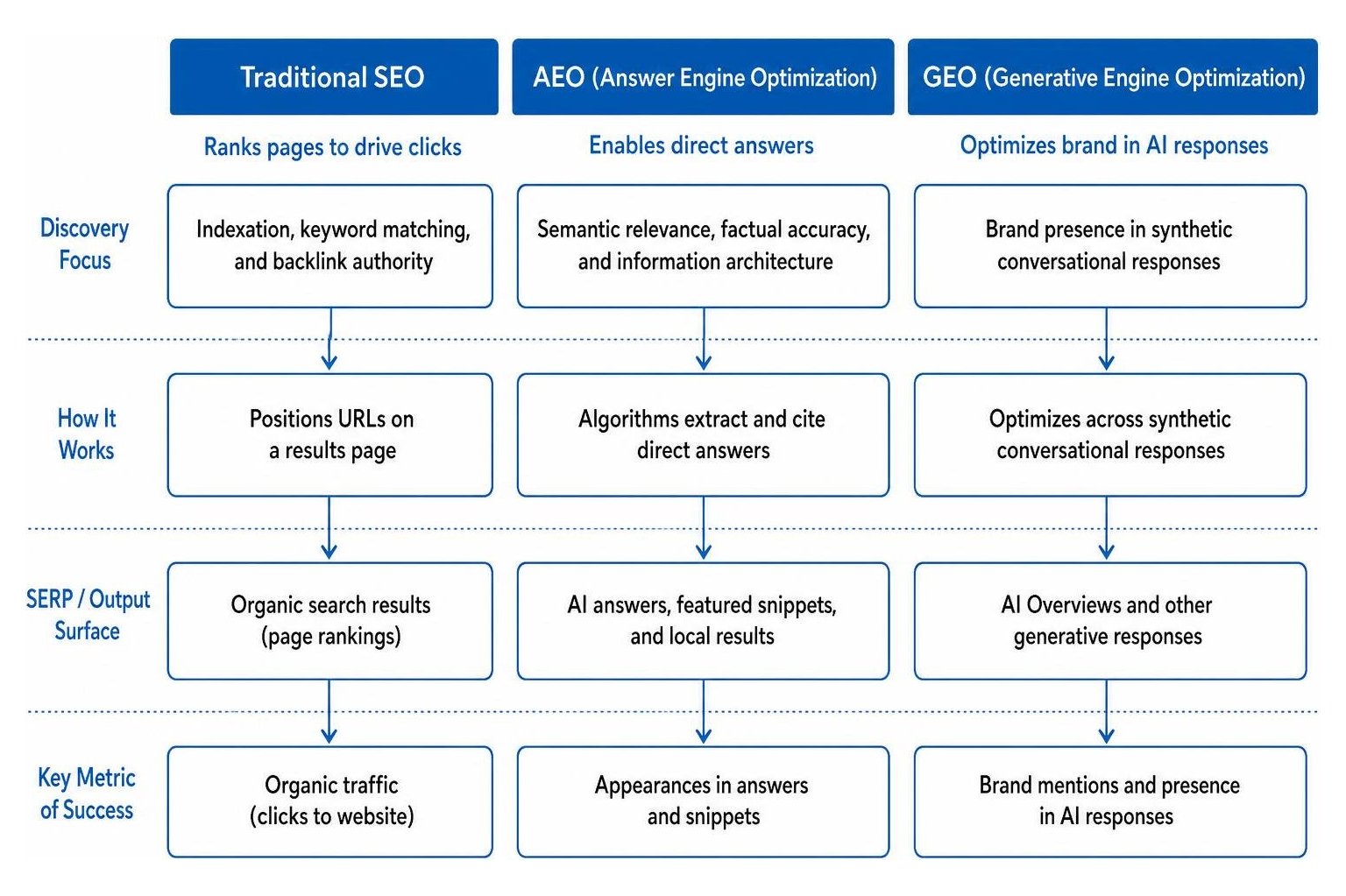
Traditional search discovery relies on indexation, keyword matching, and backlink authority to position URLs on a results page. In contrast, modern answer engines evaluate semantic relevance, factual accuracy, and information architecture to construct complete responses on the SERP. Implementing entity SEO establishes your business as a recognized entity within major knowledge graphs, allowing search platforms to associate your services directly with customer queries.
As explored in AEO strategy insights by Similarweb, these strategies address distinct stages of modern discovery:
| Optimization Strategy | Primary Objective | Target SERP / Output Surface | Key Metric of Success |
|---|---|---|---|
| Traditional SEO | Drive organic traffic to web pages | 10 blue links, standard organic listings | Organic clicks, impressions, CTR |
| Answer Engine Optimization (AEO) | Earn direct citations and featured extracts | AI Overviews, featured snippets, voice search | Citation share, zero-click impressions |
| Generative Engine Optimization (GEO) | Shape AI knowledge base recommendations | ChatGPT, Perplexity, Claude responses | Brand mention share, sentiment |
Why Is Answer Engine Optimization for Zero-Click Searches Becoming More Important?
Start with the answer. AI Overviews, voice assistants, and mobile interfaces increasingly resolve customer inquiries directly on the results page, making citation visibility and brand presence the primary drivers of discovery.
The rise of zero-click search behavior is accelerating across every device category. Mobile users experience a 77 percent zero-click rate compared to 56 percent on desktop, while 27 percent of all queries are voice-initiated. Furthermore, research indicates that when an AI summary is present, traditional organic click-through rates fall by 47 percent, with only 1 percent of searchers clicking links inside the summary itself.
Securing a high AI Overview citation rate provides substantial competitive advantages. When AI summaries appear, organic CTR drops 61 percent for brands excluded from the overview. Conversely, brands cited within the summary experience 35 percent more organic clicks and 91 percent more paid clicks compared to non-cited competitors. In platforms like Perplexity and ChatGPT, delivering concise, verifiable data ensures your solutions are recommended during conversational discovery.
How Can You Optimize Content for Answer Engines?
Start with the answer. Structure your pages into scannable, modular sections that answer specific customer questions directly within the first two sentences, backed by verifiable data and structured markup.
Answer engines rely on Retrieval-Augmented Generation (RAG) to scan web indices, extract relevant chunks of text, and synthesize answers. To ensure your content is selected, organize every page with clear semantic hierarchy, high information gain, and standalone factual accuracy.
How Do You Apply the FIFI Framework to Zero-Click Searches?
Start with the answer. The FIFI framework consists of four actionable stages—Find, Implement, Focus, and Increase—to identify question gaps, format extractable answers, build topical authority, and expand external validation.
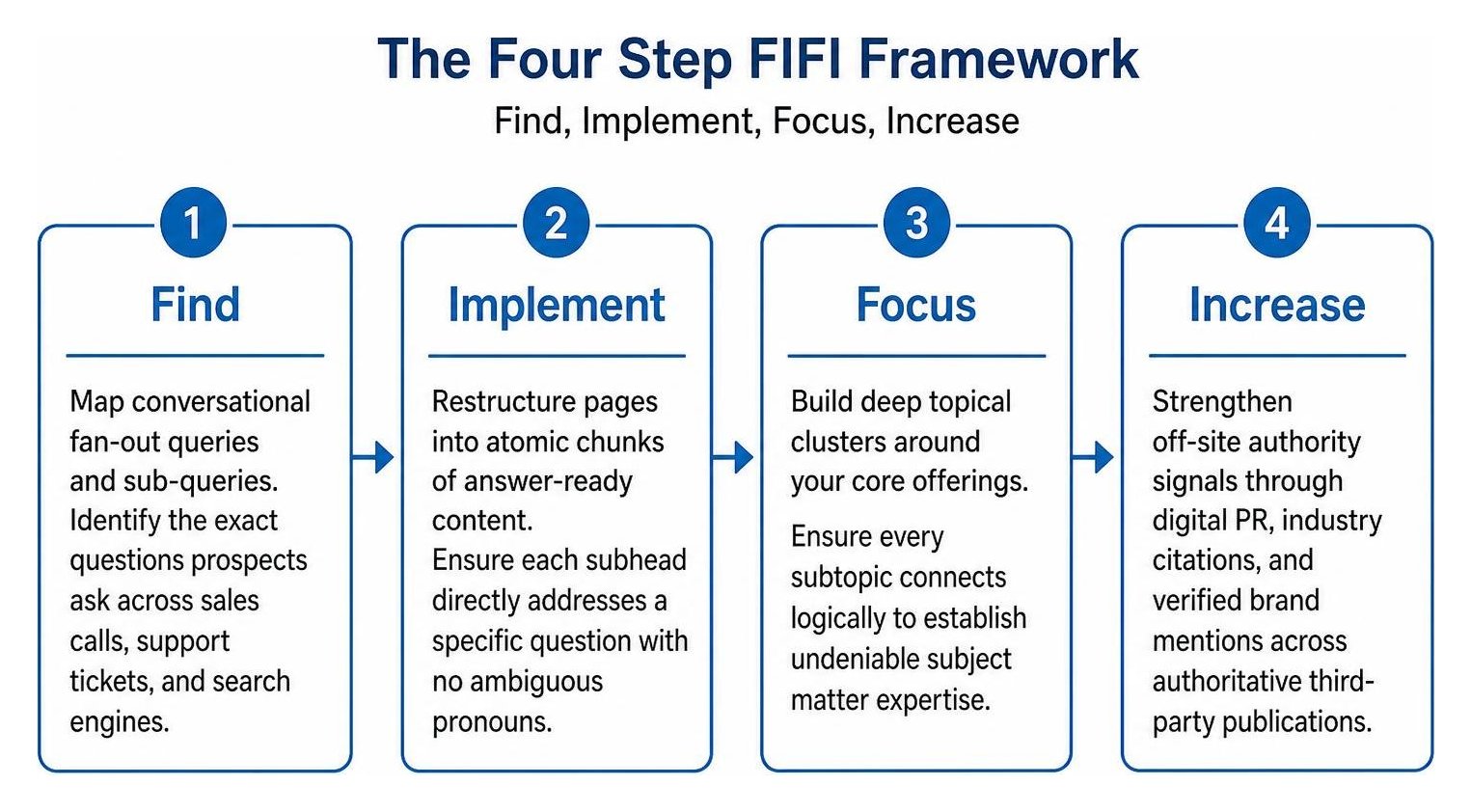
- Find: Map conversational fan-out queries and sub-queries. Identify the exact questions prospects ask across sales calls, support tickets, and search engines.
- Implement: Restructure pages into atomic chunks of answer-ready content. Ensure each subhead directly addresses a specific question with no ambiguous pronouns.
- Focus: Build deep topical clusters around your core offerings. Ensure every subtopic connects logically to establish undeniable subject matter expertise.
- Increase: Strengthen off-site authority signals through digital PR, industry citations, and verified brand mentions across authoritative third-party publications.
How Should You Structure Answer-Ready Content With Schema Markup and BLUF?
Start with the answer. Place the Bottom Line Up Front (BLUF) using a concise 40-to-60-word direct answer immediately beneath every question heading, then apply structured schema markup to validate the content for machine crawlers.
Search models read content in modular text blocks. Leading with a direct answer satisfies the retrieval system instantly before you expand on nuances, methodology, or examples. Applying schema markup—such as FAQPage, HowTo, and Organization markup—translates human-readable text into structured data triples that search engines parse without ambiguity.
To implement answer-ready SEO effectively across your site:
- Write explicit question-based H2 and H3 headings.
- Provide a direct, standalone answer in the first 40 to 60 words.
- Include quantified claims, naming the source, timeframe, and specific figures (adding quantified statistics improves LLM citation rates by up to 41 percent).
- Use clear bulleted lists, numbered steps, or data tables to organize supporting details.
How Can You Improve Your Local Pack and Knowledge Panel Visibility?
Start with the answer. Maintain an active, fully completed Google Business Profile, generate a consistent stream of verified customer reviews, and ensure identical business information across all directories.
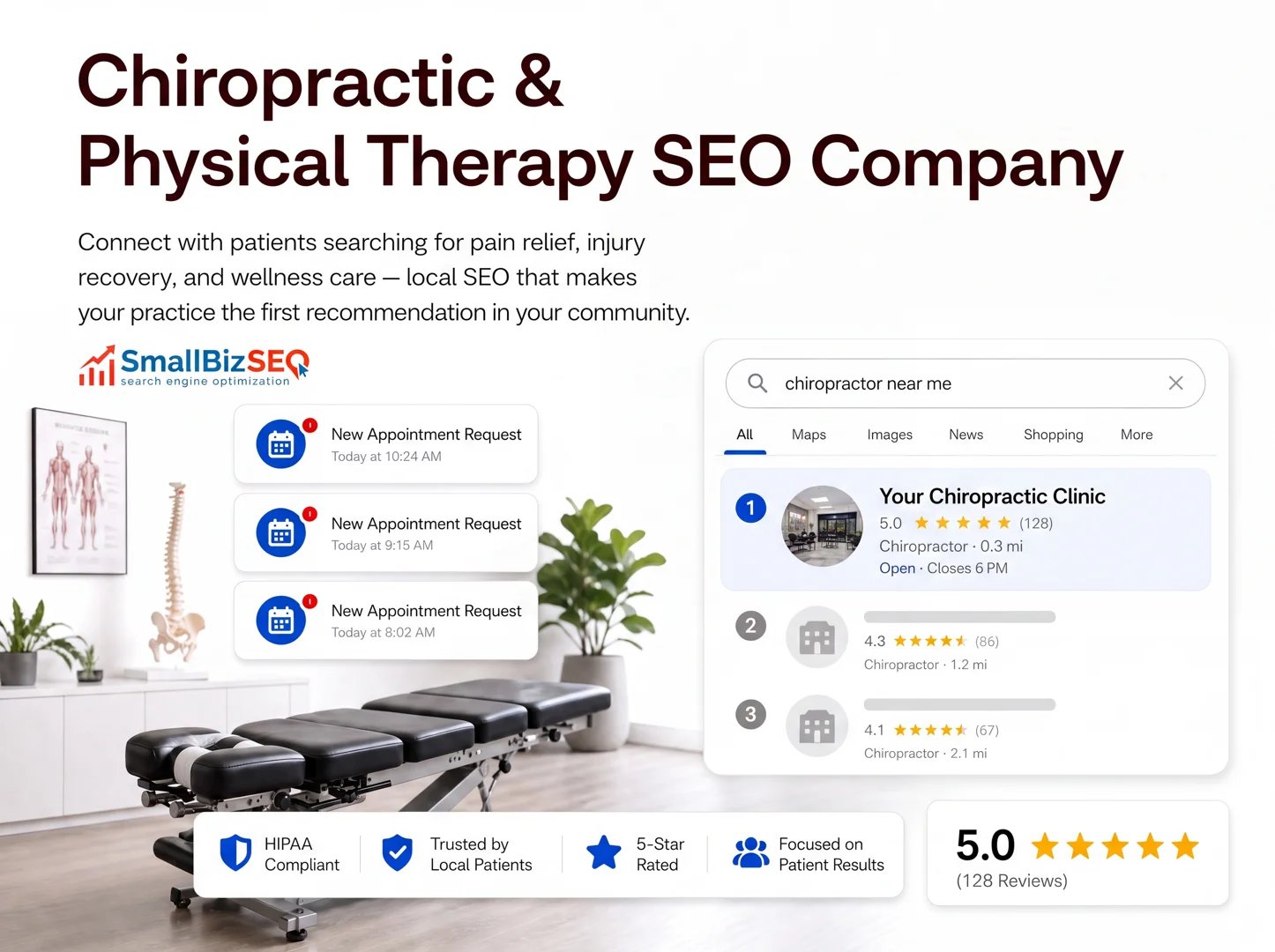
For regional service providers, high-intent searches often convert directly within the local pack without the user ever clicking to a website. Direct phone calls, booking requests, and driving directions are instant zero-click conversions. Reinforce your local entity signals by aligning website service pages with your business category attributes and publishing customer reviews that naturally reference specific services.
How Can You Measure Search Influence Without Website Clicks?
Start with the answer. Evaluate search performance by monitoring total search impressions, SERP feature ownership, AI model citation share, and assisted pipeline conversions rather than relying purely on website traffic.
As search engines resolve queries directly on the SERP, traditional web traffic metrics tell an incomplete story. We implement our data-driven "Velocity" framework at SmallBizSEO to deliver fast rankings and transparent, automated reporting that captures brand visibility across AI summaries, snippets, and knowledge graphs. Businesses looking to lead their market can leverage our tailored AI SEO services to secure citation dominance.
Which KPIs Help Track AI Citations and Search Visibility?
Start with the answer. Track citation frequency across AI engines, share of voice in AI summaries, branded search volume growth, and multi-touch pipeline attribution.
Conducting an AI SEO audit tracking the signals that matter to LLMs allows you to quantify your true market footprint. Focus on these essential AEO metrics:
- AI Citation Share: The percentage of relevant industry queries where your brand or URLs are cited in tools like Google AI Overviews, Perplexity, and ChatGPT.
- SERP Feature Ownership: The volume of featured snippets, knowledge panels, and local packs your brand currently occupies.
- Branded Search Lift: Growth in direct brand queries over time, demonstrating that zero-click impressions are driving brand recall.
- Assisted and Direct Inquiries: Leads generated directly from phone calls, profile interactions, and form submissions that reference finding your business via AI search tools.
Transforming Search Visibility Into Lasting Brand Authority
Winning modern search visibility requires shifting focus from chasing blue links to becoming the definitive answer across all search surfaces. By restructuring pages around clear answers, applying structured data, and tracking AI citations, your business will capture market share across featured snippets, local packs, and generative engines alike. Start auditing your core service pages today to make your content answer-ready and turn zero-click searches into measurable business growth.