4 Critical Cases When Permanent Redirects Must Preserve POST Data

What Happens to POST Data During a Permanent Redirect?
When a permanent redirect needs to preserve post requests, use a 308 Permanent Redirect. Make sure the new URL accepts the same POST request and body, then test a submission. A 301 is also permanent, but some clients follow it with a GET and drop the submitted data.
This matters when you move a form, checkout, or API endpoint. If the new URL no longer needs the POST data because the submission has already been processed, use a 303 See Other to send the user to a GET page instead.
I’m Clayton Johnson, founder of SmallBizSEO. My work in technical SEO and website structure informs how I assess when a permanent redirect needs to preserve post requests, so a URL change works for both visitors and search engines.
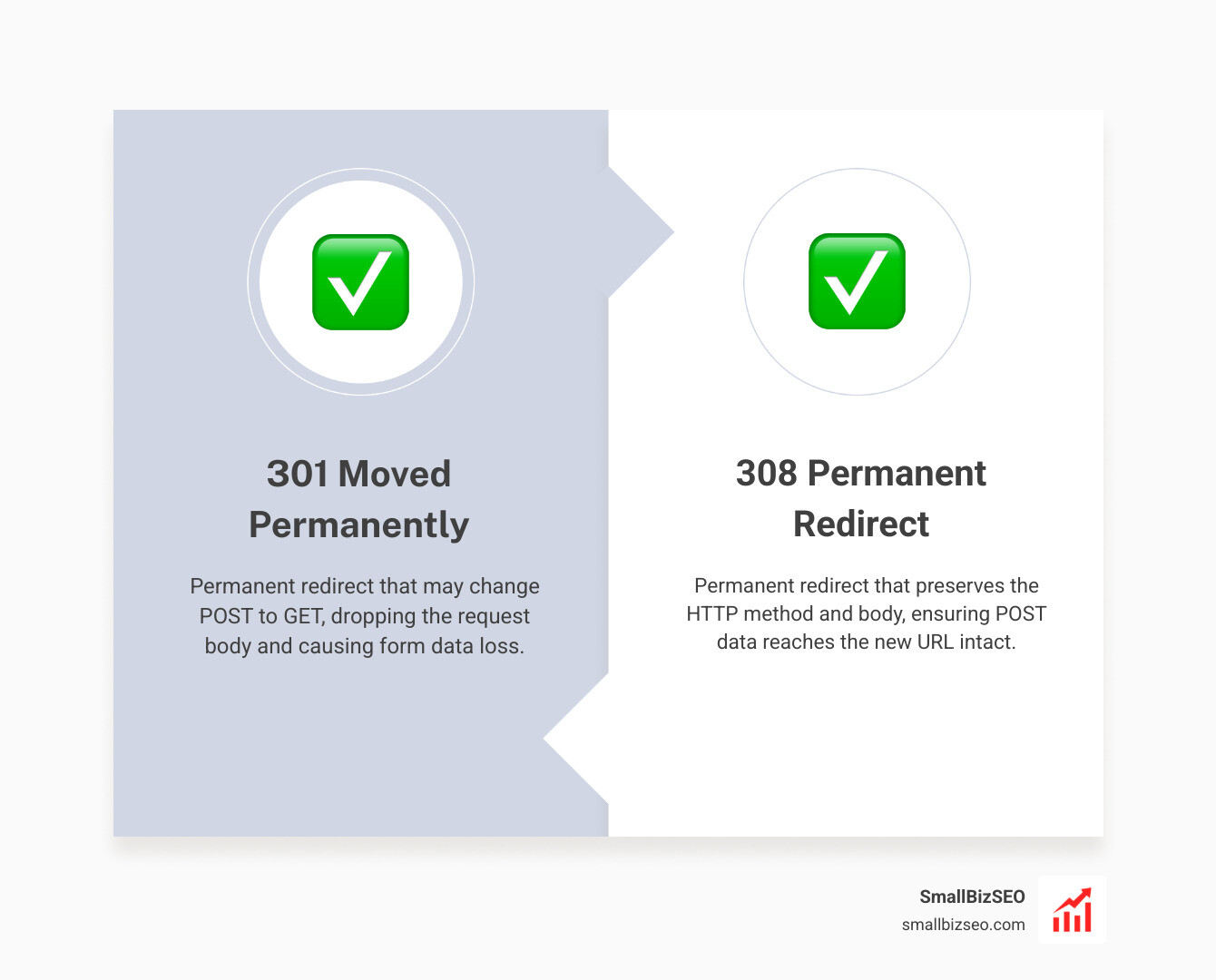
Historically, HTTP/1.0 specifications allowed user agents to morph a POST method into a GET method upon receiving a redirect response. RFC 7231 and RFC 7538 established explicit rules to fix this behavior. When a legacy redirect drops an HTTP payload, the server fails silently, leaving users with empty form errors and broken API integrations.
When Does a Permanent Redirect Need to Preserve a POST Request?
Choose a 308 Permanent Redirect when a request must reach a new URL with its HTTP method and body payload intact. Choose a 301 Moved Permanently when method preservation is unnecessary, such as standard informational page relocations.
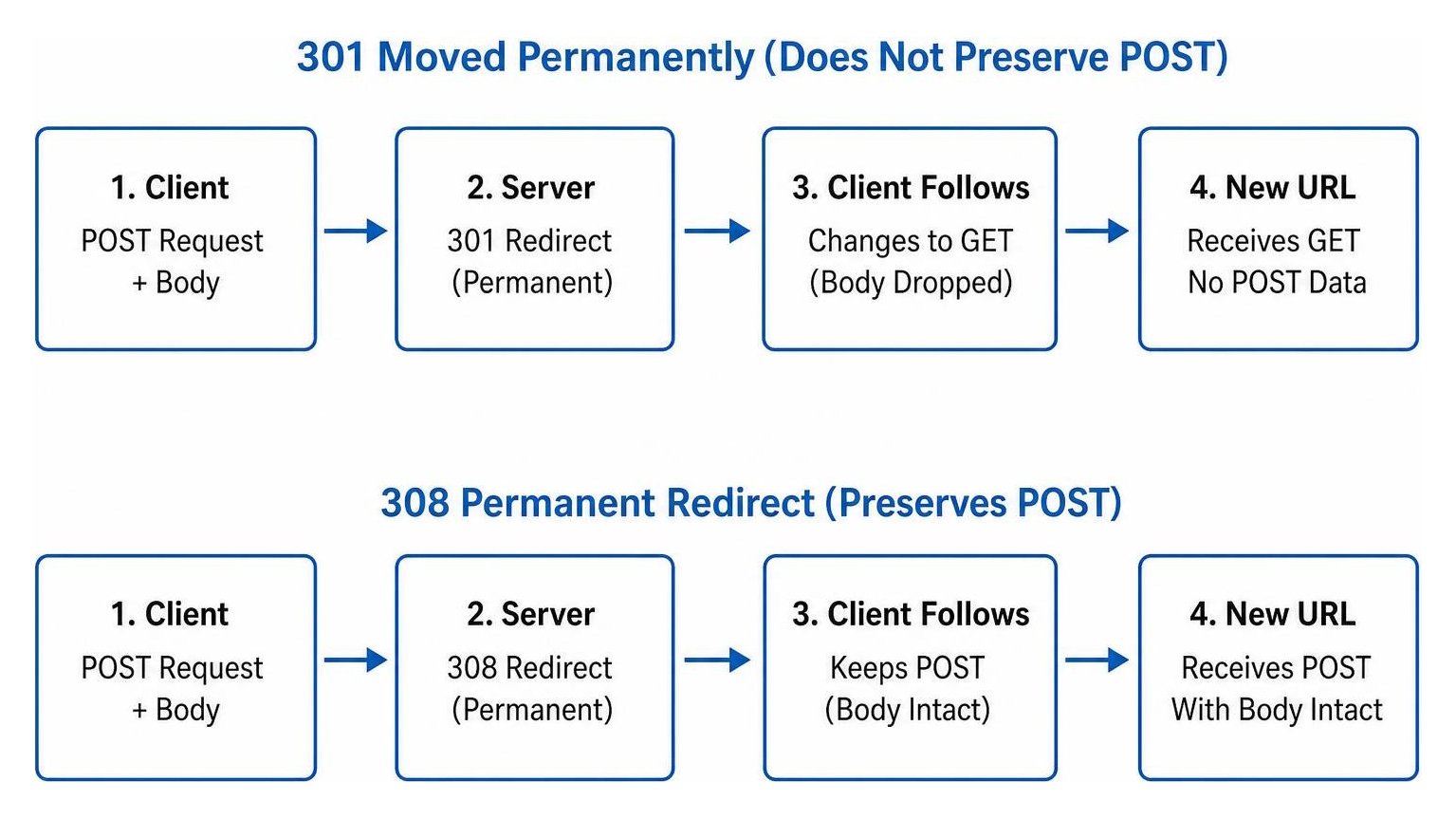
The table below breaks down how modern redirect codes handle request methods, cache storage, and search engine link equity:
| Status Code | Redirection Type | Preserves POST Method & Body | Cacheable by Default | Transfers Link Equity |
|---|---|---|---|---|
| 301 Moved Permanently | Permanent | No (Often rewrites to GET) | Yes | Yes |
| 302 Found | Temporary | No (Historically rewrites to GET) | No | No |
| 303 See Other | Temporary | No (Explicitly forces GET) | No | No |
| 307 Temporary Redirect | Temporary | Yes (Strict method preservation) | No | No |
| 308 Permanent Redirect | Permanent | Yes (Strict method preservation) | Yes | Yes |
What Happens to Request Bodies When a Permanent Redirect Needs to Preserve POST Requests?
When a permanent redirect occurs, the client receives a status code telling it where the requested resource lives. Under a standard 301 redirect, browsers and HTTP client libraries frequently strip the request body and issue a subsequent GET request to the target URL.
RFC 9110 and earlier HTTP standards formalized the 308 status code to remove this ambiguity. With a 308 response, the client must replay the exact HTTP method—such as POST, PUT, or DELETE—along with its body content to the new destination. Reviewing HTTP Redirections explained shows that proper method handling prevents data loss across distributed systems. Selecting the correct HTTP status code protects critical server interactions from silent drop-offs.
Which Architecture Scenarios Call for a Permanent Redirect That Preserves POST Requests?
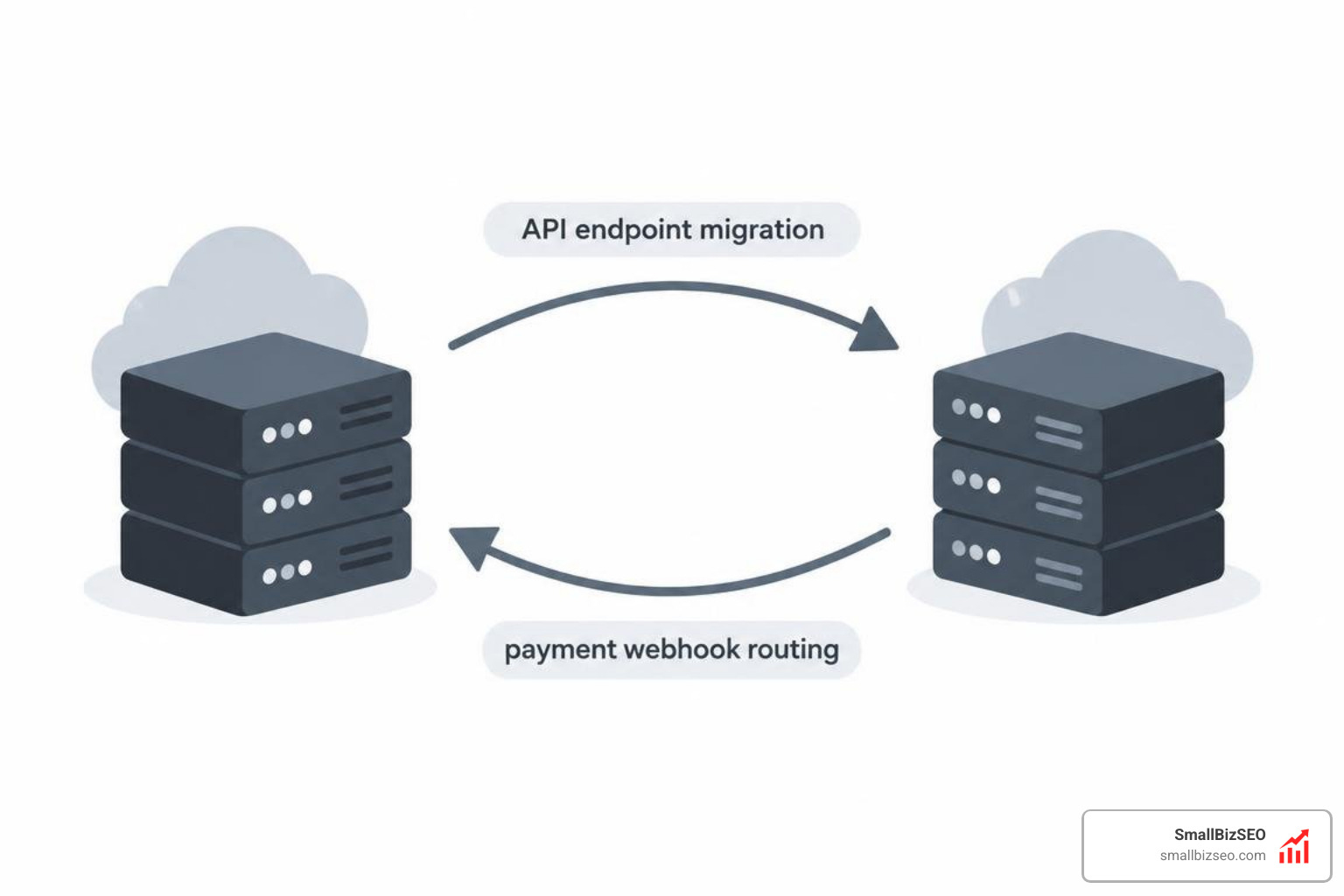
A method-preserving permanent redirect is required whenever an active endpoint expects client-submitted payloads. Common architectural scenarios include:
- REST API Endpoint Migrations: Moving from
/api/v1/usersto/api/v2/userswhere client software transmits JSON or XML data. - Payment Gateway Webhooks: Relocating notification callback URLs where payment processors send signed signature payloads.
- HTTPS Enforcement: Routing unencrypted HTTP traffic to HTTPS on domains receiving API calls or direct form submissions.
- E-commerce Checkout Routes: Updating cart processing endpoints without clearing customer checkout fields.
- OAuth Token Endpoints: Updating identity authorization routes without losing client credentials or refresh tokens.
Implementing a 308 redirect prevents client requests from returning unexpected 405 Method Not Allowed or 400 Bad Request responses.
How Do Search Engines Handle 308 Versus 301 Status Codes for SEO Equity?
Search engines process 308 redirects the same way they process 301 redirects. Major crawlers like Googlebot recognize a 308 response as an explicit signal that the original URL has moved permanently to the target location.
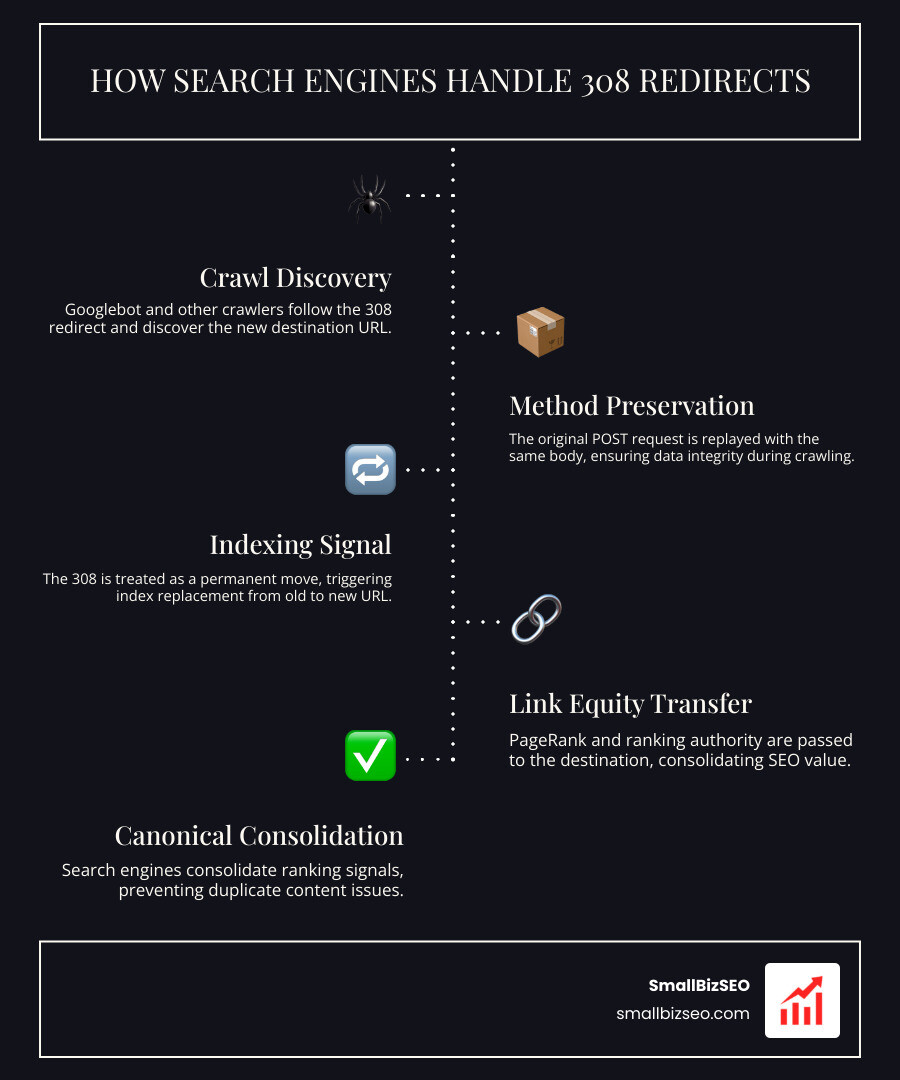
Because a 308 passes ranking authority and consolidates canonical indexing signals, it provides full SEO value while preserving data delivery. For developers weighing 301 vs 302 vs 307 vs 308: which HTTP redirect should you use?, the 308 code delivers the indexing benefits of a 301 without breaking POST payload delivery. Maintaining clean server configurations is a core foundation outlined in our technical SEO guide.
How Do You Implement and Troubleshoot Method-Preserving Permanent Redirects?
To implement a method-preserving permanent redirect, configure your server or web application to emit an HTTP 308 status code containing a valid Location header, then verify the response using automated command-line requests.

Follow these steps to validate your implementation:
- Send an explicit POST request containing sample JSON or form parameters to the source URL.
- Verify that the initial server response returns an HTTP 308 status code with the correct target
Locationheader. - Confirm that the client repeats the POST method to the target URL without stripping the body.
- Verify that the final response delivers a successful HTTP 200 or 201 status code.
How Do You Configure Nginx and Apache to Return 308 Redirects?
In Nginx, use the return directive inside your server or location block. When enforcing site-wide HTTPS upgrades across domains and subdomains, preserve the original host and request URI:
In Apache HTTP Server, configure the mod_rewrite module within your configuration or .htaccess file using the R=308 flag:
Using $host in Nginx and %{HTTP_HOST} in Apache ensures subdomains remain intact, while the 308 status ensures that API calls or form submissions sent to port 80 are not converted to GET requests during the HTTPS upgrade.
How Can You Implement a 308 Redirect in an Application or Edge Worker?
At the application level, backend frameworks support explicit status code declarations. In Node.js Express, call the redirect method with the status code:
In PHP environments, send the status code directly via the native header function:
When managing redirects through edge workers like Cloudflare Workers, avoid standard URL forwarding rules that drop request bodies. Instead, intercept the request and proxy the original body stream using fetch():
How Do You Test Redirects Without Breaking Post-Redirect-Get?
Testing redirect pipelines ensures your application distinguishes between method preservation and user-interface flows. When moving an active submission handler, a 308 keeps the payload intact. However, in standard user-facing forms, the Post-Redirect-Get (PRG) pattern should return an HTTP 303 See Other response after data processing. A 303 forces the browser to load a confirmation screen via GET, preventing users from accidentally submitting duplicate orders when refreshing their browser.
To verify that your server preserves payloads during permanent moves, execute a curl command with the --location flag:
Inspect the output to confirm that the first hop returns an HTTP 308 and the second hop maintains POST rather than converting to GET.
For detailed troubleshooting workflows, review our guide on debugging 308 permanent redirects how to validate form payloads. If your business requires complete infrastructure optimization to preserve organic traffic and data flow, our team at SmallBizSEO provides a comprehensive technical SEO audit to identify and correct redirect issues across your site.
Keep Your Data and Rankings Intact
Choosing between a 301 and a 308 redirect comes down to whether your target URL still needs the submitted request payload. While a 301 redirect remains effective for basic page relocations, the 308 Permanent Redirect provides the technical precision needed to preserve POST bodies, protect API integrations, and maintain SEO authority across URL migrations. Set up your server rules carefully, test your endpoints with automated requests, and keep your data pipelines flowing smoothly.