The Real Cost of Cheap SEO

Why Can a Cheap SEO Agency Cost More Than It Saves?
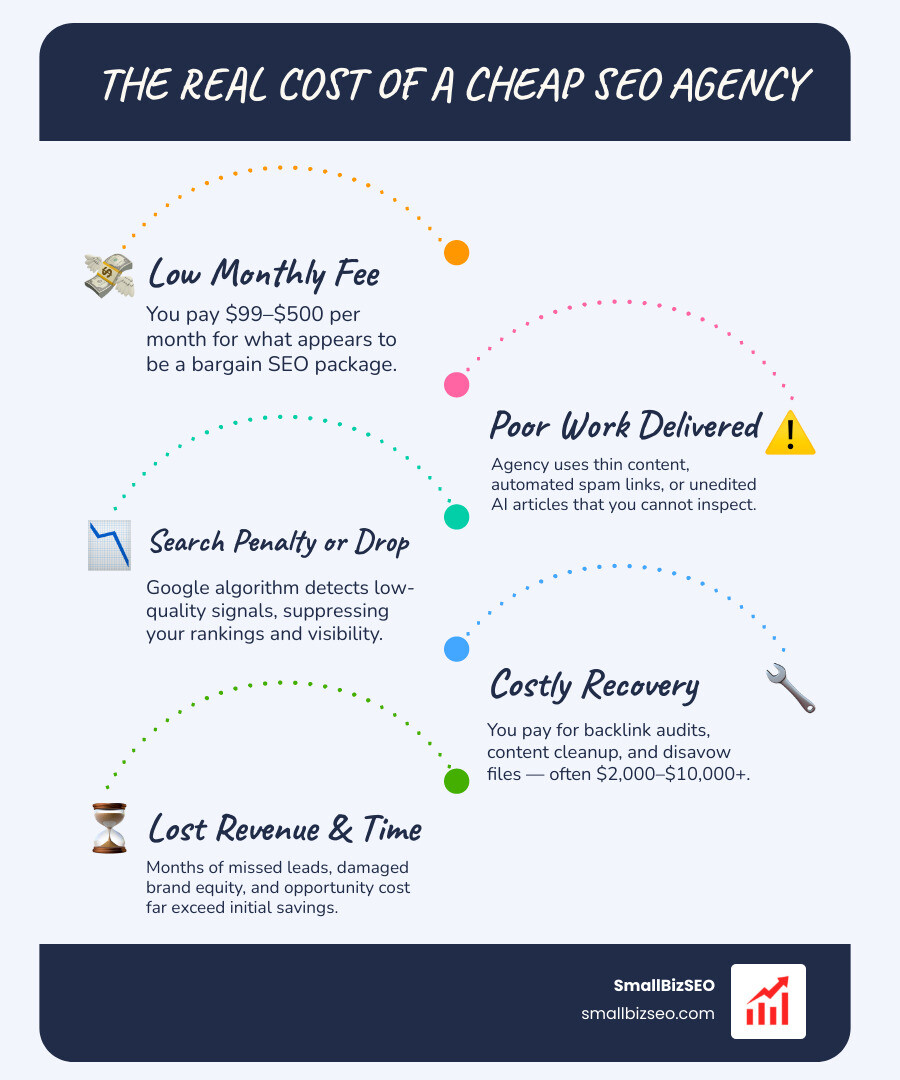
A cheap SEO agency is not a bad choice just because its fee is low. The risk is paying for work you cannot inspect: thin content, poor technical fixes, or links built only to influence rankings. Before you sign, ask what the agency will do each month, who will review the work, and how it will measure leads, not just rankings.
The real cost of a bargain package may be the time and money spent fixing weak work while your business misses searches from potential customers. A clear scope and honest reporting matter more than a low headline price.
I'm Clayton Johnson, founder of SmallBizSEO. My work in technical SEO, content, and link building has shown me why choosing a cheap SEO agency should start with the work it promises, not the price alone.
Cheap SEO agency terminology:
- SEO business
- SEO advertising agency
- roofing company SEO
Every small business owner wants to maximize their marketing budget. When you see an offer promising top Google rankings for a few hundred dollars, it feels like an easy win. But real search visibility relies on a solid foundation: useful content, sound technical optimization, and trustworthy signals that align with Google's Experience, Expertise, Authoritativeness, and Trustworthiness (E-E-A-T) guidelines.
When an agency cuts corners to offer rock-bottom pricing, it often skips the foundational work required to build genuine brand equity. The immediate result might look harmless, but the compound impact over time can devalue your entire domain, erase qualified organic search returns, and leave your site invisible in both standard search results and emerging AI Overviews.
What Risks Can Hide in a Bargain SEO Package?
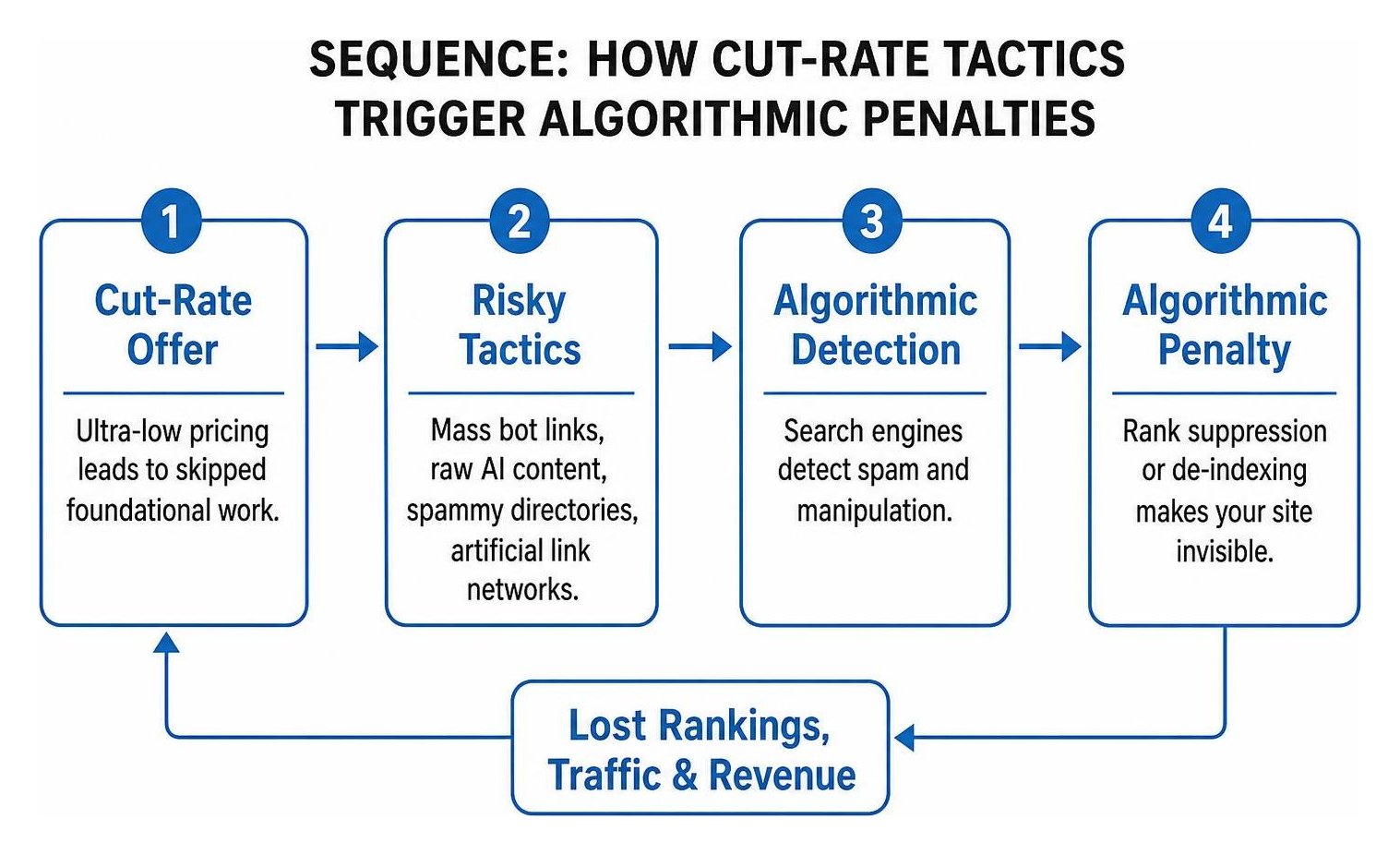
A bargain package often conceals aggressive automation, low-tier link schemes, and absent quality controls that directly violate major search guidelines.

Search engines have clear, strict standards regarding manipulation. When low-cost providers try to show quick movement on a tiny budget, they frequently rely on automated spam, mass directory submissions, and artificial link networks. These tactics are clear breaches of the Spam Policies for Google Web Search.
When search engines detect systematic link spam or auto-generated content designed purely to manipulate rankings, they take action. This can range from algorithmic suppression—where your pages simply fade into obscurity—to severe manual penalties that completely de-index your website.
What Does a $99 to $500 Cheap SEO Agency Actually Deliver?
At ultra-low price points, agencies cannot afford manual, strategic execution by experienced professionals. Instead, they rely on mass automation and unvetted templates.

To understand what you are paying for, compare the operational realities of discount packages against legitimate optimization:
| Optimization Component | $99 to $500 Budget Provider | Verified Professional SEO |
|---|---|---|
| Technical Site Audits | Automated one-click PDF exports with no manual fixes | Deep code audits, crawl budget optimization, and Core Web Vitals remediation |
| Content Strategy | Mass-generated, unedited text published without human review | Subject-matter research, search intent mapping, and clear editorial oversight |
| Link Acquisition | PBNs, automated forum profiles, and link farms | Relevant digital PR, editorial outreach, and genuine brand mentions |
| Reporting & Tracking | Vanity keyword lists with no context on leads | Transparent attribution tying organic traffic to phone calls, forms, and revenue |
Before hiring any provider, consult a reliable cheat sheet to realistic search optimization pricing to ensure the scope matches the investment needed for lasting growth.
How Can Low-Quality Optimization Confuse Search Signals and Limit AI Citations?
Low-quality optimization disrupts your brand's digital footprint. It causes entity confusion across search engines and AI answer systems alike.
Search engines and modern Generative Engine Optimization (GEO) models evaluate sites by connecting verified entities, clear service offerings, and consistent brand mentions. When a provider fills the web with conflicting business details, scrapers, and spammy forum links, it creates severe entity confusion.
Rather than viewing your company as an authority, search engines lose confidence in what you do, who you serve, and where you operate. Furthermore, low-tier links suffer from rapid link decay—meaning they disappear almost as quickly as they are built. This leaves your domain with an unstable foundation and limits your brand's ability to be cited as a trusted source in conversational search environments. Reviewing independent agency rating standards can give you a clearer picture of how verified providers structure reputable campaigns.
What Can It Cost to Fix Toxic Backlinks and Spam?
Remediating search penalties and toxic links often costs significantly more than investing in professional search optimization from the start.
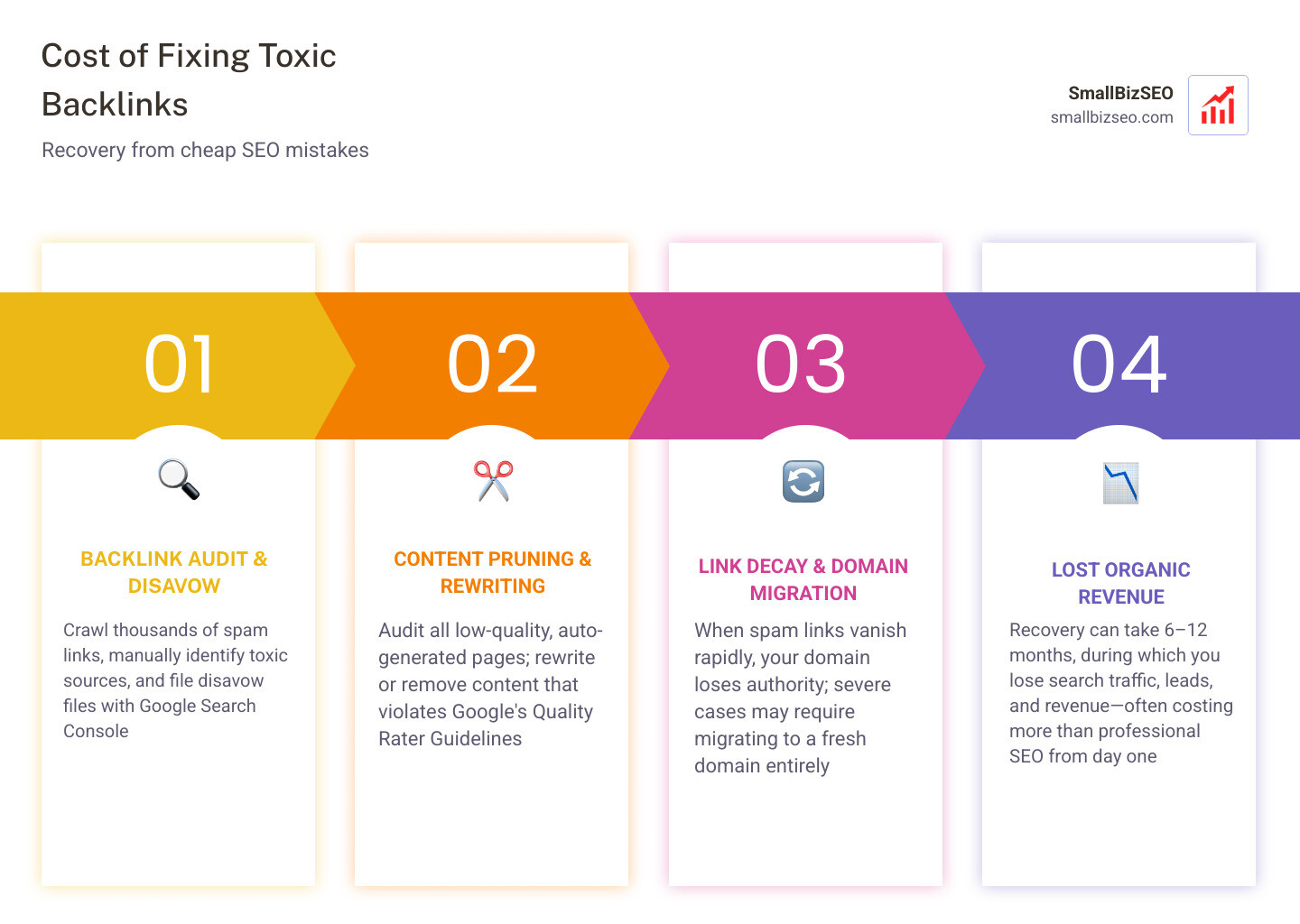
When a domain suffers algorithmic suppression or a manual action, recovering requires comprehensive intervention:
- Backlink Audits and Disavow Work: Specialists must crawl, catalog, and evaluate thousands of spam links, manually filing disavow files with Google.
- Content Pruning and Rewriting: Unhelpful, low-quality pages must be audited, rewritten, or removed to comply with Google Search Quality Rater Guidelines.
- Domain Migration Costs: In severe situations where a domain's trust cannot be restored, a complete brand migration to a fresh domain is required.
- Lost Revenue and Opportunity Cost: The months spent recovering from a penalty represent lost leads, calls, and sales that went directly to your competitors.
Understanding how to avoid low-quality SEO scams is the best defense against these costly remediation cycles.
How Can a Business Shift to Sustainable Organic Growth?
Sustainable search growth requires combining technical site health, helpful content strategy, and trustworthy authority building that compounds over time.

True organic search performance is not an overnight trick. It is an operational system that builds momentum month over month. At SmallBizSEO, we rely on our data-driven "Velocity" framework. This approach combines technical crawlability, structured data, content depth, and legitimate link building to deliver consistent, E-E-A-T-compliant visibility.
When you focus on real user experience and search intent, your organic search assets compound in value, driving qualified inquiries without the constant threat of algorithmic wipeouts. You can research reputable regional service profiles to see how transparent agencies execute sustainable campaigns.
What Red Flags Should You Look for Before Hiring a Cheap SEO Agency?
Look out for guaranteed rankings, lack of process transparency, and vague deliverables when vetting prospective optimization partners.
Before signing a contract or committing your marketing budget, ask these essential questions:
- What specific work will you complete each month? Ensure you receive an itemized scope covering technical work, content creation, and outreach.
- How will you report progress and measure business impact? Look for clear dashboards tracking leads, calls, and conversions rather than just raw rankings.
- Who creates and reviews your content? Confirm that human subject-matter experts write and edit all published material.
- How do you acquire and evaluate links? Ensure every link comes from a real, contextually relevant website with verified traffic.
- What is included in the base price, and what costs extra? Clarify all setup fees, maintenance costs, and deliverables upfront.
Reviewing a practical guide to budget-friendly optimization will help you ask the right questions and spot red flags early.
What Should Legitimate SEO Include, and How Should You Compare Prices?
Legitimate search optimization must include technical health, on-page entity optimization, authoritative authority building, and local signal consistency.
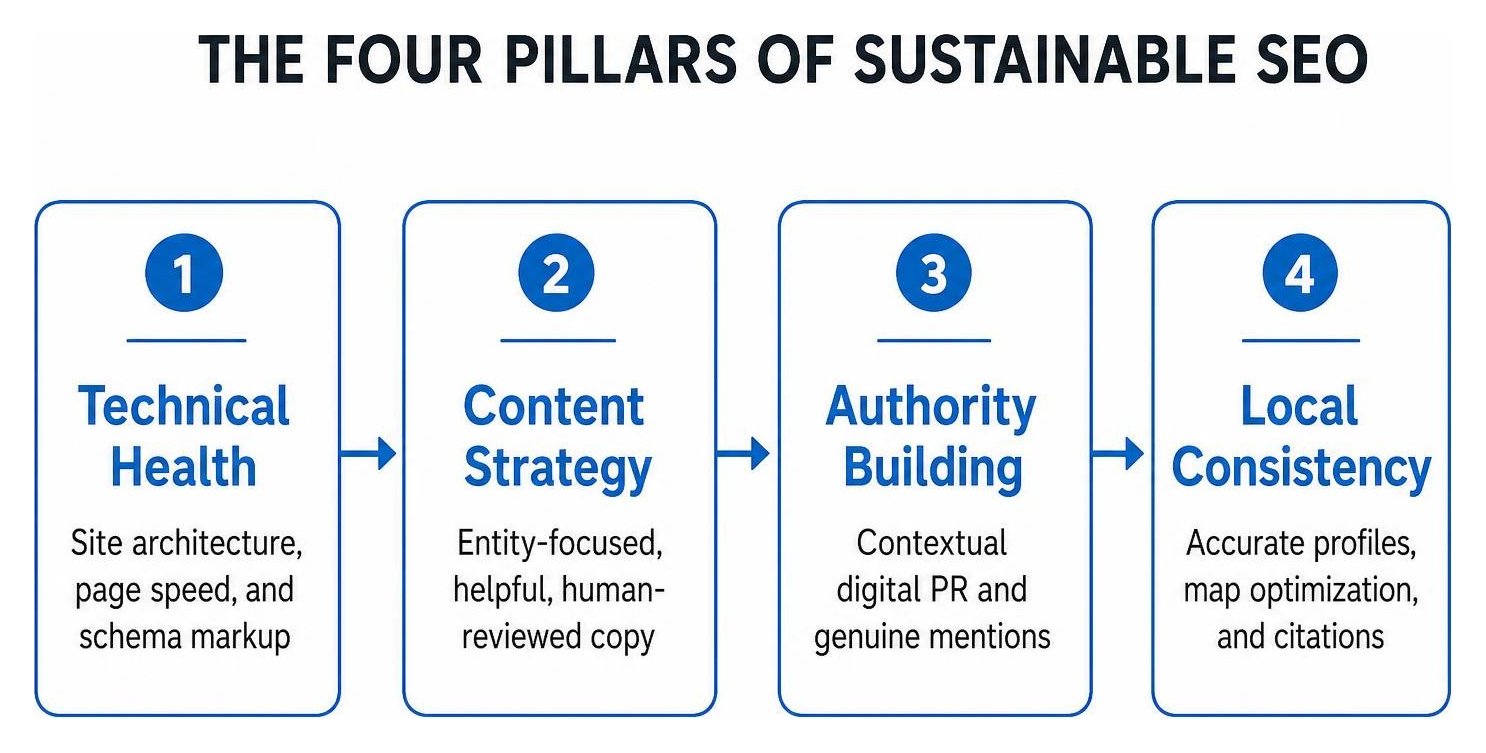
When comparing search optimization options, evaluate what each dollar buys:
- Technical Foundation: Removing crawl errors, optimizing Core Web Vitals, and implementing clear schema markup.
- Content Engineering: Creating comprehensive service and location pages that directly answer customer questions.
- Authoritative Link Acquisition: Securing brand mentions from trusted publications.
- Transparent Reporting: Continuous access to performance data tied directly to revenue.
Explore our sustainable small business search packages to see how our framework builds durable organic visibility, or claim a comprehensive SEO visibility audit to identify the exact opportunities and technical fixes your site needs to grow.
Making Your Search Investment Count
Choosing an optimization partner is one of the most critical marketing decisions your business will make. While the low price of a cut-rate package is tempting, the hidden costs of toxic links, algorithmic penalties, and lost customer trust far outweigh any short-term savings.
By focusing on transparent deliverables, technical excellence, and human-crafted content, you build an organic search asset that delivers predictable leads and compounds in value for years to come.