Transforming Beauty Supply Retail Visibility Through Search Optimization
How Can Beauty Supply Stores Improve Their Search Rankings?
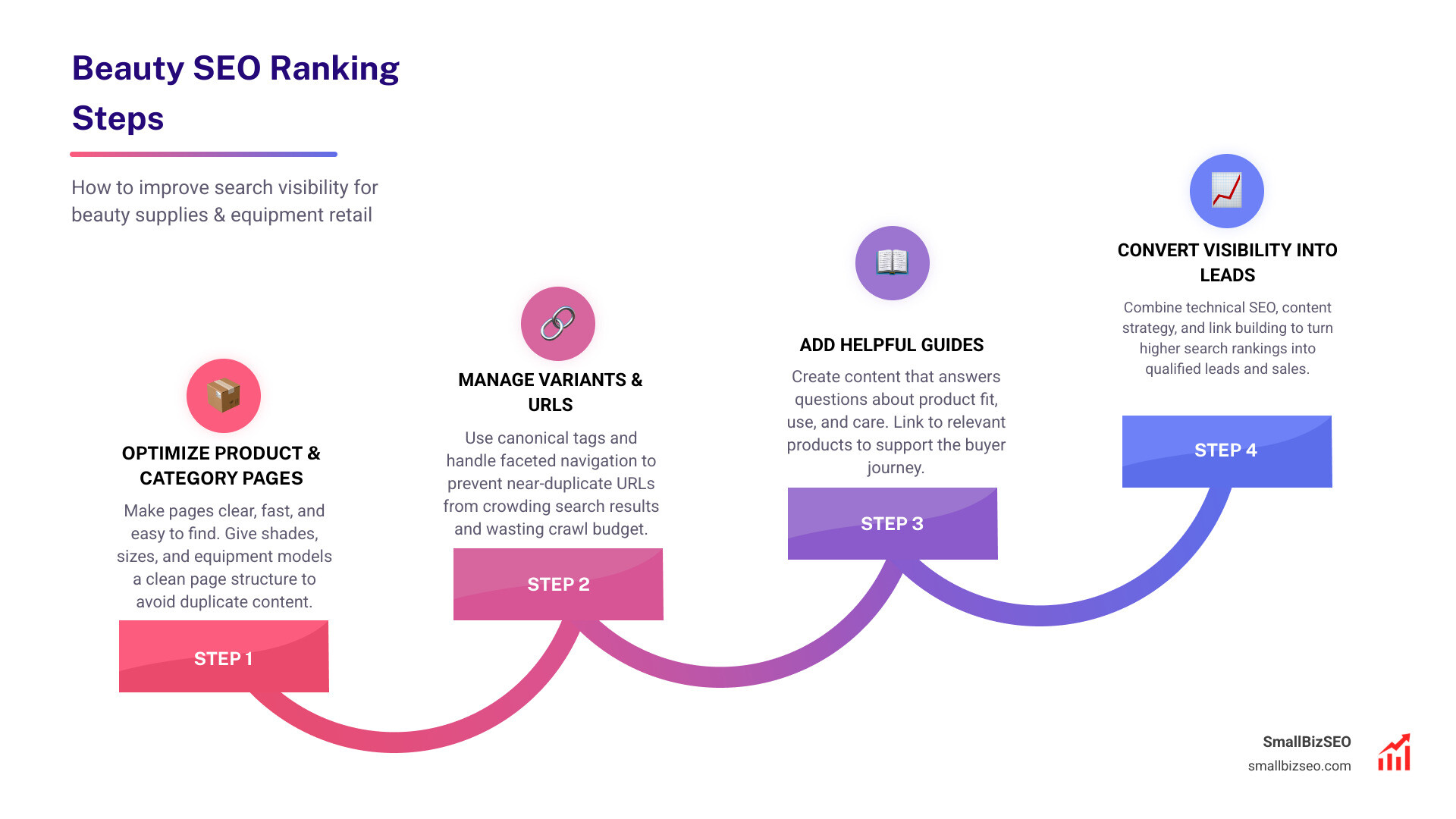
To improve SEO for beauty supplies & equipment retail, start with the pages shoppers use to buy: make product and category pages clear, fast, and easy to find. Give shades, sizes, and equipment models a clean page structure so near-duplicate URLs do not crowd search results. Then add helpful guides that answer questions about product fit, use, and care, with links to relevant products.
I’m Clayton Johnson, founder of SmallBizSEO. My work in technical SEO, content strategy, and link building shapes this approach to SEO for beauty supplies & equipment retail: help small businesses turn search visibility into qualified leads.
SEO for beauty supplies & equipment retail terminology:
SEO for Beauty Supplies & Equipment Retail: How Does Strategy Differ from Standard Ecommerce?
Direct answer: SEO for beauty supply and equipment retail differs from standard ecommerce because it demands strict regulatory compliance for ingredient claims, specialized catalog architectures for massive variant lines, and dual-funnel targeting that caters to both everyday consumers and professional salon buyers.
Selling beauty supplies online is distinct from standard ecommerce. Unlike apparel or electronics, cosmetics and spa machinery operate in heavily scrutinized categories. If your product descriptions make unsubstantiated medical claims about reversing aging or curing skin conditions, search engines can demote your listings under strict quality standards. Retailers must balance compelling marketing with compliant language that aligns with regulatory oversight.
Furthermore, the operational catalog structure presents distinct technical challenges. Beauty retailers often manage thousands of stock-keeping units (SKUs) spanning liquid foundations, pigmented powders, aesthetic laser equipment, and hydraulic styling chairs. Implementing a practical guide to the 4 types of SEO ensures your store balances technical optimization, on-page optimization, content strategy, and link building. Stores that modernize their digital architecture frequently see massive gains; for instance, resolving platform bottlenecks and streamlining technical structures can produce a 43% lift in organic search impressions and a 26% boost in organic clicks.
How Do You Manage Faceted Navigation and Duplicate Content Across Massive Shade and Machine Catalogs?
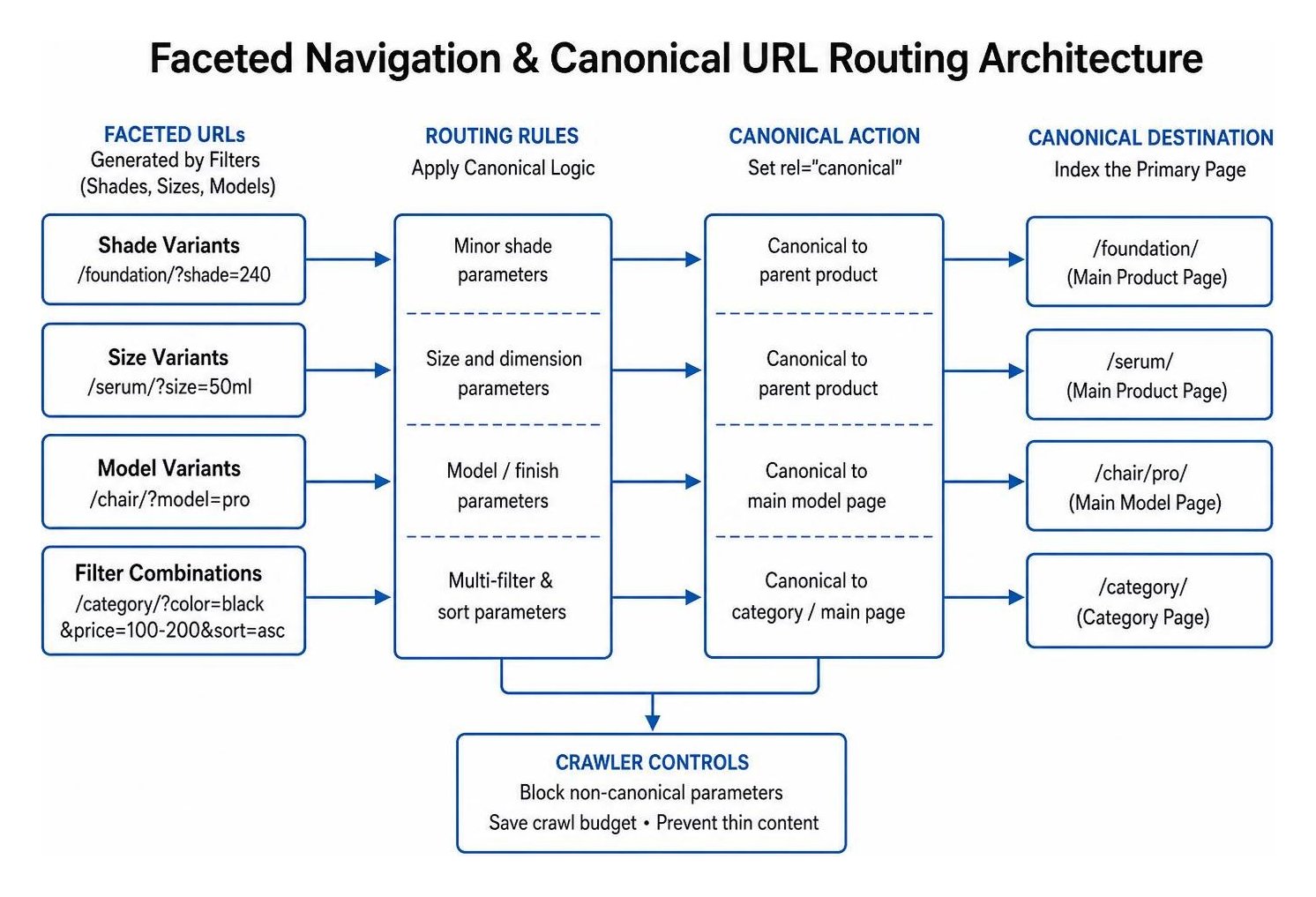
Direct answer: Manage faceted navigation by setting clear canonical tags pointing to parent category or main product pages, using parameter controls in your crawl settings, and dynamically generating unique metadata for high-demand variant pages while preventing thin, near-duplicate pages from wasting your crawl budget.
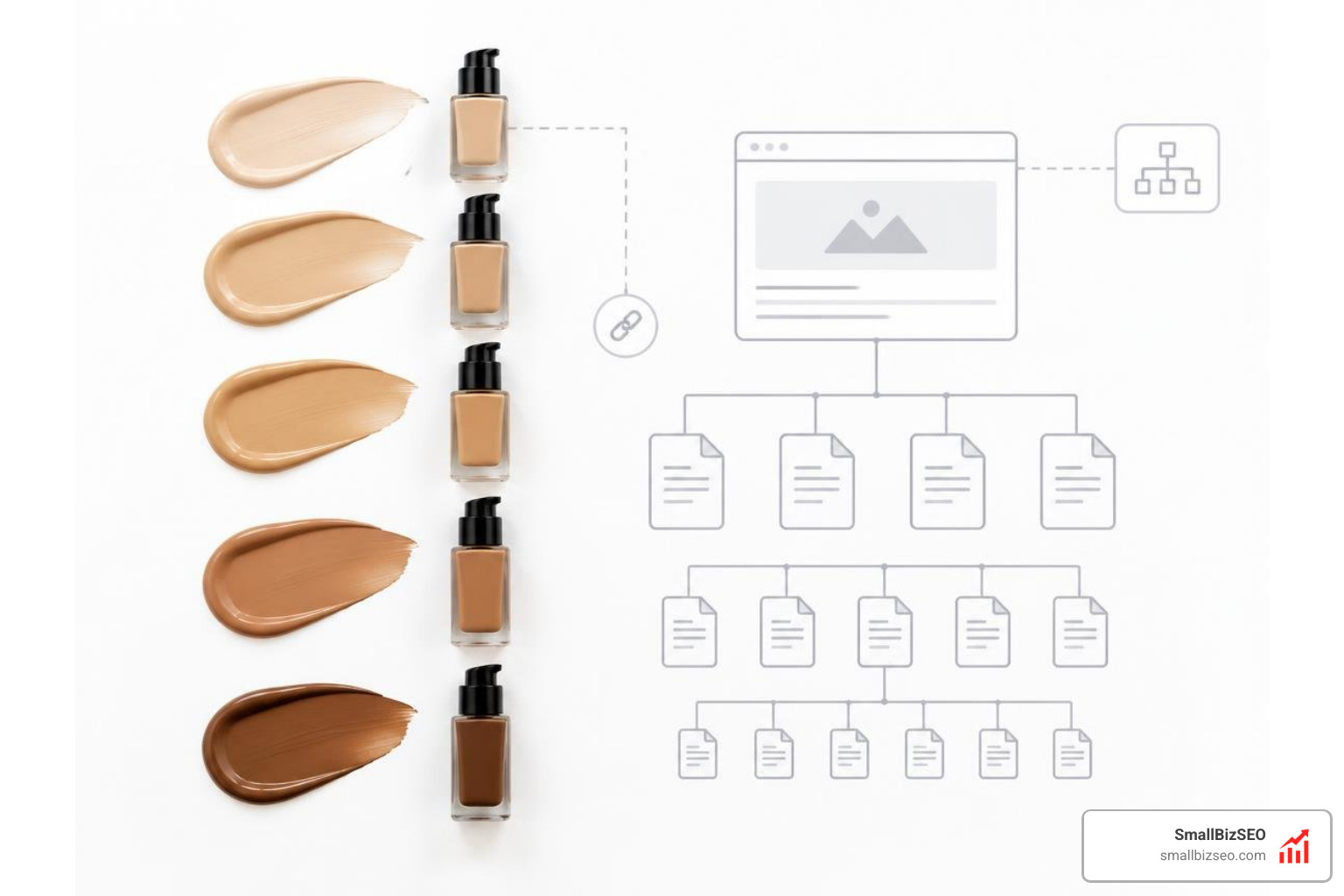
When you offer forty foundation shades or salon chairs available in multiple finishes, search engines can easily get lost in duplicate URL parameters. If each color variation generates an indexable URL with identical product descriptions, search engines encounter thin content loops.
To solve this, follow these core technical steps:
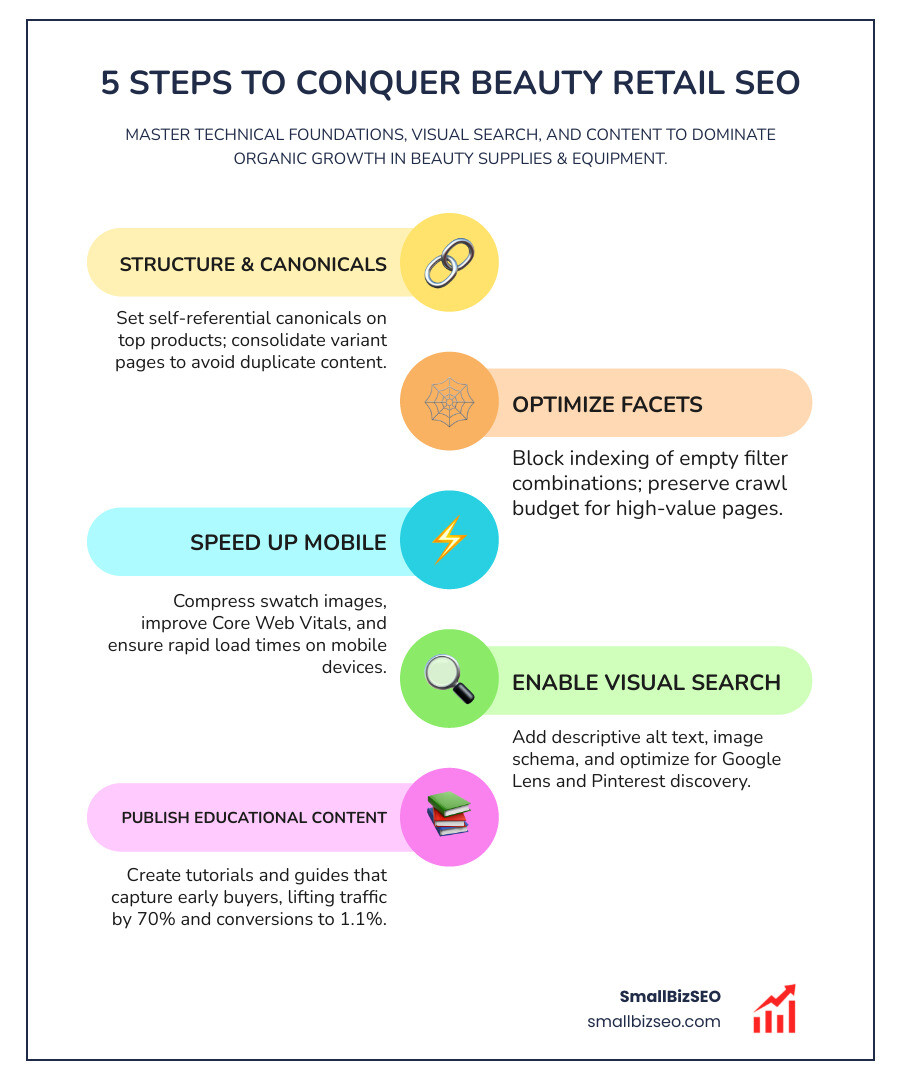
- Implement Canonical Rules: Use self-referential canonical tags on distinct, high-search-volume products. For minor variant parameters (like color hex codes or dimensions), point the canonical tag back to the primary parent product URL.
- Configure Faceted Navigation: Prevent search bots from indexing endless combinations of filters (such as price filters, sorting orders, or multi-select attributes).
- Enhance On-Page Variant Context: Make sure your primary landing pages feature complete matrix options without creating empty pages. Applying strong on-page SEO principles across your core category architecture ensures search bots discover your entire collection cleanly.
- Optimize Mobile Speed and Core Web Vitals: Complex matrix pages with high-resolution swatches can drag down performance. Improving mobile responsiveness and asset delivery keeps page load times minimal, directly lifting mobile conversion rates.
Why Is SEO for Beauty Supplies & Equipment Retail Driven by Visual Search and Educational Content?
Direct answer: Visual search and educational content drive beauty retail SEO because shoppers discover products visually on platforms like Google Lens and Pinterest before searching, while educational how-to guides capture early-stage buyers, building the trust needed to sell complex tools and products.
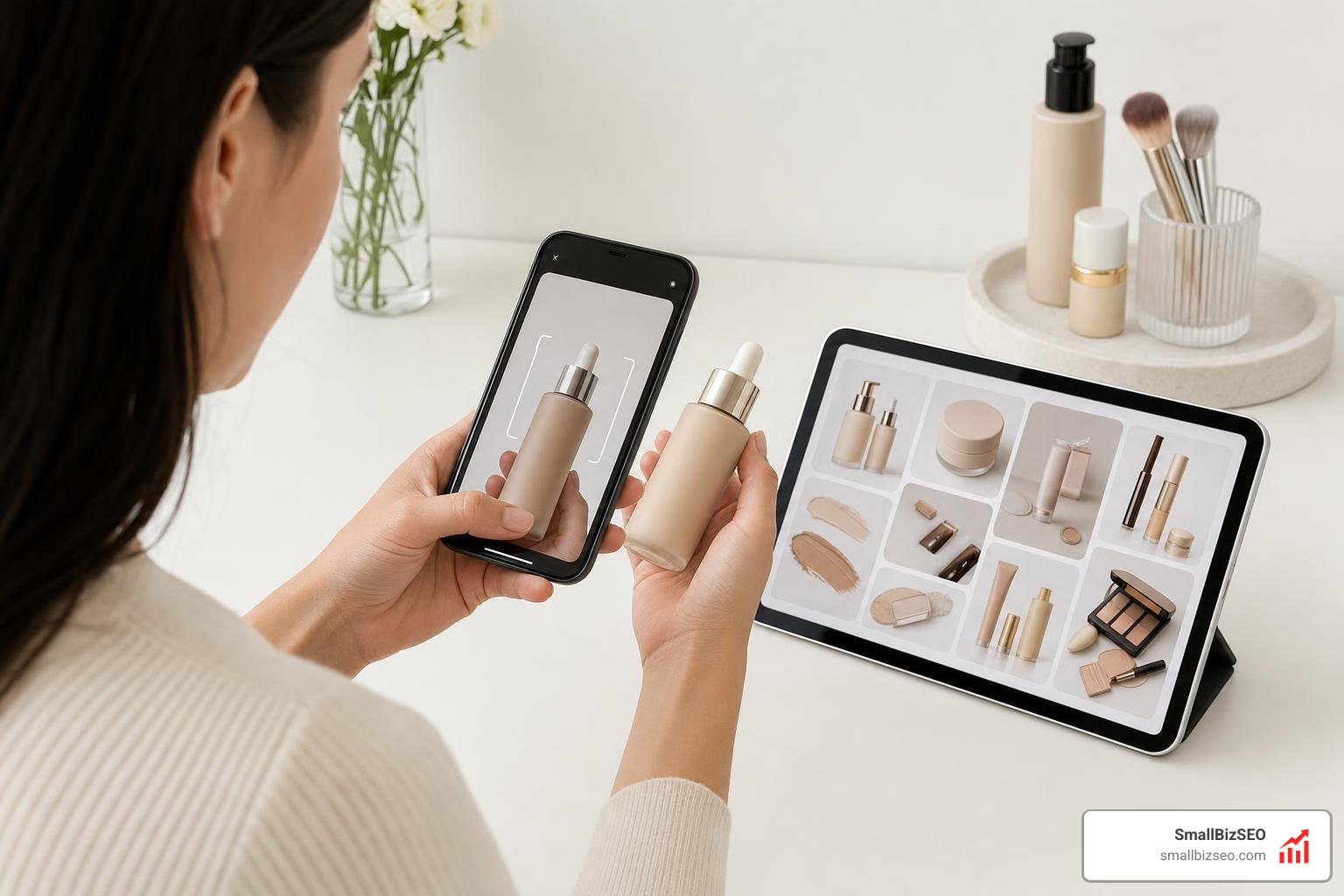
Beauty buyers rarely rely solely on plain text searches. They scan swatches on social feeds, take photos of salon equipment at trade expos, and use image recognition tools to find exact product matches. Optimizing your high-resolution imagery with descriptive filenames, comprehensive alt text, and rich product schema ensures your inventory appears in visual search carousels and shopping feeds.
At the same time, educational content bridges the gap between awareness and checkout. A buyer looking to purchase a multi-function cavitation machine or a professional keratin kit needs instructions, safety guidelines, and setup protocols. Using SEO-friendly content writing to produce step-by-step guides, ingredient glossaries, and maintenance tutorials captures early-stage research queries. Retailers who publish educational blogs often experience a 70% increase in organic search traffic and see conversion rates jump from 0.4% to 1.1% among shoppers who interact with informational guides before purchasing.
Partnering with an experienced skin care products SEO company can help map these complex user journeys, ensuring your educational articles funnel readers straight to matching product listings.
How Does SEO for Beauty Supplies & Equipment Retail Differ Between B2B Wholesalers and B2C Retailers?
Direct answer: B2B beauty SEO focuses on high-intent, low-volume keywords emphasizing bulk pricing, commercial durability, technical specifications, and salon equipment financing, whereas B2C SEO targets lifestyle trends, application tutorials, individual product benefits, and consumer reviews.
| Strategy Attribute | B2B Wholesale & Salon Equipment SEO | B2C Beauty & Cosmetic Retail SEO |
|---|---|---|
| Primary Audience | Salon owners, licensed estheticians, spas | Everyday consumers, beauty enthusiasts |
| Search Intent | Commercial specs, financing, bulk discounts | Routine tutorials, shade matching, reviews |
| Keyword Profile | "Wholesale hydraulic styling chairs", "Commercial microdermabrasion machine" | "Hydrating tinted moisturizer", "Best matte red lipstick" |
| Content Focus | ROI calculations, maintenance, certifications | Application videos, routine building, ingredients |
| Conversion Funnel | Long sales cycle, quote requests, phone sales | Fast sales cycle, direct cart checkout |
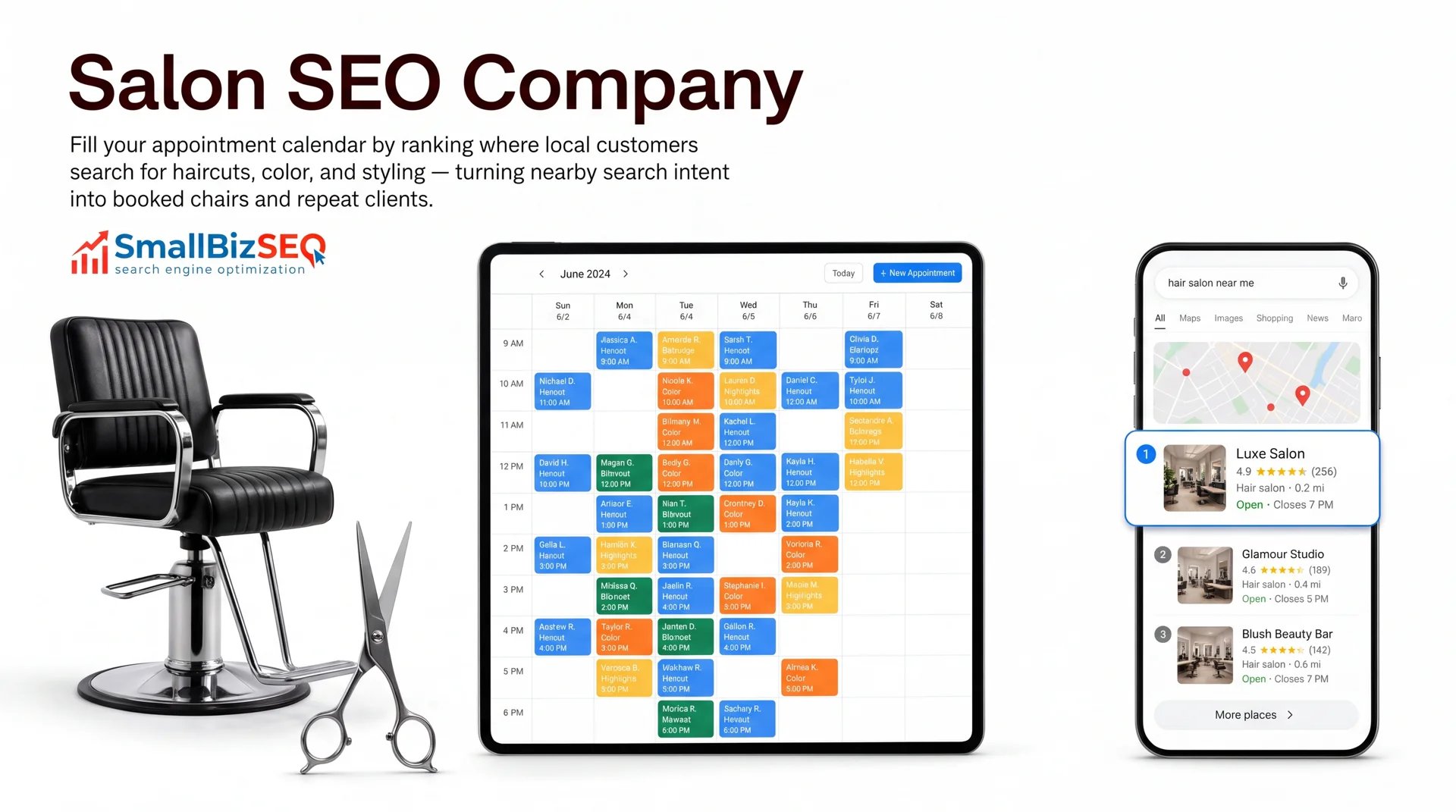
For B2B wholesalers, transactional intent centers on business growth and operational reliability. Long-form product copy outlining warranty terms, voltage requirements, and sanitation standards outperforms generic marketing copy. Working with a dedicated salon SEO company can help B2B suppliers identify commercial search patterns and rank for high-value equipment terms.
Executing a High-Impact SEO Strategy for Beauty Supply and Equipment Retailers
Direct answer: Execute a high-impact SEO strategy by combining clean technical site architecture, local visibility for physical showrooms, digital PR to earn authoritative backlinks, and structured data markup that earns prominent rich snippets across search engine results pages.
Driving real organic growth requires combining technical foundations with off-page authority. Securing editorial mentions on professional cosmetology portals, partnering with beauty training academies, and earning backlinks from industry publications builds domain trust. In competitive retail markets, executing this integrated approach can deliver an 85% boost in organic traffic and over $300,000 in new revenue within months.
What Role Do Google Business Profiles, Schema Markup, and Customer Reviews Play in Local Search?
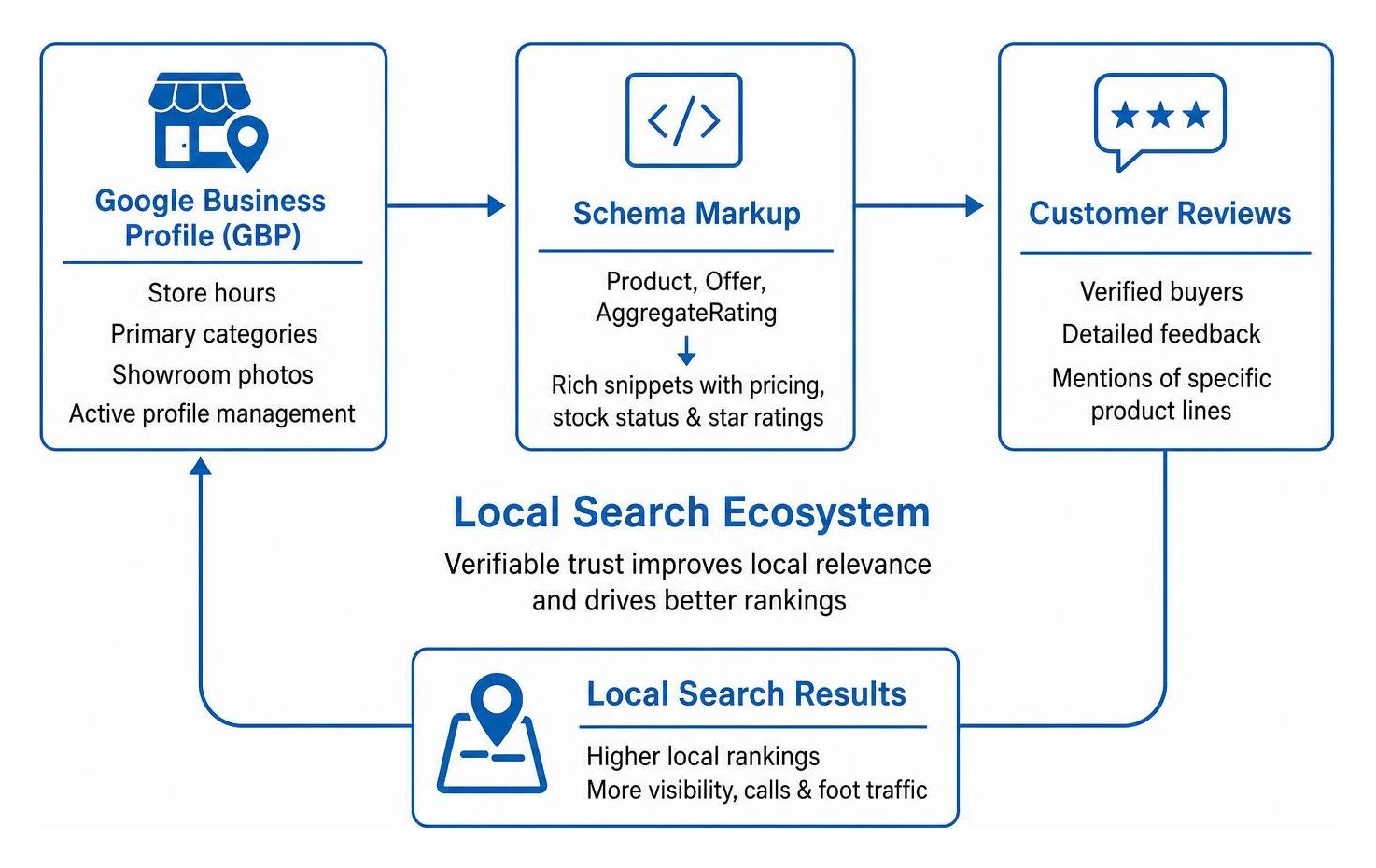
Direct answer: Google Business Profiles, structured Product schema, and authentic customer reviews establish verifiable trust, driving foot traffic to physical retail stores and boosting local 3-pack rankings by validating inventory availability and service reputation.
If your beauty retail brand operates physical stores or regional distribution hubs, local optimization is essential:
- Google Business Profile (GBP) Optimization: Keep your store hours, primary categories (e.g., "Beauty Supply Store" or "Salon Equipment Supplier"), and showroom photos updated. Active profile management can deliver up to an 89% local search share-of-voice.
- Product and Review Schema: Add structured data markup (Schema.org
Product,Offer, andAggregateRating) across your inventory. This enables rich snippets showing live stock status, pricing, and star ratings directly on search result pages. - Review Generation Campaigns: Encourage verified buyers and salon clients to leave detailed feedback mentioning specific product lines. These organic keywords within customer reviews reinforce your store's regional relevance.
- Dedicated Location Pages: Build localized landing pages for every physical outlet, incorporating consistent Name, Address, and Phone (NAP) details alongside embedded maps and local inventory highlights via targeted local SEO.
Which Metrics and Technical Audits Track Real Organic Growth and Conversion Lift?
Direct answer: Track organic revenue, non-branded search impressions, conversion rates by landing page type, Core Web Vitals performance, and crawl efficiency to measure the true commercial impact of your SEO campaign.
Measuring SEO success requires looking beyond top-level traffic numbers. High visitor volume means little if it fails to generate retail orders or wholesale inquiries. Monitor these essential metrics:
- Organic Revenue and Assisted Conversions: Attribute transactions directly to organic entry points to see how informational blogs assist commercial checkouts.
- Non-Branded Keyword Rankings: Track ranking improvements for competitive terms (e.g., "spa facial steamers" or "bulk salon shampoo") rather than just your store name.
- Core Web Vitals Metrics: Use Google Search Console to monitor Largest Contentful Paint (LCP) and Cumulative Layout Shift (CLS), ensuring smooth performance across mobile devices.
- Crawl Budget and Indexation Ratios: Audit your server logs to ensure search bots spend time crawling your high-margin products rather than getting trapped in filter URLs.
At SmallBizSEO, we deploy our proprietary data-driven "Velocity" framework to help retailers accelerate their rankings and secure sustainable organic revenue. As a specialized beauty supplies and equipment retail SEO company, our team delivers transparent, automated reporting that proves tangible ROI.
Accelerate Your Beauty Retail Search Visibility
Transforming an online beauty supply catalog into a consistent revenue engine requires technical precision, smart variant handling, and helpful content that guides shoppers toward the right products. When your store provides clear answers, fast-loading pages, and structured product data, search engines reward you with higher rankings and qualified customer traffic.
Ready to uncover the ranking potential of your store's catalog? Connect with our team to request a personalized SEO visibility audit and discover how our data-driven frameworks can scale your retail growth.