Why Objective Data Makes or Breaks Your Product Comparison Articles
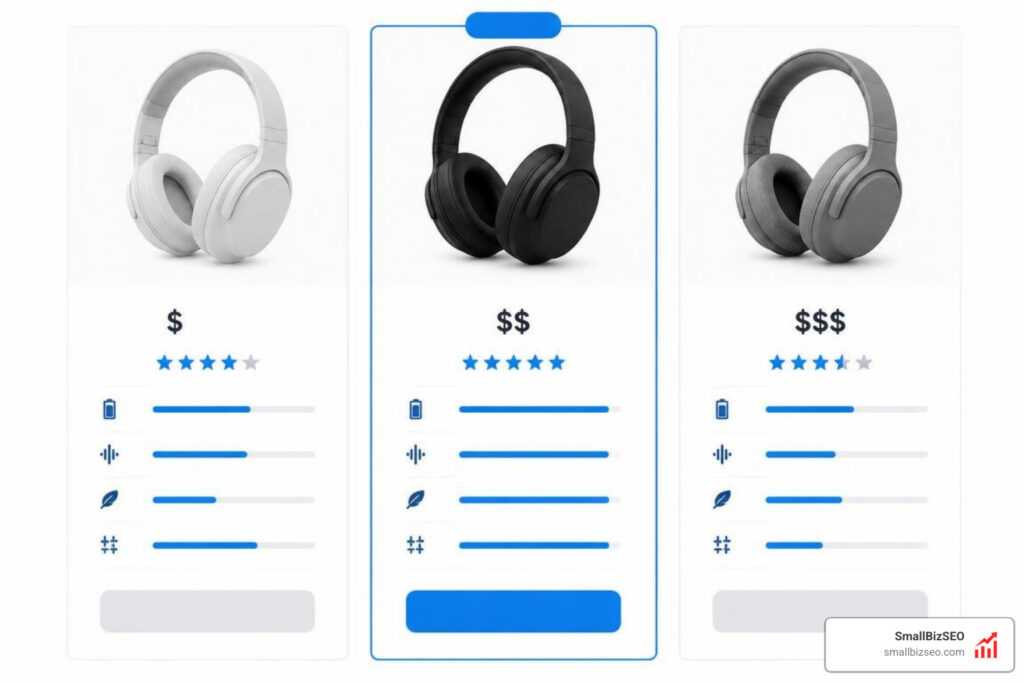
How Do You Choose Evidence for a Fair Product Comparison?
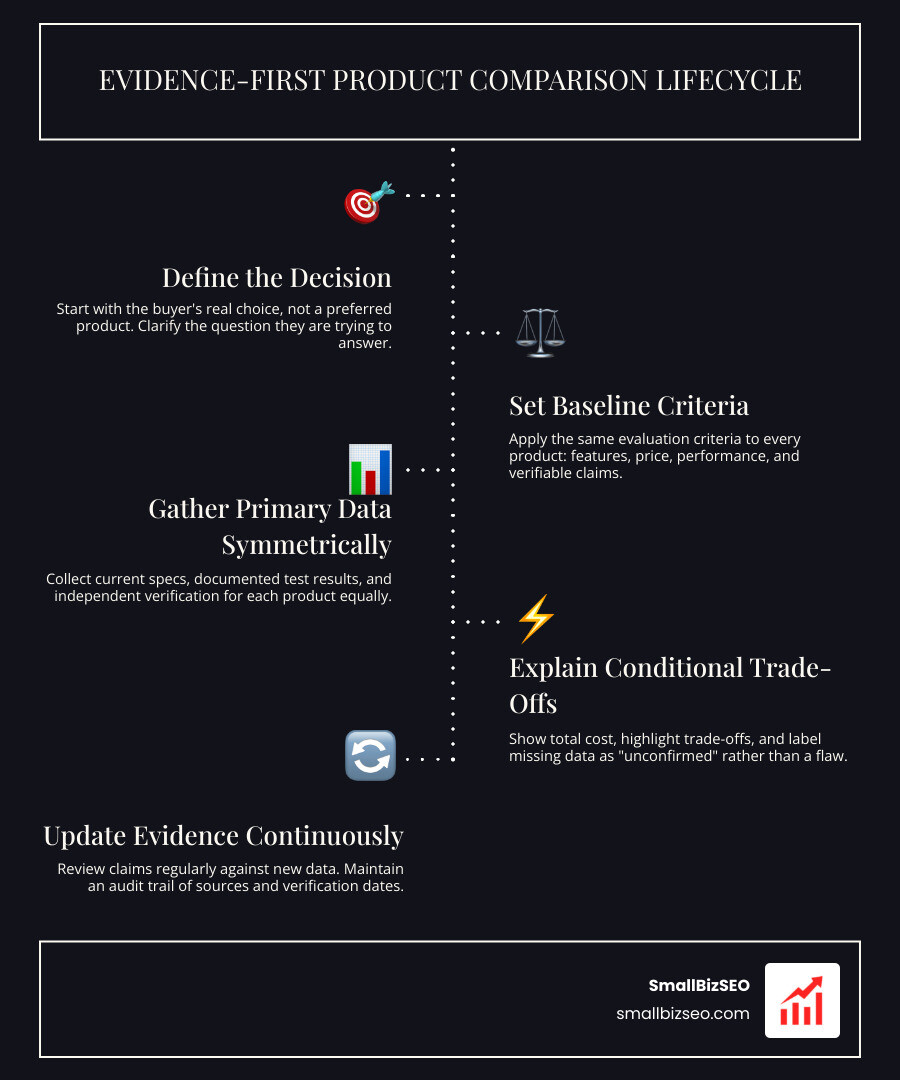
When choosing evidence for fair product comparison articles, start with the buyer's decision, not a preferred winner. Set the same criteria for every product. Then check each claim against the right source: current specifications for features and prices, documented tests for performance, and independent verification for claims a buyer cannot check alone. Show the total cost, explain trade-offs, and label missing data as unconfirmed rather than treating it as a flaw.
This work matters because available information is not always easy to use. In a Medicare drug plan experiment, people who received personalized comparisons switched plans more often than those who did not. A useful article does more than collect facts; it helps readers see what those facts mean for their choice.
I'm Clayton Johnson, founder of SmallBizSEO. My work in SEO and content strategy informs my approach to choosing evidence for fair product comparison articles: make claims easy to check and conclusions useful to the buyer.
A Step-by-Step Guide to Choosing Evidence for Fair Product Comparison Articles
To choose evidence that readers and search engines trust, follow a repeatable four-step workflow: define your decision boundaries, establish baseline evaluation criteria, gather primary data symmetrically, and map out conditional trade-offs.
When evaluating competitive services or software—such as when comparing top SEO agencies—the quality of your output depends entirely on the integrity of your initial inputs.
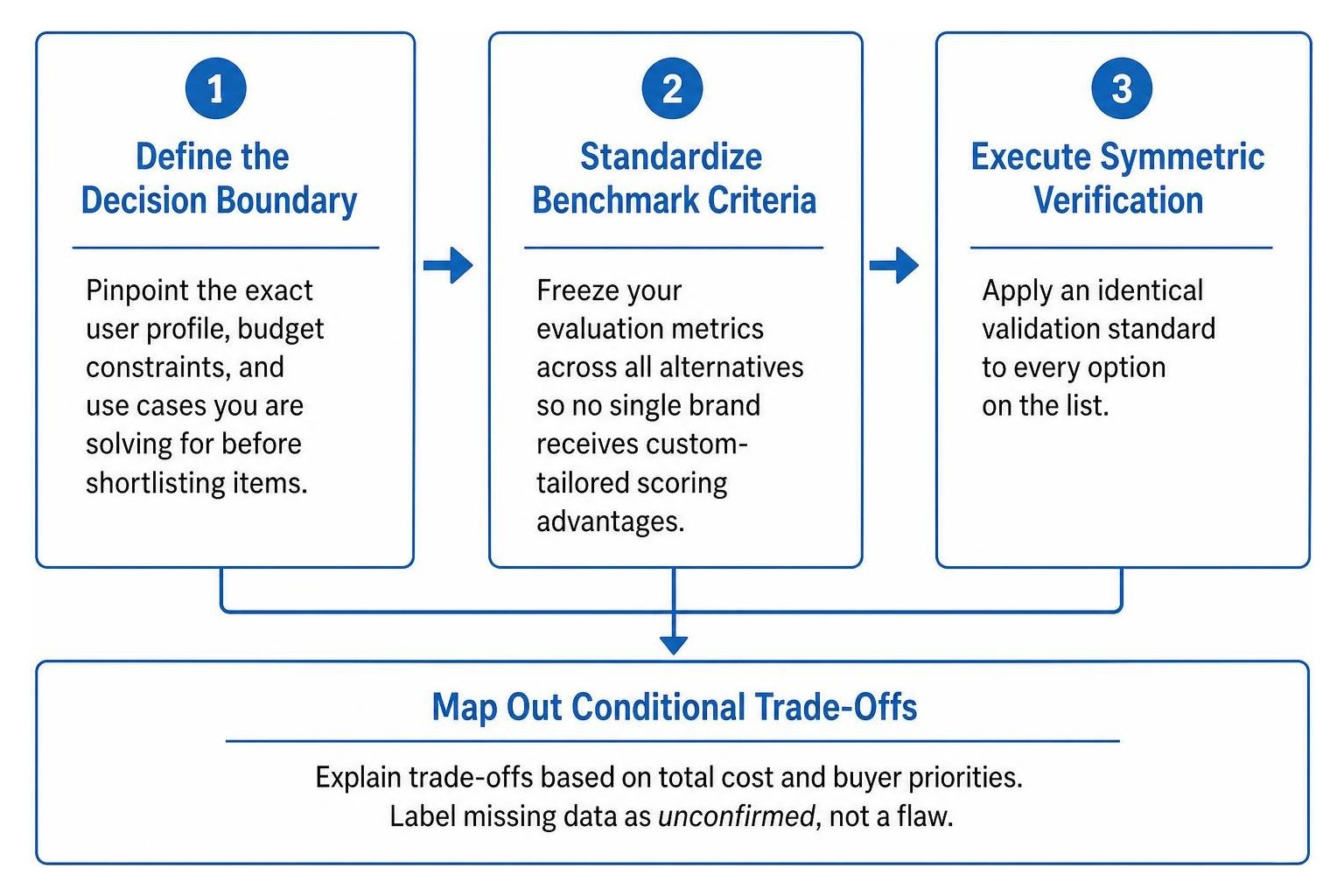
- Define the Decision Boundary: Pinpoint the exact user profile, budget constraints, and use cases you are solving for before shortlisting items.
- Standardize Benchmark Criteria: Freeze your evaluation metrics across all alternatives so no single brand receives custom-tailored scoring advantages.
- Execute Symmetric Verification: Apply an identical validation standard to every option on the list.
- Publish Inspectable Reasoning: State clearly where each data point originated and explain why a specific alternative fits one user better than another.
| Primary Evidence Type | Reliability Level | Verification Effort | Buyer Decision Impact |
|---|---|---|---|
| Direct Product Testing | High | High | Validates actual workflow speed, user friction, and real-world performance. |
| Official Documentation | High | Medium | Confirms technical limits, API boundaries, and baseline specifications. |
| Independent Audits | High | High | Verifies complex security standards, certifications, and compliance claims. |
| Published Pricing Sheets | Moderate to High | Low | Clarifies explicit line-item costs, renewal tiers, and contract minimums. |
| Self-Reported Marketing | Low | Low | Offers initial feature lists that require independent verification. |
Why Is Choosing Evidence for Fair Product Comparison Articles Essential for Buyer Trust?
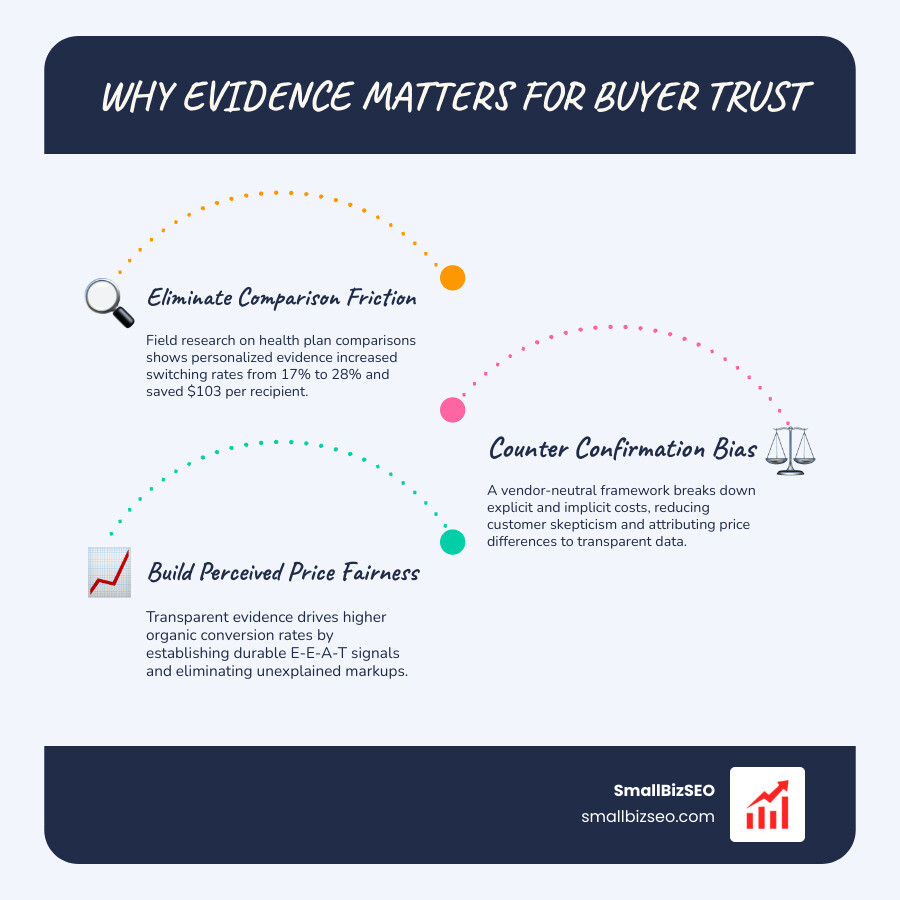
Objective evidence is essential because it eliminates comparison friction—the gap between the availability of product facts and a buyer's ability to analyze them.
When consumers face complex choices, cognitive overload often leads to suboptimal decisions. For instance, in controlled field research on health plan comparisons, providing direct, personalized comparative evidence increased plan switching from 17% in the comparison group to 28% in the intervention group. This intervention produced an average regression-adjusted cost savings of $103 per recipient across the entire group, proving that reducing comparison friction directly improves decision quality.
Adopting a vendor-neutral comparison framework counters confirmation bias and customer skepticism. Attribution theory shows that when consumers encounter unexplained price markups, they naturally attribute the difference to excessive corporate margins. By breaking down explicit and implicit costs with transparent evidence, you establish perceived price fairness, build durable E-E-A-T signals, and drive higher organic conversion rates.
How to Build an Evidence Hierarchy When Choosing Evidence for Fair Product Comparison Articles
A dependable product evaluation uses a structured evidence ladder that separates observable facts from secondary claims.
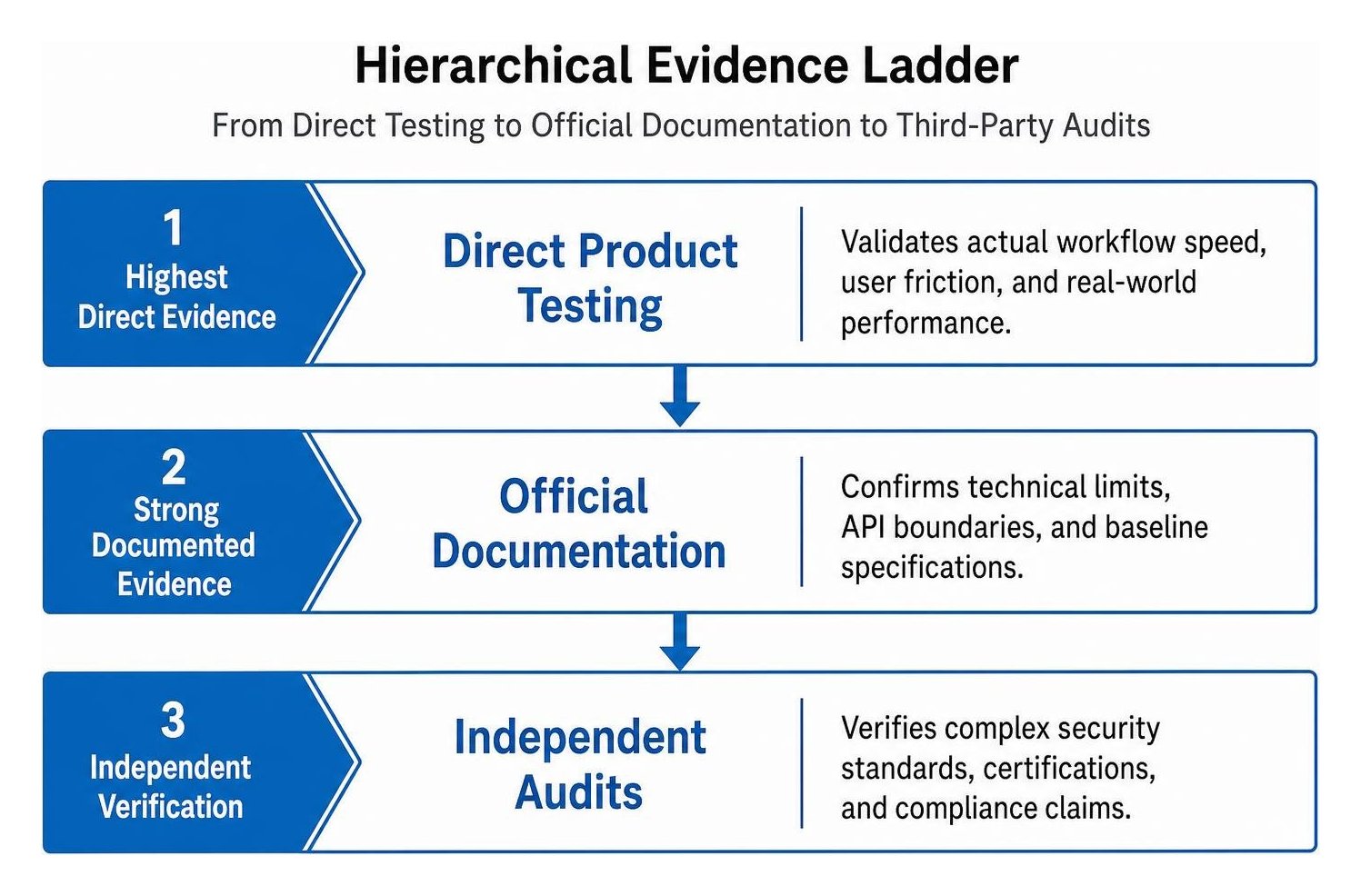
When building comparison assets using an evidence-first comparison playbook, classify your evidence into three distinct product attribute categories:
- Search Attributes: Elements that buyers can verify prior to purchase, such as dimensions, storage capacity, stated API limits, and baseline subscription pricing.
- Experience Attributes: Factors verified only through hands-on use, including UI responsiveness, ease of implementation, customer support speed, and workflow ergonomics.
- Credence Attributes: Qualities that consumers cannot verify on their own even after purchase, such as data encryption standards, ethical labor practices, or SOC 2 compliance. These require independent third-party certification and rigorous audits.
Which Objective Metrics Prevent Bias in Side-by-Side Evaluations?
To eliminate bias, normalize your evaluation metrics so that competing products are compared under identical real-world operating conditions.
- Total Cost of Ownership: Calculate explicit setup fees, recurring subscription tiers, mandatory add-ons, and maintenance requirements rather than relying on promotional entry pricing.
- Normalized Operating Parameters: Evaluate outputs using identical workloads, file formats, and hardware environments.
- Operational Trade-Offs: Show the direct compromises of each choice. A lightweight tool may offer rapid onboarding but lack deep reporting; an enterprise platform may deliver advanced governance at the cost of setup speed.
- Audience Fit Mapping: Conclude each section with clear statements outlining who should choose the product and who should look for an alternative.

How Do You Handle Missing Competitor Data and Feature Gaps Transparently?
Handle missing data by explicitly stating that a metric is unconfirmed in public records rather than assuming the capability does not exist or assigning an arbitrary score of zero.
Avoid false precision, such as subjective scores out of 100 that lack clear mathematical backing. Instead, provide concise, scannable scope notes that outline which versions, plan tiers, and observation dates were reviewed. Set strict review triggers to re-evaluate pages whenever pricing structures update or major product versions launch.
How to Keep Your Comparison Content Trustworthy and Accurate
Maintaining commercial content integrity requires treating comparison pages as living assets that need regular audits rather than treating them as static marketing copy.
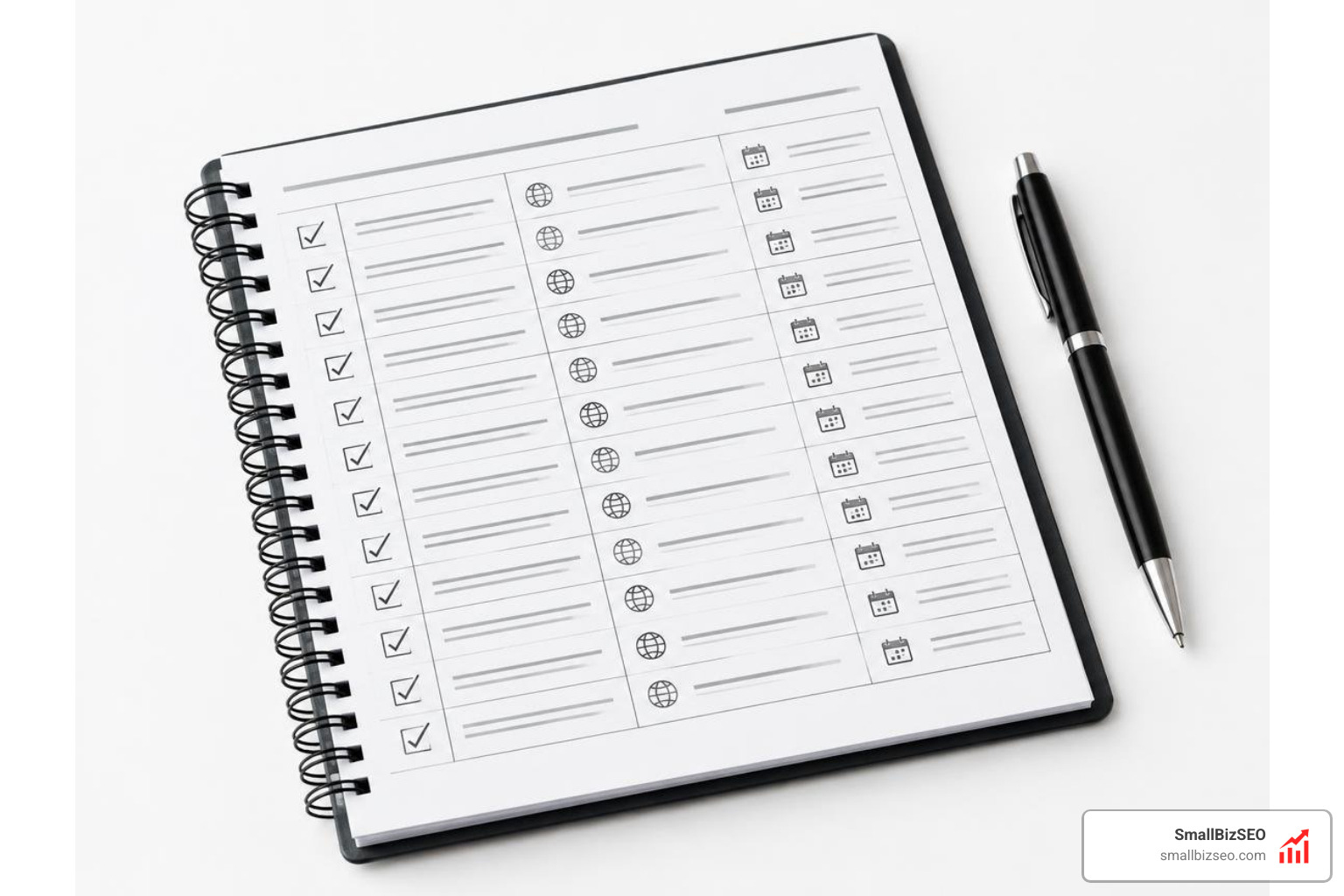
To help buyers navigating commercial investigation keywords, maintain a visible evidence ledger that records claim IDs, primary source URLs, review dates, and tested configurations. At SmallBizSEO, we implement this structured, data-driven approach across our content strategy to ensure that every comparison provides inspectable reasoning, complies with search engine review guidelines, and delivers lasting value to searchers.