A Modern Blueprint for Evaluating an Accounting Firm Search Engine Optimization Firm

A Modern Blueprint for Evaluating an Accounting Firm Search Engine Optimization Firm
Why Does SEO Matter for CPA Practices in the Modern Search Landscape?
SEO helps CPA firms appear when people search for accounting help, from a nearby tax preparer to an advisor for a growing business. If you are hiring an SEO firm, ask how it will improve your local listings, service pages, website health, and qualified inquiries. Ask to see a plan for measuring booked consultations and new clients, not just rankings.
That matters because being visible is only the first step. A prospective client may find your firm in search, check its reviews, read a service page, and then call. Your SEO plan should support that whole path.
I'm Clayton Johnson, founder of SmallBizSEO, where I work across SEO, content, and digital PR to help businesses build visibility and attract qualified leads. I bring that practical, answer-focused approach to this guide on evaluating an accounting firm search engine optimization firm.
Relevant industry resources:
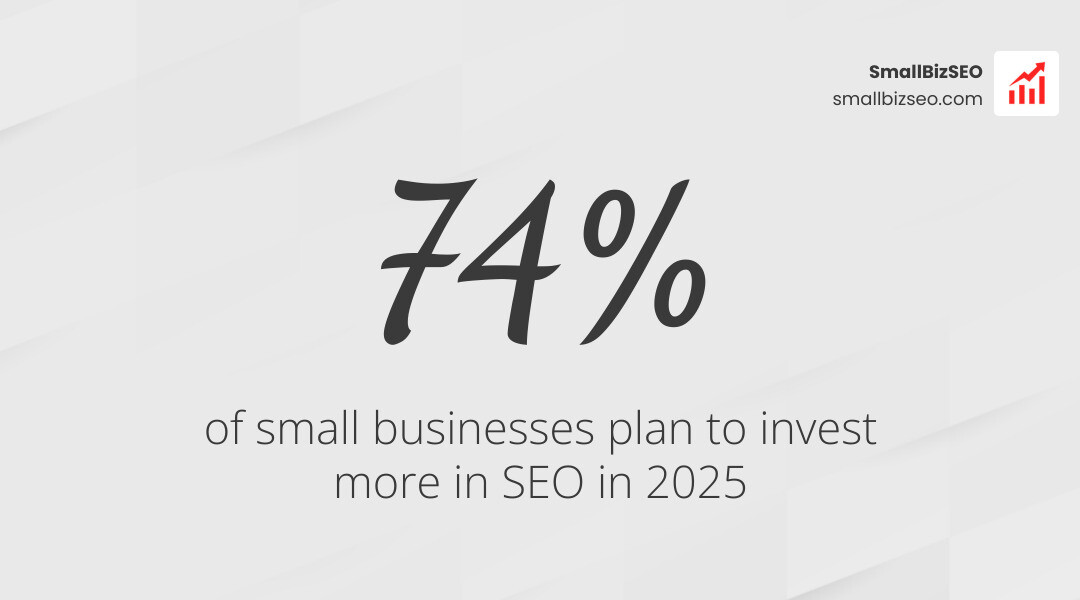
Search behavior has fundamentally shifted. Approximately 60 percent of searches end without a single click because search engines display quick answers directly on the results page. Meanwhile, about 74 percent of small businesses invest in organic optimization, yet organic search drives roughly 44.6 percent of B2B revenue across service industries. This dynamic creates a visible execution gap: firms that rely solely on outdated referral models or generic directories miss high-intent business owners searching for strategic guidance.
When a practice partners with a specialized accounting firm search engine optimization firm, it closes this visibility gap. Prospective clients do not just search for generic terms; they seek specialized help for audits, corporate restructurings, and fractional CFO advisory. Establishing search prominence ensures that your practice captures these high-value client journeys at their point of intent.
What Core Capabilities Should You Expect from an Accounting Firm Search Engine Optimization Firm?
Look for an agency that understands accounting clients, can plan for seasonal demand, and can show how its SEO work supports business goals. A qualified partner will align digital tactics with partner-level advisory objectives rather than treating your practice like an e-commerce storefront.
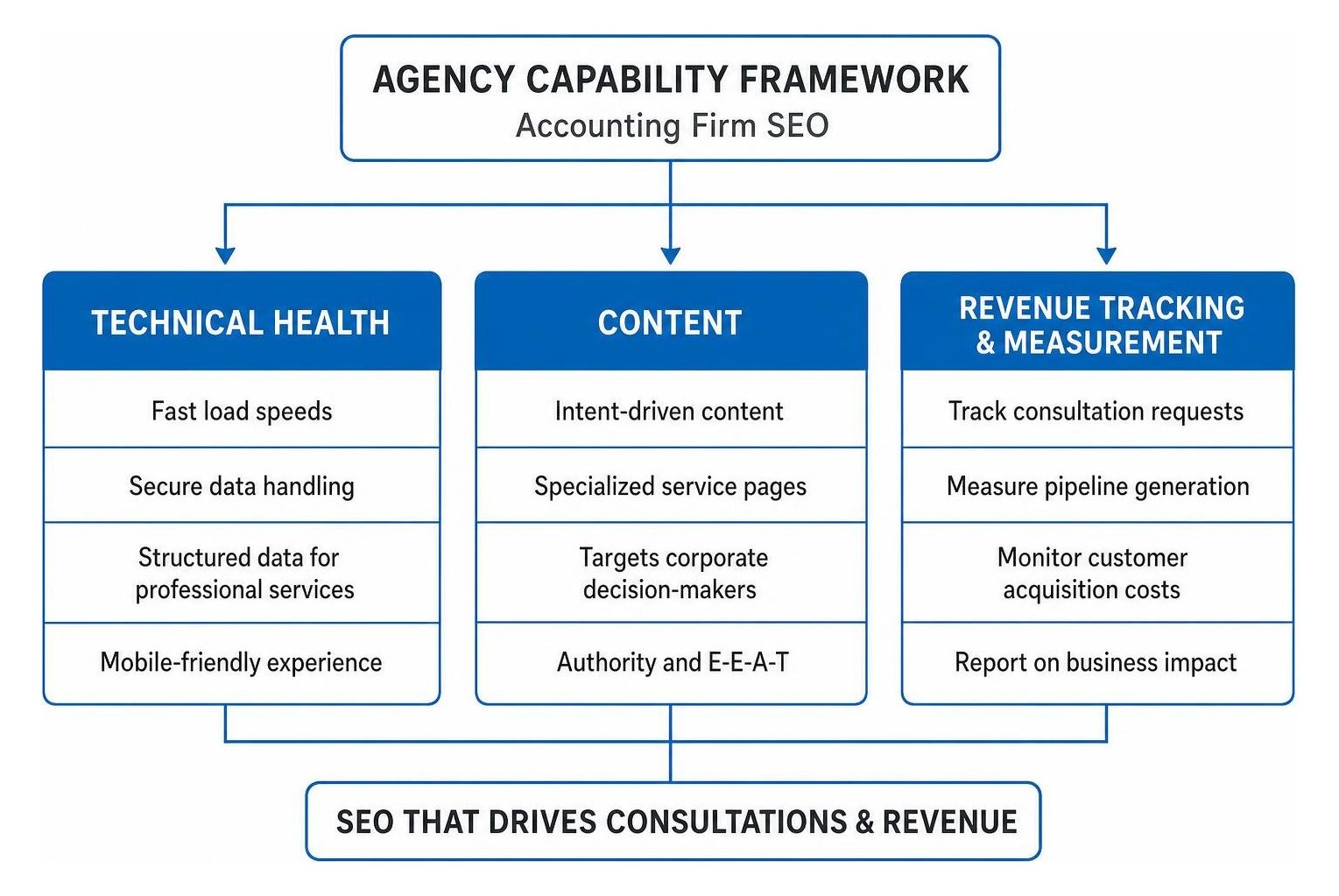
When evaluating a professional SEO company, verify that they offer comprehensive SEO services that address four fundamental areas:
- Technical Infrastructure: Ensuring fast load speeds, secure data handling, and structured data tailored to professional services.
- Intent-Driven Content: Developing specialized pages that target corporate decision-makers rather than low-value individual 1040 filers.
- Seasonal Campaign Management: Adjusting content velocity and keyword targeting around major corporate tax and filing deadlines.
- Revenue-Focused Measurement: Tracking consultation requests, pipeline generation, and customer acquisition costs.
Why Hire a Specialized Accounting Firm Search Engine Optimization Firm Over a General Agency?
A specialized agency understands accounting search terms and client needs better than a general agency, while any agency should demonstrate relevant experience and a clear strategy.
Accounting search requires precise terminology. Generalist agencies often target high-volume phrases like "cheap tax return" or "quick accounting," attracting low-margin inquiries that drain administrative staff. A specialized agency builds authority around commercial keywords like "fractional CFO for manufacturing" or "multi-state sales tax compliance." In professional services, long-tail keywords generate 68 percent of B2B organic traffic, making semantic accuracy essential.
| Feature | Generalist Marketing Agency | Specialized Accounting SEO Partner |
|---|---|---|
| Domain Expertise | General consumer terminology | Specialized CPA, tax, and advisory vocabulary |
| Intent Targeting | High-volume consumer keywords | High-intent B2B and high-net-worth queries |
| Compliance Awareness | Standard marketing copy | Adheres to state board standards |
| Content Strategy | Generic blog posts | Thought leadership and technical guides |
| Reporting Focus | Clicks and traffic volume | Inquiries, pipeline value, and booked calls |
Firms offering dedicated accounting SEO company support understand how to position complex offerings alongside established industry standards, aligning with professional guidance such as AICPA practice growth resources.
How Can an Accounting Firm Search Engine Optimization Firm Improve Local and AI Search Visibility?
Agencies improve local visibility through accurate business profiles, consistent contact details, location-focused pages, and strong reviews; they also prepare useful content for AI search results.
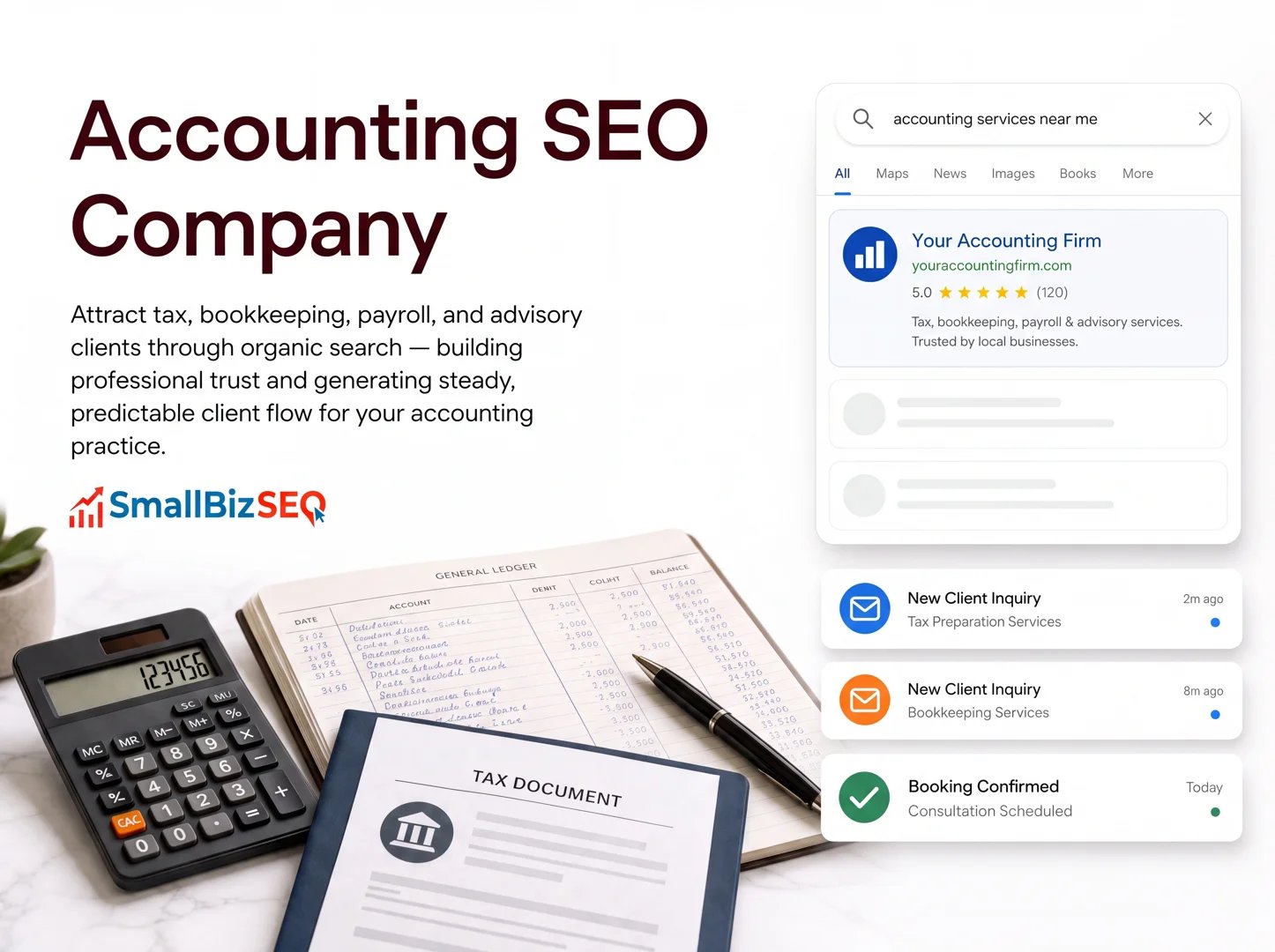
Local discovery heavily centers on the Google Local 3-Pack, which captures 67 percent of all clicks for localized service searches. An optimized Google Business Profile requires accurate primary categories, robust service listings, and continuous review collection. Maintaining consistent Name, Address, and Phone (NAP) details across commercial directories ensures your practice maintains local authority.
For practices with multiple offices, multi-location architecture prevents keyword cannibalization. Rather than creating generic duplicate pages, an agency builds unique city hubs highlighting local team members, specific case studies, and tailored service lines.
AI search platforms and Google AI Overviews also rely on established organic signals. AI Overviews synthesize direct answers for users, and roughly 76 percent of AI citations originate directly from pages ranking within the top ten traditional search results. By mastering local search optimization basics and applying principles from our practical guide to local SEO, your practice secures visibility across both standard search listings and conversational AI responses.
What Technical Standards and E-E-A-T Signals Should CPA Websites Maintain?
CPA websites should be secure, mobile-friendly, technically sound, and clear about the expertise and qualifications behind their content.
Because accounting falls under search engine categories affecting financial well-being, search algorithms demand strict Experience, Expertise, Authoritativeness, and Trustworthiness (E-E-A-T) signals. An agency must ensure your site meets these standards through:
- Financial Schema Markup: Implementing structured data that clarifies your service catalog, practitioner credentials, and physical locations to search engines.
- Core Web Vitals: Delivering fast page loading speeds, stable visual layouts, and responsive mobile navigation.
- Partner Author Attribution: Publishing detailed partner biographies with verifiable professional credentials, board affiliations, and direct bylines.
- Topical Clustering: Organizing content into cohesive topic hubs that establish authority across related financial subjects.
Implementing recommendations from our technical SEO guide, alongside methods for building topical authority in your niche and strategic link building services, protects your domain from technical debt and algorithmic shifts.
How Should You Vet an SEO Agency, Its Costs, and Its Timeline?
Vet an agency by reviewing its audit, proposed work, reporting, contract terms, and plan for measuring results.
Begin by requesting a comprehensive diagnostic audit rather than accepting generic sales proposals. An actionable diagnostic identifies underlying code errors, missing service keywords, and authority gaps. Review contract structures carefully; agencies confident in their execution often provide flexible month-to-month retainers or clear quarterly milestones instead of locking partners into rigid, non-transparent contracts.
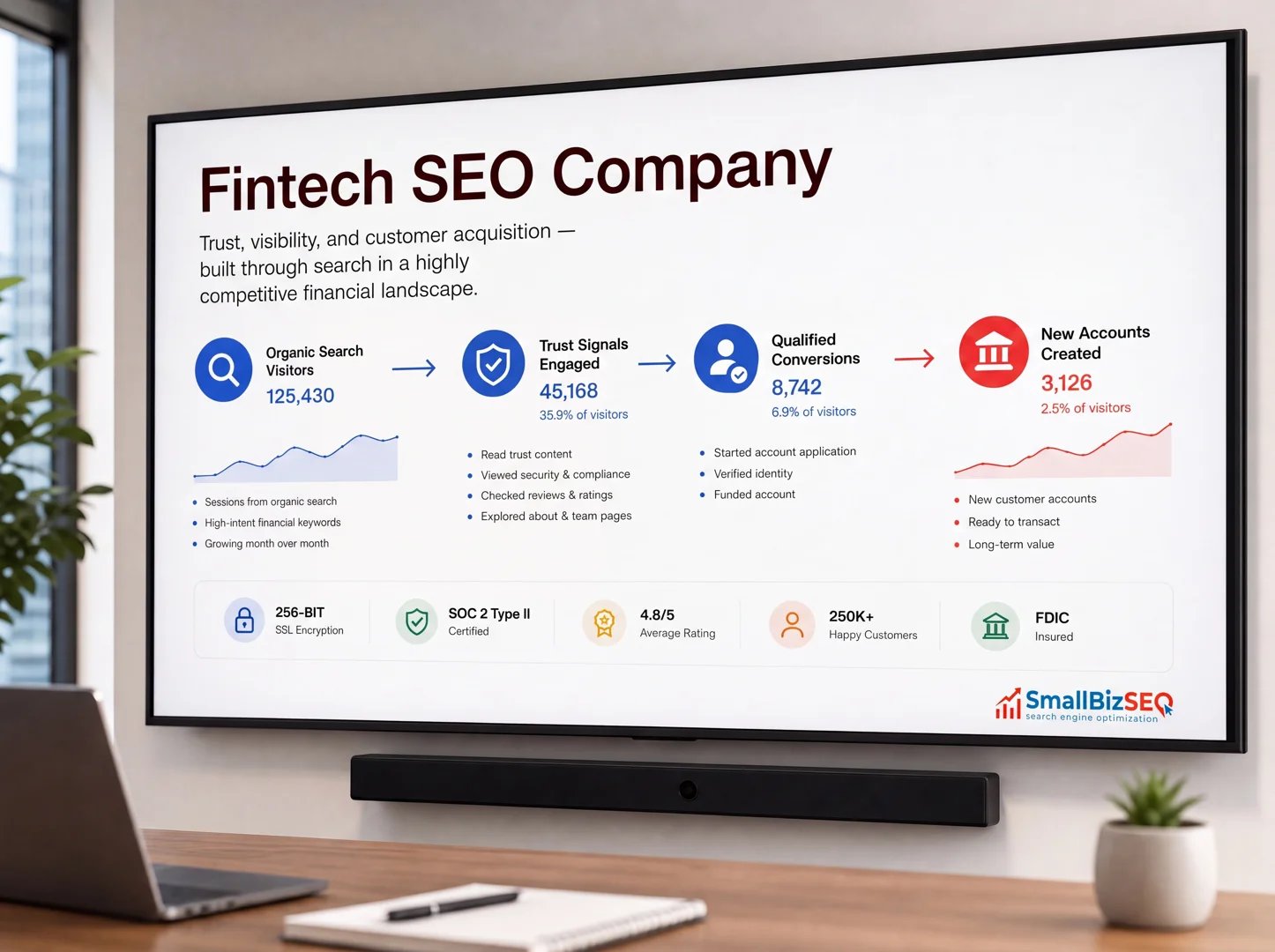
When reviewing resources on finding an affordable SEO package or using our guide to US SEO agencies, prioritize teams that provide transparent roadmaps tied directly to your firm's growth targets.
What Are the Typical Pricing Models, Timelines, and Measurable ROI for Accounting SEO?
SEO costs and timelines vary by scope and competition, so track progress through meaningful business outcomes as well as rankings.
Most accounting practices invest between $2,000 and $8,000 per month for professional search optimization. Early progress, such as keyword movement and indexation fixes, generally appears within three to four months. Accelerated lead generation and measurable revenue expansion follow within six to twelve months as domain authority compounds.
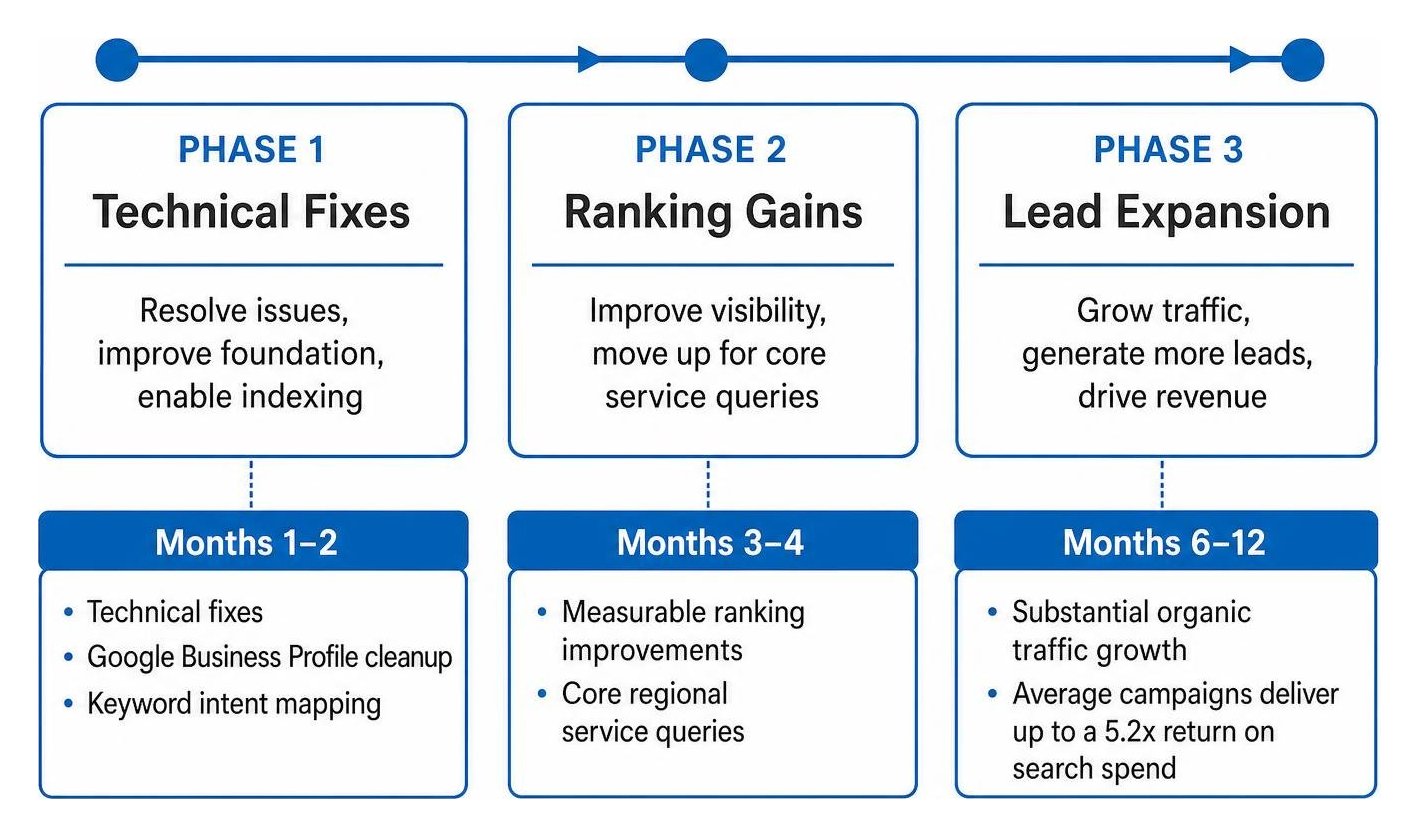
Key milestones to monitor include:
- Months 1 to 2: Technical fixes, Google Business Profile cleanup, and keyword intent mapping.
- Months 3 to 4: Measurable ranking improvements across core regional service queries.
- Months 6 to 12: Substantial organic traffic growth, with average campaigns delivering up to a 5.2x return on search spend.
Track performance through Google Analytics 4 (GA4) conversion paths, call tracking, and consultation bookings. Evaluating these outcomes against our guide to interpreting SEO reporting data ensures you evaluate genuine business return rather than vanity metrics.
What Red Flags Should You Watch for in an Agency Proposal?
Be cautious of guaranteed rankings, unclear reporting, low-quality link tactics, and proposals that do not address your firm’s specific needs.
Avoid providers that promise immediate rank-one positions. No agency controls search algorithms, and making absolute guarantees often indicates risky tactics that can harm long-term visibility. Other warning signs include:
- Generic Strategy Templates: Proposing identical campaigns without analyzing your service mix, market competition, or firm specializations.
- Opaque Vanity Metrics: Focusing solely on gross impressions while obscuring consultation bookings and conversion data.
- Junior Account Hand-offs: Selling the engagement with senior strategists, then passing daily execution to junior staff unfamiliar with accounting regulations.
- Low-Quality Link Schemes: Using automated directory submissions or private blog networks instead of genuine editorial outreach.
Partnering with SmallBizSEO for Sustainable Practice Growth
Selecting the right search partner transforms your website from a passive brochure into a predictable source of qualified inquiries. At SmallBizSEO, we eliminate guesswork through our data-driven "Velocity" framework, engineered to deliver fast rankings, strict E-E-A-T compliance, and sustainable pipeline growth. We provide full visibility into every optimization effort with transparent, automated reporting that directly connects search visibility to partner revenue.
To identify hidden visibility leaks and discover where your practice stands in modern search, visit SmallBizSEO or take your first step by requesting an SEO visibility audit today.