A Practical Guide to Auditing Deep Navigation Paths for SEO
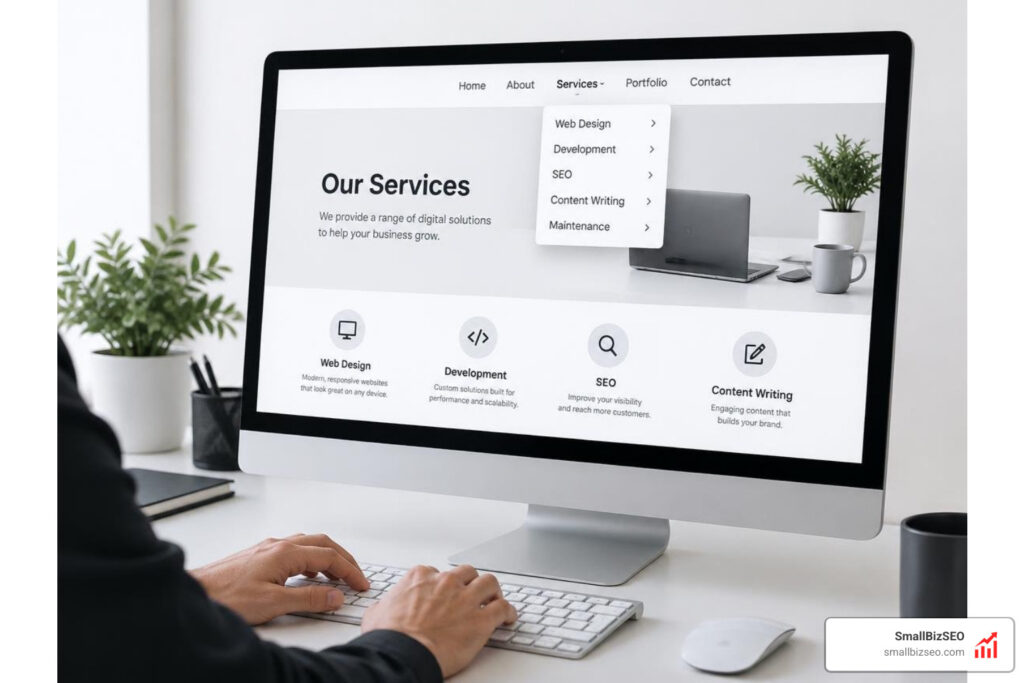
How can you spot service pages buried in your navigation?
Here's how to find important service pages buried too deep in navigation: crawl your site from the homepage and record the shortest link path to each service page. Then compare the crawl results with your XML sitemap and Google Search Console. A valuable page that takes many clicks to reach, or appears in those records but not in the crawl, needs a closer look at its internal links.
Click depth is a clue, not a fixed SEO rule. A link from a relevant services page can make a buried page easier to reach without adding every service to your main menu.
I'm Clayton Johnson, founder of SmallBizSEO. My work in technical SEO and content strategy helps small businesses understand how to find important service pages buried too deep in navigation and build clearer paths to them.
Introduction: The SEO Impact of Click Depth on Small Business Service Pages
Click depth measures the minimum number of link clicks required to reach a specific page starting from your homepage. For small business websites, keeping core commercial offerings within two to three clicks is critical for preserving PageRank flow and ensuring search engines discover, crawl, and index your content efficiently.
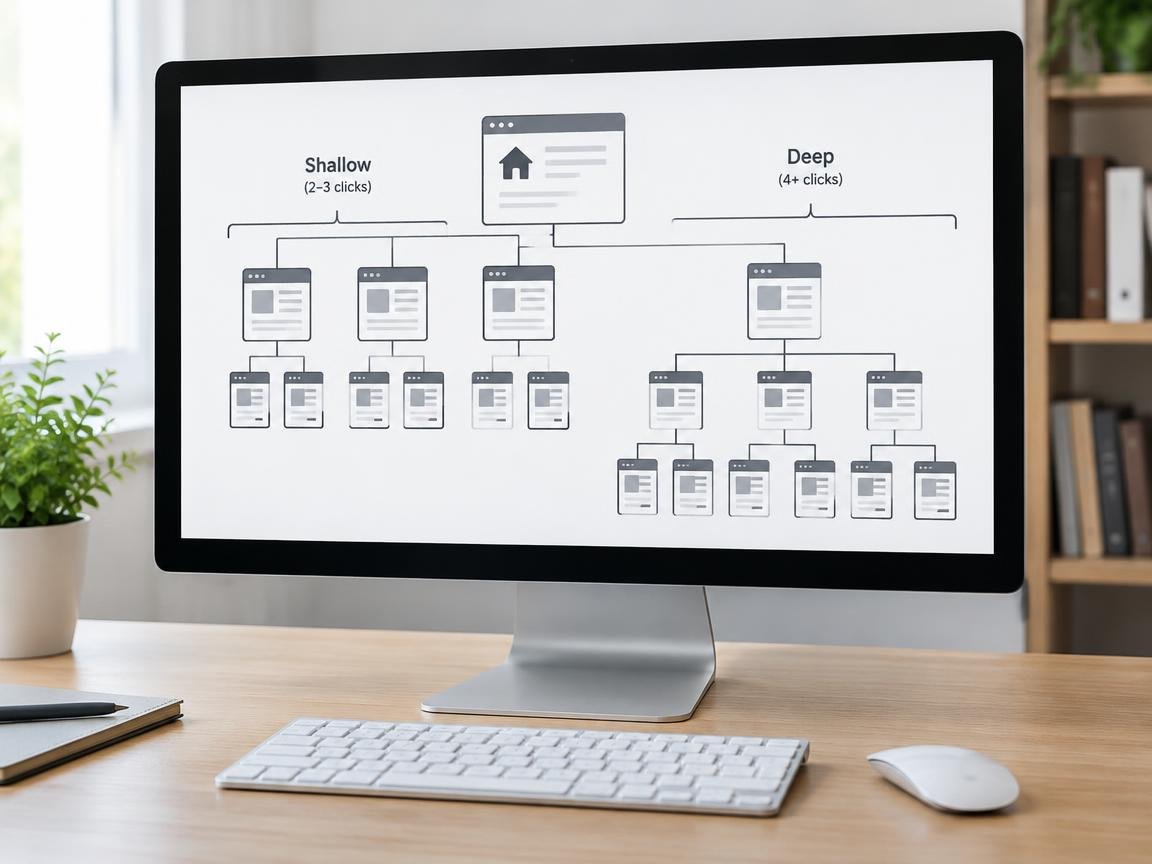
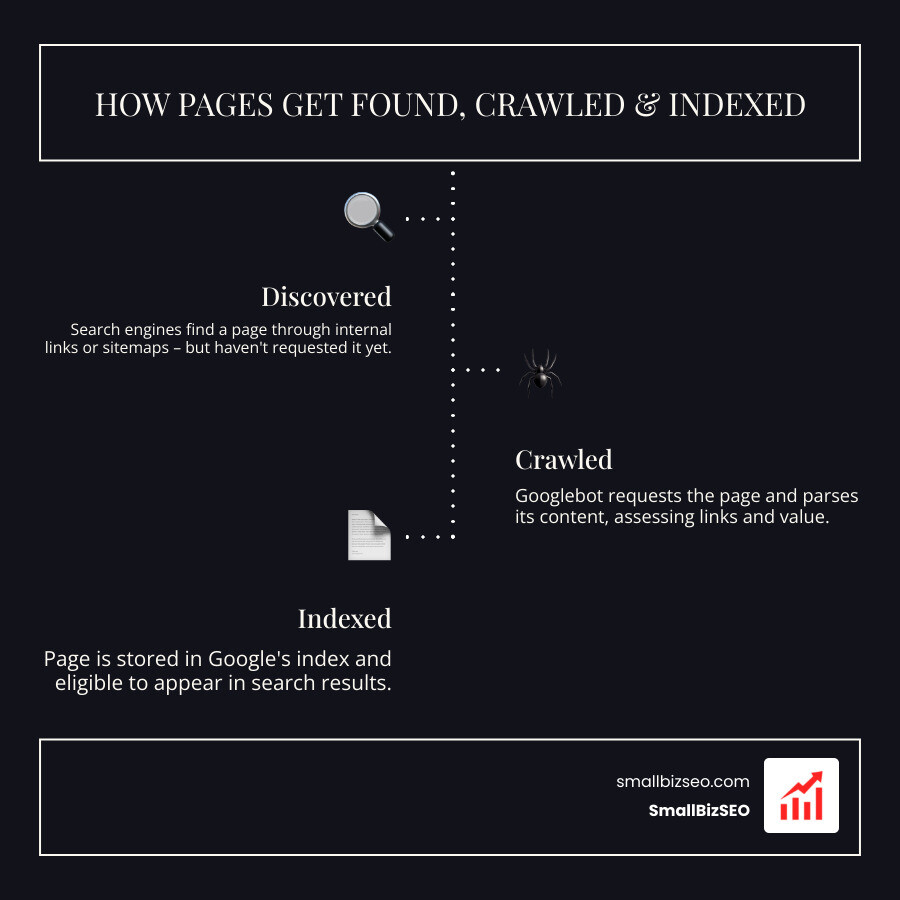
When a page sits four or more clicks away from the homepage, search bots visit it far less frequently. In fact, pages buried more than three clicks away can experience up to a 50% drop in crawl frequency. This causes a breakdown across three distinct stages of indexation:
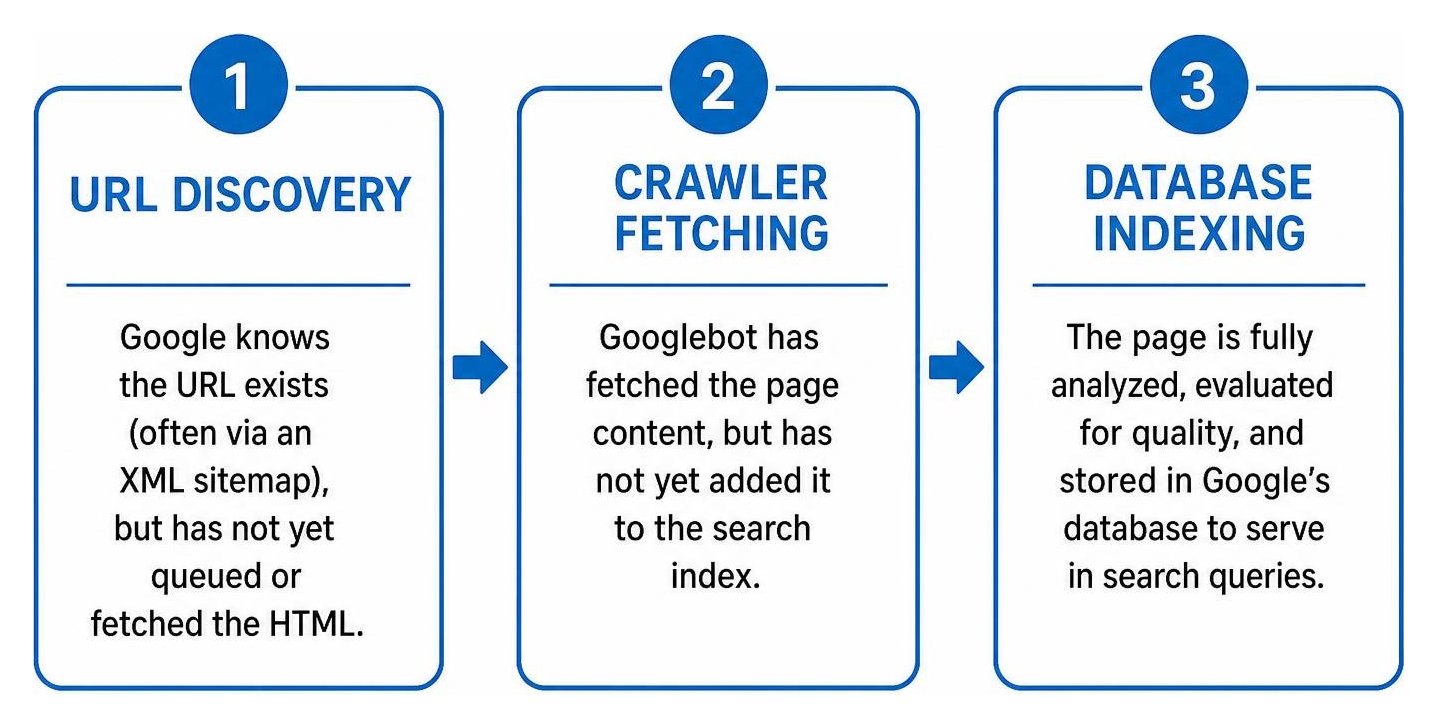
- Discovered: Google knows the URL exists (often via an XML sitemap), but has not yet queued or fetched the HTML.
- Crawled: Googlebot has fetched the page content, but has not yet added it to the search index.
- Indexed: The page is fully analyzed, evaluated for quality, and stored in Google's database to serve in search queries.
A convoluted discovery path harms both search bots and human visitors. If a prospective client browsing on a mobile navigation menu cannot find your primary service in a couple of taps, they bounce. Streamlining navigation delivers immediate ranking and user experience benefits. For example, major brand audits show that simplifying navigation menus directly correlates with increased organic traffic and higher conversion rates.
How to Find Important Service Pages Buried Too Deep in Navigation
To identify hidden URLs across your website, compare data across multiple sources rather than relying on a single visual check.
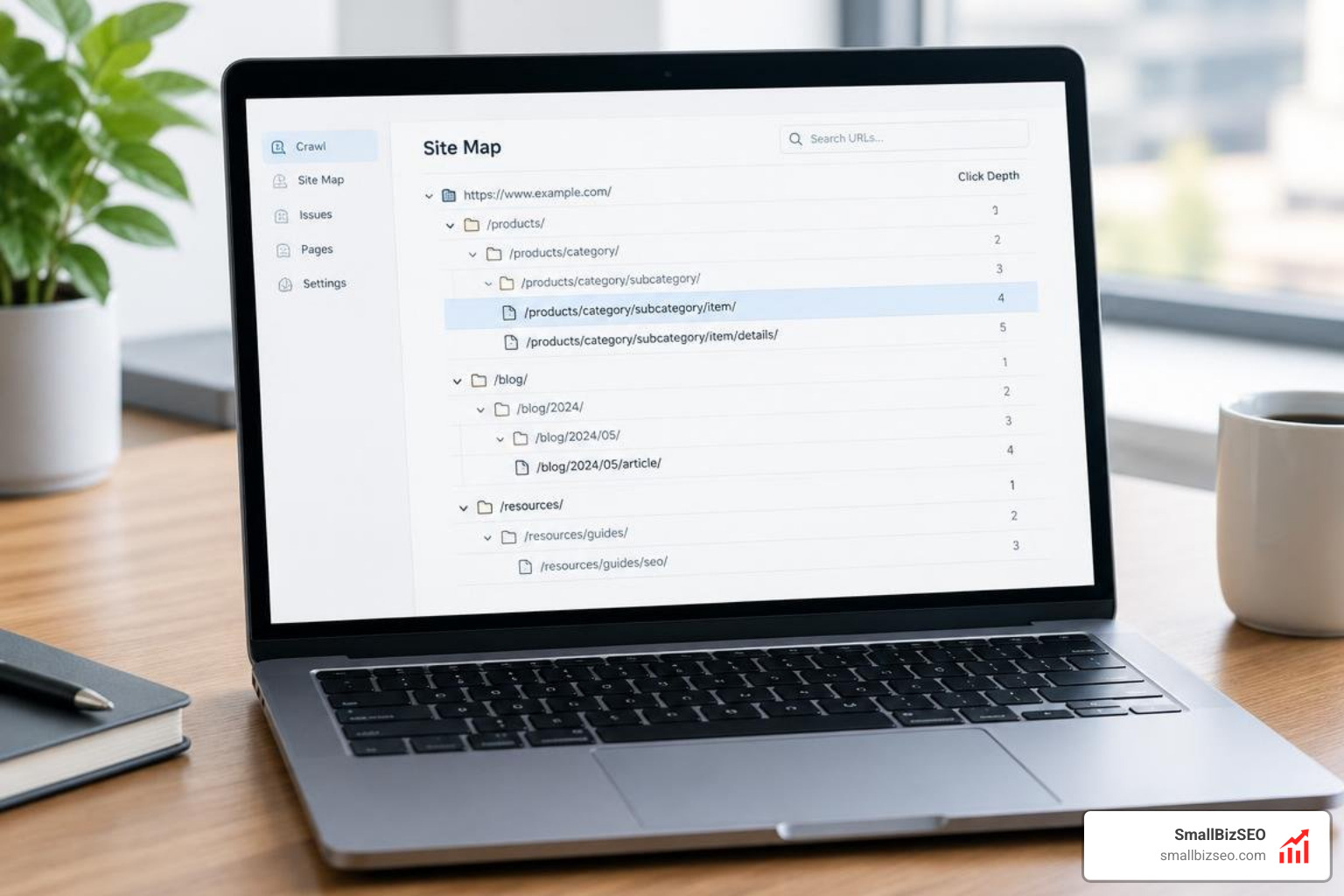
A comprehensive technical SEO review combines automated crawl analysis with server records and Google Search Console data. By diagnosing crawl depth and deep pages, you can quickly see where PageRank distribution falls off.
| Data Source | What It Reveals | Key Red Flag for Buried Pages |
|---|---|---|
| Website Crawl | Exact click path and inlink counts | Click depth of 4 or higher; low internal link counts |
| XML Sitemap | All canonical URLs intended for indexing | URLs in sitemap but missing from crawl paths |
| Search Console | Real impressions, clicks, and indexing states | "Discovered - currently not indexed" status |
| Server Logs | Real-time Googlebot crawl activity | Zero bot hits despite valid page status |
When Google leaves a URL as "Discovered - currently not indexed," it often means the crawler lacks a clear structural path to justify fetching it. You must give a discovered but uncrawled service page a reliable discovery path using visible, contextual HTML links.
Step-by-Step: How to Find Important Service Pages Buried Too Deep in Navigation Using Data
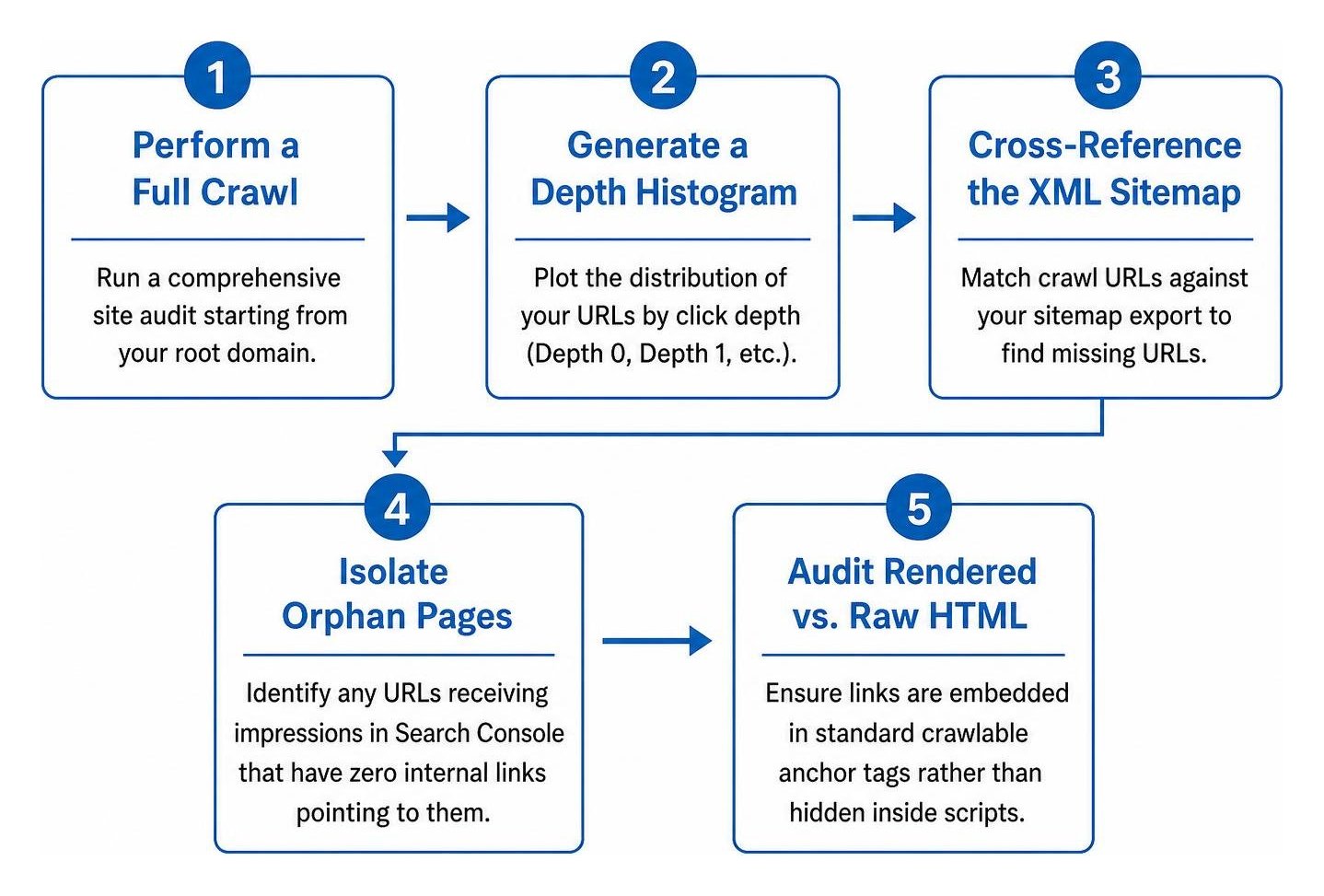
Finding buried URLs requires cross-referencing your site data step-by-step:
- Perform a Full Crawl: Run a comprehensive site audit starting from your root domain.
- Generate a Depth Histogram: Plot the distribution of your URLs by click depth (Depth 0 for homepage, Depth 1 for top navigation, etc.).
- Cross-Reference the XML Sitemap: Match crawl URLs against your sitemap export to find missing URLs.
- Isolate Orphan Pages: Identify any URLs receiving impressions in Search Console that have zero internal links pointing to them. Real-world audits highlight how organizations frequently strand dozens of vital profiles deep within unlinked directories.
- Audit Rendered vs. Raw HTML: Ensure links are embedded in standard crawlable anchor tags rather than hidden inside unrendered scripts.
What Structural Navigation Flaws Cause Service Pages to Get Buried?
Pages become deeply buried due to common structural architecture oversights:
- Paginated Directories: Long lists of services or team members split across multiple pages push items on page five or deeper into high click-depth territory.
- Unrendered JavaScript Menus: Navigation built with dynamic scripts rather than standard HTML links prevents search crawlers from discovering subpages.
- Deep Multi-Tier Dropdowns: Complex menus with excessive nested layers confuse users and dilute link authority.
- Missing Service Hubs: Individual service sub-specialties created without an overarching parent category page to anchor them.
To fix these structural flaws, ensure your technical layout uses clean markup and crawlable links. You can master URI fragments to build bulletproof navigation that maintains user orientation without breaking search engine crawlability.
How to Prioritize Which Deep Pages to Surface Based on Business Value
Not every buried URL requires a prime spot in your main navigation. Prioritize fixes by mapping commercial intent against current click depth.

Evaluate your deep URLs using three primary criteria:
- Commercial Margin: Give immediate priority to high-margin service offerings that drive business revenue.
- Search Demand: Review Google Search Console to identify pages already generating impressions despite poor placement.
- Conversion Readiness: Prioritize bottom-of-the-funnel service pages that feature clear calls to action and direct lead capture forms.
How to Restructure Navigation and Surface Buried Pages for Maximum SEO
Bringing deep pages closer to the homepage does not require stuffing every URL into your primary header menu. Instead, optimize your site architecture to create a logical, intuitive path for users and crawlers.
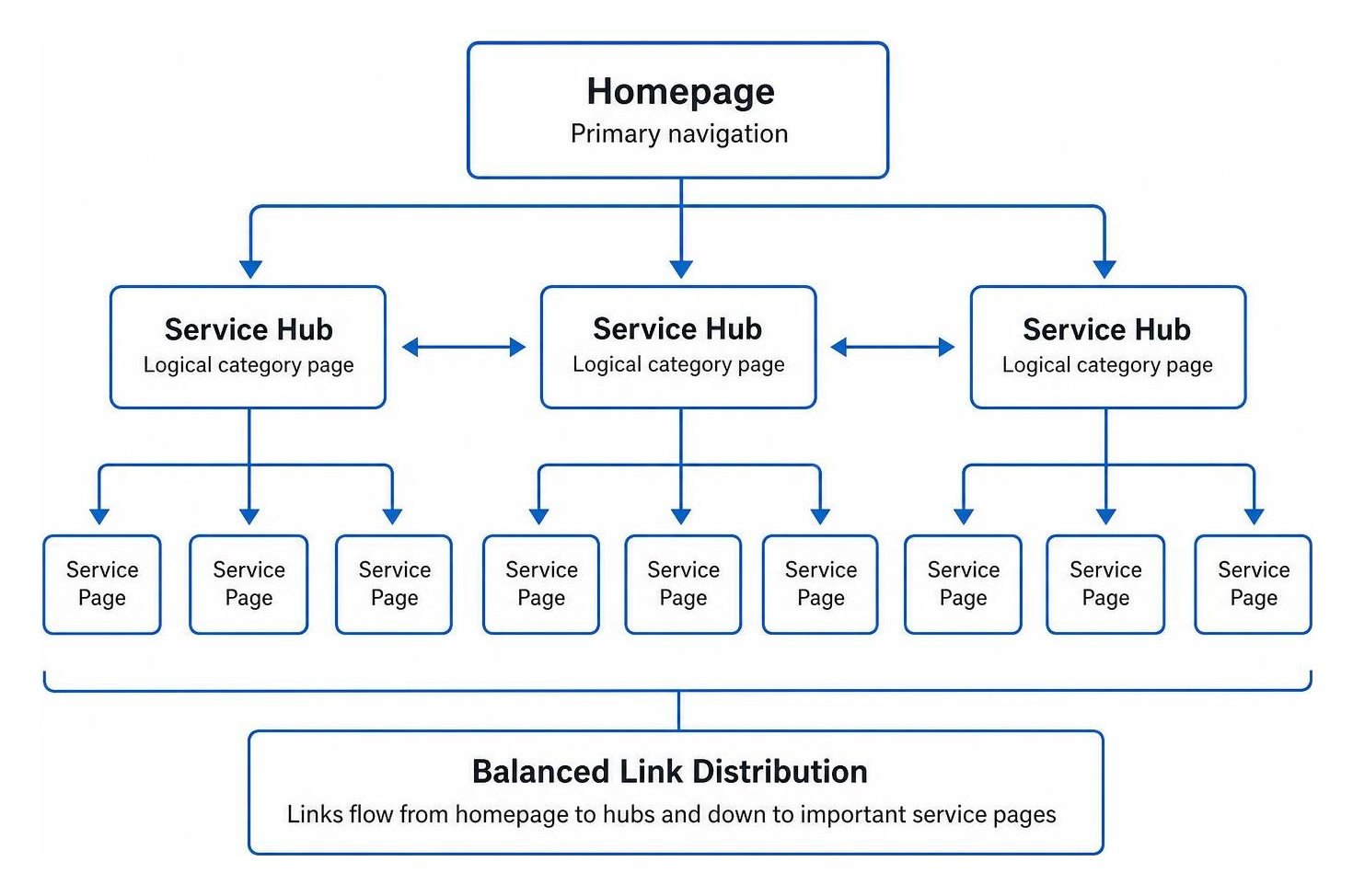
Websites with contextually relevant internal linking structures achieve over four times more monthly organic traffic than competitors with disorganized architectures. Strategic internal linking distributes PageRank smoothly from authoritative assets down to granular service pages. According to Google Search Central, establishing a logical site hierarchy helps crawlers discover your most important content. When managing deep pages, focus on building structured intermediary hubs rather than flattening your entire site into an overwhelming, single-tier menu.
Best Practices: How to Find Important Service Pages Buried Too Deep in Navigation and Reconnect Them with Hubs
To surface buried service offerings effectively, implement these architectural best practices:
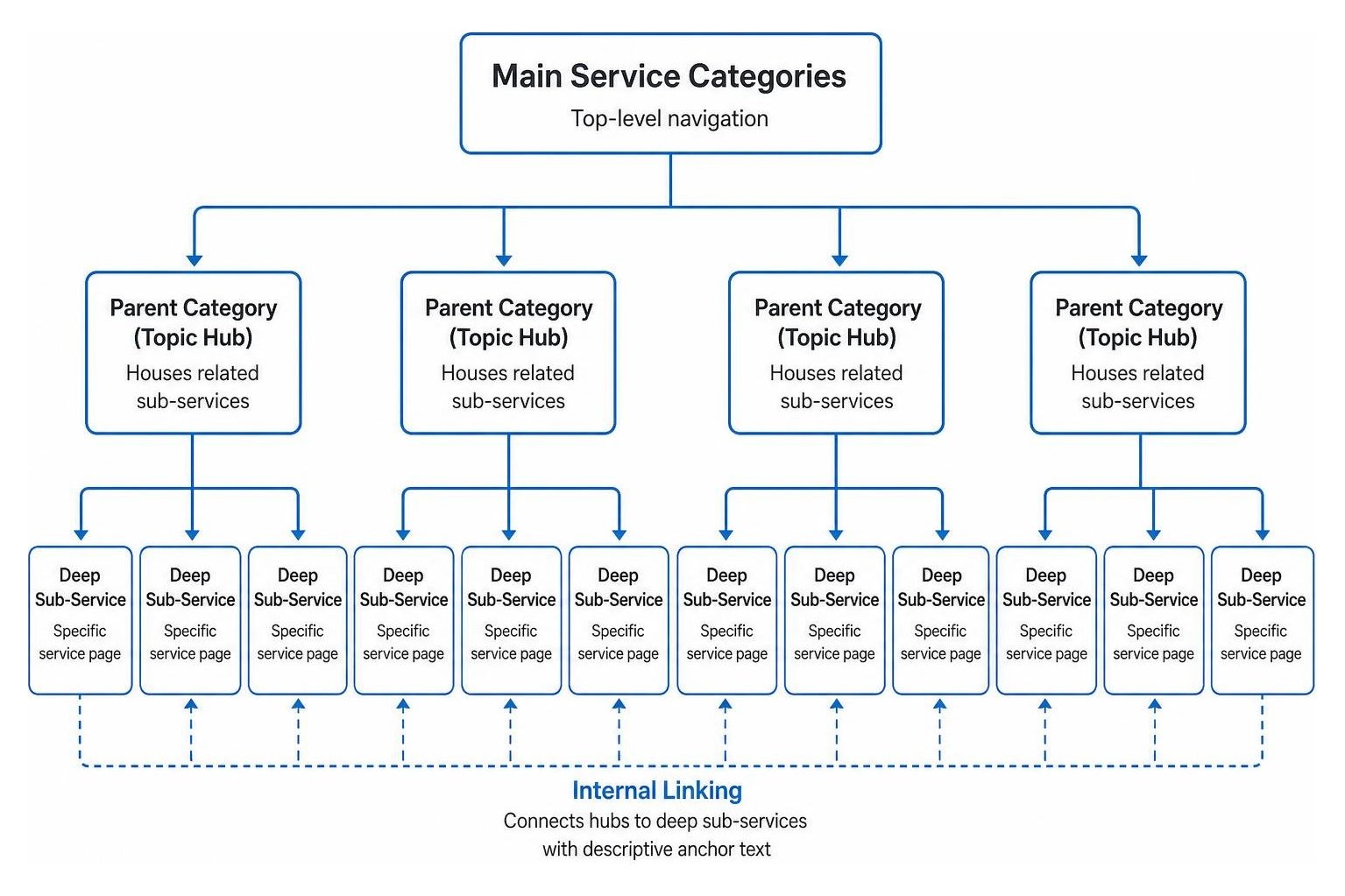
- Build Topic Hubs: Create parent category pages that house and link out to specific sub-services with descriptive anchor text.
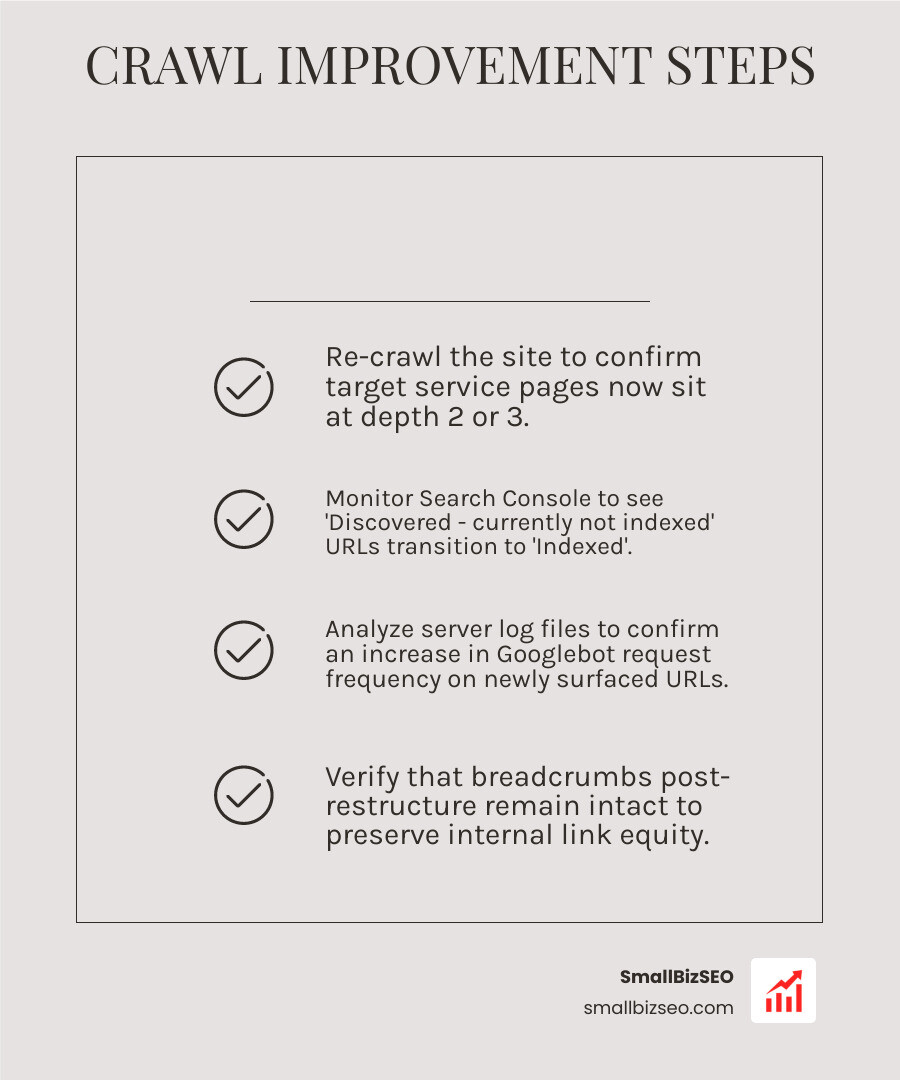
- Implement Navigational Breadcrumbs: Ensure every subpage displays a clear breadcrumb trail reflecting site hierarchy. checking breadcrumbs post-restructure saves your internal links from breakage while reinforcing structural context.
- Add Contextual In-Content Links: Link top-performing, high-authority blog posts directly to related commercial service pages.
- Prevent Link Bloat: Keep navigation clean. Limiting top-level menu items to a focused set improves crawl focus and prevents authority dilution.
How to Verify Improved Crawlability and Track Indexation Gains
Once you implement structural fixes, verify that search engines recognize the updated discovery paths:
- Re-Crawl the Site: Run a post-implementation crawl to confirm that your target service pages now sit comfortably at depth 2 or 3.
- Monitor Search Console: Track the "Page Indexing" report to confirm that previously "Discovered - currently not indexed" URLs transition to "Indexed."
- Analyze Server Log Files: Use log file analysis to confirm an increase in Googlebot request frequency on your newly surfaced URLs.
Bringing Your High-Value Service Pages Back to the Surface
Fixing buried service pages is one of the most effective ways to unlock hidden organic traffic without writing new content from scratch. When you eliminate structural roadblocks, organize content into logical topic hubs, and reduce click depth, search engines can crawl, index, and rank your commercial offerings with ease.
If you want to eliminate crawl bottlenecks and improve your site's search visibility, explore our data-driven approach to crawl depth optimization. At SmallBizSEO, we help businesses build clean, high-performing site architectures that drive measurable growth.