A Practical Guide to Broken Link Building
A Practical Guide to Broken Link Building
What Is Broken Link Building, and Why Does It Help?
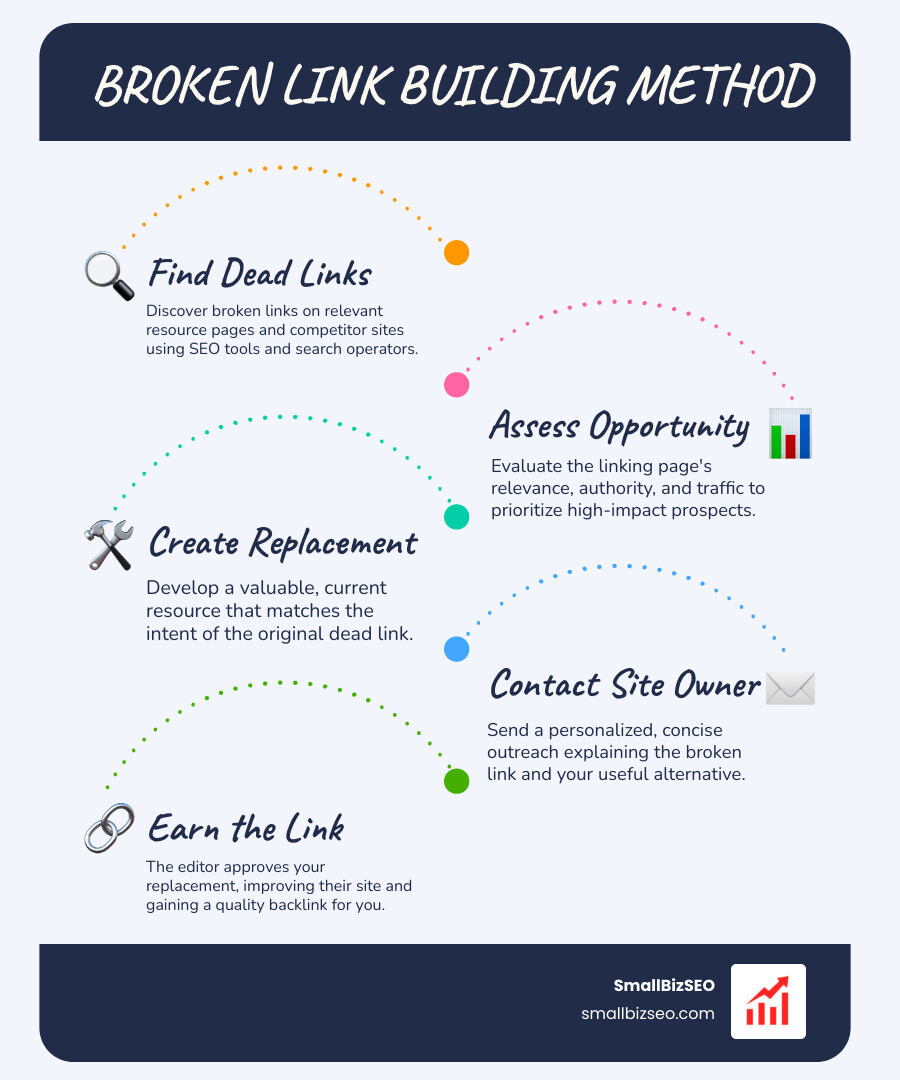
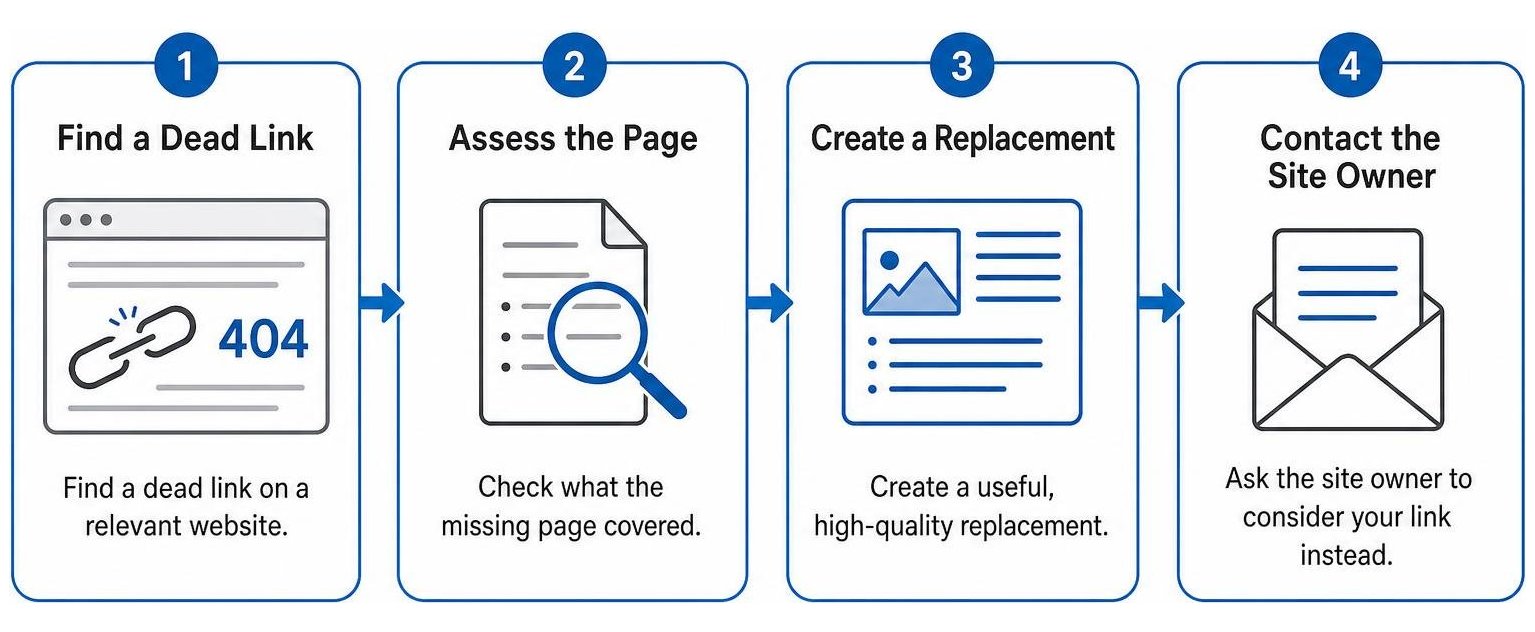
The Broken link building method has four steps: find a dead link on a relevant website, check what the missing page covered, create a useful replacement, and ask the site owner to consider your link instead. The site owner makes the final call.
It can help your SEO by earning relevant backlinks while helping another site fix a poor reader experience. The key is to offer a page that truly fits the original link, not just a page you want to promote.
I’m Clayton Johnson, founder of SmallBizSEO, where I connect SEO, content, and digital PR to help businesses build authority. My approach to the Broken link building method follows that same principle: create something worth linking to, then make a helpful request.
Every website naturally loses functional outbound links over time through domain expirations, site redesigns, and deleted pages—a technical reality documented in A cross disciplinary study of link decay and the effectiveness of mitigation techniques. When a user clicks a hyperlinked reference only to land on an HTTP 404 error, user trust drops and crawl paths break.
According to industry surveys of hundreds of digital marketing professionals, broken link outreach ranks as the fifth most widely used tactic for link acquisition. It maintains an above-average success rate because you offer tangible utility before asking for anything in return: you spot a broken element on an editor's domain and provide an immediate, high-grade solution.
How Does the Broken Link Building Method Work?
The broken link building method operates on a value-exchange framework: discover dead pages that already have inbound authority, evaluate their link quality, build an updated replacement, and inform the webmaster.
Unlike purely transactional digital PR or cold outreach, this process is an editorial collaboration. The webmaster receives a free quality check on their content, while you earn sustainable link equity. To understand how this fits into your broader growth framework, read our guide on demystifying backlinks in digital marketing.
| Strategy | Primary Mechanism | Pitch Friction | Ideal Use Case |
|---|---|---|---|
| Broken Link Building | Spotting 404 errors and suggesting modern replacement URLs | Low (solves an existing editorial error) | Scaling authoritative resource and context links |
| Guest Posting | Pitching and writing entire articles for host platforms | Medium (requires content creation time from host) | Thought leadership and brand positioning |
| Unlinked Brand Mentions | Reclaiming editorial text references of your company | Low (requires no new asset creation) | Established brands with existing organic press |
How Do You Find Dead Links?
To find dead links efficiently, use advanced search operators to uncover resource lists, then scan those pages with backlink software or browser crawlers to locate 404 targets.

Prospecting begins by locating target-rich environments. Resource directories and comprehensive industry guides are ideal targets because a single page with over 180 external references is nearly 38 times more likely to contain broken URLs than a shorter post.
You can identify these hubs using targeted search parameters:
[niche keyword] + inurl:resources[niche keyword] + "useful links"[niche keyword] + "helpful resources"[niche keyword] + inurl:links
Once you compile a list of prospective hub pages, run an automated link-checking browser extension or an external link analysis platform to highlight non-responsive outbound links. You can also watch a visual demonstration via Broken Link Building in Action to see live discovery workflows.
Another method is auditing direct competitors. Plug their root domain into an SEO tool, filter their indexed pages by HTTP 404 status codes, and sort by the total number of referring domains. Dead pages on prominent industry sites frequently retain dozens of active inbound links that are prime for replacement.
How Do You Evaluate a Broken-Link Opportunity?
Evaluate broken-link opportunities by verifying that referring domains have real organic traffic, contextual relevance, clean backlink profiles, and dofollow attributes.
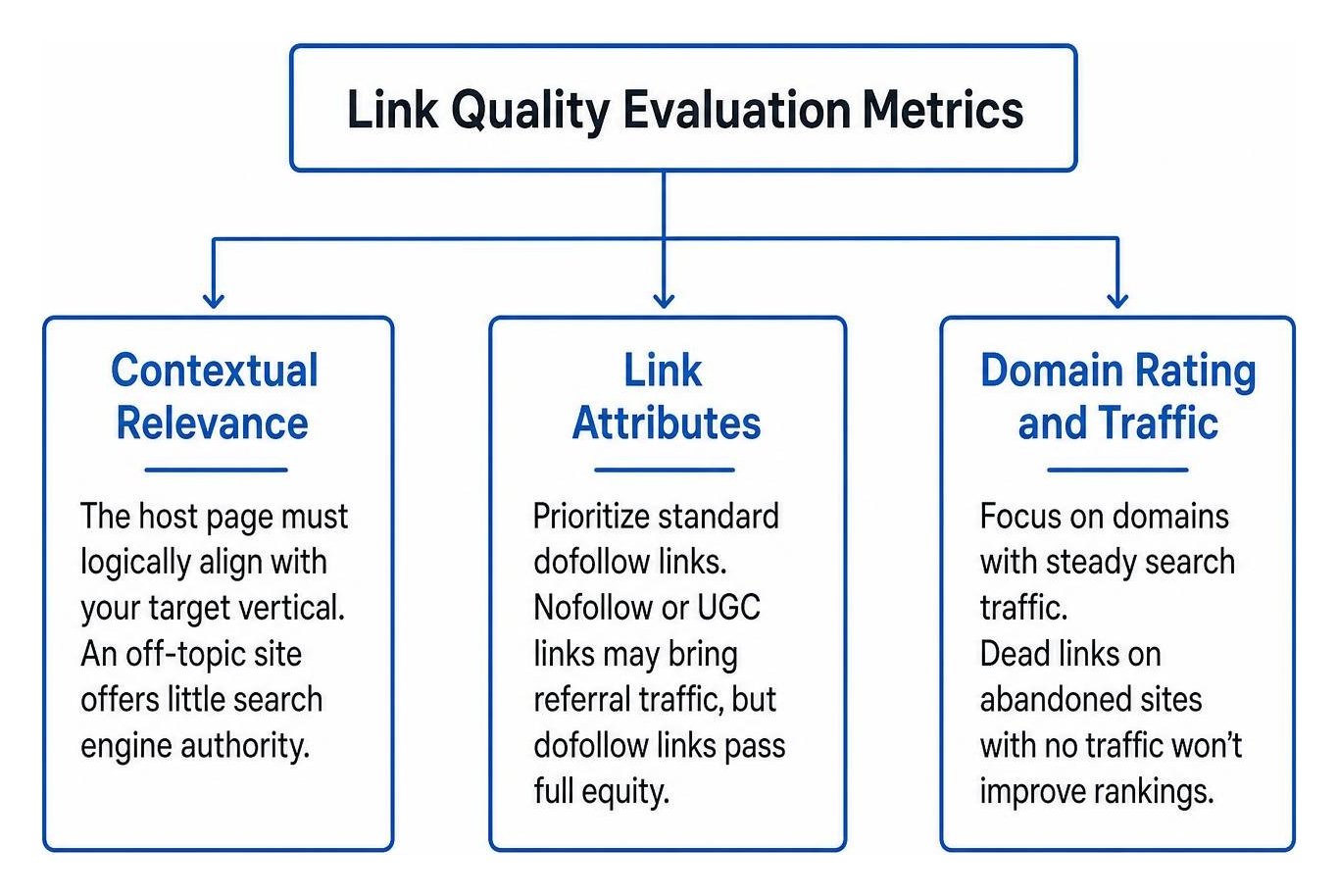
Not every dead link warrants an outreach campaign. Reviewing metrics helps keep your efforts focused on authoritative, safe placements:
- Contextual Relevance: The host page must logically align with your target vertical. A backlink from an off-topic site yields little search engine authority.
- Link Attributes: Prioritize standard dofollow links. While nofollow or UGC attributes can drive direct referral traffic, dofollow placements pass full equity.
- Domain Rating and Traffic: Focus on domains with steady search traffic. A dead link on an abandoned blog with zero monthly visits will not move your rankings.
- Anchor Text Context: Review the anchor text on the linking site. Deep links that point to specific tools or data studies offer higher conversion rates than vague anchors like "source" or "click here."
- Link Health: Run an audit to find toxic links and build authority so you avoid dead pages that have collected spam backlinks.
For a structured review workflow, reference our steps in a quick start guide to link audits.
How Do You Create a Replacement Asset?
To build an effective replacement asset, examine the missing URL via digital web archives, extract its core intent, and produce a superior, up-to-date resource.
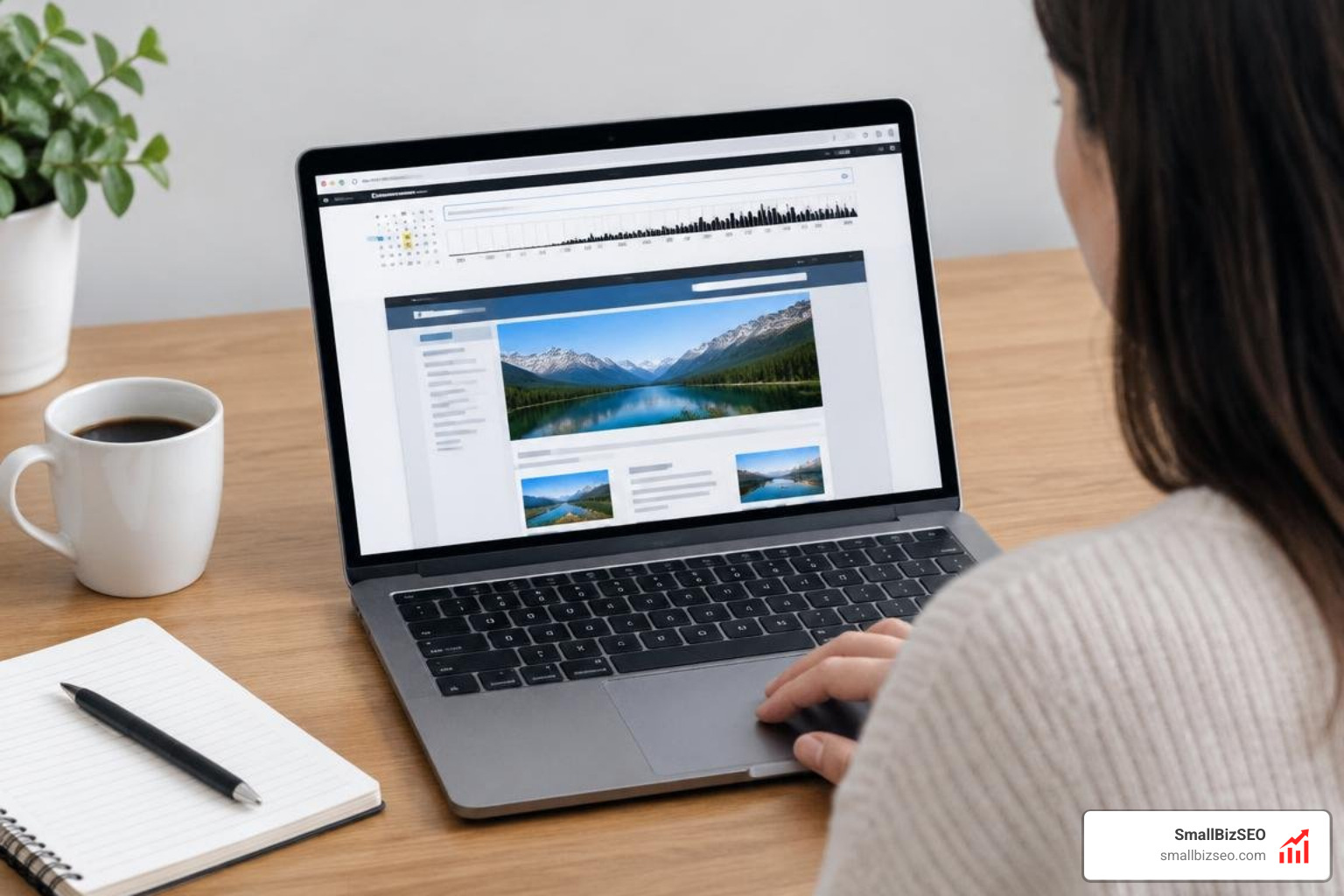
Input the dead link into the Wayback Machine to review the original layout, data points, and formatting. Ask yourself:
- What questions did the original asset answer?
- What information has changed since the page went offline?
- What graphics, charts, or actionable templates can we add to make our version far better?
Modernize outdated statistics, replace defunct tools with current alternatives, design clean diagrams, and structure your URLs cleanly by creating SEO friendly links. If the original piece was a simple 800-word summary, expand it into a comprehensive, actionable guide that gives editors an easy reason to swap out the link.
How Do You Contact Site Owners About Broken Links?
Contact site owners by sending a concise, personalized email that specifies the exact broken URL, points out its location on their page, and suggests your new asset as a replacement.
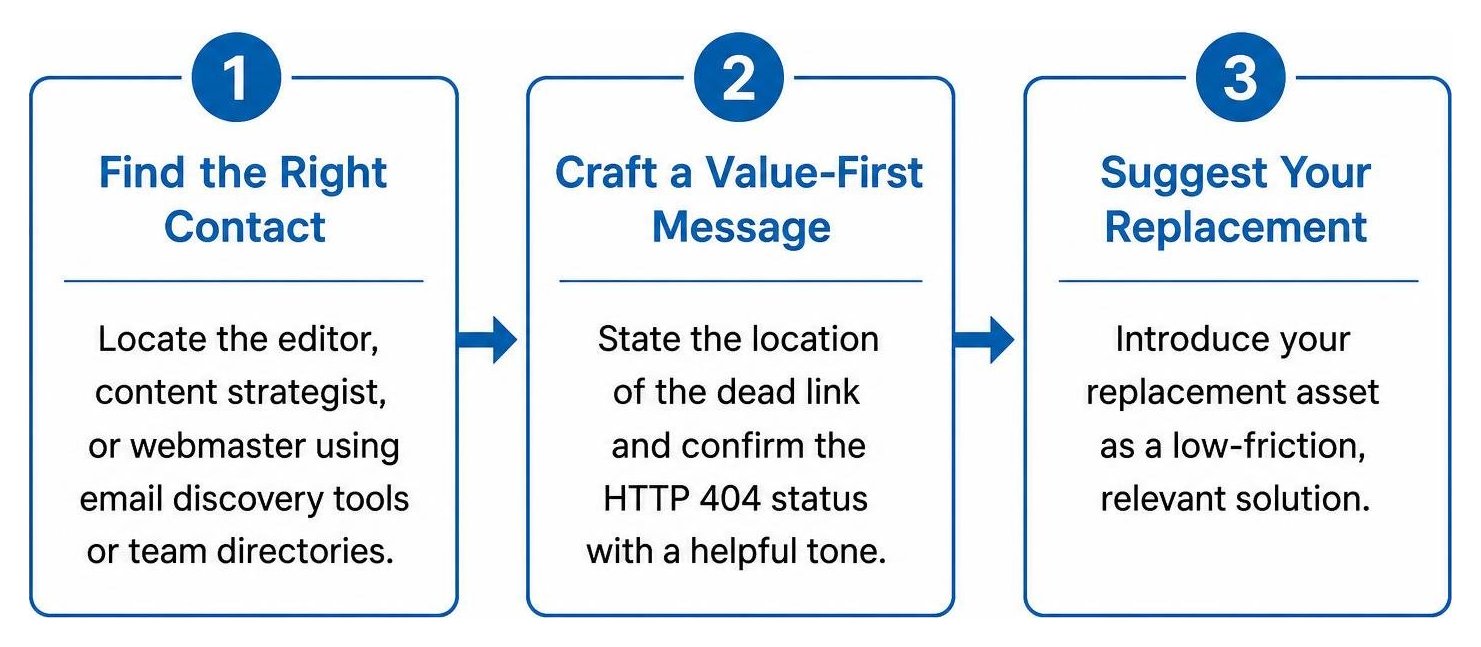
Locate the editor, managing content strategist, or webmaster using email discovery platforms or team directories. Structure your message around a value-first framework:
- Direct Subject Line: Mention the target article name or the exact broken link topic.
- Helpful Tone: State the location of the dead link cleanly and confirm the HTTP 404 status.
- Low-Friction Solution: Introduce your replacement asset without aggressive sales language.
- Editorial Freedom: Leave the decision entirely to their discretion.
For more outreach examples and follow-up templates, review our proven email outreach templates and read the strategic workflows outlined in How To Do Broken Link Building.
How Can You Improve Campaigns and Avoid Common Pitfalls?
To improve campaign efficiency, maintain clean outreach records, personalize communication, and focus on delivering strong replacement content.
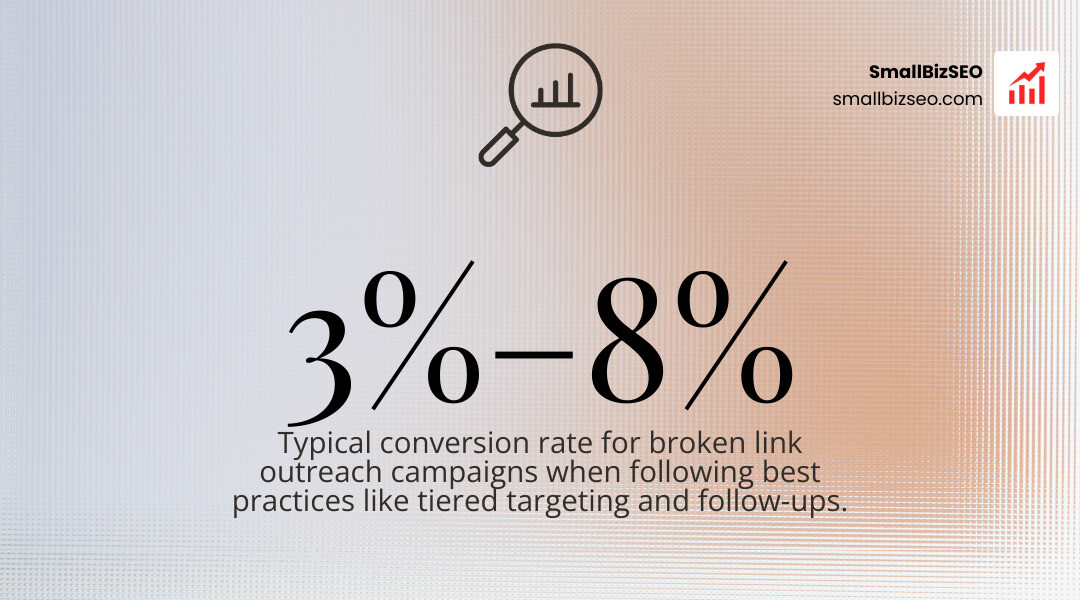
Standard broken link outreach campaigns typically achieve conversion rates between 3% and 8%. You can stay at the higher end of that range by:
- Segmenting targets into specific tiers based on domain authority and customizing your pitch for higher-tier publications.
- Following up once after 4 to 6 business days if an editor has not replied.
- Maintaining an internal database of your prospects to avoid duplicate messages.
If your team lacks the internal capacity to run research and outreach campaigns at scale, our team at SmallBizSEO provides turnkey execution through our professional link building services.
How Can SaaS Brands Scale Broken Link Building?
SaaS companies can scale broken link acquisition by finding defunct competitor tools, discontinued features, and outdated software directories, then offering an active tool or free calculator as a direct replacement.

When a software product shuts down or changes its core URL architecture, hundreds of authoritative resource lists lose their destinations. SaaS brands can capitalize on this by:
- Replicating discontinued interactive tools (such as name generators, price calculators, or diagnostic checkers) that attract natural links.
- Building dedicated competitor comparison and alternative hubs.
- Offering working API documentation or replacement technical guides.
To see how modern software platforms combine these strategies for steady organic growth, read our guide on how SaaS brands crush SEO with high quality links.
What Ethical Guidelines and Common Mistakes Should You Know?
Ethical broken link building centers on genuine utility, honest communication, and respect for editorial independence without deceptive tactics.
- Relevance Mismatches: Pitching a loosely related commercial landing page for a dead informational resource will result in immediate rejection.
- Mass Blasting: Automated shotgun templates with fake personalization harm your brand reputation.
- Ignoring Abandoned Sites: Pitching blogs that have not published updates in multiple years wastes outreach effort.
- Pushy Demands: Insisting on link placement or sending multiple aggressive follow-ups alienates editors.
Next Steps for Your Backlink Strategy
A systematic approach to broken link building turns internet link rot into a reliable source of relevant authority. By identifying real technical issues for editors, building superior content assets, and executing polite outreach, you build sustainable organic search visibility without taking shortcuts.
Start by picking three primary competitor domains, discovering their top 404 pages, and crafting your first high-utility replacement asset. If you need expert help scaling your organic velocity, explore our data-driven growth strategies on the SmallBizSEO home page or schedule an in-depth SEO visibility audit today.