Find Toxic Links and Build Authority Using Modern Backlink Analysis Tools

Find Toxic Links and Build Authority Using Modern Backlink Analysis Tools
Which Backlink Analysis Tool Is Right for Your Site?
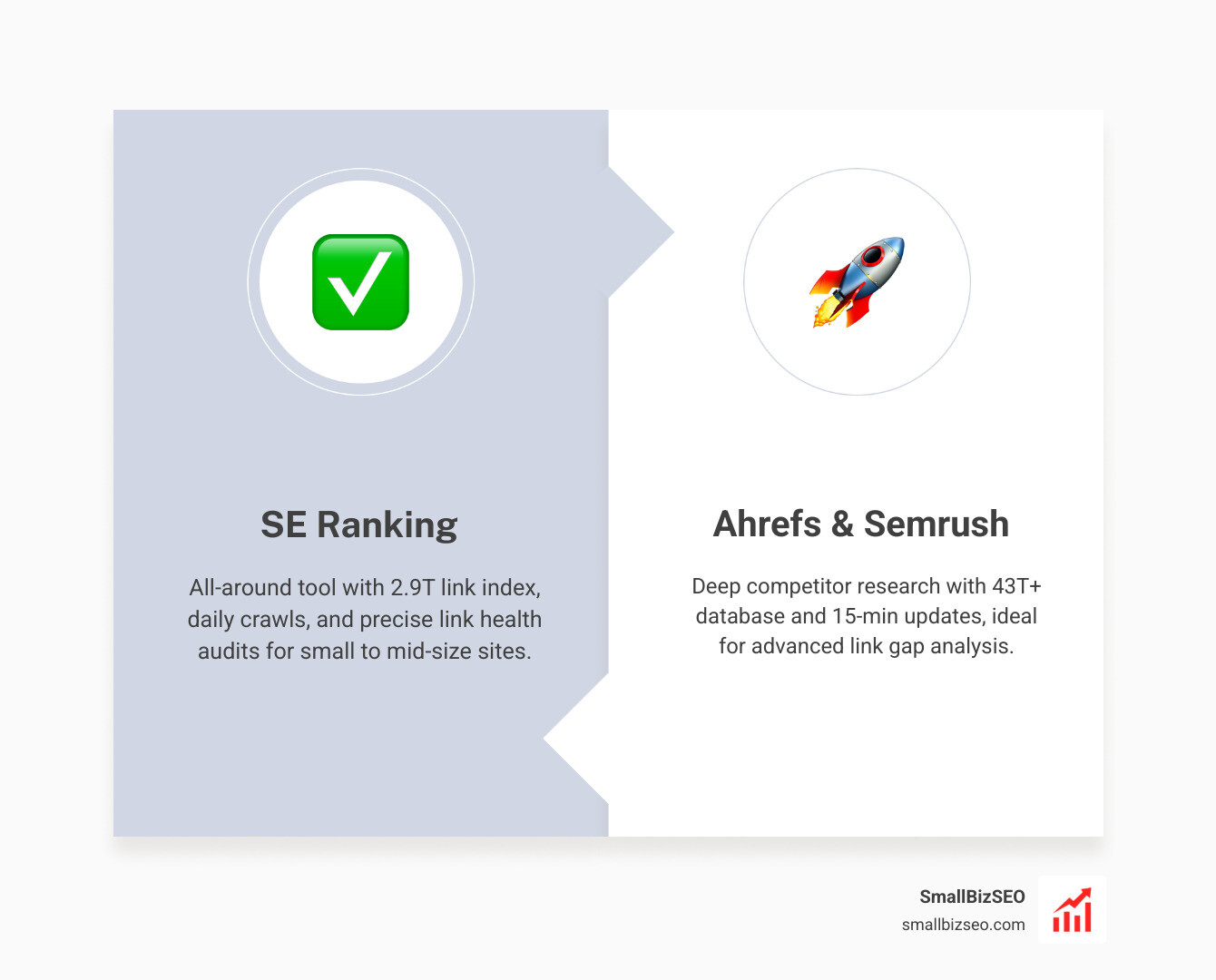
Start with the job you need done. SE Ranking is a strong all-around choice for checking link health and finding gaps. Ahrefs and Semrush offer deep data for competitor research. Majestic is useful for studying link quality and history. Ubersuggest offers a simpler starting point for a quick check.
A backlink analysis tool shows which sites link to yours, which links you may have lost, and where competitors earn coverage. Use it to find relevant sites to approach and broken links to fix. Treat any “toxic” link score as a reason to investigate, not a reason to disavow a link on sight.
I’m Clayton Johnson, founder of SmallBizSEO. My work connects SEO, digital PR, and content to help small businesses earn credible links and make better use of backlink analysis tool data.
Know your backlink analysis tool terms:
Which Backlink Analysis Tool Delivers the Best SEO Insights?
The right backlink checker depends on whether you prioritize index freshness, raw database size, historical link archives, or budget-friendly daily audits. A modern backlink analysis tool crawls millions of web pages every hour to map relationships between domains, evaluate link equity, and assess trust signals that impact your Google search rankings.
Different platforms maintain proprietary web crawlers that discover, store, and score inbound links at various speeds and depths. Here is how the top platforms compare across their technical specifications:
| Platform | Database Size | Refresh Frequency | Primary Strengths |
|---|---|---|---|
| SE Ranking | 2.9T backlinks, 411M referring domains | 58% updated every 90 days; crawls 6B pages daily | Granular toxicity audits, Page Trust scoring, automated reporting |
| Ahrefs | 35T historical backlinks, 285M domains | Index refreshed every 15 minutes | Real-time link discovery, traffic estimations, advanced filters |
| Semrush | 43T backlinks, 390M referring domains | Database refreshed at least hourly | Broad ecosystem integration, Authority Score, link gap analysis |
| Majestic | 4.5T Historic index, 187B+ Fresh URLs | Near real-time Fresh Index; archive spans more than a decade | Trust Flow vs. Citation Flow mapping, topical categorization |
| Ubersuggest | Multi-billion link index | Periodic weekly/monthly updates | Accessible interface, basic link tracking, budget-friendly |
What Features Define the Best Paid and Free Backlink Analysis Tool?
Free checkers provide a rapid snapshot of your top 100 links, referring domain counts, and baseline authority metrics. Paid platforms unlock automated monitoring, historical velocity graphs, deep API access, and bulk export capabilities that let you sort millions of data points by anchor text, link placement, and dofollow status.
When working on evaluating external link equity, free tools often truncate low-tier links or hide toxic patterns. If you need a fast diagnostic to see the backlinks you're missing, a lightweight scanner shows immediate gaps without forcing a subscription.
You should upgrade to a paid subscription when you need to:
- Monitor daily link acquisition and loss across multiple client or competitor sites.
- Export full disavow files containing thousands of flagged URLs.
- Integrate backlink metrics directly into custom reporting dashboards via API.
- Filter referring domains by organic traffic, specific geographic location, and IP subnets.
How Do Top Platforms Compare Across Database Size, Freshness, and Metrics?
Semrush and Ahrefs boast the largest active web indexes, with Semrush tracking over 43 trillion connections and Ahrefs indexing 493 billion pages with updates every 15 minutes. This near-instant discovery makes Ahrefs exceptional for digital PR campaigns where you need to verify new media placements right after publication.
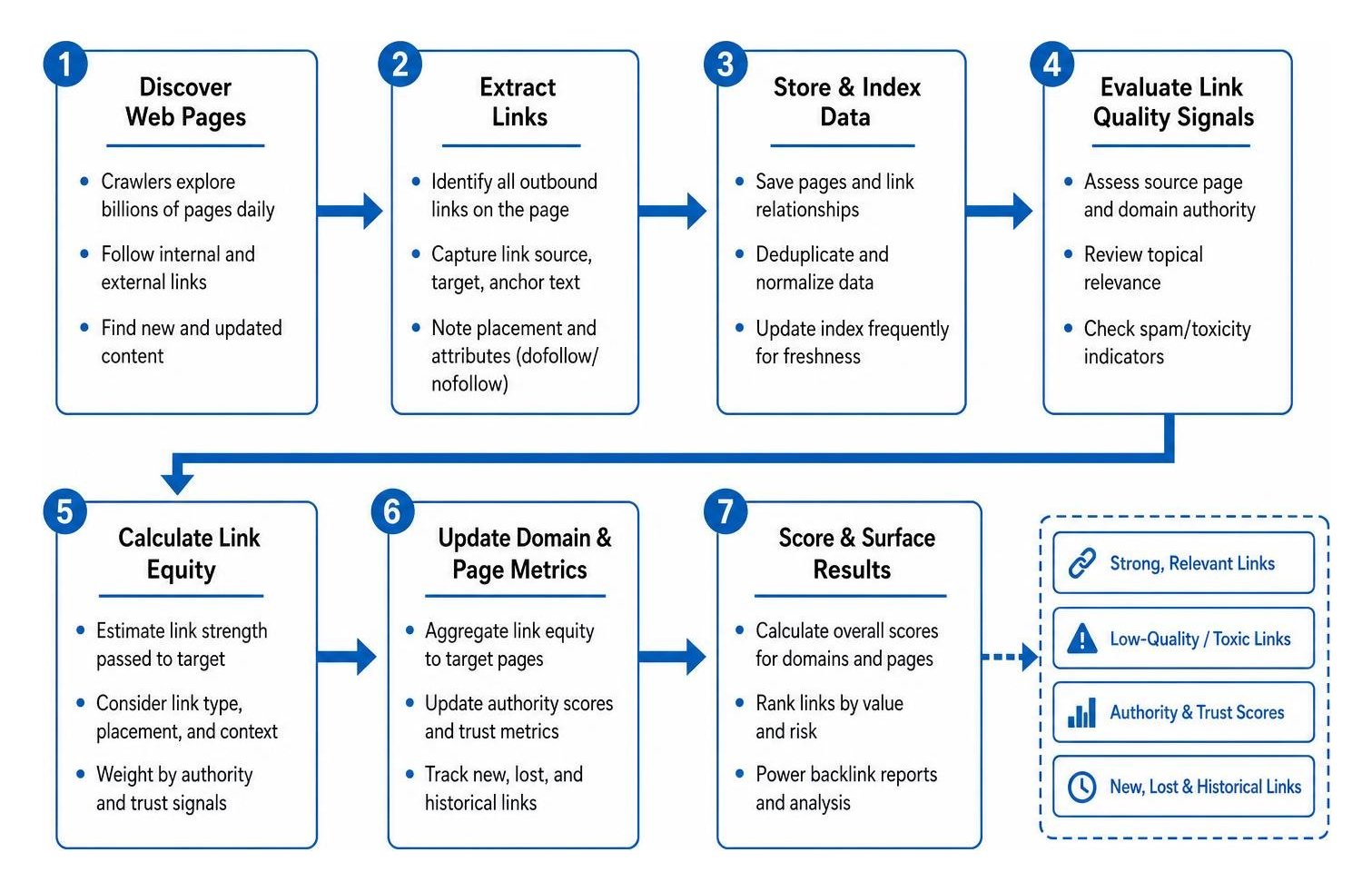
SE Ranking balances scale and data hygiene by indexing 2.9 trillion links across 411 million domains, updating 58% of its index every 90 days while crawling 6 billion pages daily. Meanwhile, Majestic separates its data into a 120-day Fresh Index and a Historic Index spanning more than a decade, giving you an unmatched view of long-term link profiles. Learning how to do a basic backlink analysis on your competitors across these diverse databases helps you uncover outreach opportunities that smaller crawlers miss entirely.
How Do Authority Metrics Like Domain Rating, Authority Score, and Trust Flow Differ?
Proprietary authority scores estimate a domain's ability to pass search equity, but each tool calculates these metrics using different formulas and quality signals:
- Domain Rating (Ahrefs): Evaluates the quantity and quality of unique domains linking to a target site on a logarithmic 0–100 scale, ignoring traffic and link spam filters.
- Authority Score (Semrush): Combines backlink volume, estimated organic search traffic, and natural profile signals while penalizing suspected link manipulation.
- Trust Flow & Citation Flow (Majestic): Trust Flow measures link quality based on proximity to hand-vetted seed sites, while Citation Flow measures raw link volume. A high Citation Flow paired with a low Trust Flow often indicates spam.
- Domain & Page Trust (SE Ranking): Analyzes the trustworthiness of both the domain and individual linking URLs to predict ranking impact.
Applying foundational link auditing principles means reviewing these numbers together rather than relying on a single third-party grade.
How to Use Backlink Data to Eliminate Risk and Boost Rankings
Backlink intelligence allows you to protect your website from negative SEO attacks, clean up spammy footprints, and discover high-authority outreach targets in your industry.
How Can You Audit Your Site with a Backlink Analysis Tool to Remove Toxic Links?
To audit your website, run a full backlink export and filter for risk markers such as over-optimized commercial anchors, link networks from unrelated foreign languages, and automated scraper directories. Tools like SE Ranking calculate a Toxicity Score by flagging unnatural sitewide links, hidden text, and spammy domain extensions.
Conducting a comprehensive off-page SEO audit helps you isolate low-quality inbound links before they harm your organic visibility. While Google's algorithms ignore most passive web spam automatically, manual penalties and algorithmic filters can still occur if manipulative link networks point directly to your commercial service pages. When you identify confirmed spam farms, compile the offending root domains into a standard text file and submit them through Google's Disavow Tool.
How Can You Spy on Competitors to Uncover New Link Building Gaps?
Competitor gap analysis reveals the exact websites that link to multiple industry rivals but have not yet linked to you. Because these referring domains already cover your niche, they represent warm outreach prospects for guest contributions, resource page inclusions, and expert commentary.
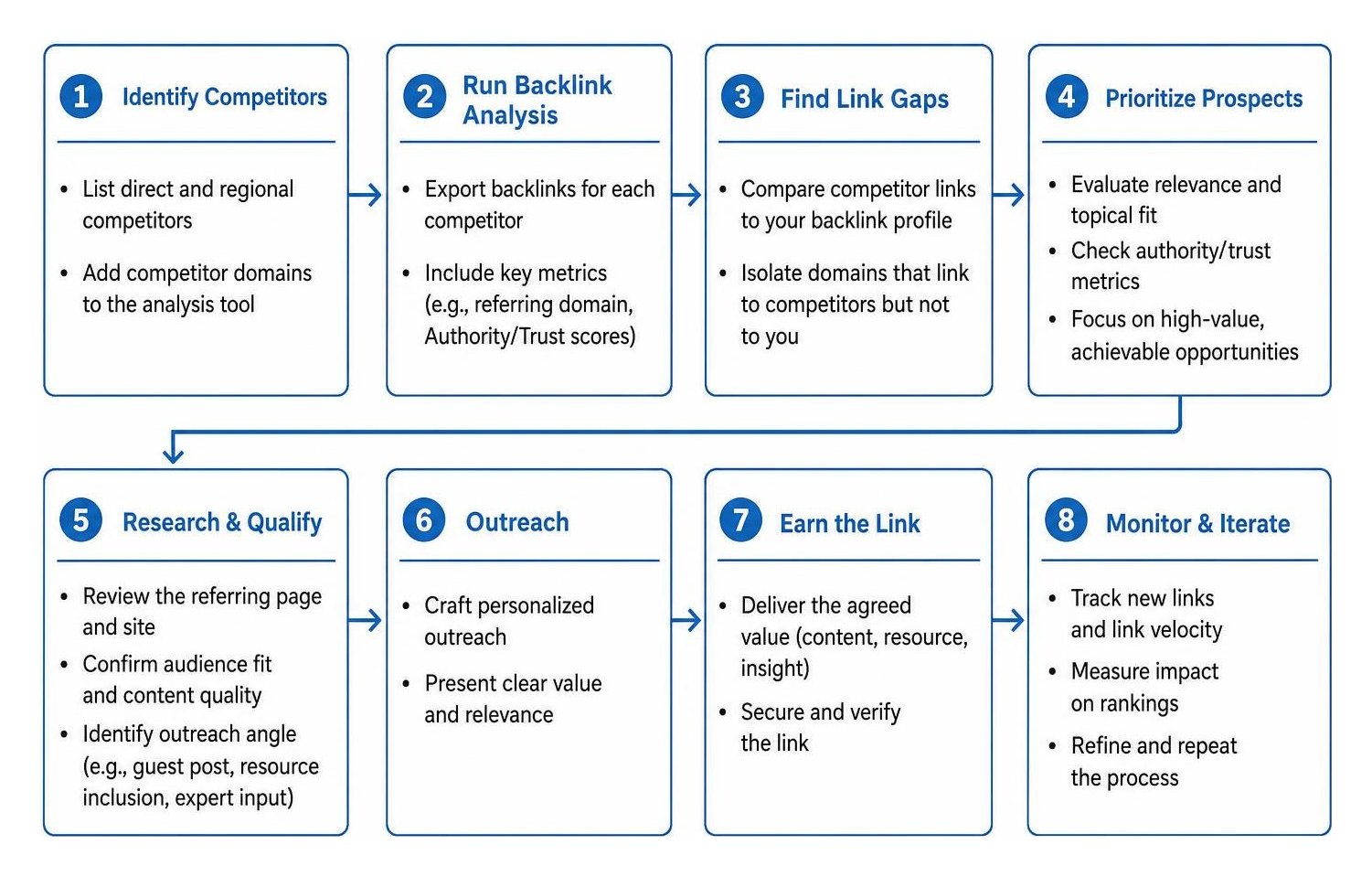
By reverse-engineering competitor link profiles, you can sort rival URLs by total referring domains to see which content formats attract editorial mentions. If a competitor earns links through an industry study or free calculator, you can create a more comprehensive asset to capture similar references. Additionally, auditing regional competitors helps with acquiring authoritative local links from chambers of commerce, business directories, and local media outlets.
How Should You Track Link Velocity and Protect Against Search Penalties?
Link velocity is the rate at which your website gains or loses inbound links over time. A healthy profile displays steady, sustainable growth rather than sudden, artificial spikes that can trigger search engine quality reviews.
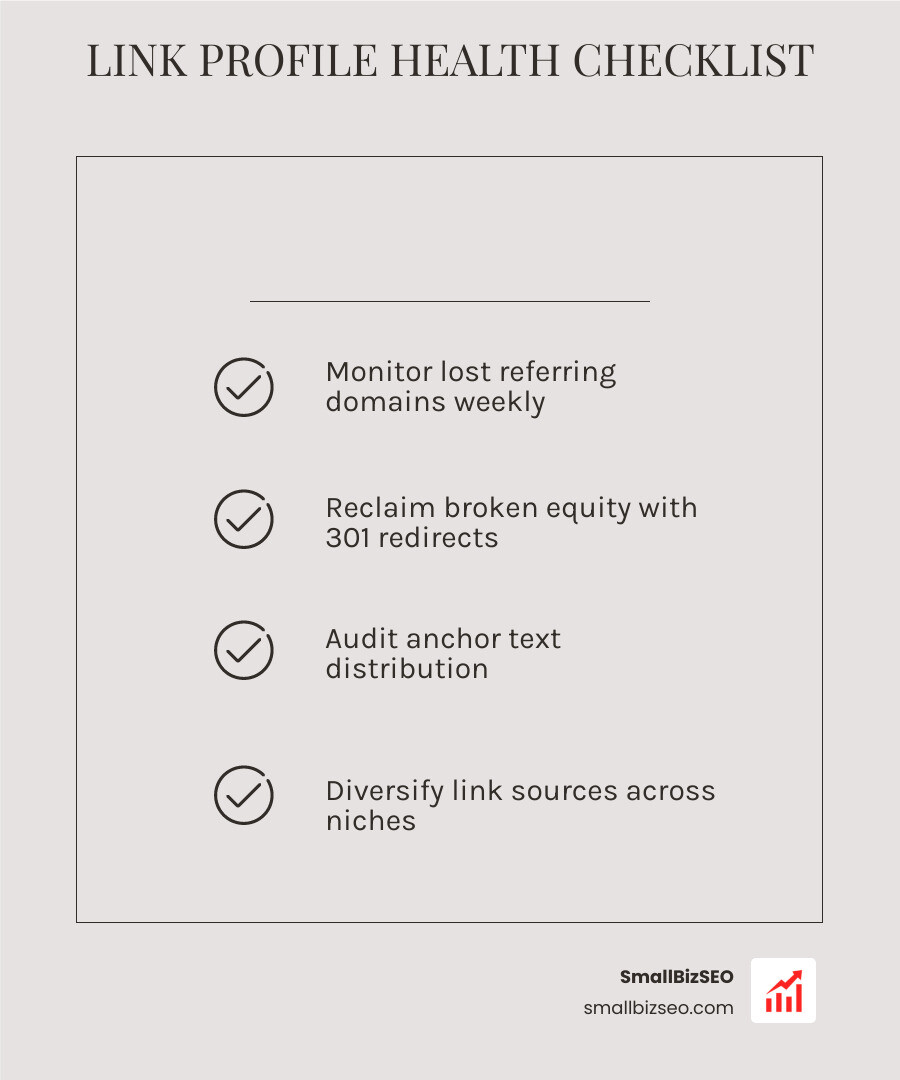
Follow these core steps to maintain your link profile health:
- Monitor Lost Links: Set up weekly alerts for lost referring domains to reclaim dropped editorial links or fix altered URLs.
- Reclaim Broken Equity: Identify external links pointing to 404 error pages on your site and implement 301 redirects to the most relevant live URLs.
- Audit Anchor Text Distribution: Ensure branded and generic anchors make up the vast majority of your profile to avoid over-optimization penalties.
- Diversify Link Sources: Balance your inbound equity across industry publications, editorial blogs, partner mentions, and authoritative directories.
At SmallBizSEO, our data-driven Velocity framework pairs continuous link health monitoring with custom link building services for businesses to build natural, high-authority backlink profiles that drive lasting search visibility.
Power Up Your Link Strategy with Smarter Data
Relying on guesswork for link building leaves your site vulnerable to hidden technical errors and wasted outreach effort. Modern backlink analysis tools turn complex web crawler data into straightforward action steps—helping you clean up toxic link equity, monitor search competitors, and capture valuable editorial placements.
Whether you start with a quick audit in SE Ranking or dive into deep competitor profiles using Semrush and Ahrefs, the secret to higher authority is consistency. Regularly check your link velocity, reclaim broken references, and focus your creative energy on earning natural mentions from reputable domains in your space.