6 Practical Steps to Modernize SEO for Auto Dealers This Year

6 Practical Steps to Modernize SEO for Auto Dealers This Year
How can auto dealers improve local SEO?
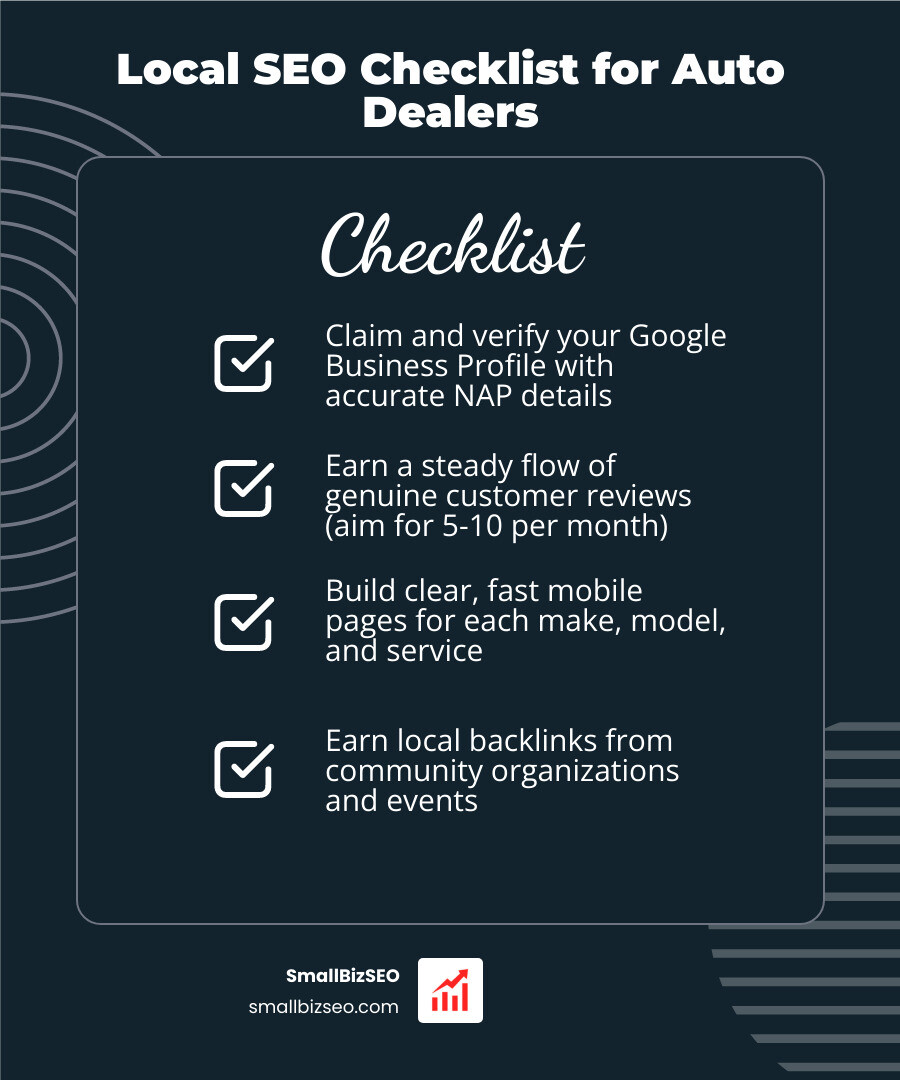
To rank locally, start with an accurate Google Business Profile and a steady flow of genuine reviews. Then give buyers clear pages for the vehicles, financing options, and services they search for. Make inventory pages fast and easy to use on a phone, earn links from relevant local organizations, and track calls and forms through your CRM. Focus on qualified leads, not rankings alone.
I'm Clayton Johnson, founder of SmallBizSEO. My work in search visibility, content, and digital PR shapes this guide to SEO for auto dealers, starting with six steps a busy dealership can put to work.
SEO for auto dealers terms explained:
Modern Playbook: 6 Core Steps of SEO for Auto Dealers
Modern automotive search marketing requires matching specific search intent to high-converting landing pages rather than relying solely on third-party listing platforms. Today, 92% of car buyers research online before visiting a showroom, and 41% purchase after visiting only a single dealership in person.
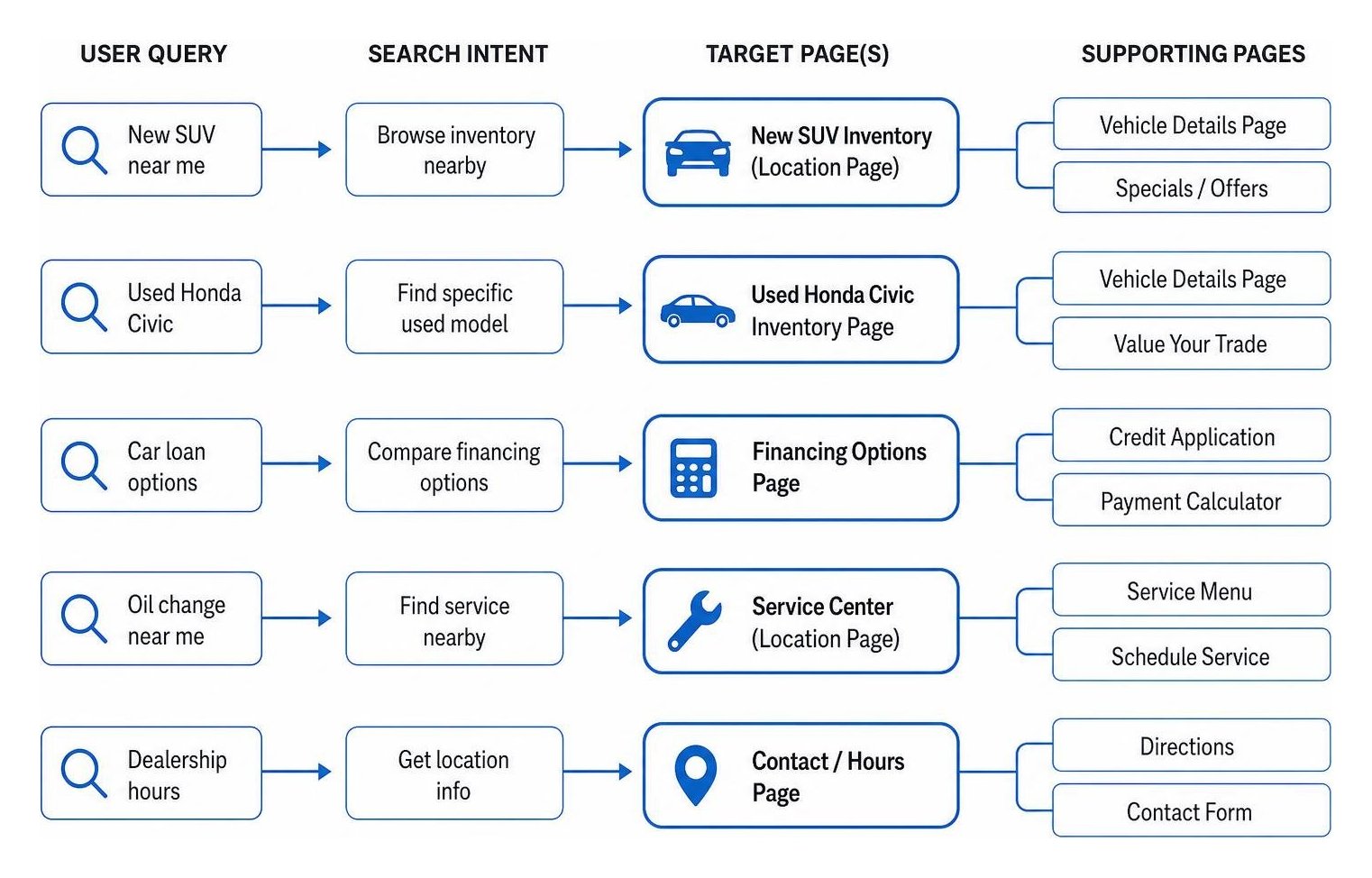
Winning that single showroom visit means capturing buyers across every phase of their journey. While branded searches drive 80% to 90% of direct website visits, non-branded local and model searches capture in-market shoppers before they settle on a specific store. Implementing structured automotive SEO guidelines ensures your digital showroom captures both commercial and transactional intent effectively.
What Is Local SEO for Auto Dealers and How Do You Dominate the Map Pack?
Local SEO for car dealerships is the process of optimizing your digital footprint so your lot appears in Google's Map Pack and localized organic search results when nearby shoppers search for vehicles or repairs. Because the Map Pack sits at the very top of local search results, winning these spots directly drives showroom foot traffic and phone inquiries.
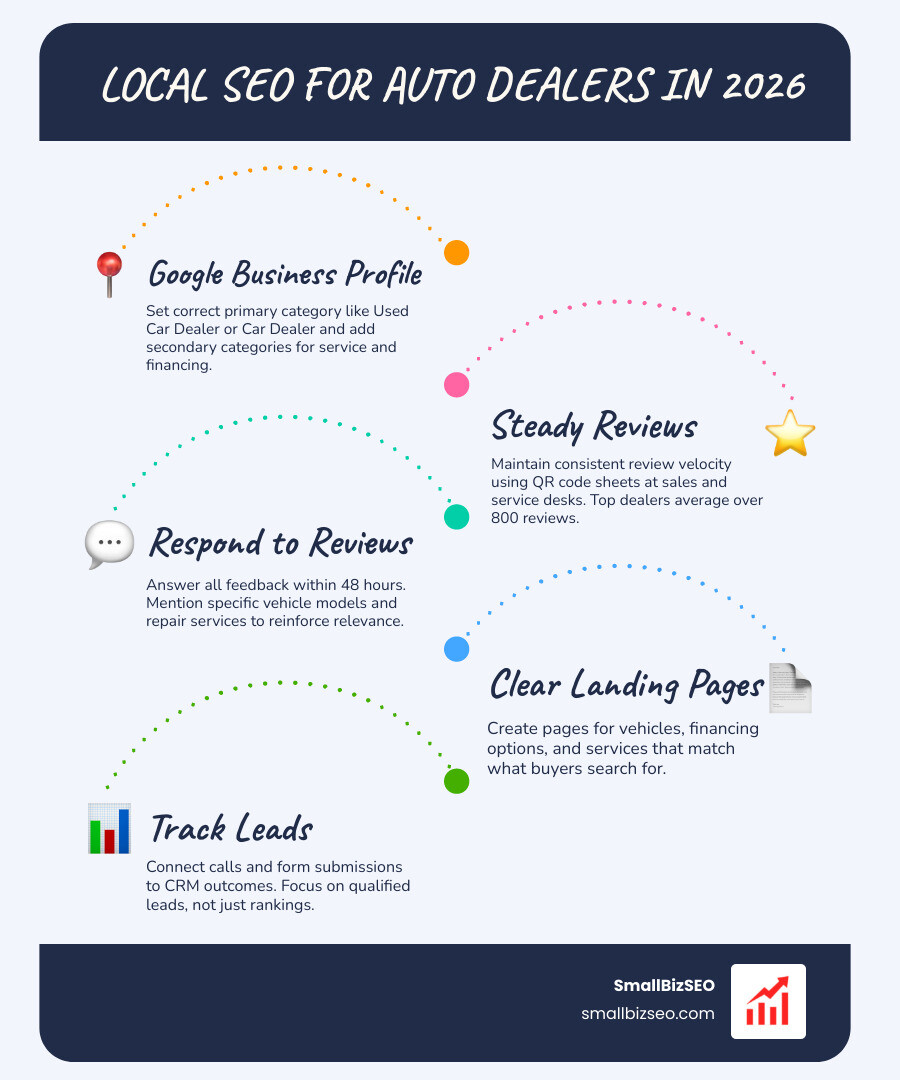
To dominate the Map Pack, implement these foundational practices:
- Select the Correct Primary Category: Set your Google Business Profile (GBP) primary category to reflect your core business (e.g., Used Car Dealer or Car Dealer), and add accurate secondary categories like Auto Repair Shop or Car Financing and Loan Service.
- Maintain Steady Review Velocity: Google favors active, highly rated profiles. Top-ranking dealership profiles average over 800 reviews. Instead of gathering reviews in sporadic bursts, implement a consistent checkout process using printed QR code review sheets at the sales and service desks.
- Respond to Every Review: Thoughtfully answer all feedback within 48 hours. Mention specific vehicle models and repair services naturally in your responses to reinforce topical relevance.
- Ensure NAP Consistency Across Citations: Align your Name, Address, and Phone number across every major automotive directory and mapping platform. Conflicting directory listings create confusion for search engines and dilute local ranking authority.
For a deeper dive into optimizing your digital map presence, explore our comprehensive local SEO guide.
How Should Dealerships Optimize Inventory, Model Pages, and Site Structure?
Dealership websites frequently struggle with dynamic inventory turnover. The solution is creating durable landing pages that target broader search categories and permanently host dynamic vehicle listings.

Structure your website with dedicated pages for specific vehicle types and buyer situations:
- Body-Style Pages Outperform Generic Category Pages: Build dedicated landing pages for high-demand body styles (such as used trucks, third-row SUVs, or hybrid sedans). These pages stay live permanently, embedding live inventory widgets that update automatically as vehicles are bought and sold.
- Target Financing and Credit Intent: Financing queries generate substantial search volume. Roughly half of non-branded dealer clicks come from financing, bad-credit auto loans, and buy-here-pay-here searches. Create dedicated finance resource pages with payment calculators, pre-approval forms, and clear explanations of available lending programs.
- Write Helpful Model Research Pages: Provide unique insights on vehicle trim levels, cargo dimensions, towing capacities, and fuel efficiency rather than copying generic manufacturer spec sheets.
How Does Dual Intent Optimization Work for Sales and Fixed-Ops Service Departments?
A car dealership operates two distinct business models under one roof: vehicle sales and fixed-operations service departments. Sales shoppers search for inventory and financing, whereas service customers look for emergency repairs, scheduled maintenance, and diagnostic help.
Treating sales and service as separate entities prevents keyword cannibalization and expands your overall local search presence.
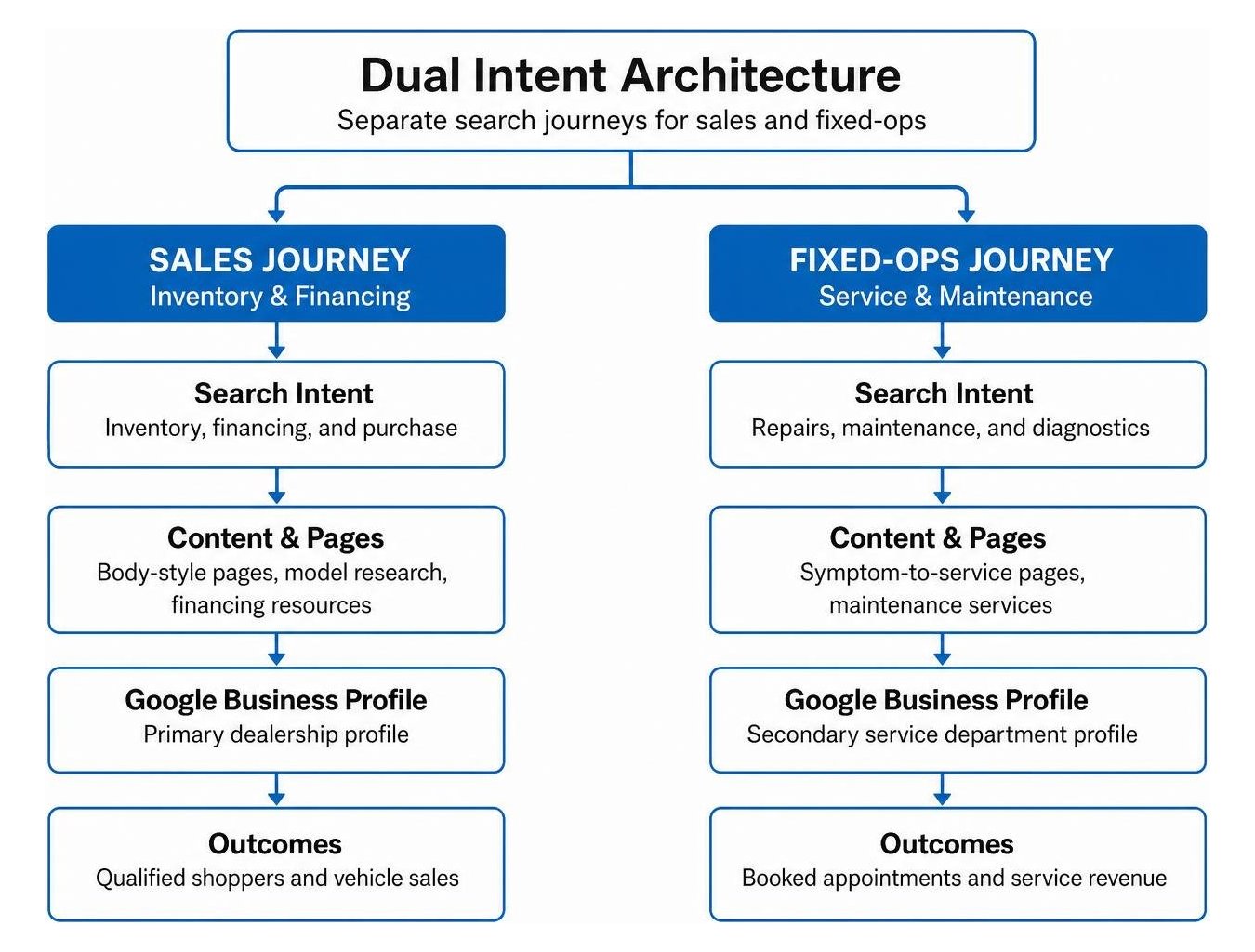
- Set Up Nested Google Business Profiles: Where eligible, create a dedicated secondary GBP for your service department (e.g., [Dealership Name] Service Center). This allows your service bays to rank for queries like oil change near me or brake replacement without diluting your primary sales profile.
- Build Symptom-to-Service Landing Pages: Routine car owners rarely search by part numbers; they search for warning signs. Create dedicated pages targeting problems such as squeaking brakes, check engine light diagnostics, and transmission fluid flush.
- Incorporate Direct Booking Schema: Add appointment scheduling links and click-to-call buttons directly on every service page to turn mobile visitors into confirmed service appointments.
To learn more about capturing fixed-ops search demand, check out our guide to targeted auto repair search optimization.
What Technical SEO and AI Search Best Practices Matter for Vehicle Detail Pages?
Vehicle Detail Pages (VDPs) showcase specific inventory items and require robust technical optimization to ensure crawlability, fast mobile performance, and visibility across generative AI engines.
| Feature | Standard Dealership Schema | Advanced Automotive Structured Data |
|---|---|---|
| Primary Type | LocalBusiness or AutoDealer |
Car nested inside AutoDealer and Product |
| Inventory Attributes | Basic title and URL | vin, itemCondition, mileageFromOdometer, vehicleEngine |
| Pricing & Availability | Static text price | priceCurrency, price, availability (InStock / Sold) |
| Service Integration | Generic contact page link | AutoRepair with specific service catalog offerings |
To maximize technical performance and prepare for AI Overviews and answer engines:
- Implement Valid JSON-LD Structured Data: Add structured data to every VDP, clearly defining the VIN, mileage, price, fuel type, and availability. While structured data helps search engines interpret inventory data accurately, it does not guarantee rich snippet display.
- Manage Sold Stock with Permanent Redirects: Avoid deleting sold inventory pages or letting them turn into 404 errors. Use 301 redirects to send visitors and search engines to the most relevant active body-style or model category page.
- Control Faceted Navigation Crawling: Filter and sorting parameters (such as price high-to-low or exterior color) can create thousands of duplicate URLs. Apply canonical tags to primary search result pages and use robots meta directives to prevent index bloat.
- Optimize for Generative Engine Optimization (GEO): AI search tools look for structured, factual information. Add concise FAQ modules answering common ownership questions and ensure your core dealership details are easily accessible across the site.
How Can Dealerships Build Local Backlinks, Real Reviews, and Community Authority?
Search engines evaluate your dealership's authority based on real-world community relationships and prominent local digital mentions. A handful of relevant, local backlinks outweighs hundreds of generic directory links.
To build meaningful digital authority:
- Sponsor Local Organizations and Events: Support youth sports leagues, charity drives, high school athletic programs, and civic festivals. Local sponsorships frequently earn high-quality backlinks from reputable community domains.
- Publish Regional Auto Guides: Create content highlighting local driving conditions, winter preparation tips for regional roads, or recommended scenic driving routes.
- Collaborate on Local Digital PR: Partner with community organizations for charity vehicle donations or seasonal car-seat safety checks, distributing press releases to local news outlets.
For advanced link acquisition tactics tailored to automotive retailers, consult proven link building strategies.
What Are the Costs, Timelines, and Avoidable Mistakes in SEO for Auto Dealers?
Automotive search optimization requires a consistent, compounding effort rather than a one-time setup. Understanding standard industry pricing and realistic timelines prevents costly mistakes.
| Dealership Type | Monthly Investment Range | Primary SEO Focus Areas | Typical Timeframe to Impact |
|---|---|---|---|
| Independent Lot | $1,500 – $2,500 / month | Local map visibility, finance pages, body-style pages | 60 to 90 days for local pack; 4 to 6 months for competitive keywords |
| Franchise Dealership | $3,000 – $6,500 / month | Dual-intent fixed-ops, model research hubs, technical crawl management | 90 days for initial gains; 6 to 12 months for organic velocity |
| Multi-Rooftop Group | Custom Retainer | Enterprise architecture, location page authority, cross-store governance | 6 to 12+ months across all rooftops |
Avoid these common automotive SEO pitfalls:
- Copying Manufacturer Copy: Syndicating standard OEM vehicle descriptions across every page causes duplicate content issues. Write unique, localized descriptions for featured inventory.
- Keyword Stuffing: Avoid repeating city names and phrases unnaturally across your footer and headers. Write helpful, natural content tailored to real shoppers.
- Treating SEO as a One-Time Project: Inventory churns daily and search algorithms update constantly. Sustainable growth requires ongoing technical maintenance and content updates.
If you are evaluating outside expertise, explore our dedicated professional car dealer SEO company support.
Measuring Dealership ROI, Attribution, and Next Steps
To accurately assess your SEO program, move beyond tracking superficial keyword positions and measure qualified business outcomes that drive showroom sales.
Track these critical key performance indicators:
- Organic VDP Views: Monitor growth in organic sessions landing directly on Vehicle Detail Pages and body-style hubs.
- Dynamic Call Tracking: Use dynamic number insertion to track calls originating from organic search and Google Business Profiles, recording conversions directly within your CRM.
- Lead Form and Test-Drive Submissions: Measure completed trade-in evaluations, finance applications, and scheduled service appointments generated by organic visitors.
- Showroom Visit Attribution: Connect CRM sales records back to organic discovery touchpoints to determine true customer acquisition costs.
Our data-driven Velocity framework focuses on technical integrity, high-intent landing pages, and transparent lead attribution to generate sustainable organic revenue. To evaluate your site's current search performance and identify immediate growth opportunities, request a comprehensive SEO visibility audit today.