Multi-Location SEO Strategy
Multi-Location SEO Strategy
How Do You Build a Multi-Location SEO Strategy?
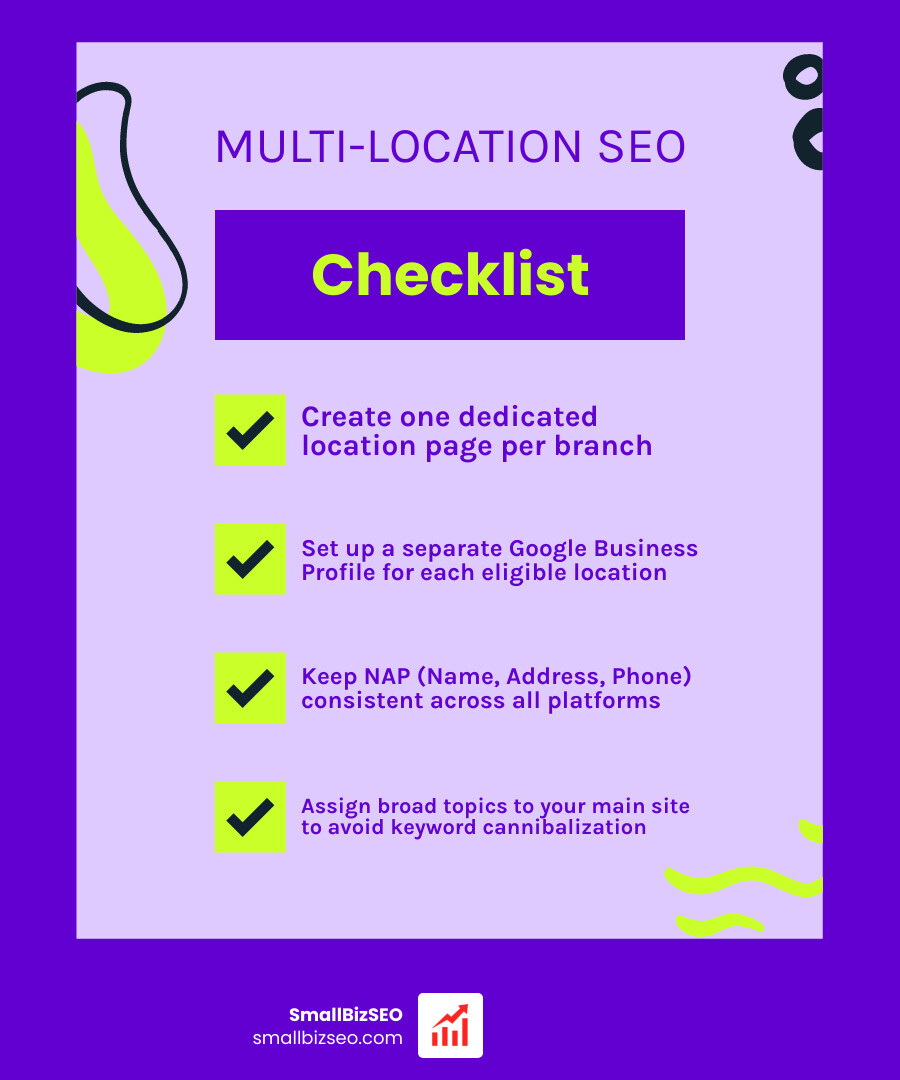
A multi location SEO strategy helps each branch show up for nearby customers without making your own pages compete. Start with one useful page and one accurate Google Business Profile for each eligible location. Give each page real local details, keep addresses and hours current, and assign broad topics to your main site so branches do not publish the same advice over and over.
The hard part is keeping that work consistent as you grow. Clear ownership, a shared location record, and regular checks of pages, listings, and reviews make the strategy easier to manage.
I’m Clayton Johnson, founder of SmallBizSEO. My experience building SEO content and practical search frameworks shapes how I approach a multi location SEO strategy: give each branch a clear purpose while keeping the brand’s information trustworthy.
Building a Scalable Multi Location SEO Strategy for Modern Search
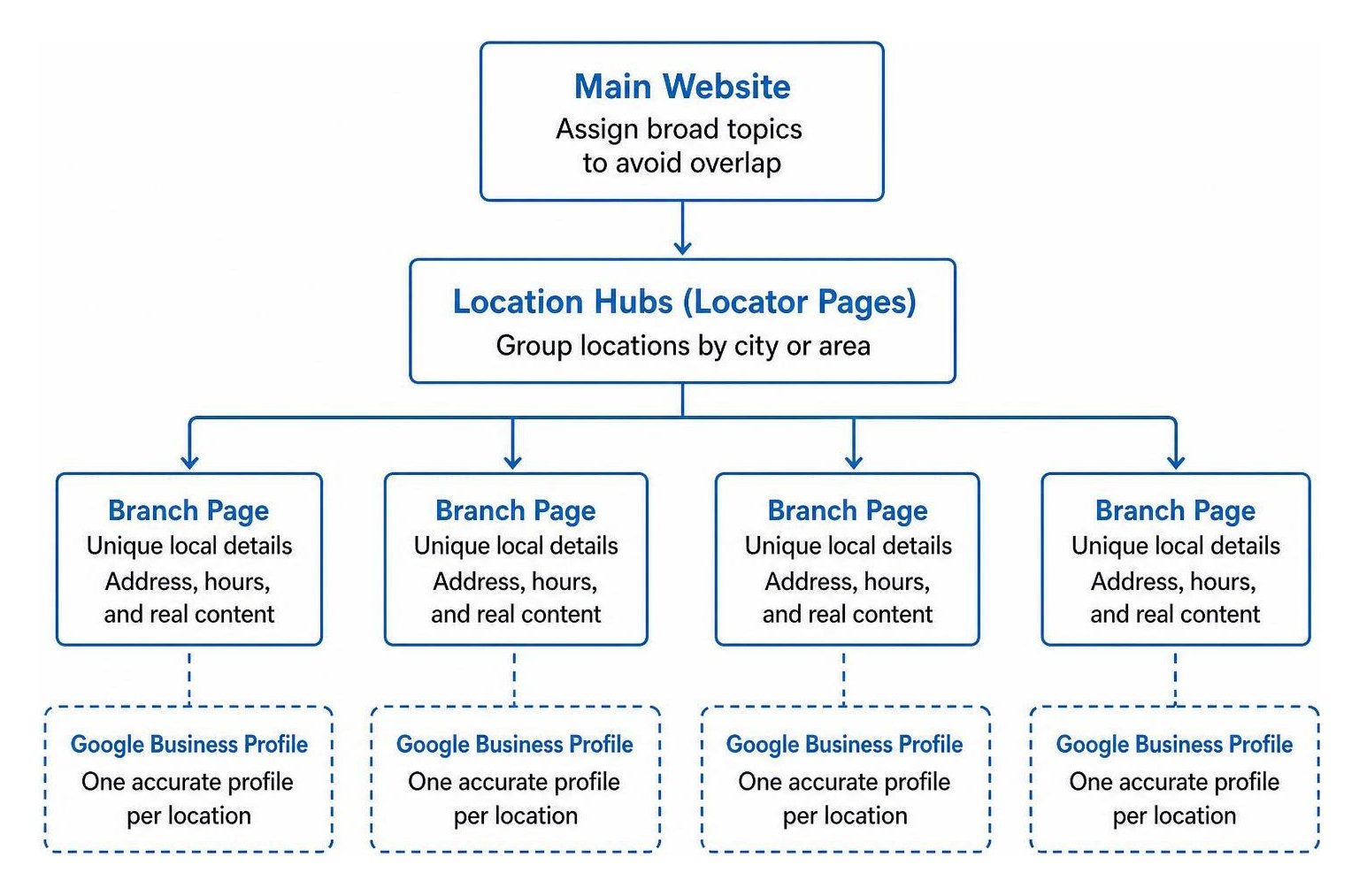
Modern search engines evaluate multiple locations through an entity-matching model built around relevance, distance, and prominence. To build sustainable organic traffic across dozens or hundreds of branches, you must design a structured, hub-and-spoke site architecture that consolidates domain authority while giving each storefront distinct local signals.
Executing a structured multi-location search playbook for expanding brands and franchises ensures every branch ranks for its neighborhood queries without cluttering search index crawls. Partnering with an experienced enterprise local SEO company allows growing teams to align technical architectures and avoid common pitfalls. Without clear architectural rules, brand branches inevitably cannibalize each other's rankings.
What URL Structure Best Prevents Crawl Bloat and Diluted Authority?
Subfolder structures (e.g., brand.com/locations/city-name/) provide the strongest SEO foundation for managing multiple branches. Subfolders concentrate domain authority, backlinks, and crawl equity into a single domain rather than fragmenting trust across separate properties.
| Structure Option | Authority Consolidation | Technical Maintenance | Risk of Crawl Bloat | Best Use Case |
|---|---|---|---|---|
Subfolders (/locations/city/) |
High (shared across root domain) | Low (centralized updates) | Low (with clean sitemaps) | Recommended for 99% of multi-location brands |
Subdomains (city.brand.com) |
Low to Moderate (treated as separate entities) | High (individual server configs) | Moderate | Distinct business divisions or separate regional systems |
Separate Domains (brand-city.com) |
None (isolated backlink profiles) | Very High (individual CMS instances) | High | Separate brand entities or independently owned franchises |
Using subfolders ensures that high-authority links earned by your corporate content directly power your localized landing pages.
How Do You Scale Unique Location Pages Without Creating Doorway Pages?
To scale branch pages without triggering algorithmic doorway page penalties, combine a standardized layout with dynamically injected, unique local proof. Search engines penalize thin template pages where only the city name is swapped out.
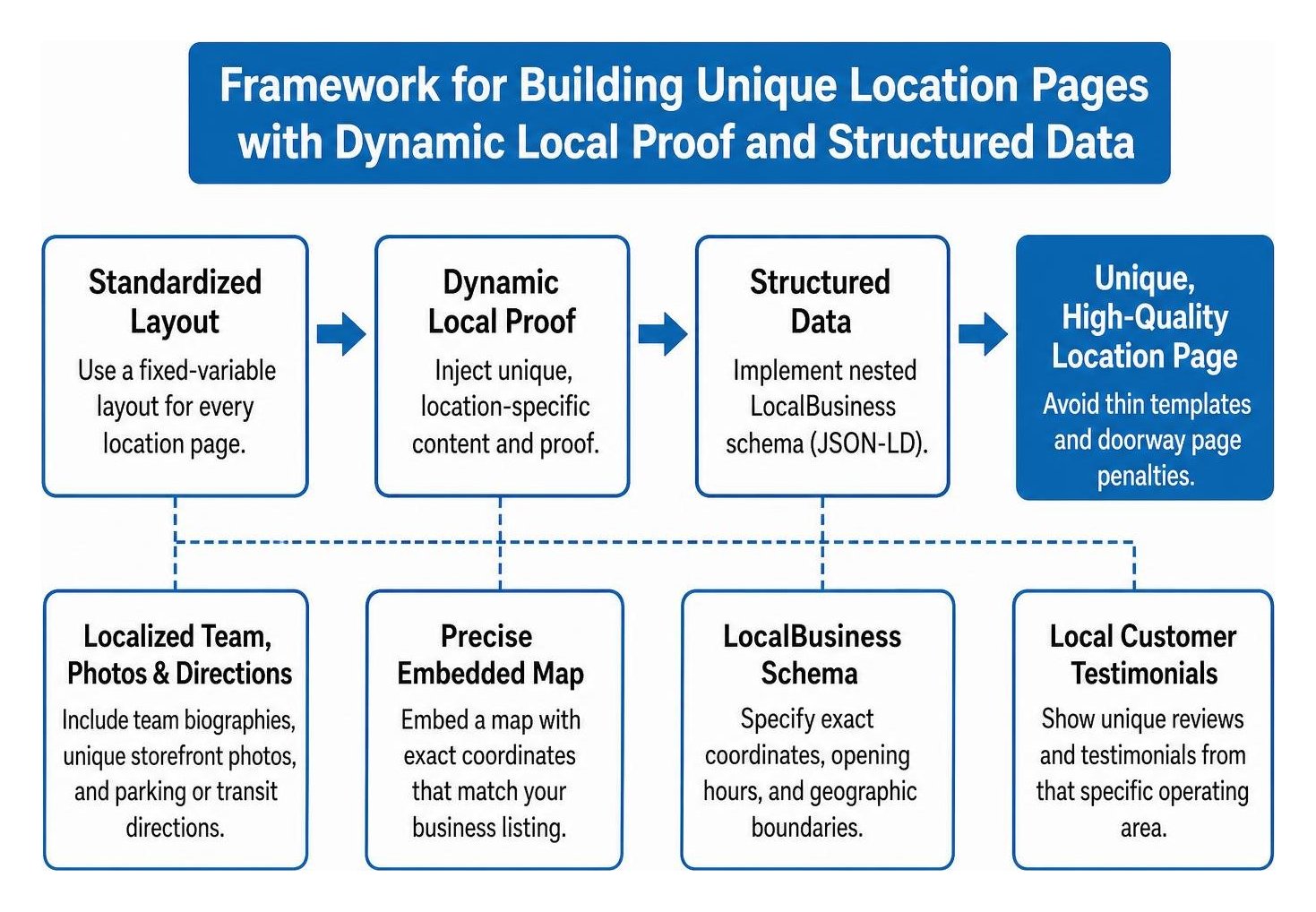
Every branch page must feature:
- A fixed-variable layout containing localized team biographies, unique photos of the storefront, and parking or transit directions.
- Embedded maps matching the exact coordinates of your listing.
- Properly nested
LocalBusinessschema using JSON-LD, specifying exact coordinates, opening hours, and geographic boundaries. - Unique customer testimonials from that specific operating area.
Following the ultimate guide to local search optimization basics will help you establish these on-page fundamentals, while understanding NAP consistency ensures your name, address, and phone number match across all digital assets.
How Should Brands Balance Corporate and Local Content in a Multi Location SEO Strategy?
Corporate teams must own broad, educational, evergreen authority content, while local branch teams focus entirely on neighborhood-specific proof and customer engagement.
For guidance on coordinating location pages, listings and measurement, see our multi-location search playbook.
- Corporate Responsibilities: Core service overviews, brand-wide educational articles, site architecture, structured data governance, and master keyword mapping.
- Local Branch Responsibilities: Local community sponsorships, neighborhood FAQs, store hours, local customer project photos, and staff spotlights.
Clear content ownership rules are essential for maintaining brand coherence across large multi-unit networks.
Optimizing Map Packs, AI Search, and Long-Term Performance
Achieving high visibility in the Local Map Pack and AI-driven search experiences requires ongoing data management, prompt review generation, and active profile engagement.

What Google Business Profile and NAP Management Steps Drive Local Pack Prominence?
Securing top rankings in Google's Local 3-Pack requires verified individual profiles with complete, accurate attributes and pristine NAP data across major directories.
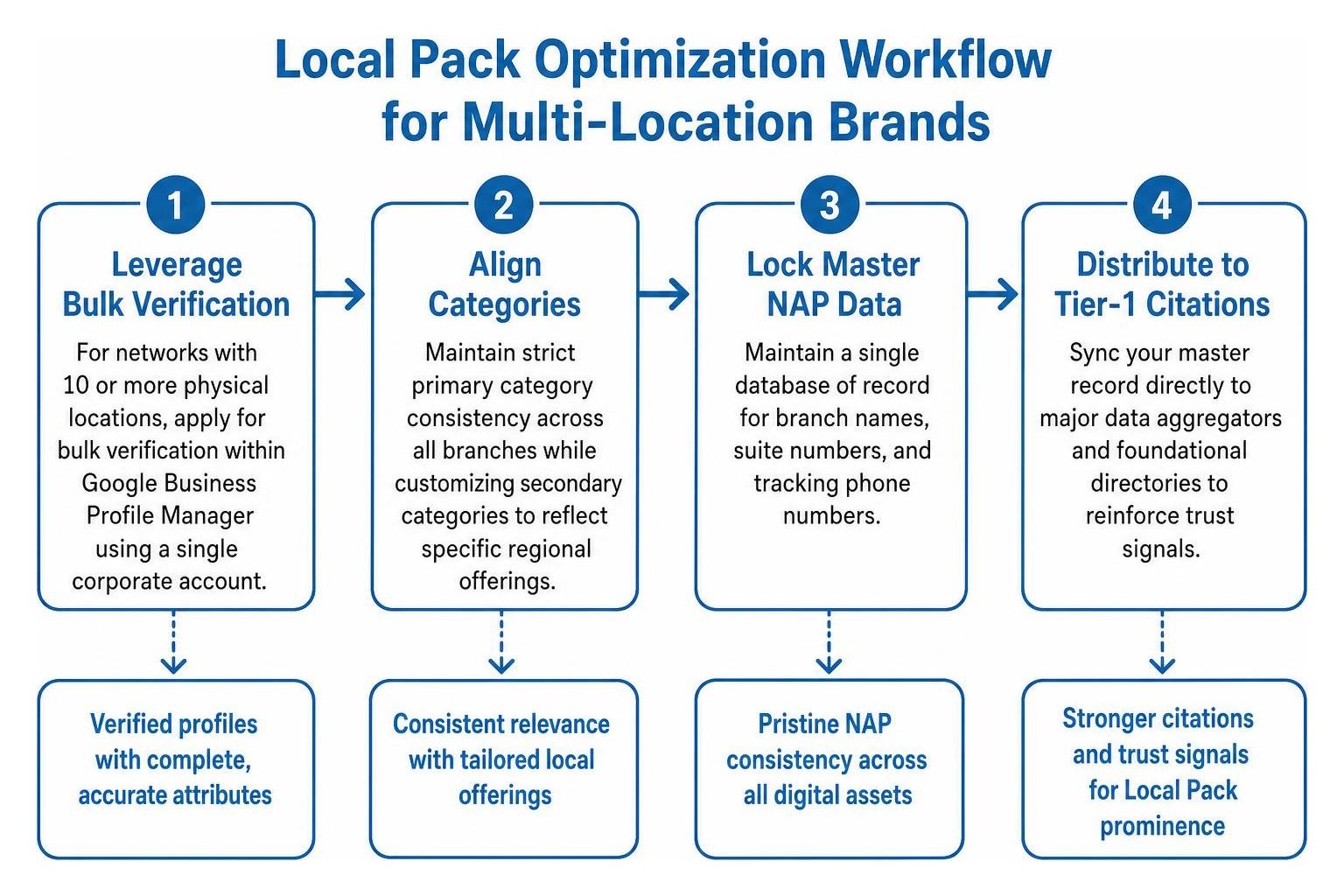
- Leverage Bulk Verification: For networks with 10 or more physical locations, apply for bulk verification within Google Business Profile Manager using a single corporate account.
- Align Categories: Maintain strict primary category consistency across all branches while customizing secondary categories to reflect specific regional offerings.
- Lock Master NAP Data: Maintain a single database of record for branch names, suite numbers, and tracking phone numbers.
- Distribute to Tier-1 Citations: Sync your master record directly to major data aggregators and foundational directories to reinforce trust signals.
For practical guidance on Google Business Profile details, reviews and location-based tracking, see our guide to local SEO map visibility.
How Do Reviews and AI Search Reshape Your Multi Location SEO Strategy?
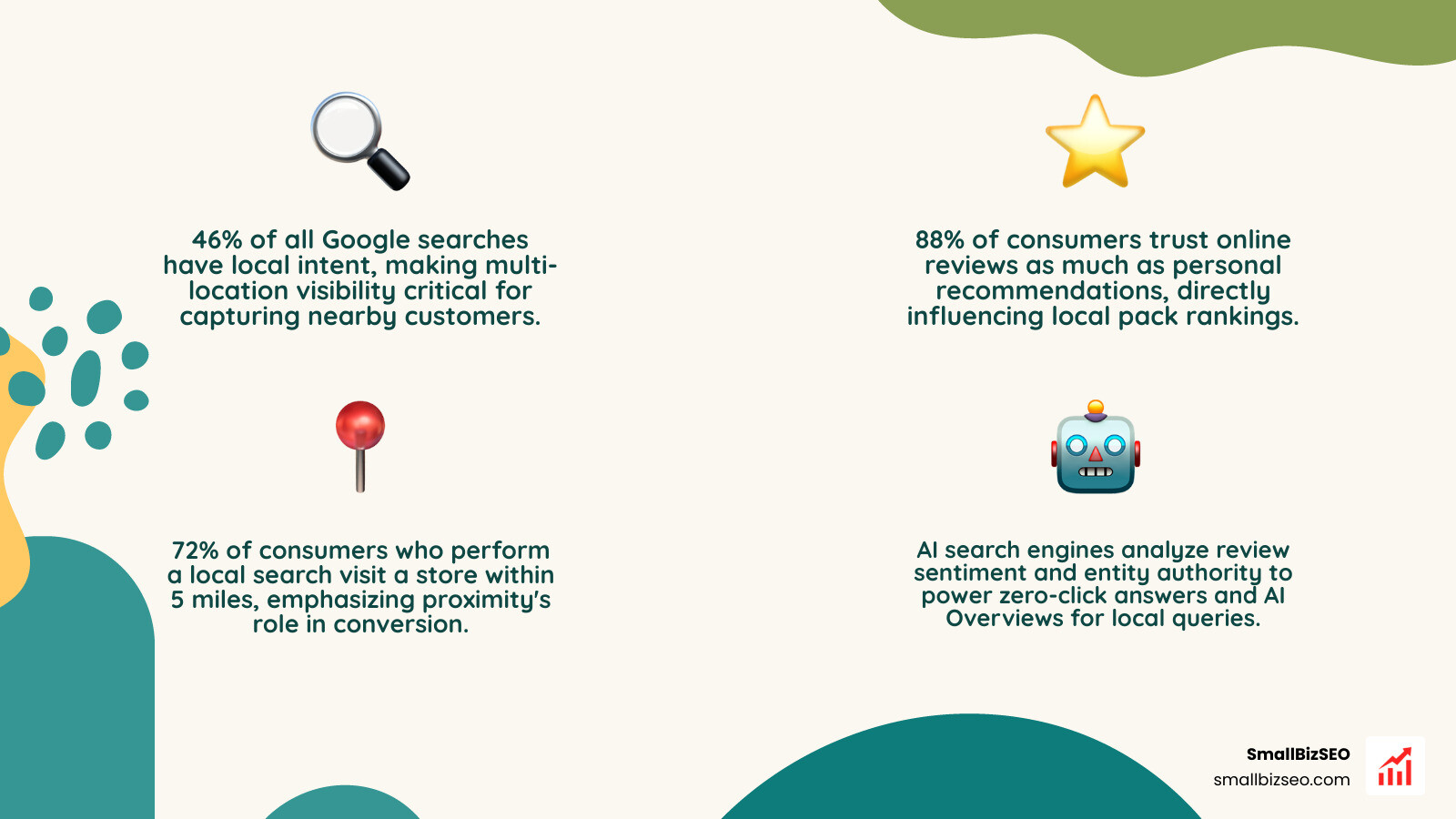
Modern AI search engines and AI Overviews evaluate unstructured review text to answer natural language queries. Steady review velocity, positive customer sentiment, and substantive owner responses provide the entity authority needed to appear in zero-click and AI-generated answers.
Review generation should be an ongoing, automated process:
- Direct customers to branch-specific review links via point-of-sale QR codes or automated post-service messages.
- Respond to both positive and negative reviews within 48 hours, mentioning specific services and location contexts naturally.
- Avoid common local SEO mistakes like review gating or collecting reviews in sporadic bursts.
Consistent profile activity, clean structured data, and authentic customer feedback establish the prominence required for multi-branch brands to dominate modern search.
Supercharge Your Multi-Branch Search Visibility
Scaling an organic search footprint across multiple locations requires clear technical architecture, unified data governance, and consistent local engagement. By consolidating domain authority through clean subfolders, providing genuinely differentiated location content, and actively managing branch profiles, multi-unit brands build lasting prominence across traditional and AI-driven search results.
At SmallBizSEO, we implement our data-driven "Velocity" framework to help multi-unit businesses scale local rankings, resolve structural conflicts, and drive measurable in-store traffic through transparent, automated systems.
Ready to dominate local search across all your operating markets? Get an actionable roadmap tailored to your footprint by booking a comprehensive SEO visibility audit today.