Multi-Location Search Playbook for Expanding Brands and Franchises

Multi-Location Search Playbook for Expanding Brands and Franchises
How do you build an SEO strategy for multiple locations?
An SEO strategy for multiple locations starts with a clear page and Google Business Profile for each eligible branch. Put every branch on a searchable locations hub, keep its address, phone, and hours accurate, and add details customers need at that site. Then track calls, directions, and leads by location so you can see where the work is paying off.
The challenge is to keep the brand consistent without making every branch look the same. A useful local page might show its actual team, services, photos, and customer questions. A page that only swaps one city name for another gives people little reason to use it.
I’m Clayton Johnson, founder of SmallBizSEO. My work in site structure, content, and search visibility shapes the SEO strategy for multiple locations in this guide: a practical plan that growing brands can maintain.
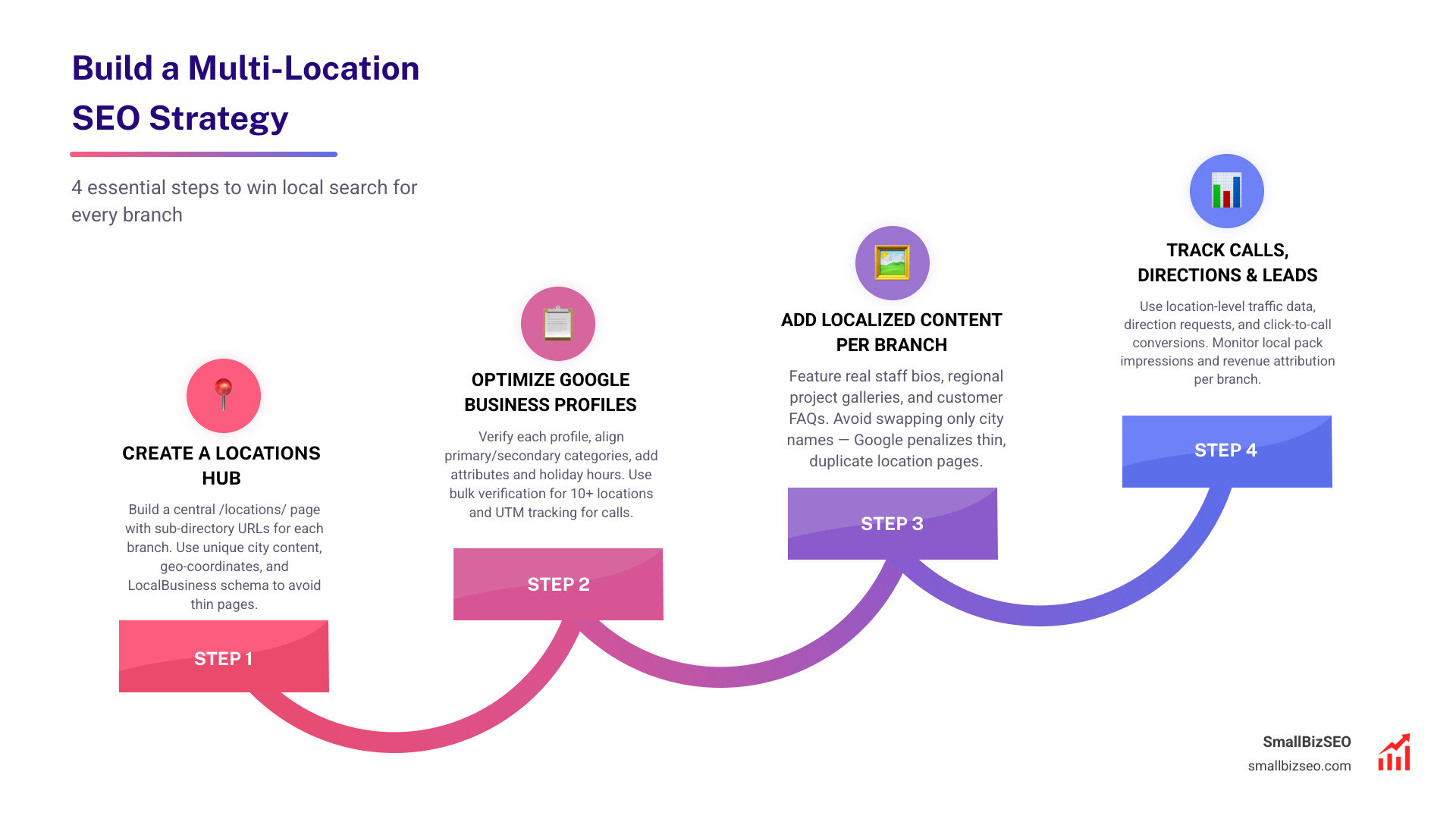
Key terms for SEO strategy for multiple locations:
Consumer habits make multi-unit search optimization vital: 46% of all Google searches carry local intent, and 35% of consumers search for nearby businesses multiple times per week. Even more compelling, 76% of people who conduct a local search visit a physical storefront within 24 hours. When expanding companies fail to coordinate their digital footprint across regions, they trigger internal keyword cannibalization and surrender valuable local map pack real estate.
Core Pillars of an SEO Strategy for Multiple Locations
An effective multi-unit framework coordinates three interconnected systems: website architecture, entity authority signals, and unified directory listings. For guidance on coordinating location pages, listings and measurement, see our multi-location SEO strategy.
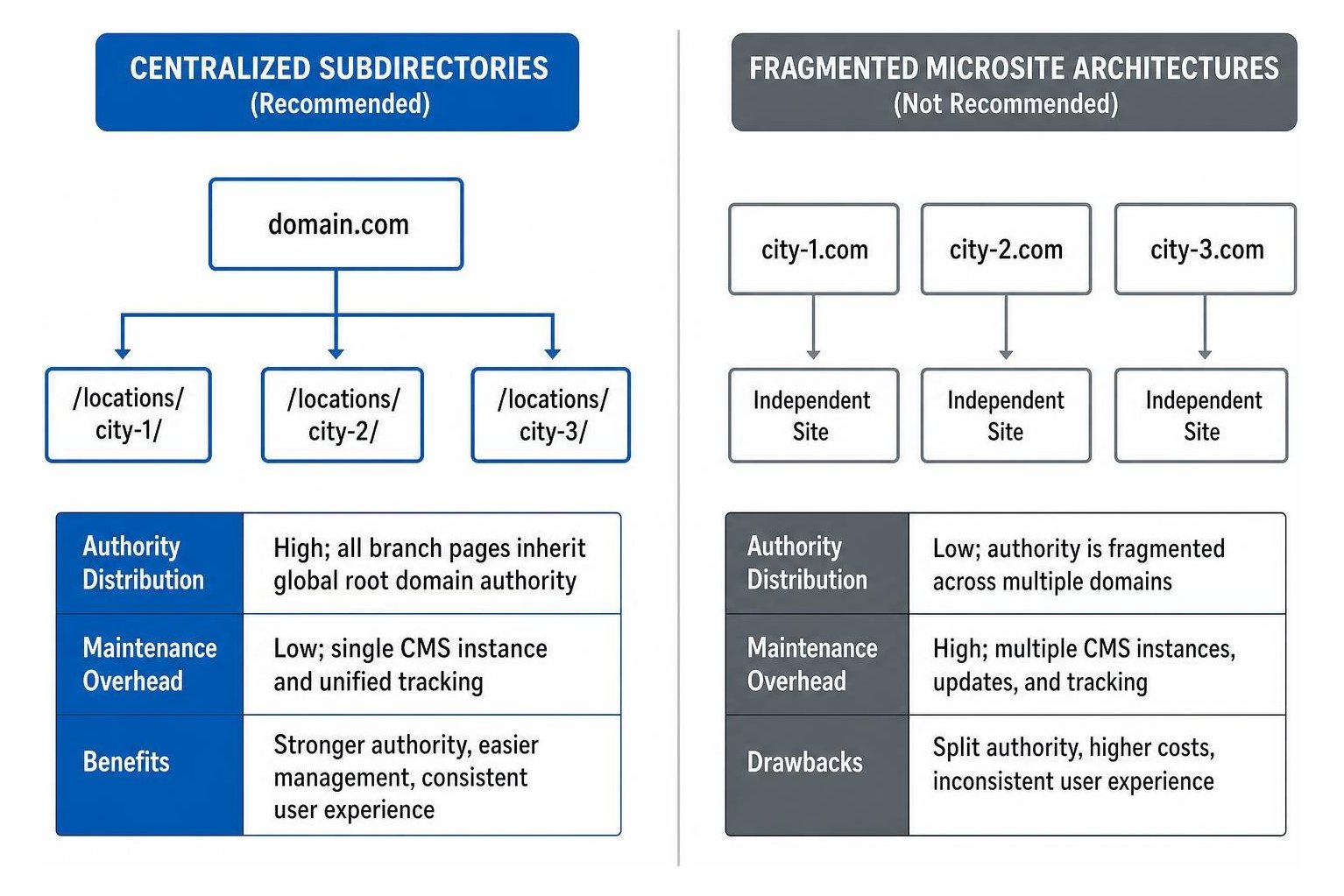
Google ranks local entities using relevance, distance, and prominence. To align with standard search guidelines on how to improve your local ranking, your website must clearly communicate where each store operates, what specific services it delivers, and how verified customers rate their experiences.
| URL Structure Type | Architecture Example | Authority Distribution | Maintenance Overhead |
|---|---|---|---|
| Centralized Sub-directory (Recommended) | domain.com/locations/city-name/ |
High; all branch pages inherit global root domain authority | Low; single CMS instance and unified tracking |
| Sub-domain Hierarchy | city-name.domain.com/ |
Medium; search engines often treat sub-domains as separate entities | High; requires fragmented technical management |
| Decentralized Geo-Domains | brand-cityname.com/ |
Extremely Low; divides link equity across multiple root domains | Severe; multiplied hosting costs and duplicate setup |
How Should You Structure Website Architecture and Location Pages?
To structure your site properly, host all regional storefronts inside a /locations/ sub-directory off your primary domain, with every city page linking upward to the main location index and downward to neighborhood service pages.
Every regional page requires distinct, value-added content rather than copy-pasted boilerplate with a dynamic city tag. Include verified geo-coordinates, street-level parking directions, localized team member profiles, and high-resolution photos of your actual facility. When contractors and enterprise brands plan their layout, following a proven multi-location SEO framework prevents indexation deadlocks.
Avoid the 5 common local SEO mistakes that dilute local authority, particularly launching thin pages that trigger doorway-page penalties. Mark up each branch landing page with complete LocalBusiness JSON-LD schema, embedding your exact latitude, longitude, operating hours, phone number, and a parentOrganization reference that points back to your corporate brand entity.
How to Execute an SEO Strategy for Multiple Locations on Google Business Profile?
Execute your profile management by grouping all locations inside a verified Google Business Profile corporate account, applying identical primary categories across matching storefronts, and populating every available attribute field.
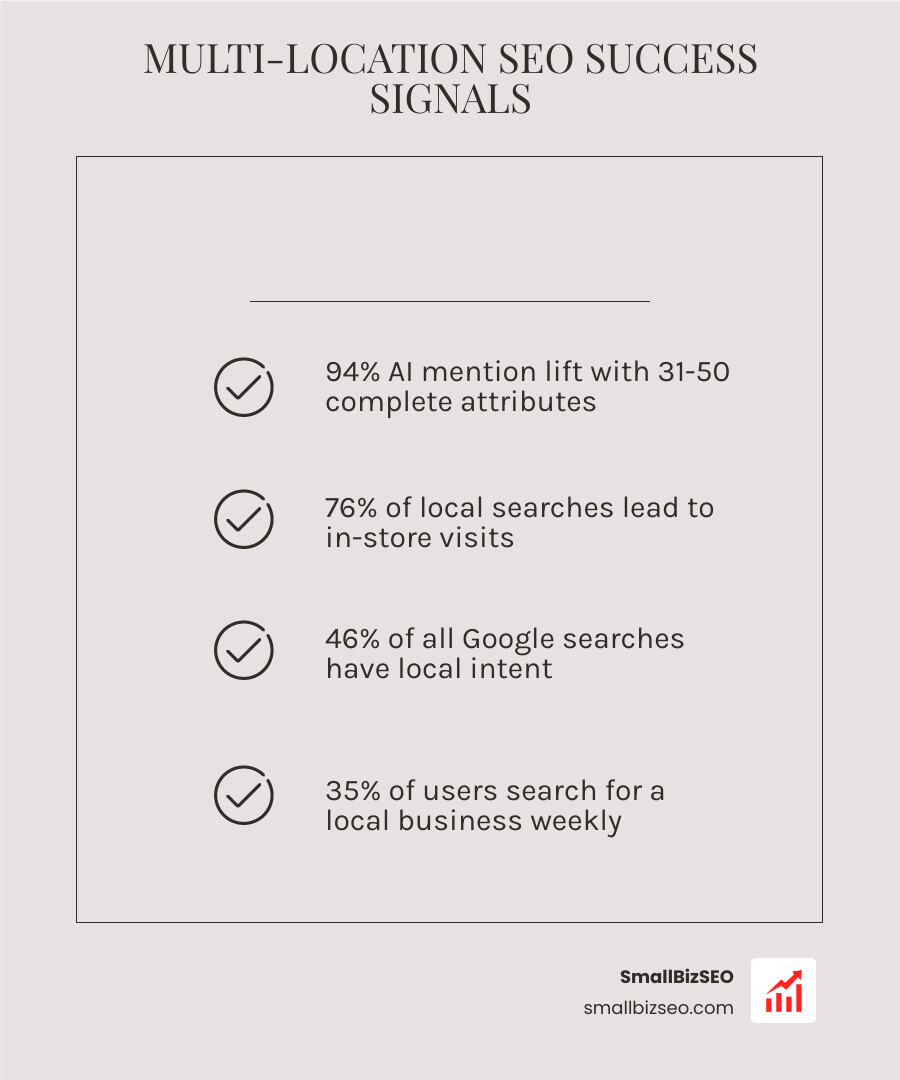
Maintaining high data completeness directly impacts modern discovery. Profiles featuring 31 to 50 detailed attributes achieve a 94% mention rate in automated search results, compared to just 22% for profiles with minimal details. Apply these essential profile practices:
- Bulk Verification: Request corporate bulk verification once you operate ten or more qualifying physical storefronts under the same brand name.
- Category Precision: Set one standardized primary category for all standard branches, reserving niche secondary categories for specialized local services.
- Tracking Parameters: Add campaign UTM tags to the website link on each profile to distinguish organic directory clicks from standard website search traffic inside analytics.
- Profile Freshness: Upload weekly branch photos and publish timely updates. Profiles left untouched for more than four weeks regularly experience measurable drops in map views.
For step-by-step guidance on ranking in the map pack, consult our practical guide to local SEO map visibility.
What Is the Difference Between Brick-and-Mortar and Service-Area SEO?
The primary difference lies in physical customer access: brick-and-mortar locations invite customers onto the premises and must display a physical address, whereas service-area businesses deliver services directly to customer homes and must hide their street address on map listings.
| Operational Factor | Brick-and-Mortar Storefronts | Service-Area Businesses (SAB) |
|---|---|---|
| Address Display | Full public street address required on profile | Street address hidden; designated radius or county list |
| Landing Page Focus | Showcases showroom photos, parking, and transit routes | Highlights dispatch areas, regional response times, and vans |
| Expansion Rules | Requires a dedicated lease and onsite staff per listing | Expands via dedicated service zones managed from central depots |
When managing home-service networks or reviewing franchise local SEO basics, never create virtual offices or fake addresses to artificially expand into neighboring towns. Instead, define explicit operational territories and build dedicated landing pages only for cities where you actively dispatch technicians and can showcase authentic project case studies.
Scaling Governance, AI Visibility, and Multi-Location ROI
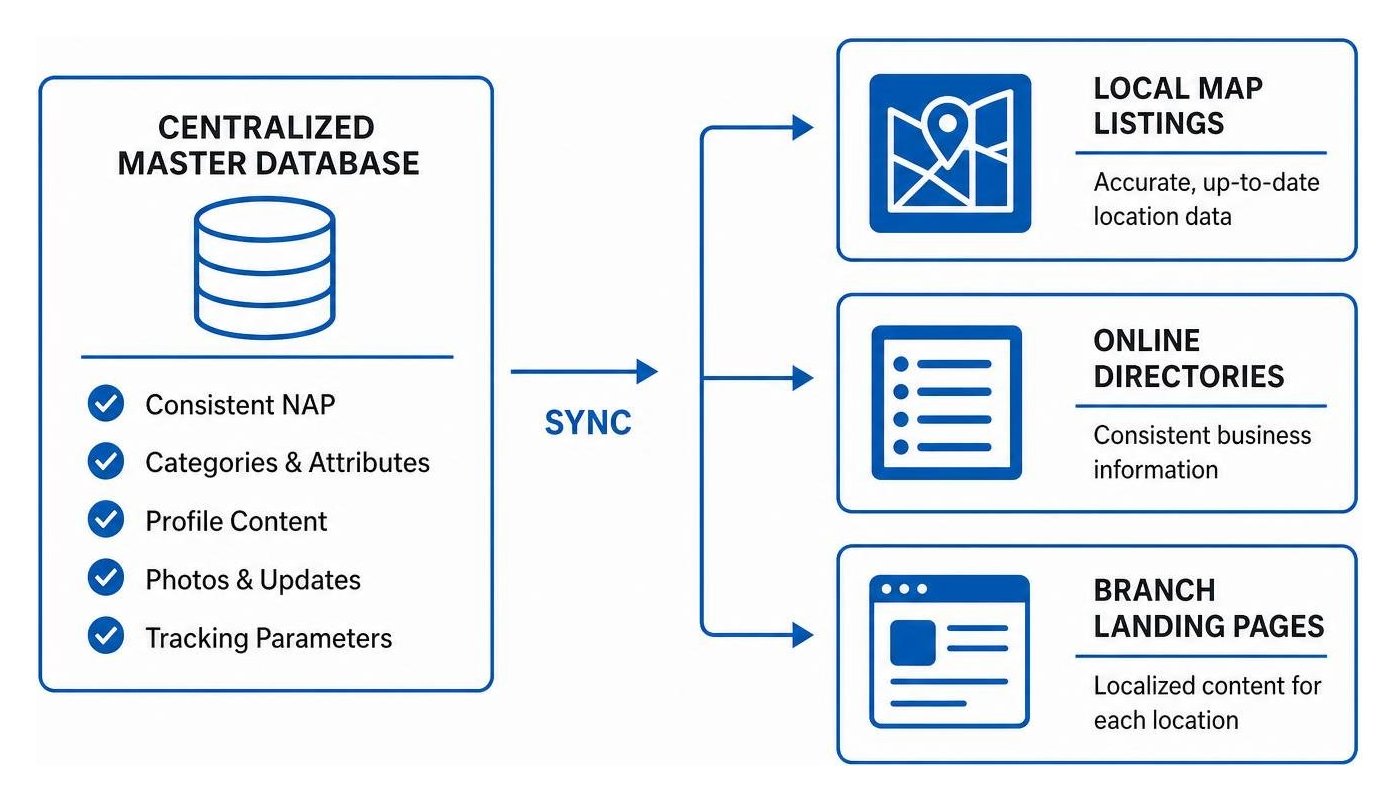
Scaling local search across dozens of operating units requires centralized policy enforcement paired with local execution. Utilizing a standardized multi-location framework ensures your brand maintains a single source of truth for name, address, and phone (NAP) data across aggregators and search engines.
How Does AI Search Impact Your SEO Strategy for Multiple Locations?
Generative answer engines evaluate local businesses as distinct data entities rather than relying solely on legacy backlink counts. An AI engine cross-references profile completeness, directory accuracy, and natural-language review sentiment before generating regional recommendations.
This shift creates a clear divide between legacy brand equity and modern search visibility:
- A national financial institution may hold over 70% of regional banking deposits yet capture only 12% of automated search mentions in that market.
- Large hotel networks controlling two-thirds of available regional rooms often capture less than 17% of conversational search mentions.
- Niche healthcare chains operating 20% of metropolitan practices frequently capture under 5% of generative recommendations due to incomplete local profiles.
Generative models reward structured, descriptive information. Adding comprehensive operational descriptions, detailed service menus, and active profile attributes provides the data these engines need to recommend your local branches.
How Do You Manage Reviews, Citations, and Brand Control at Scale?
Manage multi-unit reputation and citations by deploying an automated feedback pipeline alongside a centralized directory synchronization tool.
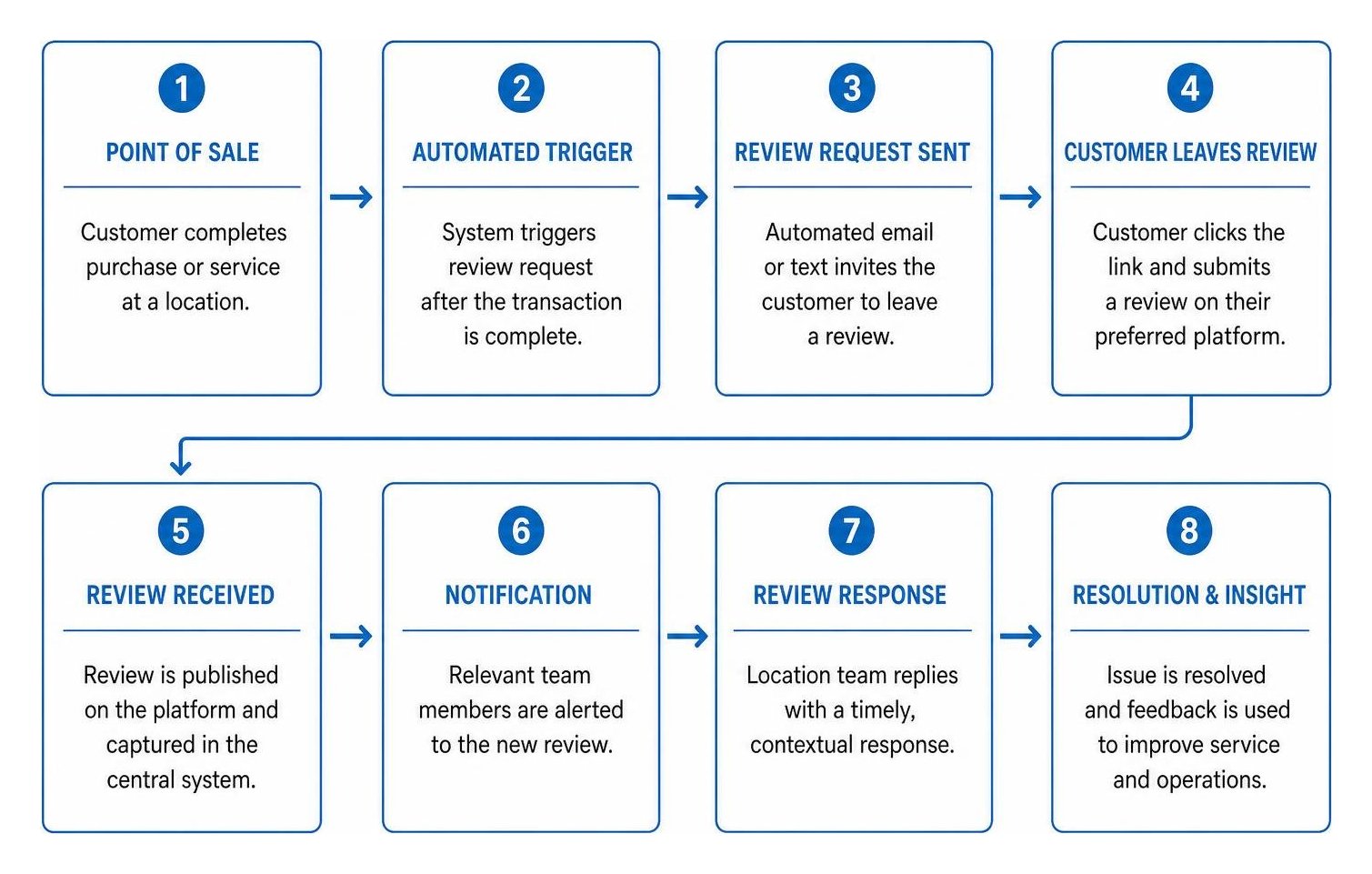
- Master NAP Repository: Lock your official business names, suite numbers, and local phone numbers in a central database to prevent unauthorized alterations.
- Tier-One Directory Distribution: Push synchronized location data directly to major map providers, navigation platforms, and primary data aggregators.
- Automated Feedback Requests: Trigger automated text or email invitations following completed transactions, aiming for a steady rate of at least five authentic reviews per month for each branch.
- Contextual Review Replies: Empower branch operators to answer reviews using localized details, resolving critical customer service feedback within 48 hours.
What Metrics Prove the Success of Multi-Branch Organic Growth?
To measure multi-unit performance accurately, look beyond broad vanity keyword positions and track local customer actions across every branch market:
- Local Pack Visibility: Monitor your 3-pack appearance rate across hyper-local coordinate grids surrounding each store.
- High-Intent Actions: Measure phone calls, direction requests, and website clicks generated directly through local profiles.
- Landing Page Conversions: Track regional contact form submissions, appointment bookings, and direct phone calls using dynamic call tracking numbers.
- Market Share Growth: Compare organic foot-traffic attribution and revenue yield between optimized branches and emerging locations.
Elevate Your Multi-Unit Market Dominance
Building a scalable multi-unit organic strategy requires uniting technical site architecture, precise profile optimization, and disciplined citation governance. When you provide clear, structured data for every branch, search engines reward your network with prominent visibility across local map packs and generative search platforms.
If you are ready to identify visibility gaps across your operating network, schedule an SEO visibility audit with our technical team today to build a durable growth engine for every market you serve.