Aquarium Retail Search Playbook: Attracting Serious Hobbyists Online

How can aquarium retailers get found by serious hobbyists?
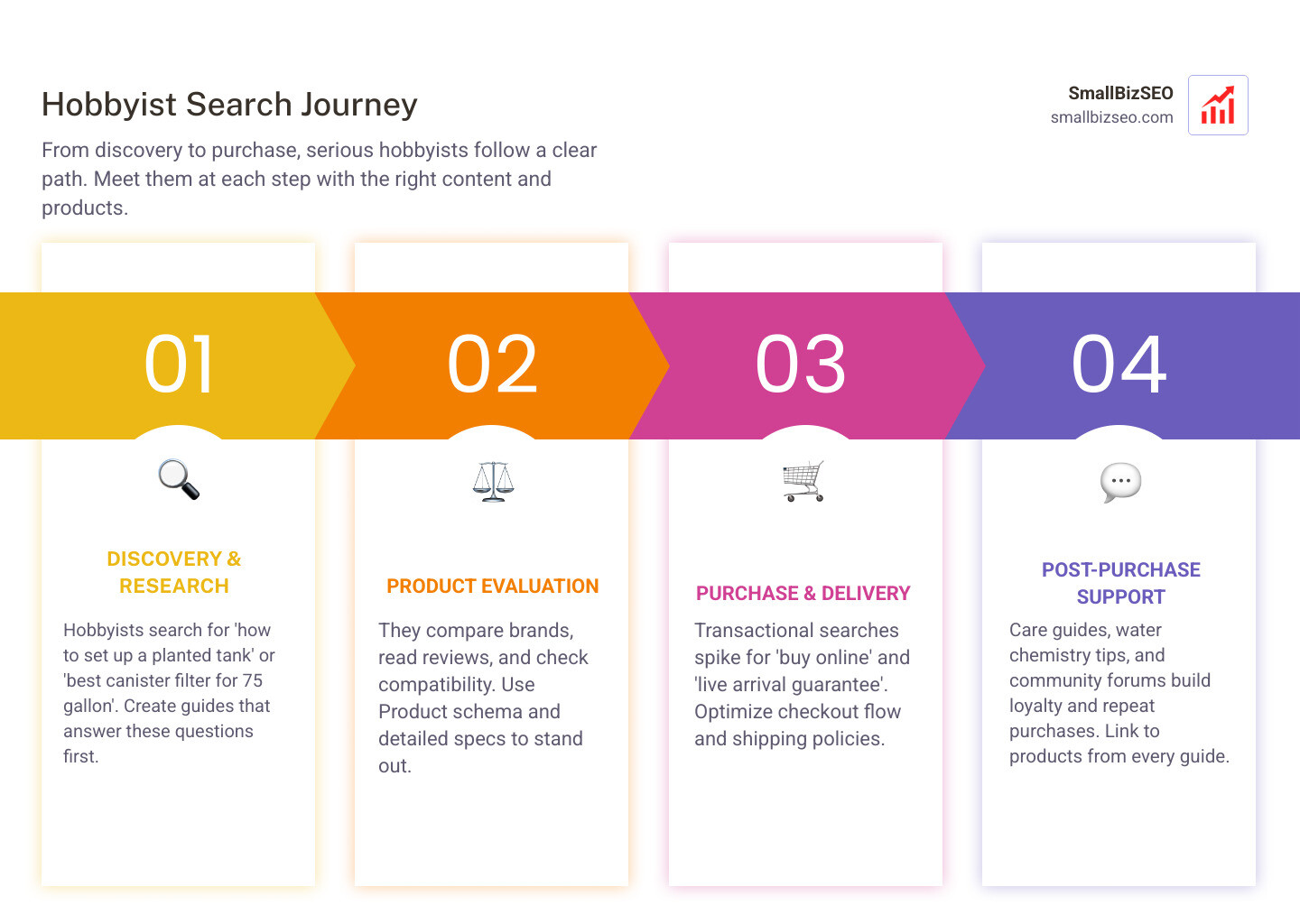
SEO for aquarium supplies and fish retail starts with the searches your customers already make. Build clear pages for your main product categories and fish species. Answer care and equipment questions in useful guides, then link those guides to relevant products. If you have a storefront, keep your Google Business Profile, hours, and inventory photos current so nearby shoppers know what to expect.
The goal is to help someone find the right answer, whether they are setting up their first tank or looking for a specific species. The steps below show how to turn those searches into store visits and sales.
I’m Clayton Johnson, founder of SmallBizSEO. My work in technical SEO, content strategy, and link building shapes this guide to SEO for aquarium supplies & fish retail: make each page useful, easy to find, and clear about what your shop offers.
Easy SEO for aquarium supplies & fish retail glossary:
Comprehensive Framework for SEO for Aquarium Supplies & Fish Retail
Aquatic retail requires a distinct search strategy because customers buy living creatures alongside sensitive technical hardware. Roughly 85% of pet owners research products online before visiting a physical store, and the top organic search result captures 32% of all clicks. Winning those clicks requires demonstrating deep Experience, Expertise, Authoritativeness, and Trustworthiness (E-E-A-T).
Google evaluates specialty ecommerce through rigorous standards. By following proven ecommerce search guidelines and establishing comprehensive topical authority, your aquatic business can outrank generic pet chains.
What Keyword Research Drives SEO for Aquarium Supplies and Fish Retail?
To capture high-intent buyers, segment keyword research across the entire hobbyist lifecycle. Beginners search for broad troubleshooting terms, while advanced aquarists search for exact scientific species names and high-end hardware specifications.
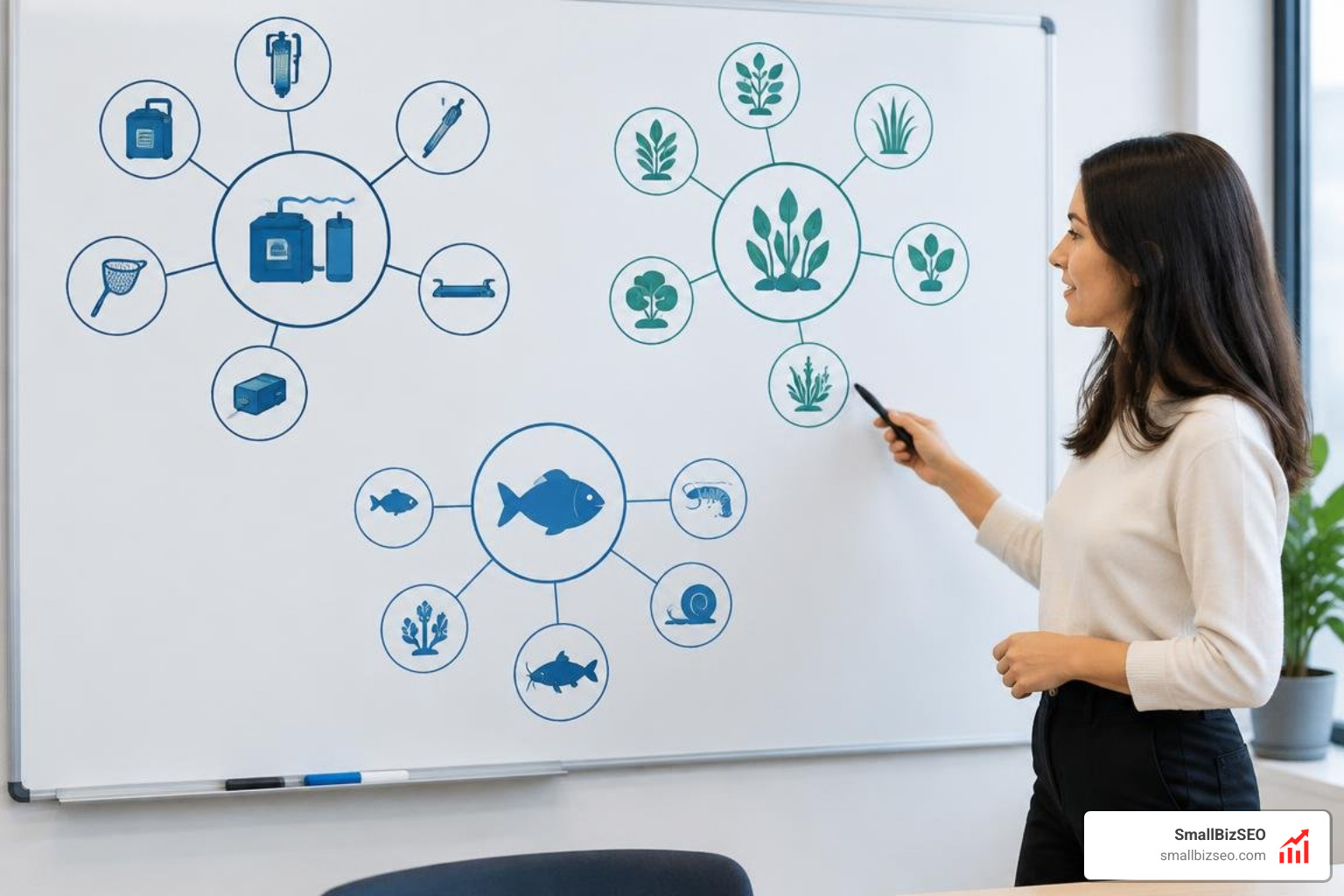
A winning aquatic keyword strategy balances four main search intents:
- Transactional Hardware Terms: Queries targeting equipment purchases, such as "canister filter for 55 gallon tank," "planted aquarium LED lighting," or "reverse osmosis system for reef tank."
- Species-Specific Livestock Queries: High-converting searches including "buy Discus fish online," "freshwater dwarf shrimp for sale," or "healthy Nerite snails."
- Troubleshooting and Care Searches: Informational questions like "how to lower aquarium pH naturally" or "how to cycle a freshwater fish tank."
- Seasonal Spikes: Keywords that surge during colder indoor months or spring breeding cycles, such as "aquarium heater sizing guide" or "live pond plants."
Structuring these phrases through customized eCommerce SEO services ensures your store captures both urgent purchases and top-of-funnel research traffic.
How Should Product and Species Pages Be Structured for Maximum Search Visibility?
Standard supplier descriptions fail to rank because hundreds of resellers copy the exact same manufacturer text. For live fish and sensitive supplies, enrich your product listings with verified scientific data, precise care parameters, and transparent guarantees.
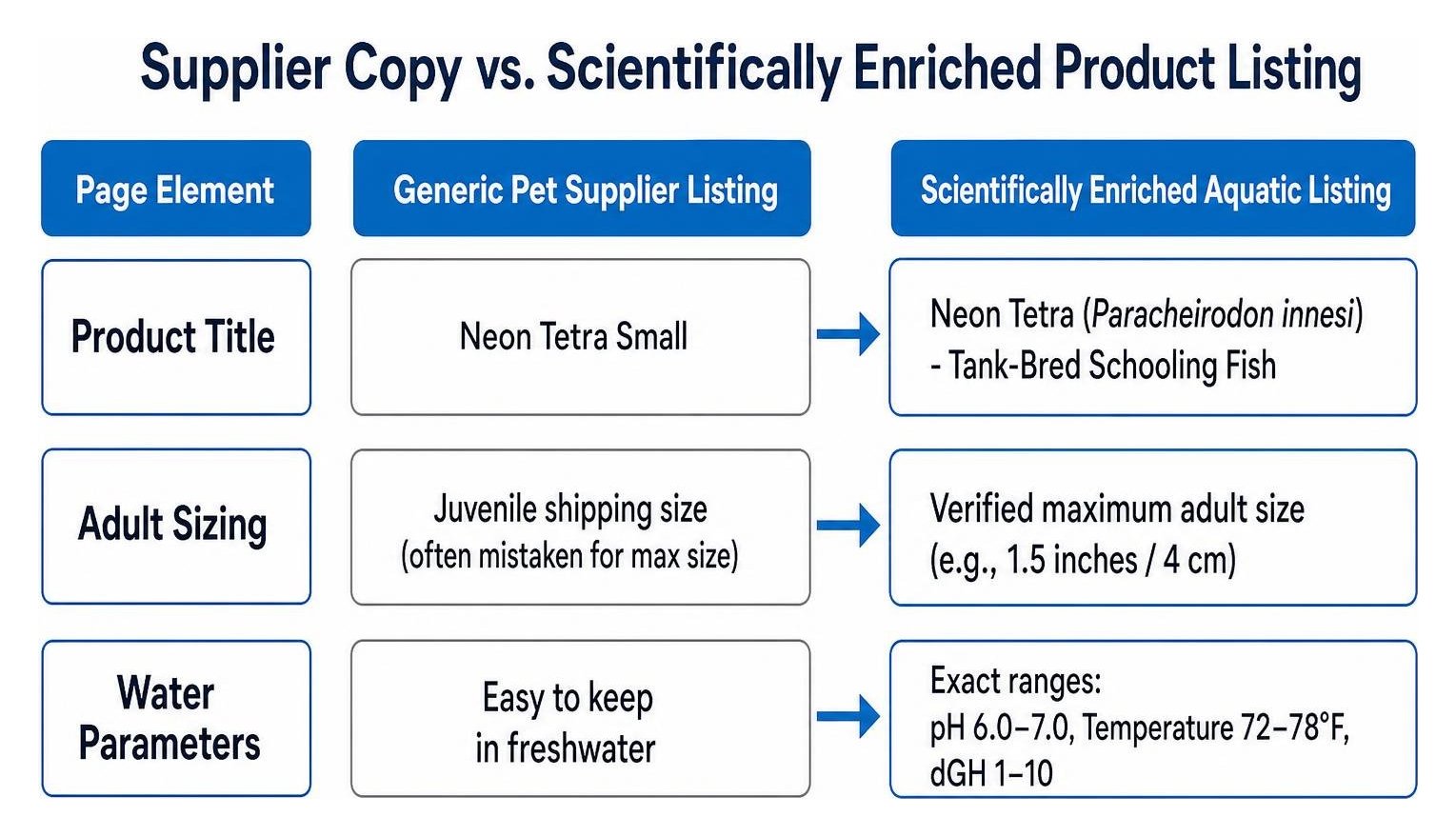
| Page Element | Generic Pet Supplier Listing | Scientifically Enriched Aquatic Listing |
|---|---|---|
| Product Title | "Neon Tetra Small" | "Neon Tetra (Paracheirodon innesi) - Tank-Bred Schooling Fish" |
| Adult Sizing | Juvenile shipping size (often mistaken for max size) | Verified maximum adult size (e.g., 1.5 inches / 4 cm) |
| Water Parameters | "Easy to keep in freshwater" | Exact ranges: pH 6.0–7.0, Temperature 72–78°F, dGH 1–10 |
| Compatibility Data | Generic community tag | Detailed temperaments, suitable tank mates, minimum group sizing |
| Trust Signals | Standard shipping badge | Live Arrival Guarantee, acclimation procedure, insulated packaging details |
Applying structured product data transforms simple listings into comprehensive buying guides. Integrating these elements alongside dedicated online shopping SEO company strategies keeps bounce rates low and conversions high.
How Does Content Marketing and Species Care Guides Build Authority for Aquatic Shops?
Informational care guides act as the primary traffic engine for specialty aquatic retailers. High-ranking sites build dedicated topic clusters around foundational aquarium topics—such as the nitrogen cycle, planted tank aquascaping, and disease treatment—and link directly to corresponding equipment and livestock.
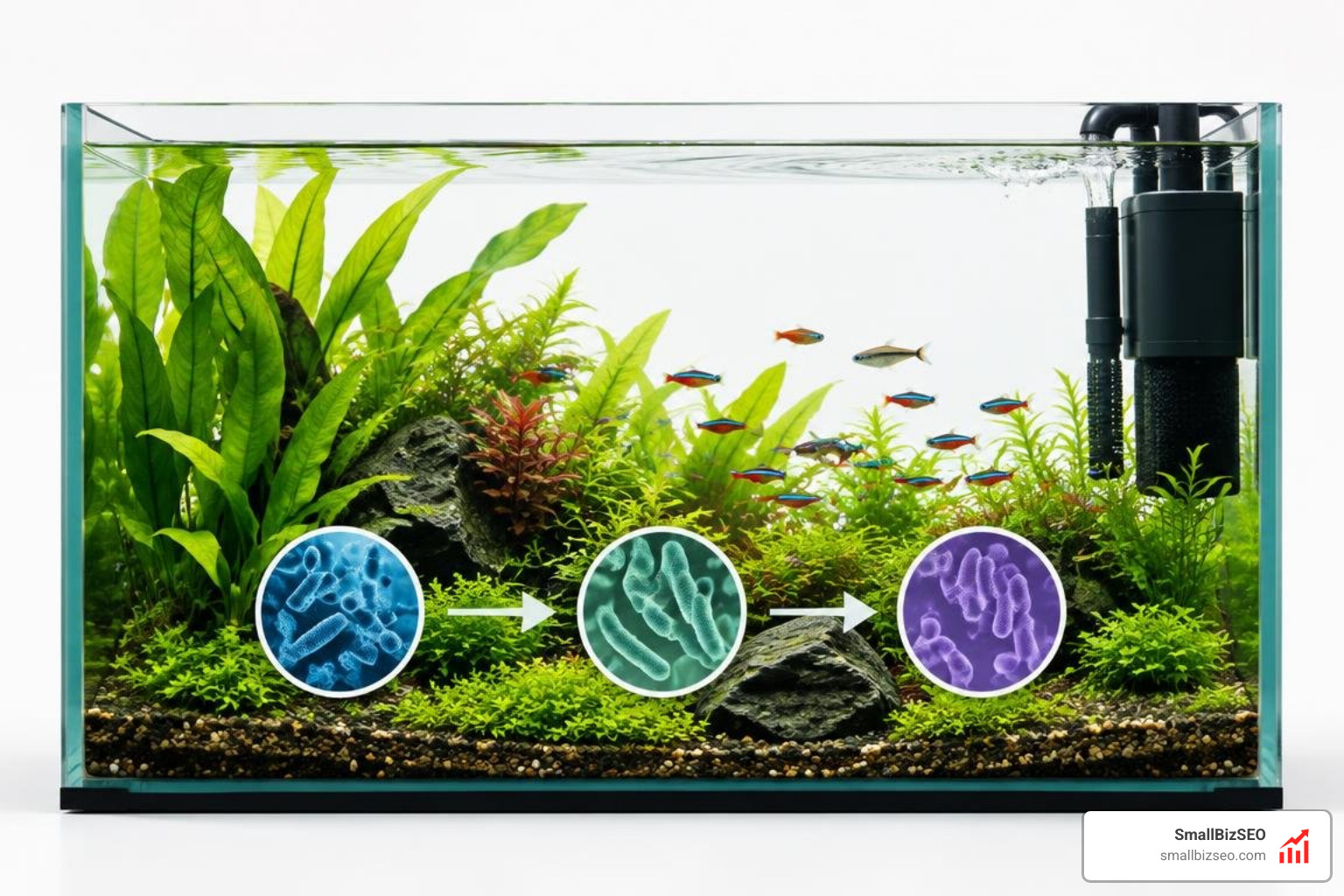
As demonstrated in recent industry analyses like the Gensou content-led SEO case study, independent specialty stores can generate thousands of monthly organic visits on modest domain authority by creating deeply detailed, species-level care sheets. When an aquarist reads your troubleshooting guide on eradicating black beard algae, linking directly to your liquid carbon conditioners and phosphate test kits turns a reader into an immediate buyer.
Actionable Steps to Dominate Search and Drive Store Traffic
Translating organic visibility into retail revenue requires a synchronized approach across local listings, technical site architecture, and specialized link acquisition. Coordinating these steps through targeted pet food and accessories stores SEO company practices delivers steady growth.
How to Optimize Local SEO for Aquarium Supplies & Fish Retail Storefronts?
Local search drives between 30% and 50% of in-store visits for specialty retail shops. Over 76% of mobile "near me" searches result in a same-day store visit.
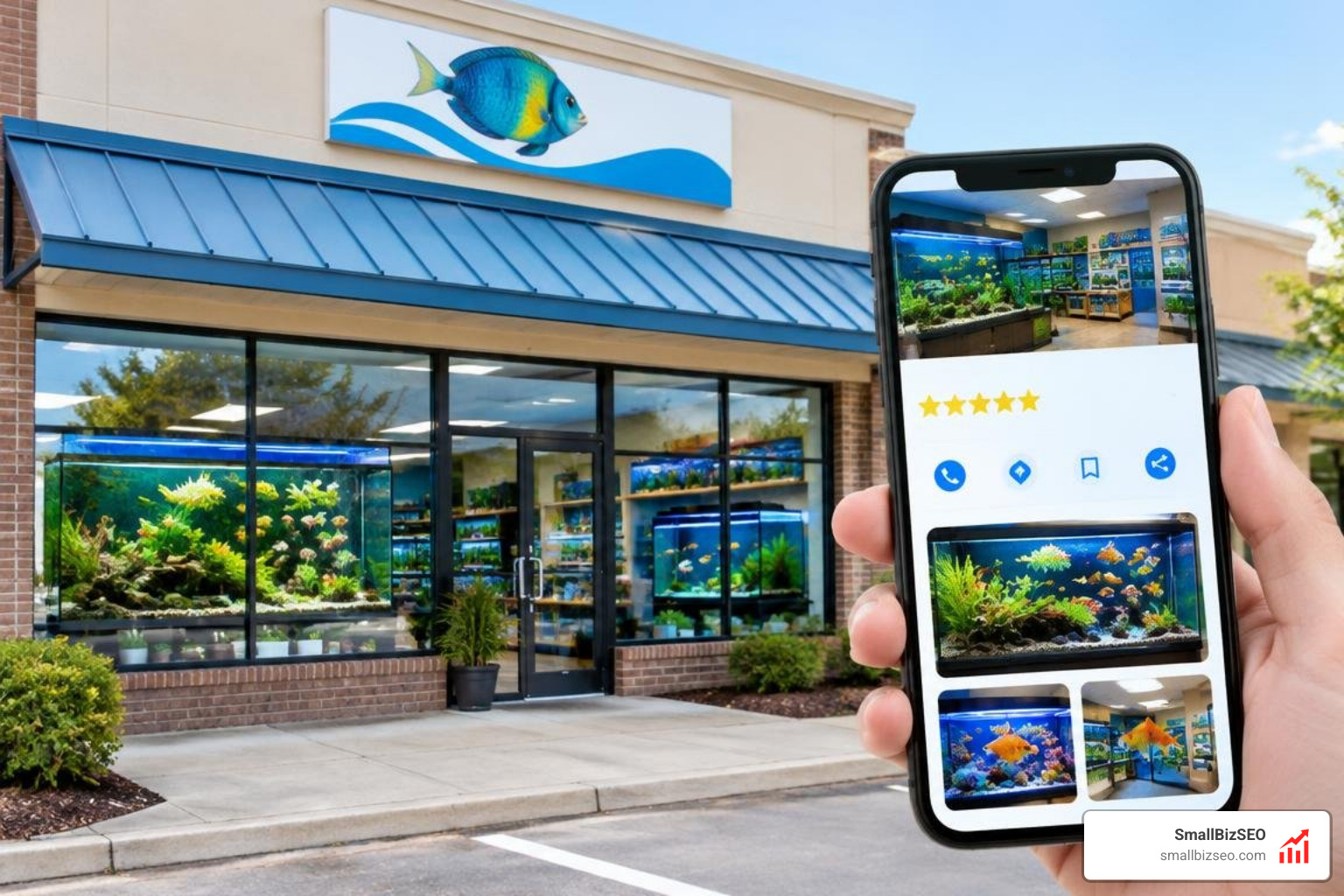
To dominate your immediate market:
- Select the Correct Primary Category: Set your primary Google Business Profile category to "Tropical fish store" or "Aquarium shop" rather than the generic "Pet store." Use secondary categories for additional specialties like "Reptile store" or "Pond supply store."
- Execute a Weekly Photo Cadence: Stores that upload photos of new livestock arrivals and display aquariums weekly see Maps profile views increase by roughly 40% within 60 days. High visual appeal is critical, as 85% of local shoppers prioritize visuals when selecting a store.
- Engage the GBP Q&A Section: Pre-populate and answer common customer questions regarding live arrival guarantees, water testing services, and special species sourcing.
- Build Review Velocity: Encourage hobbyists to mention specific fish species and tank setups in their reviews. Respond to all customer feedback within 24 to 48 hours to signal ongoing active management.
Pairing your profile with dedicated local SEO company campaigns captures nearby hobbyists ready to buy.
Which Technical SEO and Schema Markup Fixes Boost Aquarium Ecommerce Performance?
Aquarium ecommerce catalogs contain thousands of product variations, from filter media sponges to specialty lighting units. Clean technical architecture ensures search engines index your inventory efficiently without wasting crawl budget on faceted filter loops.
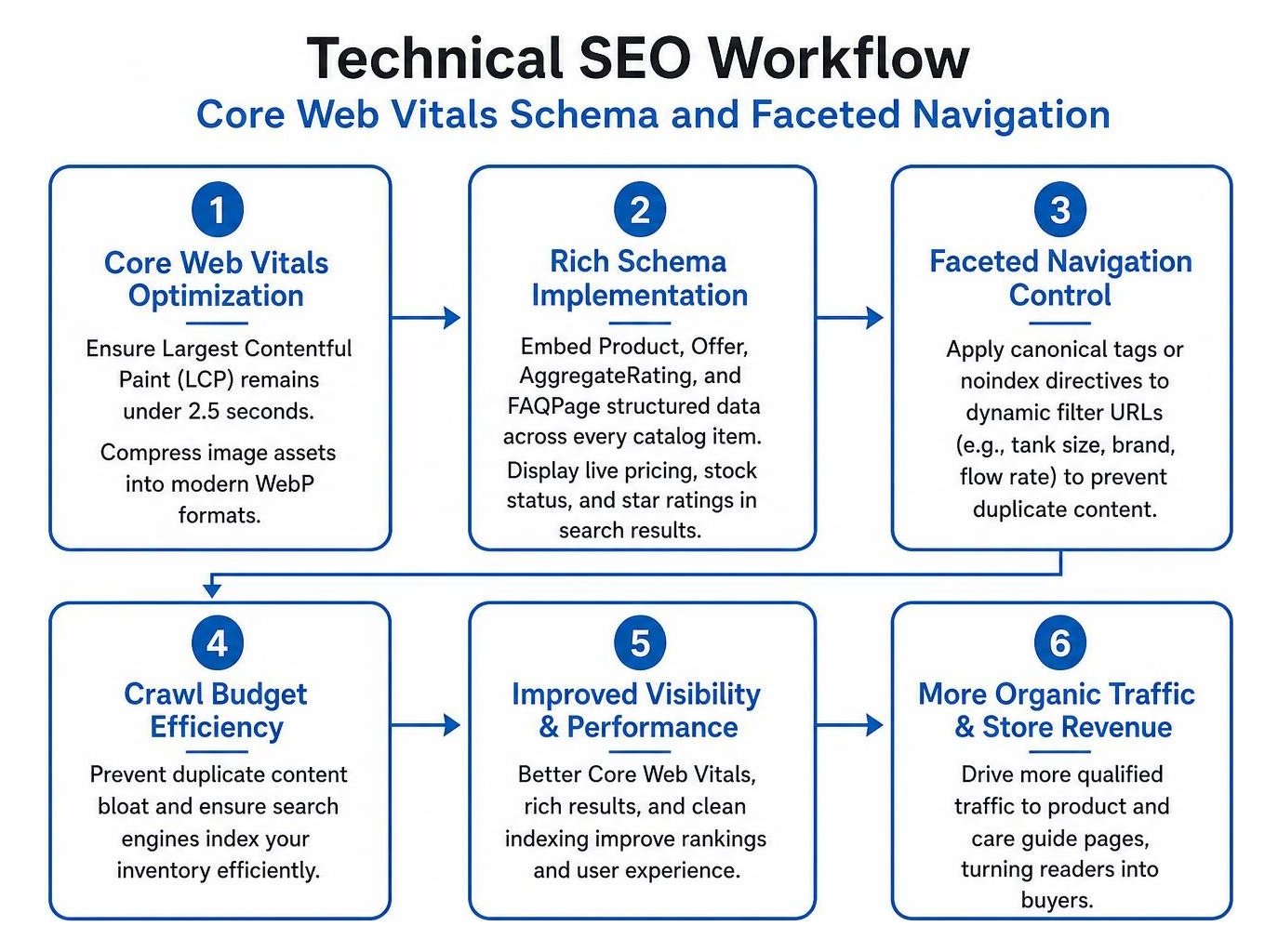
Key technical priorities include:
- Core Web Vitals Optimization: Over 68% of pet owners shop via mobile devices. Ensure Largest Contentful Paint (LCP) remains under 2.5 seconds by compressing image assets into modern WebP formats and using lightweight responsive themes.
- Rich Schema Implementation: Embed
Product,Offer,AggregateRating, andFAQPagestructured data across every catalog item to display live pricing, stock status, and star ratings directly in Google search results. - Faceted Navigation Control: Apply canonical tags or
noindexdirectives to dynamic filter URLs (such as sorting by tank size, brand, or flow rate) to prevent duplicate content bloat.
Our team at SmallBizSEO implements these technical safeguards through our small business SEO company frameworks to maximize organic crawling efficiency.
How Can Backlinks and Strategic Partnerships Outrank Big-Box Pet Competitors?
High-quality backlinks signal trust and subject-matter authority to search engines. Instead of buying generic directory links, aquatic retailers should earn relevant backlinks from respected hobbyist communities:
- Local Aquarium Societies and Clubs: Sponsor regional aquarium societies and fish-keeping clubs to secure contextual backlinks from meeting directories and resource pages.
- Aquascaping and Breeder Collaborations: Partner with recognized fish breeders and aquascaping creators to publish guest care sheets, co-host live tank setup webinars, and review exclusive product releases.
- Veterinary and Marine Conservation Outreach: Provide data or expert commentary to aquatic veterinary resources and non-profit conservation publications.
To discover existing technical bottlenecks and identify backlink gaps, schedule a comprehensive SEO visibility audit with our team.
Fueling Long-Term Growth for Your Aquatic Business
Running a successful aquarium shop requires deep technical expertise, passion for aquatic animal welfare, and continuous care. Your digital marketing should reflect those exact same standards. By structuring your catalog around genuine hobbyist search patterns, optimizing your local presence, and maintaining fast, structured technical infrastructure, your store can establish lasting authority in search results.
At SmallBizSEO, our data-driven "Velocity" framework delivers rapid rankings and E-E-A-T-compliant organic growth backed by transparent, automated reporting. Ready to scale your aquatic retail operations? Partner with us to turn organic search into your most profitable sales channel.