Building Search Visibility for Manufactured Housing Communities
Why Does Search Visibility Matter for Manufactured Housing Communities?
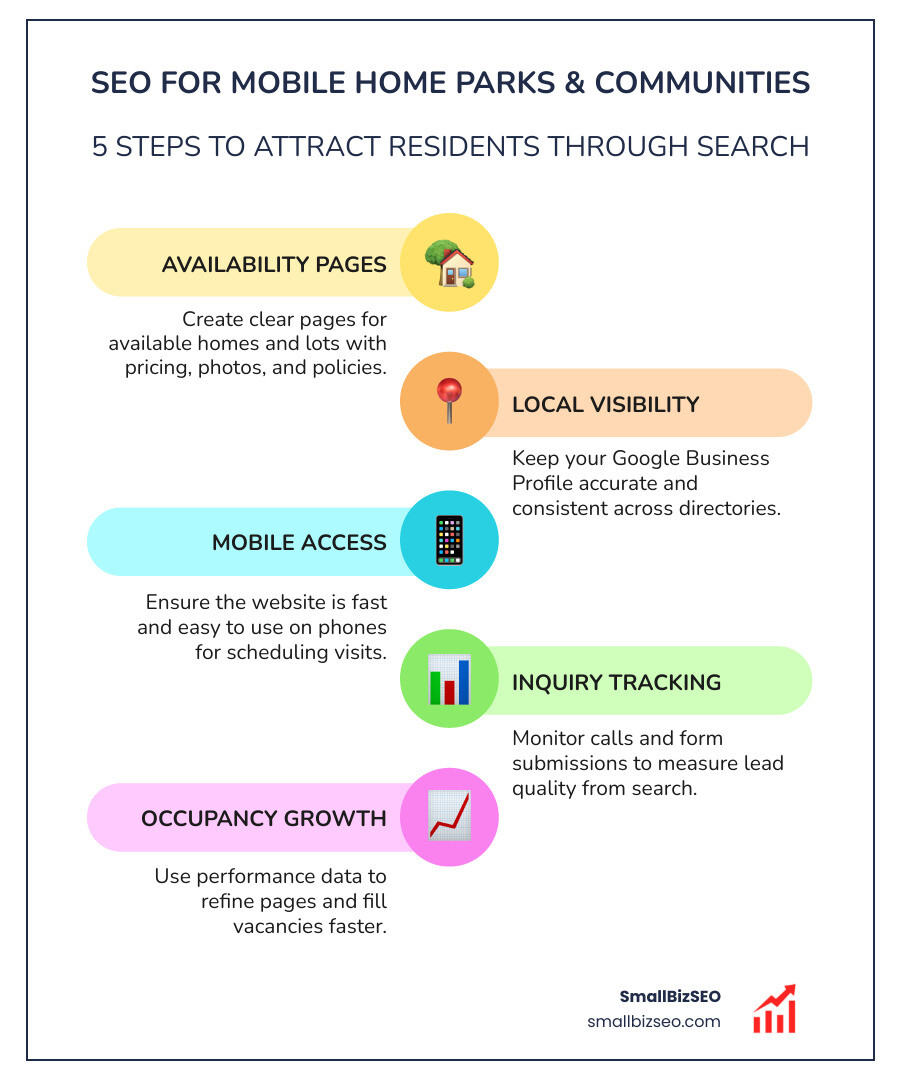
SEO for mobile home parks & communities starts with the searches prospective residents make. Create clear pages for available homes and lots, explain pricing and community policies, and keep your Google Business Profile accurate. Make it easy to call or schedule a visit from a phone. Then track inquiries and move-ins to see whether better visibility is helping fill vacancies.
I’m Clayton Johnson, founder of SmallBizSEO. My work in technical SEO, content strategy, and link building for small businesses informs this approach to SEO for mobile home parks & communities: answer residents’ questions clearly and measure the leads that follow.
Know your SEO for mobile home parks & communities terms:
Organic search helps prospective residents find communities with available homes or lots. Track inquiries and occupancy alongside rankings to see whether visibility is supporting resident acquisition.
Real estate represents roughly 19 percent of U.S. GDP, yet digital search competition for manufactured housing remains 30 to 50 percent lower than traditional single-family real estate niches. Most local areas feature three or fewer optimized community websites. Establishing organic search visibility allows property operators to connect with high-intent individuals seeking long-term, affordable housing.
What Does SEO for Mobile Home Parks & Communities Include?
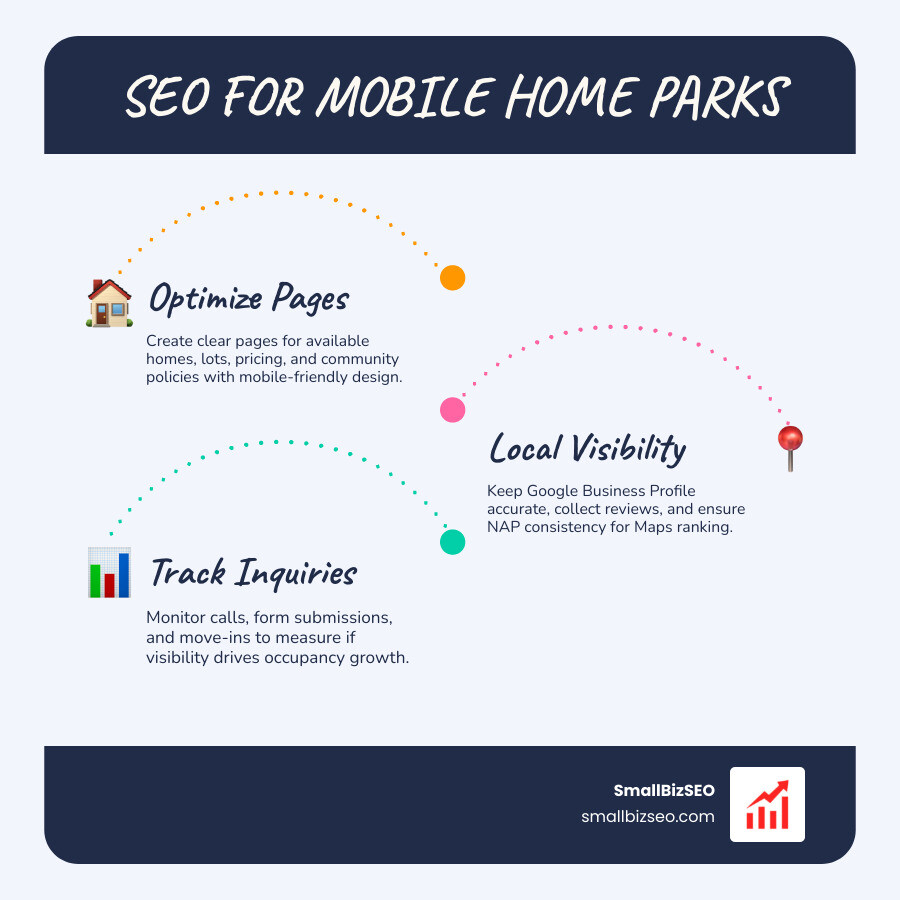
SEO for a mobile home park combines useful website content, a sound technical setup, and local visibility to help prospective residents find and contact the community. Compare results using qualified inquiries, not rankings alone.
A comprehensive campaign targets three distinct pillars:
- On-Page Experience and Content: Informative pages showcasing lot sizes, home models, lease options, amenities, and community guidelines.
- Local Optimization: Managing map listings, directory accuracy, and local reviews to secure placement in local map results.
- Technical Architecture: Fast loading speeds, clean schema markup, and intuitive mobile navigation.
| Feature | Mobile Home Park SEO | Traditional Apartment SEO | RV Park & Campground SEO |
|---|---|---|---|
| Primary Resident Intent | Long-term residency, lot leases, home sales | 12-month unit leases, single-building units | Short-term stays, seasonal travel, rig compatibility |
| Core Search Keywords | "Mobile home parks near me," "lots for lease" | "Apartments for rent," "1-bedroom rentals" | "Full hookup RV sites," "pull-through sites" |
| Key Decision Drivers | Community safety, pet rules, pad fees | Unit square footage, building amenities | Rig size fit, electrical hookups, nightly rates |
| Inventory Structure | Individual lots and park-owned manufactured homes | Distinct floor plans inside unified buildings | Transient pad sites and seasonal reservations |
Which SEO Strategies Help Mobile Home Parks Reach Prospective Residents?
Start by matching pages to what people search for, including available homes or lots, community details, and questions about living there. Use actual search and inquiry data to refine the topics.
Consumer search intent divides into clear transactional and informational groups:
- Transactional Queries: Prospects looking for immediate housing search terms like "manufactured homes for rent," "mobile home parks near me," or "open mobile home lots."
- Informational Queries: Prospective buyers researching the lifestyle search terms like "how do lot leases work," "manufactured home financing," or guidelines from state manufactured housing regulations.
Align your website copy with the exact language buyers use. While industry professionals often prefer formal branding, real consumer search volume overwhelmingly favors everyday phrases like "mobile home park" over industry-exclusive jargon. Integrating your listings with national mobile home park directories and referencing related construction categories like modular homes SEO helps capture high-intent buyers throughout their search journey.
What Technical Setup Does a Park Website Need?
Make the site easy to use on phones, quick to load, and organized so visitors and search engines can find community and availability details. Check mobile usability, page speed, and structured data as part of a regular review.
Modern search engines use mobile-first indexing, meaning the mobile version of your site dictates your rankings. Critical technical priorities include:
- Core Web Vitals: Maintain fast load times with a Largest Contentful Paint under 2.5 seconds and lightweight image compression.
- Logical URL Structure: Organize pages with simple hierarchies, such as
/communities/,/available-homes/, and/amenities/. - Structured Data Markup: Implement
LocalBusiness,HousingCommunity, andRealEstateListingJSON-LD schema so search engines understand community hours, contact details, and open lot inventory. You can review similar architectural strategies in our guide to proven local search optimization for apartment buildings.
How Can a Community Improve Its Google Maps Visibility?
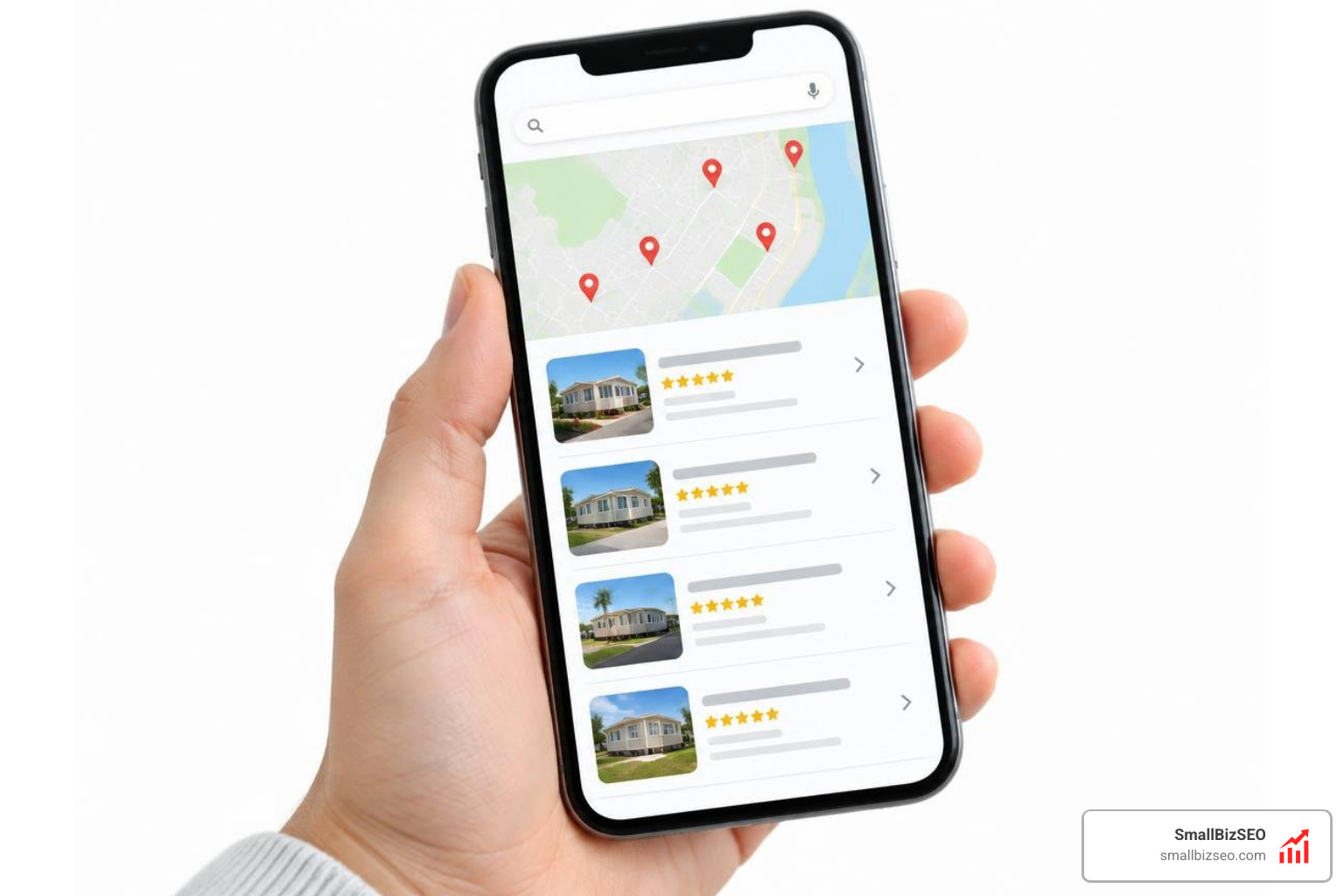
Keep the Google Business Profile accurate, make the community’s name, address, and phone number consistent, and ask residents for honest reviews. Monitor local visibility and inquiries to assess progress.
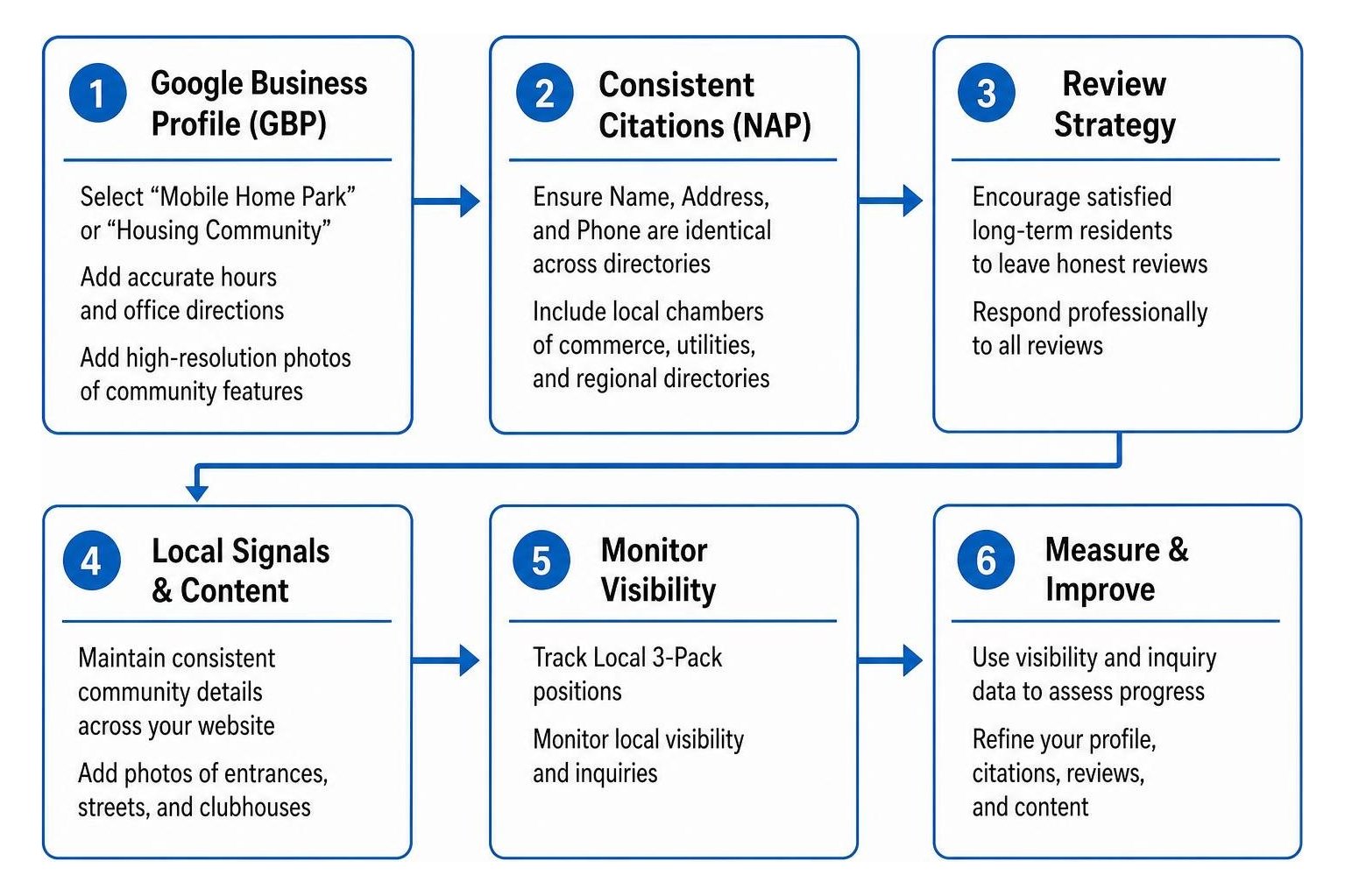
Securing a spot in the Local 3-Pack on Google Maps requires consistent local signals:
- Google Business Profile (GBP): Select primary categories such as "Mobile Home Park" or "Housing Community." Add accurate operating hours, office directions, and high-resolution photos of community entrances, paved streets, and community clubhouses.
- Consistent Citations: Ensure your Name, Address, and Phone number (NAP) are identical across local chambers of commerce, utilities, and regional directories.
- Review Strategy: Actively encourage satisfied long-term residents to leave genuine feedback. Responding professionally to all reviews signals active management and local authority.
For detailed steps on citation accuracy and directory management, consult our comprehensive local SEO guide.
What Content Helps Attract Long-Term Residents?
Publish clear pages about amenities, the neighborhood, available lots, and daily life in the community. Use common prospective-resident questions and actual inquiry data to choose topics.
Long-term tenants seek stability, neighborhood safety, and clear community rules. High-performing content assets include:
- Dedicated Amenity Pages: Highlight walking trails, swimming pools, storage facilities, playgrounds, and pet-friendly areas.
- Neighborhood and Relocation Guides: Cover local school districts, nearby shopping centers, hospital access, and public transit routes.
- Lot Availability Portals: Provide updated lot dimensions, utility connections, and pad lease terms.
- Resident Guides: Outline application workflows, park rules, and manufactured home setup standards, similar to content models used in property management SEO.
High-converting keyword themes include:
55+ manufactured home communities in [City]Pet-friendly mobile home parks with open lotsAffordable land lease communities near [City]Manufactured home lots for lease with full hookups
How Can Parks Measure SEO Performance and ROI?
Measure whether search brings qualified inquiries by tracking calls and forms, their cost, and how they relate to occupancy. Use real analytics and lead data rather than relying on rankings or other vanity metrics.

Evaluate organic search performance by tracking practical conversion metrics:
- Phone Inquiries and Form Submissions: Track completed applications, tour bookings, and direct office phone calls originating from organic search and Google Maps.
- Cost Per Qualified Lead: While initial setup requires upfront investment, ongoing organic lead acquisition costs often decrease significantly as community search visibility compounds.
- Occupancy Correlation: Measure the direct connection between organic traffic growth and physical lot occupancy gains over multi-month periods.
How Long Can SEO Take, What ROI Can Parks Expect, and What Mistakes Should They Avoid?
Timing and returns vary by market, website, and competition, so avoid promising a fixed ranking or occupancy outcome. Review progress over time using organic inquiries, lead quality, and occupancy data.
Building organic search visibility typically requires a focused effort over several months as search engines index content and evaluate local authority. Once established, organic search leads convert reliably, delivering sustainable lead flow.
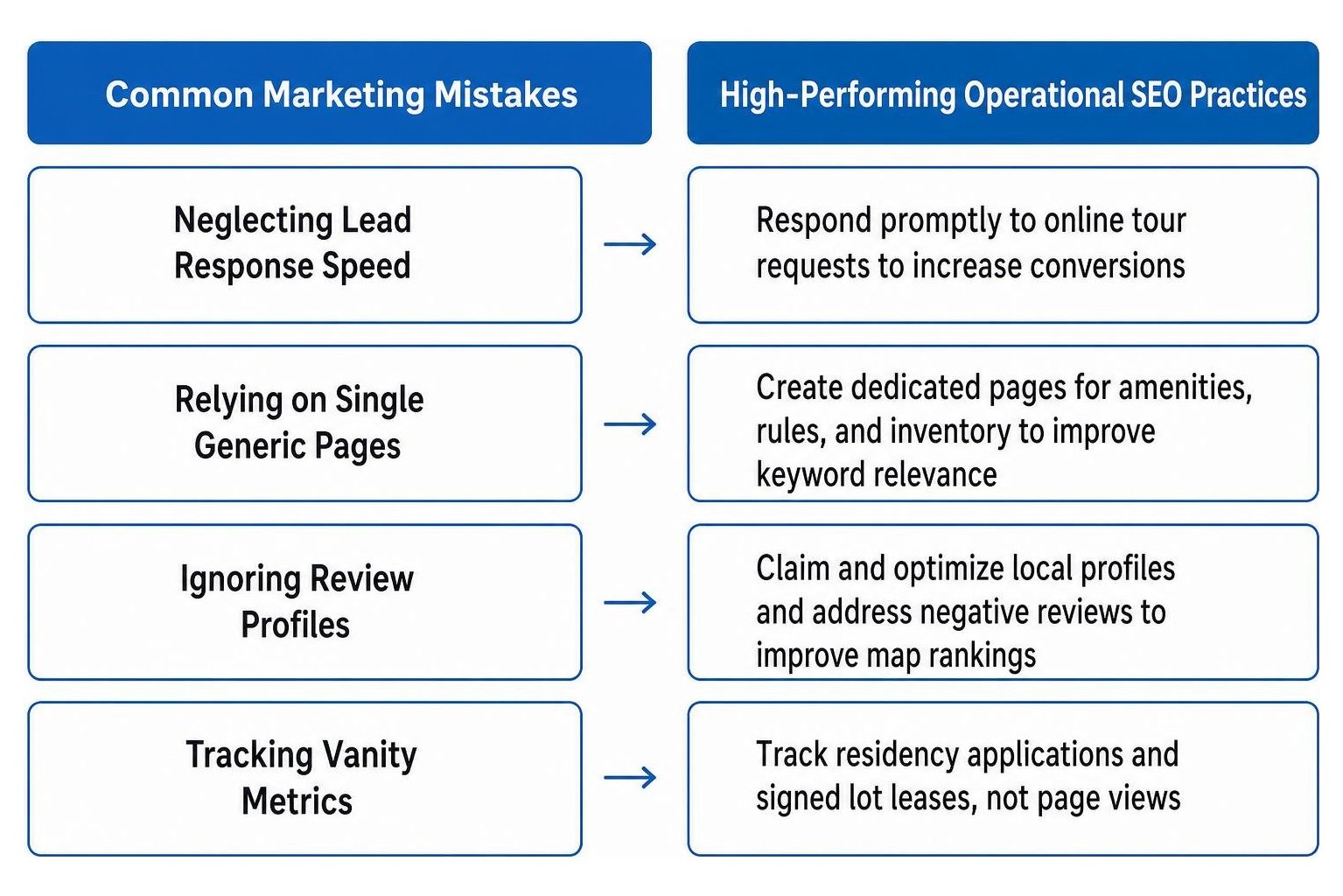
Common mistakes park operators should avoid:
- Neglecting Lead Response Speed: Inquiries convert at the highest rates when on-site leasing staff respond promptly to online tour requests.
- Relying on Single Generic Pages: Housing all amenities, rules, and inventory on a single generic homepage limits keyword relevance.
- Ignoring Review Profiles: Unclaimed local profiles with unaddressed negative reviews depress map rankings and turn prospective residents away.
- Tracking Vanity Metrics: Measuring page views rather than submitted residency applications and signed lot leases.
How Can Communities Grow Occupancy Through Ongoing Optimization?
Communities can build on results by reviewing performance data, improving pages that attract qualified inquiries, and reporting progress regularly. SmallBizSEO’s Velocity framework uses data-driven optimization and transparent, automated reporting to expand search visibility and support sustainable resident acquisition.
By prioritizing structured technical foundations, location-specific pages, and active local directory profiles, community managers can maintain full occupancy and build long-term local authority. Start by assessing your current search footprint with a comprehensive SEO visibility audit to identify growth opportunities across your target market.