Capture AI Search Visibility: Answer Engine Optimization AEO Strategies for 2027

How can small businesses improve AI search visibility with AEO?
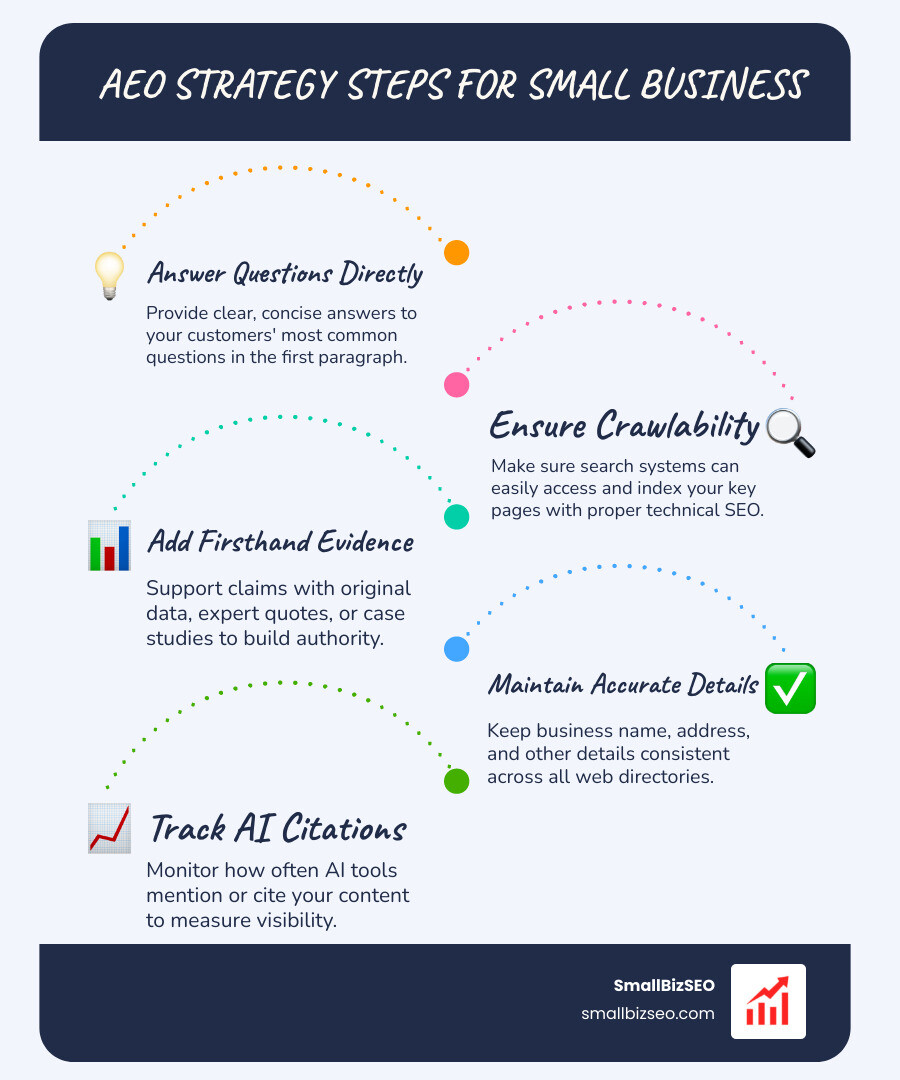
Start with clear answers to your customers’ questions. Make those answers easy to find on pages that search systems can crawl. Support them with knowledge, keep your business details accurate across the web, and check whether AI tools mention or cite you. These answer engine optimization (AEO) strategies remain a practical starting point for the year ahead.
Traditional SEO helps people find your pages in search results. AEO also helps AI tools understand and use the information on those pages. You need both, but a citation is never guaranteed.
I’m Clayton Johnson, founder of SmallBizSEO. My work on answer engine optimization (AEO) strategies builds on my experience connecting SEO, content, and digital PR to help small businesses earn visibility and qualified leads.
Answer engine optimization aeo strategies word roundup:
- answer engine optimization (aeo)
- how to answer complex service questions without oversimplifying
- prioritizing answer content for recurring pre purchase questions
What is answer engine optimization, and how is search changing?
Answer Engine Optimization (AEO) is the practice of structuring web content so generative models, AI assistants, and conversational search platforms can easily extract, summarize, and cite your information in direct responses.
Traditional SEO focuses on earning high rankings across search engine results pages to capture clicks. In contrast, AEO focuses on providing the precise facts that AI platforms need to construct syntheses. Today, search behaviors have shifted toward natural conversational queries. Users ask detailed questions across platforms like ChatGPT and Perplexity, while Google AI Overviews summarize complex topics directly on the results page.
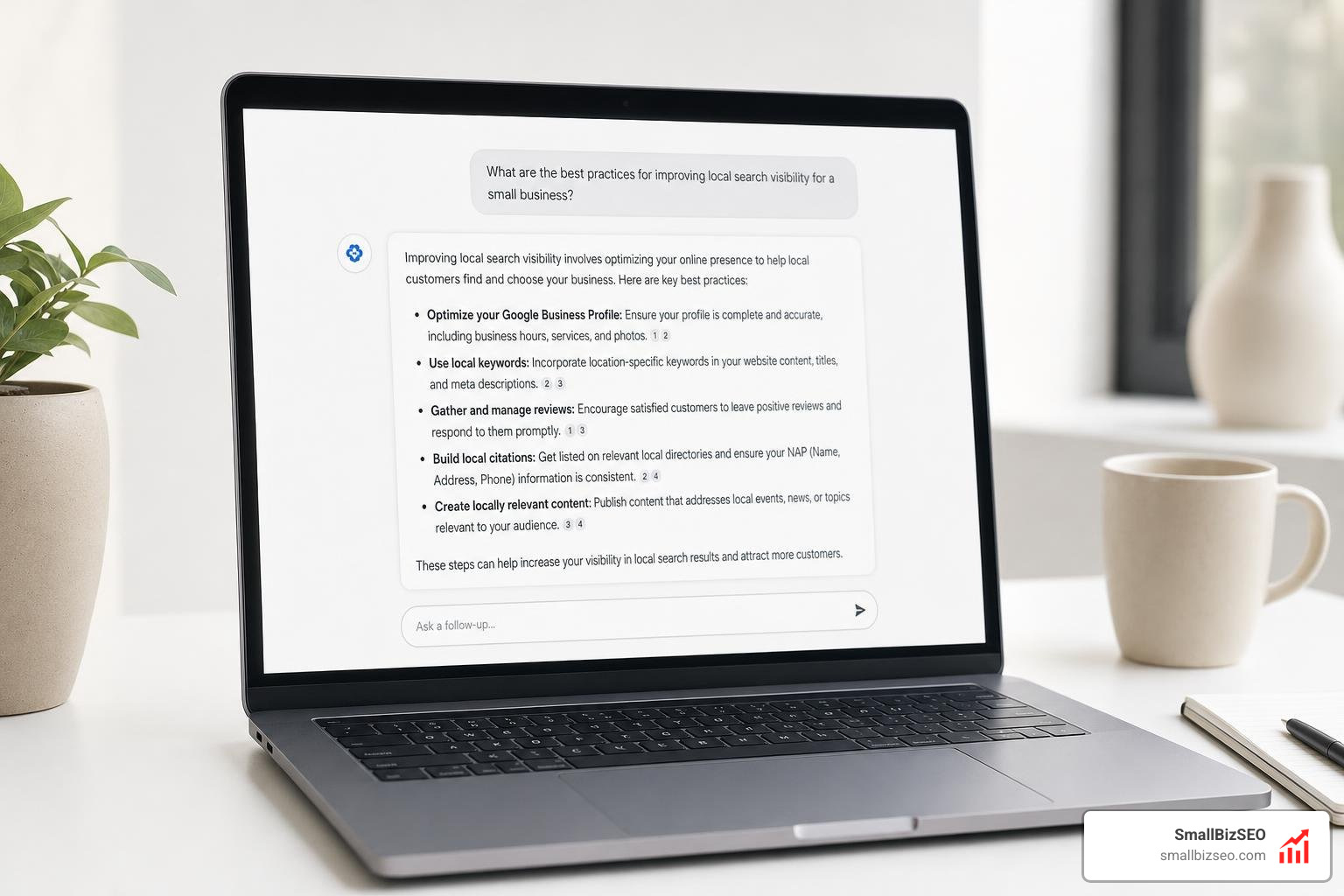
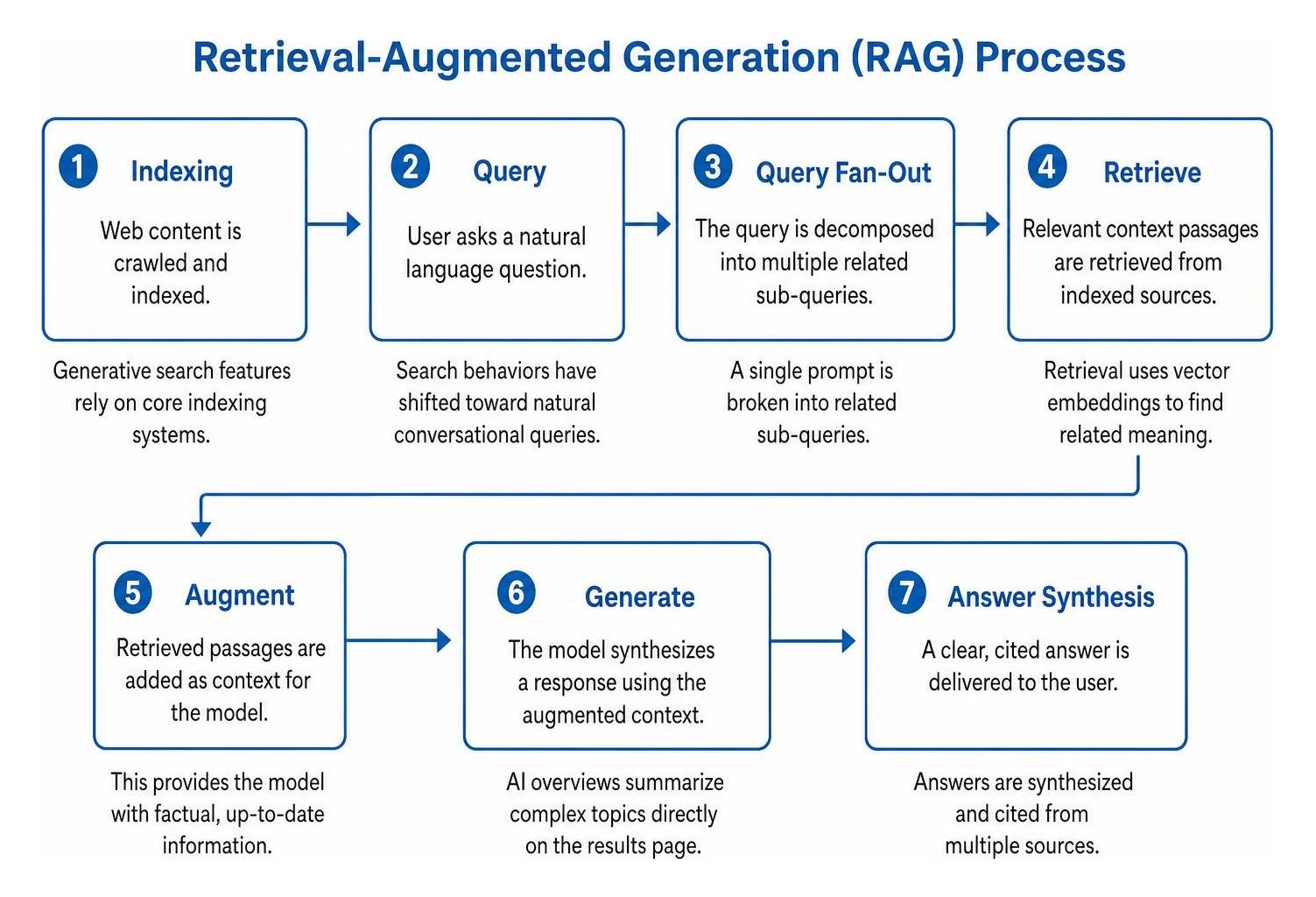
This evolution is heavily shaped by zero-click behavior. Roughly 60% of searches conclude without a user clicking through to an external website because AI overviews synthesize answers instantly. Modern answer engines evaluate user queries through a process known as query fan-out, where a single prompt is decomposed into multiple related sub-queries to retrieve data from diverse candidate sources.
While overall click volume on simple queries decreases, users who do click through from AI citations demonstrate significant pre-qualification. Industry data indicates that AI search visitors convert at substantially higher rates because they have already completed preliminary research within the answer interface.
Which AEO strategies can help you earn AI search visibility?
To earn visibility across modern AI platforms, websites must deliver extractable, highly specific answers backed by clear technical crawlability and verified experience.
According to Google's Generative AI search documentation, generative search features rely on core indexing systems and Retrieval-Augmented Generation (RAG) rather than disconnected AI repositories. When an engine processes a query, it converts text into vector embeddings—numerical representations of text that help systems identify related meaning—to locate relevant context passages.
Modern AEO requires structuring content for rapid passage extraction while establishing strong Experience, Expertise, Authoritativeness, and Trustworthiness (E-E-A-T) signals. High factual density and original information gain prevent your content from being filtered out as generic background text across AI Search platforms.
| Traditional SEO Factor | Modern AEO Synthesis Requirement |
|---|---|
| Keyword density and exact matching | Semantic vector proximity and factual accuracy |
| Standalone backlink quantity | Multi-source consensus and entity validation |
| Full-page keyword relevance | Self-contained, extractable passage clarity |
| Focus on SERP ranking positions | Direct source citations and brand mentions |
| Broad organic click acquisition | High-intent qualified lead capture |
How should you format direct-answer blocks for AEO?
Structure every informational section using the inverted pyramid model: state the direct, unhedged answer immediately below your question heading, followed by data, steps, and edge cases.
Fulfilling specific Search Intent requires eliminating fluff. Placing a concise 40-to-60-word summary directly beneath an H2 or H3 heading allows LLM retrieval mechanisms to grab the passage without ambiguity. Studies indicate that approximately 44% of citations generated by platforms like ChatGPT originate from the first 30% of a page's text.
Use bolded declarative statements, scannable bullet points, and clean HTML tables. We explore these technical requirements further in our guide to Demystifying AI Search Ranking Factors for Smarter SEO.
How do schema and entity signals help AI systems understand your business?
Structured schema markup translates on-page text into explicit entity relationships that knowledge graphs and search crawlers can index without interpretation errors.

Implementing JSON-LD schemas—such as FAQPage, Article, Organization, and Product—helps search systems connect your business entities to broader semantic databases. Technical foundations like server-side rendering ensure that automated bots read your complete document Object Model (DOM) without client-side script delays. For a deeper breakdown of crawlable infrastructure, review our recommendations on Teaching Robots to Love You: Best Practices for Modern AI SEO.
How can you build cross-web consensus and add useful information?
AI engines confirm facts by cross-referencing multiple third-party sources across the web before citing a brand as an authoritative answer.

When an LLM evaluates a company, it reviews brand mentions across independent publications, industry forums, review platforms, and discussion communities like Reddit. Incorporating proprietary data, unique surveys, and verifiable expert quotations significantly boosts citation odds. In fact, Semrush research on answer engine optimization reveals that adding statistics to content increases AI visibility by 22%, while including direct expert quotations increases it by 37%.
How should AEO differ across e-commerce, SaaS, and B2B?
Tailor your content depth and structure to match the distinct discovery workflows of your industry.
- E-Commerce: Address Zero Click Search behaviors by populating Product Detail Pages (PDPs) with dense technical specifications, exact dimensions, materials, and structured review feeds.
- SaaS: Match complex Semantic Search patterns by providing objective comparison matrices, pricing breakdowns, and transparent use-case documentation.
- B2B: Align pages with multi-stakeholder buyer journeys by structuring clear problem-and-solution frameworks, implementation timelines, and verified compliance details. Specialized niche authority allows agile businesses to outperform larger, generic competitors in AI answers.
How can you measure, troubleshoot, and scale AI visibility?
Measure AEO performance by tracking brand citations, Share of Model (how often your brand appears in AI answers for core prompts), and referral traffic paths in your analytics platform.
Because roughly 83% of AI citations originate from content updated within the preceding twelve months, establishing a quarterly refresh cadence for key informational assets is essential to prevent citation decay. To understand tracking platforms and attribution modeling, read our analysis on The Future of Search: LLM Visibility Tools & SEO Explained.
Ready to Strengthen Your AI Search Strategy?
Succeeding in generative search requires an integrated approach that pairs foundational technical SEO with modern, answer-ready content structuring. Review our A Quick Start Guide to AEO Implementation to begin refining your pages, or explore our specialized AEO optimization services to capture lasting authority across AI-driven discovery platforms.