What to Answer First When Addressing Pre-Purchase Friction on Key Pages
Which Pre-Purchase Questions Should You Answer First?
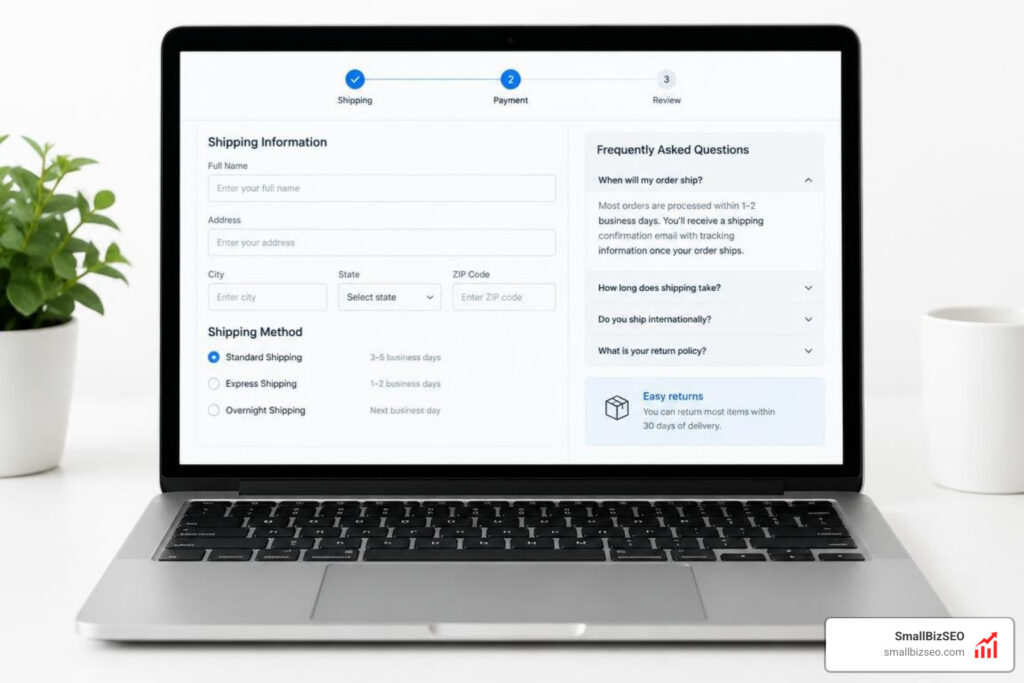
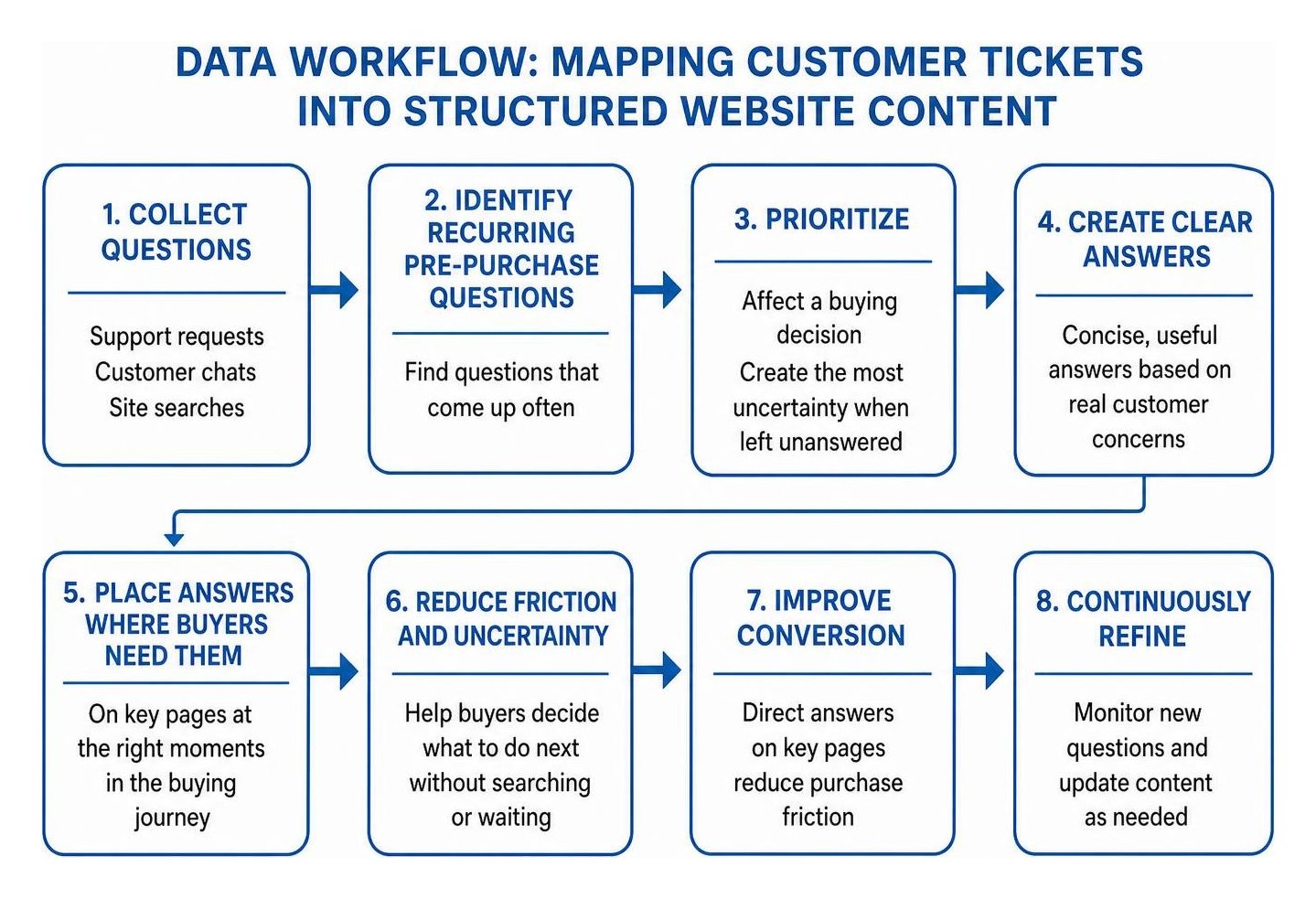
Start prioritizing answer content for recurring pre purchase questions by gathering questions from support requests, customer chats, and site searches. Answer the ones that come up often, affect a buying decision, and create the most uncertainty when left unanswered. Put each answer where the buyer needs it, such as sizing guidance beside product options or shipping costs near checkout.
You do not need a long FAQ to begin. A few clear answers on your key pages can help buyers decide what to do next without searching or waiting for a reply.
I’m Clayton Johnson, founder of SmallBizSEO, where I develop SEO and content strategies around the questions customers ask before they buy. My approach to prioritizing answer content for recurring pre purchase questions starts with real customer concerns and clear, useful answers.
Handy prioritizing answer content for recurring pre purchase questions terms:
How Should You Prioritize Answers to Recurring Pre-Purchase Questions?
To prioritize answers to recurring pre-purchase questions, collect real inquiries across customer touchpoints, score each query by frequency and direct revenue impact, and publish concise, evidence-backed answers directly on high-intent decision pages.
Around 70% of online shopping carts are abandoned before purchase, often because buyers encounter unanswered questions about shipping terms, sizing, compatibility, or return policies. Customers actively seek rapid clarity: 88% of shoppers expect self-service options, and 63% try solving issues on their own before contacting support. When they do reach out, 90% rate an immediate response as critical. Delivering direct answers on your key conversion pages eliminates purchase friction before buyers drop out of the funnel.
Where Can You Find Questions That Block Purchases?
To find questions that block purchases, audit your live chat transcripts, helpdesk tickets, internal site search logs, and product return reasons to identify recurring hesitation patterns.
Customer service and search data reveal the exact friction points that halt transactions. Rather than guessing what shoppers need, we extract raw customer wording across core touchpoints:
- Live Chat and Messaging Transcripts: Inquiries sent via live chat or SMS represent active shoppers ready to buy. Since 42% of consumers prefer messaging channels, these logs highlight immediate conversion barriers.
- Support Tickets: Tag and categorize incoming pre-sale tickets. Recurring questions about dimensions, materials, or delivery timelines signal missing information on your pages.
- On-Site Search Queries: When visitors type specific questions or filter terms into your search bar, they are signaling unfulfilled search intent on the main product view.
- Return and Cancellation Reasons: Analyzing why customers return items helps you uncover misleading descriptions or missing sizing details before future sales occur.
Once collected, organize queries by customer intent rather than internal department themes, as detailed in this guide on how to organize a product FAQ by customer intent. Grouping questions into clear intent categories—such as fit, comparison, pricing, and logistics—creates a targeted list of high-priority answers.
How Should You Score Questions by Potential Revenue Impact?
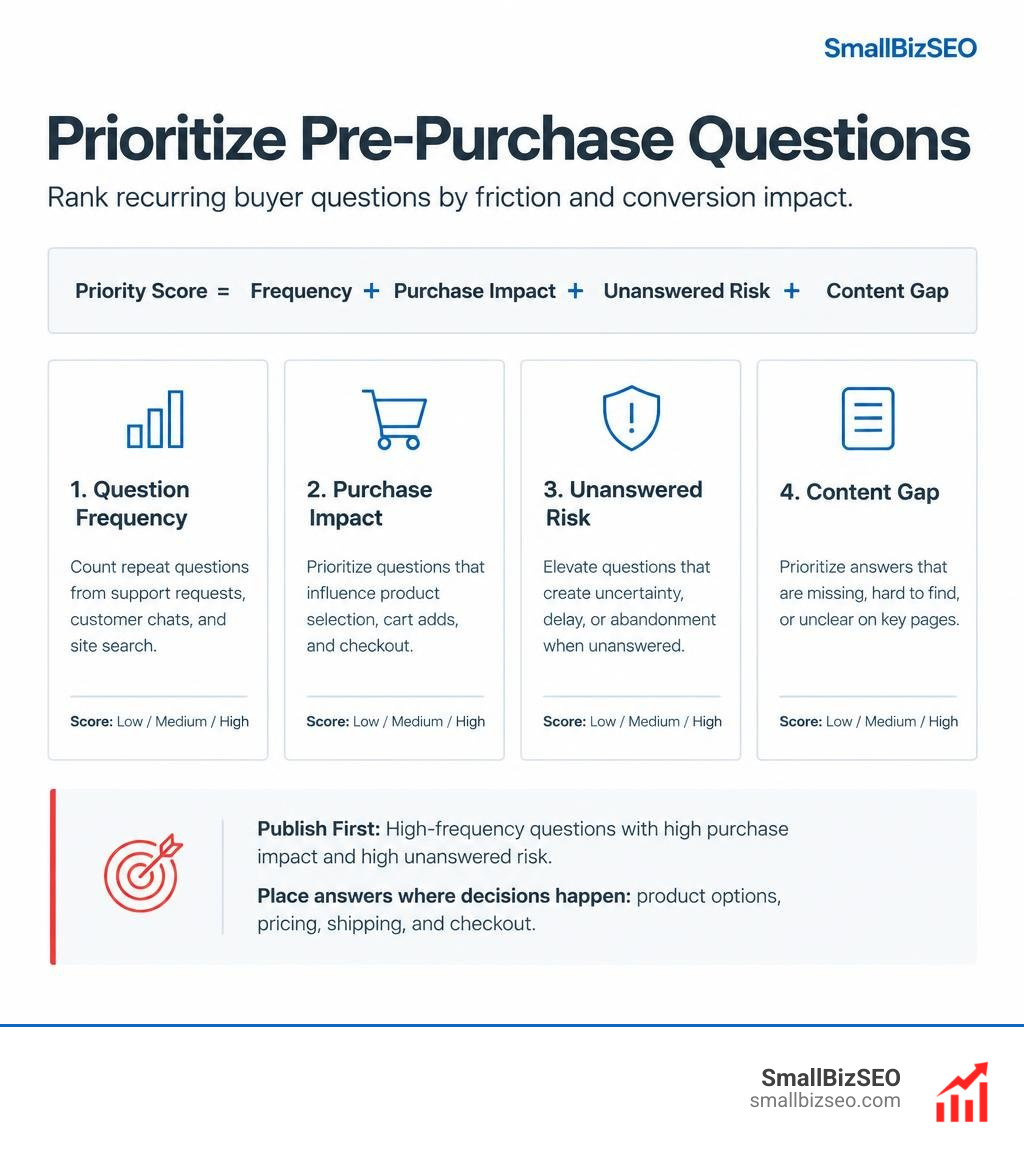
To score questions by potential revenue impact, evaluate each query against frequency, commercial relevance, existing content gaps, and the financial risk created by leaving the question unanswered.
Not all inquiries carry equal commercial weight. A question about delivery speeds directly influences a buying decision, whereas general company trivia does not. We assign a numerical score (from 1 to 5) across four critical dimensions:
- Inquiry Frequency: How often does this exact question arise across support tickets, chat logs, and search queries?
- Commercial Relevance: Does answering this resolve a transactional keyword query that directly impacts a checkout or form submission?
- Customer Risk: Does an unclear answer risk an immediate cart abandonment or an expensive product return?
- Content Gap: Is this information completely missing, buried in dense policy pages, or difficult to find on mobile?
| Question Category | Intent Level | Primary Buyer Concern | Revenue Impact Score | Placement Priority |
|---|---|---|---|---|
| Product Fit & Sizing | High Decision | "Will this work for my exact setup or size?" | 5 / 5 | Above the fold, near selectors |
| Pre-Order Logistics | High Decision | "What are the exact shipping costs and delivery times?" | 5 / 5 | Beside the checkout or Add-to-Cart CTA |
| Return & Warranty Terms | Reassurance | "What happens if this does not fit or work?" | 4 / 5 | Under pricing and payment blocks |
| Feature Comparison | Consideration | "How does this model differ from alternative options?" | 3 / 5 | Mid-page comparison section |
| General Brand Inquiries | Informational | "Where are your materials sourced?" | 2 / 5 | Secondary help center or footer |
Addressing high-scoring questions first creates low-effort experiences. Research shows that 94% of customers intend to purchase after a low-effort interaction, compared to just 4% after high-effort experiences.
What Makes a High-Intent Answer Clear and Useful?
A high-intent answer is clear and useful when it opens with a direct, bounded statement, provides verifiable proof or exact specifications, and finishes with an actionable next step.
Applying our Answer-Ready SEO framework ensures that both human buyers and search engines find immediate clarity. Every high-intent answer should follow a four-part structure:
- Direct Answer: State the answer in the very first sentence using clear, simple language without marketing fluff.
- Supporting Evidence: Back up the statement with precise data, measurements, material specs, or policy terms to deliver a grounded answer.
- Scope and Conditions: Clearly define who or what this applies to (for example, specific product variants, regions, or order thresholds).
- Clear Next Step: Guide the customer toward the next logical action, such as a sizing calculator, shipping table, or checkout button.
Structuring answers this way aligns with best practices on how to build direct-answer content that AI models cite. Adding structured data like FAQPage schema in JSON-LD markup helps search engines parse and feature your answers across search engine results and AI answer features.
Where Should You Place Answers on Key Pages?
Place answers directly within the visual flow of key decision pages where hesitation occurs, optimizing for mobile accordions and maintaining consistency with automated chat tools.
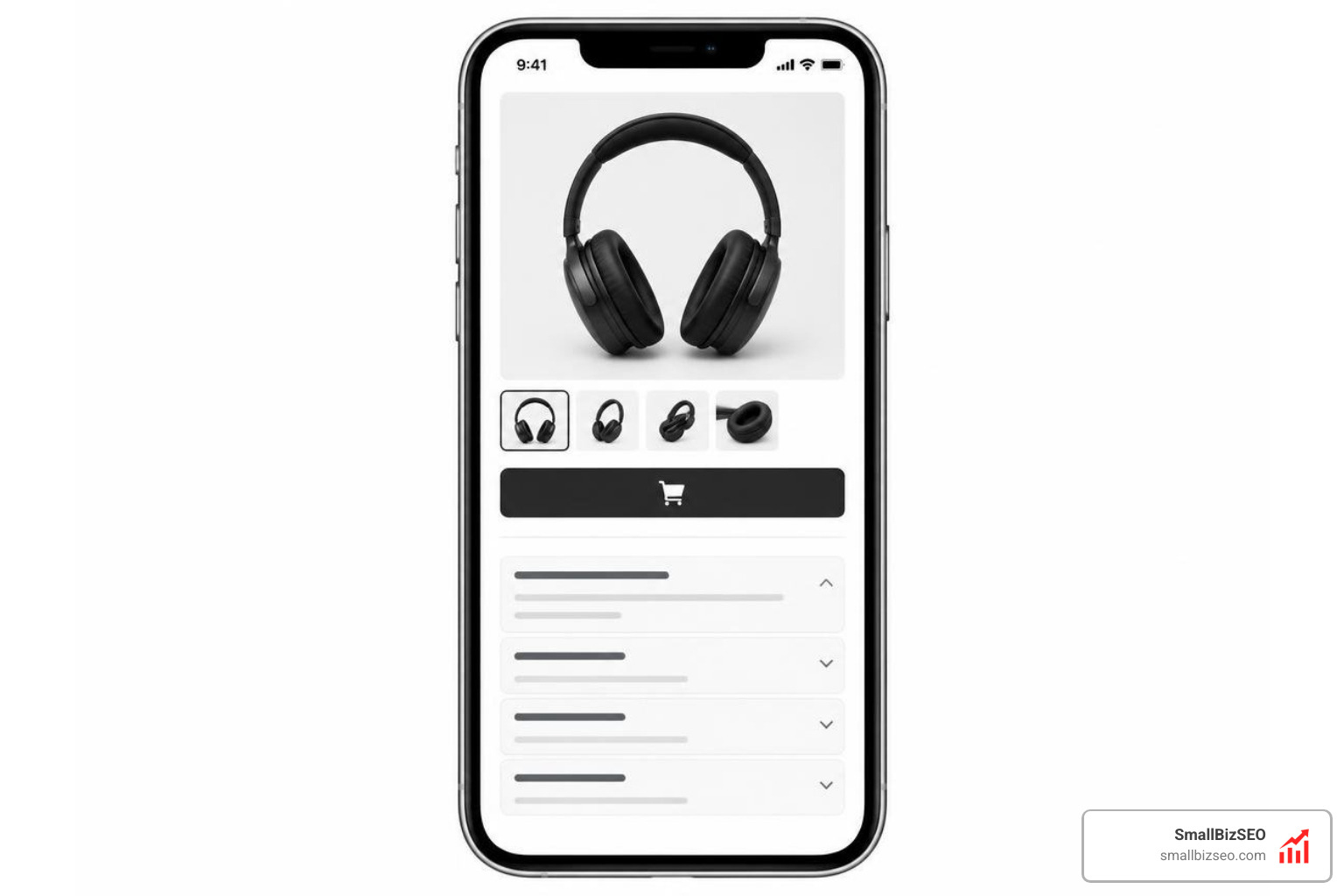
On mobile devices, the first three visible FAQ items capture approximately 70% of user clicks. Stacking dozens of generic questions at the bottom of a page forces users to scroll past the details they need. Instead, position contextual answers near the elements that trigger hesitation:
- Beside Variant Selectors: Place sizing charts, compatibility guides, and material specifications directly under product options.
- Adjacent to Call-to-Action Buttons: Display delivery windows, shipping thresholds, and return policies right next to the "Add to Cart" or "Buy Now" button.
- Between Descriptions and Social Proof: Embed comparison tables and use-case details between core product specifications and customer reviews.
- In Checkout and Cart Flows: Reassure buyers with accepted payment methods, security guarantees, and order modification rules directly on checkout pages.
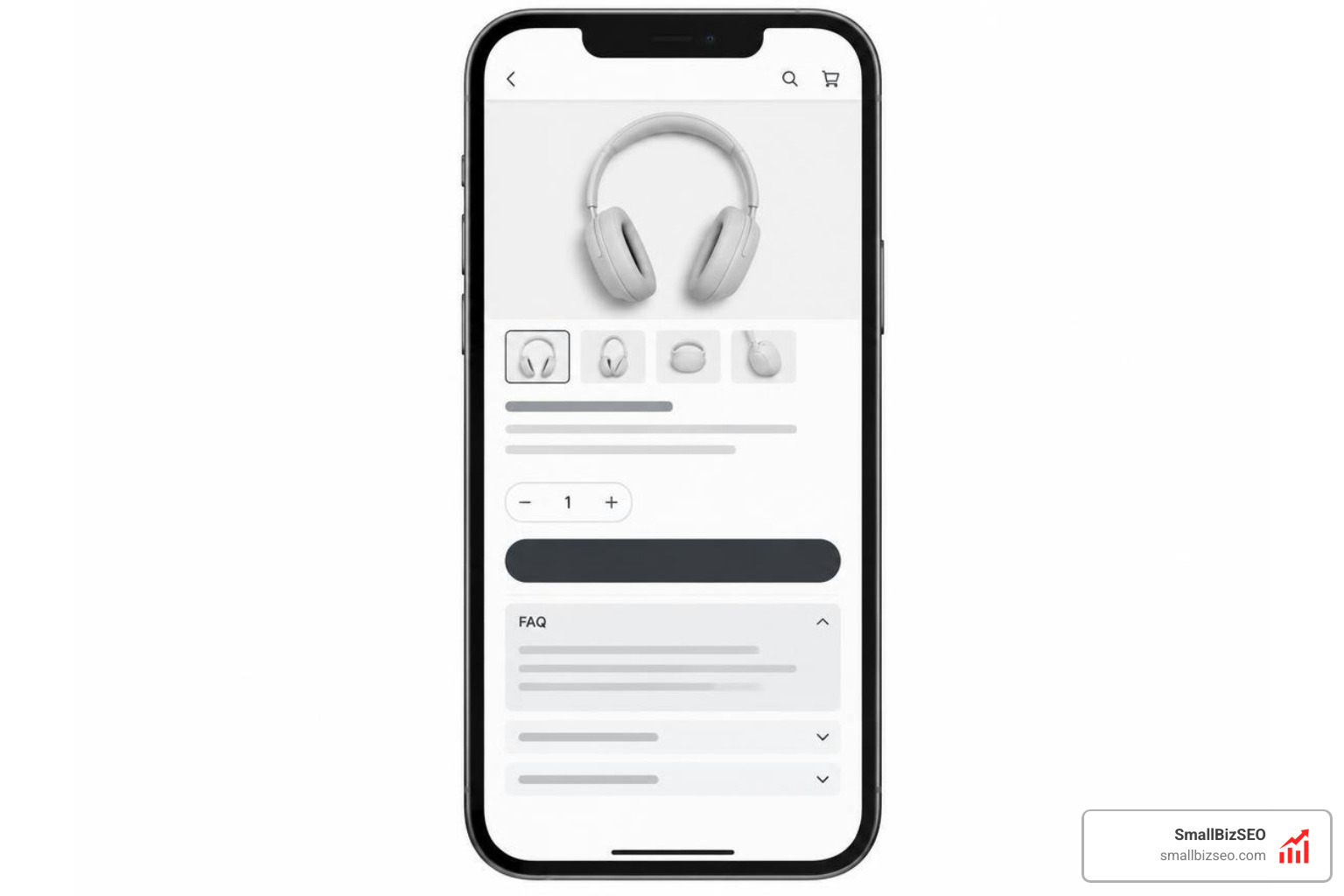
Ensure that all on-page FAQ content serves as the single source of truth for your automated support systems. When live chat assistants and on-page accordions deliver identical answers, you eliminate customer confusion and improve organic conversion rates.
How Can You Measure and Scale Your Answer Strategy?
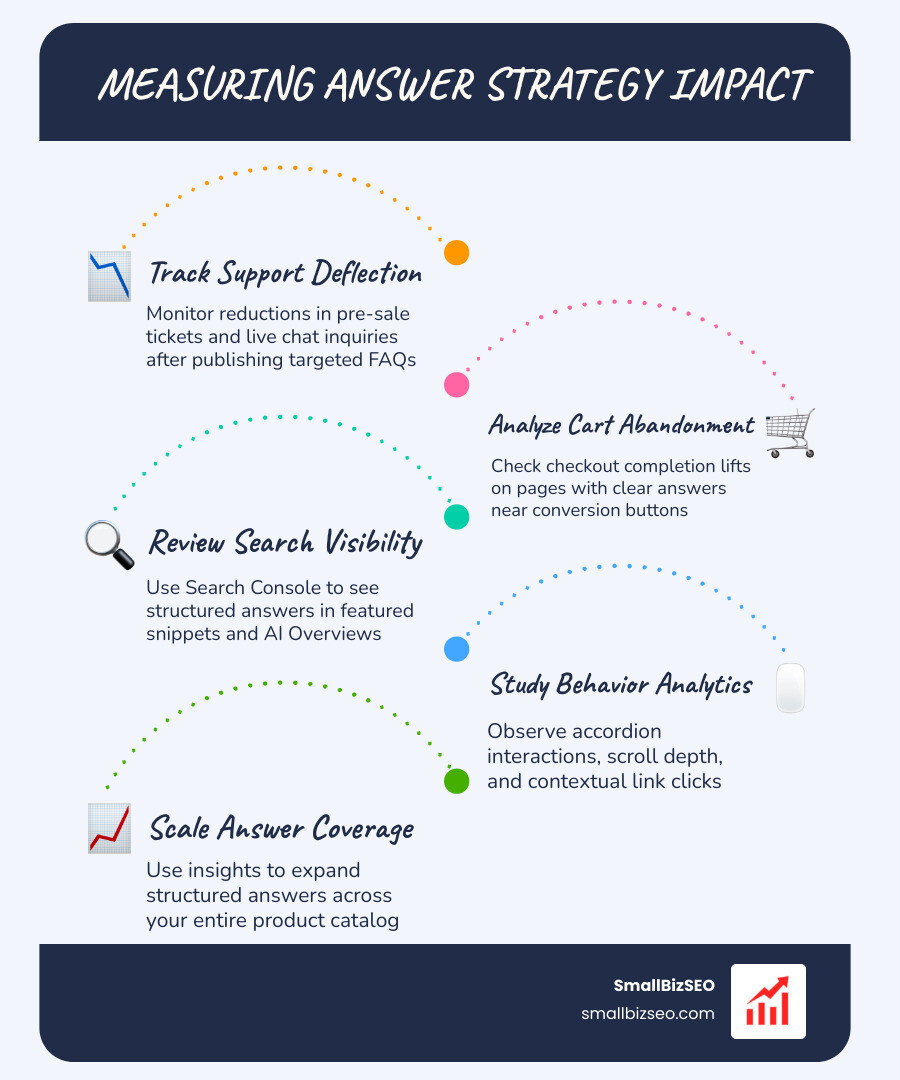
Measure and scale your answer strategy by tracking support ticket deflection, cart abandonment rates, and on-page engagement, then use these insights to systematically expand answer coverage across your catalog.
Proactively answering high-friction questions produces measurable business outcomes across multiple channels:
- Support Deflection Rate: Monitor reductions in incoming pre-sale tickets and live chat inquiries for specific product lines after publishing targeted FAQ sections.
- Cart Abandonment and Conversion Rates: Track checkout completion lifts on product detail pages that feature clear answers near primary conversion buttons.
- Search and AI Visibility: Review Google Search Console and analytics to see how structured answers capture visibility in featured snippets and AI Overviews.
- Behavior Analytics: Use user behavior analytics to observe how visitors interact with accordions, scroll depth, and contextual links.
Turn Buyer Hesitation into Steady Revenue
Answering customer questions before they cause friction is one of the fastest ways to increase conversion rates and build long-term customer trust. By mining real inquiry data, scoring questions by revenue impact, and deploying structured, easy-to-read answers directly on high-intent pages, you turn common objections into seamless purchases.
Explore our comprehensive Answer Engine Optimization services to see how SmallBizSEO helps businesses build structured, conversion-focused answer content that ranks in modern search engines and turns visitors into loyal buyers.