8 Actionable SEO Tactics to Boost Watersport and Scuba Reservations
How Can Dive and Watersport Centers Get More Direct Bookings From Search?
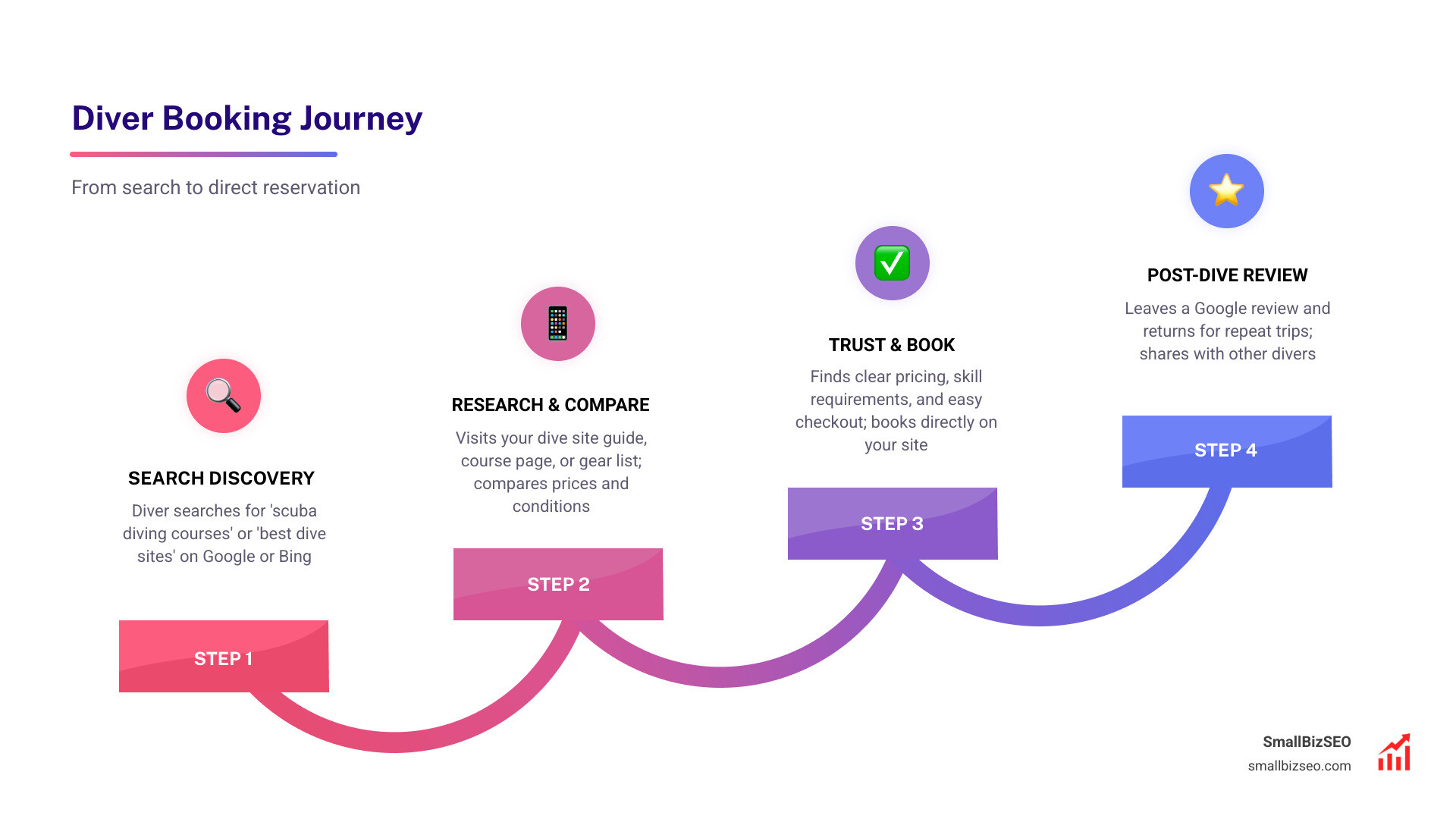
SEO for scuba diving & watersport centers starts with the searches that lead to bookings. Create a clear page for each course or activity, publish useful guides to nearby dive sites and conditions, and keep your Google Business Profile accurate. Make prices, skill requirements, and booking steps easy to find on a phone. These steps help divers find and book with you while they are still planning their trip.
Large booking platforms can appear for broad searches. Your advantage is knowledge: which sites suit beginners, what a trip includes, and when conditions are best. This guide shows how to turn that knowledge into search visibility and direct bookings.
I'm Clayton Johnson, founder of SmallBizSEO. My work in technical SEO, content strategy, and link building for small businesses shapes this guide to SEO for scuba diving & watersport centers.
SEO for scuba diving & watersport centers vocab to learn:
Core Pillars of SEO for Scuba Diving & Watersport Centers: Search Visibility and Setup
Direct booking growth requires a solid foundation across local visibility, site performance, and intent-focused content. Relying on online travel agencies (OTAs) can cost operators between 15% and 30% in platform commissions on every ticket sold. Over 68% of all online experiences begin with a search engine, and 53% of all trackable web traffic arrives through organic search. When we establish deep topical authority around local reefs, tides, and gear setups, we capture adventure seekers during their early trip-planning phase. This bypasses intermediary booking portals entirely.
How Does Local SEO for Scuba Diving & Watersport Centers Outrank OTAs on Google Maps?
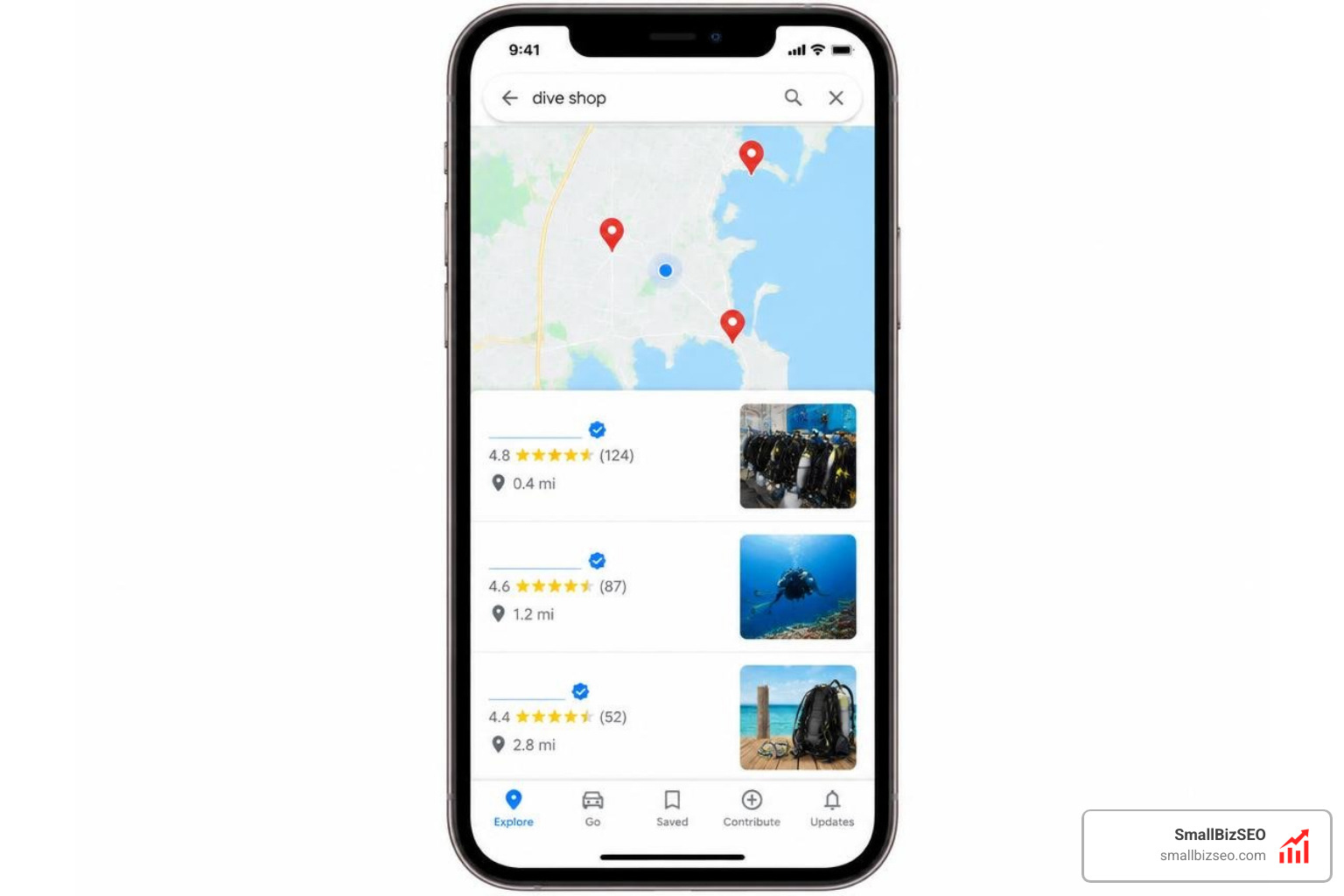
To outrank aggregator listings on Google Maps, configure your Google Business Profile (GBP) with precise activity categories, verified contact details, and fresh visual proof of operations. Big travel platforms have massive marketing budgets, but they do not possess a physical boat dock or certified dive masters on site.
Selecting the most accurate primary category directly determines your map placement. A water sports school categorized generically as a "Sports School" misses high-intent queries. Reclassifying a business to its exact operational focus—such as setting "Kiteboarding School" as the primary category and "Water Sports Equipment Rental Service" as secondary—has increased local map impressions by over 40% within two months.
Follow this category mapping structure:
- Scuba Dive Shops: Set "Diving Center" or "Scuba Tour Agency" as primary; add "Scuba Instructor" and "Diver Navigation Equipment" as secondary.
- Kite & Windsurfing Hubs: Set "Kiteboarding School" or "Windsurfing Center" as primary; add "Outdoor Sports Store" as secondary.
- Paddle & Snorkel Outposts: Set "Canoe & Kayak Rental Service" or "Snorkeling Tour Agency" as primary; add "Boat Tour Agency" as secondary.
Maintain strict Name, Address, and Phone number (NAP) consistency across every directory. Upload authentic, weekly visual content showing conditions, daily marine life sightings, and student training sessions. Reviewing the PADI guide to top scuba diving keywords and applying our comprehensive local SEO guide will help align your map listing with diver search phrases.
Which Technical SEO Fixes and Schema Formats Prevent Booking Engine Drop-Off?
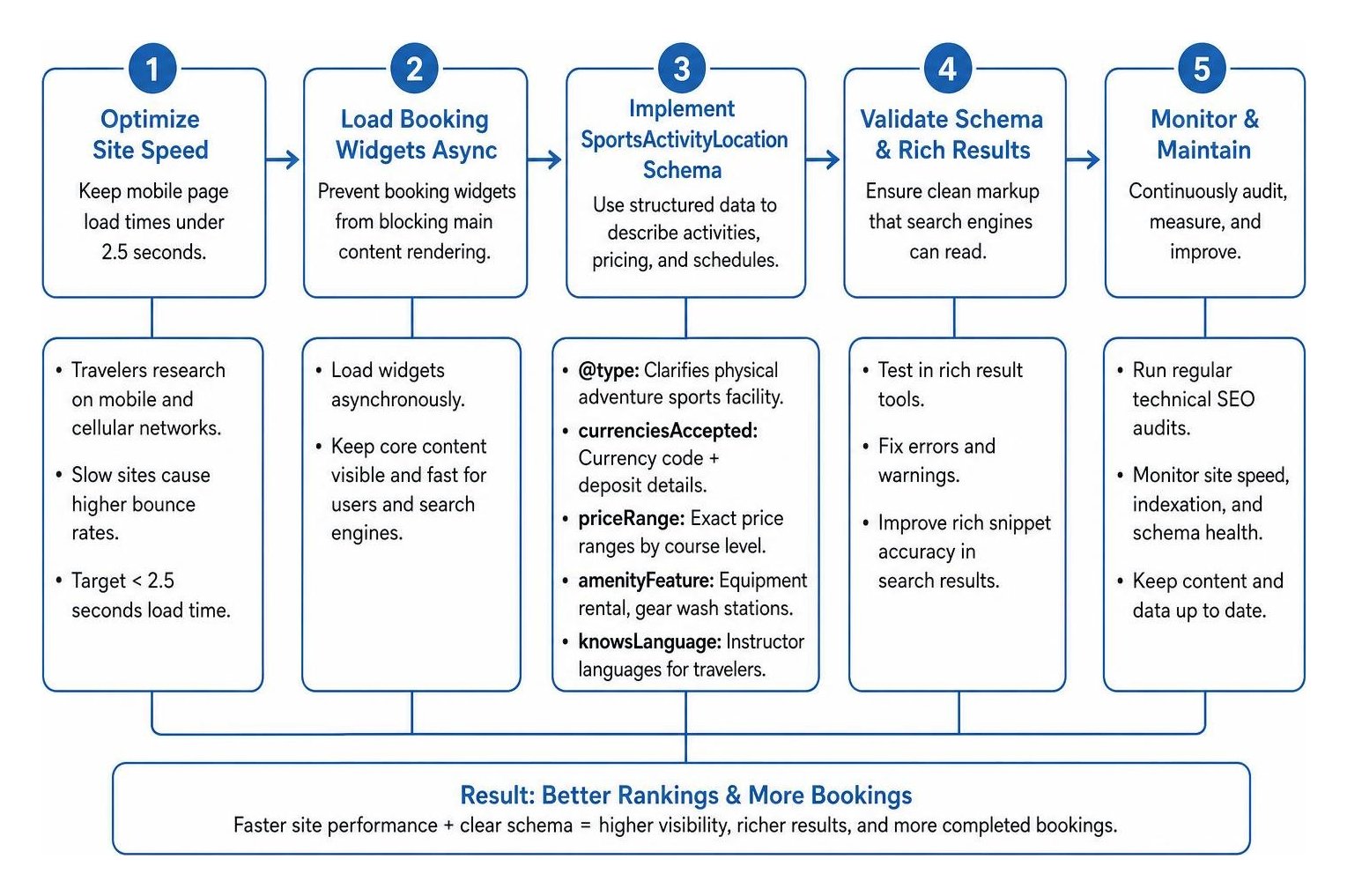
Technical search optimization prevents booking abandonment by keeping mobile page load times under 2.5 seconds and structuring your activities with SportsActivityLocation schema. Most travelers research coastal excursions while traveling, using mobile devices on cellular networks. If a site takes longer than three seconds to load, bounce rates surge.
Ensure booking widgets (such as Checkfront, FareHarbor, or Peek Pro) load asynchronously so they do not block main page content from rendering. Search engines also require clear structured data to read your activity requirements, pricing, and schedules.
| Schema Property | Standard LocalBusiness |
SportsActivityLocation Markup |
Operational Benefit |
|---|---|---|---|
@type |
LocalBusiness |
SportsActivityLocation |
Clarifies physical adventure sports facility to search engines |
currenciesAccepted |
Basic currency code | Currency code + deposit details | Displays accurate checkout currency for travelers |
priceRange |
Generic indicator ($$) |
Exact price ranges by course level | Improves rich snippet accuracy in search results |
amenityFeature |
Not supported | Equipment rental, gear wash stations | Highlights gear offerings directly in rich cards |
knowsLanguage |
Optional string | Explicit array of instructor languages | Matches international travelers searching in native languages |
Resolve common indexation problems by running a regular technical SEO audit, and use our guide to structured schema markup to implement code that validates cleanly in rich result testing tools.
What High-Intent Keyword and Content Strategy Captures Divers During Research?
Capture divers early by creating dedicated, question-focused pages for each certification tier, dive site, and seasonal wildlife migration. Divers search by certification level, visibility conditions, water depth, and marine life calendars rather than generic travel phrases.
Structure your content strategy to cover three core intent buckets:
- Certification Queries: Build specific URLs targeting courses like open water certification, advanced navigation, rescue diver training, and enriched air nitrox courses.
- Site-Specific Guides: Publish individual guides for popular local reefs, wrecks, and drop-offs. Detail entry methods, average depth, current strength, and required experience levels.
- Marine Life Calendars: Write guides outlining the best months to encounter sea turtles, pelagic rays, or seasonal shark migrations.
Pair these comprehensive resources with straightforward on page SEO techniques and strategic SEO content marketing to capture qualified researchers before they browse third-party aggregators.
Advanced Search Tactics: Multilingual Optimization, AI Visibility, and Conversions
Capturing direct bookings from international tourists requires multilingual content, modern AI-engine optimization, and fast post-experience review collection. International visitors make up a massive percentage of seasonal water sports participants. When our digital presence addresses their language preferences and feeds accurate facts to generative answer engines, direct reservations increase substantially.
How Do Multilingual SEO and AI Engine Visibility Drive International Reservations?
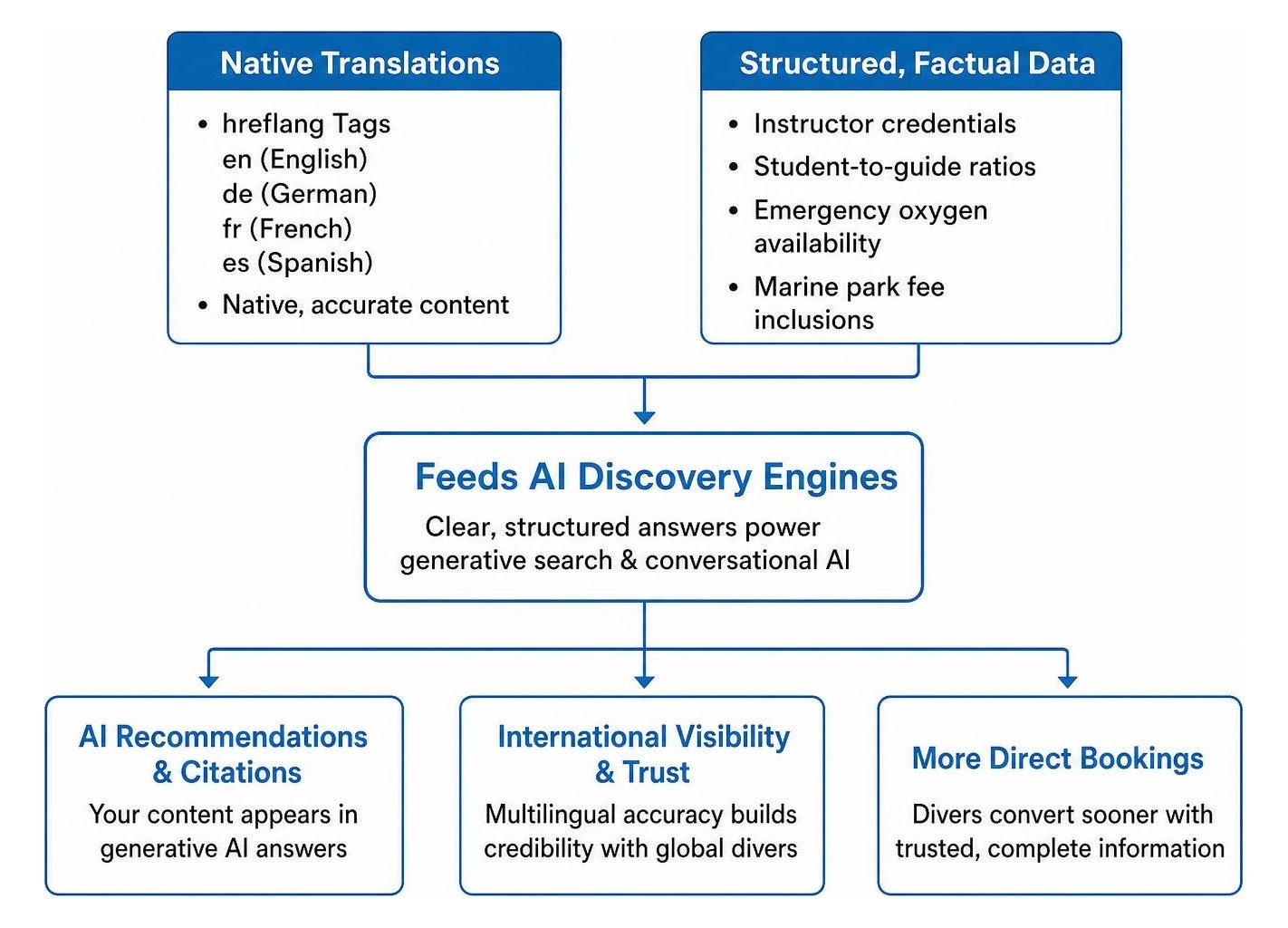
To earn bookings from international guests and AI search platforms, implement verified hreflang tags with native translations and publish structured, factual trip specifications. Machine-translated pages often mix up technical scuba terminology (such as confusing buoyancy control terms with general marine phrases), eroding trust and rankings.
Implement proper hreflang tags across your site's alternate language directories:
- Standard English:
hreflang="en" - German:
hreflang="de" - French:
hreflang="fr" - Spanish:
hreflang="es"
Generative search engines and conversational AI models look for clear, structured answers when recommending tour operators. Create an explicit information section on your website that details instructor credentials, student-to-guide ratios, emergency oxygen availability, and marine park fee inclusions. Earn high-value backlinks from marine conservation projects, regional tourism boards, and research initiatives using authoritative link building services to reinforce your site's entity authority.
How Can Email Marketing and Review Workflows Reinforce SEO for Scuba Diving & Watersport Centers?
Automating review request emails within four hours of an activity generates the keyword-rich customer feedback that boosts local search rankings. Customer reviews mentioning specific dive sites, instructors, and equipment quality provide strong local ranking signals that large platforms cannot duplicate.
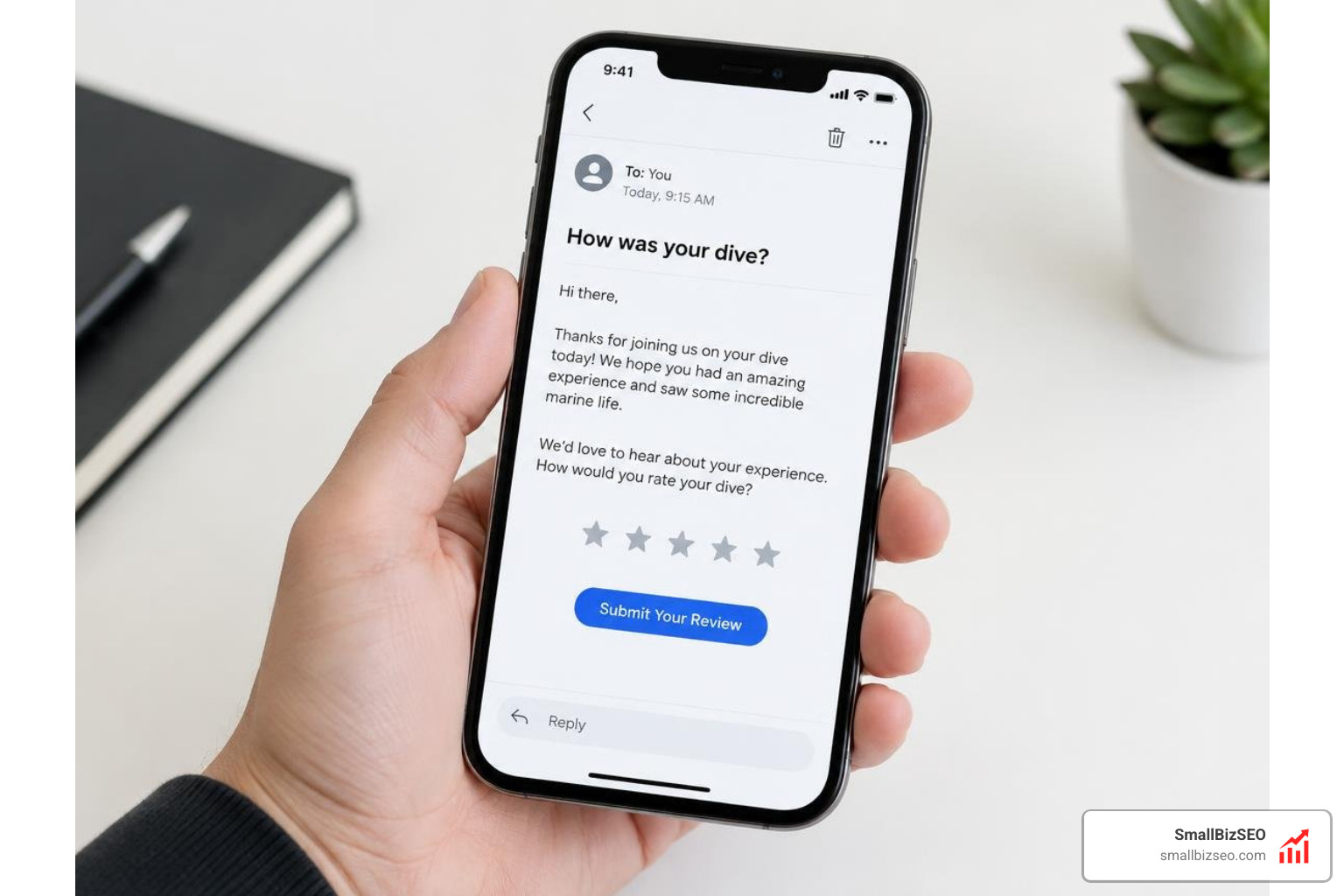
Timing is essential when collecting feedback. Sending an automated review request email within four hours of completing a trip yields significantly higher completion rates than waiting until the following day. We found that conversion rates dropped by over 60% when testing next-day follow-ups against same-day review emails sent shortly after guests returned from the water.
Email marketing also drives repeat course enrollments. Marketers report an average return of $38 for every $1 spent on email marketing campaigns, with 82% identifying email as a primary driver of customer retention. Connecting platforms like Diversdesk with your email platform allows you to segment divers by certification level, sending automated reminders when students are eligible for advanced certifications. Implement these strategies alongside our proven local SEO tips for businesses to turn one-time vacationers into regular direct bookers.
How Do Dive Shops Track SEO ROI and Overcome Common Ranking Pitfalls?
Track SEO return on investment by measuring direct booking revenue against organic conversion sources in your analytics dashboard. Organic search builds an asset that compounds over time, steadily lowering your cost per acquisition compared to ongoing pay-per-click ads or OTA commission fees.
Monitor key performance indicators regularly:
- Organic Direct Bookings: Total reservation revenue originating from non-paid search clicks.
- Discovery Impressions: Search visibility for local map queries and dive site guides monitored through data tracking in google search console.
- Booking Engine Drop-Off: The percentage of mobile users who exit during checkout steps.
Avoid common search pitfalls like keyword cannibalization (such as creating three separate pages targeting the same beginner course keyword) or neglecting seasonal site updates. Dive centers that consistently update their site conditions and refine on-page metadata achieve visible ranking gains within three to six months. Partnering with a specialized scuba diving and watersport centers SEO company gives you the technical velocity and reporting needed to keep your boats full year-round.
Charting Your Path to Consistent Direct Bookings
Dominating search results in the water sports industry comes down to answering real customer questions with local expertise. By optimizing your Google Business Profile, publishing in-depth dive site guides, resolving technical page speed bottlenecks, and automating your review collection, you establish an authoritative digital storefront.
Direct bookings protect your margins, provide complete control over guest communication, and create long-term customer loyalty. Begin by auditing your primary business categories and identifying your top-producing local dive sites today. Turn your ocean knowledge into steady organic search traffic that fills your booking schedule season after season.