Curate Better Rankings: A Practical SEO Guide for Modern Museums

How can SEO for science centers and museums bring in more visitors?
SEO for science centers & museums starts with pages that answer what people are searching for. Give each major exhibit and program its own useful page. Make hours, tickets, accessibility, and directions easy to find. Then check that search engines can reach those pages and that visitors can book without friction.
This approach serves two audiences: people researching a science topic and people planning a visit. A clear exhibit page can help both, especially when it links to related learning resources and a simple ticket path.
I’m Clayton Johnson, founder of SmallBizSEO. My work in SEO, content strategy, and digital PR shapes this guide to SEO for science centers & museums, with a focus on useful answers and clear paths from search to visit.
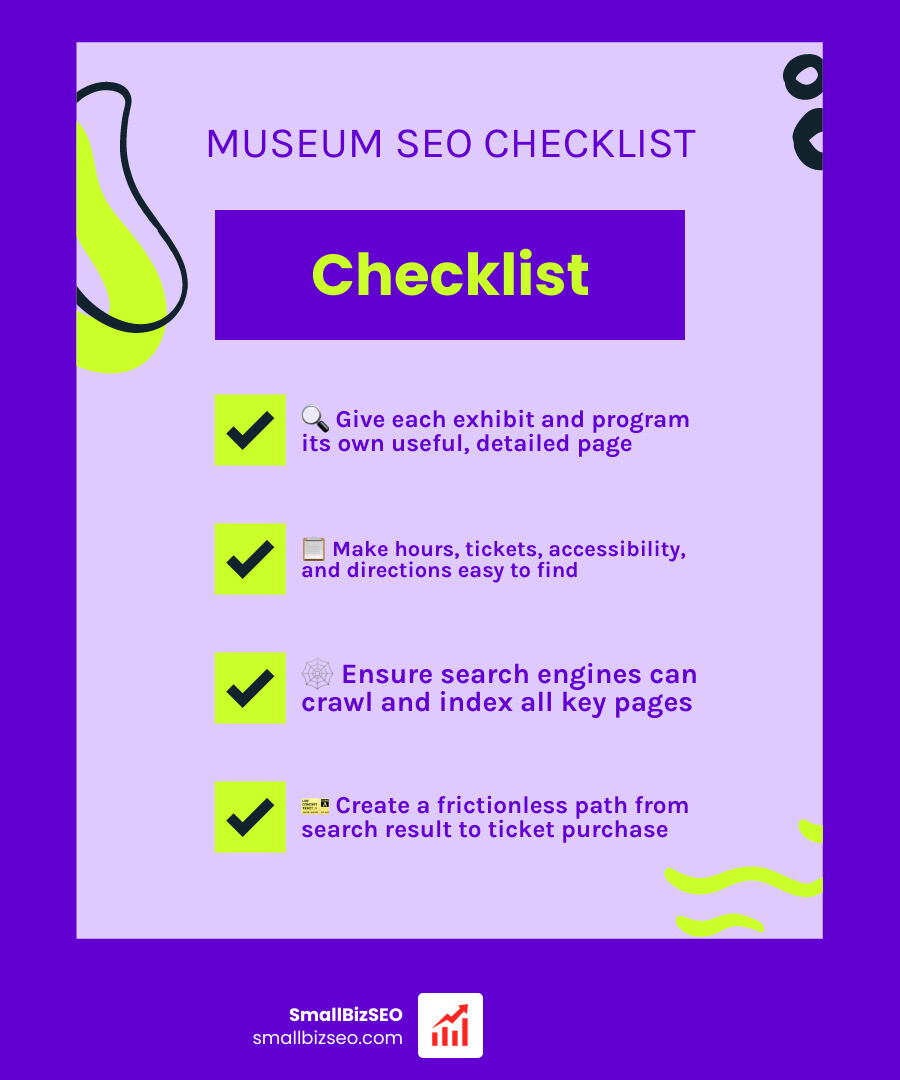
SEO for science centers & museums word guide:
Organic search accounts for 40% to 60% of all website traffic to cultural institutions. Museums and science centers contribute over $50 billion annually to the gross domestic product, serving as key anchors for cultural tourism and public education. However, capturing this online audience requires moving beyond static brochure sites and adopting structured digital optimization.
Mastering SEO for Science Centers & Museums: Core Strategic Frameworks
Building high search visibility for cultural institutions requires balancing seasonal event demand with permanent, educational authority. While performing arts venues navigate rapid query spikes, science centers and museums generate long-term organic traffic through indexable collections, hands-on science assets, and structured exhibition cycles.
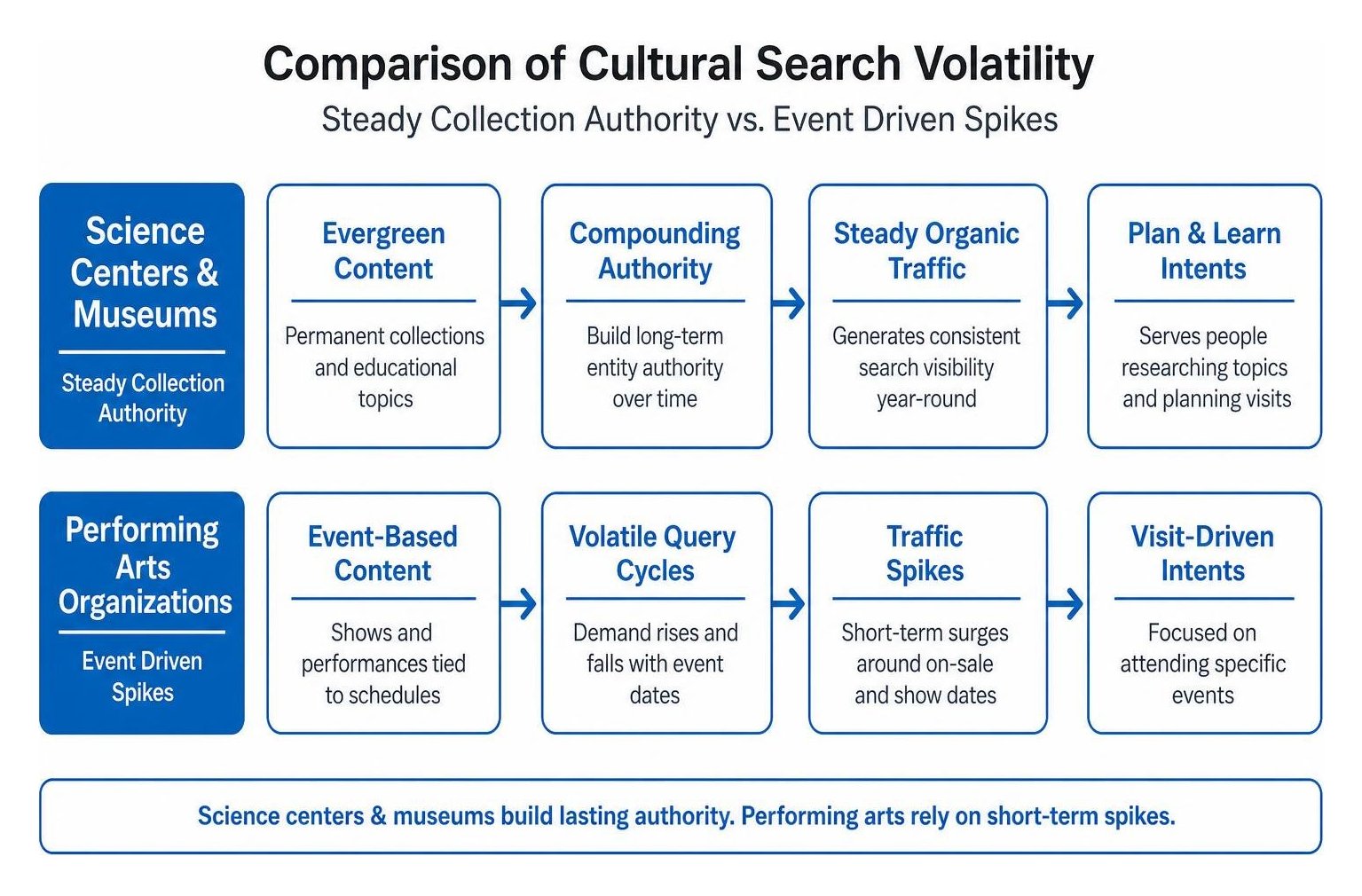
How Does SEO for Science Centers & Museums Differ from Performing Arts?
SEO for science centers and museums focuses on building compounding, evergreen entity authority around permanent collections and educational topics, whereas performing arts SEO centers on volatile, event-driven query cycles that rise and fall with show schedules.
| Strategic Dimension | Performing Arts Organizations | Science Centers & Museums |
|---|---|---|
| Search Traffic Volatility | High volatility; short bursts around production runs and guest stars | Low-to-moderate volatility; steady baseline with seasonal holiday spikes |
| Primary Intent Profile | Commercial and transactional (tickets, showtimes, cast queries) | Informational, educational, and transactional (research, field trips, planning) |
| Content Longevity | Temporary event URLs that expire after show runs | Permanent, compounding collection-entity and interactive exhibit URLs |
| Entity Authority Type | Dynamic event schemas, performers, theatrical productions | Educational subjects, scientific disciplines, permanent artifacts |
| Audience Re-engagement | Show-by-show ticket promotions and season subscriptions | Annual memberships, rotating traveling exhibits, school group visits |
Performing arts organizations often experience sudden surges in visibility, but museums rely on evergreen assets that build sustained authority over time. As outlined by the Association of Science and Technology Centers framework, science centers possess unique educational environments that attract continuous interest from educators, families, and researchers.
How Do Institutions Build Collection-Entity Authority and Plan Exhibition Cycles?
Institutions build collection-entity authority by assigning each permanent artifact, specimen, and interactive exhibit its own indexable URL supported by structured data markup, while planning exhibition content 8 to 12 weeks before opening to capture early search demand.
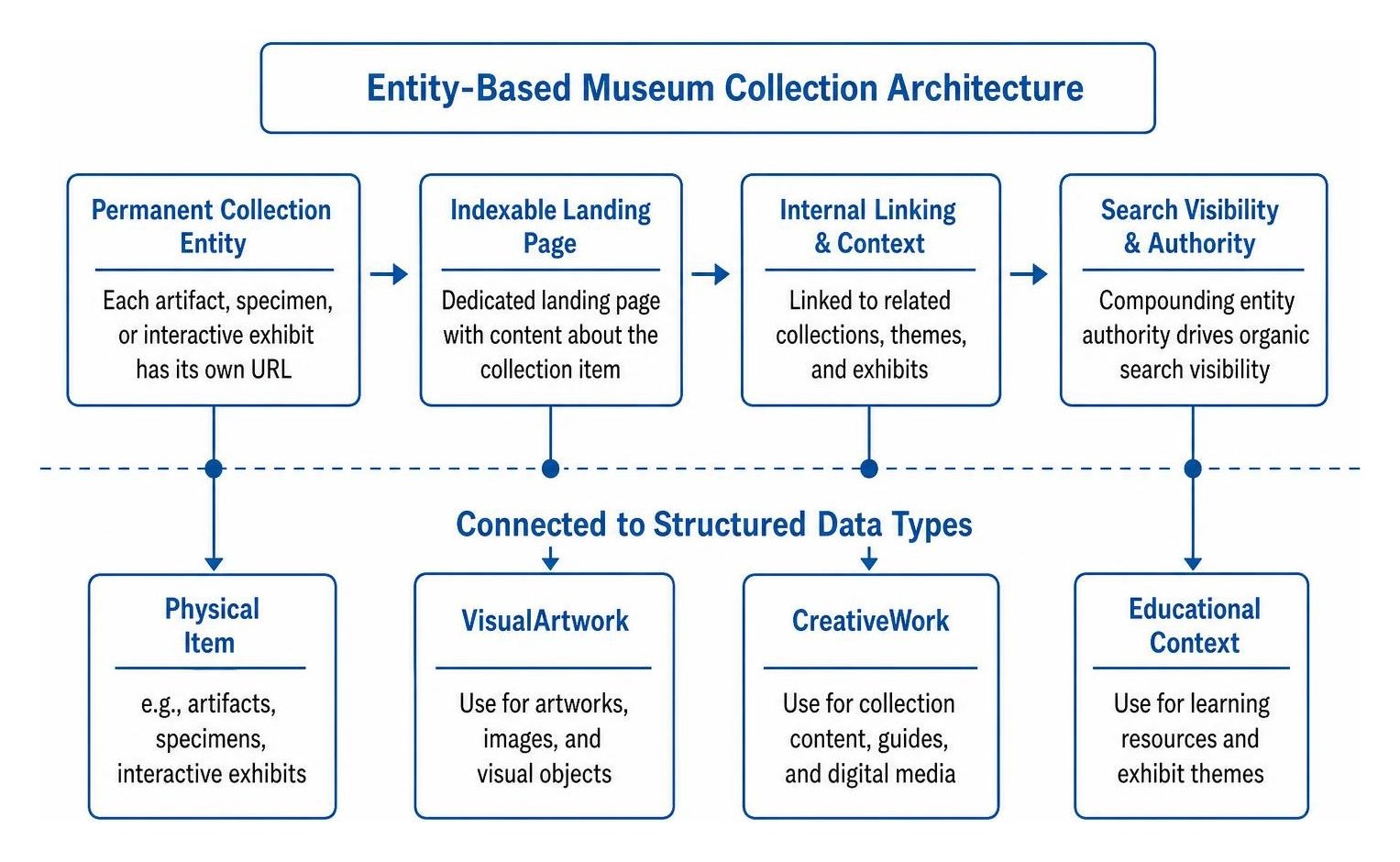
To establish entity authority:
- Publish dedicated landing pages for individual collection items rather than bundling them into unsearchable, dynamic portals.
- Implement structured entity types like
VisualArtworkandCreativeWorkalongside clean internal linking. - Deploy strategic content SEO to answer specific research queries tied to collection themes.
- Launch exhibition preview pages two to three months prior to opening to build indexation and capture early media coverage.
Research highlighted in the Johns Hopkins University museum search study underscores that dynamic collection pages frequently suffer from indexing gaps unless supported by clean semantic URL paths and automated metadata.
How Can Science Centers Leverage Interactive STEM Assets and Education Outreach?
Science centers can differentiate their search visibility by publishing downloadable, curriculum-aligned lesson plans, interactive lab guides, and dedicated pages for live demonstrations that capture high-intent family and educator searches.
Museums and science centers contribute over 18 million instructional hours annually across the country. Institutions capture significant organic demand by targeting informational queries like "hands-on science experiments for kids" or "elementary physics lesson plans."
Applying standard on-page SEO techniques—such as clear header structures, optimized meta titles, and compressed media—ensures these educational assets rank competitively. For example, hands-on programming and public science initiatives by the New York Hall of Science demonstrate how community-focused STEM workshops generate high-authority backlinks from school districts and educational networks.
Converting Cultural Search Demand into On-Site Visits and Long-Term Support
Turning organic visitors into on-site ticket buyers, members, and donors requires a secure technical foundation, streamlined visitor planning, and structured content optimized for modern search engines.
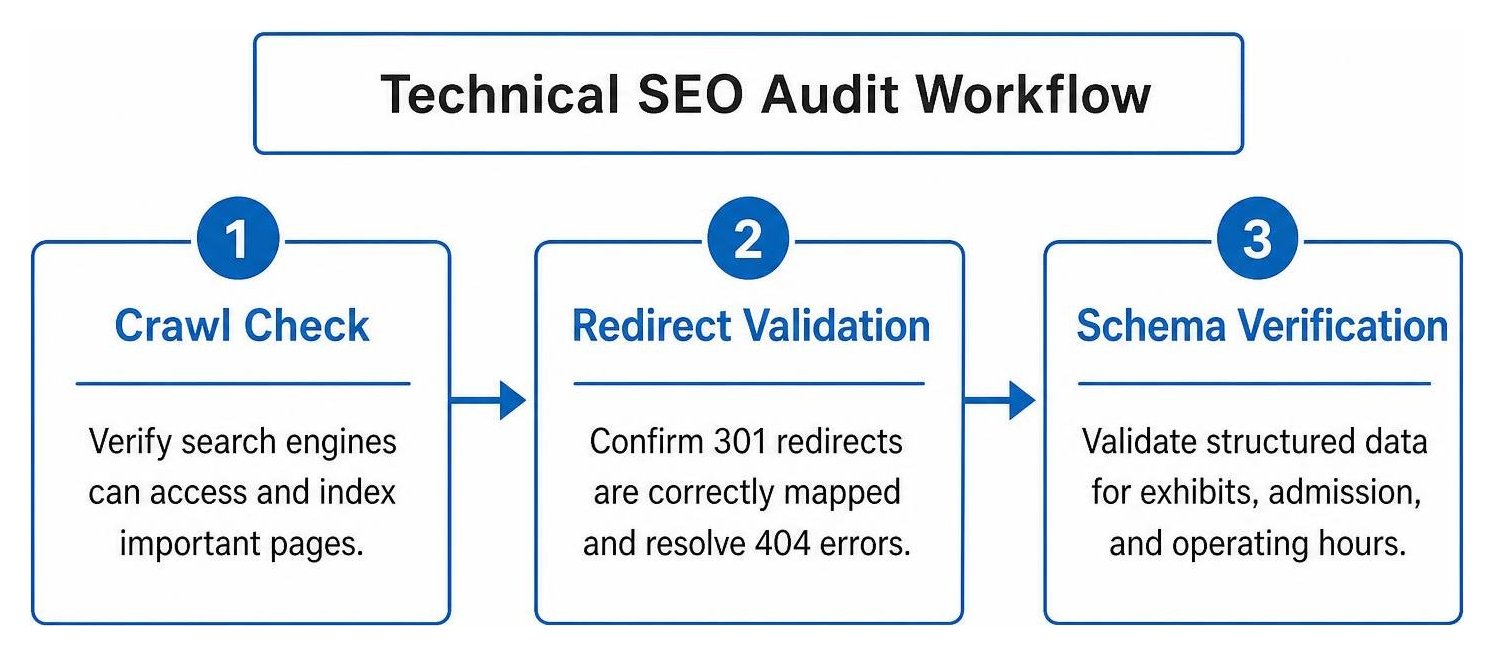
How Do Technical Audits and Schema Markup Elevate SEO for Science Centers & Museums?
Technical audits and schema markup prevent dramatic traffic losses during website updates while providing search engines with clear machine-readable details about exhibits, admission pricing, and operating schedules.
A major website redesign or domain change without proper 301 redirect mapping can cause search visibility drops of 50% or more. Institutions protect organic reach by maintaining technical health:
- Audit Crawlability and Indexation: Regularly review search console data to eliminate broken links, redirect chains, and accidental
noindexdirectives across deep collection pages. - Review Technical Foundations: Implement our comprehensive technical SEO guide to maintain sub-second server response times, responsive mobile rendering, and clean XML sitemaps.
- Deploy Multi-Type Schema: Execute complete schema markup implementation using JSON-LD for
Museum,Event, andOfferschema types.
Structured data ensures ticket prices, exhibition dates, and physical amenities appear directly within rich search results, improving organic click-through rates.
How Should Visit-Planning UX, Local Search, and Memberships Be Structured?
Visit-planning user experience must feature clear pathways to admission details, accessibility accommodations, parking options, and tiered membership comparisons that convert casual searchers into paying patrons.

Over 80% of museum attendees research online prior to visiting, and more than half of family excursions begin with local intent searches. To capture this demand:
- Optimize the institution's Google Business Profile with accurate seasonal hours, ticket booking links, and updated exhibit photography.
- Embed structured local business schema on the primary visit-planning page.
- Create explicit accessibility landing pages highlighting wheelchair access, sensory-friendly hours, and public transit directions.
- Build membership landing pages featuring simple cost-benefit comparison tables showing that a membership pays for itself within two visits, helping offset operational costs.
How Should Cultural Institutions Adapt to AI Summaries and Track Multi-Dimensional SEO Metrics?
Institutions must adapt to AI-generated search overviews by formatting content with concise direct answers and structured entity definitions while monitoring holistic performance metrics beyond basic keyword positions.
To maintain strong citation authority across AI summaries:
- Structure exhibit summaries with straightforward question-and-answer headings.
- Maintain consistent institutional facts across reputable cultural directories, Wikipedia, and educational databases.
- Track non-branded keyword impressions, local map pack clicks, and organic ticketing conversions rather than relying solely on vanity rankings.
- Perform a thorough SEO visibility audit to identify technical bottlenecks and content gaps across exhibition archives.
At SmallBizSEO, we implement our data-driven Velocity framework to help cultural organizations systematically build E-E-A-T-compliant authority, improve crawl efficiency, and convert online interest into vibrant on-site attendance.
Expanding Your Museum's Digital Discovery
A modern SEO strategy transforms a museum or science center website from a digital brochure into an engine for attendance and community education. By structuring collection archives, launching exhibition content early, maintaining technical site health, and designing clear visit-planning pathways, your institution can expand its cultural impact and welcome more visitors through its doors every day.