Fast-Track Your SERP Positions with Rapid SEO Execution

Fast-Track Your SERP Positions with Rapid SEO Execution
How Can You Improve Search Rankings Faster?
Start with pages Google can crawl and index. Then target specific searches your customers make, match each page to what they need, and link related pages together. If your site already gets impressions, use Google Search Console to find pages near page one and improve their titles, answers, and internal links first.
Fast means focused, not instant. Rankings may change within weeks for less competitive searches, while a new site often needs months to build steady traffic. Track impressions and clicks so you can see what is working.
I’m Clayton Johnson, founder of SmallBizSEO. My fast ranking SEO strategy connects technical fixes, useful content, and digital PR to help small businesses build lasting search visibility.
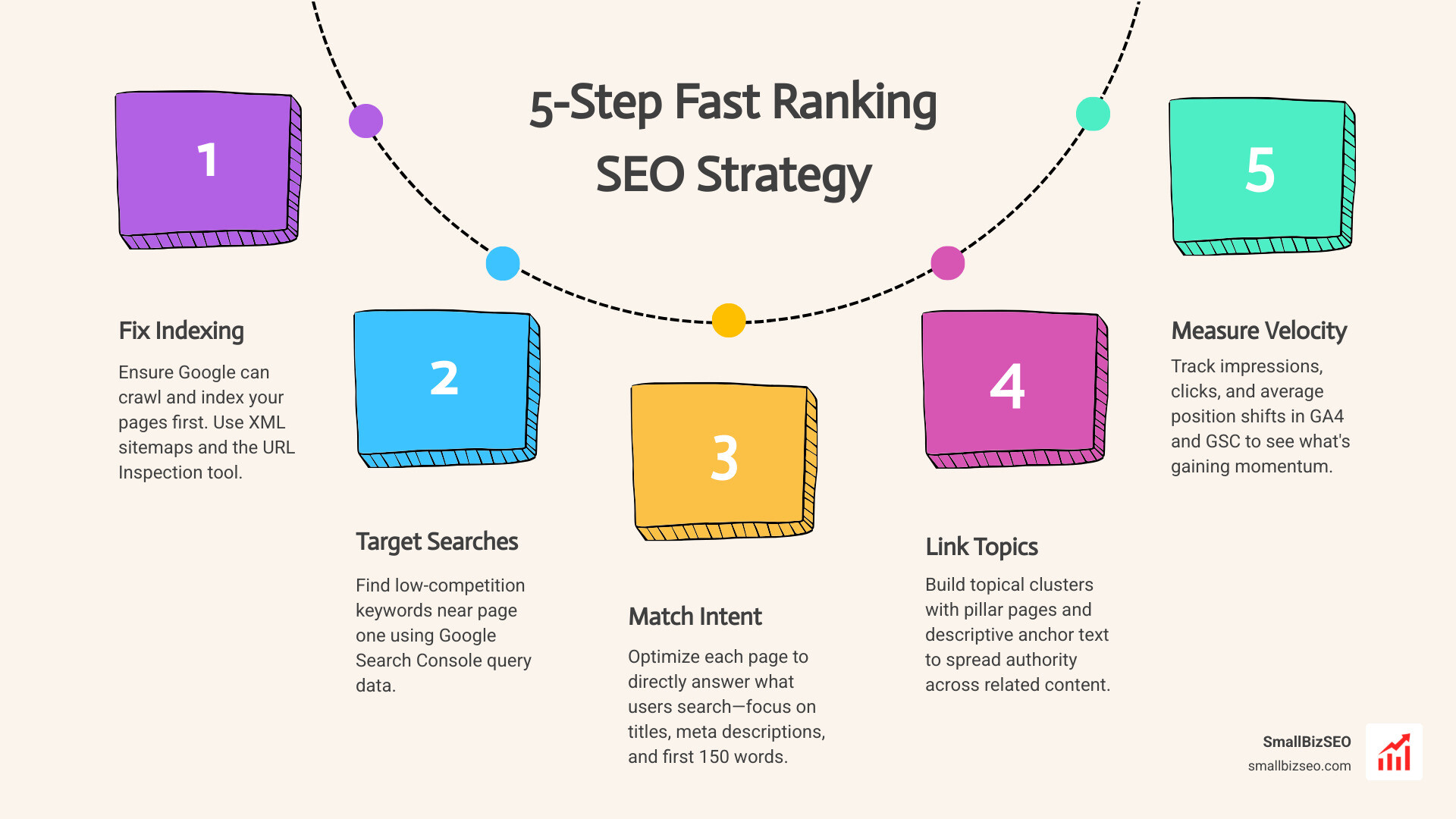
Handy fast ranking SEO strategy terms:
The Core Pillars of a Fast Ranking SEO Strategy
A rapid SEO approach relies on three interconnected pillars: efficient crawl accessibility, tight search intent alignment, and high-velocity internal authority distribution. By addressing technical bottlenecks first, search engines process your updates immediately instead of leaving pages stranded in crawl queues.
Over 96.55% of web pages receive zero organic traffic from search engines. This massive failure rate happens because website owners publish disconnected content without establishing crawl paths, technical health, or intent precision. When you streamline site architecture and prioritize pages that already demonstrate search traction, you dramatically reduce the time needed to climb search engine results pages.
| Strategic Dimension | Traditional Slow SEO | Rapid Velocity Execution |
|---|---|---|
| Primary Focus | High-volume competitive head terms | Striking-distance and low-competition queries |
| Indexing Strategy | Passive XML sitemap discovery | Active protocol submission and URL inspection |
| Content Creation | Isolated, broad blog posts | Topical clusters connected by contextual internal links |
| Optimization Cadence | Annual or sporadic overhauls | Agile monthly performance-driven refreshes |
| Technical Health | Periodic bug fixes | Continuous Core Web Vitals and crawl budget optimization |
To build sustainable momentum, review established educational frameworks such as university web guidelines to keep your overall approach grounded in authoritative standards.
What Technical and Indexing Fixes Enable a Fast Ranking SEO Strategy?
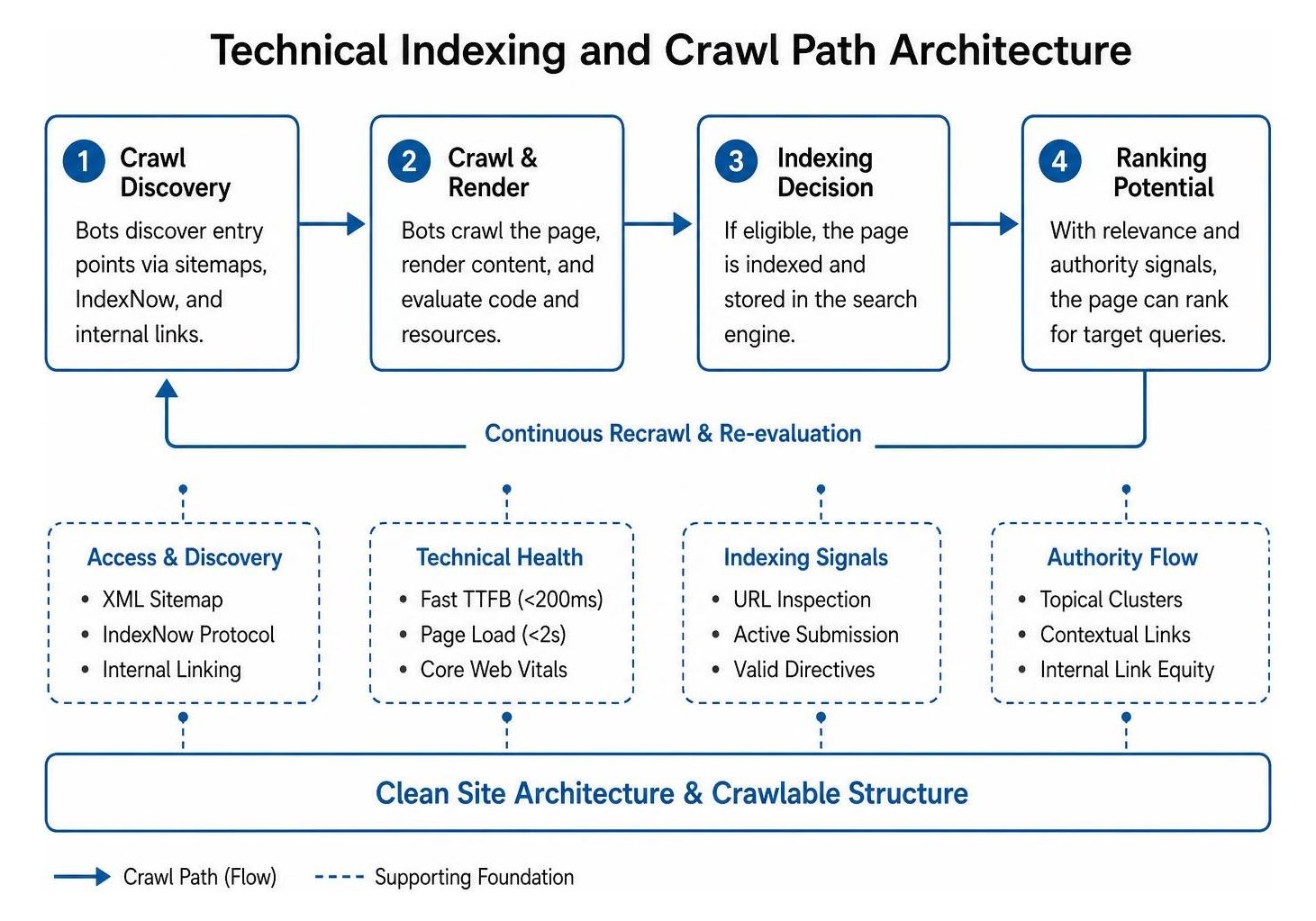
Technical optimization ensures search engine bots can discover, render, and index your content without hitting server delays or code errors. If search crawlers cannot evaluate your pages within milliseconds, your content cannot rank.
To maximize your indexing speed and technical efficiency:
- Submit URLs Actively: Do not wait for passive discovery. Use the Google Search Console URL Inspection tool to request indexing for high-priority updates.
- Deploy Direct Notification Protocols: Implement IndexNow alongside dynamic XML sitemaps to broadcast real-time content changes directly to participating search engines. You can study faster Google indexing methods to speed up crawling cycles.
- Execute High-Impact Site Repairs: Implement quick SEO fixes that help small websites rank by eliminating redirect loops, resolving broken links, and cleaning invalid directives in your robots.txt file.
- Accelerate Server Response Times: Keep your Time to First Byte (TTFB) under 200 milliseconds and total page load times under two seconds. Compressing images into WebP formats and stripping render-blocking scripts instantly enhances your Core Web Vitals.
How Does Striking-Distance Keyword Optimization Accelerate Rankings?
Striking-distance optimization targets search queries currently ranking between positions 5 and 15 in Google Search Console. Because search engines already view these pages as relevant, minor on-page refinements can push them into top-three positions in days or weeks rather than months.
Begin by exporting your search performance data. Filter queries with high impression counts but low click-through rates (CTR). Identify terms where your page hovers just below the primary visibility zone. Applying systematic low-competition keyword targeting techniques prevents you from wasting effort on terms dominated by massive enterprise domains.
Follow a structured, step-by-step striking distance optimization process to capture missed search intent:
- Place your primary keyword in the first 60 characters of your title tag and opening heading.
- Refine your meta description to approximately 155 characters, adding an active call to action to boost organic CTR.
- Extract semantically related terms and search questions from search engine autocomplete features to expand topical depth.
- Incorporate clear comparison lists and bulleted takeaways directly beneath your primary headings.
How Do You Structure Topical Clusters for a Fast Ranking SEO Strategy?
Topical clusters establish comprehensive subject authority by grouping related articles around a central pillar page. Instead of relying on isolated posts, a hub-and-spoke architecture distributes link equity across your entire domain.
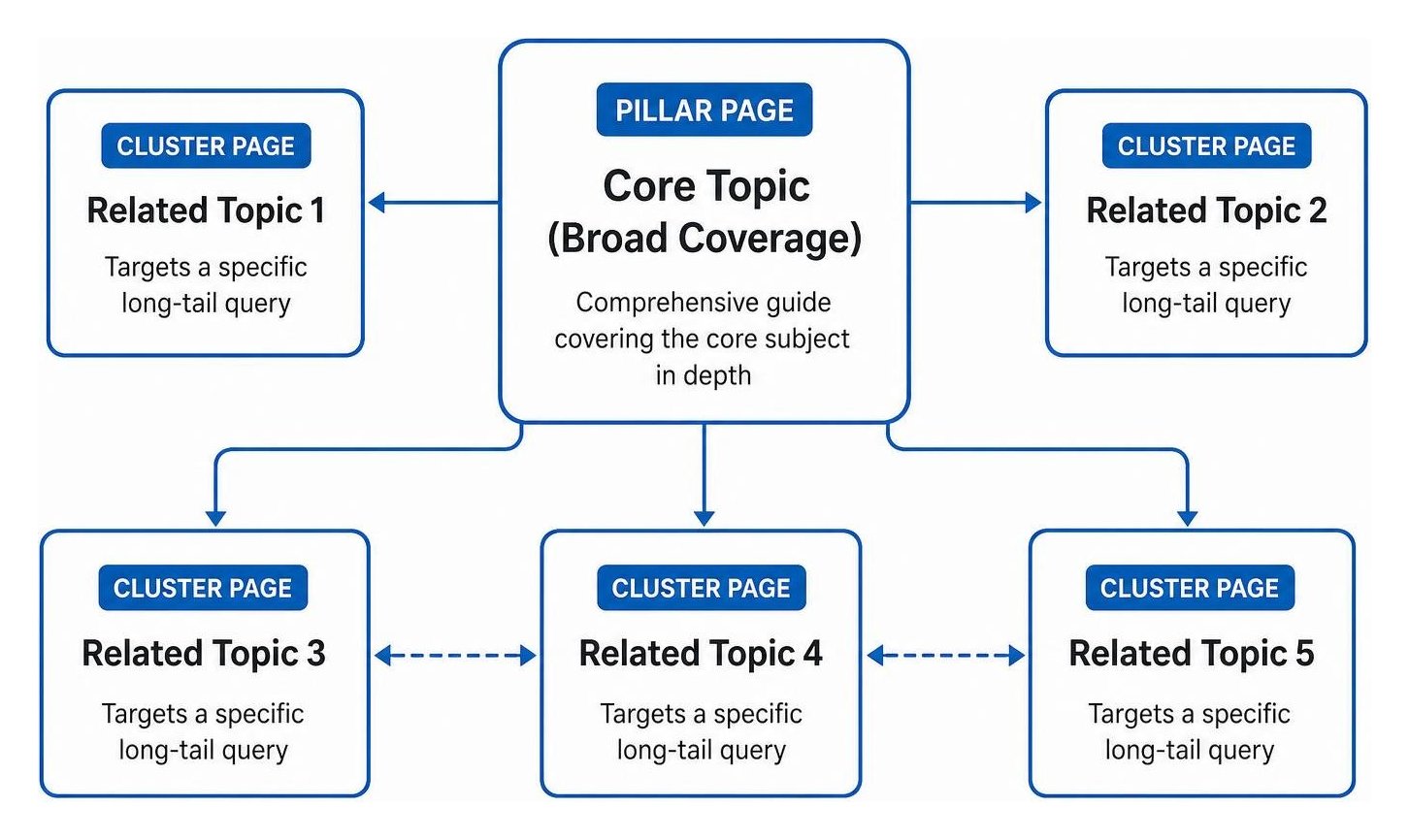
When designing clusters, build one in-depth pillar page that covers your core subject broadly. Next, produce three to five supporting articles targeting specific long-tail queries. Connect every supporting article back to the pillar using descriptive anchor text, while linking relevant subpages to one another.
This internal structure sends clear signals regarding your site's Experience, Expertise, Authoritativeness, and Trustworthiness (E-E-A-T). Adopting proven organic traffic growth strategies helps prevent internal keyword competition, ensuring multiple pages do not cannibalize the same target search query.
What On-Page and AI Overview Optimizations Produce Immediate Traffic?
Answer-ready on-page formatting places direct, concise solutions at the very top of your content sections. Search engines and automated answer engines favor clear, modular definitions that resolve user intent without requiring visitors to scroll through filler text.
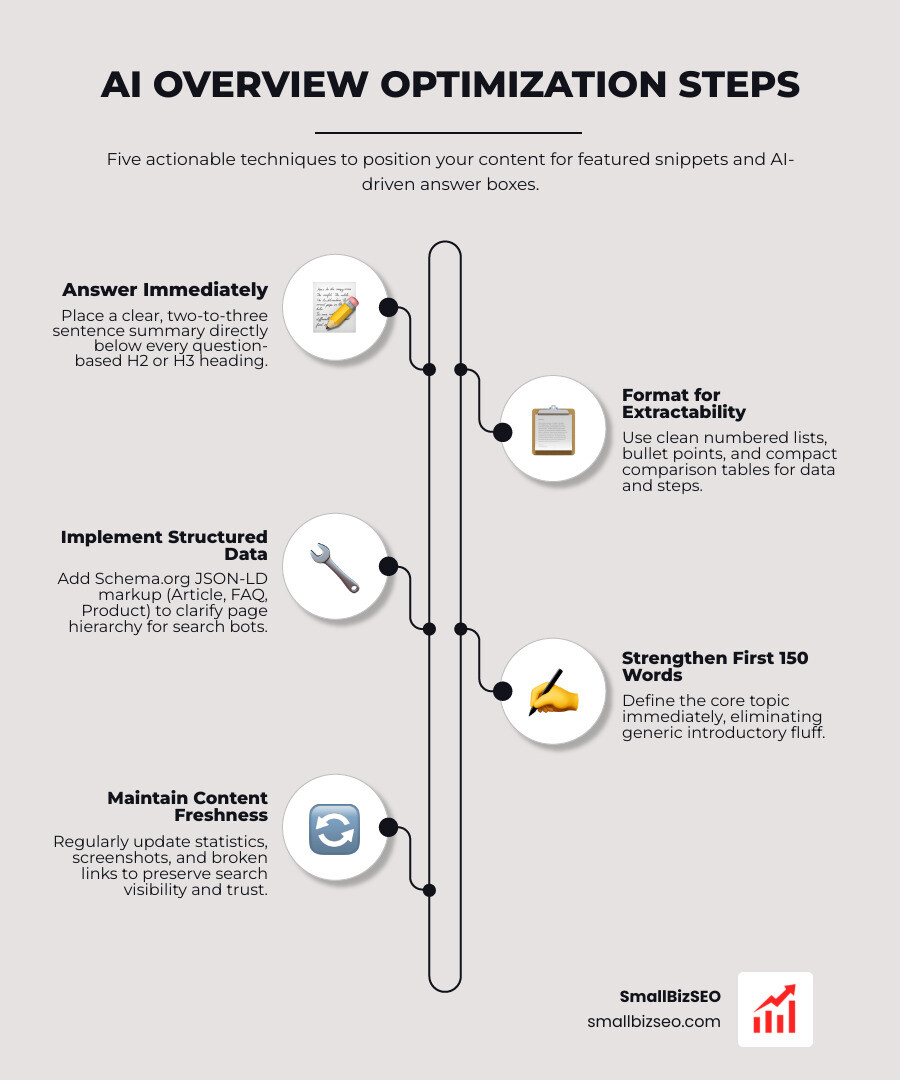
To position your content for featured snippets and AI-driven answer boxes:
- Answer Questions Immediately: Place a clear, two-to-three sentence summary directly below every question-based H2 or H3 heading.
- Format for Extractability: Use clean numbered lists, bullet points, and compact comparison tables to present data, technical steps, and product specifications.
- Implement Structured Data: Add Schema.org JSON-LD markup—including Article, FAQ, and Product schemas—to clarify your page hierarchy for search bots.
- Strengthen the First 150 Words: Define the page's core topic immediately, eliminating generic introductory fluff.
- Maintain Content Freshness: Regularly update statistics, screenshots, and broken links to preserve search visibility and trust.
Measuring Velocity and Executing Your 90-Day Ranking Roadmap
A structured 90-day execution roadmap breaks SEO momentum into measurable technical, content, and promotional sprints. Clear operational phases allow you to validate real-time gains before expanding into higher-difficulty search phrases.
- Days 1 to 30 (Foundation & Technical Accessibility): Audit site crawlability, fix broken redirects, optimize Core Web Vitals, and submit real-time sitemaps.
- Days 31 to 60 (Content Velocity & Striking-Distance Expansion): Publish structured topical clusters and rewrite striking-distance metadata based on performance metrics.
- Days 61 to 90 (Authority Distribution & Signal Amplification): Secure niche-relevant backlinks, conduct digital PR outreach, and expand your internal link equity.
Sustainable growth requires balancing rapid execution with solid technical standards. Following principles for achieving sustainable organic search results keeps your site resilient against broad search algorithm updates. If you want a complete baseline review of your technical health, request a comprehensive SEO visibility audit to identify performance bottlenecks.
Which Real-Time Metrics Signal Early SEO Momentum?
Leading indicators reveal positive search performance weeks before top-tier rankings translate into bottom-line conversions. Monitoring these metrics prevents premature strategy shifts while search engines evaluate your site.
- Impression Trajectory: An upward curve in Google Search Console impressions serves as the earliest signal that search engines have indexed your updates and recognized their relevance.
- Average Position Movement: Track queries moving from deep SERP pages into striking distance (positions 5 to 15).
- Crawl Frequency and Stats: Review server logs and crawl reports to ensure search bots visit your pages more frequently following sitemap and internal link updates.
- Organic CTR Shifts: Monitor click-through rate gains on rewritten title tags and meta descriptions to confirm your messaging matches user expectations.
What Mistakes Derail Quick SERP Growth and How Do You Avoid Them?
Avoiding common technical and content mistakes is just as vital as executing positive tactics. Simple oversights can stall search progress and drain organic momentum:
- Targeting Unrealistic Head Terms Early: Do not waste initial resources on high-difficulty keywords before building topical authority through long-tail searches.
- Publishing Thin Content: Mass-producing generic, repetitive text without first-hand examples or unique insights leads to poor engagement and ranking drops.
- Creating Orphan Pages: Publishing articles without integrating them into existing site navigation or contextual internal links prevents crawlers from discovering them.
- Neglecting Mobile Performance: With over 70% of web searches occurring on mobile devices, ignoring layout shifts or slow mobile load speeds hurts overall rankings.
- Keyword Stuffing: Forcing unnatural phrases into headings and body text damages readability and triggers search spam filters.
Ready to Accelerate Your Search Engine Visibility?
Fast ranking is not about taking shortcuts or risking search engine penalties. It is about removing technical roadblocks, prioritizing queries where you already have traction, and answering customer questions clearly and directly.
When you align site performance, topical structure, and data-driven updates, search engines reward your website with steady visibility gains. Audit your pages, target your striking-distance opportunities, and build an authoritative search presence that drives business growth.