Find Local SEO Services for Storage Containers
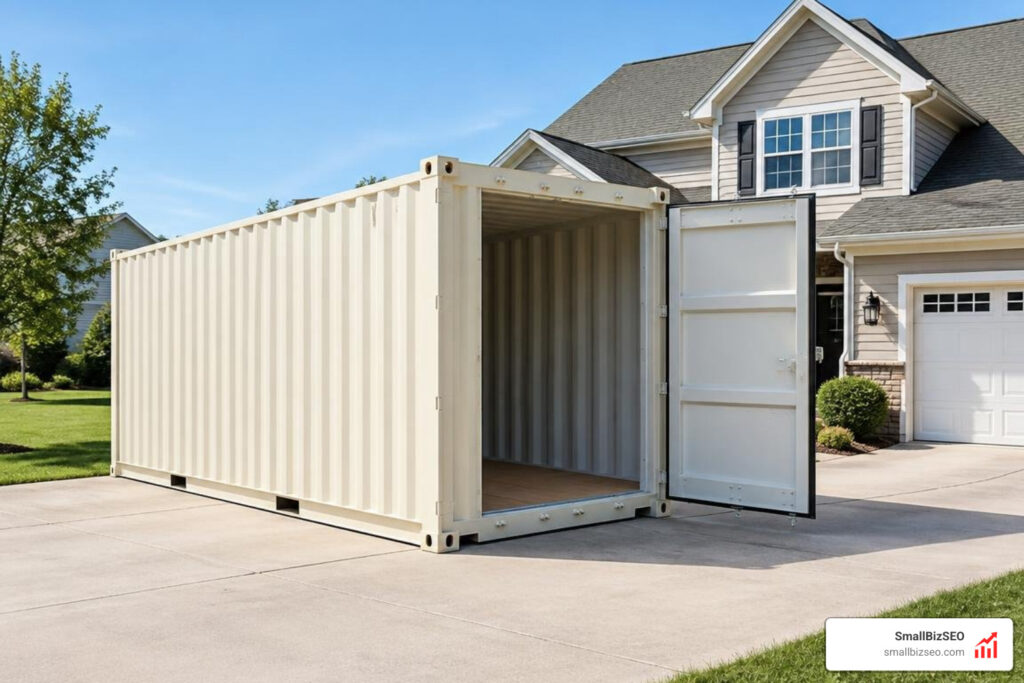
How Can SEO for Storage Containers Bring in Local Renters?
SEO for storage containers starts with the places you deliver. Target searches such as “portable storage container rental in [city]” on pages that explain available sizes, delivery areas, site access, and how to request a quote. Keep your Google Business Profile accurate, ask customers for reviews, and make it easy to call or request a quote on a phone.
Unlike a fixed storage facility, a container company must show where it can deliver, not just where its yard is. Useful local details can help an independent company stand out when national brands offer only general location pages.
I’m Clayton Johnson, founder of SmallBizSEO. My work in technical SEO, content strategy, and link building shapes this guide to SEO for storage containers and its focus on qualified local inquiries.
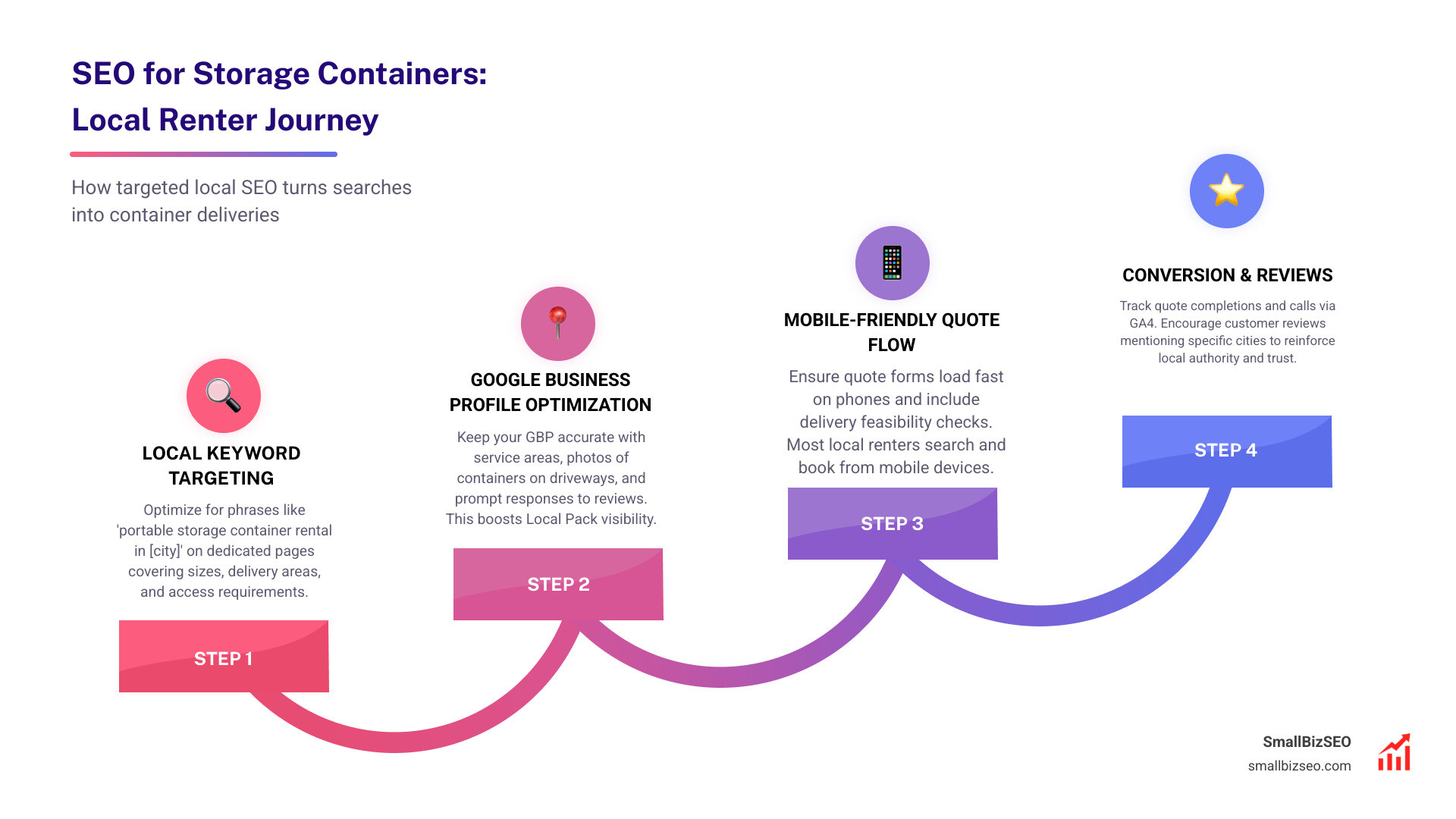
Essential SEO for storage containers terms:
Proven Strategies in SEO for Storage Containers
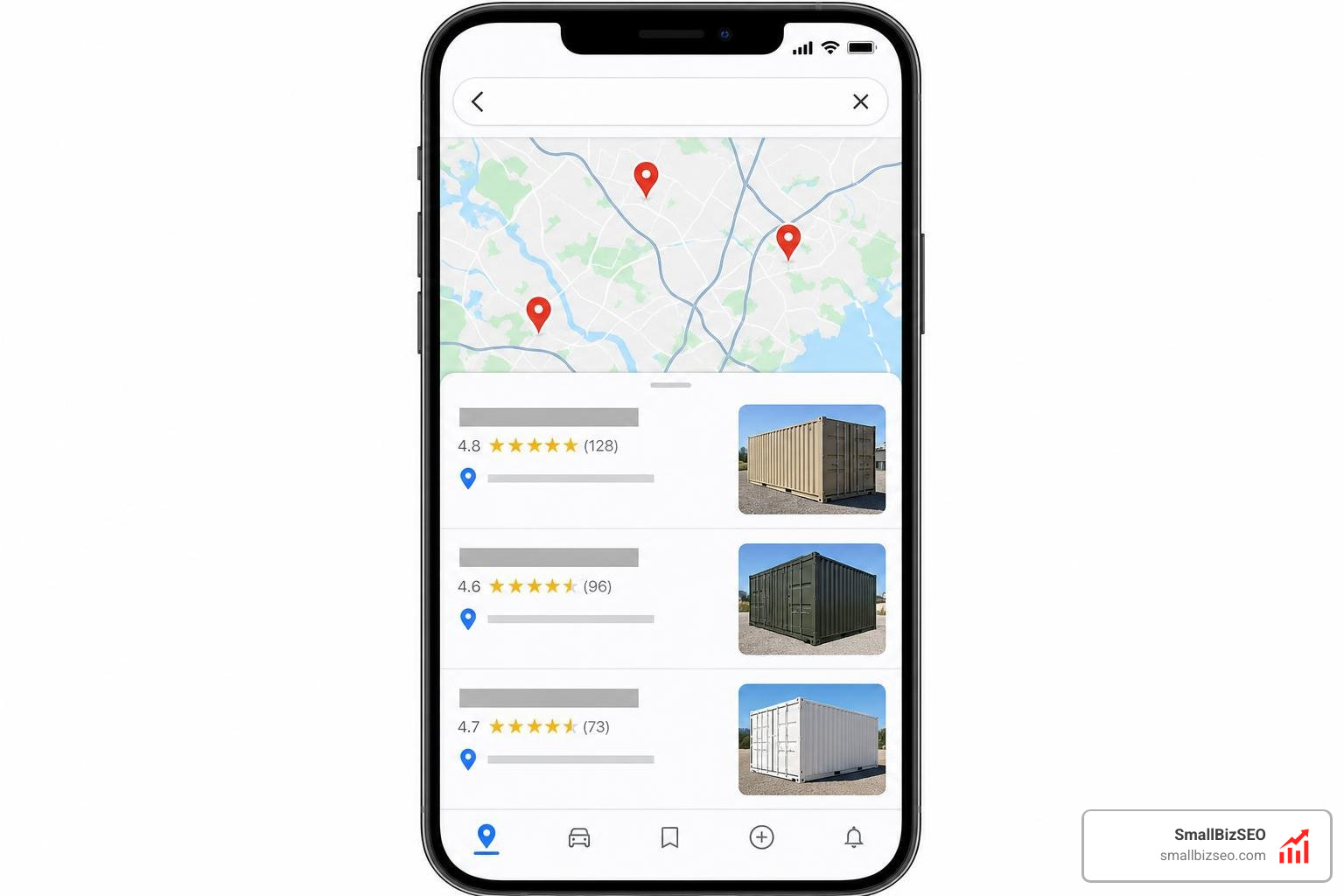
Local search visibility drives container rentals because 97% of consumers search online to find local services. To win these customers, we must optimize for Google's Local 3-Pack and organic search simultaneously. Achieving map dominance requires strict Name, Address, and Phone number (NAP) consistency across directories and industry citations, aligning with industry-standard self-storage marketing strategies. Learn more in our guide to local SEO map visibility to understand how geographic prominence influences local search rankings.
Conversion rate optimization (CRO) plays a vital role alongside search rankings. Because only about 3% of your website visitors are in the immediate "ready-to-buy" stage, your website must instantly answer core logistics questions for immediate buyers while guiding researchers toward a quote. Building consistent brand search volume through local community sponsorships and trade visibility signals real-world trust directly to search engines.
How Does SEO for Storage Containers Differ from Traditional Self-Storage?
Portable storage container SEO focuses on operational delivery boundaries and drop-off logistics, whereas traditional self-storage SEO focuses strictly on a fixed 3-to-5-mile radius around a physical building.
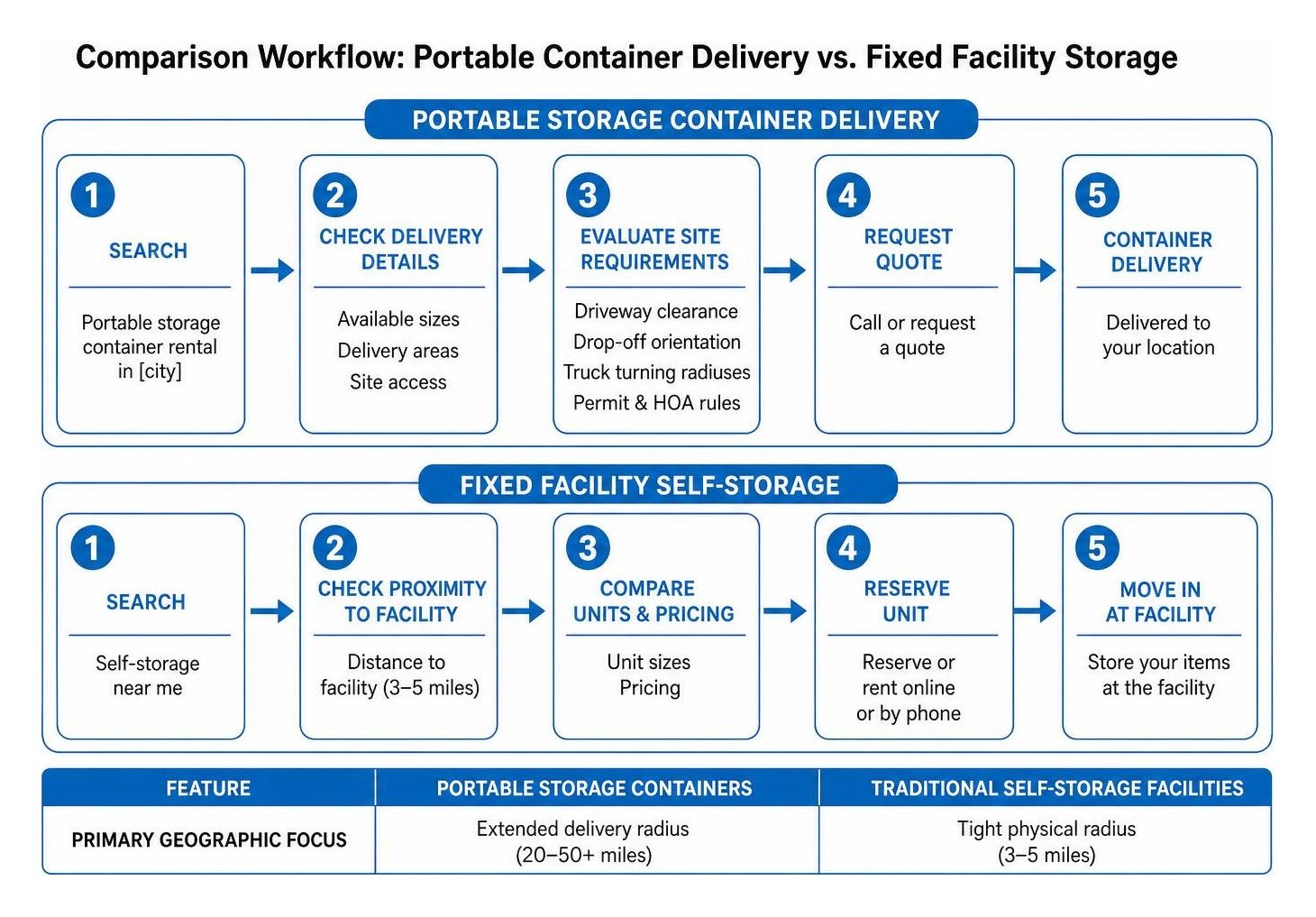
When renters search for traditional self-storage, they want to know how close the facility is to their home or workplace. In contrast, portable container searchers evaluate driveway clearance, drop-off orientation, truck turning radiuses, municipal street permit rules, and neighborhood HOA guidelines. Addressing these hyper-local logistical constraints allows independent container operators to outperform national rental franchises with detailed, region-specific guidance.
| Feature | Portable Storage Containers | Traditional Self-Storage Facilities |
|---|---|---|
| Primary Geographic Focus | Extended delivery radius (20–50+ miles) | Tight physical radius (3–5 miles) |
| Primary Customer Concern | Driveway access, drop logistics, street permits | Facility proximity, gate hours, unit access |
| Website Structure | Dedicated service-area city and county pages | Single localized facility landing pages |
| Key Schema Types | LocalBusiness, Service, Product |
SelfStorage, LocalBusiness |
| Inventory Display | Container sizes (10ft, 20ft, 40ft) and drop fees | Unit size grids and monthly unit street rates |
What Technical and On-Page Factors Drive SEO for Storage Containers?
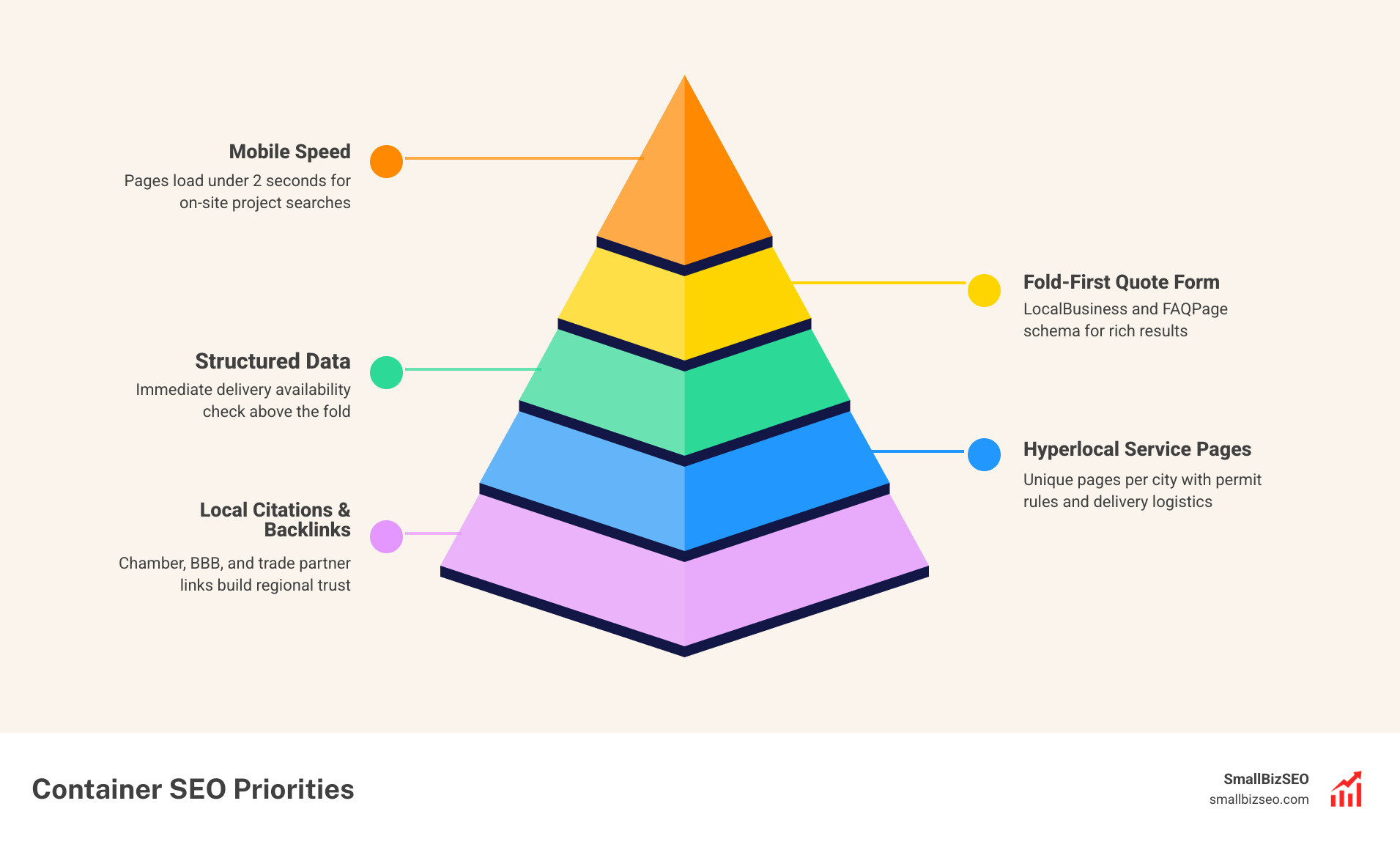
Technical performance and clear on-page structure turn organic traffic into paying customers. Because most storage searches happen on mobile devices—frequently while homeowners or contractors are actively organizing a project—pages must load in under two seconds. Compressing heavy product images and eliminating render-blocking code ensures strong Core Web Vitals across all devices.
Every primary service page requires a prominent, fold-first quote request form that allows users to check delivery availability immediately. Implementing LocalBusiness and FAQPage structured data helps search engines extract unit dimensions, delivery options, and pricing ranges directly into search result features. Similar structural principles apply when managing specialized storage structures, as outlined in our local SEO guide for storage sheds.
Targeting high-intent keyword variations with specific dimensions and use cases captures buyers at every stage of consideration:
- Core local rental queries: "portable storage container rental," "mobile storage units near me," "on-site storage container drop off"
- Dimension-specific searches: "20ft storage container rental," "40ft high cube container delivery," "10 foot mobile storage box"
- Commercial and use-case queries: "jobsite storage container rental," "storage container for home renovation," "construction site conex box"
How Do Service-Area Pages and Local Citations Outrank National Competitors?
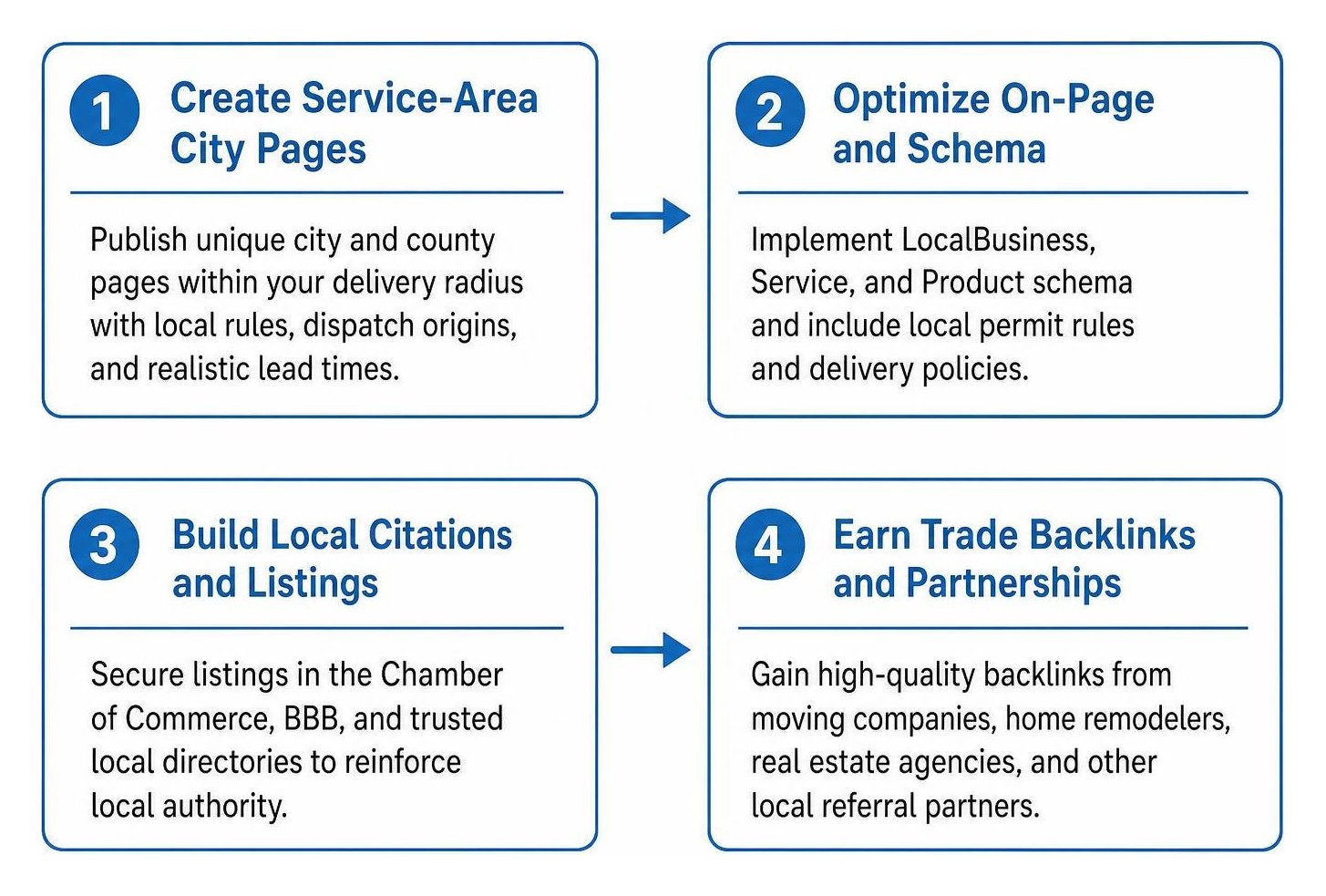
Creating distinct, informative service-area pages allows independent operators to outrank generic national templates. National container brands often use automated, low-detail location pages that fail to address municipal regulations. By publishing dedicated pages for every major municipality within your delivery radius, you demonstrate genuine local expertise.
Each service-area page should contain unique regional content, including local street placement permit rules, low-clearance residential delivery policies, local dispatch origins, and realistic delivery lead times. Backlink authority for container businesses comes from local Chamber of Commerce listings, Better Business Bureau accreditation, and referral partnerships with local moving companies, home remodelers, and real estate agencies. Building high-quality neighborhood links reinforces your prominence within regional local SEO campaigns.
How Should Companies Handle Single Rentals Versus Bulk Wholesale Container Sales?
Companies offering both residential container rentals and B2B wholesale sales must establish distinct URL structures to prevent mixed search signals. Rental customers search for temporary on-site storage, while commercial buyers and wholesale procurement managers search for permanent container purchases, multi-unit depot sourcing, and cargo-worthy certifications.
Organize your website architecture with clear category hubs:
- /rentals/: Dedicated landing pages for 10ft, 20ft, and 40ft portable container rentals organized by delivery city and use case.
- /sales/: Category pages for used (wind and watertight, cargo-worthy) and one-trip containers with transparent inspection standards and condition grading.
- /wholesale/: A specialized procurement workflow detailing multi-unit order procedures, depot logistics, and freight delivery options.
Separating these user journeys ensures individual inventory changes do not create broken URLs or disrupt stable organic rankings. For deeper insights into catalog architecture and e-commerce growth, explore our comprehensive ecommerce SEO services guide.
How to Measure Success and Choose Local SEO Services
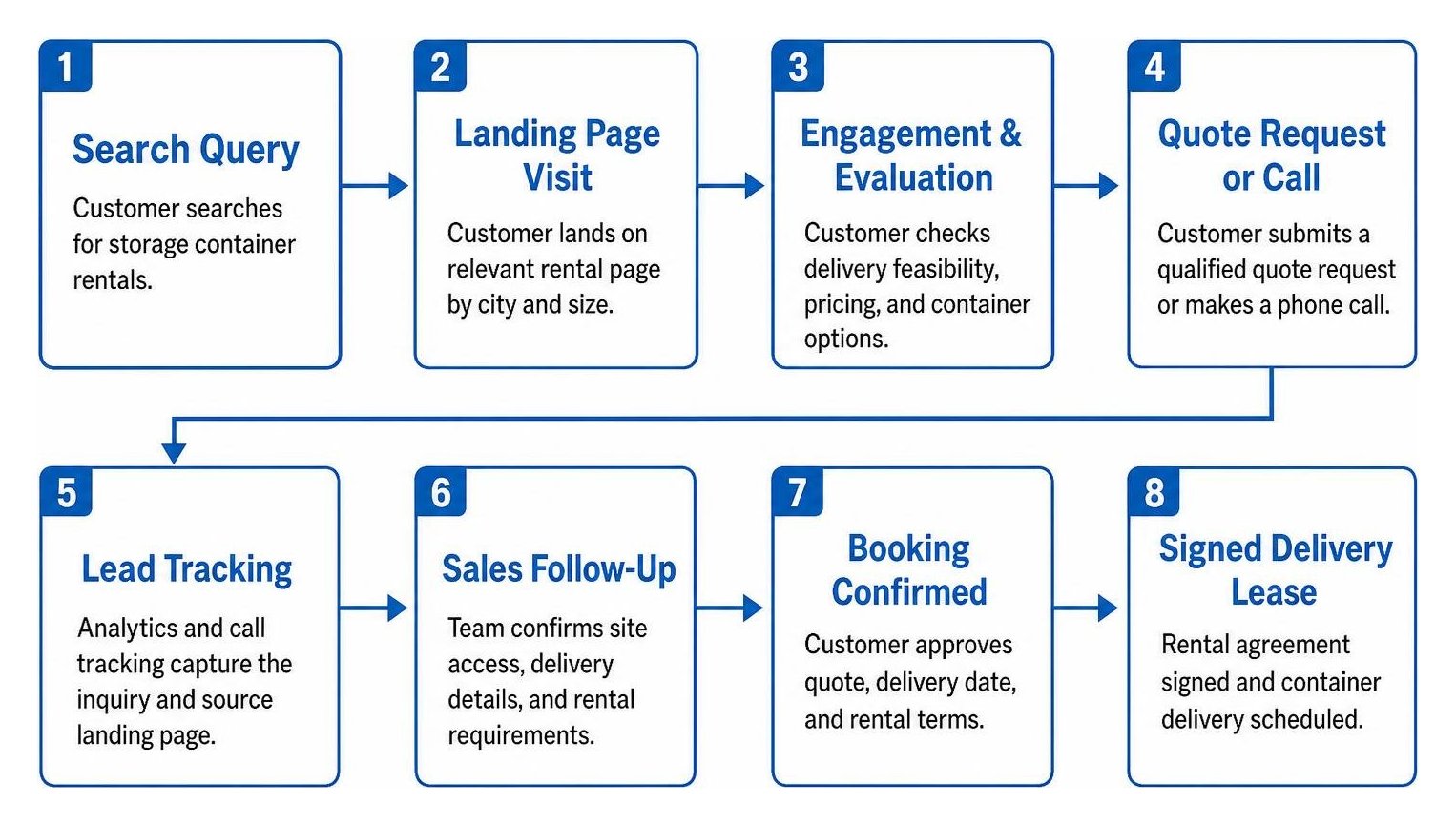
Measuring container SEO success requires tracking actual revenue outcomes rather than vanity keyword metrics. While keyword rankings indicate progress, business growth relies on qualified quote requests, phone calls, and booked container deliveries.

At SmallBizSEO, we implement our data-driven "Velocity" framework to deliver fast rankings and transparent growth. By connecting Google Analytics 4 custom event tracking with dynamic call tracking, we attribute closed rentals directly to specific search queries and landing pages. To identify technical bottlenecks and visibility gaps on your website, you can claim a comprehensive website analysis today.
Which Metrics and Conversion Signals Best Track SEO Performance?
Evaluating your search performance requires looking past raw traffic numbers to focus on transactional conversion data. Tracking these critical key performance indicators ensures your digital marketing generates profitable container leases:
- Qualified Quote Submissions: Form completions that meet your delivery radius criteria and site access constraints.
- Delivery Feasibility Checks: User interactions with online delivery radius maps, address checkers, and container sizing tools.
- Inbound Phone Inquiries: Phone calls tracked dynamically to pinpoint the exact organic landing page that generated the lead.
- Google Business Profile Actions: Direction requests, click-to-call actions, and website visits originating from local map pack listings.
- Review Velocity: Maintaining a steady stream of positive customer reviews that mention container sizes and specific delivery towns.
Addressing common tracking errors and citation mismatches is essential for growth; review these costly local SEO mistakes that hurt visibility to ensure your tracking infrastructure captures every revenue opportunity.
Partnering for Long-Term Container Rental Growth
Building a dominant online presence for your storage container business requires aligning technical website health, informative service-area content, and active local profile management. By providing the exact local delivery logistics, clear sizing guides, and transparent pricing that national competitors overlook, your business can capture ready-to-rent customers across your entire operating territory. We build customized search strategies that connect your container inventory directly with local home renovators, commercial contractors, and moving families.