SEO for Modular Homes: A-Z Guide to Finding Services
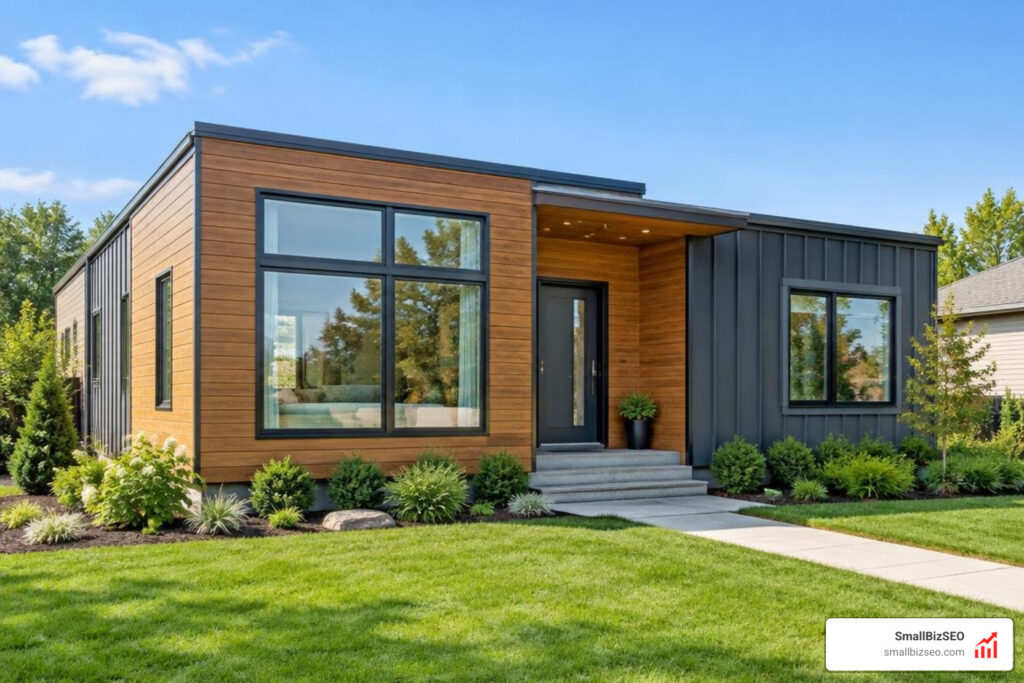
How Can SEO Help Modular Home Buyers Find You?
SEO for modular homes helps buyers find your floor plans, pricing, and delivery information when they search online. Start with a page for each home model, add clear details about costs and service areas, and answer common questions about land, financing, and construction quality. Then make those pages easy to use on mobile, keep your business details accurate in local search, and track calls and inquiries.
This guide covers the steps that help a modular home website serve as a useful digital showroom, from keyword research to local visibility and measurement.
I’m Clayton Johnson, founder of SmallBizSEO. My experience in technical SEO, content strategy, and link building shapes this guide to SEO for modular homes, with a focus on helping small businesses earn trust and attract qualified leads.
SEO for modular homes vocabulary:
Why Does Strategic SEO for Modular Homes Drive High-Value Construction Leads?
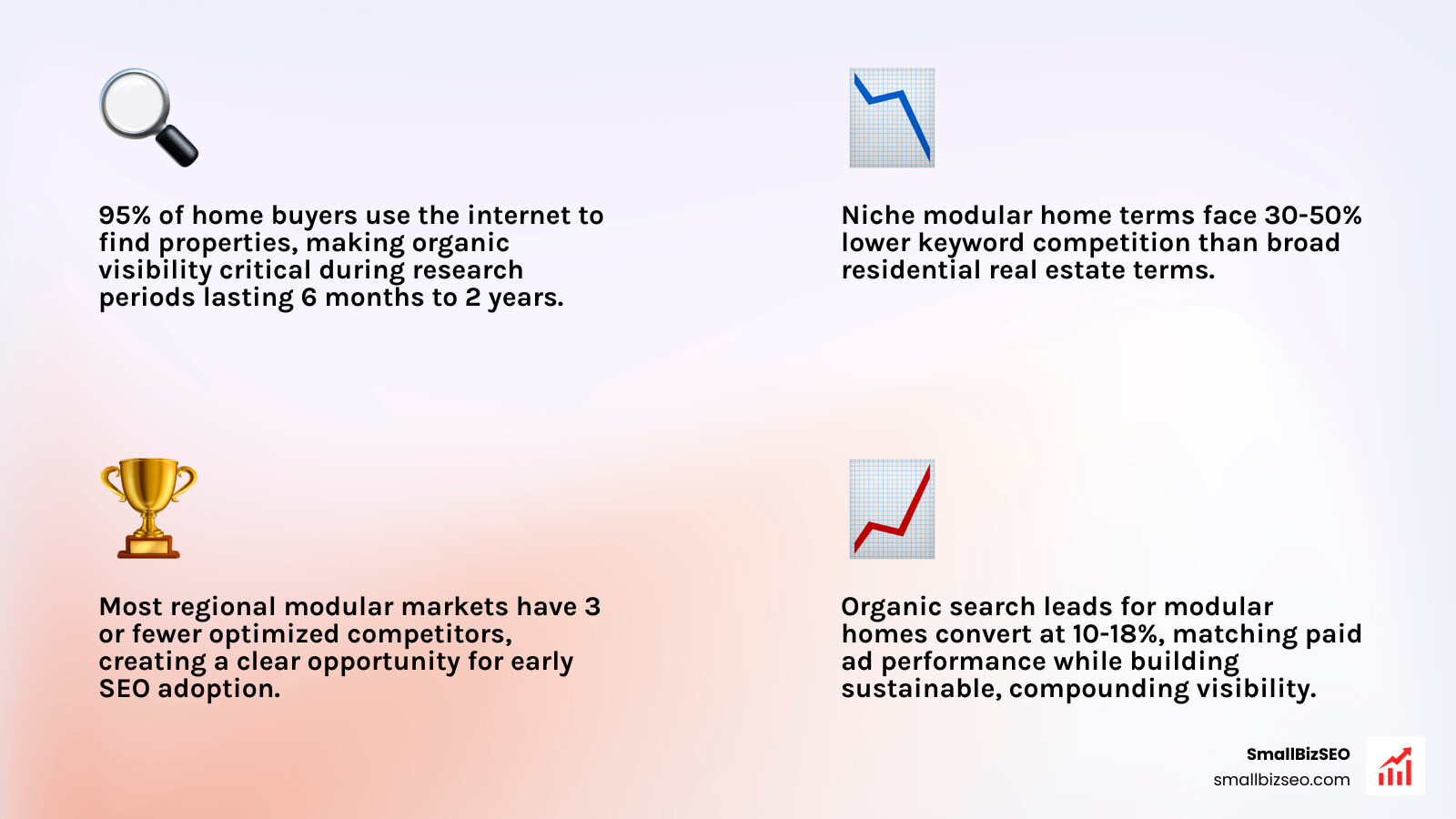
Strategic SEO drives high-value construction leads by placing your floor plans and pricing directly in front of buyers who are actively researching factory-built homes. Because 95 percent of home buyers use the internet to find properties, organic visibility captures prospects during research periods that often last six months to two years.
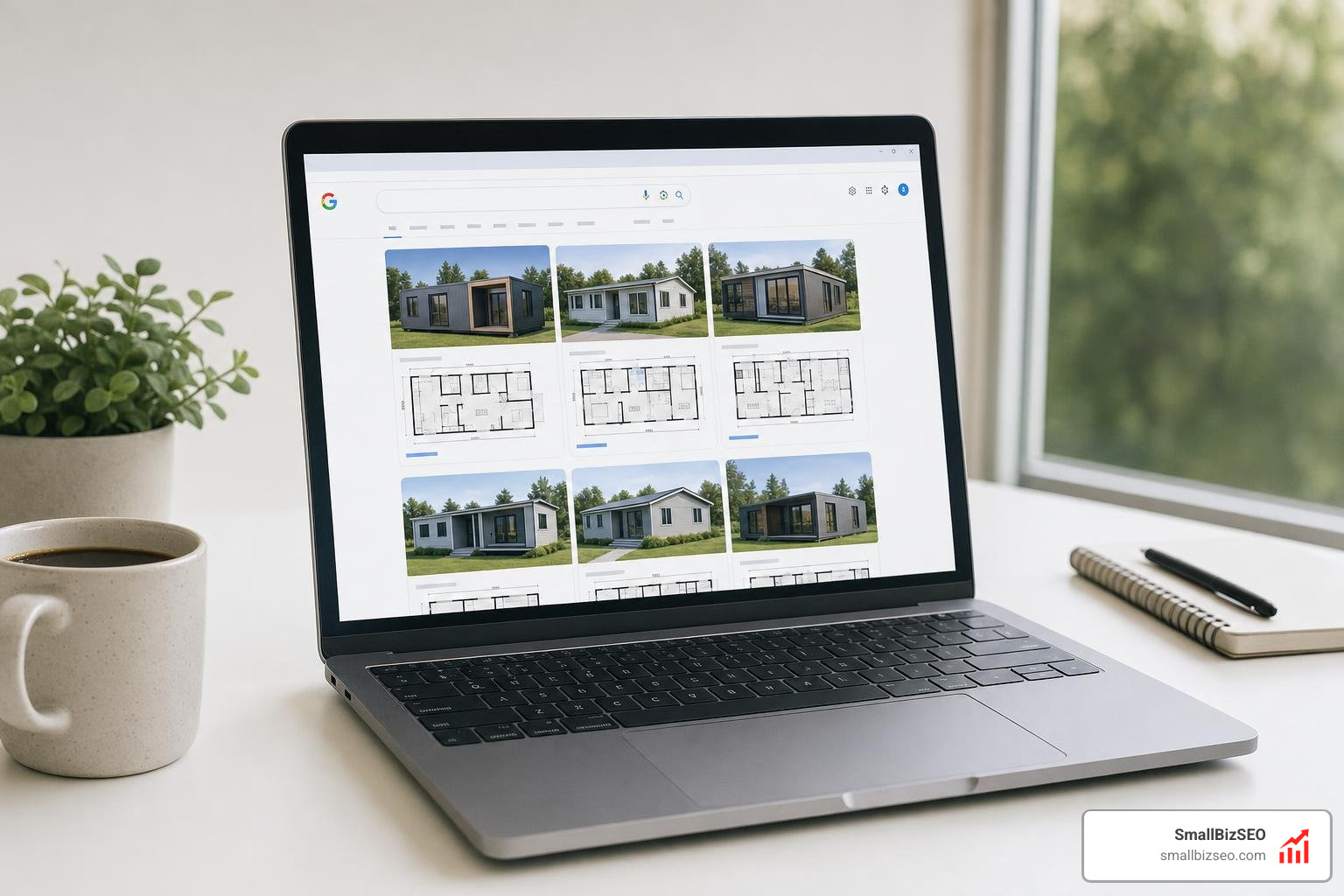
When people search for new construction, modular housing offers distinct advantages in build speed and efficiency. However, traditional custom home terms often carry steep keyword difficulty. Niche terms for factory-built and prefabricated residences face 30 to 50 percent lower keyword competition than broad residential real estate terms. In fact, most regional markets have three or fewer optimized modular competitors, and some smaller delivery areas have none.
Organic search leads convert into closed deals at 10 to 18 percent—matching the closing performance of paid ads while creating sustainable, compounding visibility. An optimized digital presence supports both residential sales and commercial projects. If you operate in broader property markets, partnering with a real estate SEO company or studying luxury modular construction trends shows how high-end buyers evaluate custom off-site fabrication.
What Makes Keyword Research and On-Page SEO for Modular Homes Unique?
Keyword research for modular home builders requires organizing search terms by purchasing intent, architectural style, and specific delivery zones. Rather than relying solely on broad industry terms, your website needs individual pages for specific home layouts, price bands, and regional service boundaries.
High-intent searches typically combine building categories with geographic modifiers, such as architectural styles matched with target counties. If your business also supplies commercial modular spaces, collaborating with a mobile offices and commercial units SEO company can help separate business-to-business intent from residential retail buyers.
| Buyer Intent Stage | Typical Search Query | Target Page Type | Key On-Page Elements |
|---|---|---|---|
| Top of Funnel (Discovery) | "Modular vs site-built cost comparison" | Educational Guide | Detailed cost breakdown, quality standards, build timelines |
| Middle of Funnel (Evaluation) | "Modern farmhouse modular floor plans" | Category Gallery | Layout filters, dimensions, starting price bands |
| Bottom of Funnel (Decision) | "3 bedroom modular home builder near me" | Model & Location Pages | Spec sheets, real site photos, consultation scheduling form |
Every model page should function as an informative spec sheet. Include exact square footage, bedroom and bathroom counts, structural customization options, and an embedded delivery radius map. Providing clear price ranges prevents buyer bounce-offs and qualifies incoming inquiries before your sales team picks up the phone.
How Does Local SEO for Modular Homes Capture Regional Showroom Traffic?
Local SEO captures nearby showroom visits and lot tours by optimizing your Google Business Profile and maintaining matching contact records across key online directories. When prospective homeowners search for display centers, search engines evaluate geographic distance, relevance, and company prominence to populate local map results.
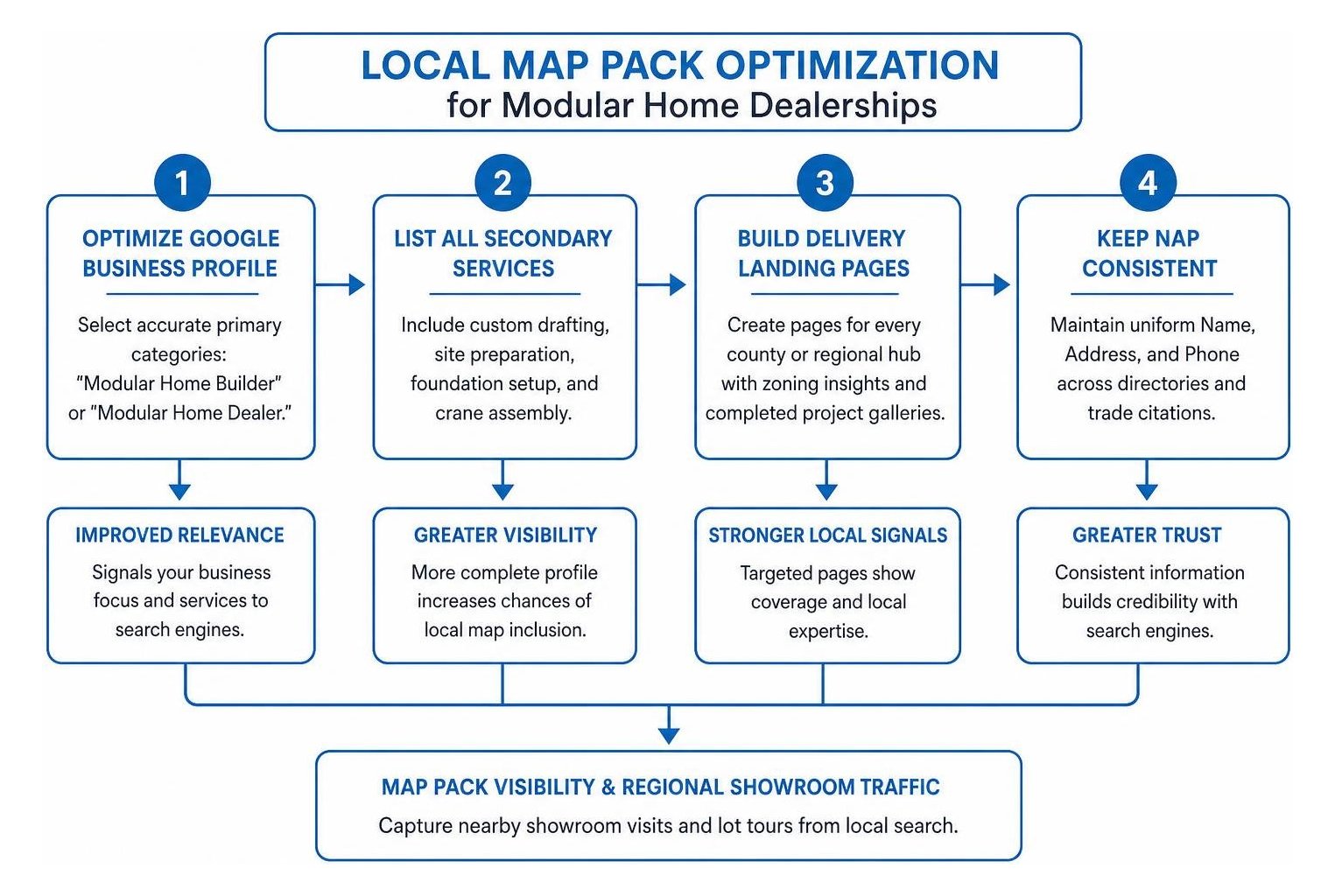
To secure map visibility across your entire sales territory:
- Select accurate primary categories on your Google Business Profile, such as "Modular Home Builder" or "Modular Home Dealer."
- List all secondary services individually, including custom drafting, site preparation, foundation setup, and crane assembly.
- Build dedicated delivery landing pages for every county or regional hub where you install homes, highlighting regional zoning insights and completed project galleries.
- Keep your business Name, Address, and Phone (NAP) details uniform across construction directories and trade citations.
Working with an experienced general contractor SEO company ensures your regional location pages target specific delivery zones without triggering search engine penalties for duplicate content.
How Can Modular Home Companies Address Buyer Doubts About Financing, Zoning, and Quality?
To address buyer hesitation around financing, zoning, and durability, publish educational content that explains building codes, appraisal rules, and permanent foundations. Many prospective buyers confuse modern modular construction with federal HUD-code manufactured trailers.
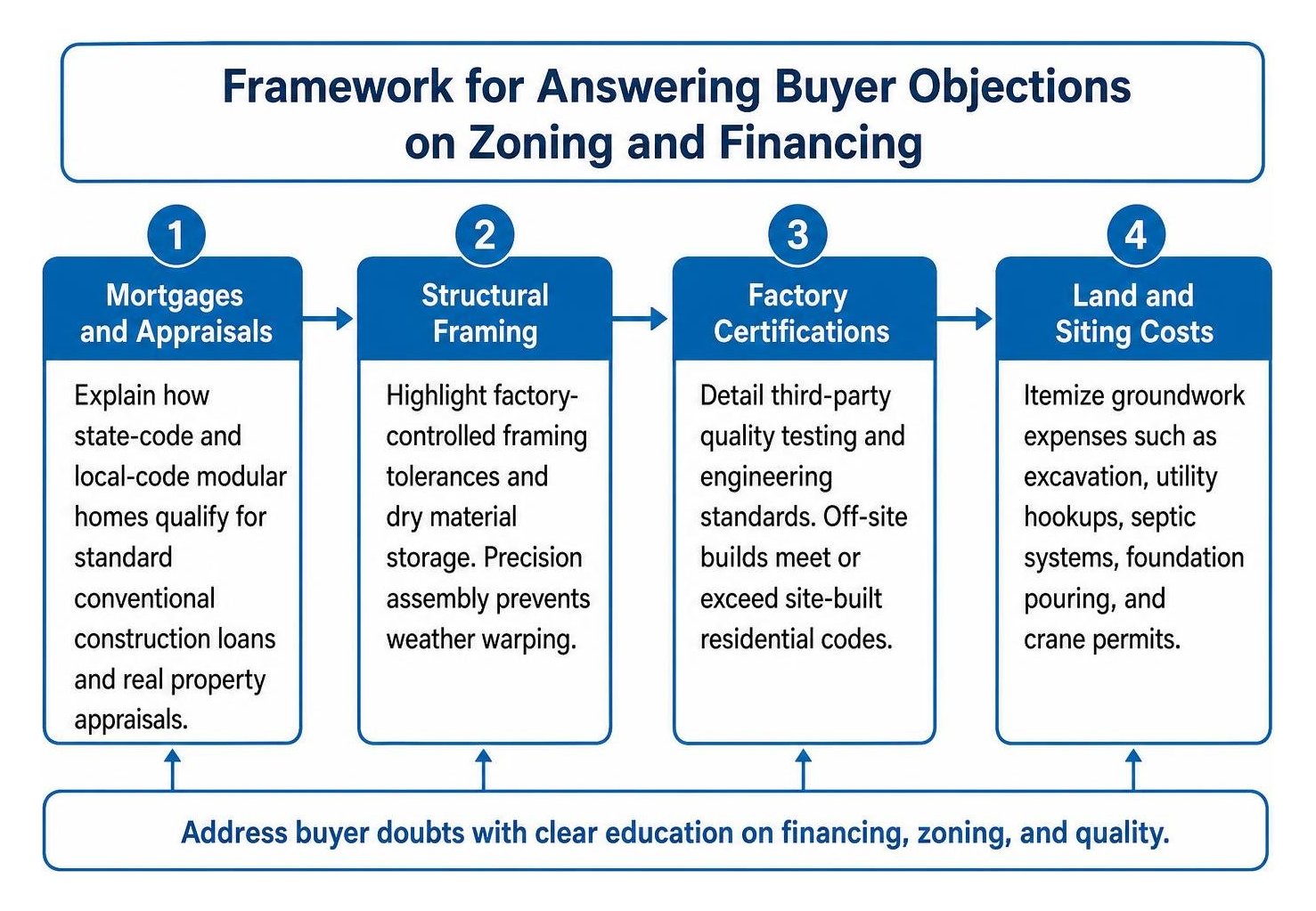
Your website must directly address these common research topics:
- Mortgages and Appraisals: Explain how state-code and local-code modular homes qualify for standard conventional construction loans and real property appraisals.
- Structural Framing: Highlight factory-controlled framing tolerances and dry material storage. Exploring techniques from a house framing contractors SEO company shows how precision assembly prevents weather warping.
- Factory Certifications: Detail third-party quality testing and engineering standards, similar to custom modular home construction standards, which prove off-site builds meet or exceed site-built residential codes.
- Land and Siting Costs: Itemize groundwork expenses such as excavation, utility hookups, septic systems, foundation pouring, and crane permits.
Addressing total siting expenses builds trust early and pre-qualifies buyers who might otherwise underestimate site preparation budgets.
How Can You Execute and Hire Targeted SEO Services for Prefabricated Housing?
Executing a targeted SEO campaign requires establishing a crawlable website structure, publishing comprehensive buyer guides, and earning authoritative links from construction organizations. A structured website catalog helps search engines index your models while directing authority to your high-priority commercial pages.
Topical authority grows when you earn backlinks from local home builder associations, architectural partners, and engineering directories. If your manufacturing facility also produces metal components or utility outbuildings, working with a steel buildings SEO company can help strengthen domain authority across commercial and residential structures alike.
What Technical and Visual SEO Essentials Should Modular Home Sites Cover?
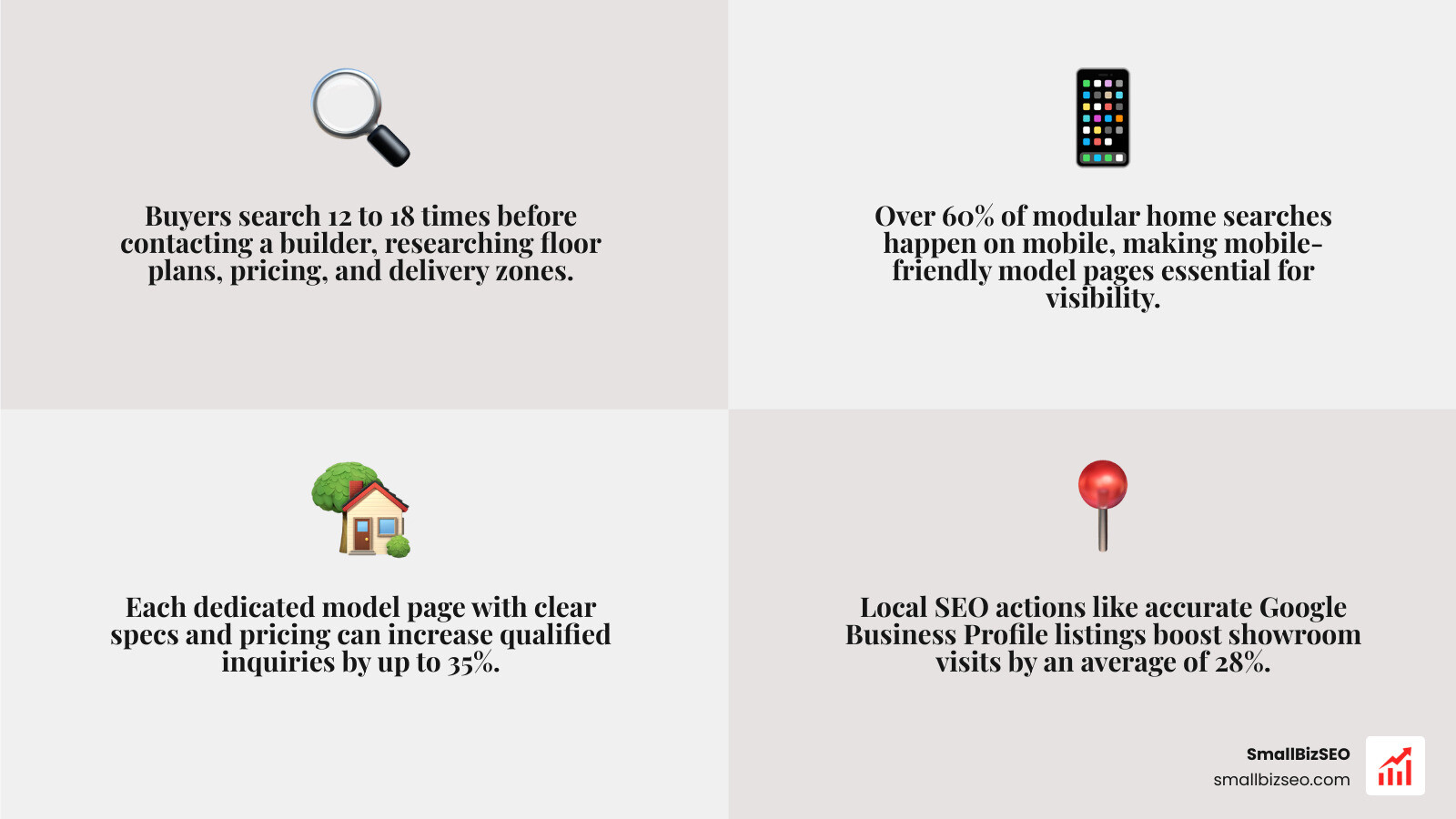
Technical SEO for modular builders requires optimizing high-resolution floor plan imagery, implementing structured data, and maintaining fast mobile loading speeds. Because custom home buyers spend hours reviewing floor plan details on mobile devices, responsive performance directly impacts search rankings.
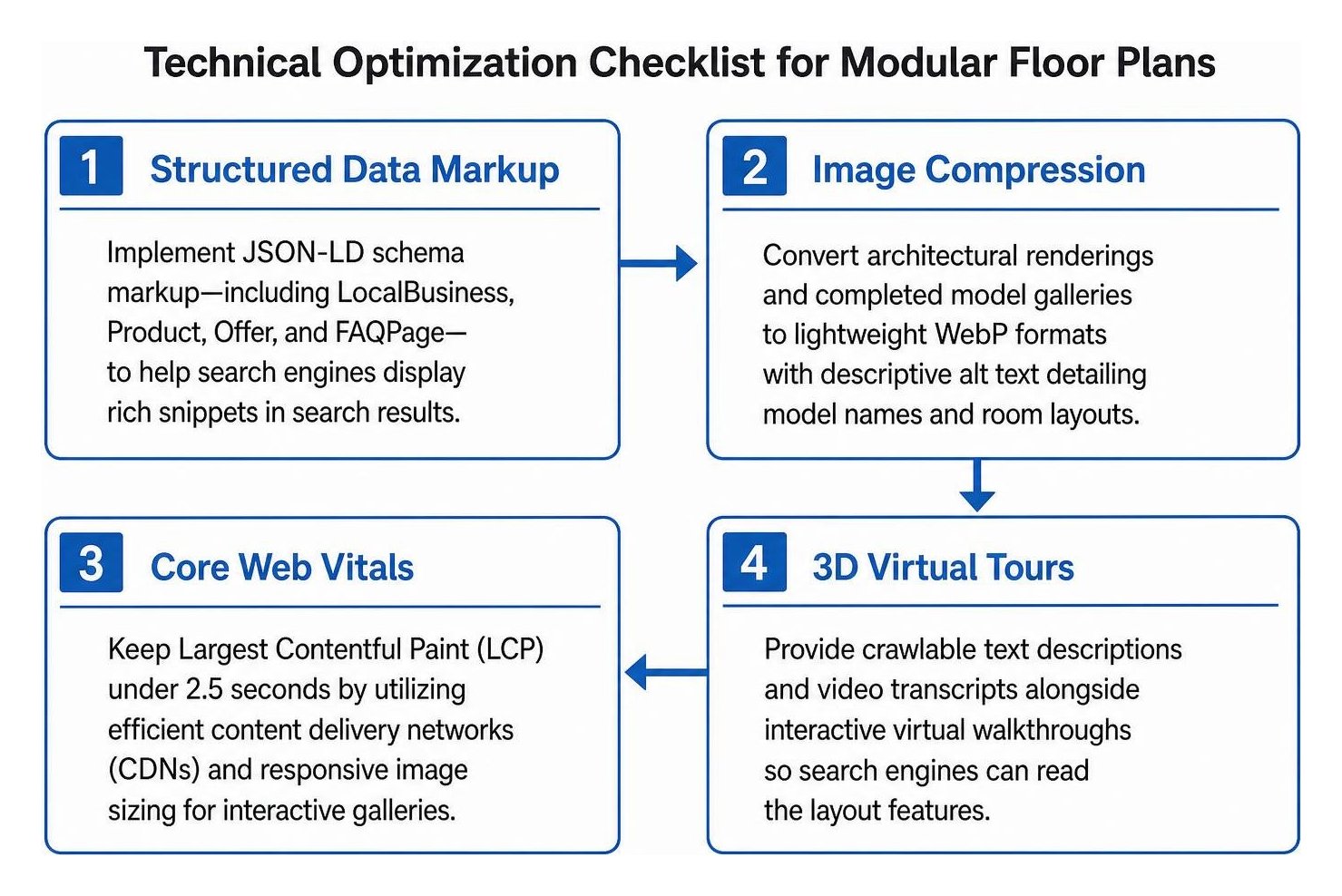
Key technical priorities include:
- Structured Data Markup: Implement JSON-LD schema markup—including
LocalBusiness,Product,Offer, andFAQPage—to help search engines display rich snippets in search results. - Image Compression: Convert architectural renderings and completed model galleries to lightweight WebP formats with descriptive alt text detailing model names and room layouts.
- Core Web Vitals: Keep Largest Contentful Paint (LCP) under 2.5 seconds by utilizing efficient content delivery networks (CDNs) and responsive image sizing for interactive galleries.
- 3D Virtual Tours: Provide crawlable text descriptions and video transcripts alongside interactive virtual walkthroughs so search engines can read the layout features.
If you manufacture prefabricated accessory units, aligning your technical site health with insights from a storage sheds SEO company will ensure your product catalogs remain fast and accessible.
How Do You Select the Right Agency Partner and Measure Organic Growth?
Select an SEO agency that understands the extended sales cycle of high-ticket construction projects and evaluates success using qualified inquiries rather than vanity traffic alone. In custom home building, organic campaigns typically require four to nine months to achieve page-one visibility for competitive local terms.
A qualified partner will establish transparent tracking across all touchpoints:
- Showroom Appointments: Tracking scheduled model home tours and sales center visits.
- Inquiry Form Submissions: Measuring floor plan downloads and custom price quote requests.
- Phone Call Tracking: Logging calls from Google Business Profiles and localized landing pages.
- Search Impression Growth: Monitoring visibility gains for transactional keywords and regional delivery terms.
Avoid agencies that rely on automated duplicate city pages or spam directory links. Our team at SmallBizSEO uses our data-driven "Velocity" framework to deliver sustainable search visibility and clear reporting tailored to your specific delivery regions.
Build Your Modular Home Search Pipeline Today
Capturing high-intent home buyers requires an optimized website that functions as a 24/7 digital showroom. By publishing transparent pricing, creating dedicated model spec sheets, demystifying zoning and financing, and maintaining an accurate local footprint, your company can outrank competitors and generate consistent construction leads.
To identify technical gaps, content opportunities, and local ranking hurdles across your service area, request a comprehensive SEO visibility audit from SmallBizSEO to start growing your organic pipeline.