Finding Backlinks That Deliver Targeted Traffic: A Practical Guide

Which backlinks bring visitors who are likely to become customers?
To find which backlinks send qualified referral visitors, start with links on sites your customers already use: complementary partners, industry associations, niche publications, and trusted comparison pages. Look for a link in useful content that explains why someone should visit your page. Then check whether those visitors engage, inquire, or buy. A relevant link that sends a few good leads is worth more than one that sends many clicks with no results.
I'm Clayton Johnson, founder of SmallBizSEO. My work connects SEO, digital PR, and useful content to help small businesses assess which backlinks send qualified referral visitors, not just raise link counts.
What Differentiates Authority Backlinks from Traffic-Driving Backlinks?
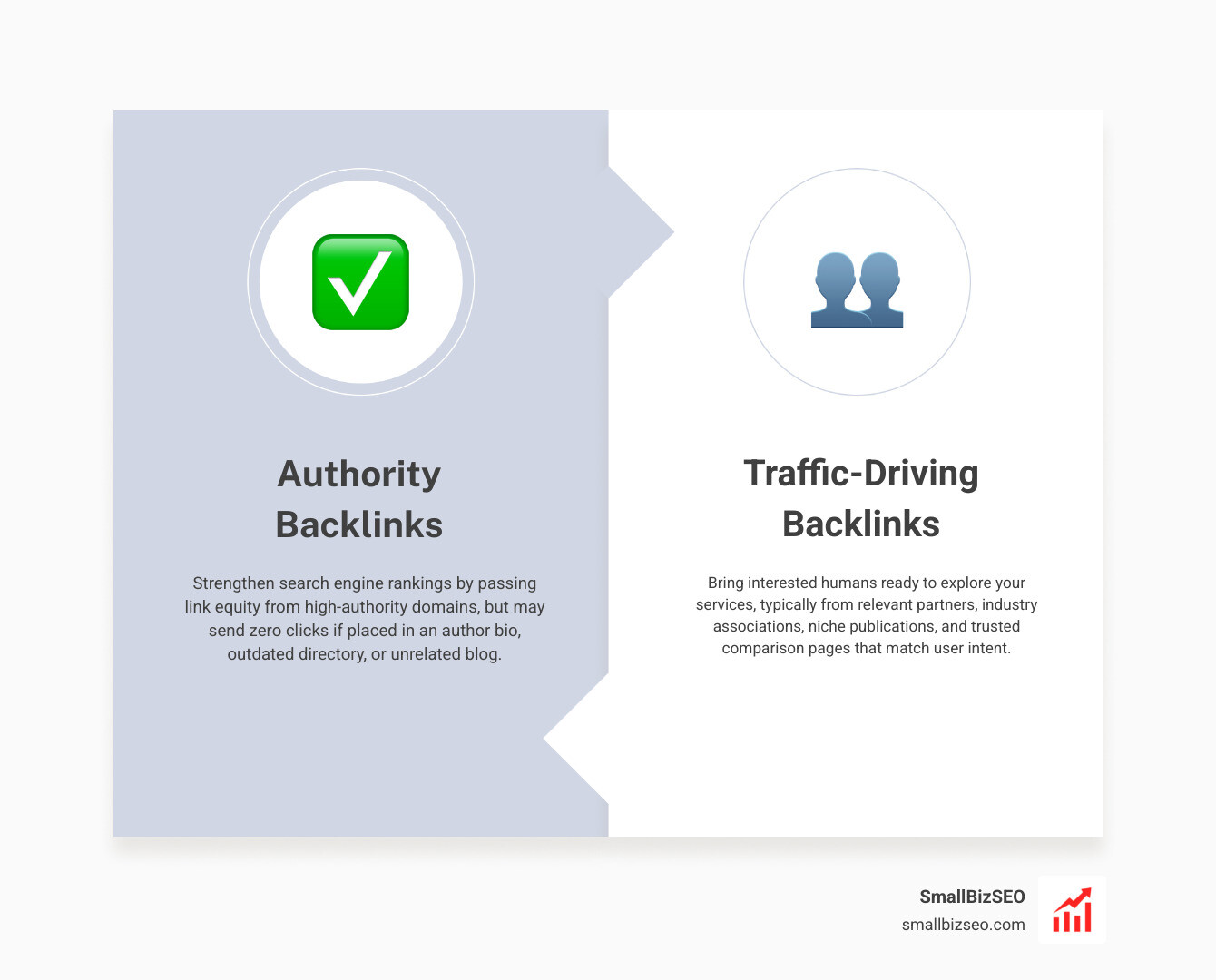
Authority backlinks strengthen search engine rankings, while traffic-driving backlinks bring interested humans who are ready to explore your services. The most valuable links accomplish both at the same time.
Many link-building campaigns focus purely on search engine metrics. While gaining link equity from an authoritative referring domain helps your overall visibility, a high-authority backlink might send zero actual clicks if it is tucked away in an author bio, buried in an outdated directory, or placed on an unrelated blog.
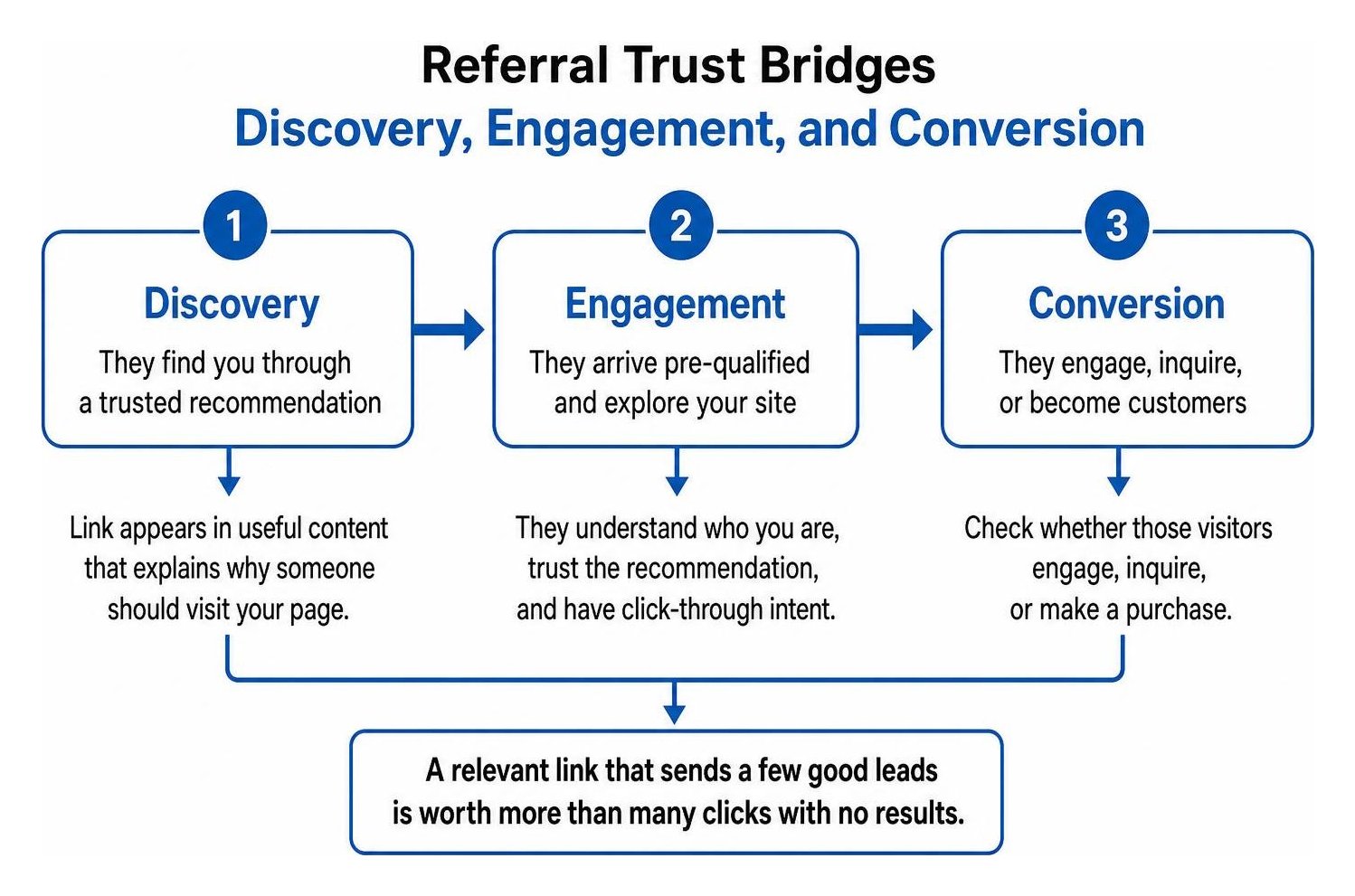
In contrast, referral-focused links leverage built-in trust. When an industry writer naturally links to your resource as the solution to a specific problem, the reader arrives on your site pre-qualified. They already understand who you are, trust the recommendation, and possess strong click-through intent.
Which Backlinks Send Qualified Referral Visitors Most Consistently?
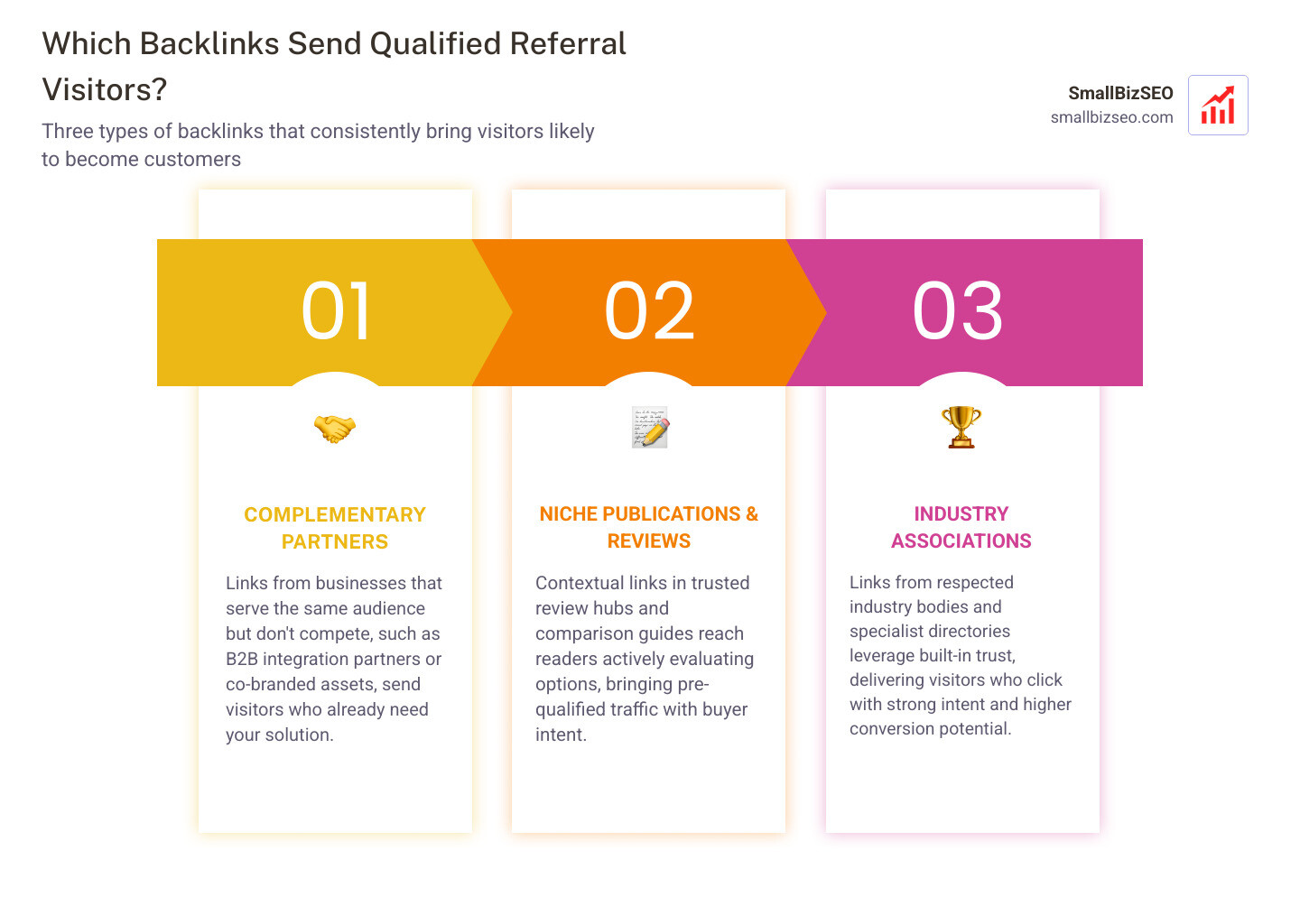
Links from complementary business partners, specialist review hubs, and respected industry publications send the highest quality referral visits because they reach an audience that already needs your expertise.
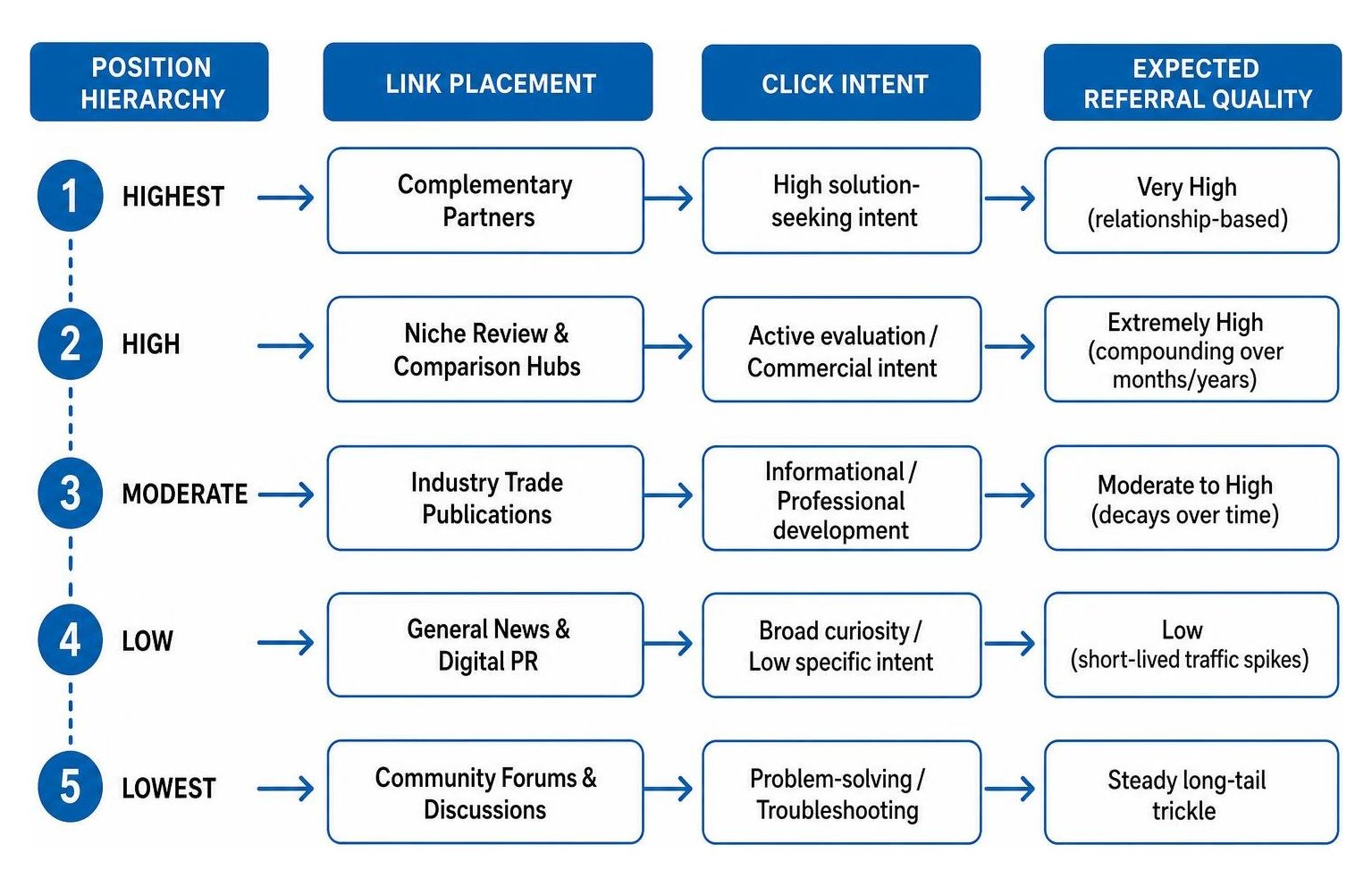
Understanding the difference between raw click volume and commercial intent helps prioritize link opportunities:
| Backlink Source Type | Primary Visitor Intent | Conversion Potential | Long-Term Referral Stability |
|---|---|---|---|
| Complementary Partners | High solution-seeking intent | Very High | High (relationship-based) |
| Niche Review & Comparison Hubs | Active evaluation / Commercial intent | Extremely High | Compounding over months/years |
| Industry Trade Publications | Informational / Professional development | Moderate to High | Moderate (decays over time) |
| General News & Digital PR | Broad curiosity / Low specific intent | Low | Low (short-lived traffic spikes) |
| Community Forums & Discussions | Problem-solving / Troubleshooting | Moderate | Steady long-tail trickle |
A modest volume of referral traffic from an aligned partner often beats hundreds of cold visitors from general press mentions.
Partnership Mentions: Which Backlinks Send Qualified Referral Visitors in B2B and SaaS?
Partnership links send qualified visitors when they appear where buyers evaluate related workflows, software integrations, and professional service providers.
In business-to-business settings, the strongest referral links come from non-competing vendors who serve the same clientele. For example, a web development agency linking to a specialized SEO audit service or a billing platform featuring a CRM integration creates an immediate bridge for high-intent users. Understanding how SaaS brands crush SEO with high quality links often comes down to co-marketing assets, integration directories, and co-authored case studies that directly solve shared customer problems.
Contextual Comparisons: Which Backlinks Send Qualified Referral Visitors from Review Hubs?
Contextual links within product comparison guides and expert evaluation hubs consistently drive prospects who are standing right at the point of decision.
When buyers research complex purchases, they turn to detailed roundups, buyer guides, and trusted reviews. An editorial link embedded inside a head-to-head comparison reaches users who have already moved past basic research. A single placement on a respected review site can deliver steady, qualified sessions for months or years after publication.
Why Do Placement and Topical Relevance Determine Referral Quality?
A backlink attracts the right visitor when it appears naturally in relevant content and gives readers an obvious reason to click.
Topical relevance ensures that the reader's mindset matches your landing page offer. Reviewing the practical link builders guide to topical relevance shows that search algorithms and human visitors look for identical contextual signals.
A contextual link placed early in the main body text earns significantly more qualified clicks than a sidebar link or footer credit. When anchor text clearly describes what lies on the other side of the click, visitors arrive with clear expectations, resulting in lower bounce rates and higher conversion rates.
How Can You Measure, Convert, and Scale High-Intent Referral Backlinks?
You can identify your best referral sources by tracking engagement time and conversions in your analytics, then optimizing destination pages for those specific audiences.
Attributing referral value requires looking past basic session counts. Google Analytics tracks external website visits within its standard referral acquisition channels, as detailed in the official Default channel group documentation. If you notice valuable brand mentions across the web that lack active hyperlinks, using systematic link reclamation helps convert lost opportunities into active referral funnels.
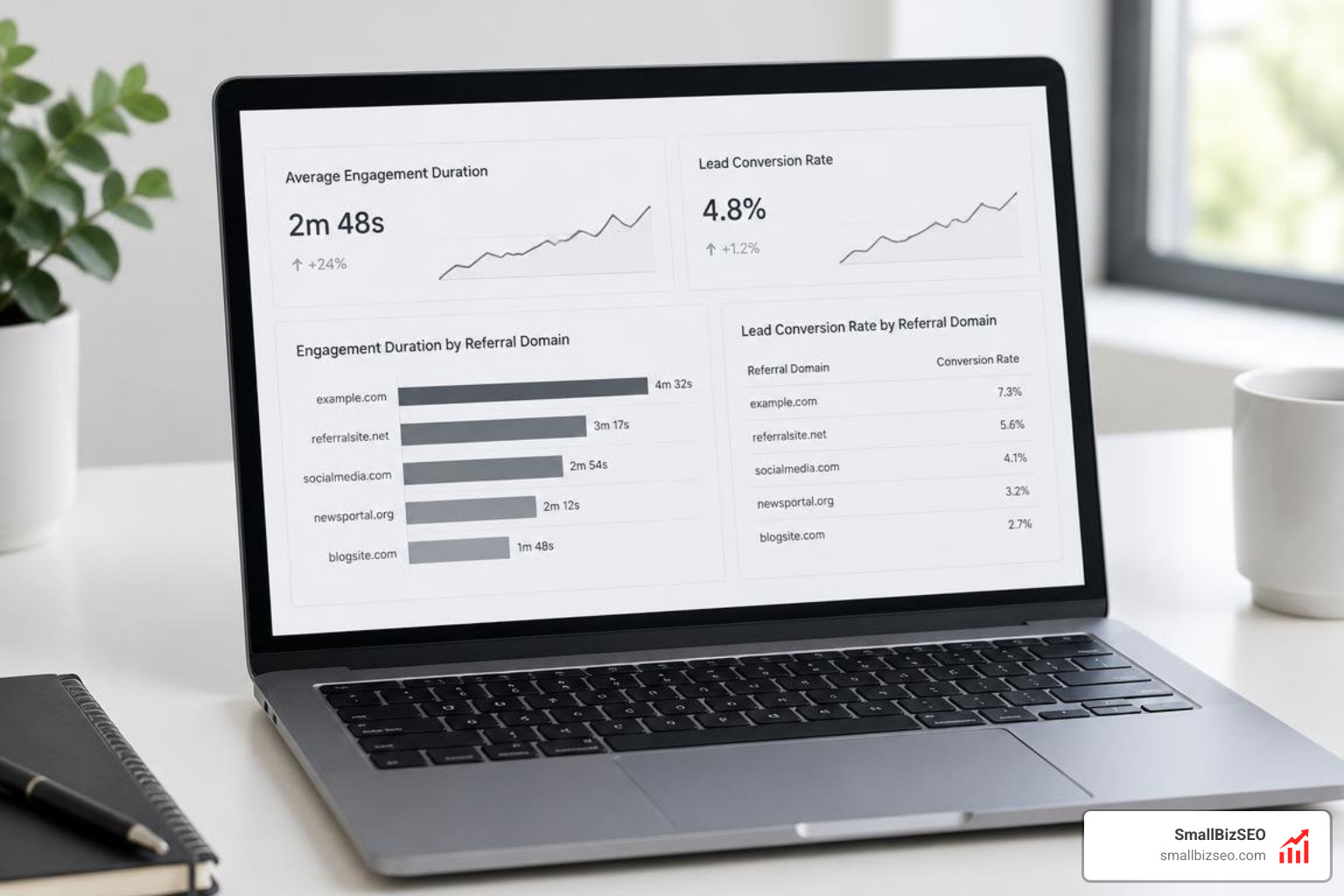
Tracking Metrics: How Can You Identify Qualified Leads from External Links?
Use web analytics to evaluate session engagement rates, average engagement duration, and goal completions for each referring domain.
To separate high-intent visitors from vanity clicks, look at three core performance signals:
- Engagement Rate: Visitors who spend over one minute or view multiple pages are genuinely consuming your material.
- Key Event Completions: Track consultation bookings, form submissions, or trial signups generated by specific partner domains.
- Lead Quality: Match closed deals back to original referring sources to see which websites bring actual revenue.
How Can You Align Landing Pages and Technical Setup for Referral Conversions?
Send referral visitors to dedicated, fast-loading landing pages that match the context of the referring article and present an obvious next step.
When visitors click a partner link, any friction on your website will cause them to leave. Ensure your landing pages load in under two seconds and continue the exact conversation started on the referring site. If a prospect clicks a link discussing compliance audits, do not send them to a generic homepage. Direct them to a dedicated page addressing that exact topic.
At SmallBizSEO, our data-driven Velocity framework pairs high-intent link building services with conversion-focused content strategy to ensure every link drives measurable business growth.
Turning Referral Backlinks into a Sustainable Growth Engine
Generating consistent, high-converting referral traffic requires shifting your focus from link quantity to link context. When you secure placements on platforms your target buyers actively read, each backlink functions as an evergreen recommendation.
By tracking engagement metrics, maintaining strong partner relationships, and guiding referral visitors to tailored landing pages, you create a sustainable pipeline of high-intent prospects while reinforcing your overall search authority.