A Practical Guide to Local SEO for Fire Extinguishers
How Can SEO for Fire Extinguishers Bring in Local Commercial Leads?
SEO for fire extinguishers starts with the services commercial buyers search for. Create separate pages for inspections, recharges, and maintenance. Add the areas you serve, keep your Google Business Profile accurate, and make it easy for a facility manager to request service.
This approach helps your business appear for local searches tied to a specific job, not just general fire safety questions. Clear service details and credentials also help buyers decide whether to contact you.
I’m Clayton Johnson, founder of SmallBizSEO. My work in content strategy, technical SEO, and building authority shapes this practical approach to SEO for fire extinguishers; next, we’ll look at how to reach commercial buyers.
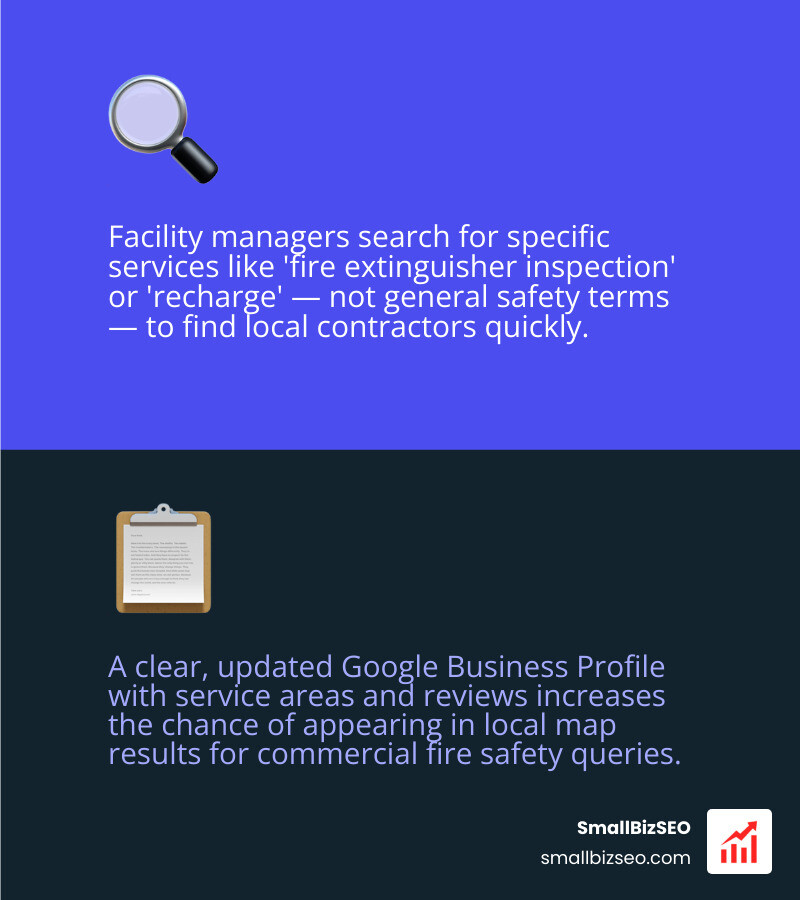
Must-know SEO for fire extinguishers terms:
Why SEO for Fire Extinguishers Requires a Targeted Commercial Strategy
A winning SEO campaign for fire protection focuses on commercial compliance rather than residential safety tips. Most revenue in life safety comes from recurring commercial contracts: annual maintenance, periodic recharge, hydro testing, and local compliance certification.
When a building owner or facility director searches Google, they are rarely browsing out of curiosity. They have a looming inspection deadline, a municipal violation notice, or an insurance mandate. Aligning your digital presence with strict municipal standards—such as referencing regulatory requirements found in the FDNY business guide on portable fire extinguishers—establishes immediate technical trust with B2B decision-makers.
How Does Commercial Buyer Intent Differ from Residential Safety Queries?
Commercial buyers search with strict operational deadlines and specific code requirements, while residential searchers look for basic DIY guidance or single-unit purchases.
Targeting commercial accounts requires structuring your keyword strategy around maintenance intervals, safety codes, and recurring service agreements. Homeowners typically query general terms like "kitchen fire extinguisher types." In contrast, facility managers query high-intent, transactional phrases like "commercial fire extinguisher inspection tag" or "hydrostatic testing service."
Understanding small business local SEO fundamentals allows you to filter out casual traffic and focus your content on high-value procurement terms.
| Search Dimension | Residential Intent | Commercial Intent |
|---|---|---|
| Primary Goal | Buying a single unit or general home safety tips | Code compliance, annual tagging, and liability reduction |
| Typical Queries | "Best home fire extinguisher," "how to use extinguisher" | "Annual fire extinguisher inspection," "hydrostatic testing quote" |
| Decision Maker | Homeowner or tenant | Facility manager, property manager, or safety director |
| Contract Value | Low (one-time purchase under $100) | High (recurring annual multi-unit service agreements) |
| Urgency Driver | Personal precaution | Impending fire marshal inspection, insurance requirement |
What Website Architecture Drives Rankings in SEO for Fire Extinguishers?
The most effective website structure uses dedicated, siloed service pages built around specific compliance tasks rather than a single generic services page.
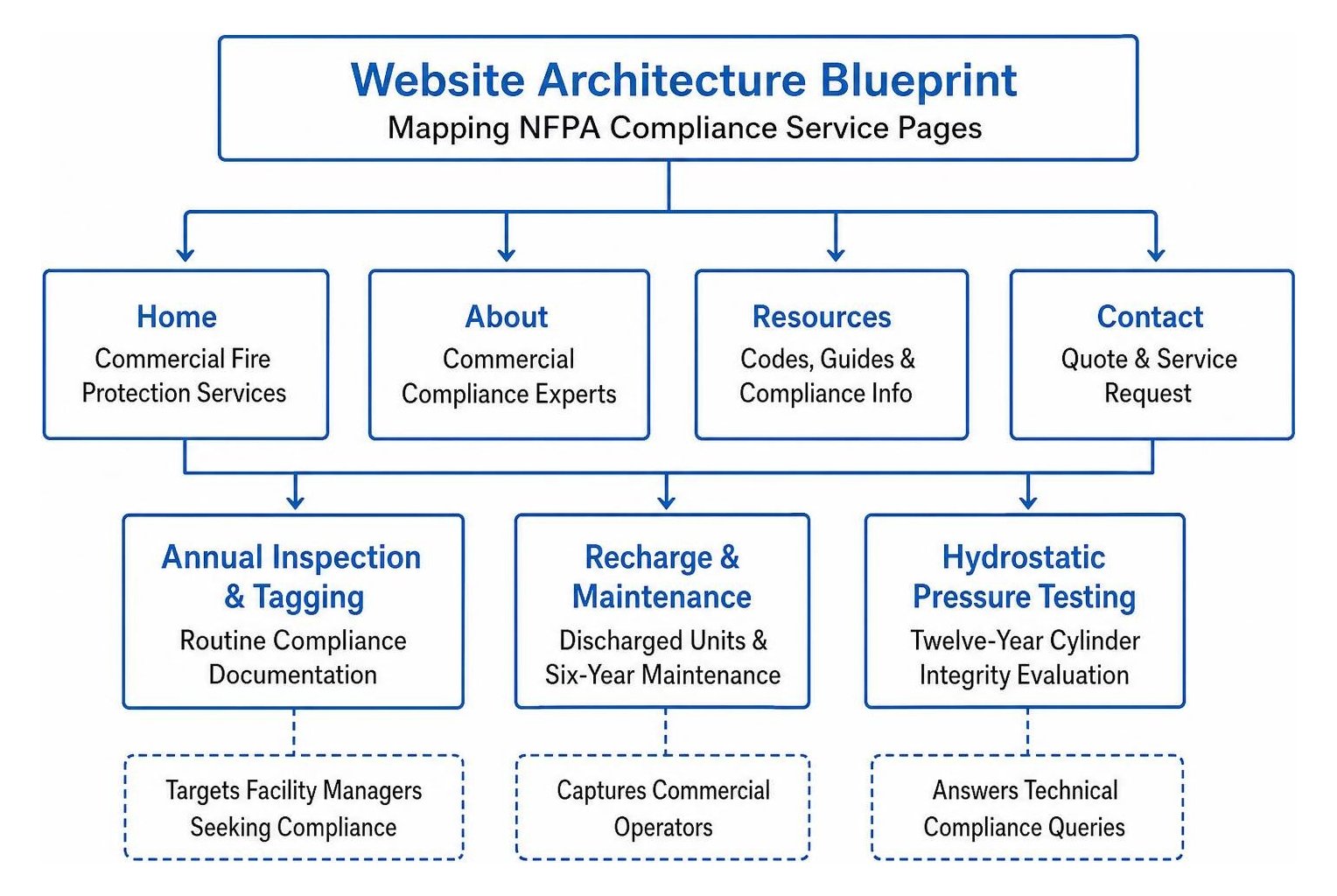
Search engines reward websites that provide deep, specialized answers to distinct search intents. Instead of listing everything on one page, your site should feature dedicated URLs for each primary service:
- Annual Fire Extinguisher Inspection & Tagging: Targets facility managers seeking routine compliance documentation.
- Fire Extinguisher Recharge & Maintenance: Captures commercial operators who have discharged equipment or need standard six-year maintenance.
- Hydrostatic Pressure Testing: Answers technical queries regarding twelve-year cylinder integrity evaluations.
- Cabinet & Hardware Installation: Ranks for new commercial buildouts and tenant improvement projects.
Organizing these pages beneath a clear parent directory establishes topical authority. Integrating proven on-page SEO strategies—such as using exact H2 subheadings, embedding detailed service specifications, and linking to related offerings like fire alarm systems SEO solutions—ensures search engines understand the breadth of your fire protection capabilities.
How to Optimize Local Search Signals and Google Business Profile for Life Safety Contractors?
Optimizing your Google Business Profile requires selecting precise primary categories, building consistent local citations, and acquiring reviews that mention specific compliance services.
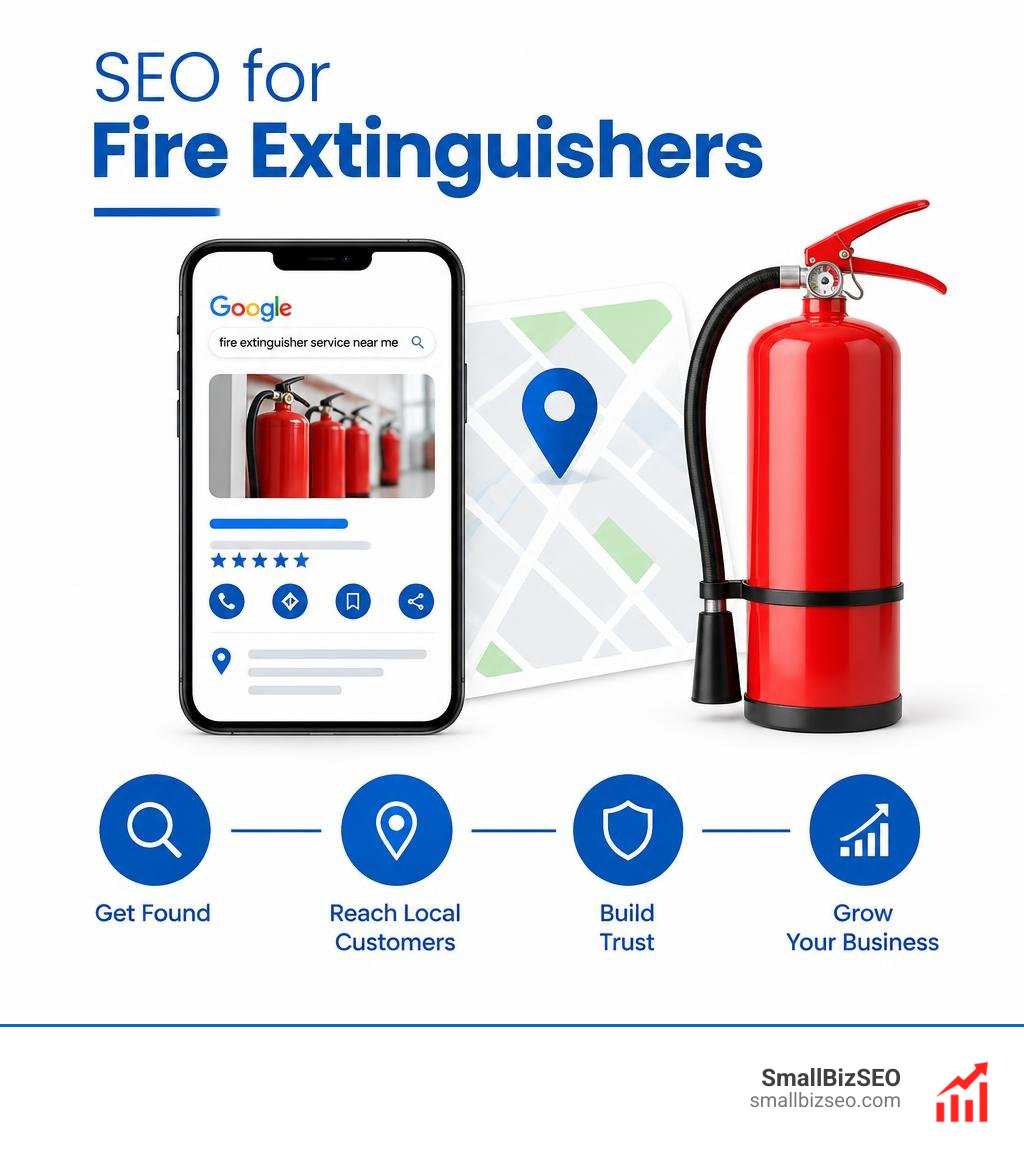
Google Maps and the local 3-pack generate the highest conversion rates for fire protection contractors. To maximize visibility in your operational footprint:
- Set the Primary Category: Choose "Fire Protection Service" as your primary classification, supplemented by secondary categories such as "Fire Protection Equipment Supplier."
- Standardize Name, Address, and Phone (NAP): Keep your contact data identical across every business listing, directory, and website footer.
- Showcase Verified Credentials: Upload photos of your certified field technicians, mobile service vans, inspection tags, and equipment testing bays.
- Implement an Active Review System: Encourage commercial clients to mention specific services in their reviews, such as "annual inspection tags" or "warehouse recharge."
Following a comprehensive local SEO guide ensures your company establishes the local prominence required to outrank regional competitors across nearby commercial zones.
Actionable Execution: Technical Audits, Citations, and AI Search Optimization
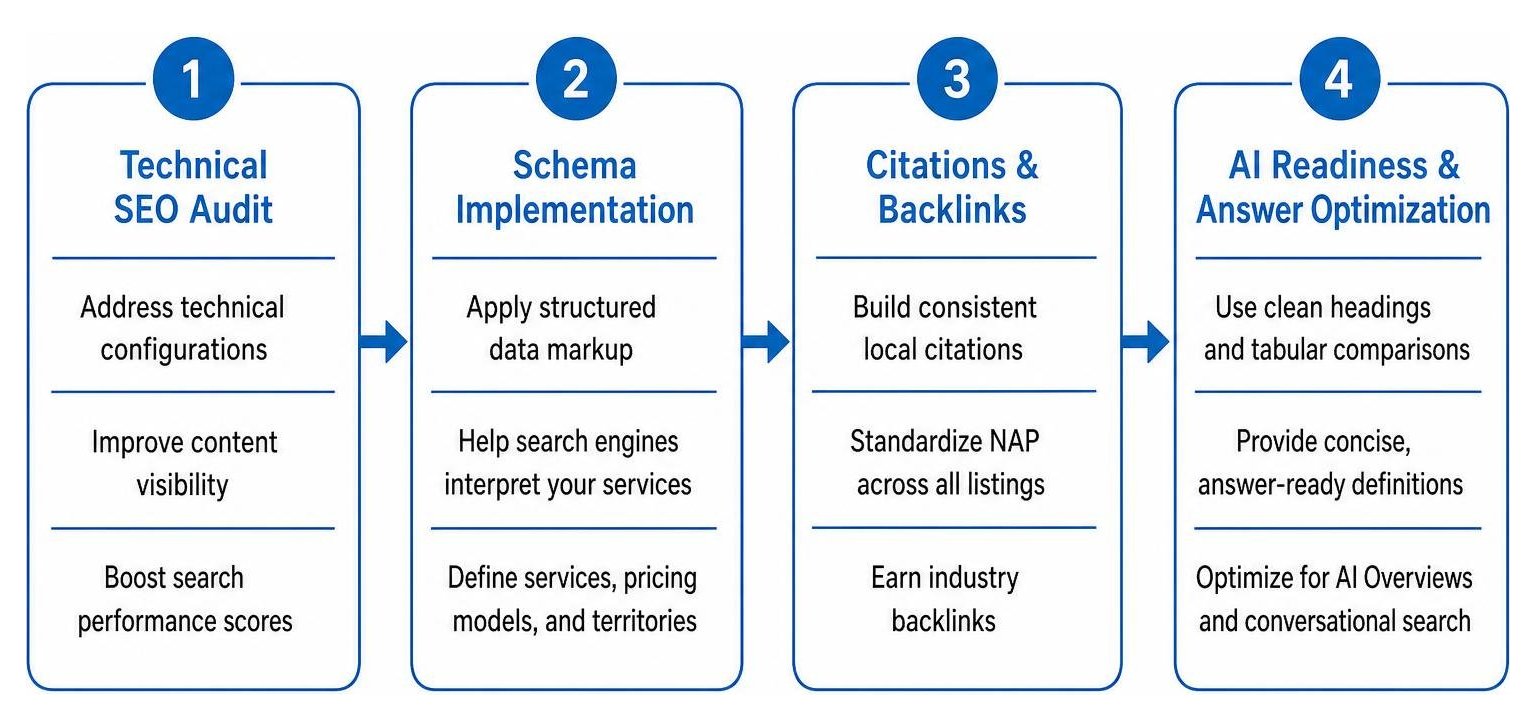
Technical SEO, structured schema markup, and industry backlinks create the operational foundation required to rank in both traditional search engines and AI answer engines.
Academic research on SEO techniques for fire extinguisher marketing demonstrates that addressing technical configurations, schema markup, and content visibility produces rapid gains in overall search performance scores.
How to Master AI-Driven Search and Local Schema Markup in SEO for Fire Extinguishers?
Optimizing for AI search platforms like Google AI Overviews and conversational engines requires structured data markup and concise, answer-ready definitions.
Search systems extract direct answers from pages that feature clean headings, tabular comparisons, and structured semantic code. Applying structured data allows search engines to instantly interpret your services, pricing models, and service territories.
Key schema types every life safety contractor should deploy include:
LocalBusiness/FireProtectionService: Declares your business hours, geo-coordinates, brand name, and telephone numbers.Service: Defines specific offerings like monthly visual inspections, six-year teardowns, and hydro testing.FAQPage: Outlines common compliance questions regarding tagging schedules, recharge protocols, and regulatory rules.
Mastering local search optimization basics ensures that your technical markup directly feeds AI retrieval algorithms with accurate data.
What Are the Key Technical Fixes and Authority Link-Building Tactics?
The most vital technical optimizations include improving mobile page speed, resolving crawl anomalies, and acquiring relevant backlinks from trade and safety organizations.
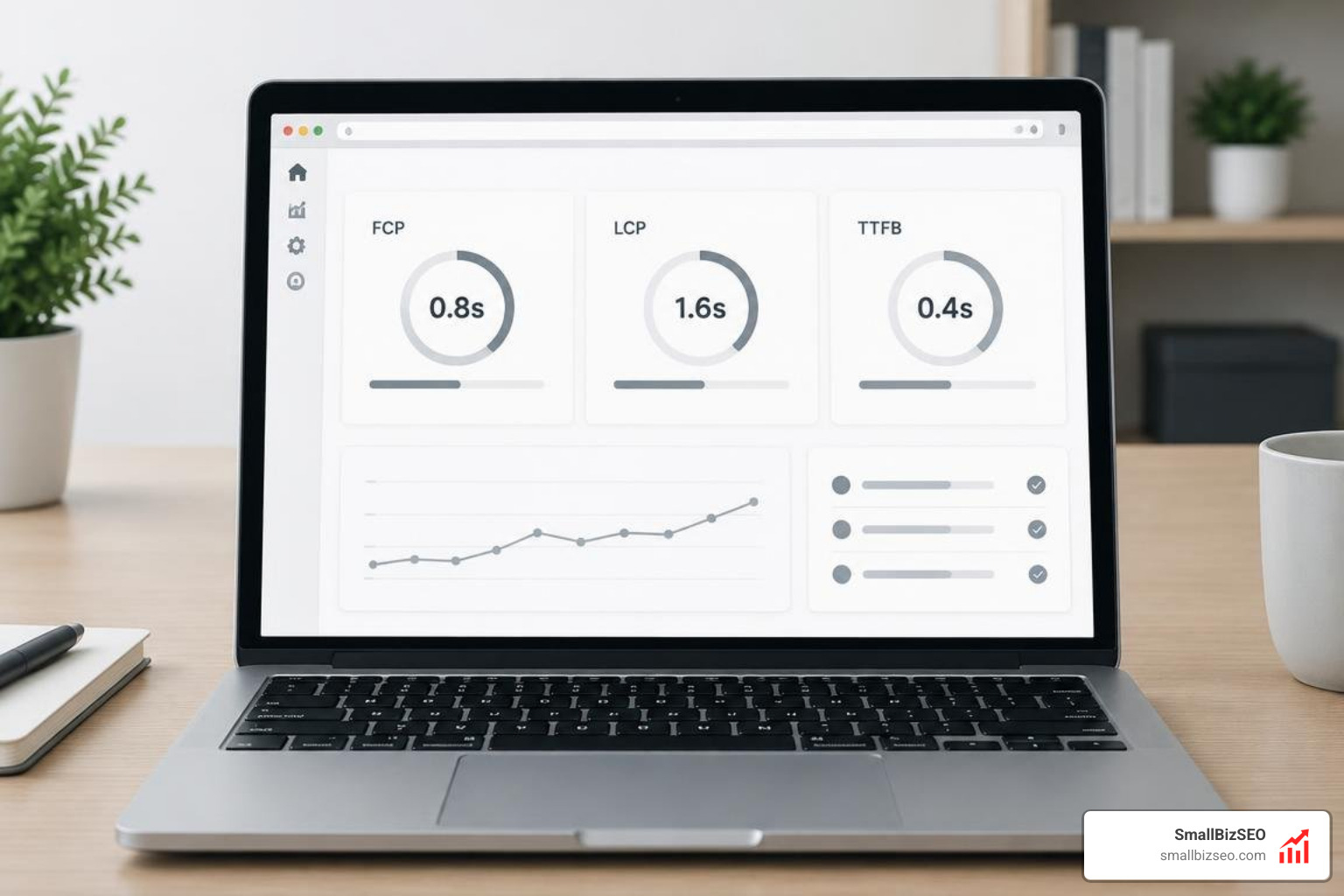
Commercial property managers often place service calls directly from job sites using mobile devices. If your website takes longer than three seconds to load or fails Core Web Vitals assessments, visitors bounce to competitors.
Essential technical checkpoints include:
- Compressing service bay and fleet imagery into modern WebP formats.
- Eliminating render-blocking scripts to keep First Contentful Paint (FCP) under 1.8 seconds.
- Ensuring mobile navigation makes calling dispatch or submitting a work order instantaneous.
For deeper technical implementation, review our technical SEO guide. Beyond site speed, link building in the life safety industry relies on earning citations from regional trade groups, building safety associations, and municipal business rosters.
What Real-World Results and Timelines Can Fire Safety Providers Expect?
Most fire safety companies observe measurable ranking improvements within 60 to 90 days, with substantial organic lead growth occurring between 3 and 6 months.
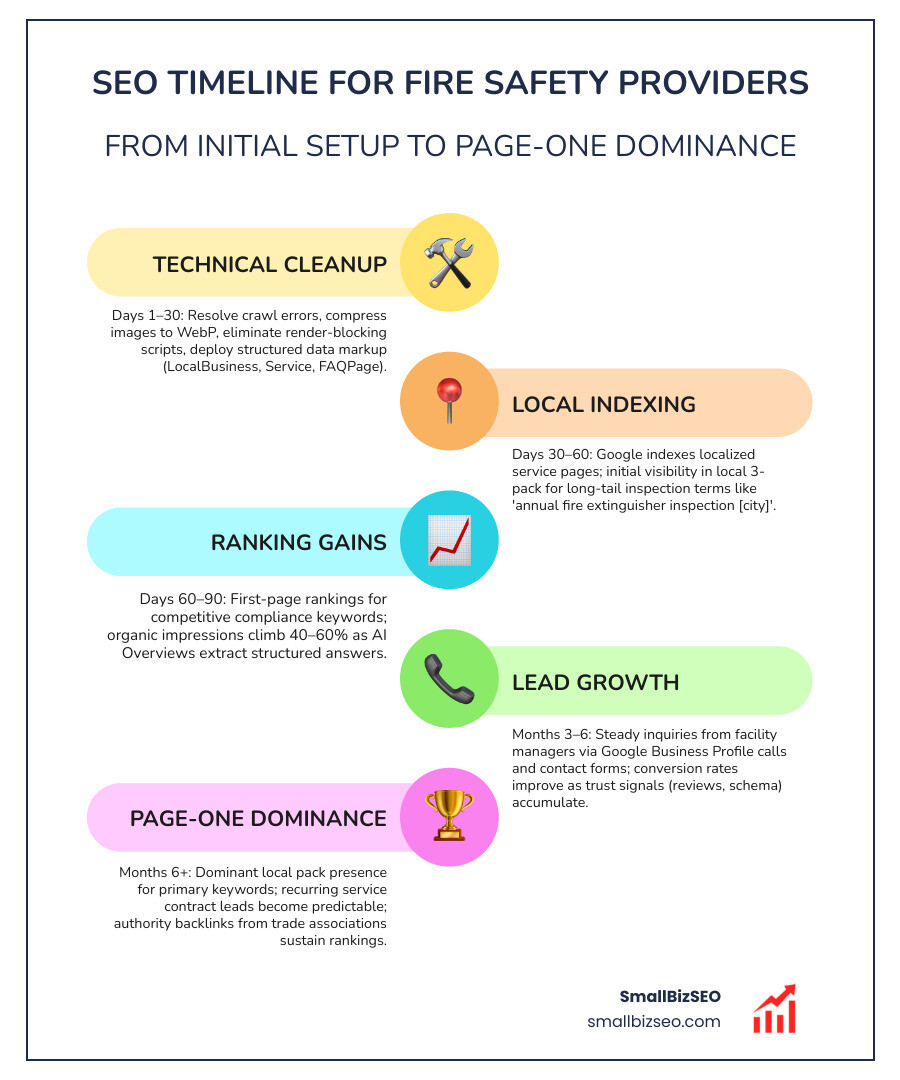
Because commercial competition in life safety is often thinner than general residential trades, structured campaigns build authority rapidly:
- Days 1–30: Complete technical cleanup, schema deployment, and service page restructuring.
- Days 60–90: Indexing of localized service pages, initial local 3-pack visibility, and ranking jumps for long-tail inspection terms.
- Months 3–6: First-page rankings for primary competitive keywords, driving steady inquiries from facility managers.
Securing Your Commercial Market Advantage
Dominating search results for life safety services requires moving beyond generic digital marketing. By creating a dedicated site architecture around compliance, maintaining an optimized Google Business Profile, and utilizing answer-ready structured data, your business can consistently capture high-value commercial inspection contracts.
At SmallBizSEO, we use our data-driven "Velocity" framework to deliver rapid, sustainable organic growth and transparent reporting for service contractors. Explore our specialized SEO for fire extinguisher companies or schedule a visibility audit consultation today to build an SEO system that generates booked inspection jobs.