How to Analyze Traffic Shifts Once a Google Core Update Finishes

How Do You Measure Search Traffic After a Google Core Update?
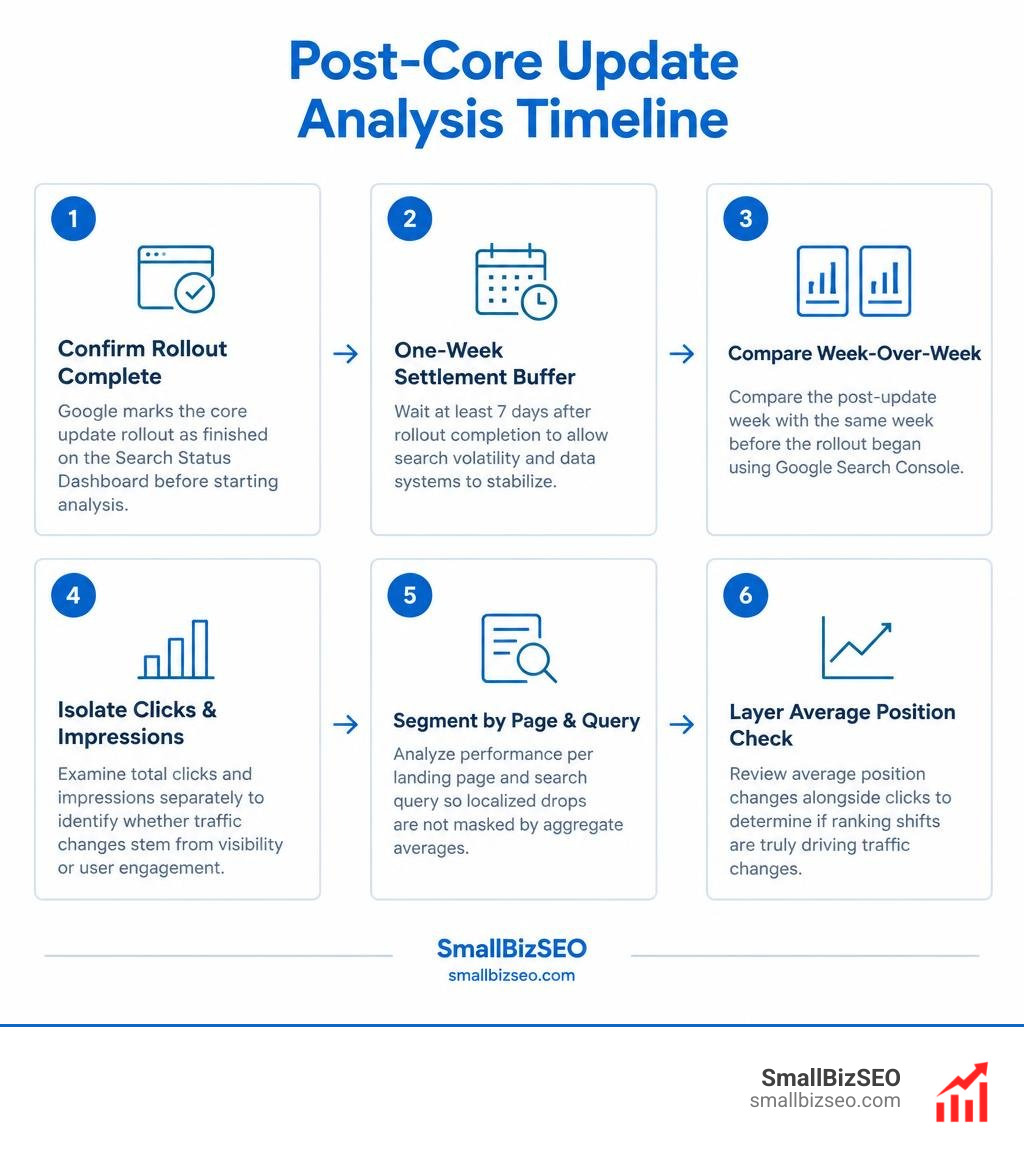
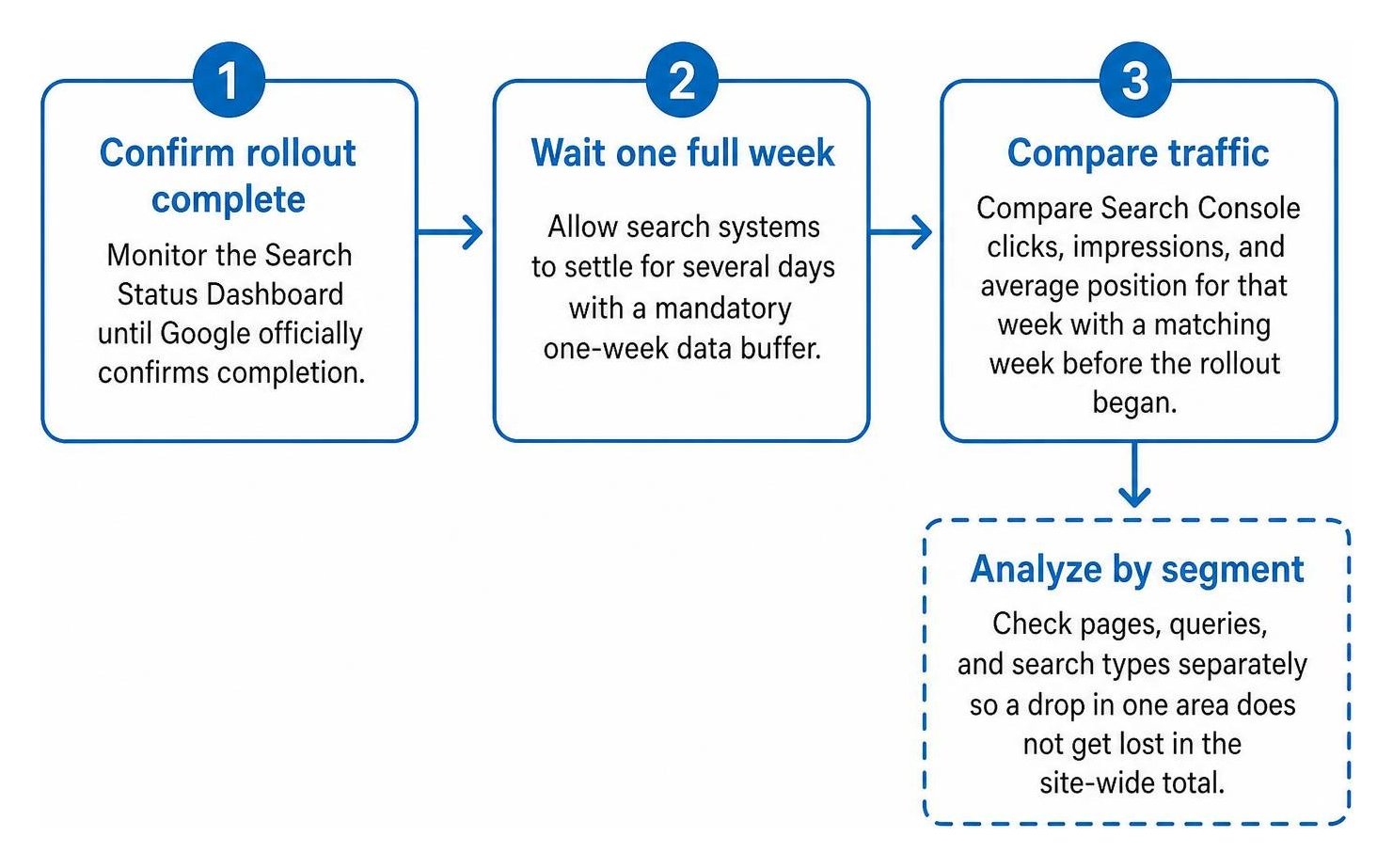
The first step in analyzing traffic after a google core update finishes is to confirm that Google has marked the rollout complete. Wait at least one full week, then compare Search Console clicks, impressions, and average position for that week with a matching week before the rollout began. Check pages, queries, and search types separately so a drop in one area does not get lost in the site-wide total.
I'm Clayton Johnson, founder of SmallBizSEO. My work in SEO and digital growth strategy informs my approach to analyzing traffic after a google core update finishes: identify what changed before deciding what to improve.
How Can You Analyze Traffic After a Google Core Update Finishes?
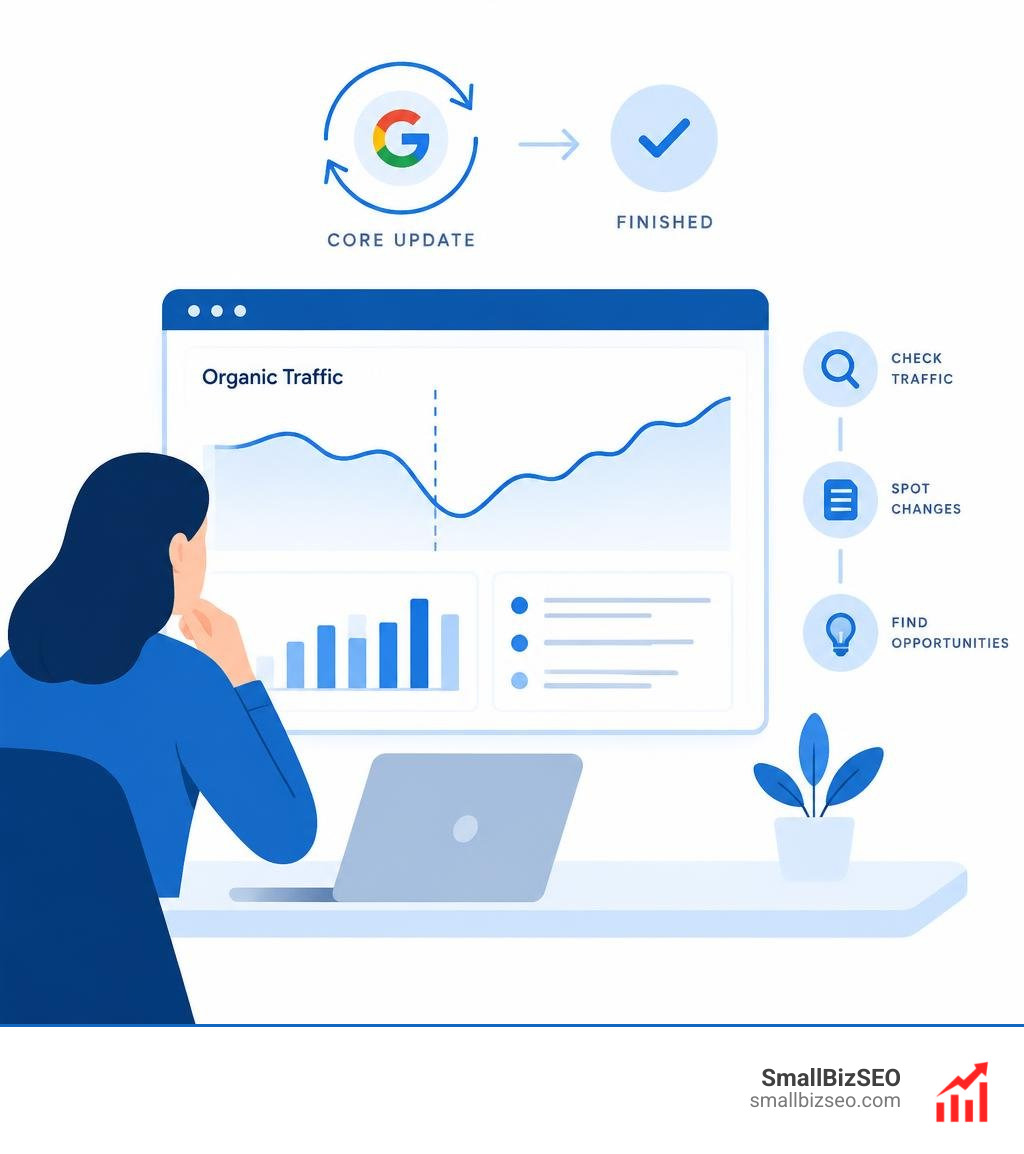
To accurately evaluate performance changes, confirm the rollout is fully complete on official tracking channels, allow search systems to settle for several days, and isolate performance data across specific pages, queries, search types, and device profiles.

Evaluating an algorithm shift requires a structured approach. Search systems handle over 89% of global search queries, and major algorithmic shifts recalibrate site-wide quality assessments. Attempting to draw conclusions while data is still fluctuating leads to false diagnoses and wasted resources.
Why Is Analyzing Traffic After a Google Core Update Finishes Dependent on Waiting for Rollout Completion?
You must wait until Google confirms the rollout has concluded because ranking systems fluctuate wildly while systems update indexes, and a mandatory one-week data buffer is necessary to distinguish permanent shifts from temporary turbulence.
During an active update, search rankings experience significant daily volatility. These shifts occur as algorithms evaluate site-wide content quality, consolidate signals, and adjust rankings across billions of pages. According to official core update documentation, updates introduce broad algorithmic enhancements rather than manual penalties against specific sites.
Checking your analytics mid-rollout provides incomplete data. Temporary index rebalancing often resembles traffic drops. To avoid making premature changes:
- Monitor the Search Status Dashboard until Google officially confirms completion.
- Wait a minimum of seven full days after completion before pulling baseline reports.
- Verify that observed fluctuations are not temporary indexing anomalies by reviewing how crawl shifts and updates influence short-term reporting.
Which Tools and Filters Reveal the Real Impact on Clicks and Queries?
Use Google Search Console performance reports configured with 28-day or matching 7-day comparative date ranges to isolate exact click deltas, impression changes, and position shifts across individual URLs and search terms.
Google Analytics and third-party rank trackers show macro trends, but Google Search Console provides direct search performance records. When debugging traffic drops, configure your filters to identify root causes:
- Compare Equivalent Periods: Compare a full 7-day post-rollout window against the 7-day period immediately preceding the update announcement. Ensure you compare matching days of the week to prevent weekend traffic variances from skewing data.
- Track Page-Level Click Deltas: Export URL performance data and calculate the absolute change in clicks. A page dropping from 1,000 clicks to 600 requires immediate attention compared to a page moving from 10 clicks to 6.
- Evaluate Impressions Versus Clicks: If impressions remain steady while clicks fall, examine search snippets, meta descriptions, and rich result features. If both impressions and clicks drop simultaneously, rankings have dropped.
- Perform Macro Validations: Run a multi-month or year-over-year comparison to rule out seasonal shifts in user demand.
How Should You Segment Performance Across Different Search Types and Devices?
Filter performance by Web Search, Discover, Image, Video, and News tabs individually, then cross-reference with mobile versus desktop devices to isolate platform-specific visibility changes.

A site-wide traffic dip often masks gains or losses concentrated in specific search verticals. For example, Google Discover traffic patterns differ significantly from traditional web results, sometimes accounting for over 60% of search-driven visits for topical publishers.
When segmenting your post-update data:
- Isolate Google Discover: Discover relies heavily on fresh, highly engaging, topic-focused media. A loss in Discover traffic does not indicate a drop in core organic web rankings.
- Inspect Rich Media Feeds: Review Image and Video search tabs separately. Search updates frequently modify media carousels and visual layouts on mobile devices.
- Evaluate Editorial Visibility: If your site produces timely editorial content, review your standing following a News Core Update to evaluate your presence in Top Stories carousels.
- Segment by Device: Check desktop versus mobile performance. Significant drops isolated to mobile devices often point toward mobile usability issues, intrusive interstitials, or page experience factors rather than site-wide content quality problems.
How Can You Diagnose Drops and Plan Long-Term Recovery?
Diagnose drops by categorizing ranking declines into minor adjustments or structural devaluations, validating user intent against the URLs that replaced you, and executing targeted technical and content upgrades.
How Do You Distinguish Between Small Position Shifts and Critical Drop Patterns?
Distinguish between minor volatility and critical devaluations by measuring position delta: drops of 1 to 3 positions indicate normal competitive movement, whereas drops of 10 or more positions signal that algorithms re-evaluated content quality or intent alignment.
Minor ranking drops do not require immediate rewrites or structural redesigns. However, when pages fall from page one to deep internal results, search systems have chosen more comprehensive, authoritative resources.
| Metric / Dimension | Small Position Shift | Critical Ranking Drop |
|---|---|---|
| Typical Movement | Position 2 to 4 or 5 to 7 | Position 4 to 29 or off top 50 |
| Impression Impact | Minor decline (5% to 15%) | Severe collapse (50% to 90%+) |
| Primary Root Cause | Competitor content updates, snippet layout shifts | Algorithmic re-evaluation of depth, trust, or intent |
| Initial Action | Monitor rankings, review competing title tags | Conduct full content audit via pre-refresh diagnostic checklist |
| Remediation Priority | Low; make minor factual updates | High; restructure content, improve E-E-A-T, prune low-value URLs |
What Best Practices Help You Analyze Traffic and Guide Content Audits?
Audit impacted pages by reviewing technical access, checking industry demand trends, and comparing your content's depth and unique perspective directly against newly promoted competitors.
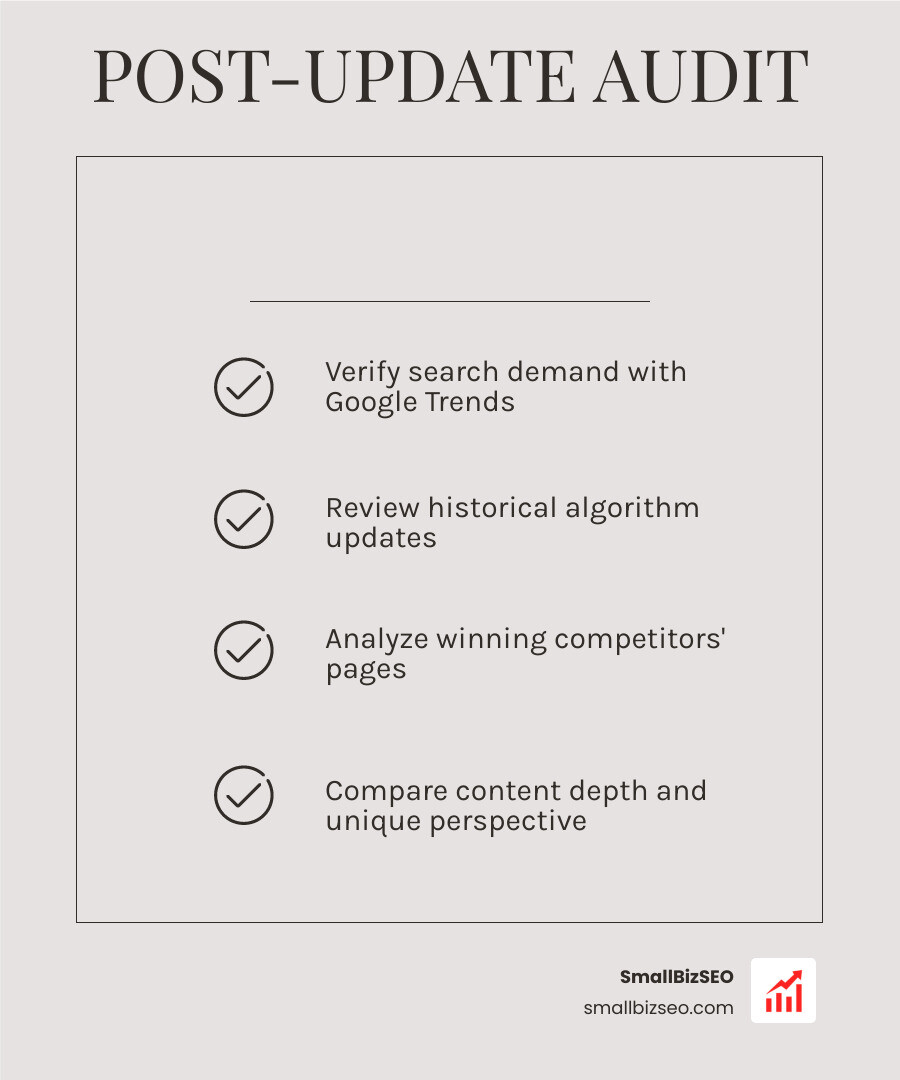
To conduct an actionable audit after traffic losses settle:
- Verify Search Demand: Open Google Trends to verify that overall search interest for your primary topics has not declined industry-wide.
- Review Historical Algorithms: Check our coverage of Google search updates to understand the primary systems refined during the rollout.
- Analyze Winning Competitors: Search your primary keywords and analyze the pages that took your positions. Note their content structure, original research, visual assets, author credentials, and how quickly they resolve the searcher's query.
- Identify Thin and Redundant Content: Identify low-performing, templated, or overlapping pages. Consolidate competing URLs into comprehensive guides and prune unhelpful pages that dilute site-wide quality.
- Inspect Technical Health: Ensure server rendering issues, slow Core Web Vitals, or misconfigured directives are not preventing search engines from efficiently crawling your high-priority pages.
How Long Does Meaningful Recovery Take and What Role Does E-E-A-T Play?
Recovery from a core update requires demonstrating Experience, Expertise, Authoritativeness, and Trustworthiness (E-E-A-T) over several months, with substantive ranking improvements taking anywhere from two to twelve months as systems re-evaluate your site.
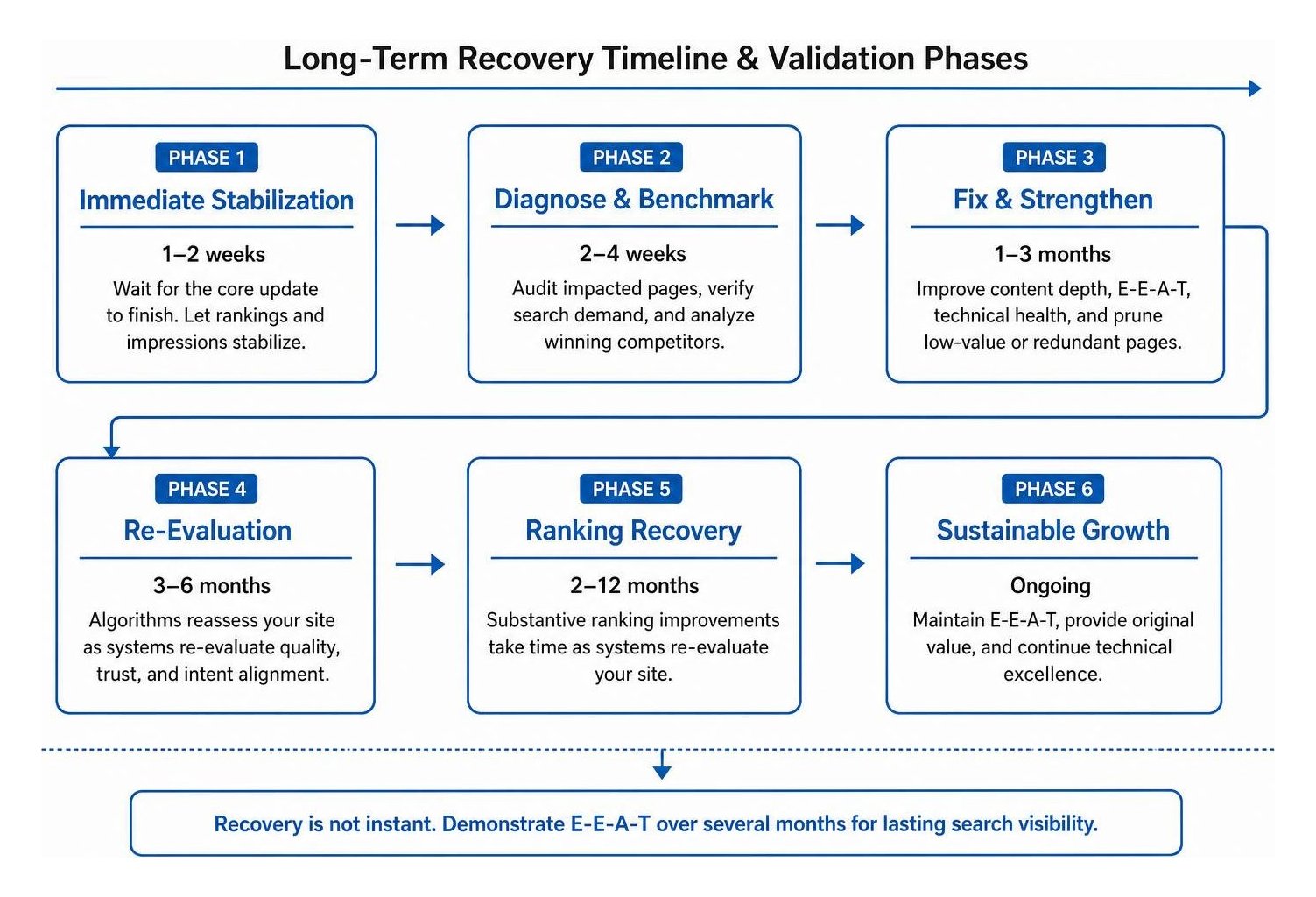
Core updates assess broad quality signals across your entire domain. Rebuilding search visibility is not achieved through superficial keyword adjustments or metadata tweaks. Instead, it requires addressing core quality factors:
- Showcase Transparent Experience: Include clear author bios detailing professional credentials, practical industry experience, and verifiable background information.
- Provide Original Value: Replace generic, rewritten content with proprietary data, case studies, original photography, and clear technical insights.
- Build Transparent Trust Signals: Maintain easily accessible contact details, editorial guidelines, clear citations, and transparent business policies across your domain.
- Execute Iterative Improvements: Follow a structured algorithm recovery roadmap to audit backlinks, fix structural architecture defects, and remove duplicate content assets.
Substantial traffic recovery typically requires consistent content quality improvements and often solidifies when future core updates roll out.
Building Resilient Organic Visibility Moving Forward
Analyzing traffic changes requires patience, objective data extraction, and a commitment to people-first content quality. Rather than reacting impulsively to mid-rollout volatility, use settled Google Search Console metrics to guide your content enhancements. If your business needs structured guidance to diagnose complex drops and rebuild organic performance, explore our expert core update recovery strategies to restore search growth.