How to Earn High-Quality Backlinks for Your Startup with Zero Initial Authority

How to Earn High-Quality Backlinks for Your Startup with Zero Initial Authority
Can Digital PR Replace Traditional Link Building for a New Startup?
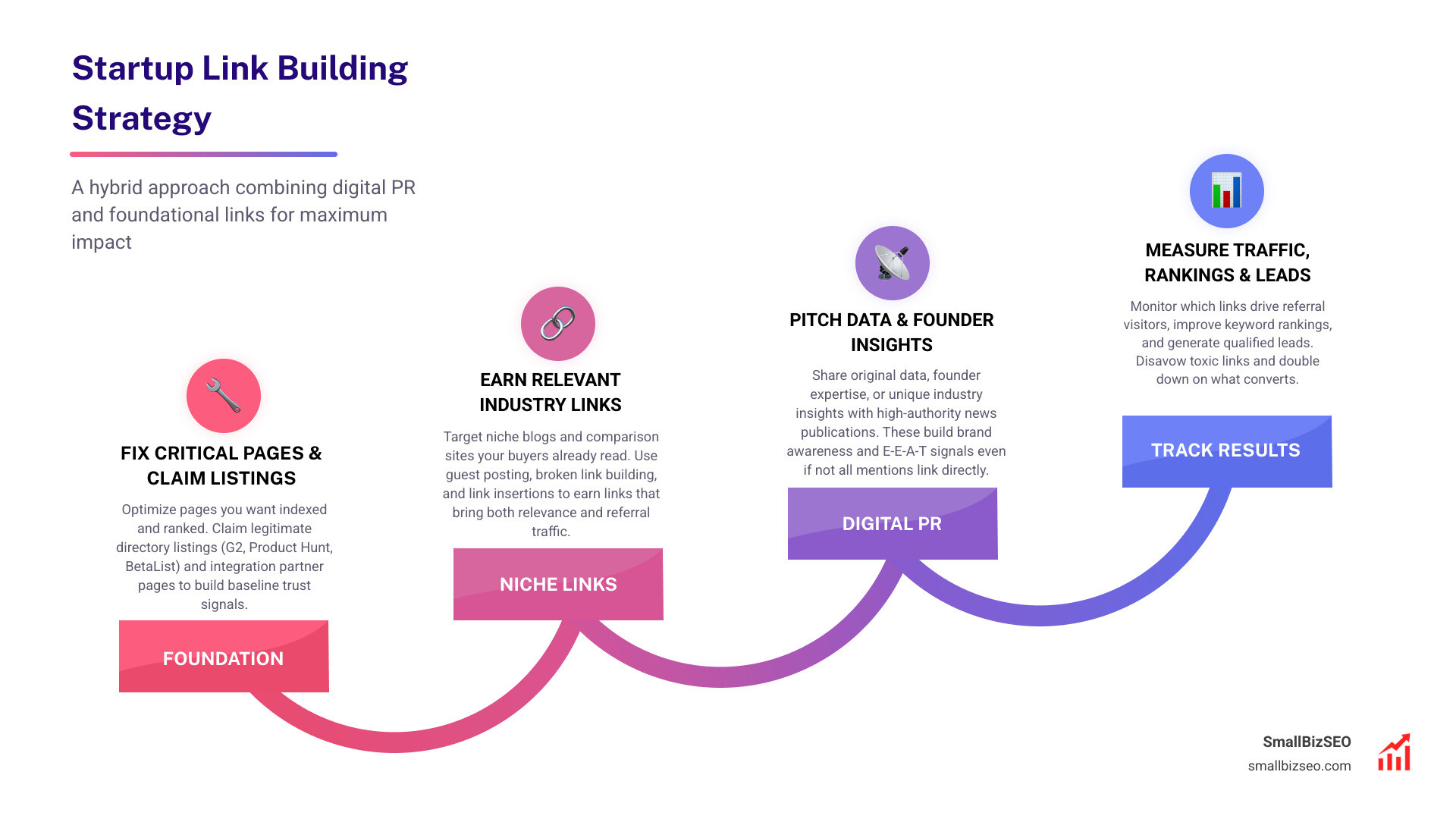
No. A useful startup link building strategy combines digital PR with relevant, smaller links. Start by fixing pages you want people to find, then claim legitimate listings and links from partners. Pitch founder insights or original data to publications, and earn links from niche sites your buyers already read. Track which links bring visitors, rankings, and leads.
Digital PR can build awareness, but a news mention may not link to your site or reach someone ready to buy. A relevant industry link can do both. For a new domain, the better question is not which tactic wins? It is what useful reason can you give each site to mention you?
I’m Clayton Johnson, founder of SmallBizSEO. My work connects SEO, content, and digital PR, and I use that experience to help businesses build a startup link building strategy around useful resources and qualified leads.
Startup link building strategy word roundup:
- small business SEO link building
- data driven SEO small business
- transparent SEO reporting small business
Digital PR vs. Foundational SEO: Building an Unbeatable Startup Link Building Strategy

Digital PR earns high-authority media mentions by pitching newsworthy stories, unique proprietary data, or founder commentary. Foundational SEO link building focuses on directory listings, partner pages, guest articles, and contextual link insertions on topically relevant websites.
While 78% of digital marketers report a worthwhile ROI from link building, roughly 96.55% of all web pages receive zero organic search traffic because they lack backlink signals. Relying solely on PR campaigns often leaves commercial pages starved of topical authority. A comprehensive backlink plan balances high-authority press mentions with steady, niche-relevant contextual backlinks.
| Factor | Digital PR Campaigns | Tactical Foundational Link Building |
|---|---|---|
| Primary Goal | Broad brand awareness & top-tier press trust | Direct keyword rankings & commercial page equity |
| Typical DR Range | DR 70 - 90+ | DR 25 - 65 |
| Target Landing Pages | Homepage or linkable data assets | Commercial pages, feature guides, comparison tables |
| Audience Intent | Informational & passive awareness | High commercial intent & active problem solving |
| Placement Speed | Variable (campaign sprints) | Predictable (monthly compounding cadence) |
Can High-Authority Media Placements Replace Tactical Niche Links for a DR 0 Domain?
High-authority media placements cannot fully replace tactical niche backlinks. While a major news feature delivers powerful entity trust and brand recognition, news reporters rarely link directly to bottom-of-funnel conversion pages using commercial anchor text.
To escape the zero-authority trap on a fresh domain, founders need hyper-relevant links that reinforce topical relevance. Incorporating effective guest posting tactics enables teams to target industry-specific blogs that potential customers read daily.
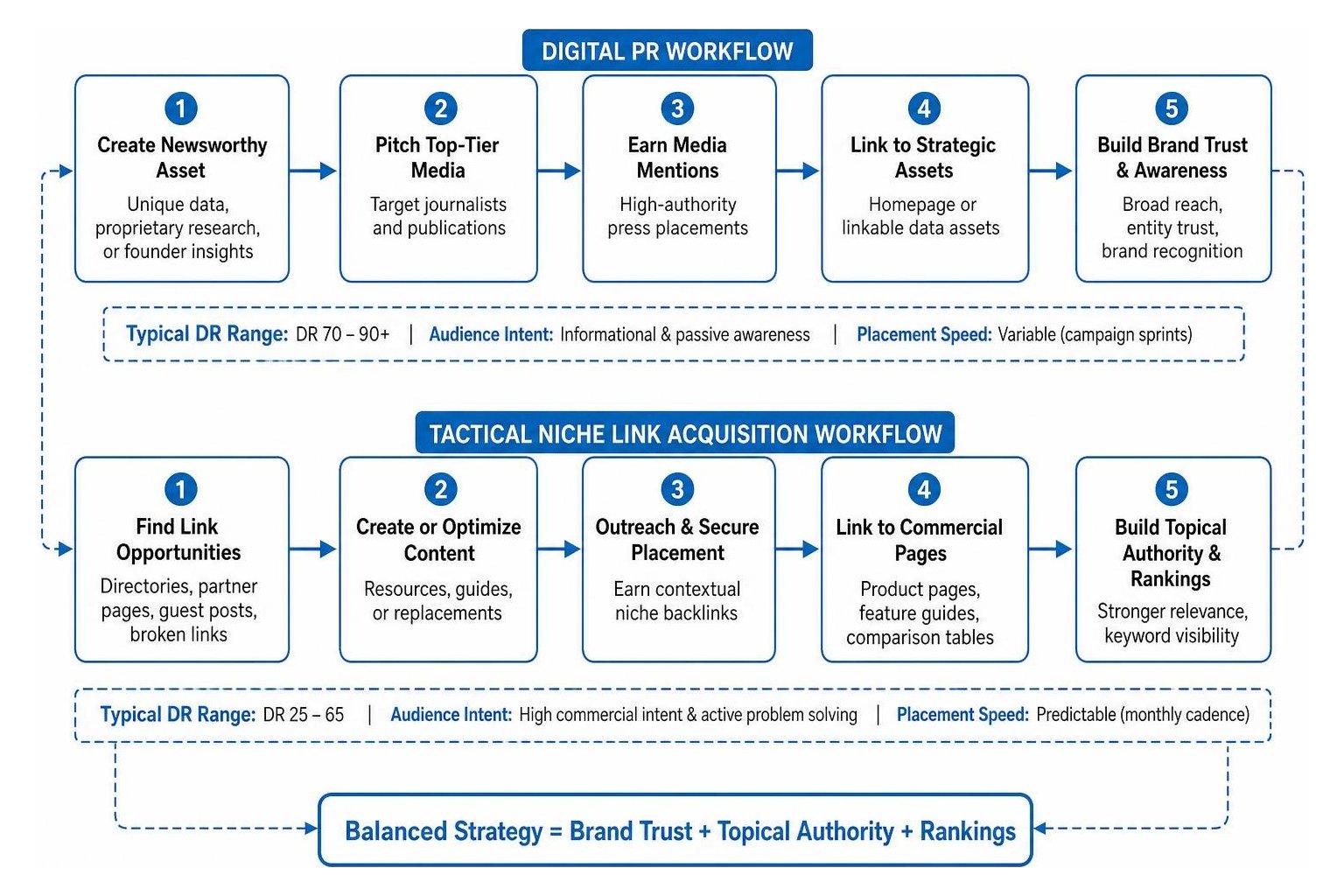
Complementing guest articles with systematic broken link building workflows allows you to discover dead competitor URLs and replace them with your fresh resources. Early on, practicing tactical zero-budget link acquisition through founder roundups, unlinked brand mentions, and contextual niche insertions builds the required topical relevance Google requires before ranking competitive queries.
Which Pages Should You Target First in Your Startup Link Building Strategy?
Prioritize commercial conversion assets and primary landing pages rather than sending every backlink to your homepage or general blog posts.
A proven allocation framework for early-stage software and tech companies balances link equity across five core page types:
- Homepage (30%): Builds baseline domain trust and establishes your core brand entity.
- Comparison & Alternative Pages (30%): Drives high-intent buyers evaluating competitors directly to your solution.
- Core Feature & Use-Case Pages (20%): Directs authority to pages detailing specific problem-solving workflows.
- Integration Pages (10%): Validates technical compatibility with ecosystem partners.
- Linkable Blog Pillars (10%): Serves as research hubs to attract natural editorial citations over time.
Focusing on building SaaS topical authority across these commercial pages ensures that ranking power transfers directly into product trials and pipeline revenue. Creating dedicated linkable assets—such as an original industry benchmark report—can earn dozens of editorial links organically, dramatically reducing your long-term cost per acquisition.
How Can Pre-Launch Startups Secure Their First 20 Quality Backlinks on a Budget?
Startups can earn their first 20 backlinks before writing extensive content by claiming verified business profiles, software directory placements, and participating in expert quote platforms.
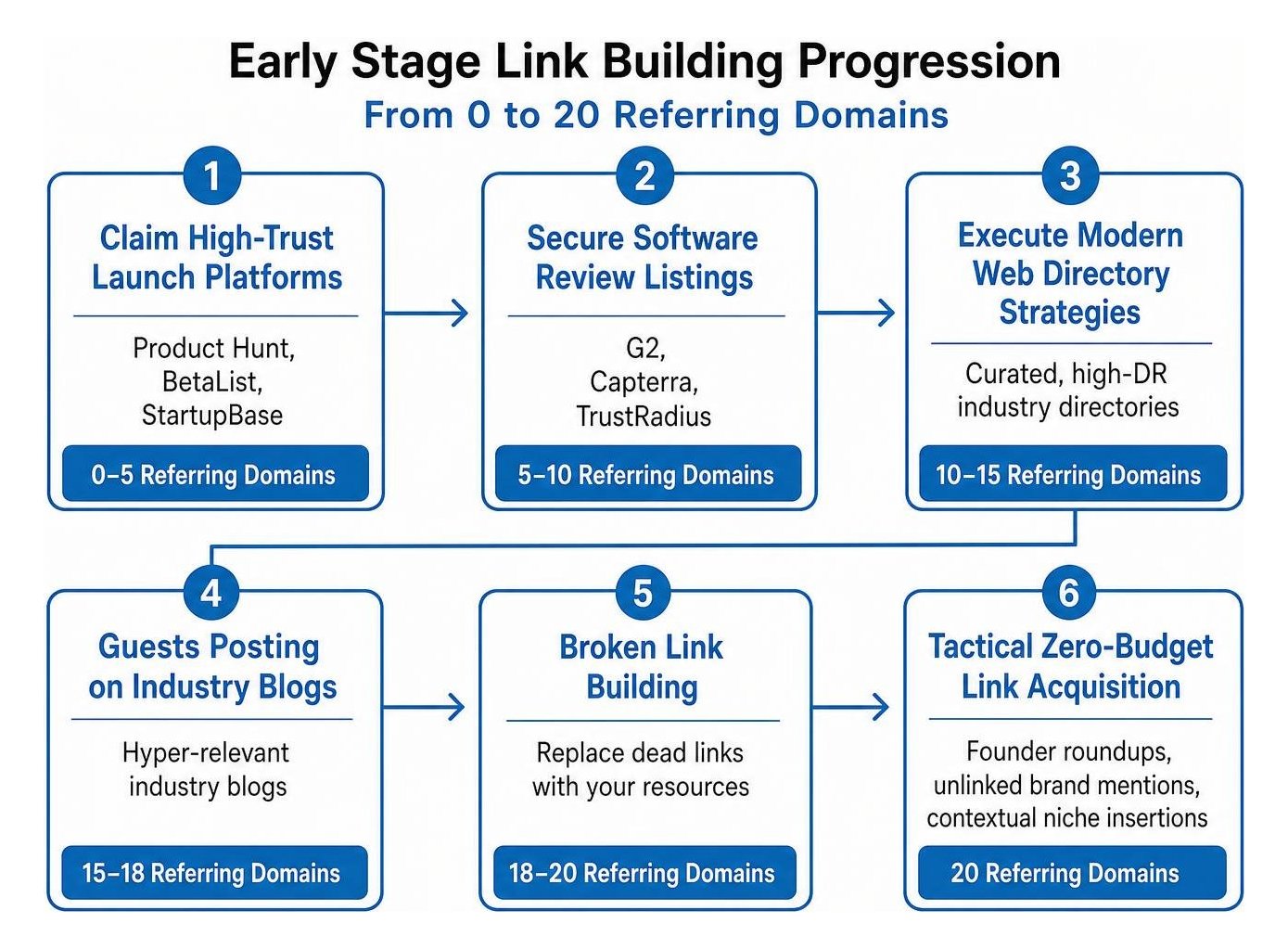
Execute these steps to build your initial link profile:
- Claim High-Trust Launch Platforms: Create comprehensive profiles on Product Hunt, BetaList, and StartupBase to establish immediate indexation signals.
- Secure Software Review Listings: Set up verified company profiles on G2, Capterra, and TrustRadius to capture category-level search traffic.
- Execute Modern Web Directory Strategies: Target curated, high-DR industry directories using custom descriptions for every profile to prevent duplicate content flags.
- Leverage Pre-Market Directory Launch Playbooks: Secure early listings across specialized B2B directories to capture referral traffic before your public release.
- Pitch Expert Commentary Daily: Spend 20 minutes each morning answering relevant journalist queries on platforms like Featured.com to earn high-DR media citations.
- Activate Ecosystem Partners: Request partner profile listings on investor portfolios, accelerator cohort pages, and API integration directories.
Executing and Scaling: How to Measure, Budget, and Implement Your Roadmap

Scaling a backlink campaign requires tight risk management, natural anchor text distribution, and automated tracking. The Google top-ranking result holds roughly 3.8 times more backlinks than positions two through ten, demonstrating that continuous link velocity is essential for staying competitive.
Track these core performance indicators to measure campaign momentum:
- Net New Referring Domains: The monthly count of unique, verified domains linking to your site.
- Topical Relevance Ratio: The percentage of linking root domains directly related to your software category.
- Link Survival Rate (90 Days): Ensuring acquired backlinks remain live and indexed after search engine recrawls.
- Commercial Keyword Velocity: Tracking ranking improvements for bottom-of-funnel comparison and feature terms.
In-House Team or Specialized Agency: What Is the True Cost of Execution?
Building an internal link-building operation requires dedicated prospecting tools, email deliverability software, copywriters, and outreach specialists. A fully staffed internal setup often costs between $72,000 and $105,000 in its first year, scaling up to $250,000 annually as output expands.
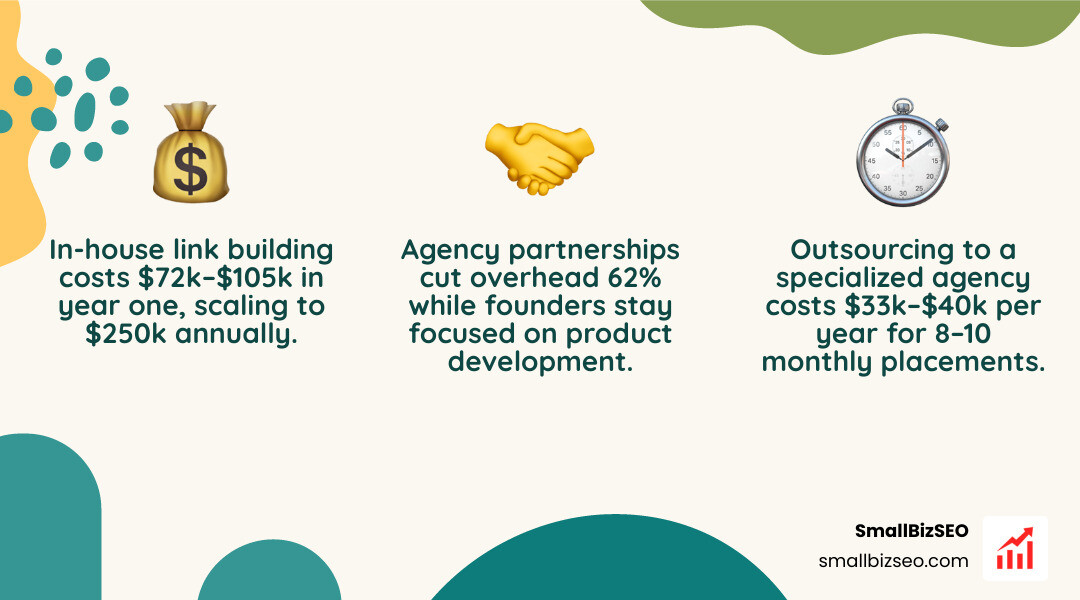
Conversely, partnering with a dedicated startup growth SEO company provides instant access to established publisher relationships and proven outreach frameworks. According to SaaS founder link building benchmarks, early-stage teams purchasing 8 to 10 verified placements per month spend roughly $33,000 to $40,000 annually, cutting overhead while allowing technical founders to keep their full attention on product development.
What Realistic Timeline Should Founders Expect from a Startup Link Building Strategy?
Search engines process new backlinks over several weeks, meaning early-stage link building compounds over time rather than delivering overnight spikes.
Using transparent SEO reporting frameworks allows founders to track leading indicators—like crawl frequency and keyword impressions—well before high-competition transactional keywords reach page one.
How Do Backlinks Drive Visibility in AI Overviews and Traditional Search Rankings?
Backlinks play a vital role in earning citations within generative AI search engines and AI Overviews. Large language models frequently source information from top-ranking organic pages, industry resource listicles, and high-engagement discussion threads. Engaging in community conversations on Reddit and niche forums has been shown to boost AI referral traffic significantly while indexing brands for over 100 conversational queries.
Our data-driven Velocity framework at SmallBizSEO combines technical SEO health, commercial content structure, and high-impact outreach to accelerate search visibility. Utilizing expert link building services ensures your startup builds the durable authority required to dominate both traditional search engine rankings and AI answer platforms.
Accelerate Your Startup's Search Authority with SmallBizSEO
Building organic authority requires consistent effort, technical precision, and high-quality outreach. Rather than choosing between broad public relations and tactical link building, high-growth startups blend both into an agile growth engine.
Ready to increase your domain authority, capture high-intent buyers, and secure long-term organic revenue? Explore our comprehensive SEO Services or schedule your diagnostic SEO Visibility Audit today to start outranking your competitors.