How to Start a Mural & Faux Finish SEO Campaign in 5 Steps
Why Do Mural and Faux Finish Artists Need SEO?
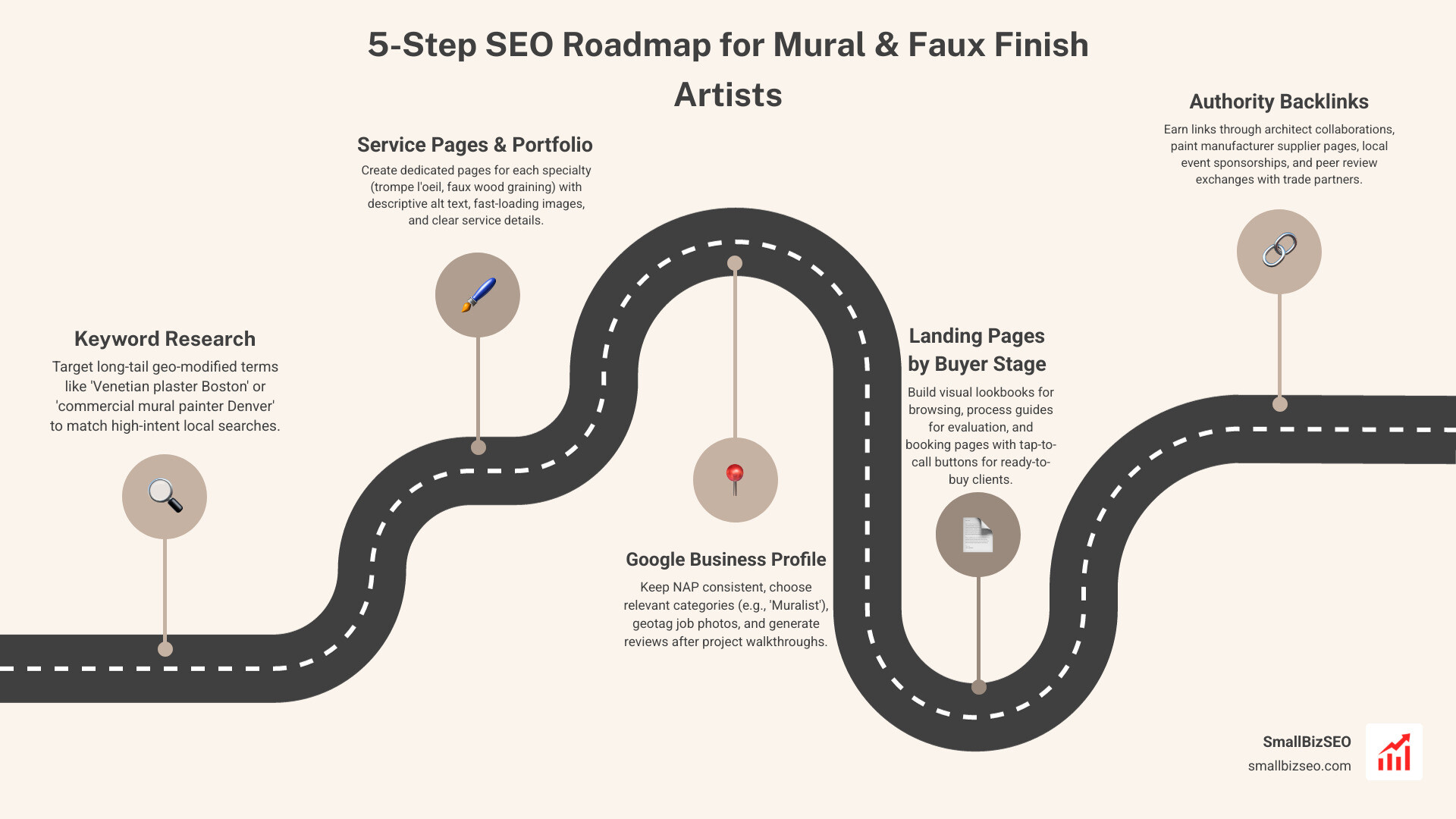
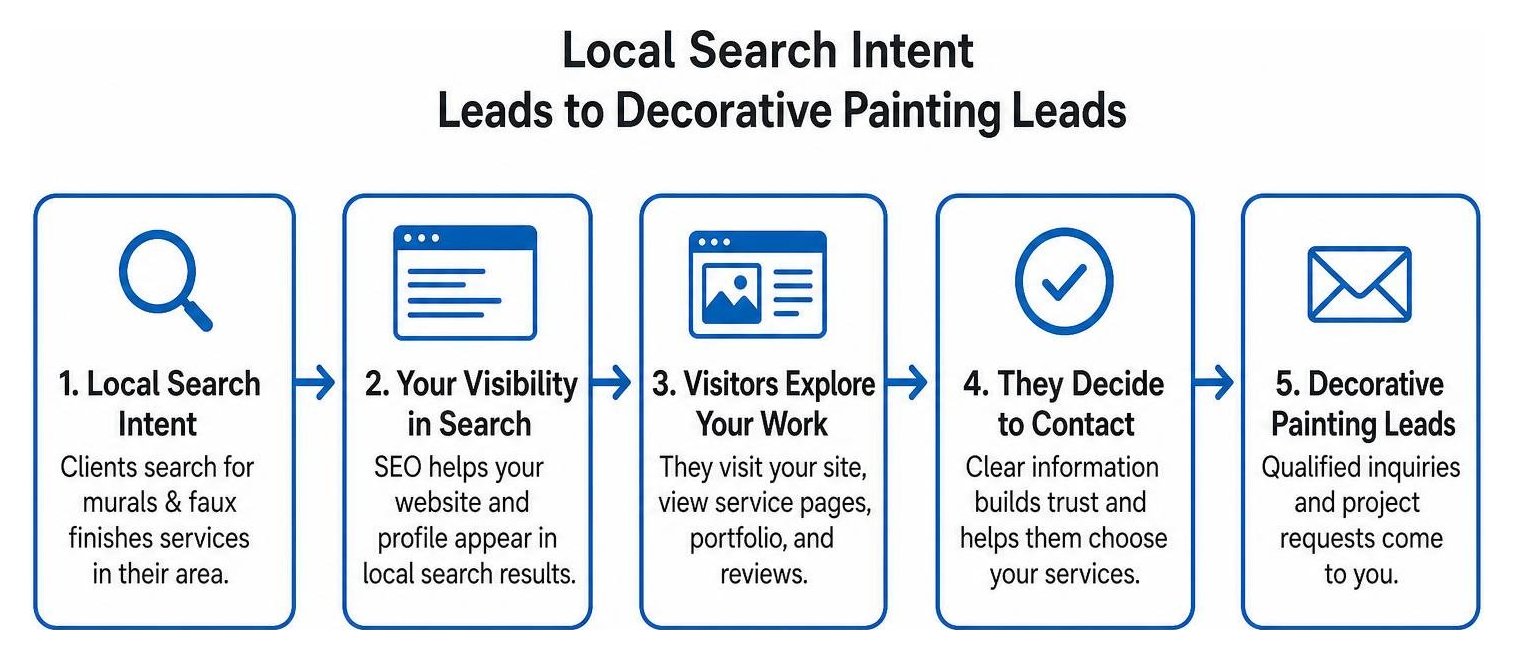
SEO for murals & faux finishes helps local clients find your work when they are ready to plan a project or hire an artist. Start with five steps: find the service terms clients use, build clear pages for each specialty, make portfolio images easy to find and quick to load, complete your Google Business Profile, and earn links from relevant local and trade partners.
Your photos show what you can create. Clear service pages, project details, and reviews help visitors decide whether to contact you.
I’m Clayton Johnson, founder of SmallBizSEO. I use technical SEO, content strategy, and link building to help small businesses attract qualified leads; this guide applies that approach to SEO for murals & faux finishes.
Learn more about SEO for murals & faux finishes:
Why Do Specialty Decorative Artists Need Organic Search Visibility?
Direct answer: SEO helps muralists and faux finish artists appear when local customers search for the specialty work they offer.
Many decorative painters rely on word-of-mouth referrals or social media networks. While social platforms showcase visual creativity, they often reach casual scrollers rather than property owners actively looking to hire an artisan. Search engines capture high-intent demand at the exact moment a client needs a project completed. Research shows that 97% of consumers search online to find local businesses, and 87% read online reviews before hiring a contractor.

High-end residential and commercial clients approach hiring with a distinct mindset. Wealthy homeowners and commercial interior designers search for terms that reflect craftsmanship and quality. Positioning your business online as a decorative artist or architectural surface specialist—rather than a generic painter—aligns your website with luxury client psychology and commands higher project fees.
What Are the 5 Core Steps to Master SEO for Murals & Faux Finishes?
Direct answer: Research the right search terms, improve your website and local listings, create useful service pages, and build trusted industry links.
Executing search optimization for an artisan business requires balancing visual galleries with clear technical signals. Following proven tips to improve your local ranking on Google ensures search algorithms connect your services with regional demand.
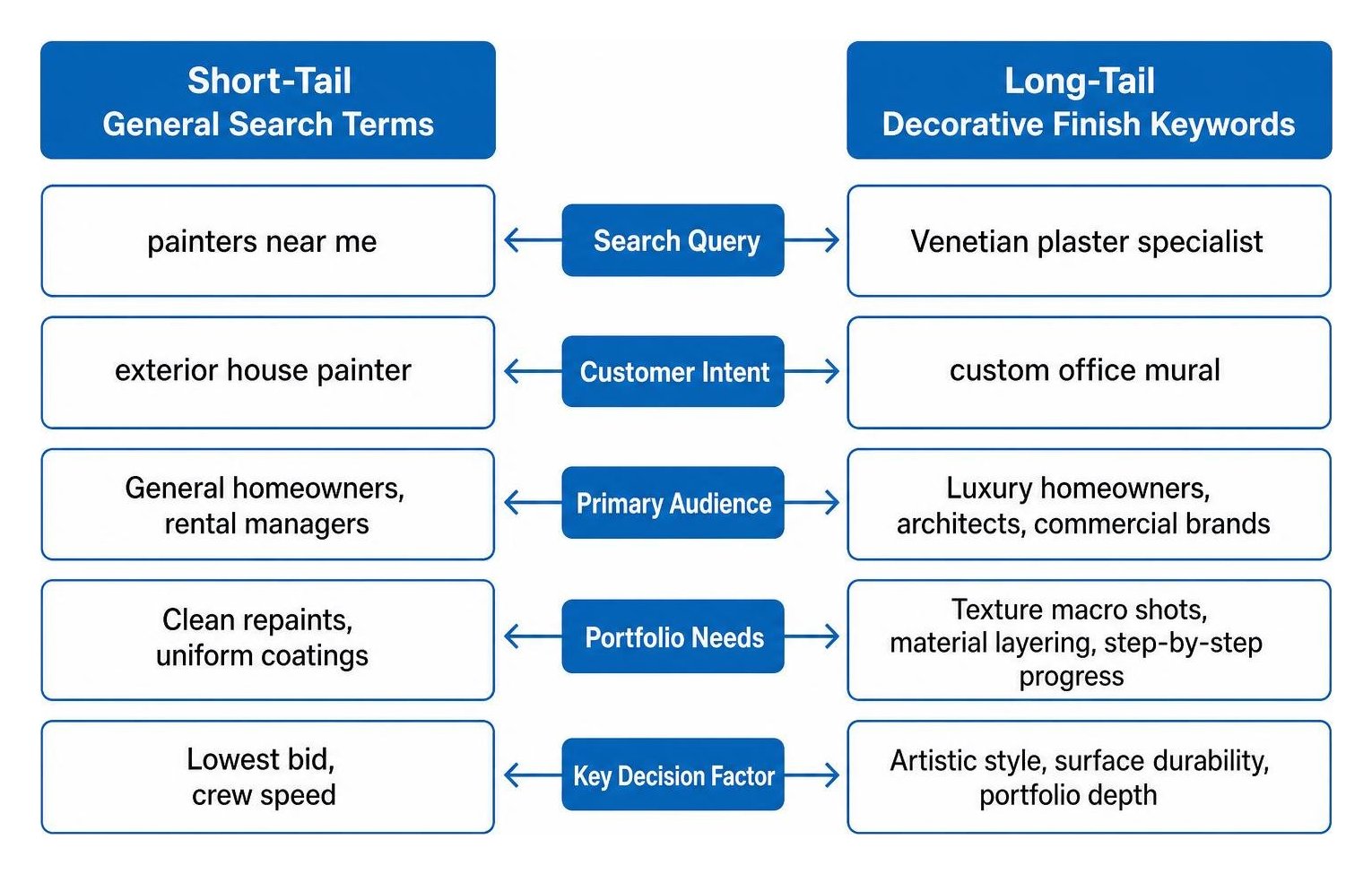
| Feature | Standard House Painting SEO | Specialty Decorative & Faux Finish SEO |
|---|---|---|
| Primary Audience | General homeowners, rental managers | Luxury homeowners, architects, commercial brands |
| Search Queries | "painters near me", "exterior house painter" | "Venetian plaster specialist", "custom office mural" |
| Portfolio Needs | Clean repaints, uniform coatings | Texture macro shots, material layering, step-by-step progress |
| Key Decision Factor | Lowest bid, crew speed | Artistic style, surface durability, portfolio depth |
Step 1: What Keywords Should You Target for Murals and Specialty Finishes?
Direct answer: Target specific service and location searches that show someone is looking for the work you do.
Effective keyword research segments terms by customer intent and service specificity. While broad terms like "mural painting" generate substantial search volume, pairing terms with specific surface finishes or commercial applications yields higher-converting leads. Reviewing our practical guide to painting contractor SEO illustrates how specific search modifiers connect contractors with serious buyers.
Target high-value specialties and technique-based keywords, including:
- Venetian plaster and Italian lime finishes
- Trompe l'oeil illusions and dimensional murals
- Faux wood graining, marbleizing, and stone replication
- Commercial branded murals and restaurant feature walls
- Textured suede, metallic, and architectural glazes
Studying proven commercial mural marketing strategies confirms that B2B commercial buyers frequently search for specialized architectural branding rather than generic painting services.
Step 2: How Do You Optimize Website Content and Portfolio Images?
Direct answer: Use clear service information and well-labeled, fast-loading project photos to help people and search engines understand your work.
Artisan websites rely on high-resolution photography. Uncompressed image files can slow down website loading speeds, frustrating users and harming search rankings. To maintain visual clarity without compromising speed, compress all images into modern formats like WebP and implement lazy loading.
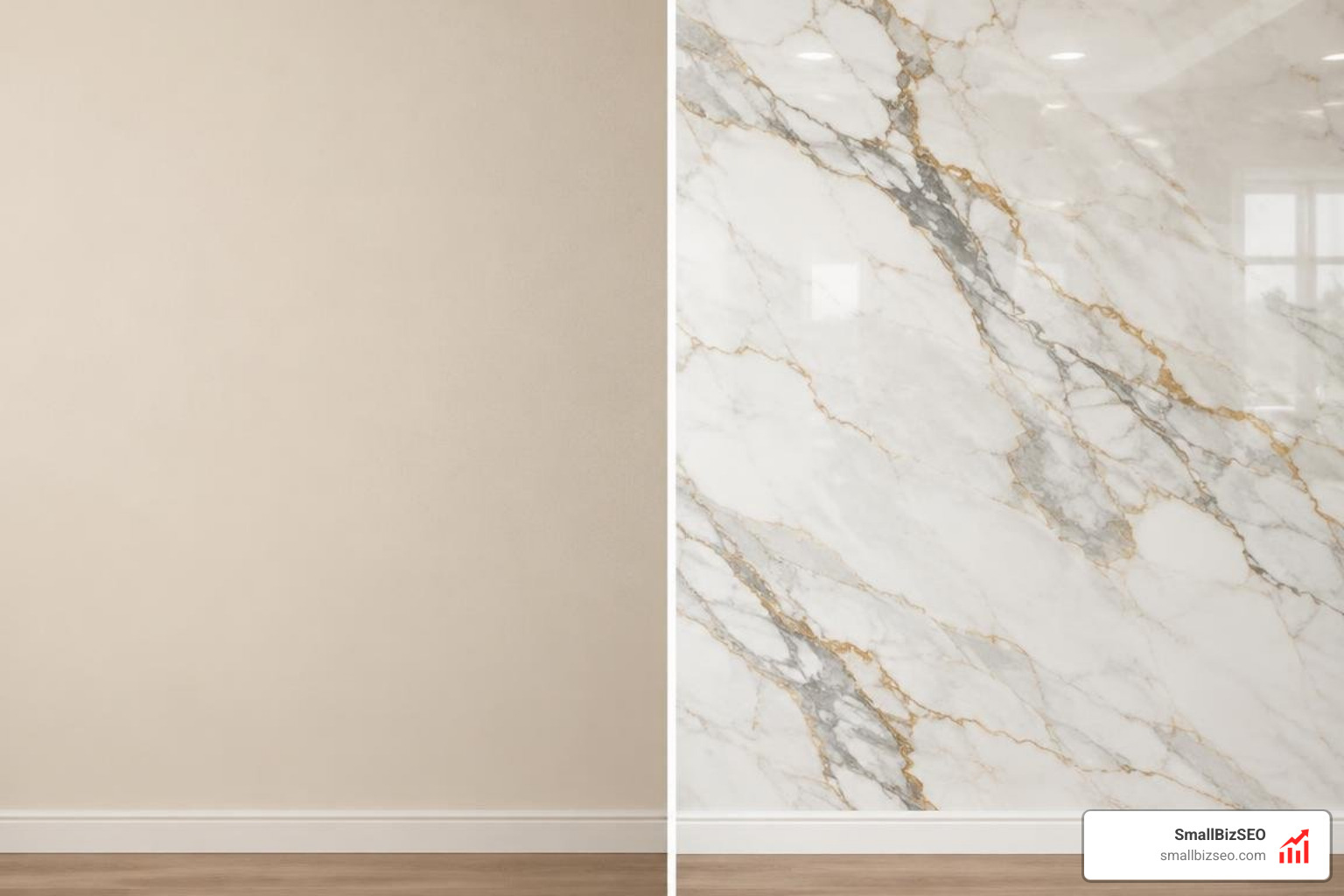
Search engines read file names, page context, and image alternative text to index visual assets. Understanding the best practices for describing before and after photos in alt text allows your project transformations to be accurately understood by search algorithms.
Capturing image-driven search traffic through modern visual search optimization requires:
- Descriptive, keyword-relevant file names (e.g.,
commercial-hand-painted-office-mural.webp) - Structured metadata using
ImageObjectandServiceschema markup - Hierarchical headings (H1, H2, H3) that organize techniques, materials, and room locations
- Contextual internal linking connecting your project galleries directly to your primary service inquiry pages
Step 3: How Do You Improve Local Search and Your Google Business Profile?
Direct answer: Keep your business details accurate, choose relevant categories, and make it easy for satisfied customers to leave reviews.
Winning visibility in Google's Local Map Pack brings direct inquiries from local property owners. Your Google Business Profile serves as the primary trust verification asset for local search algorithms.
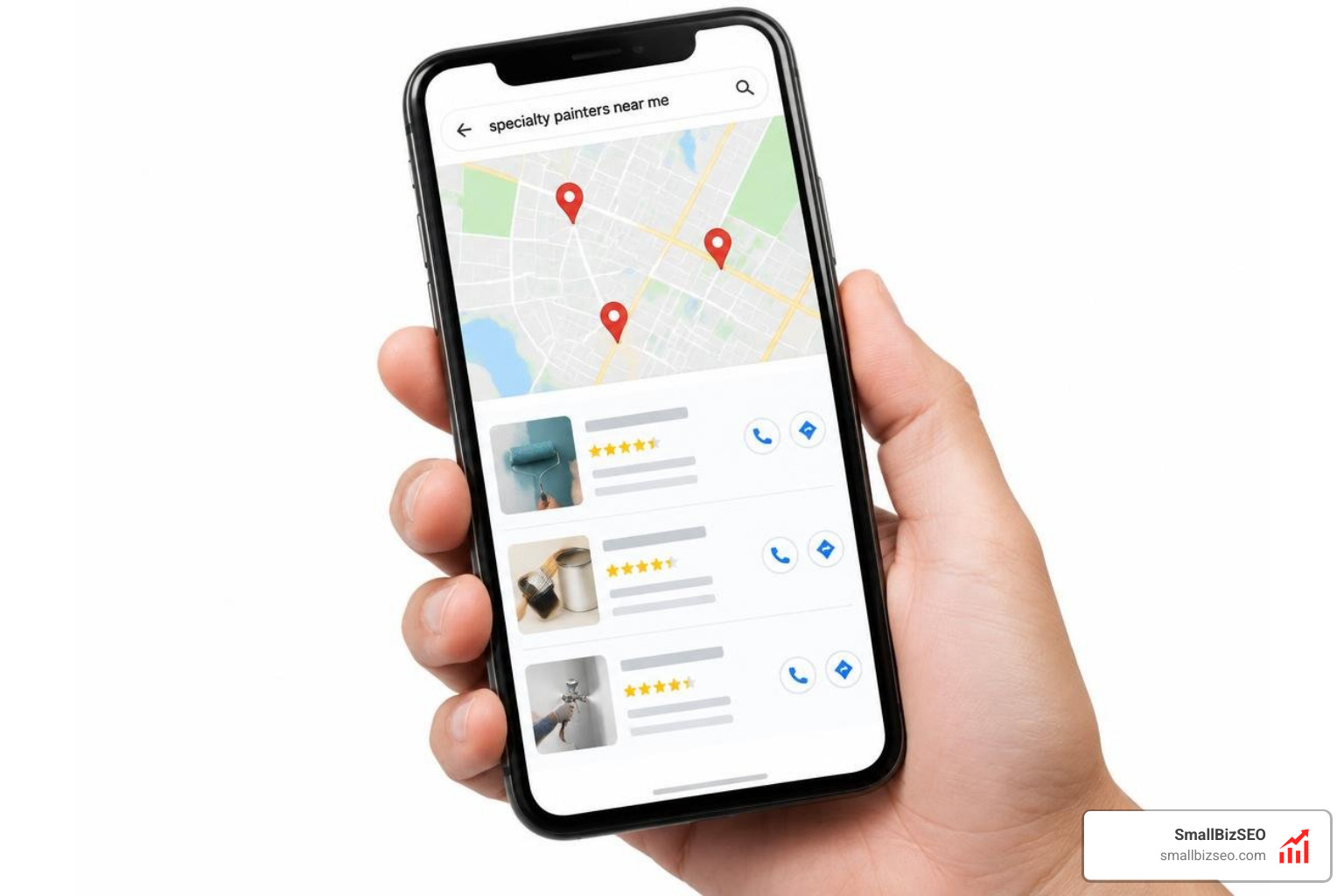
Implement the core principles from our local SEO guide to solidify your regional footprint:
- Category Selection: Set your primary category accurately (such as "Painter" or "Artist") and include relevant secondary categories like "Mural Artist" or "Interior Decorator."
- NAP Consistency: Ensure your business Name, Address, and Phone number are identical across every online directory and citation.
- Visual Updates: Upload high-resolution, geotagged photos of completed wall finishes, studio prep work, and final project reveals weekly.
- Review Strategy: Ask clients for feedback immediately after the final walkthrough. Encourage reviewers to mention their neighborhood and the specific finish applied, such as a custom dining room mural or fireplace Venetian plaster.
Step 4: What Landing Pages Should You Build for Murals and Faux Finishes?
Direct answer: Create pages that match what visitors need, from project ideas to service details and quote requests.
A single homepage cannot address the varying mindsets of residential homeowners, commercial art directors, and interior designers. Building dedicated landing pages for each buyer stage increases lead conversions and search visibility. Incorporating structured contractor SEO service strategies helps establish pages tailored to specific intent levels.
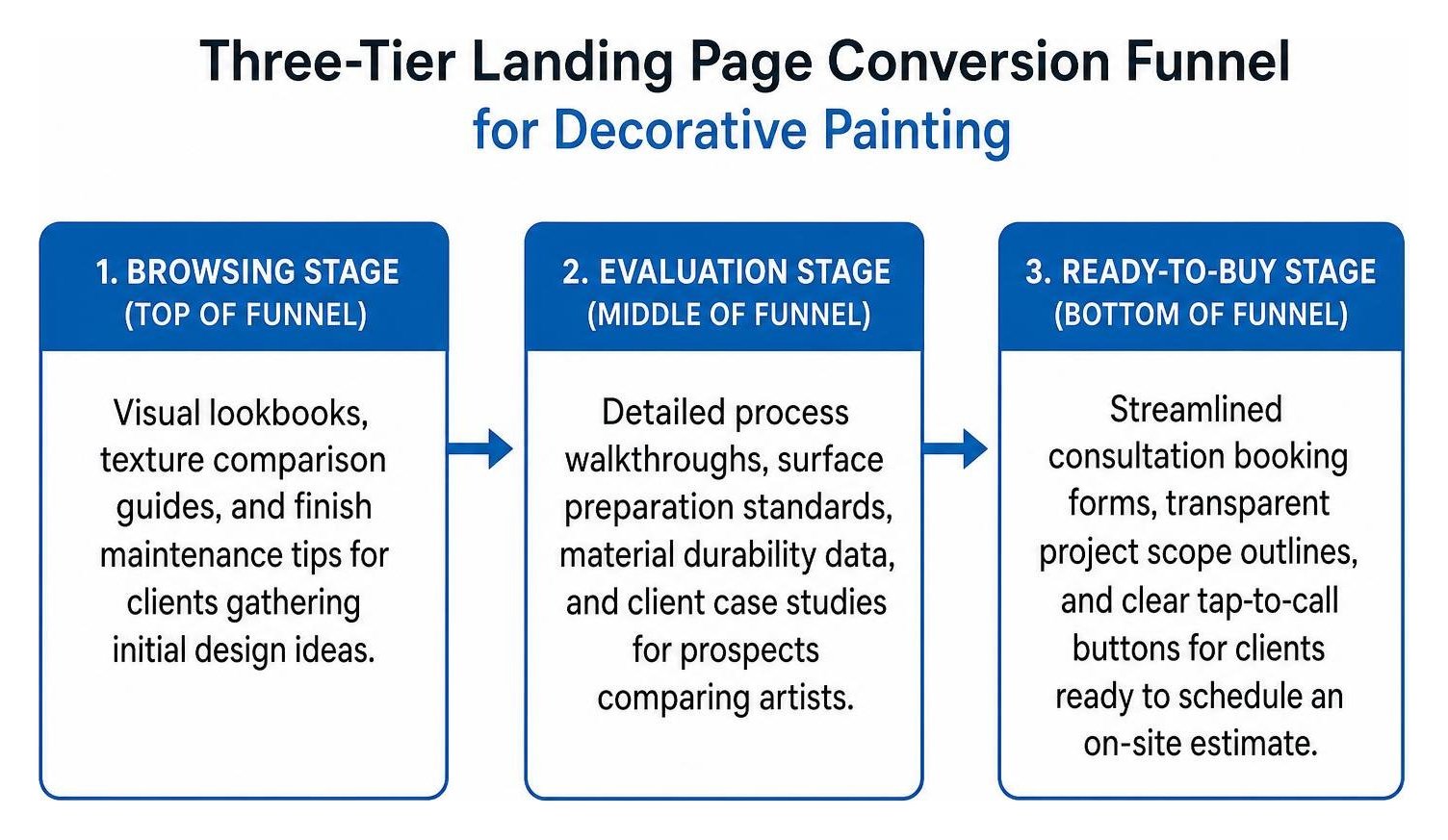
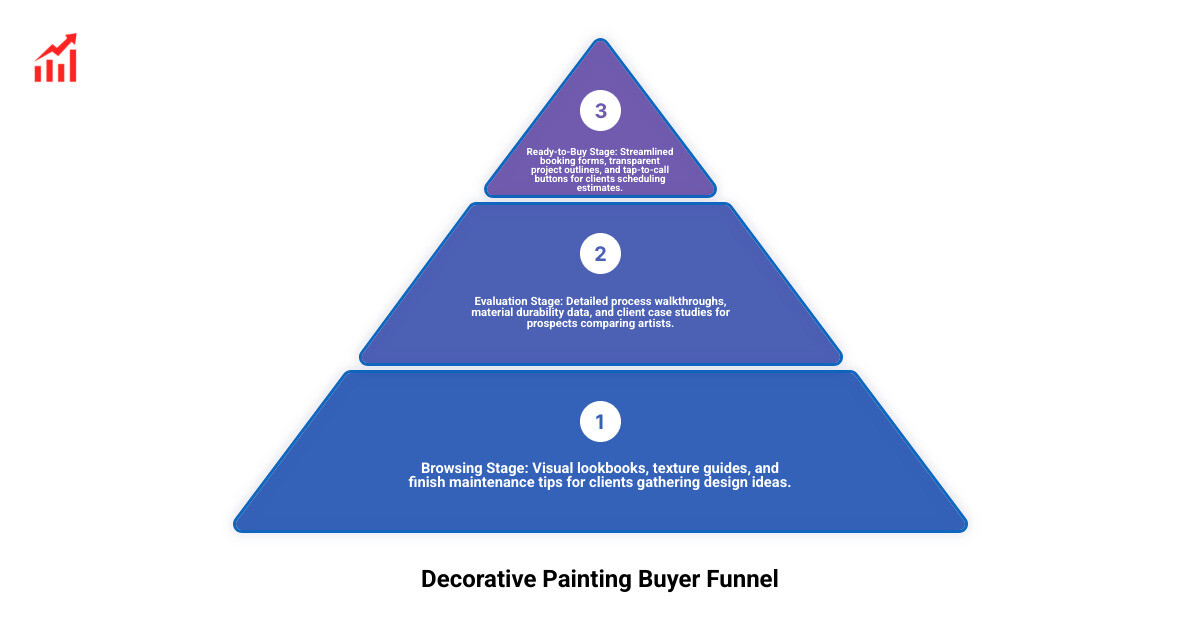
Structure your website around three distinct buyer stages:
- Browsing Stage (Top of Funnel): Visual lookbooks, texture comparison guides, and finish maintenance tips for clients gathering initial design ideas.
- Evaluation Stage (Middle of Funnel): Detailed process walkthroughs, surface preparation standards, material durability data, and client case studies for prospects comparing artists.
- Ready-to-Buy Stage (Bottom of Funnel): Streamlined consultation booking forms, transparent project scope outlines, and clear tap-to-call buttons for clients ready to schedule an on-site estimate.
Step 5: How Can You Build Authority Through Backlinks and Trade Partnerships?
Direct answer: Build relationships with relevant local and industry partners who may refer clients or link to your website.
Backlinks from respected websites act as votes of confidence in the eyes of search algorithms. For decorative artisans, the strongest links come from professional relationships within the architecture, design, and construction trades.
Engaging in artisan marketing and peer networking creates opportunities to earn relevant backlinks. High-impact link-building strategies include:
- Collaborating with high-end interior designers and architects who feature your wall finishes in project portfolio write-ups
- Securing supplier features from specialty paint and plaster manufacturers whose materials you apply
- Sponsoring local community arts programs, historic home restoration tours, or charity showhouses
- Publishing guest educational guides on residential remodeling and commercial fit-out blogs
How to Measure Your Search Campaign Results and Keep Growing
Direct answer: Track qualified inquiries alongside search traffic, and keep your pages useful, fast, and easy to understand.
Monitoring your campaign's performance requires looking beyond vanity traffic metrics. The true measure of search marketing success is the steady generation of high-value estimate requests from qualified local clients.
Avoid these common optimization mistakes:
- Grouping all services onto a single page: Search engines struggle to rank one generic page for diverse searches like "trompe l'oeil ceiling" and "restaurant logo mural."
- Publishing thin location pages: Avoid duplicating generic content with swapped city names; instead, provide real project case studies and local client reviews for each service area.
- Neglecting technical performance: Ensure your site uses clean URL slugs, fast server response times, and valid structured schema markup to remain accessible to both human visitors and modern AI search overviews.
At SmallBizSEO, we implement data-driven technical optimization, content architecture, and authority building to help specialty trade businesses achieve sustainable search visibility. Exploring our customized small business SEO packages provides a clear roadmap for scaling your creative commissions with predictable organic leads.