A Practical Guide to Building Local Link Networks for Small Businesses

How can small businesses build local link networks?
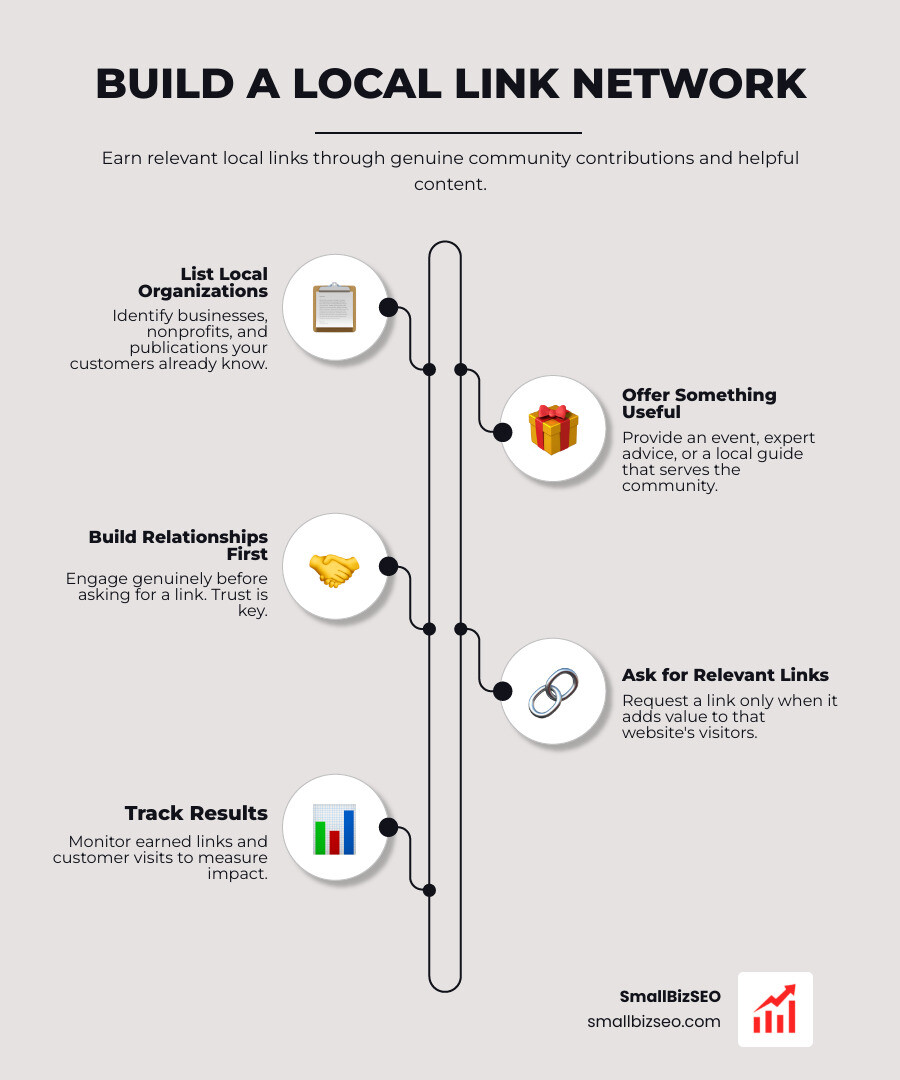
How to build local link networks starts with real community ties. List the organizations, businesses, and local publications your customers already know. Then offer something useful, such as an event, expert advice, or a local guide. Ask for a link only when it helps that website's visitors, and track the links and customer visits you earn.
A local link network is the collection of links and mentions your business earns from relevant websites in its area. Those connections can support local SEO and help nearby customers discover you, but they do not guarantee a higher ranking.
I'm Clayton Johnson, founder of SmallBizSEO, where I connect SEO, digital PR, and useful content to help small businesses build authority. My approach to How to build local link networks focuses on earning relevant links through helpful work and genuine relationships.
How to build local link networks glossary:
- How to build local backlinks
- local SEO
- local SEO priorities for a newly opened business with one location
How Do You Build Local Link Networks Step by Step?
You build a local link network by systematically identifying community organizations, qualifying opportunities based on geographic relevance, and offering concrete value before requesting an editorial link.
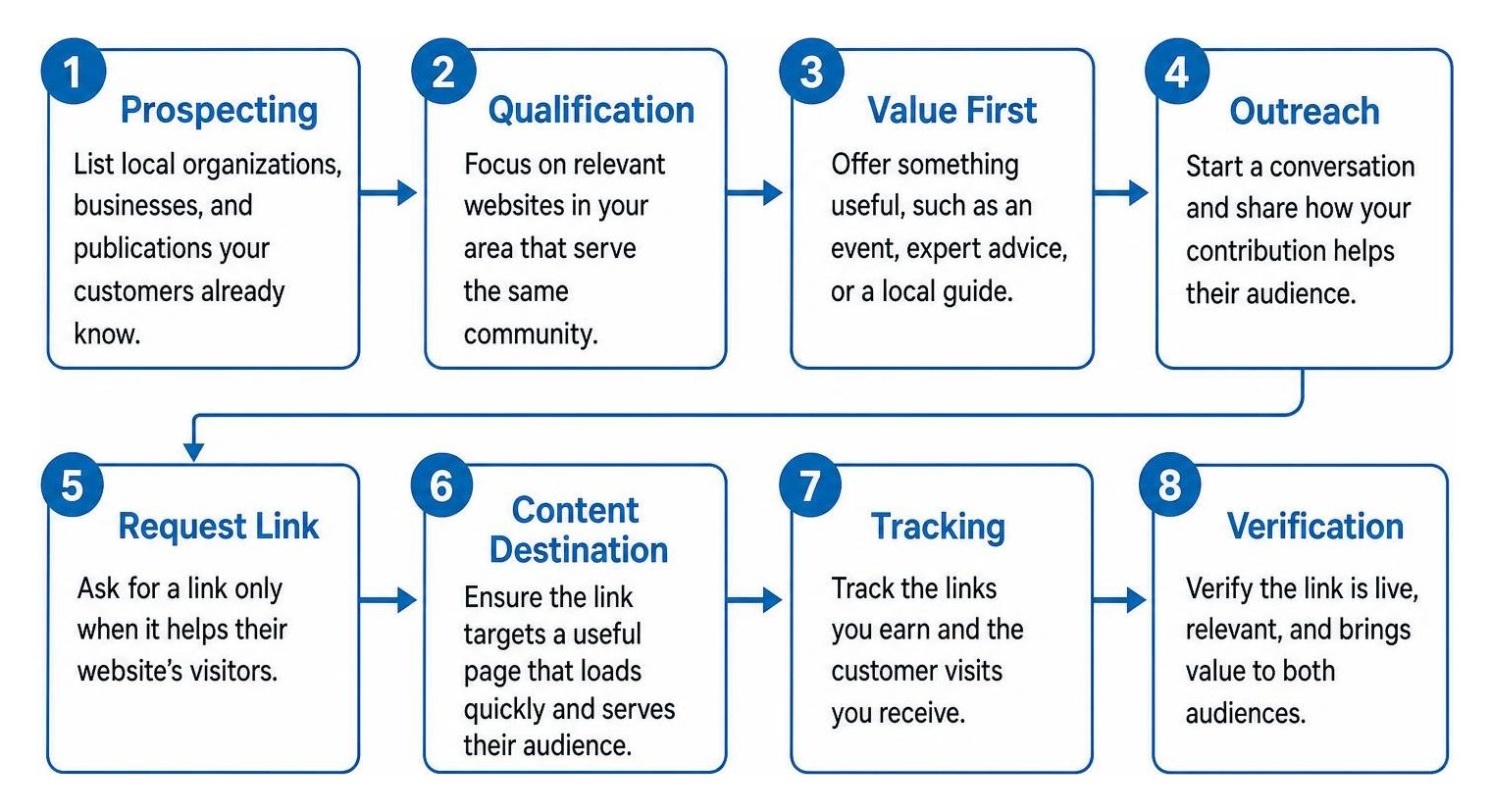
About 38% of all internet queries have local search intent. Search engines evaluate these searches using three core signals: relevance, distance, and prominence. Link signals represent one of the biggest ranking factors for local organic results and serve as the fourth most important factor in local pack algorithms.
Instead of chasing generic metrics like Domain Authority across national platforms, focus on local relevance. In most competitive markets, earning 10 to 30 strong links from geographically relevant sources produces measurable ranking improvements. Most small businesses can realistically execute six to 10 of these initiatives per quarter. Furthermore, top-ranking competitors in local search results rarely have more than 150 referring domains, making a focused local link network highly achievable.
When developing outreach, review established resources such as 13 Local Link Building Tactics to Boost Your Visibility - BrightLocal to identify relevant outreach pathways. Always ensure every link targets a useful destination page that loads quickly and serves the publisher's audience.
What Are Local Link Networks and Why Do They Matter for Visibility?
A local link network is an ecosystem of inbound links and brand mentions from websites rooted in your shared operating area. These links signal geographic prominence to search engines while driving direct referral traffic from nearby consumers.
Unlike national campaigns that prioritize high-volume link equity, local link networks establish physical authority. Search engines examine whether nearby civic bodies, local industry partners, and community portals acknowledge your business. Earning these connections is central to scoring the best local backlinks because a link from a neighborhood association or regional trade board often carries more local ranking weight than an unrelated high-authority national site.
It is also important to distinguish between local backlinks and citations:
| Feature | Local Backlink | Local Citation |
|---|---|---|
| Primary Definition | An HTML hyperlink pointing directly from a local third-party site to your website. | An online mention of your core business details (Name, Address, Phone number). |
| SEO Impact | Passes page authority, strengthens geographic prominence, and boosts organic positions. | Establishes business legitimacy and verifies physical location across directories. |
| Typical Sources | Local news, community event pages, supplier sites, non-profit portals, blogs. | Structured directories (Yelp, YellowPages), mapping apps, chamber registries. |
| Link Attribute | Usually followed or editorial; can be rel="sponsored" for paid placements. |
Frequently nofollow, redirect, or linkless plain text. |
How Can Community Partnerships and Sponsorships Help Build Local Link Networks?
Community partnerships and sponsorships earn high-quality local links when your business actively supports local civic groups, charitable causes, and industry initiatives.
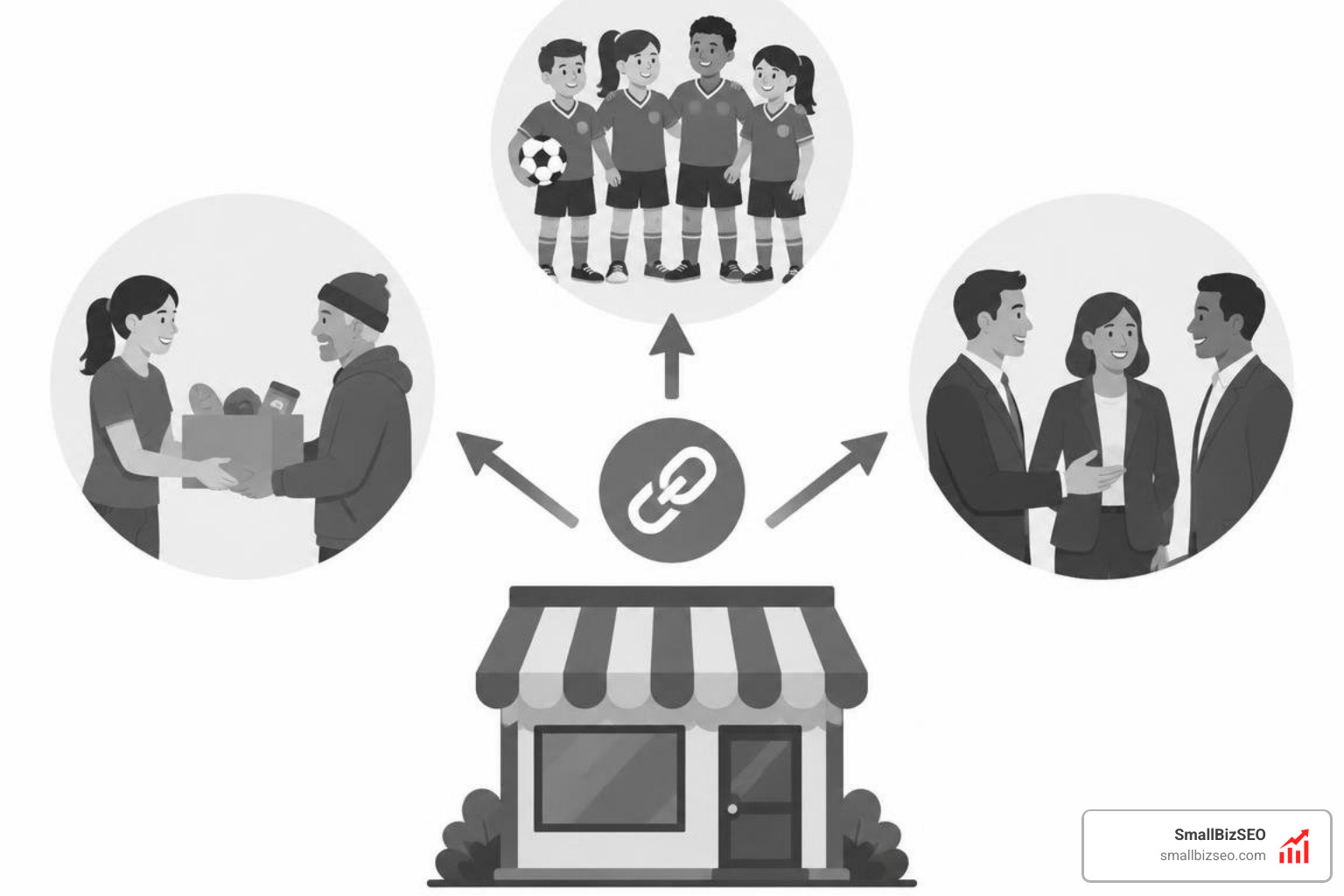
Begin by cataloging local organizations where your business already contributes time, equipment, or funding. Effective partnership channels include:
- Local Chambers of Commerce: Joining your regional business association provides an immediate member directory profile, building foundational authority and reinforcing your local citation profile.
- Youth Sports Teams and Non-Profits: Sponsoring little leagues, charity fun runs, or neighborhood food banks often includes a dedicated sponsor profile on the organization's website.
- Local Scholarships: Creating an annual scholarship for high school seniors or community college trade programs earns natural editorial links from regional educational domains.
- Event Hosting and Co-Marketing: Offering your meeting space or partnering with adjacent service providers for workshops creates cross-promotional linking opportunities.
Ensure all sponsorship agreements adhere to search guidelines by asking webmasters to link naturally to the page most relevant to their readers.
How Can Locally Focused Content and Digital PR Build Local Link Networks?
Publishing useful, location-specific resources gives regional media outlets, community bloggers, and civic organizations a compelling reason to link back to your website.
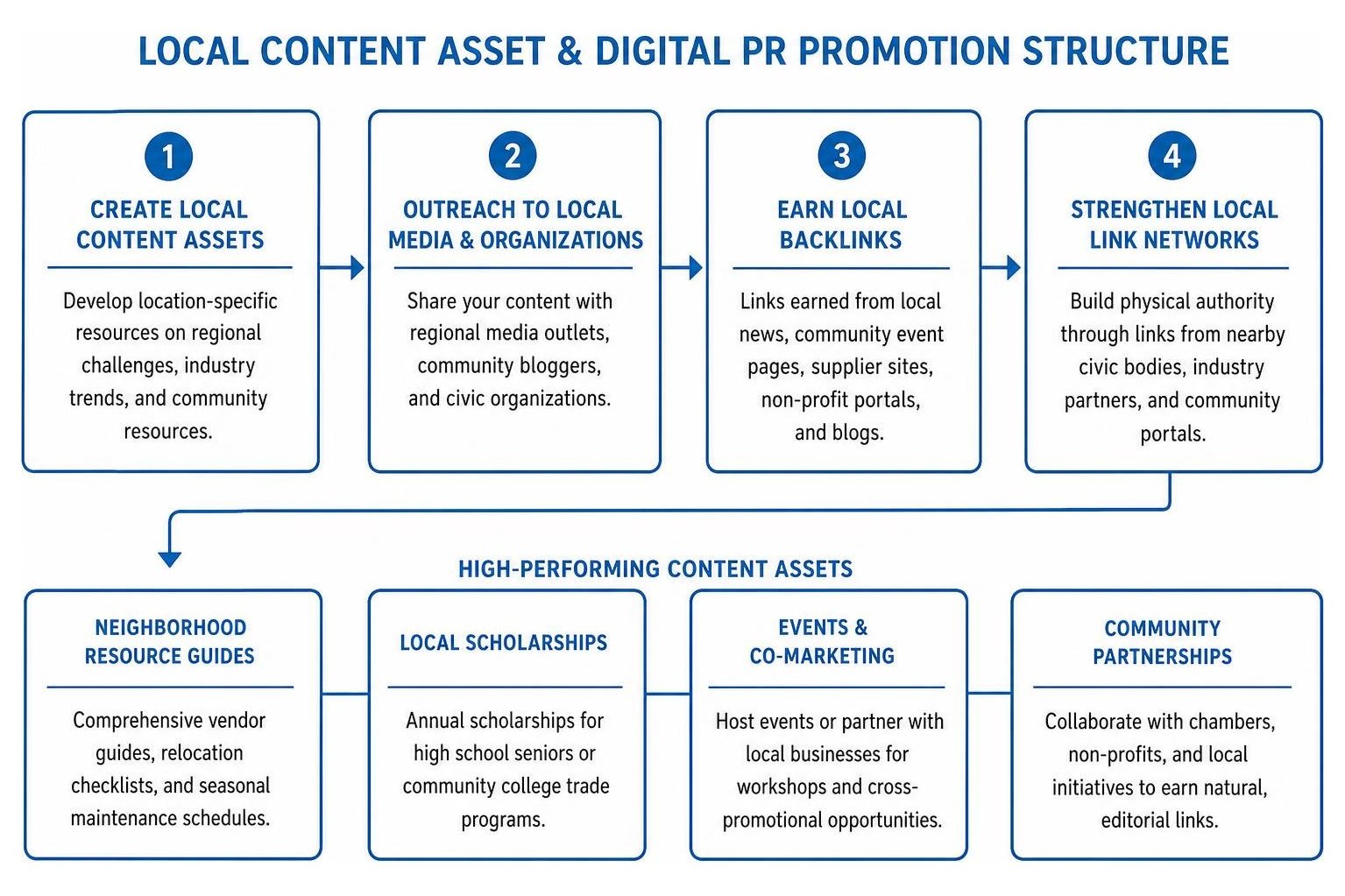
Creating generic blog articles rarely attracts local attention. Instead, develop content centered on regional challenges, industry trends, and community resources. Following official link best practices ensures your assets use crawlable, natural link structures that search engines and regional publishers can easily navigate.
High-performing content assets include:
- Neighborhood Resource Guides: Comprehensive vendor guides, relocation checklists, and seasonal maintenance schedules that non-competing businesses can reference.
- Hyper-Local Case Studies: Real-world examples highlighting how your services solved specific regional challenges.
- Expert Editorial Columns: Pitching regular advisory columns to community news sites and local business magazines.
- Local Podcast and Media Interviews: Speaking on business podcasts or participating in regional event panels to earn dedicated profile links.
How Can You Find Local Opportunities Through Competitor Analysis and Reclamation?
Analyzing competitor backlink profiles and reclaiming unlinked brand mentions allows you to uncover high-intent local link opportunities that your competitors already use.
Start by running your top three local competitors through backlink analysis tools to identify overlapping referring domains. If multiple competitors earn links from a specific community directory, neighborhood council, or business association, that source represents an accessible target for your outreach.
Next, set up automated monitoring alerts for your business name, executive names, and brand assets. When regional publications mention your business without including an HTML link, send a polite message thanking the author and providing a helpful link destination.
Throughout this process, ensure your core business details maintain complete NAP consistency across all newly discovered partner pages, industry directories, and vendor listings.
How Do You Track Performance, Manage Spam Risks, and Grow a Local Link Network?
To sustain long-term growth, you must track local search positions and referral metrics while avoiding manipulative link schemes that risk manual actions or algorithmic devaluation.
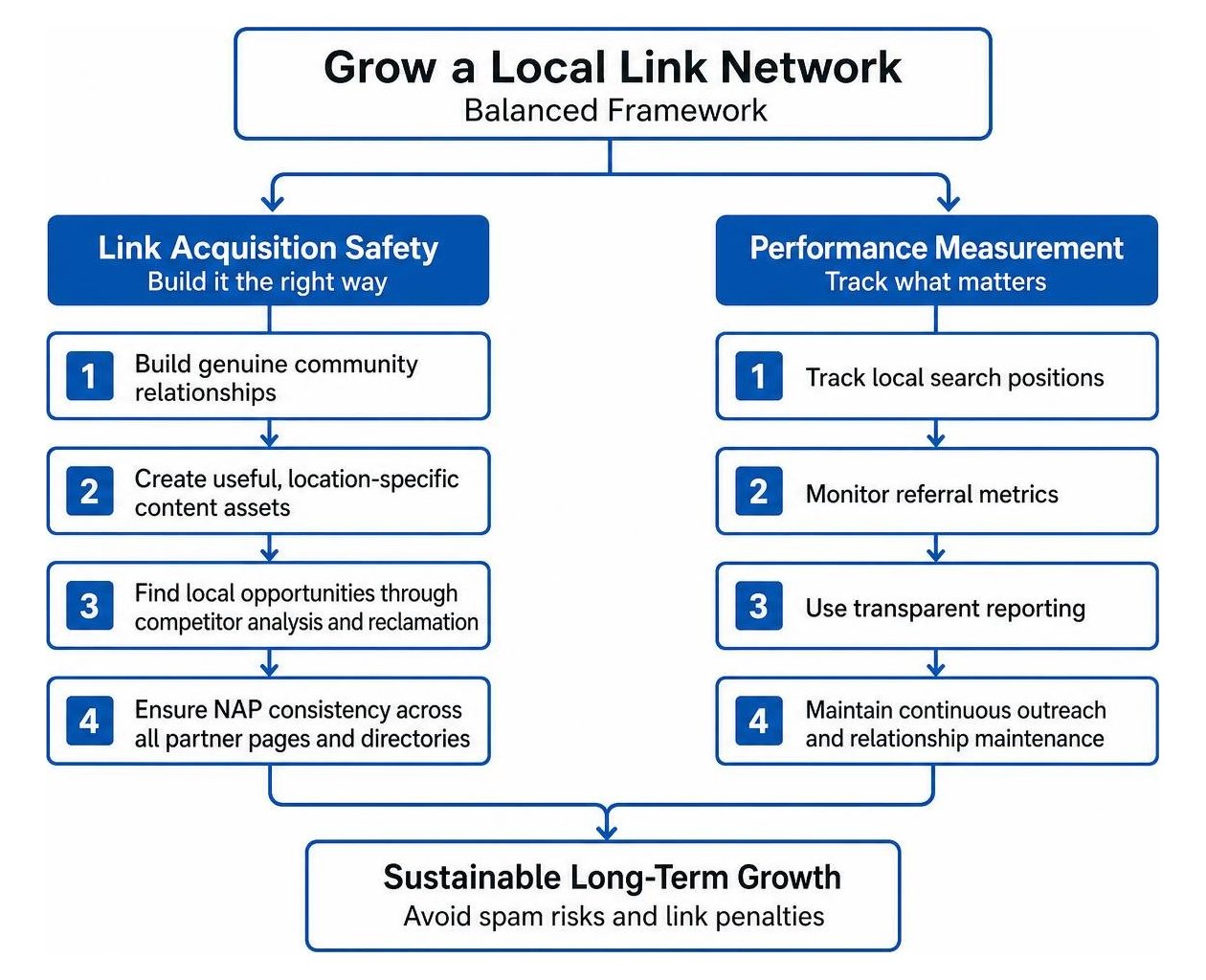
We build sustainable local networks by combining transparent reporting with careful link qualification. If managing continuous outreach and relationship maintenance internally becomes resource-intensive, our team at SmallBizSEO provides dedicated link building services powered by our Velocity framework to secure authoritative local placements safely.
How Can You Avoid Common Link-Building Mistakes?
You avoid link penalties by prioritizing genuine community relationships, avoiding automated link-generation tools, and properly labeling sponsored placements.
Avoid purchasing bulk links from generic directory networks or participating in private blog networks (PBNs). Search engine algorithms easily detect artificial link patterns, which can trigger algorithmic filtering or ranking drops. For a deeper breakdown of common technical traps, review our guide on 5 local SEO mistakes killing your visibility.
To maintain complete compliance:
- Apply
rel="sponsored"orrel="nofollow"attributes to links resulting from paid sponsorships or donations. - Avoid aggressive, exact-match anchor text optimization; use natural brand names and conversational phrases instead.
- Disregard bulk link vendor packages promising hundreds of immediate directory placements.
- Build links at a steady, consistent pace that reflects genuine business growth.
How Can You Track Local Rankings, Referral Traffic, and ROI Over Time?
Track your local link network performance by monitoring changes in localized organic rankings, Map Pack visibility, and referral customer conversions across your primary operating area.
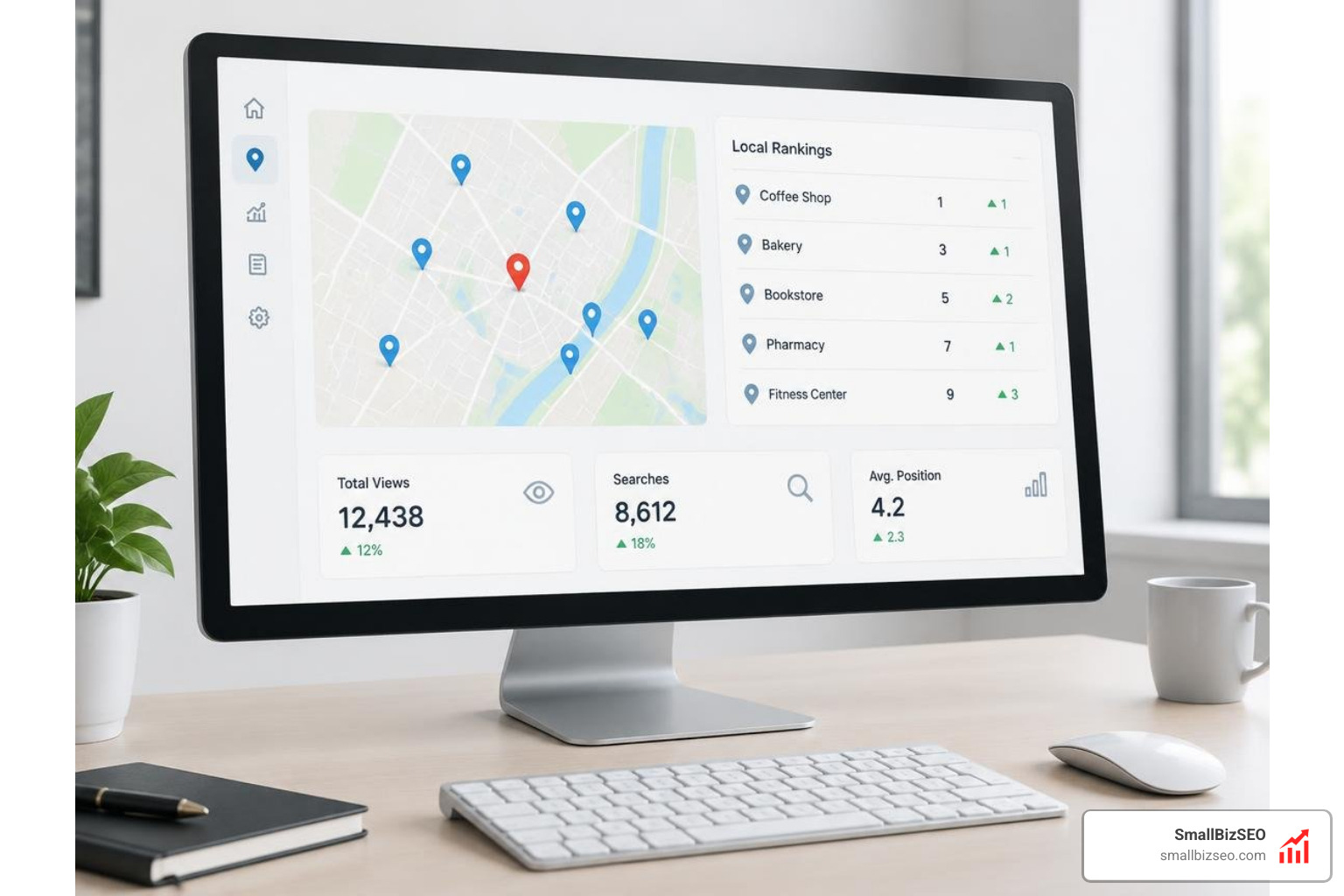
Track campaign performance using these specific metrics:
- Map Pack Visibility: Monitor your local visibility across geographic coordinates using an automated local rank grid to see ranking improvements across nearby neighborhoods.
- Search Console Acquisition Data: Track new referring domains and impression gains on geo-modified search terms.
- Referral Traffic and Actions: Analyze website visits coming directly from community partners, sponsorships, and local news coverage to measure user engagement.
- Quarterly Profile Audits: Periodically audit your backlink profile to verify that active partner links remain intact and destination URLs continue loading without broken redirects.
Strengthening Your Community Footprint
Building an effective local link network requires consistent community involvement and a focus on genuine value rather than quick shortcuts. By partnering with neighborhood organizations, producing valuable local resources, and maintaining clean outreach standards, your business can build enduring search prominence across your service areas.
If you are ready to evaluate your current search footprint, request an audit from our specialists at SmallBizSEO or explore our complete range of local SEO services to accelerate your business growth.