Mastering Verifiable Reasoning Prompts for Clean and Auditable Output

How Do You Get a Short AI Explanation You Can Check?
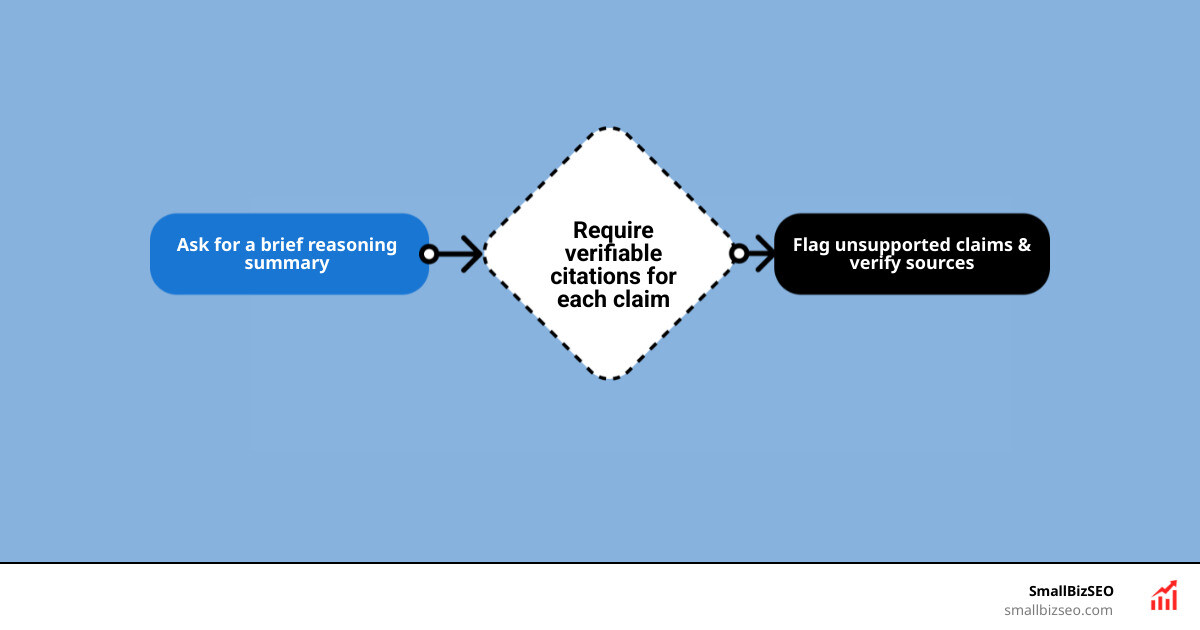
To learn how to request a concise reasoning summary with verifiable sources, make two separate requests. Ask for a brief explanation of the answer, not the model’s private reasoning. Then require a source link or publication details for each key claim, and tell the model to flag claims it cannot support.
If you use an API, request a reasoning summary where the model supports it and set reasoning effort to match the task. Do not treat the summary as proof that the citations are real. Open the sources and check that they support the claims before publishing.
I’m Clayton Johnson, founder of SmallBizSEO. My work on Answer-Ready SEO has taught me that knowing how to request a concise reasoning summary with verifiable sources is only useful when you also check the evidence behind the answer.
How Can You Request a Concise Reasoning Summary with Verifiable Sources?
To get an accurate, brief summary with real citations, you must explicitly set strict length limits, demand specific citation formats, and tell the AI to stop or admit uncertainty rather than hallucinating references.
Modern reasoning models generate internal thinking tokens before producing a final response. However, those hidden thinking chains are often thousands of tokens long, non-deterministic, and unsuitable for client-facing audit trails. Instead of asking the model to show every internal thought step, request a dedicated, structured summary at the top of the output followed by factual claims grounded in real evidence.
Academic resources such as the Prompting - Research with Generative AI - Research Guides at Southern Methodist University emphasize that generic queries lead to generic, hallucinated responses. When we formulate prompts for our clients, we treat prompt design as a legal contract. We define the objective, the evidence requirements, and strict verification boundaries before generating content.
Before putting any generated copy online, verifying AI sources before you publish ensures your brand protects its authority and maintains true E-E-A-T compliance across all search engines.
Which API Parameters Help Request a Concise Reasoning Summary with Verifiable Sources?
You can control reasoning depth and output structure using specific API parameters like reasoning effort, reasoning summary toggles, and max token allocations.
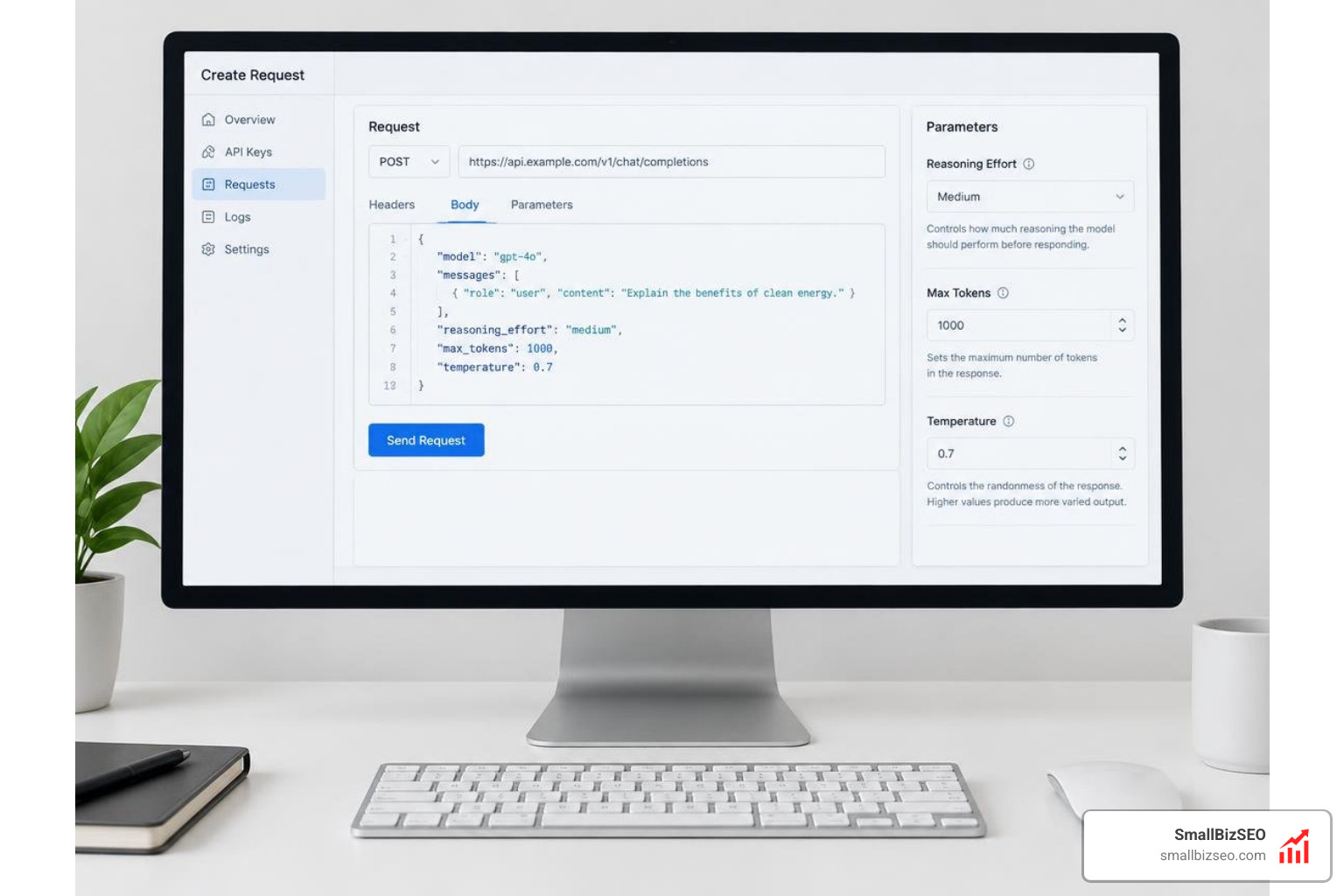
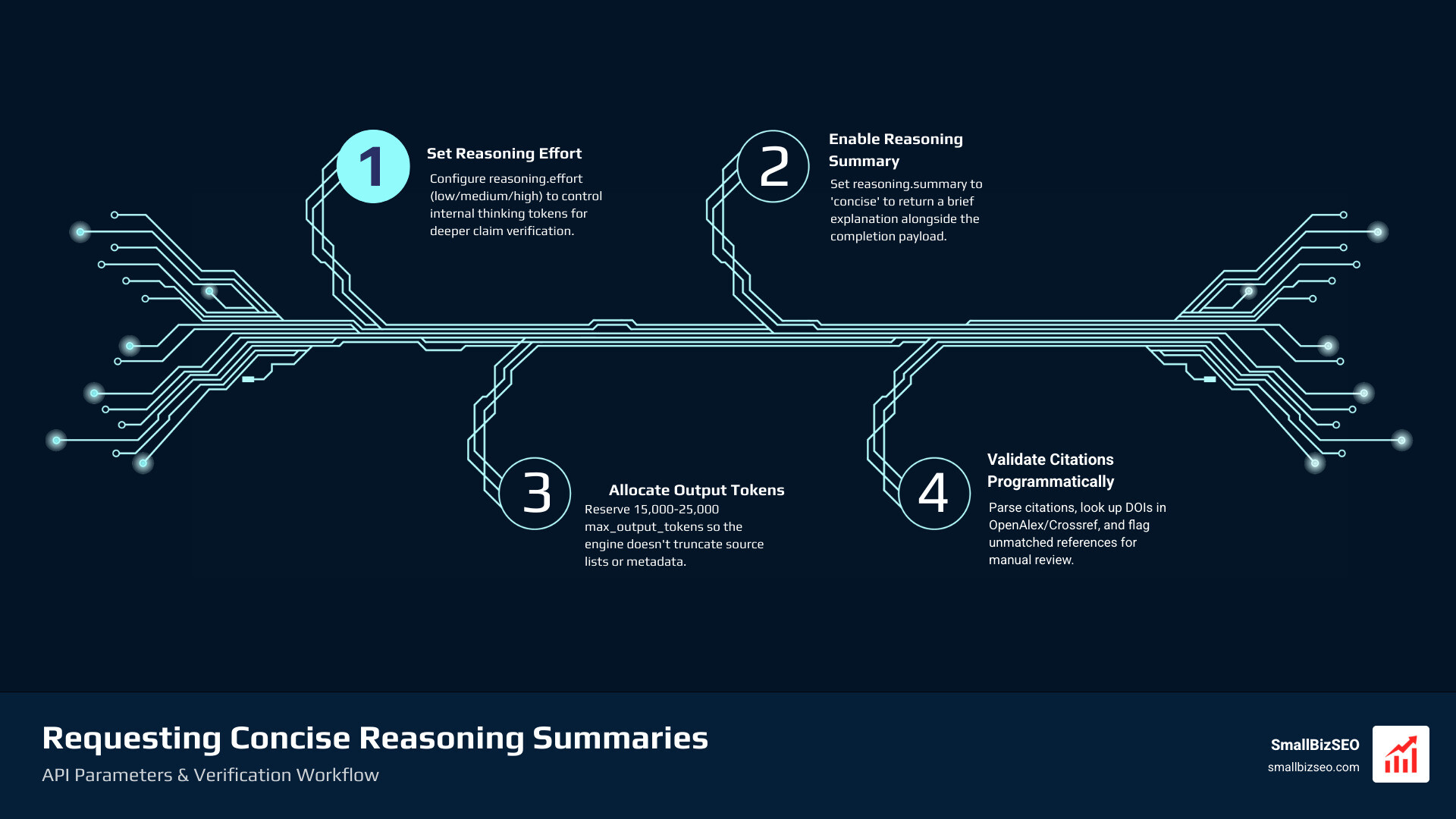
When calling modern endpoints such as OpenAI's Responses API, the system separates internal thinking tokens from final visible tokens. The primary parameters to configure include:
- Reasoning Effort (
reasoning.effort): Controls the volume of internal thinking tokens. Values typically range from low to medium and high. Low effort delivers faster, lower-cost responses, while high effort allocates deeper compute for complex verification and logic. - Reasoning Summary (
reasoning.summary): When supported by the model family, setting this parameter to concise or auto instructs the engine to return a brief explanation alongside the completion payload. - Max Output Tokens (
max_output_tokens): Reserve a healthy buffer (often 15,000 to 25,000 tokens across combined reasoning and completion space) so the engine does not truncate source lists or omit required bibliographic metadata mid-response.
| Parameter Setting | Reasoning Effort | Median Summary Length | Verified Reference Rate | Best Use Case |
|---|---|---|---|---|
effort: low |
Low | 74 words | 78.3% | Quick factual lookups, simple definitions, and low-risk drafts |
effort: medium |
Medium | 160 words | 81.5% | Standard technical copywriting and routine SEO audits |
effort: high |
High | 248 words | 84.8% | Deep research, multi-source synthesis, and competitive analysis |
Setting higher reasoning compute changes how the model handles citations, but parameter configuration alone does not eliminate the need for programmatic validation.
Why Can Reasoning Effort Affect Reference Verifiability and Citation Accuracy?
Higher reasoning effort gives the model more computational room to double-check internal claims, evaluate temporal constraints, and express epistemic caution, directly increasing citation accuracy.
Empirical studies evaluating reasoning models reveal notable accuracy gains when moving from low to high reasoning effort:
- The mean paper-level verified-reference rate increases from 78.3% under low effort to 84.8% under high effort.
- Metadata-correct references jump from 61.47% to 71.65%.
- Major metadata errors drop from 33.50% down to 24.47%.
- Unresolved references with no matching real-world publication fall from 12.40% to 6.76%.
- Epistemic caution—where the model explicitly notes uncertainty or boundary limitations—is present in only 17.5% of low-effort summaries but rises substantially under high effort.
- Temporal constraint awareness (checking whether a cited paper actually predated the target discovery) appears in just 3.7% of low-effort runs, improving markedly as compute increases.
While roughly 32.6% of low-effort references repeat under high effort and match real publications, higher reasoning compute is not magic. It makes citations more reliable, but it does not eliminate hallucinations entirely. Independent verification against databases like OpenAlex, Crossref, and Semantic Scholar remains necessary.
How Should You Structure a Contract Prompt for Verifiable Sources?
To guarantee clean, verifiable citations, structure your prompt using a contract framework that isolates facts, defines authority rules, and sets explicit stop conditions.
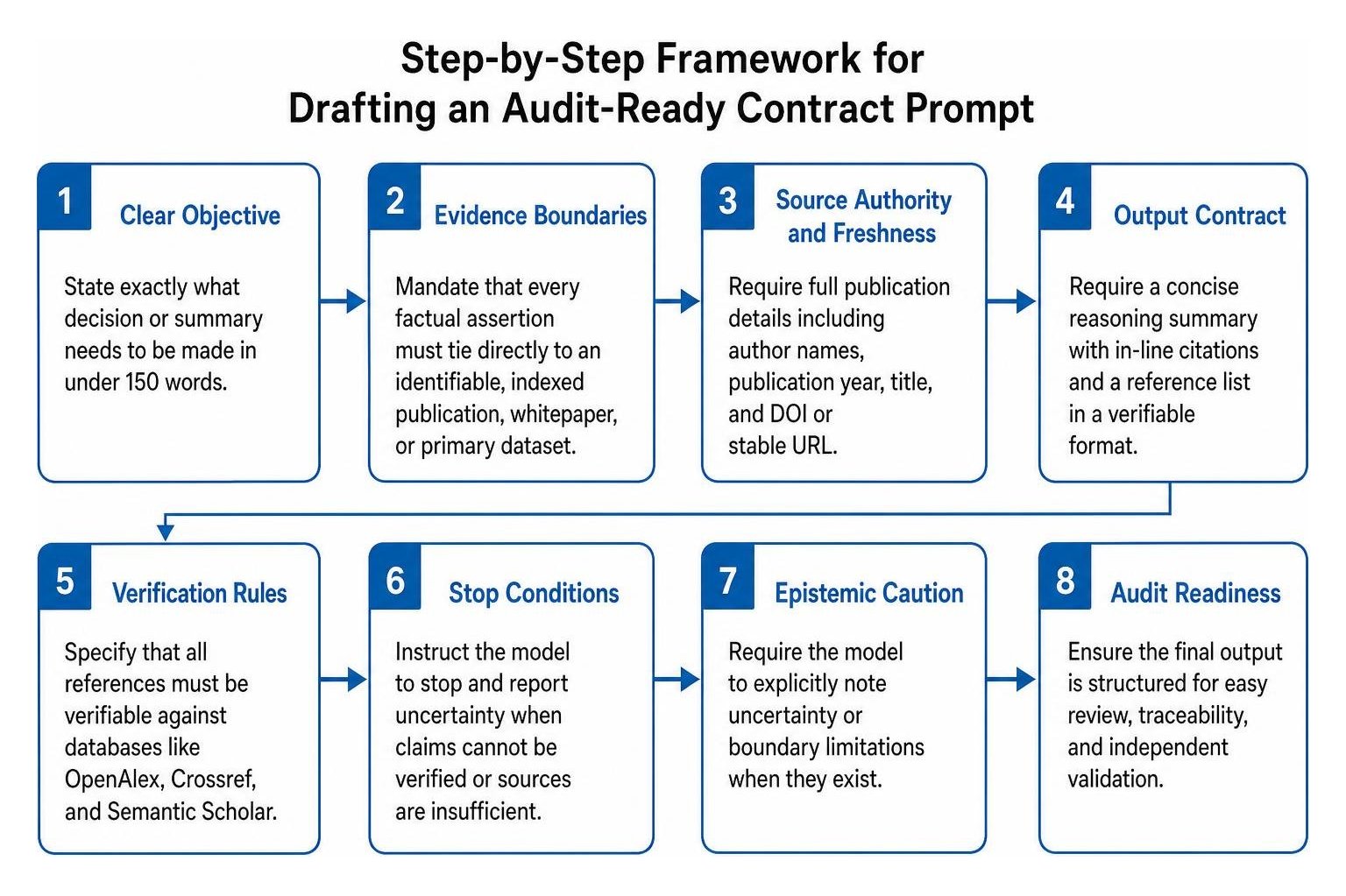
A production-grade prompt should incorporate the following components:
- Clear Objective: State exactly what decision or summary needs to be made in under 150 words.
- Evidence Boundaries: Mandate that every factual assertion must tie directly to an identifiable, indexed publication, whitepaper, or primary dataset.
- Source Authority and Freshness: Require full publication details including author names, publication year, title, and DOI or stable URL.
- Epistemic Caution Rule: Instruct the model to say "Insufficient verifiable data available" rather than estimating details when it cannot confirm a citation.
- Output Contract: Force a dual-block output structure containing a two-paragraph reasoning summary followed by a bulleted reference registry.
Structuring prompts this way ensures that models deliver auditable material. For companies refining their search presence, the AI SEO audit: tracking the signals that actually matter to LLMs provides a repeatable blueprint for tracking how generative search engines evaluate and cite authoritative domain assets.
How Can You Overcome API Limitations, Empty Summaries, and Verification Failures?
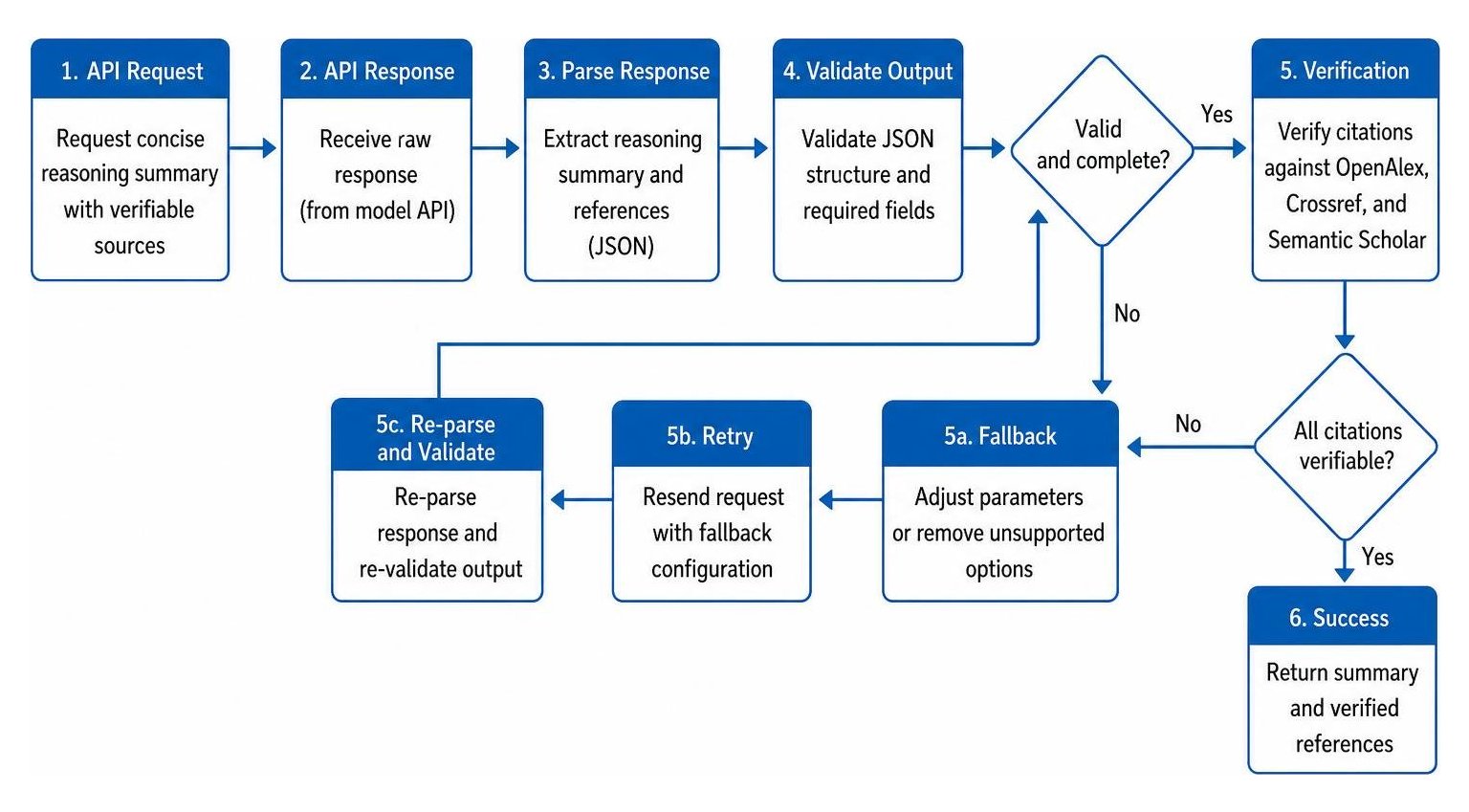
You can resolve API summary issues and broken citations by implementing automated JSON validation, fallback parameter routing, and programmatic identifier matching in your application pipeline.
Building production workflows around reasoning models requires handling unexpected edge cases. When models fail to output a reasoning summary or drop critical citations, having an automated verification pipeline catches errors before content reaches users. Tracking metrics like AI share of voice helps teams monitor how reliably their brand appears in cited generative responses over time.
How Do You Diagnose Empty Summaries, Verification Gates, and HTTP 400 Errors?
To resolve API errors and missing summaries, inspect your organization's access permissions, handle silent parameter omissions, and inspect the raw response object.
Common integration hurdles include:
- HTTP 400 Bad Request Errors: Some upstream providers require explicit organization-level verification before allowing access to parameters like
reasoning.summary. If your account lacks this verification tier, requesting summary fields returns a 400 error. - Silent Parameter Omission: Certain managed cloud endpoints accept the
reasoning.summaryparameter without throwing an error but return an empty text array while still billing for internal reasoning tokens. - Parameter Clamping: Passing unsupported sampling parameters alongside reasoning modes can trigger instant rejection. Many advanced reasoning engines reject manual temperature and top-p adjustments outright.
To fix these issues programmatically, check whether summary[].text contains valid characters. If the field returns null or an empty string, route your application to use reasoning.effort directly and extract structured explanations from the primary completion payload.
What Production Workarounds and Programmatic Source-Validation Steps Should You Use?
To validate sources automatically in production, parse all generated citations, query bibliographic APIs for matching DOIs, and flag unresolved references for manual editorial review.
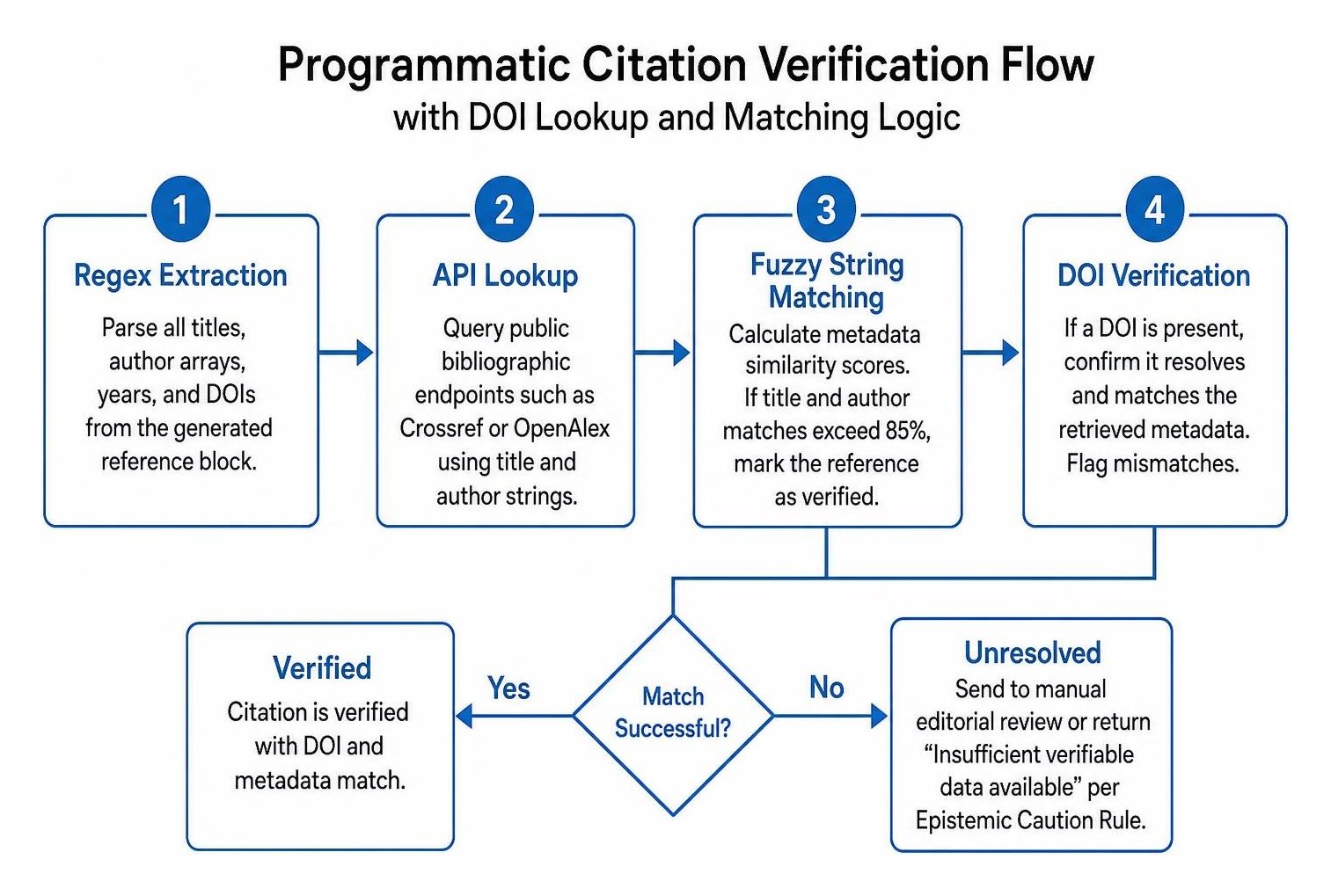
We recommend deploying a five-step automated validation flow:
- Regex Extraction: Parse all titles, author arrays, years, and DOIs from the generated reference block.
- API Lookup: Query public bibliographic endpoints such as Crossref or OpenAlex using title and author strings.
- Fuzzy String Matching: Calculate metadata similarity scores. If title and author matches exceed 85%, mark the reference as verified.
- Temporal Verification: Ensure the cited publication date precedes any dependent claims made in the body text.
- Fallback and Flagging: If a citation fails resolution or shows major metadata errors, automatically flag the output for human review or re-run the prompt at a higher reasoning effort setting.
Our comprehensive SEO services apply these rigorous verification standards to technical SEO, content strategy, and link building, ensuring every asset we create builds lasting search visibility and brand authority.
Building Auditable and Resilient AI Workflows
Mastering verifiable reasoning prompts requires treating AI models as structured processing engines rather than unquestioned authorities. By combining explicit prompt contracts, calibrated reasoning parameters, and independent programmatic verification, you eliminate guesswork and build an auditable content generation pipeline.
When you need reliable, source-backed performance across your entire digital presence, applying Answer-Ready SEO principles ensures your business stays visible, accurate, and authoritative across modern search platforms.