Mobile SEO Strategies That Keep Smartphone Shoppers on Your Site

Mobile SEO Strategies That Keep Smartphone Shoppers on Your Site
What Should Businesses Know About Mobile SEO?
To improve mobile SEO for businesses, make your site easy to find and use on a phone. Use a responsive layout, keep important content visible on mobile, compress large images, and make menus and buttons easy to tap. Then check your key pages with PageSpeed Insights and track mobile search clicks in Google Search Console.
This matters because Google primarily uses the mobile version of a page for indexing. A page that looks good on a desktop but hides details or slows shoppers down on a phone can lose both visibility and potential customers.
I'm Clayton Johnson, founder of SmallBizSEO, where I help small businesses connect technical SEO, content, and lead generation. My approach to mobile SEO for businesses starts with clear answers and an easier path from search to inquiry.
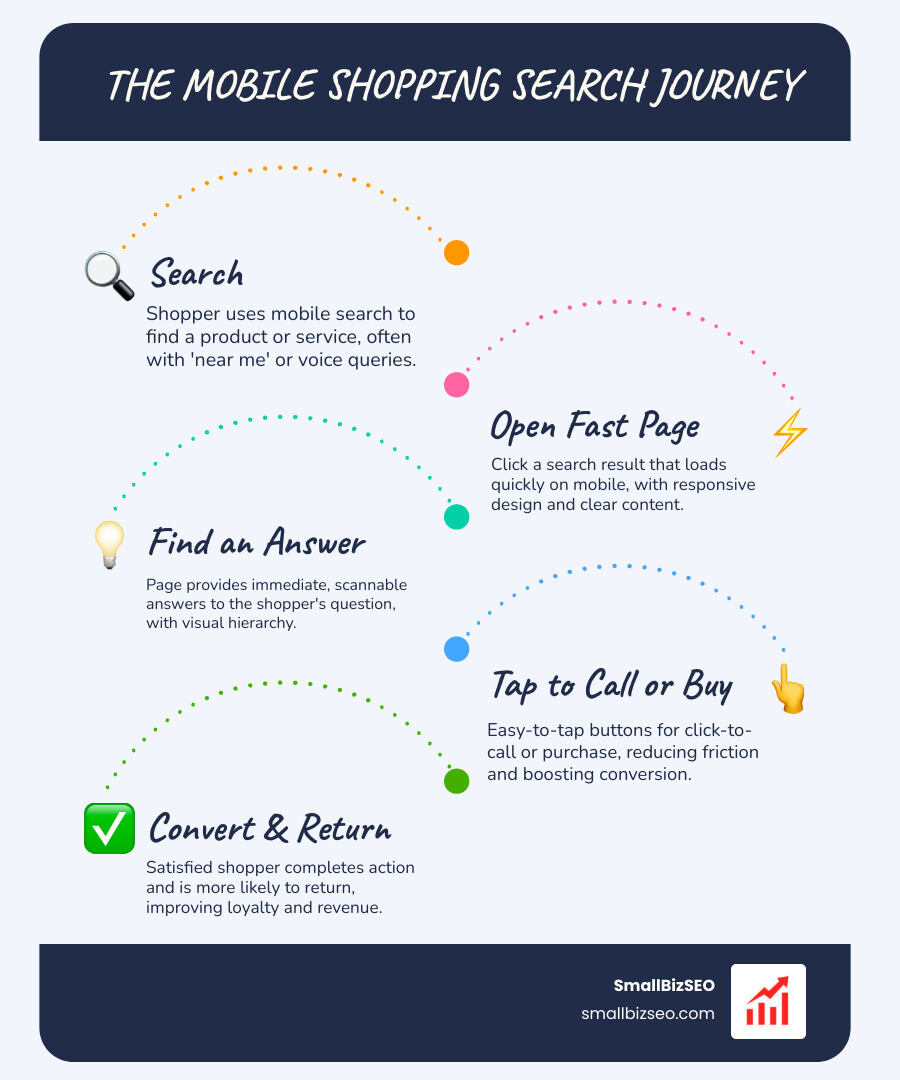
Key terms for mobile SEO for businesses:
Over 60% of all global web traffic originates from mobile devices, and 90% of consumers turn to their smartphones to conduct real-time product research while browsing in physical retail stores. If a website takes just one extra second to load on a mobile device, businesses experience an average 7% direct loss in conversions. More than 53% of mobile visitors will abandon a page entirely if it takes longer than three seconds to display its content. Search engines directly reward mobile usability, meaning a poorly configured mobile experience lowers organic discovery for every page on your domain.
How Does Mobile SEO for Businesses Drive Modern Revenue and Search Visibility?
Mobile SEO delivers sustainable revenue by positioning your company directly in front of active buyers who make immediate transactional decisions on their phones. Smartphone shoppers operate with high urgency, seeking quick contact options, operational hours, product specifications, and instant checkout solutions.
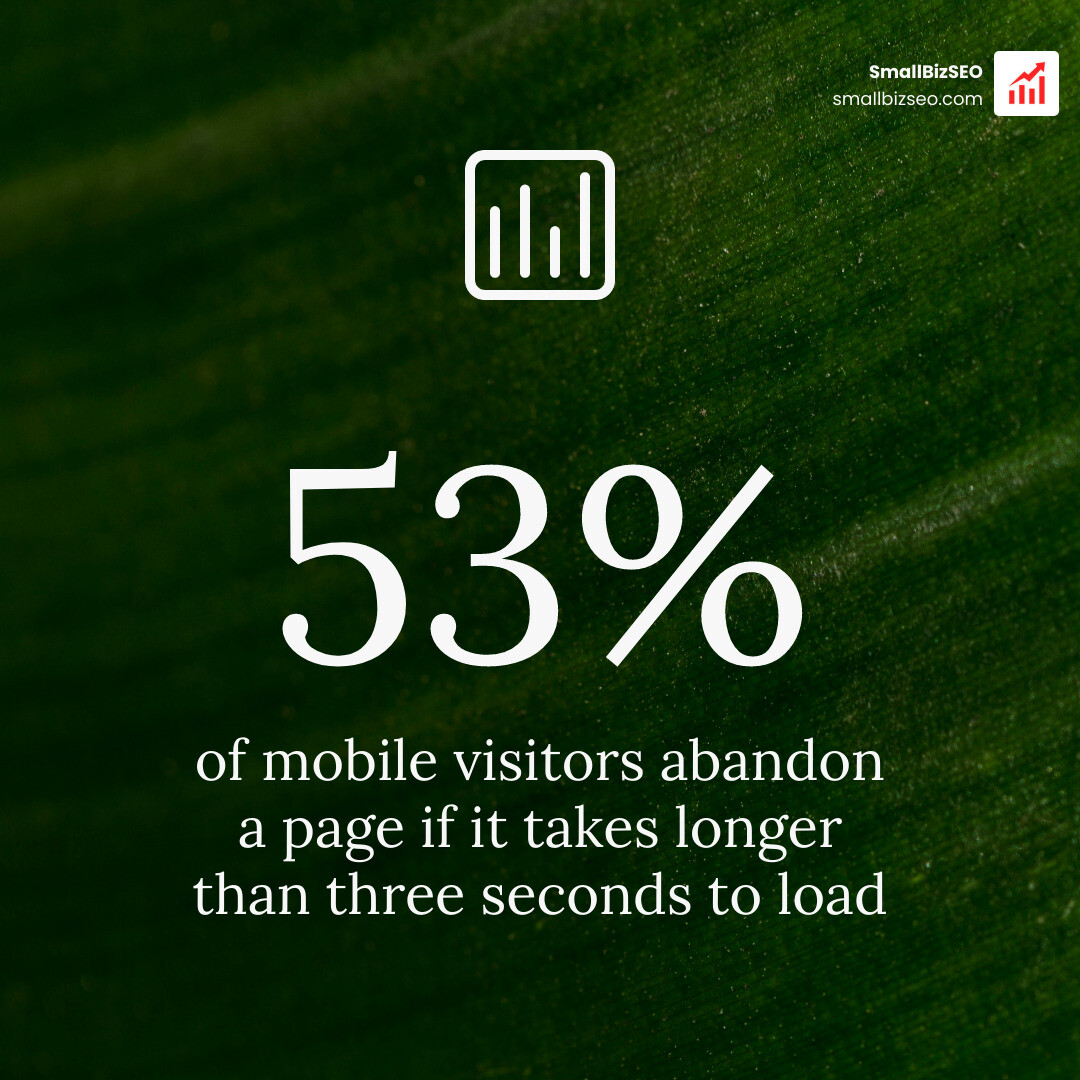
When your pages load instantly and present scannable value, search engines reward your domain across broad query categories. Following in-depth mobile-first indexing guidance helps ensure your technical setup complies with search engine evaluation systems.
| Feature | Mobile Search Behavior | Desktop Browsing Patterns |
|---|---|---|
| User Intent | Urgent, transactional, local, immediate answers | Research-heavy, informational, extended sessions |
| Session Length | Short (averaging around 2 minutes per visit) | Long (averaging around 5 minutes per visit) |
| Conversion Action | Click-to-call, tap-for-directions, 1-click buy | Detailed forms, multi-tab comparisons, desktop checkout |
| Viewport Space | Compact vertical screens requiring concise text | Wide panoramic screens accommodating sidebars |
| Input Method | Touch targets, thumbs, voice commands | Mouse precision, physical keyboard navigation |
How Does Mobile SEO for Businesses Differ from Traditional Desktop Search?
Mobile search centers on localized, time-sensitive queries executed within limited screen space, whereas desktop search focuses on multi-tab research and long-form data evaluation. Desktop users navigate with precise mouse pointers, while smartphone shoppers browse with their thumbs across compact viewports.
When planning on improving company website SEO, businesses must prioritize touch-friendly elements, streamlined checkout flows, and simplified navigation menus to prevent user friction.
What Is Mobile-First Indexing and How Does Googlebot Evaluate Your Pages?
Mobile-first indexing means Google evaluates and indexes only the mobile version of your website to determine your search rankings across all devices.

Googlebot Smartphone uses a headless Android browser to render HTML, execute JavaScript, and measure layout stability just like a real visitor. If your mobile layout hides text, strips navigation links, or omits schema markup found on your desktop view, your entire domain loses ranking power.
Maintaining complete parity between desktop and mobile versions is vital under mobile-first indexing. Ensure your robots.txt file does not block critical CSS or script assets required for rendering. Keep total HTML payloads lean to prevent DOM truncation during crawl operations.
How Can Businesses Use a Step-by-Step Mobile SEO Framework to Retain Shoppers and Boost Conversions?
To retain mobile shoppers and elevate search rankings, apply a structured mobile optimization framework focused on speed, content clarity, and effortless navigation.
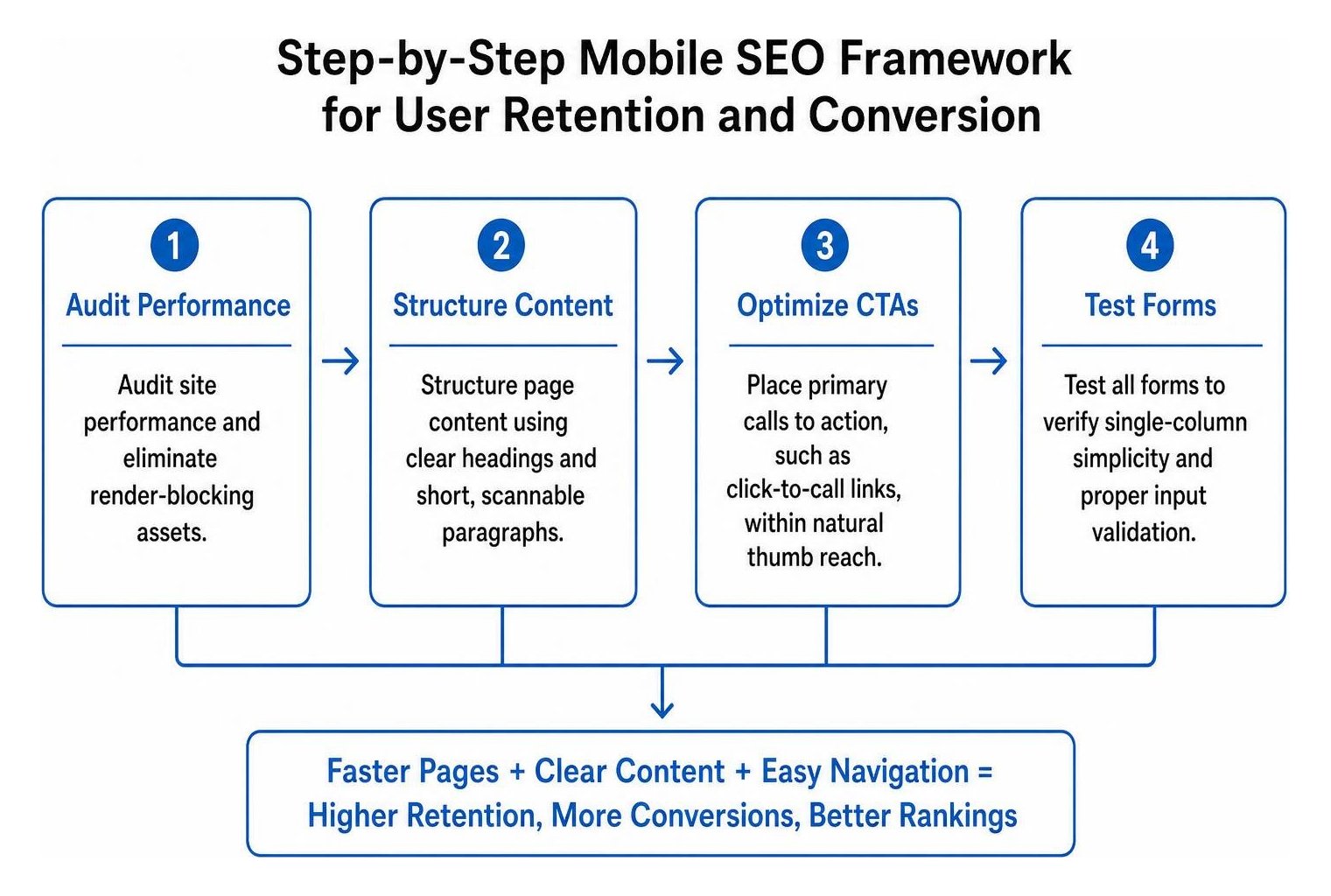
- Audit site performance and eliminate render-blocking assets.
- Structure page content using clear headings and short, scannable paragraphs.
- Place primary calls to action, such as click-to-call links, within natural thumb reach.
- Test all forms to verify single-column simplicity and proper input validation.
What Are the Core Technical Best Practices of Mobile SEO for Businesses?
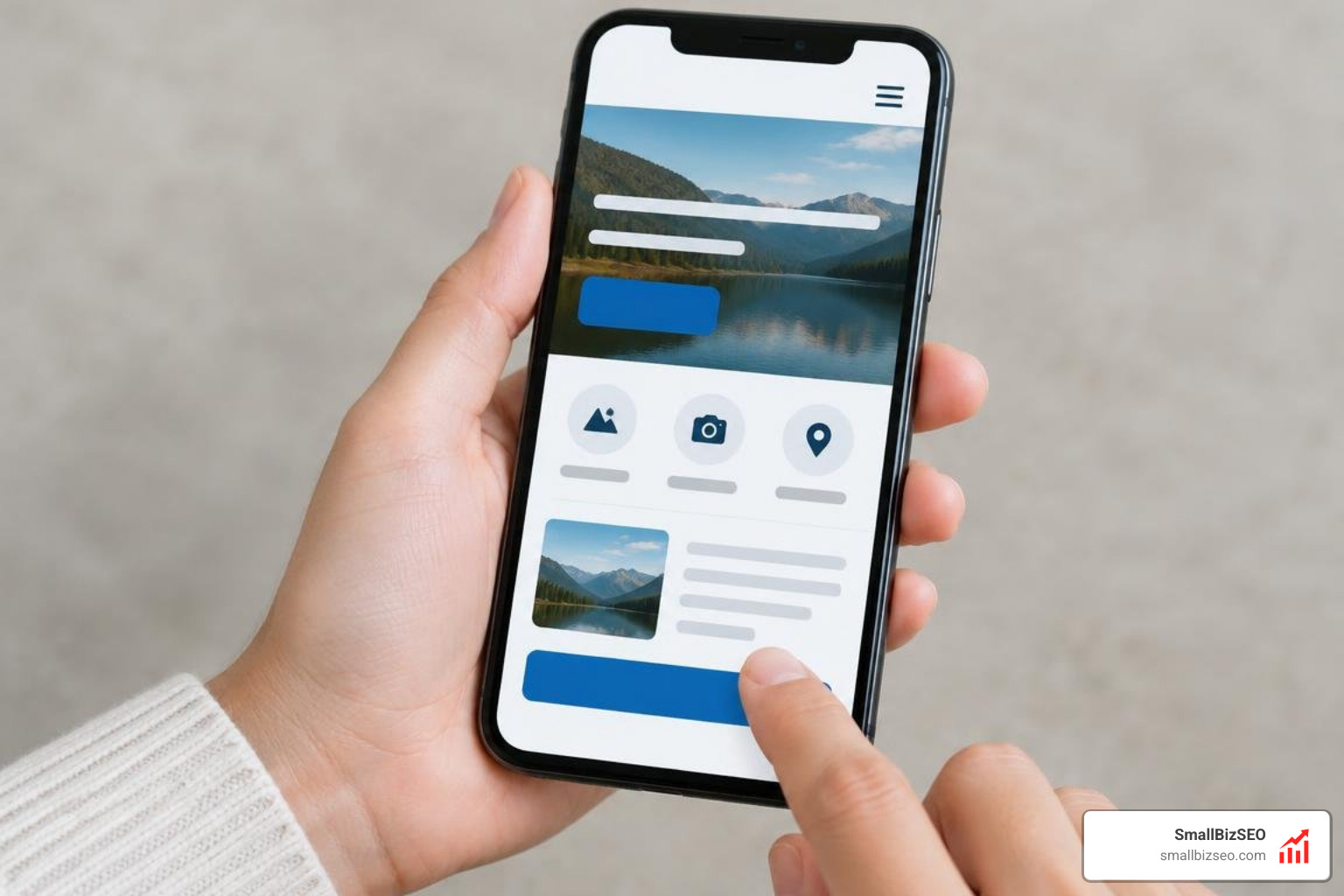
The foundation of modern mobile visibility begins with responsive web design using fluid CSS grids, adaptive media queries, and correct viewport meta tags.
- Configure the viewport tag with width equal to device-width and initial scale set to 1.0.
- Ensure all interactive touch targets measure at least 48 by 48 pixels with an 8-pixel margin between clickable items.
- Replace heavy image formats with compressed WebP files and responsive image markup.
- Defer non-essential JavaScript to prevent rendering delays.
- Eliminate intrusive full-screen interstitials and pop-ups that obstruct page content upon landing.
Our complete technical SEO guide outlines deeper architectural optimizations that keep your digital assets lightweight and compliant with search engine standards.
How Do Core Web Vitals Impact Mobile Page Speed and Shopper Retention?
Core Web Vitals measure the real-world user experience of your pages by analyzing loading speed, visual stability, and interactive responsiveness on mobile devices.
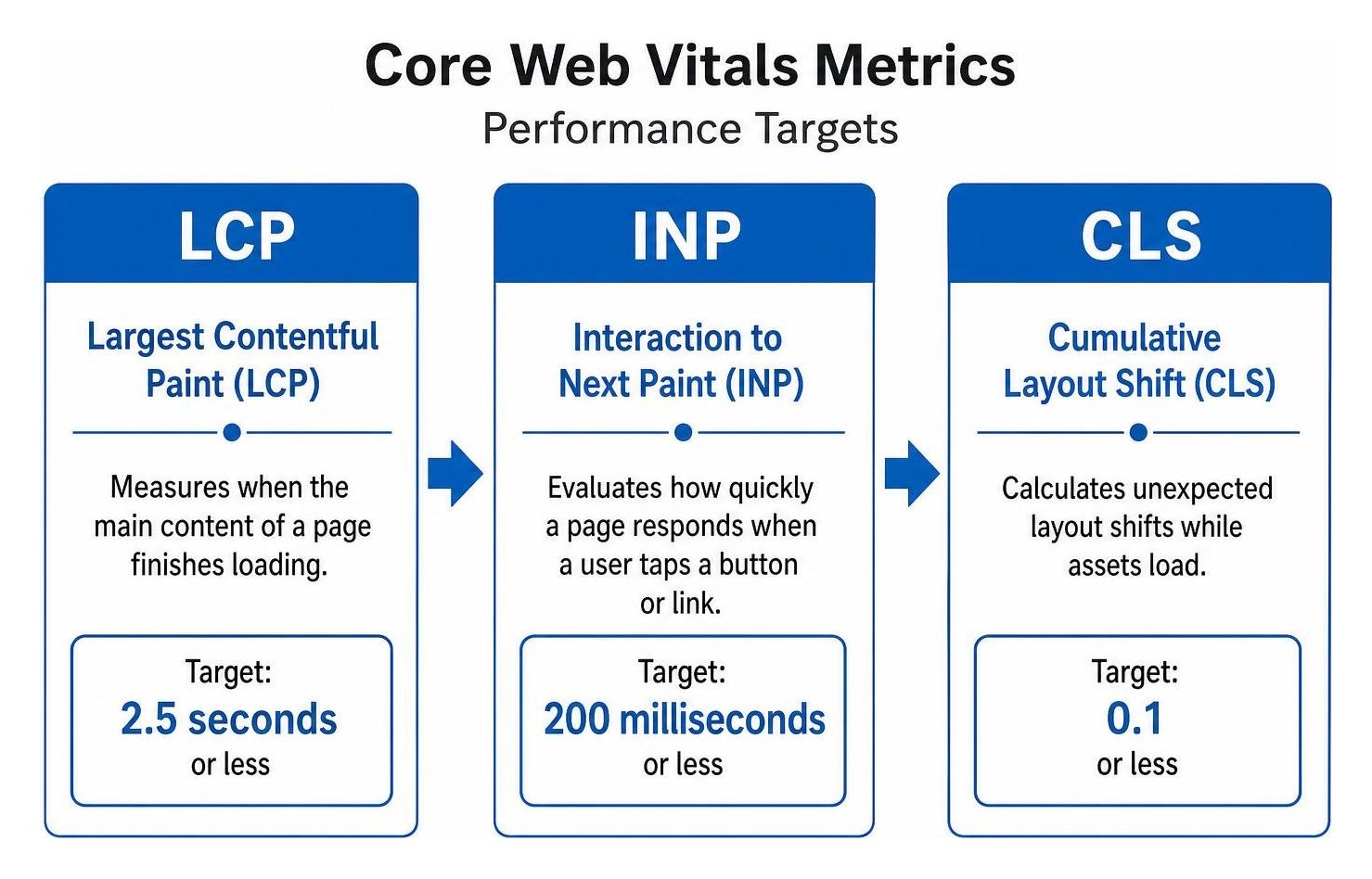
- Largest Contentful Paint (LCP): Measures when the main content of a page finishes loading. Target: 2.5 seconds or less.
- Interaction to Next Paint (INP): Evaluates how quickly a page responds when a user taps a button or link. Target: 200 milliseconds or less.
- Cumulative Layout Shift (CLS): Calculates unexpected layout shifts while assets load. Target: 0.1 or less.
When a site fails these metrics, bounce rates rise sharply as shoppers abandon sluggish pages. Applying modern on-page SEO techniques helps eliminate layout shifts, reduces server response times, and safeguards conversion rates.
How Can Businesses Optimize for Mobile Local Intent and Voice Search?
Local search and voice queries are predominantly executed on mobile devices by shoppers looking for nearby products, services, and operational hours. Over 80% of local searches on a smartphone result in direct conversions within 24 hours.
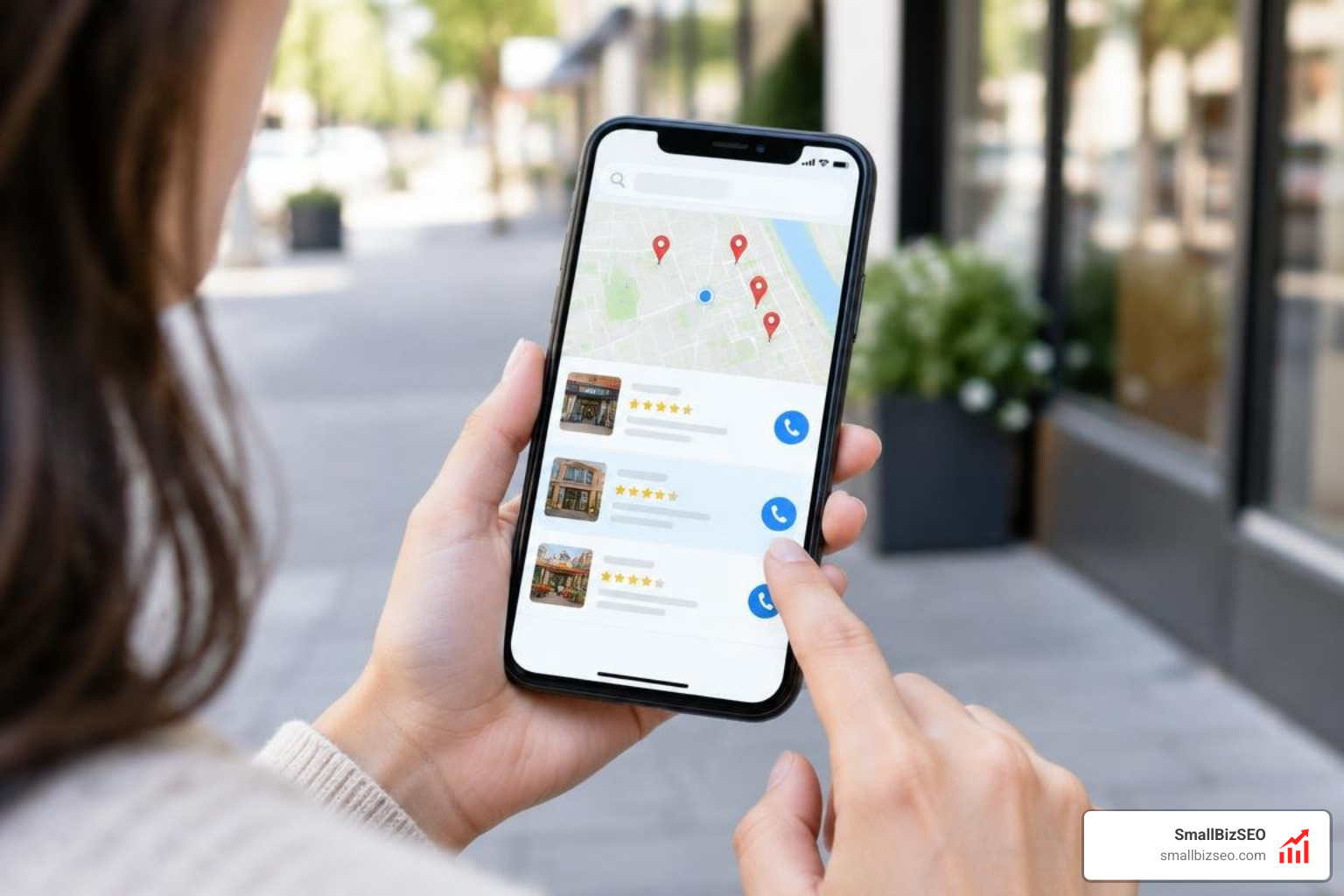
To capture high-intent local demand, claim and optimize your Google Business Profile with complete contact details, accurate categories, high-resolution photos, and consistent updates. Embed LocalBusiness structured data in your mobile page code to highlight operating hours, physical service locations, and direct phone links.
Reviewing local search optimization basics allows you to target conversational long-tail queries, such as "where to find" or "open now near me." For deeper localization tactics, explore optimizing mobile SEO for local search to capture nearby shoppers when purchase intent is highest.
What Tools and KPIs Measure Success When Auditing Mobile Performance?
Tracking mobile search performance requires a combination of automated diagnostics and behavioral analytics to isolate technical errors and measure customer engagement.
- Google Search Console: Monitor indexing status, verify Googlebot Smartphone crawling, and review mobile usability alerts.
- PageSpeed Insights & Lighthouse: Measure Core Web Vitals lab and field data to identify script bottlenecks.
- Mobile Rank Tracking: Track keyword positioning specifically across mobile search engine results pages.
- Behavioral Analytics: Compare mobile versus desktop bounce rates, average session durations, and conversion funnels.
Reviewing a clear SEO reporting guide helps streamline this data into actionable commercial insights. SmallBizSEO delivers transparent, automated performance tracking through our proprietary Velocity framework, helping businesses achieve fast organic rankings and sustainable expansion. If your website struggles to generate phone calls or online orders, request our comprehensive SEO visibility audit to pinpoint technical roadblocks and capture more smartphone revenue.
Turning Mobile Searchers into Loyal Customers
A successful mobile presence requires more than shrinking desktop pages onto smaller screens. It demands fast load times, clear page layouts, touch-friendly navigation, and direct answers that resolve shopper intent in seconds.
By applying modern responsive design, maintaining complete content parity for search engine crawlers, and optimizing for local smartphone queries, your business can build a high-converting mobile presence that outperforms the competition and drives steady commercial growth.