9 SEO Practices for Software Design & Development Companies

Why Does SEO Matter for Software Design and Development Agencies?
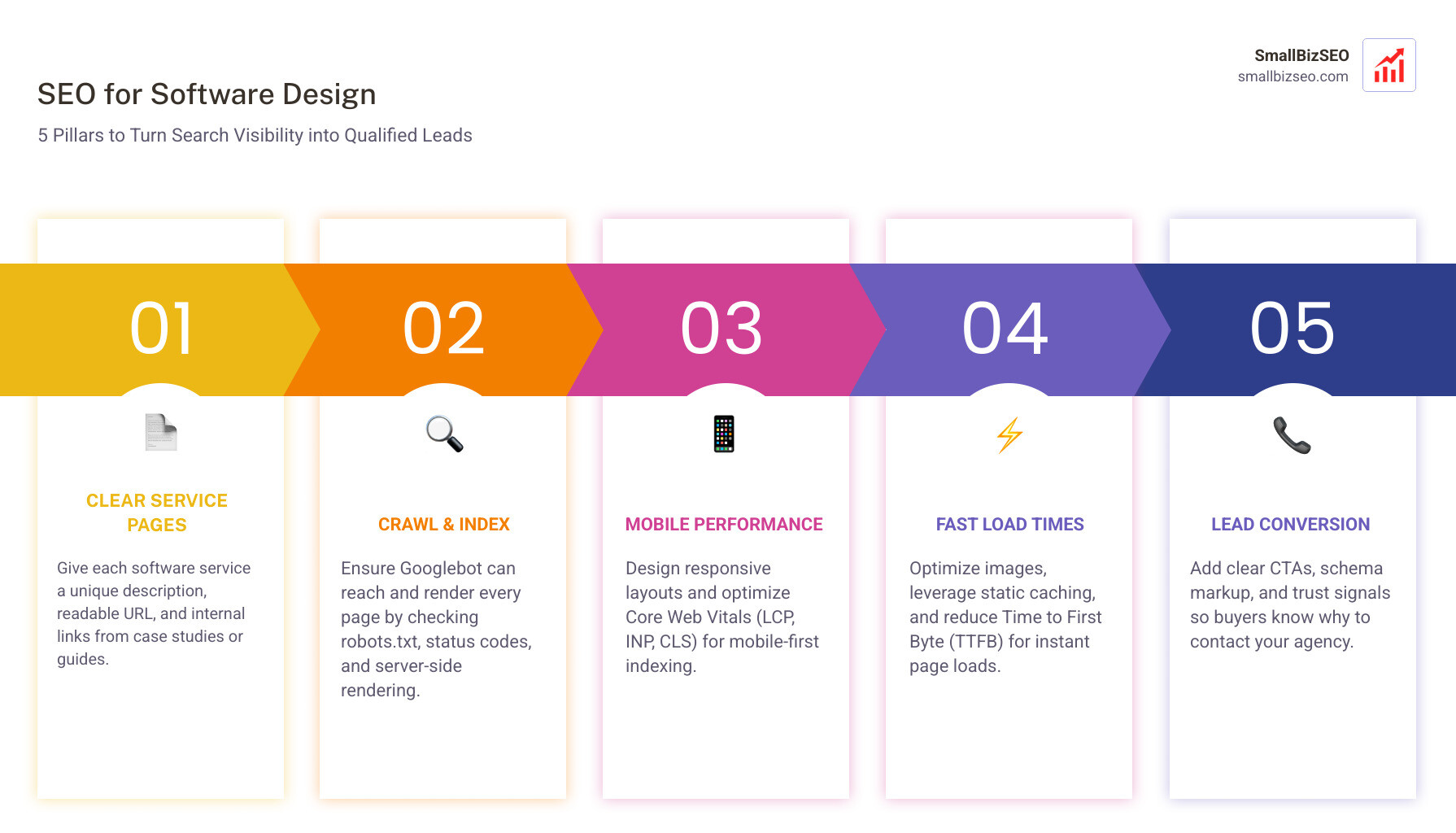
To rank software development service pages, start with the pages buyers need. Give each service a clear description, a readable URL, and links from relevant case studies or guides. Then make sure Google can reach and read the page, it works well on mobile, and it loads quickly. That is the practical starting point for SEO for software design & development.
Unlike a sales message sent to a prospect, SEO helps your agency show up when someone is already looking for a solution. Strong technical work makes your expertise easier to find; clear content gives buyers a reason to get in touch.
I’m Clayton Johnson, founder of SmallBizSEO. My work in SEO for software design & development draws on technical SEO, content strategy, and authority building to help businesses turn search visibility into qualified leads.
Basic SEO for software design & development glossary:
- SEO for architectural design firms
- SEO for graphic design studios
- SEO for air cargo & package express services
Strategic Foundations of SEO for Software Design & Development
A strong technical SEO foundation ensures search engines crawl, render, and index your code without friction. Software engineering firms often build high-performance web applications but neglect the underlying protocols that search bots rely on. By configuring clean architectures, you turn your digital presence into a steady pipeline for qualified client inquiries.
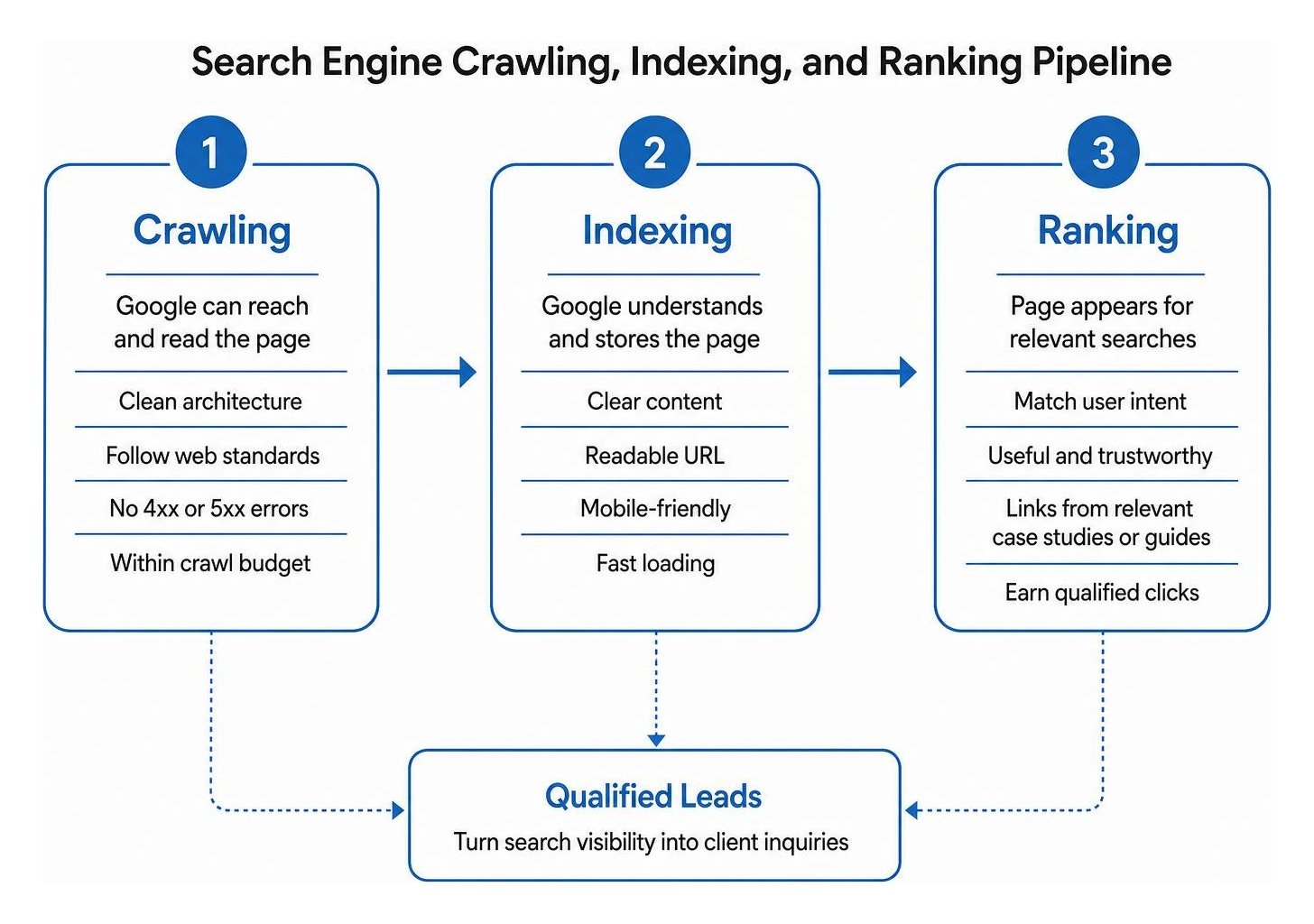
When establishing your site architecture, review our comprehensive technical SEO guide to confirm your backend infrastructure adheres to baseline web standards. Search engines like Google operate on finite crawl budgets and automated parsers. Following documented standards from Google Search Central allows technical teams to safeguard site discoverability, eliminate 4xx and 5xx response errors, and map organic traffic directly to commercial outcomes.
Why Is SEO for Software Design & Development Different from Push Marketing?
SEO operates as pull marketing by serving users who actively search for specific technical solutions, much like handling an incoming API request. In contrast, push marketing broadcasts messages to passive audiences through outbound emails, cold outreach, or intrusive display ads.
In high-ticket software development, sales cycles span six to eighteen months. Multiple stakeholders—ranging from CTOs to procurement teams—evaluate technical vendors. Decision-makers rarely convert from cold social ads; they search for deep architectural expertise, framework comparisons, and compliance standards.
To win these competitive searches, agencies must build comprehensive resource hubs that establish topical authority across their specific engineering domains.
| Strategy Attribute | Push Marketing (Outbound Ads) | Pull Marketing (Technical SEO) |
|---|---|---|
| Buyer Intent | Low to moderate; user is interrupted | High; user actively seeks a solution |
| Cost Model | Recurring spend per impression or click | Compounding return on web assets |
| Audience Alignment | Broad targeting with high bounce rates | Precise technical queries from CTOs |
| Longevity | Traffic stops when ad budget ends | Evergreen visibility and authority |
How Does Search Engine Crawling and Indexing Impact Software Platforms?
Search engines discover, parse, and store web pages through three distinct phases: crawling, indexing, and ranking. If Googlebot encounters a blocking directive or an unhandled client-side script, it halts the process, leaving your services completely invisible in organic search.
- Robots.txt Configuration: Keep your robots.txt file clean. Disallow internal API endpoints, staging environments, and administrative routes while keeping CSS, JavaScript, and main service URLs fully accessible.
- HTTP Status Hygiene: Ensure every canonical URL returns an immediate HTTP 200 OK status. Avoid long 301 redirect chains and eliminate broken 404 links that drain crawl budget.
- Rendering Strategy: While modern search bots can execute JavaScript, client-side rendering (CSR) introduces rendering queues and crawl delays. Utilizing server-side rendering (SSR) or static site generation (SSG) delivers pre-rendered HTML to crawlers instantly.
- Canonical Architecture: Prevent duplicate content across varied query parameters and trailing slashes by implementing self-referential canonical tags on all indexable pages.
Leading industry directories like DesignRush consistently feature development agencies that maintain flawless site architectures and rapid loading speeds.
How to Execute Technical SEO for Software Design & Development Websites
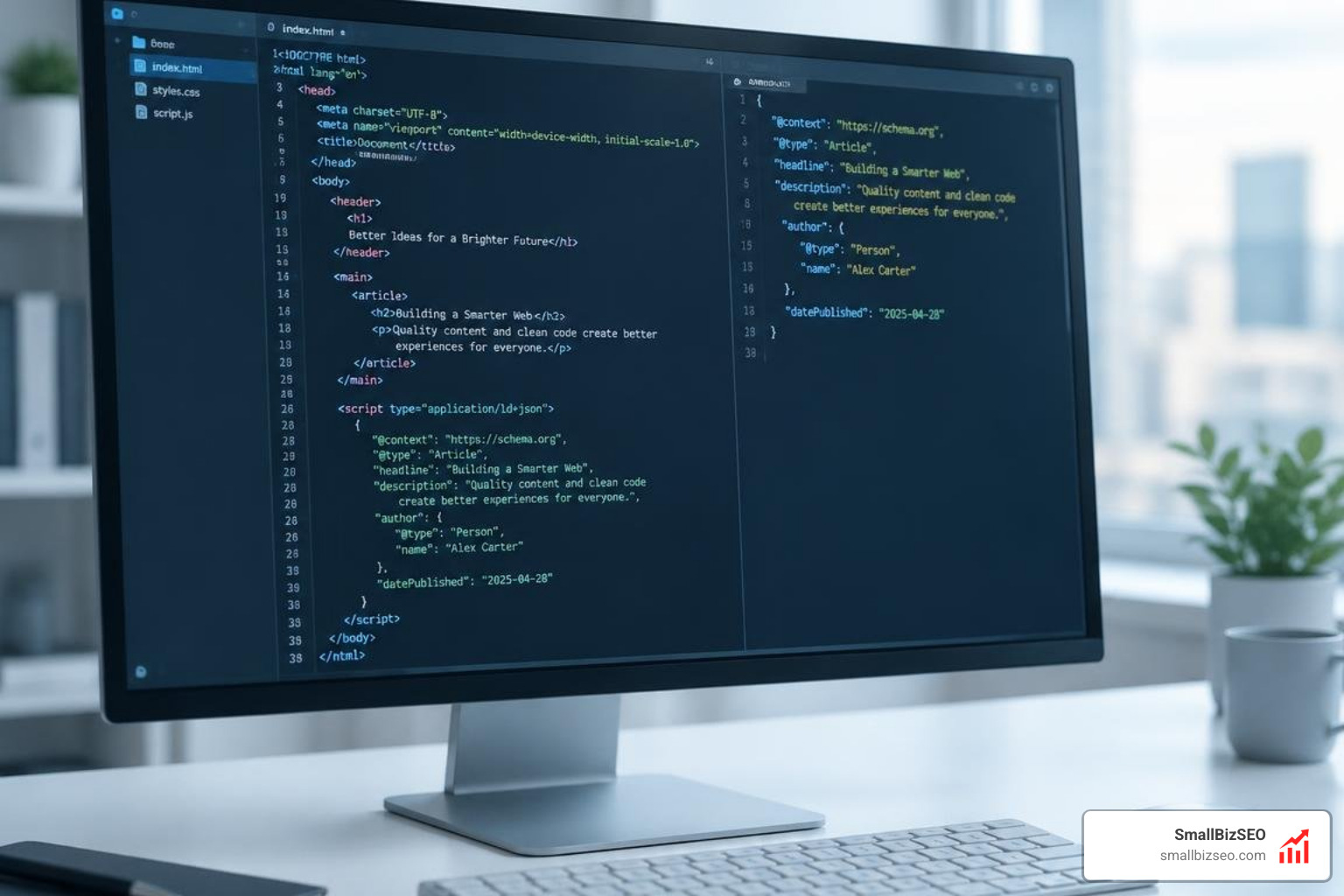
Execute technical SEO by implementing structured JSON-LD schema, semantic HTML markup, and flat URL hierarchies. Structuring your pages correctly helps search engines and automated scrapers immediately identify your core service offerings.
When modifying your site structure, follow our website redesign checklist to preserve existing equity and maintain canonical paths. Integrate these key structural elements:
- Organization and Service Schema: Add machine-readable JSON-LD tags defining your legal entity, leadership, and custom development capabilities.
- FAQPage Structured Data: Implement FAQ schema on technical service pages to capture rich snippets on search results pages.
- Semantic Hierarchy: Use exactly one primary H1 tag per page, followed by an intuitive H2 and H3 sequence without skipping levels.
- Descriptive URLs: Construct short, lower-case, hyphen-delimited URLs that cleanly communicate the directory path (for example,
/services/cloud-native-development).
Modern Execution: Technical Architecture, GEO, and Growth
Modern organic growth requires marrying technical performance engineering with modern visibility strategies across AI and traditional search. Partnering with an experienced organic SEO agency ensures that backend code quality directly aligns with your business development objectives.
How Do Core Web Vitals and Page Speed Influence Design Decisions?
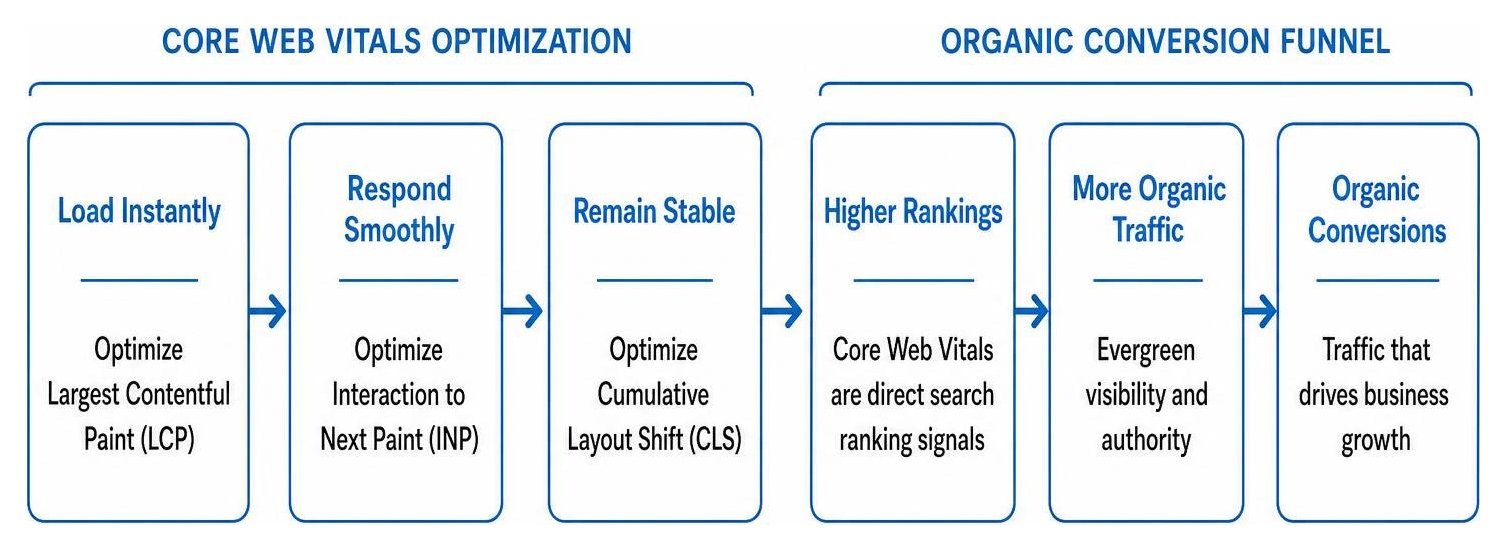
Core Web Vitals serve as direct search ranking signals, prioritizing sites that load instantly, respond smoothly, and remain visually stable. Fast load times directly impact how decision-makers perceive your engineering caliber.

To diagnose speed bottlenecks, conduct a comprehensive SEO visibility audit to inspect server response times and frontend asset delivery. Focus on these core benchmarks:
- Largest Contentful Paint (LCP): Keep LCP under 2.5 seconds. Optimize critical rendering paths, preload hero assets, and utilize next-generation image formats like WebP or AVIF.
- Interaction to Next Paint (INP): Maintain INP below 200 milliseconds by breaking up long JavaScript tasks and offloading intensive computation from the main thread.
- Cumulative Layout Shift (CLS): Target a CLS score under 0.1 by providing explicit width and height dimensions on all images, videos, and dynamic UI elements.
- Infrastructure Optimization: Implement edge caching, deploy global content delivery networks (CDNs), and minimize Time to First Byte (TTFB).
What Is Generative Engine Optimization (GEO) in AI Search?
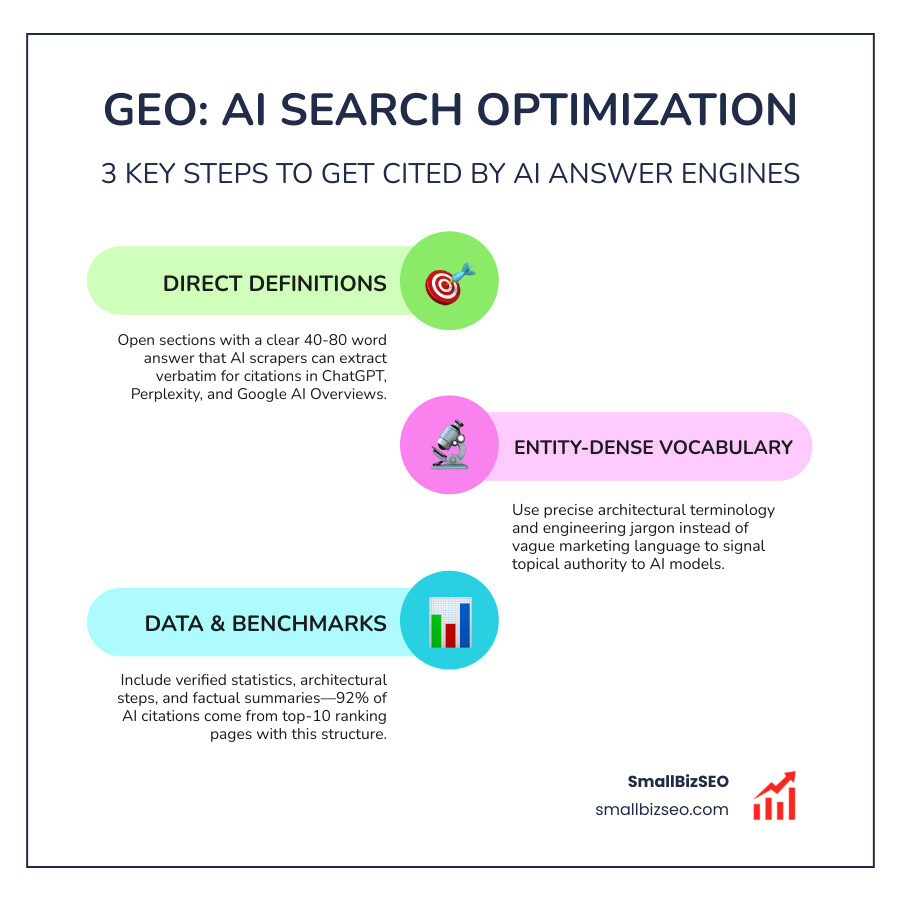
Generative Engine Optimization (GEO) is the practice of optimizing content so AI answer engines like ChatGPT, Perplexity, and Google AI Overviews cite your agency as an authoritative source.
Research indicates that over 92% of AI Overview citations come from pages already ranking in the top 10 organic results. However, winning these citations requires specific editorial formatting:
- Direct Definitions: Open key informational sections with a clear, direct answer of 40 to 80 words that AI scrapers can parse and extract.
- Entity-Dense Vocabulary: Use exact architectural and engineering terminology rather than vague marketing language.
- Data and Benchmarks: Include verified statistics, architectural steps, and factual summaries.
For an in-depth breakdown of these techniques, explore our detailed guide on Generative AI SEO and GEO. As tracked across leading publications like Built In, early adopters of GEO capture high-value citations across AI search interfaces.
Which Common Technical SEO Mistakes Break Agency Growth?
The most damaging technical SEO mistakes stem from treating search optimization as an afterthought rather than a core engineering requirement. Avoid these common pitfalls to protect your domain:
- Blocking JavaScript Execution: Accidental disallow directives in robots.txt can prevent search engines from rendering dynamic content and critical resources.
- Publishing Thin Service Pages: Generic pages lacking architectural specifics, tech stacks, or real project outcomes fail to satisfy high-intent buyer searches.
- Neglecting Mobile-First Indexing: Google indexes the mobile version of your site. Incomplete mobile navigation or missing responsive styling degrades visibility across all devices.
- Ignoring Developer-Driven Authority: Software teams hold a natural link-building advantage. Publishing open-source libraries, API documentation, and technical post-mortems earns authoritative backlinks naturally.
At SmallBizSEO, we help agencies resolve structural bottlenecks using our data-driven Velocity framework. If you want to evaluate your technical posture, request a free SEO visibility audit to identify performance blockers and unlock consistent organic growth.
Next Steps for Software Engineering Leaders
To scale your software agency’s organic visibility, align your development standards with search crawlability from day one. Treat your website as an enterprise-grade software product. Deliver fast server-side HTML, implement structured data, design for mobile-first user journeys, and produce technical documentation that answers real buyer questions.
By combining clean technical foundations with focused topical authority, your agency will build an organic acquisition engine that consistently captures qualified enterprise clients.